In the age of the all-powerful algorithm, where a business’s reputation hangs by a single click, the line between the sacrosanct right to criticism and digital superficiality is becoming increasingly blurred. The latest media controversy lifts the golden veil on the sometimes ruthless dynamics of online reviews, transforming a trivial geolocation error into a sophisticated lesson in ethics and professional solidarity.
The Weight of Digital Reviews
The contemporary restaurant industry has now come to terms with an undeniable truth: online review platforms have become the indispensable compass for modern foodies in search of the perfect dining experience. A chorus of stars and comments capable of determining a restaurant’s success or, conversely, of unfairly tarnishing its reputation. Staff work tirelessly, between the stoves and the tables, to craft an impeccable welcome that translates into a positive online reputation. But what happens when the axe of dissent strikes indiscriminately, driven by the misguided judgment of a distracted diner?
The bitter cup of blind criticism
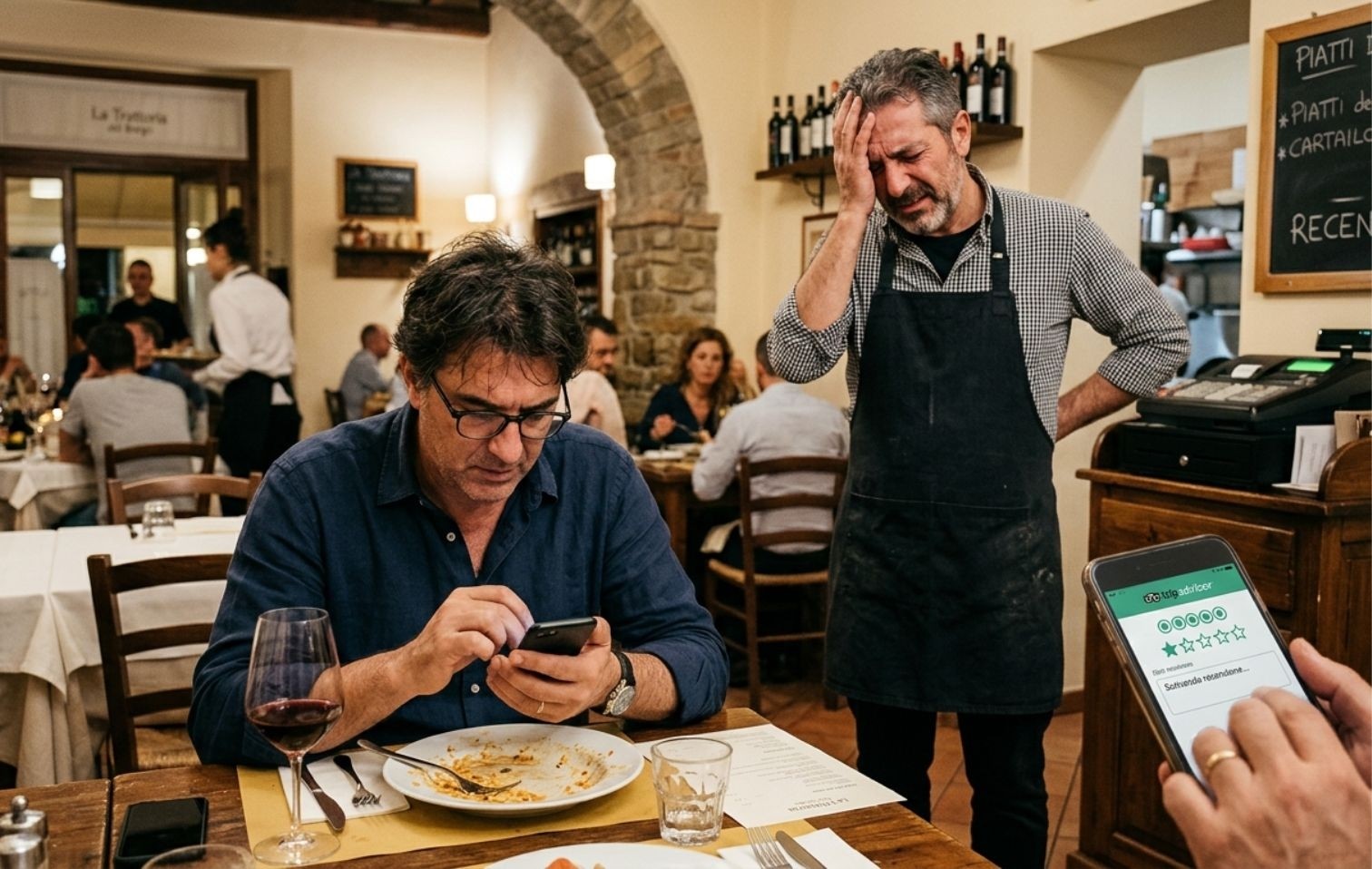
The news offers a perfect case study of this cultural clash, reported on the social media profile of Soy Camarero (a waiter who recounts the critical issues in restaurateur-guest relationships). An annoyed user posted a scathing review online, a bitter cup of gall aimed at the restaurant’s front-of-house management: “Terrible service, a so-called waitress who ignores you and prefers to clear empty tables rather than serve customers. I can’t stand this kind of staff. There are many bars like this; I foresee a bleak future for them. Time will tell. Goodbye." Words as sharp as boning knives, destined to unfairly damage the restaurant’s rating. However, in typing with excessive fervor, the author made a glaring mistake, mistaking the recipient’s name and directing his anger toward a kitchen completely unrelated to the matter.

The Restaurant Owner’s Comeback: “We Were Closed”
The restaurant owner’s response was swift, initially framed in the tone of elegant culinary bewilderment, before revealing the absurdity of the situation. With Olympian composure, the owner replied: “What you’re saying is a bit strange because we don’t have any waitstaff on our staff. For now, only waiters. Furthermore, today, Sunday, we’re closed. Are you sure you posted the review in the right section?” A perfect counterattack that froze the ambitions of the improvised critic, revealing that the targeted restaurant was actually enjoying its legitimate weekly day off.
Beyond One’s Own Backyard: A Lesson in Ethics and Solidarity
But the true masterstroke—the one that elevates the story from a mere anecdote to a manifesto of professional solidarity—came immediately afterward. Not content with having demonstrated his own complete lack of involvement, the owner chose to take a stand in defense of his unknown colleague at the other restaurant—the one where the patron had actually consumed his unsatisfactory meal. The restaurateur’s words turned into a j’accuse of rare nobility, a true lesson on how the dignity of front-of-house work must take precedence over any gastronomic pretensions: “Nevertheless, regarding the waitress at the other restaurant you mentioned… you’re rude. Who knows if it was her first day or if she was alone with people like you. You should be ashamed of writing a review like that, because it says much more about you than it does about the waitress.”
The Human Value of Hospitality
This episode, which quickly went viral, stands out as a modern-day parable. As master chef Ferran Adrià—a key figure in the global culinary revolution—often emphasized, service and hospitality hold paramount value in the industry, even “more important than the cuisine” itself. An excellent dish loses its soul if it is not underpinned by mutual human respect between those who serve and those who sit at the table. The story reminds an audience all too often accustomed to instant judgment that behind the dishes and uniforms beats the heart of a team of workers. And that, before demanding excellence in the glass or on the plate, one should demonstrate the same excellence in manners.