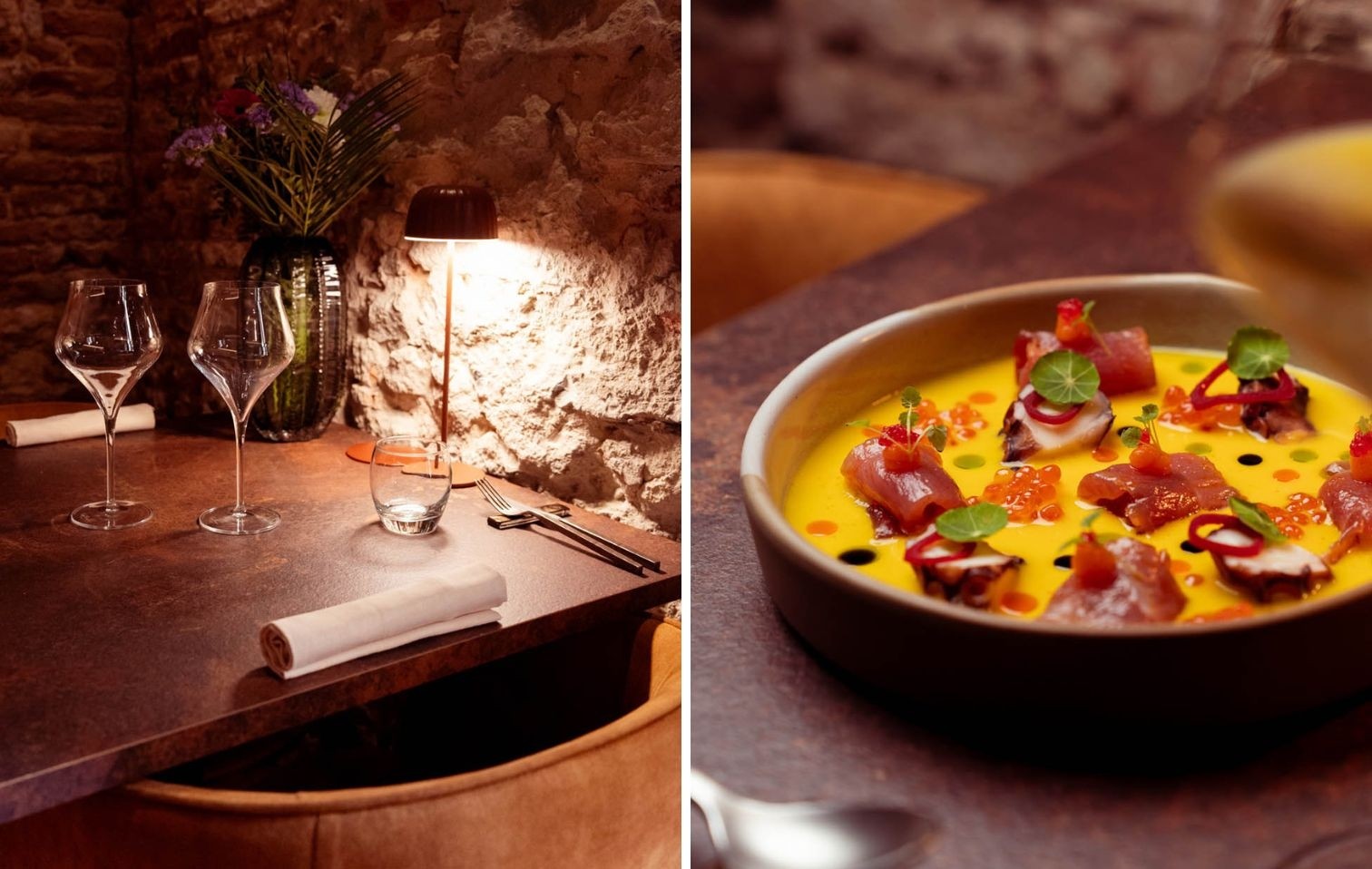
Roots, alchemy, and fire: Tumi Osteria’s new culinary journey speaks the language of the Andes and thinks in Tuscan terms. In the historic center of Pisa, Peruvian chef Luis Romero Caballero builds a gastronomic bridge between Latin America and Tuscany, transforming charcoal-grilled flavors, seasonal ingredients, and personal memories into a contemporary cuisine with a dual soul.
When was the last time you experienced something for the first time?
This question sets the stage for “Tributo,” the new culinary journey at Tumi Osteria, located at Vicolo del Tinti 15. Here, Peruvian chef Luis Romero Caballero avoids narrative shortcuts and exotic gimmicks. He crafts a personal, layered narrative where two seemingly distant gastronomic worlds coexist without overlapping. You remain in Tuscany, yet you traverse the Andes. You stay seated, yet you travel. And yet, despite precise service, meticulous plating, and top-tier tableware, Tumi Osteria eschews the most rigid conventions of fine dining. No icy distance, no minimalist refinement. The portions are generous, sometimes opulent, consistent with the “osteria” that the restaurant’s name clearly claims. The technique is evident, but it does not translate into extreme minimalism. Here, you truly eat, and you share.
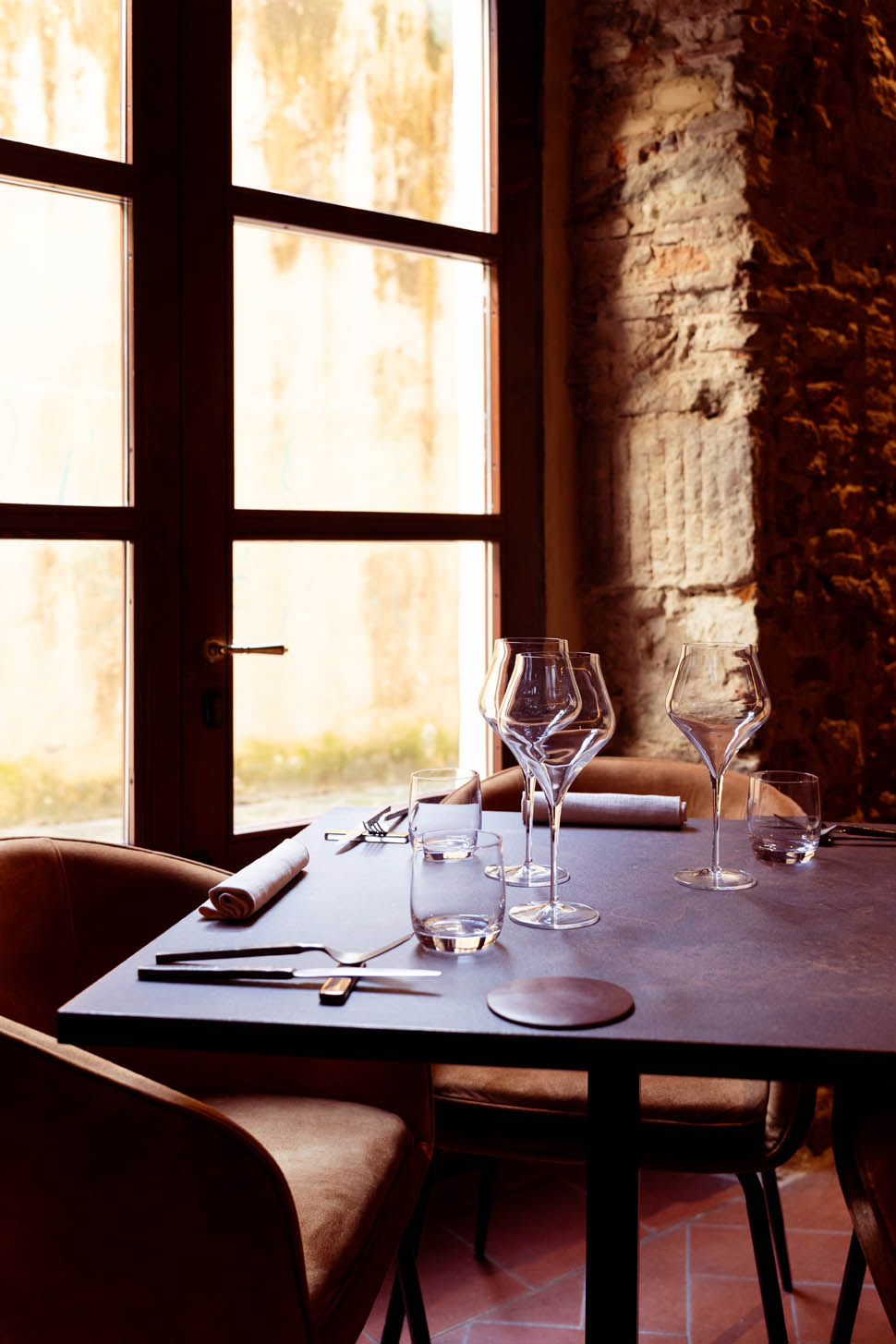
“Our menu represents the connection between two lands, distant yet not so different. Our goal is to make everyone feel equal around the table, where we can sense the essence of both worlds through roots, alchemy, and fire. These three elements tell a single story: where we come from, how we transform, what animates and drives us,” explains the chef.
Herbs, grasshoppers, memory
The amuse-bouches immediately set the tone for the restaurant. The emollient potion—boldo, flaxseeds, pineapple peel, uña de gato, erba Luigia, inka muña—introduces an aromatic profile far removed from Italian conventions. It smells of Andean markets and ancestral remedies, leaving a balsamic and bitter trail that cleanses the palate and prepares it to listen.
The black cabbage leaves with tamarind and chapulines take center stage without any unnecessary fanfare. The toasted grasshoppers offer crunch and depth, reminiscent of roasted nuts. The tartness of the tamarind and the vegetable bitterness of the cabbage keep them in balance. This is one of those dishes that expands the boundaries of taste without needing any special effects. In other words: a first for many, which surprises above all for its simplicity. The homemade bread with Andean herb yogurt brings everything back to a fundamental gesture so dear to Tumi: “compartir”. Fragrant crust, springy crumb, lactic freshness, and herbaceous notes that linger on the palate. The bread becomes the centerpiece of the table, an element of identity, not merely an accompaniment.
The dishes that linger
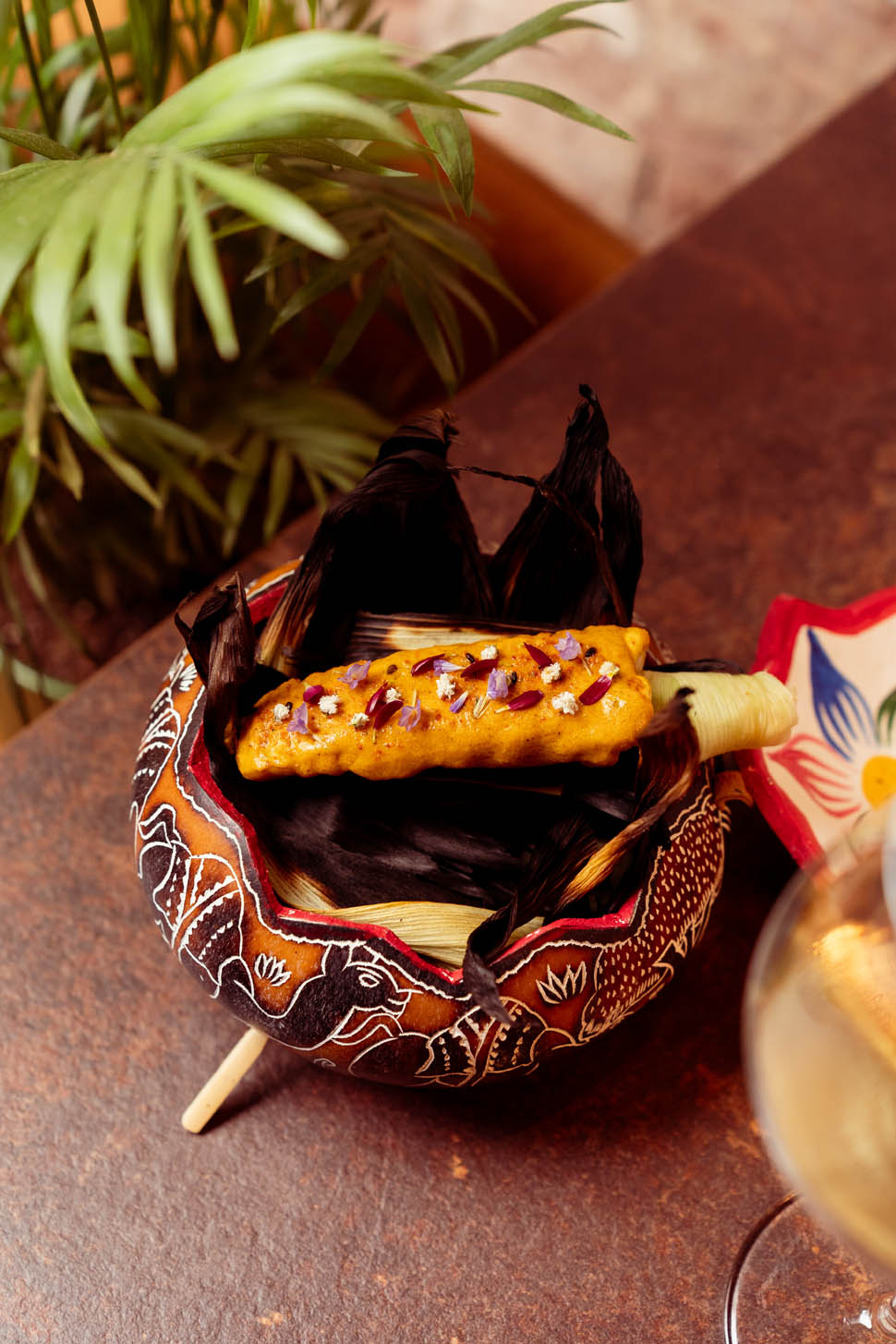
The grilled choclitos with mole de ají mirasol and togarashi are an effective synthesis of Romero Caballero’s culinary philosophy and that of his team, led by Cesar Ivan Tenorio Cubas. The corn, marked by the fire, releases toasted sweetness that deepens within the mole. The togarashi adds a subtle, never-overpowering touch.
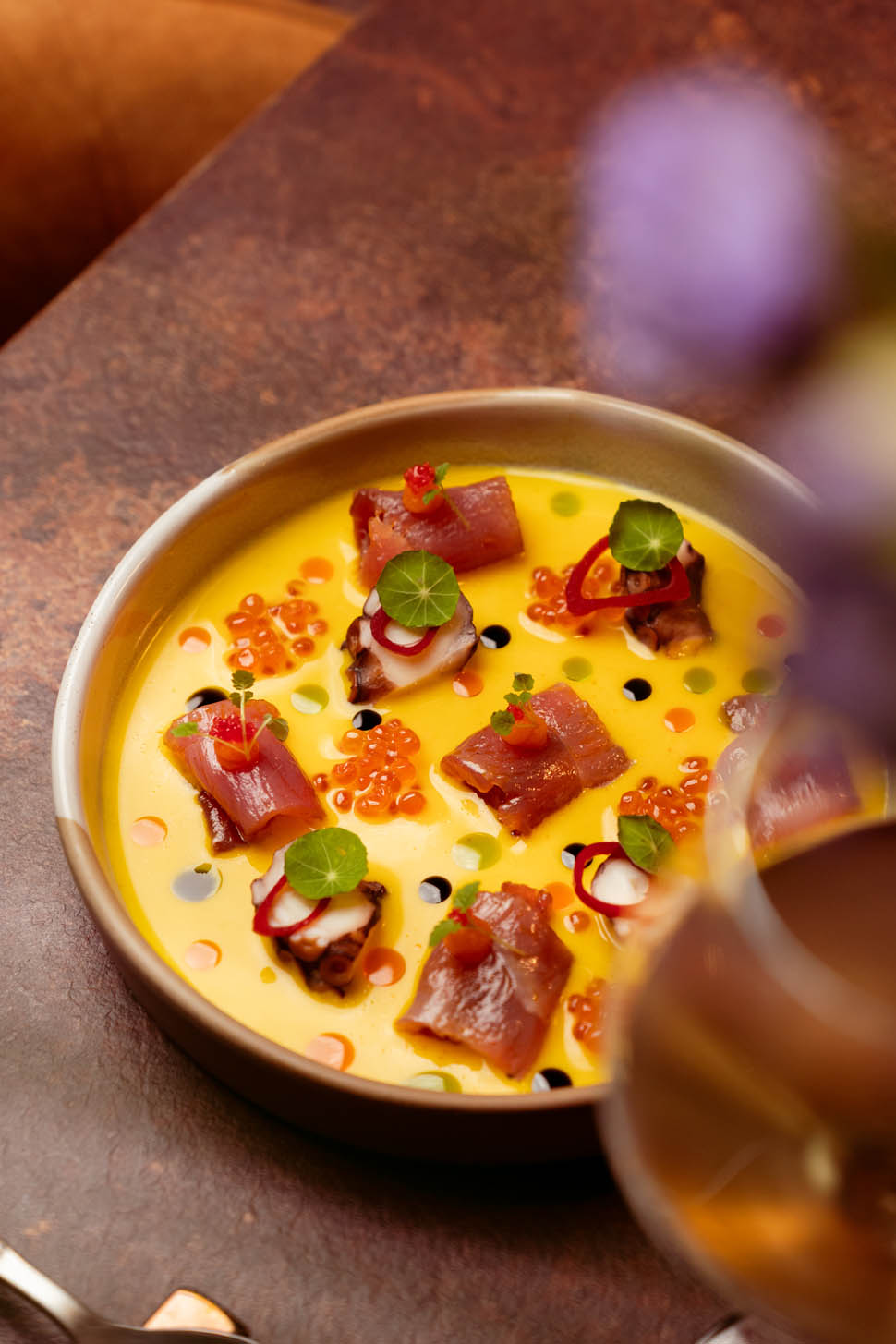
The Venison tartare is one of the highlights of the menu. Precisely cut, raw meat, a kimchi dressing that introduces fermentation and a tangy acidity, curado egg yolk to add richness, and a herb gel to restore freshness. The forest and the cellar of fermentations engage in a measured dialogue. The Ceviche of croaker, octopus, and sea cucumber, with pomegranate and rocoto leche de tigre plays on calibrated contrasts. Citrus acidity meets a bitter note of cocoa, while the rocoto imparts a progressive, fragrant heat. A thoughtful reinterpretation, with the unexpected addition of sea cucumber. Then comes the Bomba rice paella with chicken hearts and gizzards and beef heart. Now the cuisine becomes more carnal. The offal is treated with technical respect and without rhetoric. The grains remain separate, the broth is deep, and the charcoal reaffirms its centrality as a primordial gesture.
Playing with Fire
The Lamb chops marinated in eggplant yakiniku sauce with ash purée bring the savory course to a close with a deliberate sense of controlled combustion. The sauce, Japanese-inspired yet filtered through a Latin American lens, envelops the meat with measured sweetness and toasted notes. The ash purée transcends mere presentation and becomes an integral part of the dish, enveloping the chops with a clean, smoky note that amplifies their depth. The meal concludes with a selection of grilled cheeses and Arroz con Leche, a great classic on Latin American tables.
Liquid Alchemy
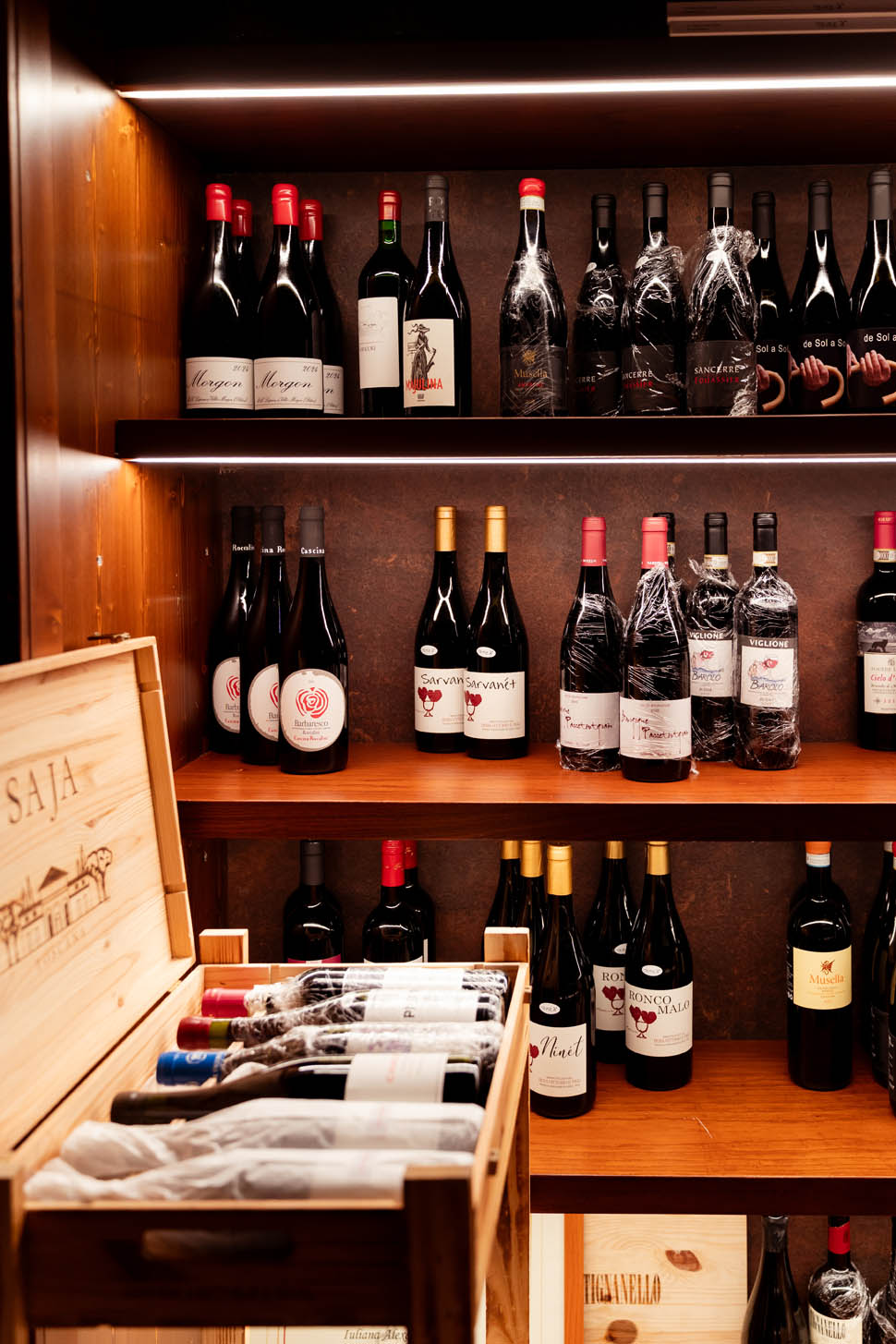
While the kitchen focuses on roots and fire, Alexandra Dinu in the dining room works her magic. The “Alma” project pairs each dish with a dedicated infusion: cedron with pineapple peel on the Choclitos, hierba buena with hibiscus flower on the Tartare, warm pisco with passion fruit on the Ceviche, muña on the Paella, valerian with orange blossom water on the finale. Not mere herbal teas, but tools for harmonization. Temperatures and intensities are calibrated to amplify or contrast. The result is a continuous dialogue between solid and liquid, between warmth and freshness, extending the narrative beyond the plate. Tumi Osteria draws on a personal memory rooted in the Tuscan land, finding a common language in the embers. Fire itself becomes the element that bridges distances and transforms roots into a meeting point. As if we were all gathered around the same hearth, from Tuscany to Peru.
Contact
Tumi Osteria
Vicolo dei Tinti 15, Pisa
Tel. 050 520 1811