Precision and a clear expression of local identity—not merely a hollow slogan, as is all too often the case. Riccardo Bacciottini’s cuisine surprises with its consistency and freshness, as well as its distinct character. All this in a peaceful setting that nods to the contemporary.
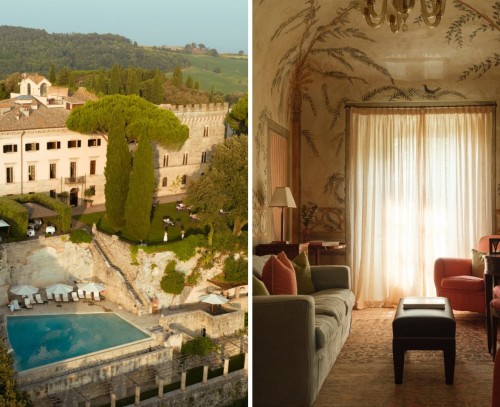
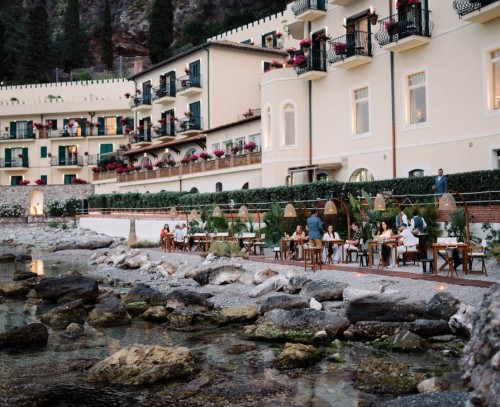
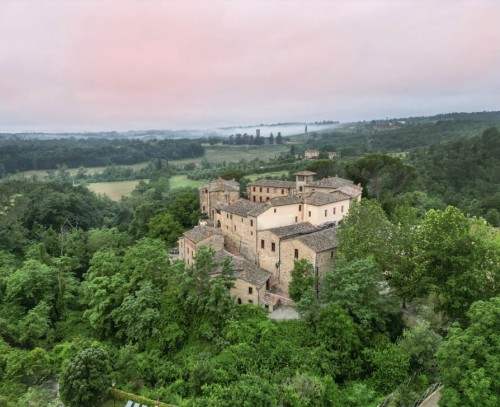
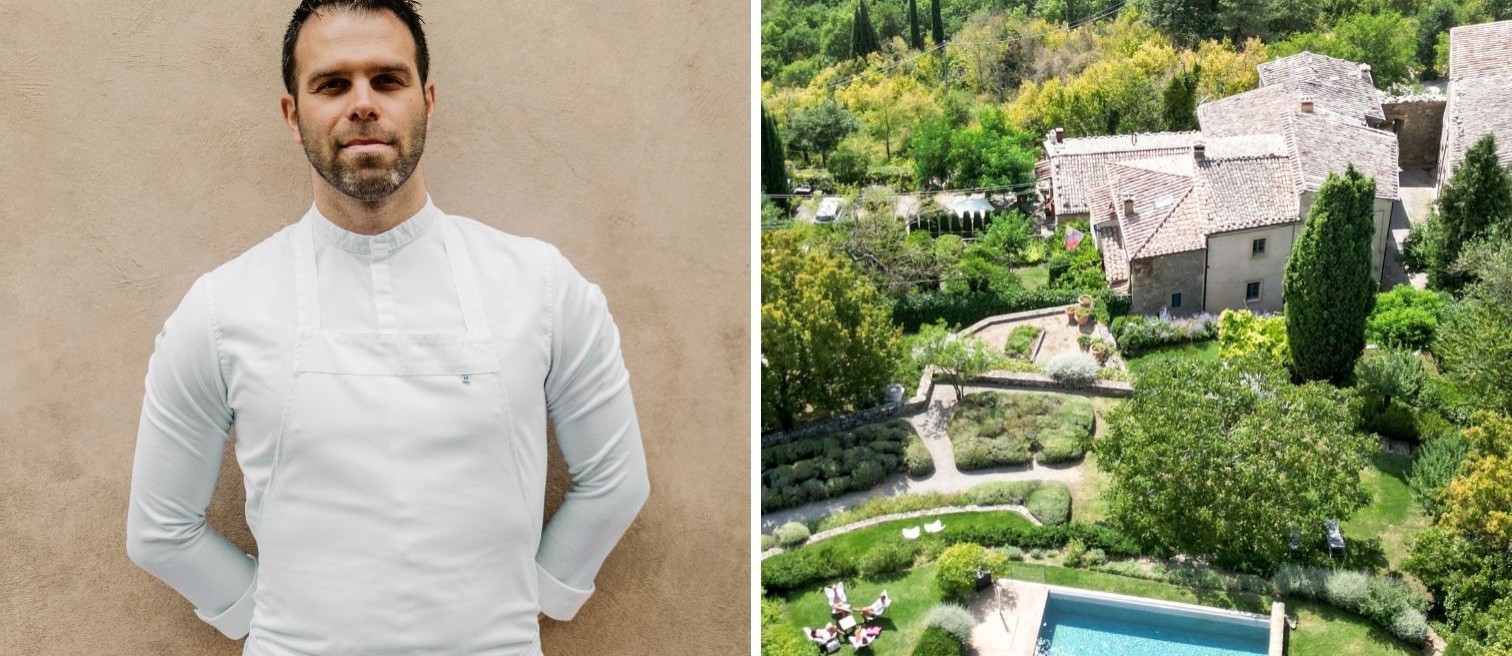
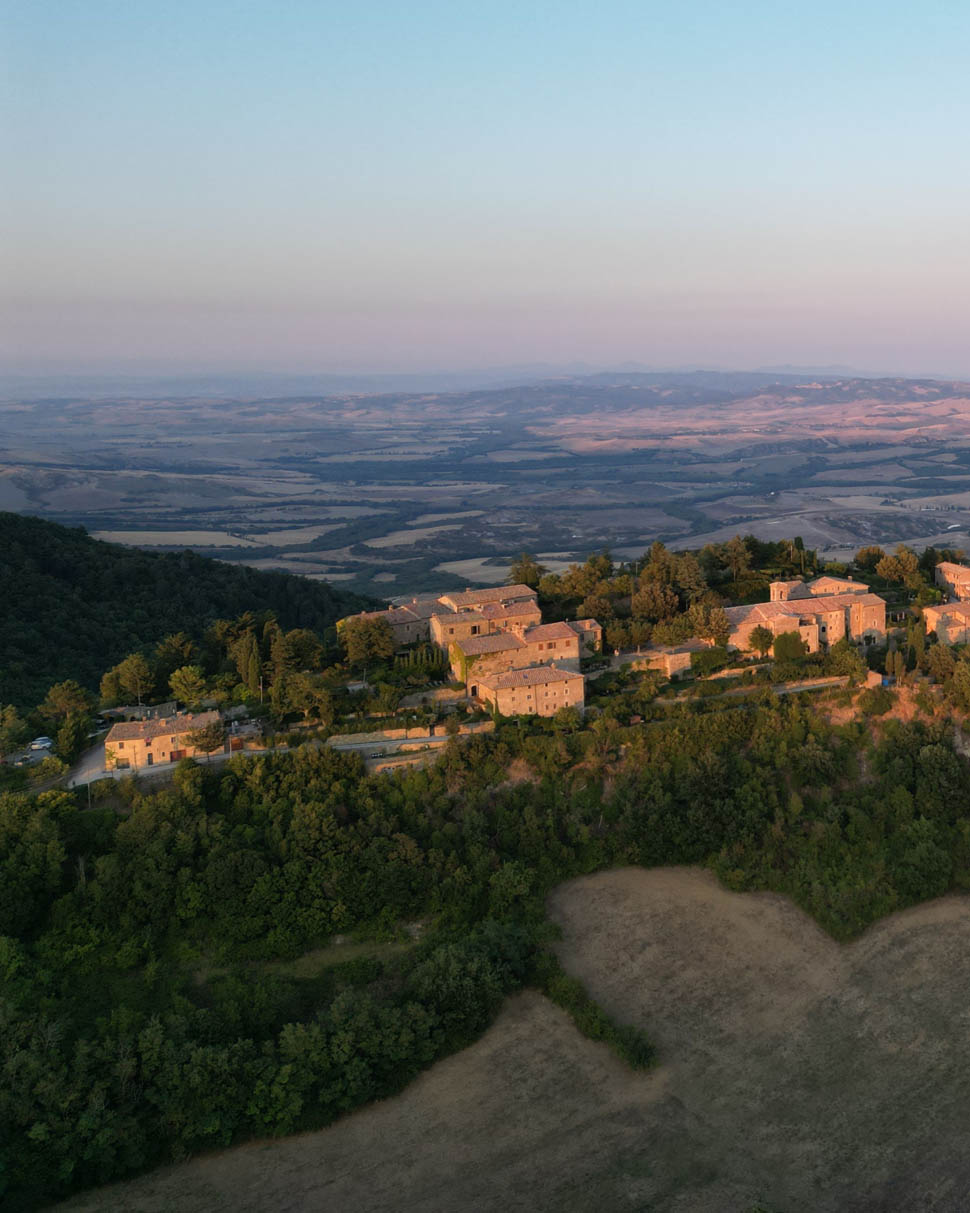
Imagine losing yourself between the Val d’Orcia, on its southern edge, and the Val di Chiana, traveling along a dirt road that opens up to natural landscapes of breathtaking beauty, until you reach Castiglioncello del Trinoro, a charming little ancient village just under 800 meters above sea level. Michael L. Cioffi, an American business lawyer, arrived there in 2003 and immediately fell in love with the place, a passion that led him to open Monteverdi Tuscany in 2012—now a two-Michelin-starred restaurant—preserving Castiglioncello from depopulation through a combination of a “diffused hotel” concept and residential restoration.
The Hospitality Concept
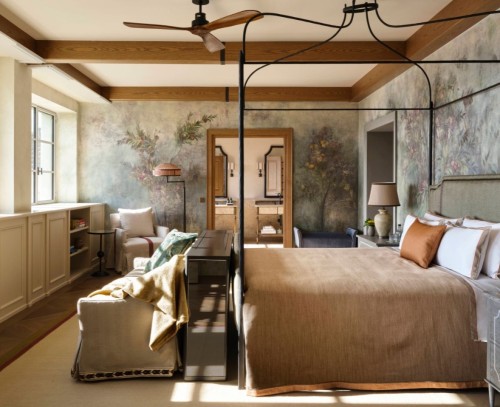
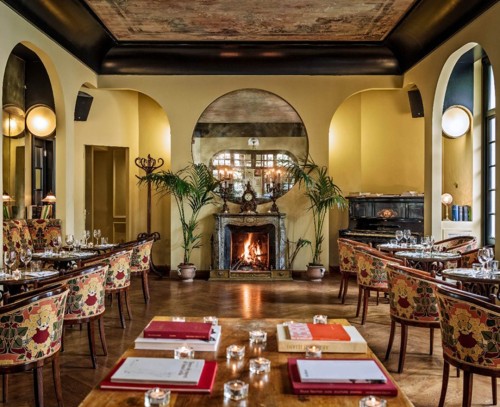
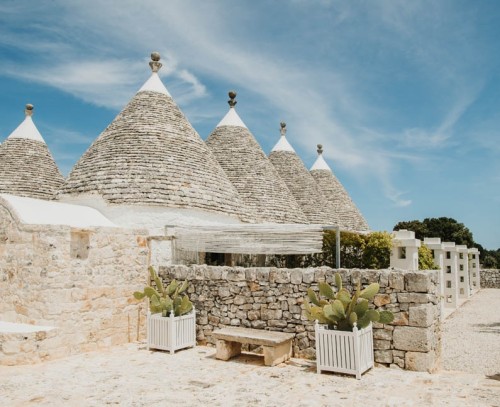
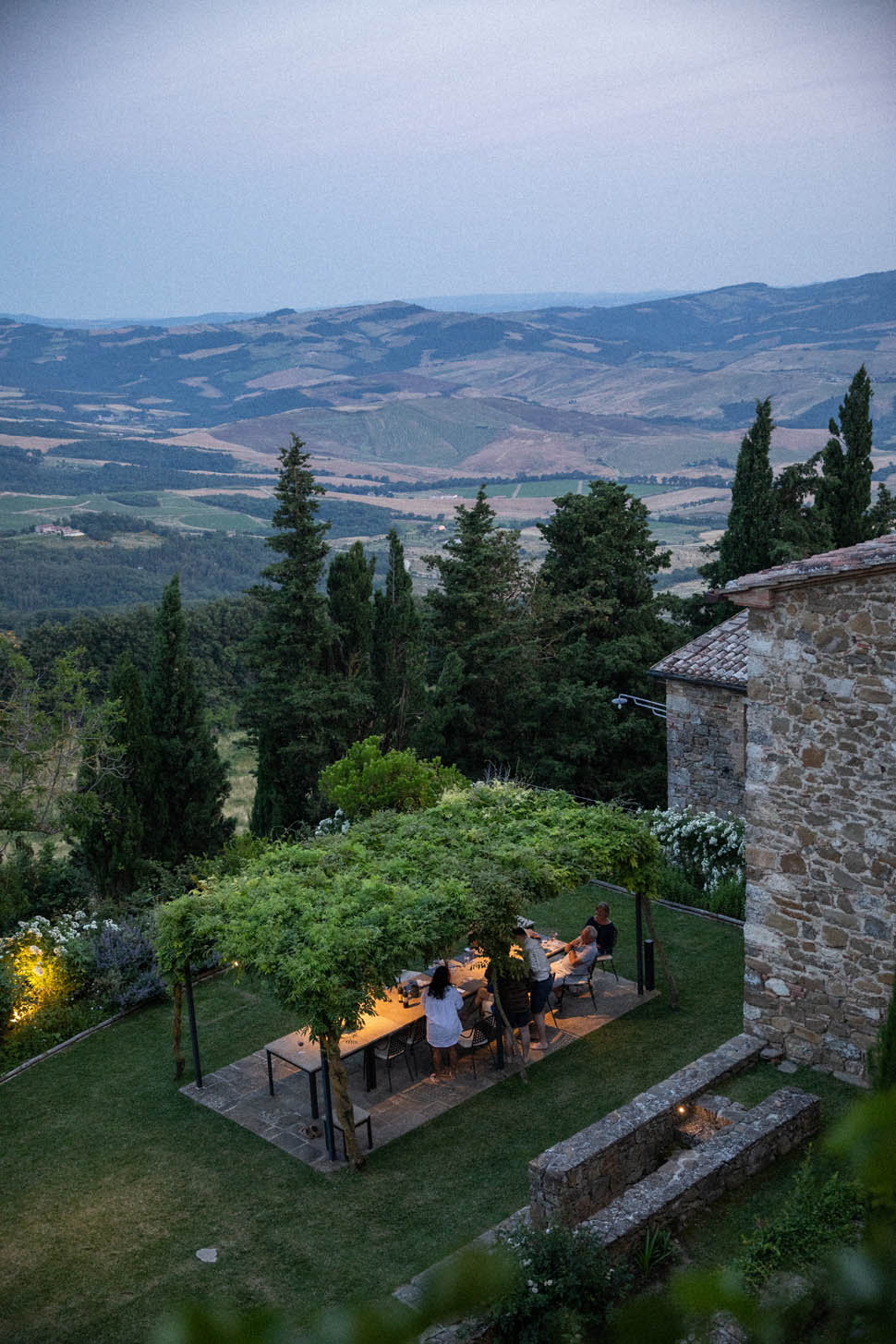
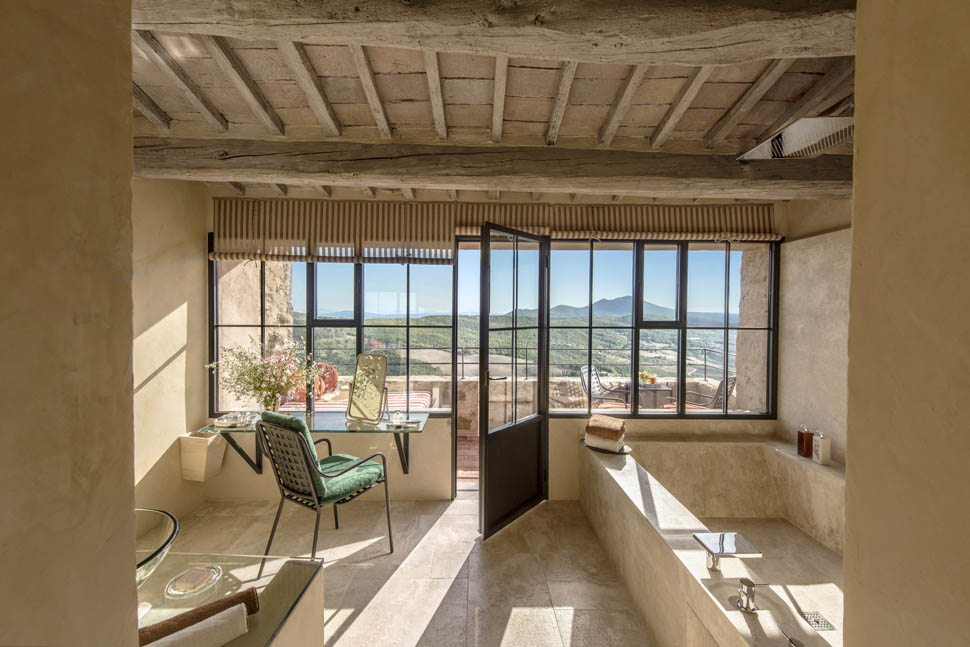
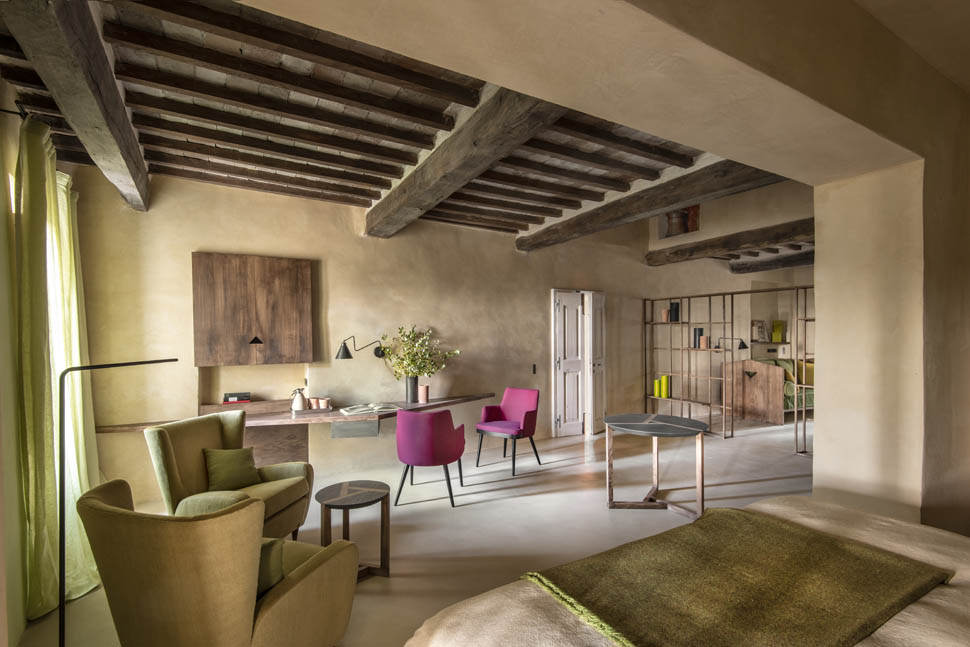
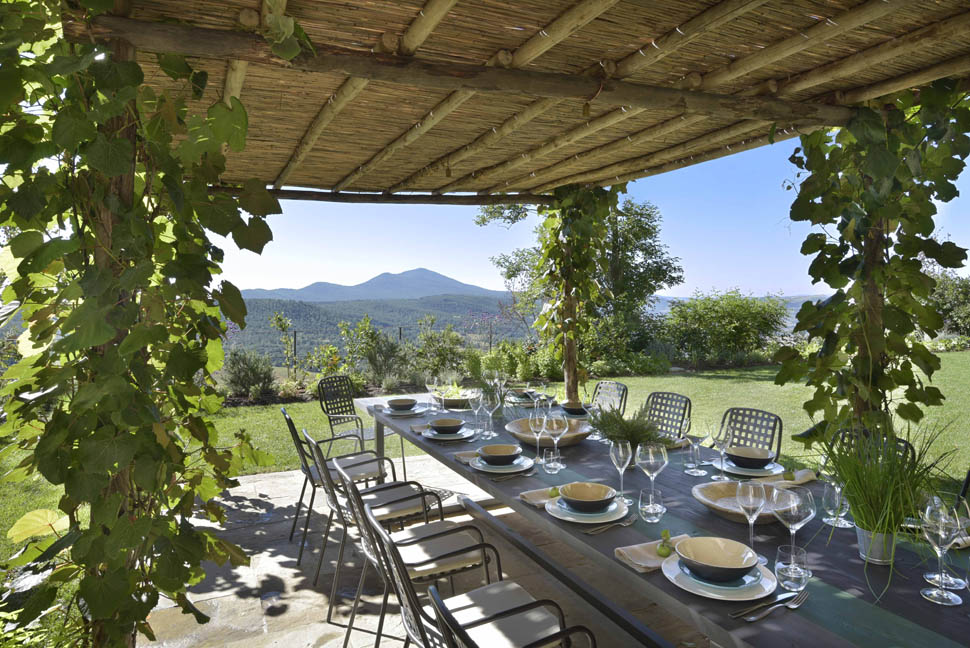
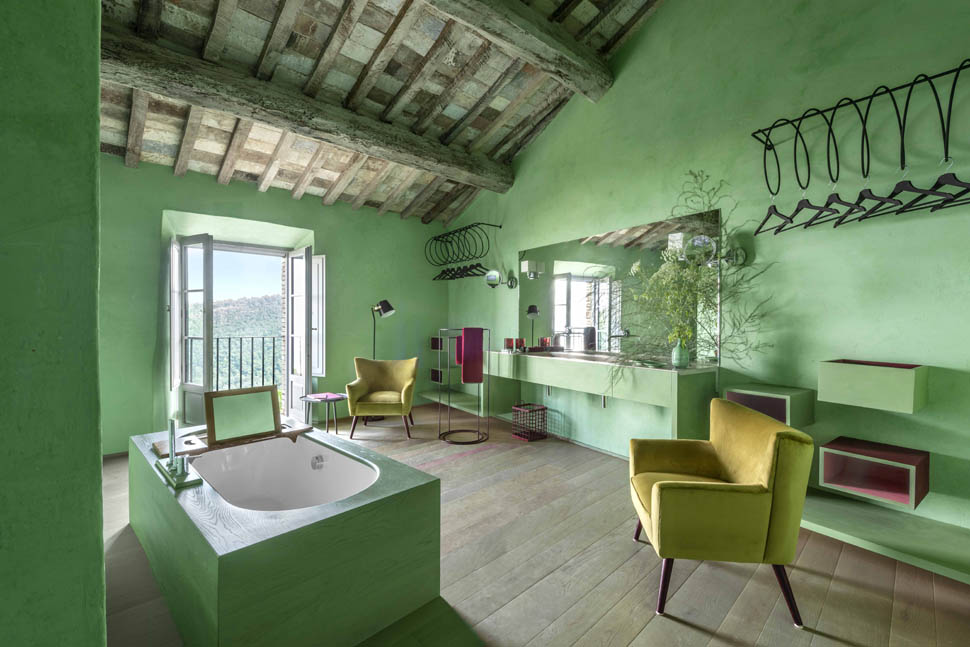
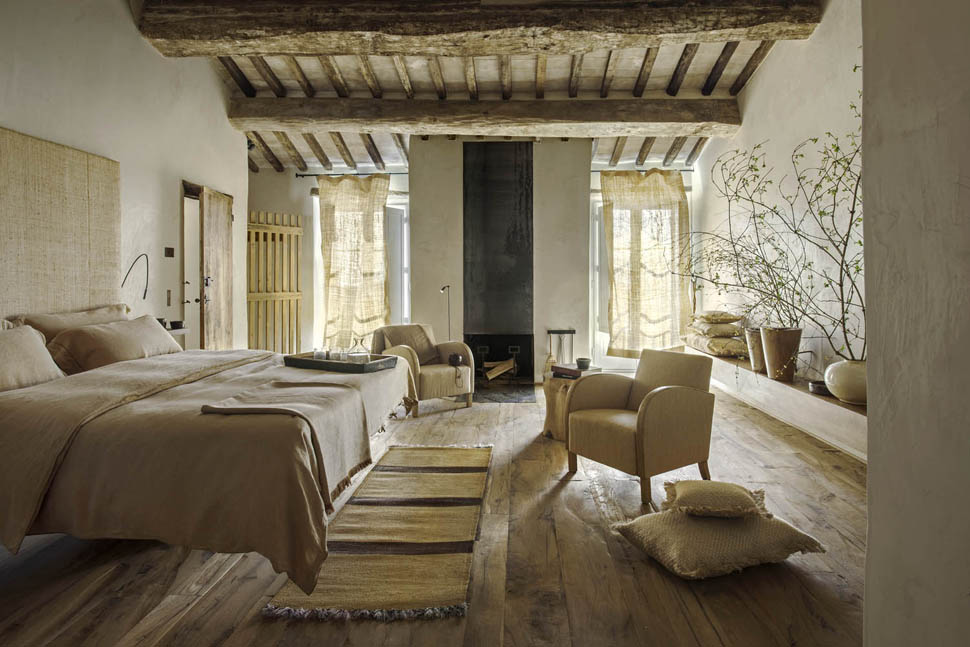
What stands out in this place of peace and elegance is a masterful blend of original architectural elements (the archaeological site of the ancient castle has also been restored) and contemporary comfort, allowing the hustle and bustle and stress to fade away as you surrender to the invigorating air of the high hills. While Ilaria Miani, the Roman designer responsible for a meticulous and historically accurate restoration, oversaw the 30 rooms of various types and the three private villas, the work on the common areas—including the fine-dining restaurant Oreade, Osteria Zita, and the small, picturesque art gallery—was handled by Foster + Partners, one of the world’s most prestigious architecture and design firms.
Time flies by surprisingly quickly, because there is so much to do. Just to give a few examples: in addition to letting your gaze wander toward the horizon while admiring the unspoiled beauty, the walk leading to the magnificent beech forest of Pietraporciana offers a couple of hours of immersion in the Val d’Orcia Natural Park.
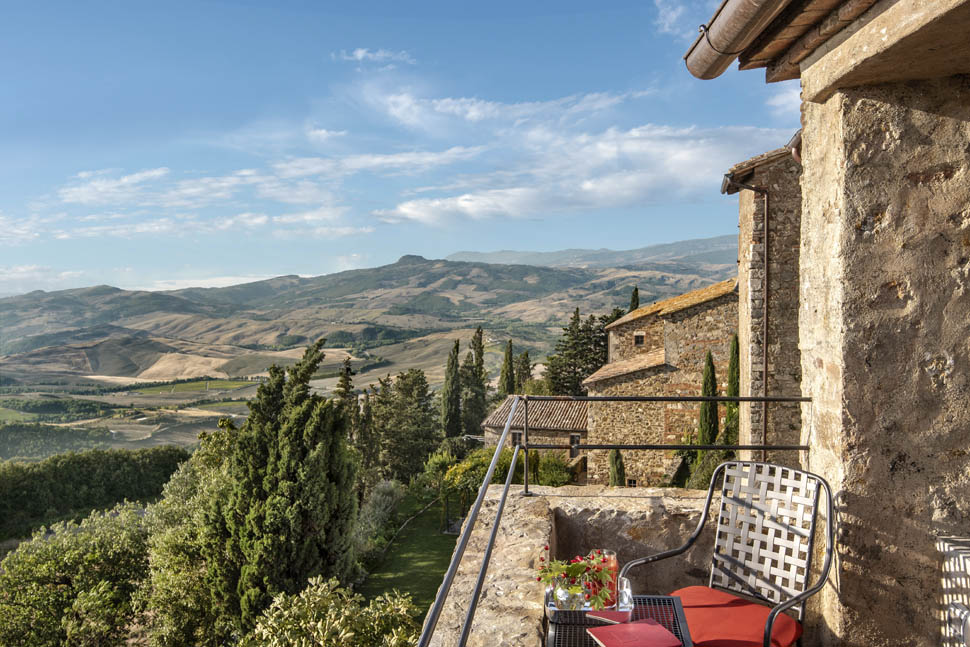
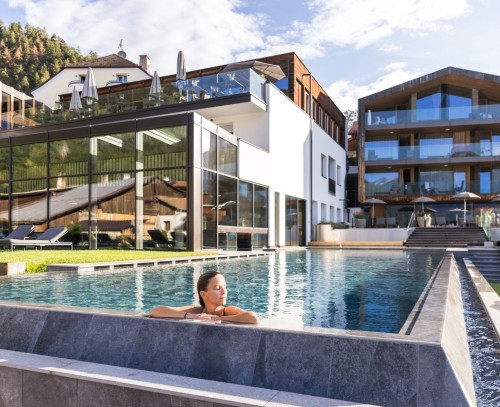
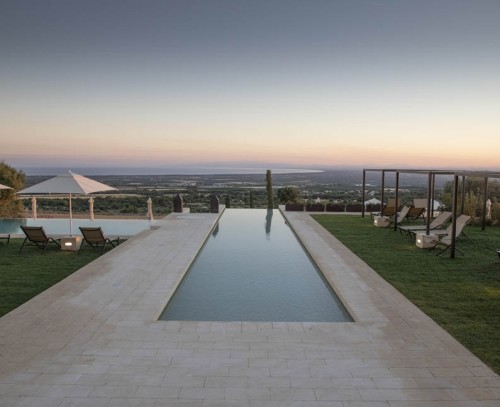
Those who prefer to take it easy can relax in the infinity pool overlooking Mount Amiata, or enjoy the small, delightful SPA with a circuit inspired by Roman baths, or simply pamper themselves with a treatment. We were lucky enough to attend a splendid chamber music concert among those periodically organized by the resort: the summer program includes performances by young musicians from the Lindemann Young Artist Development Program of the Metropolitan Opera, who will stay in the village for rehearsals and study and will perform in the Romanesque church of Sant’Andrea. In short, there’s no way to get bored.
The Culinary Offering
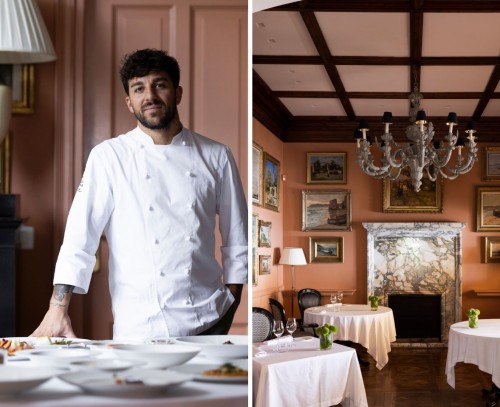
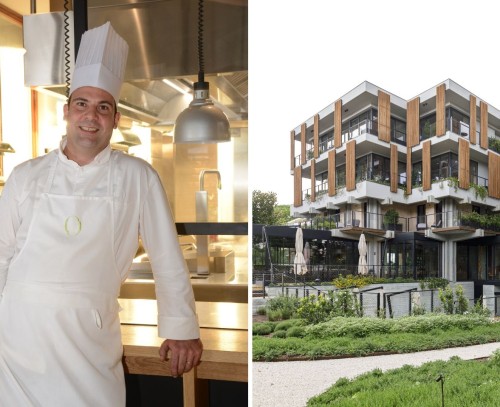
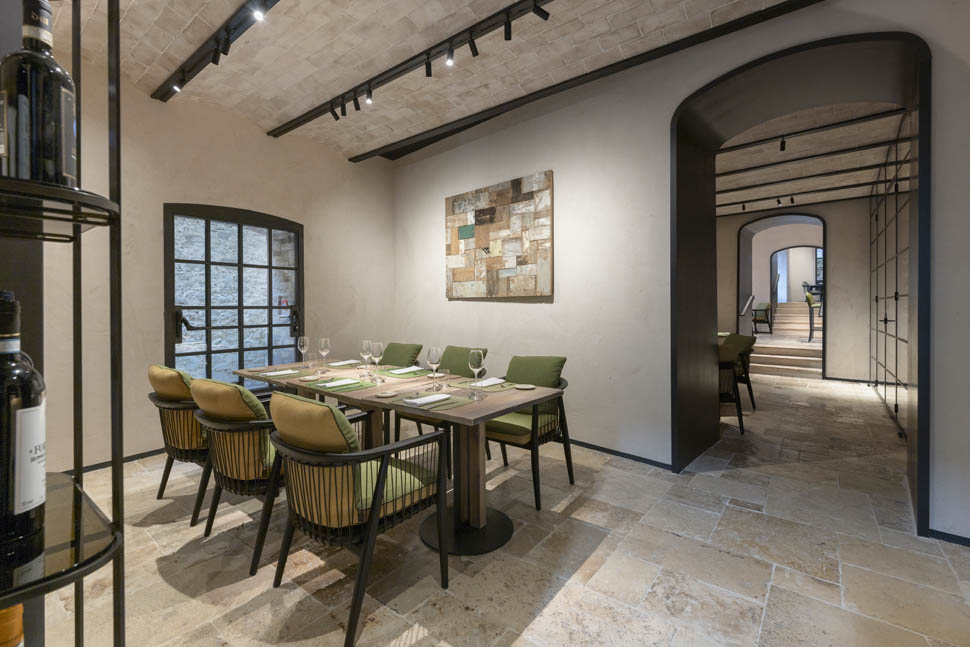
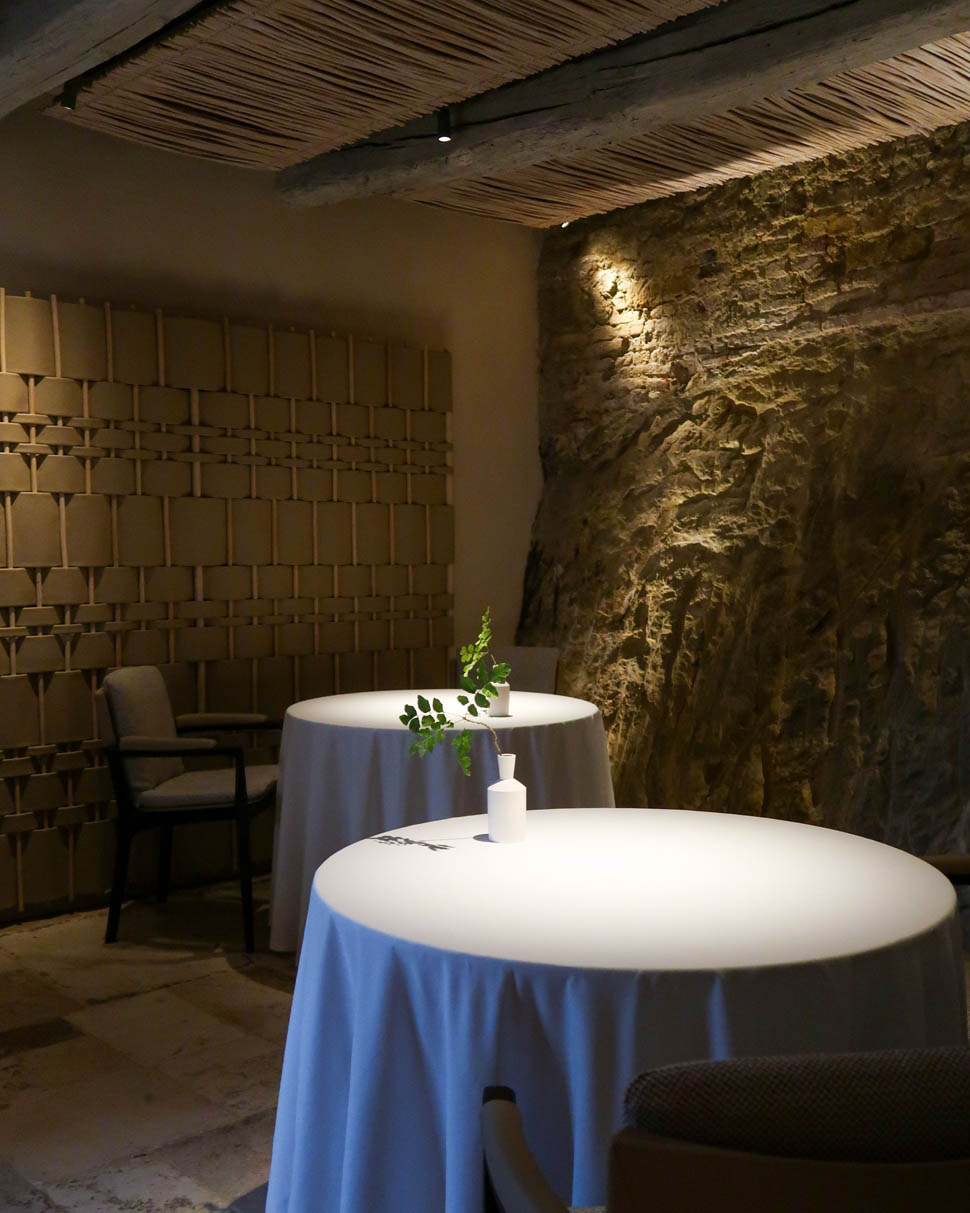
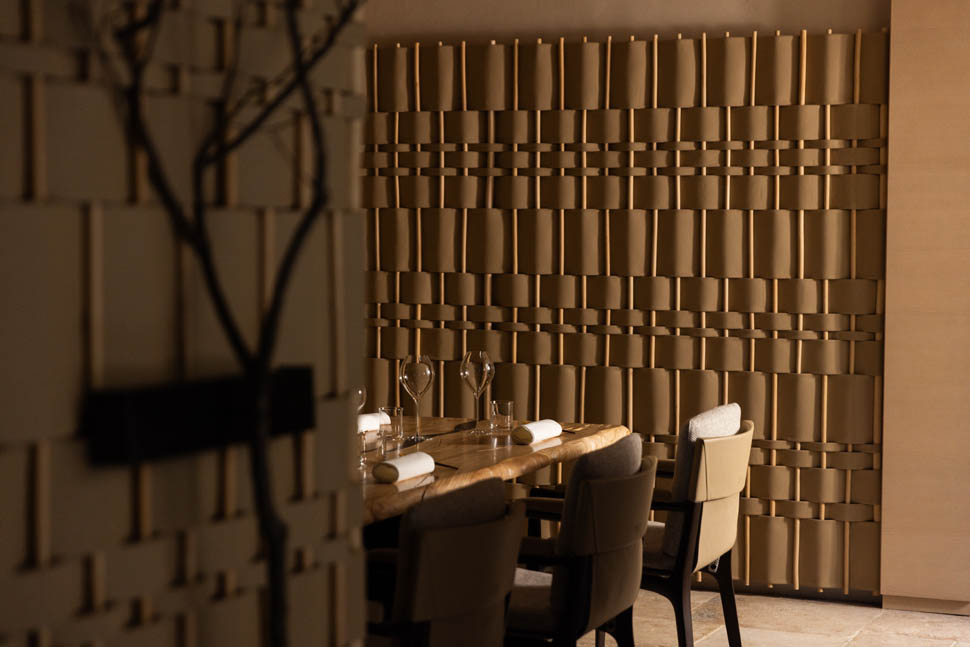
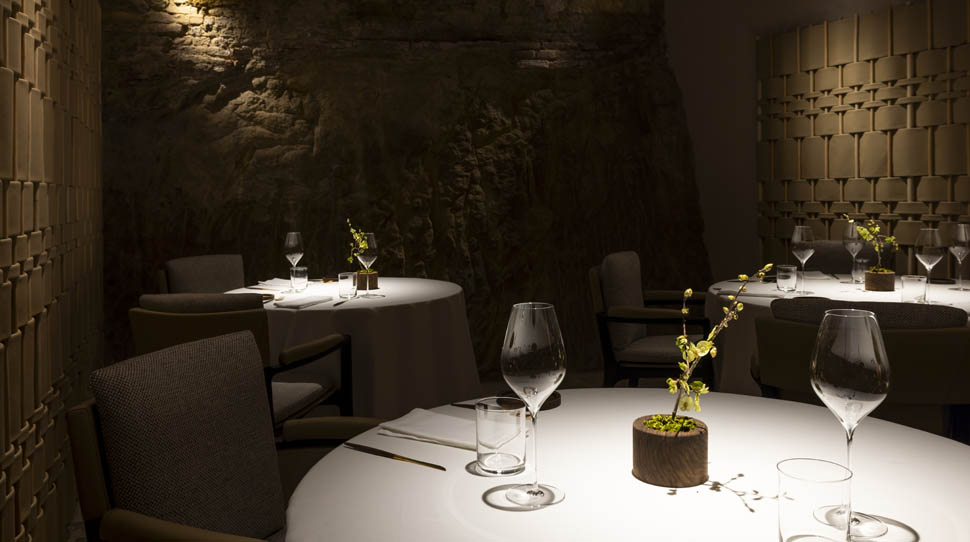
It goes without saying that Monteverdi Tuscany aims high when it comes to cuisine. And it has every reason to, with a professional like executive chef Riccardo Bacciottini overseeing a comprehensive offering that includes a culinary academy, as well as Zita, an all-day dining venue open from breakfast through dinner featuring a selection of traditional Tuscan cuisine executed to perfection; then there is Oreade, a recent and ambitious fine-dining project with 14 seats in a setting of understated sophistication, whose name evokes the mountain nymphs of Greek mythology. The interior design was created in collaboration with local artisans, drawing inspiration from the “arte povera” style of the 1960s and 1970s; more than 90% of the materials—including wood, fabrics, and reclaimed elements—come from within a 100-kilometer radius of here.
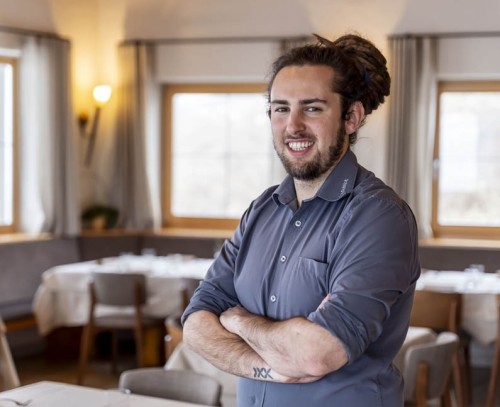
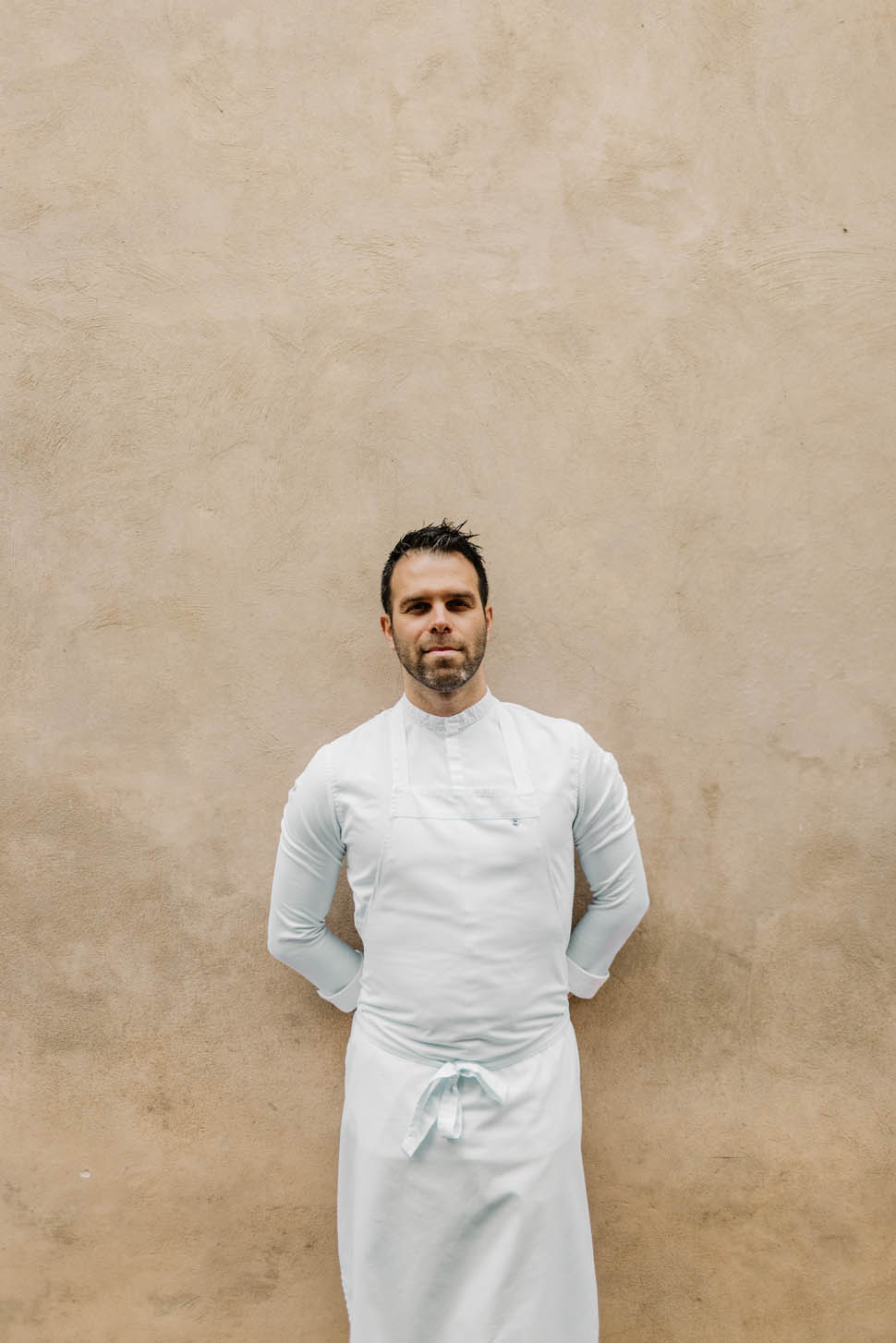
Bacciottini, born in 1990, is originally from Poggibonsi: “The landscapes here are similar to the ones I find here in Val d'Orcia. I've been surrounded by woods since I was born, and this place reminds me a bit of home.” In reality, the chef, making his debut, has a deep conviction: “I love my homeland, but after finishing school I felt the need to move on; there was this idea that if you wanted to learn to cook, you had to go to Paris. And so it was, for my first experience with Edoardo D’Alto, a student of Gualtiero Marchesi, even though that city couldn’t offer much to an 18- or 19-year-old. So I moved to London and had a tremendous experience there with Gordon Ramsay for about two and a half years: it was one of the best experiences I’ve ever had.”
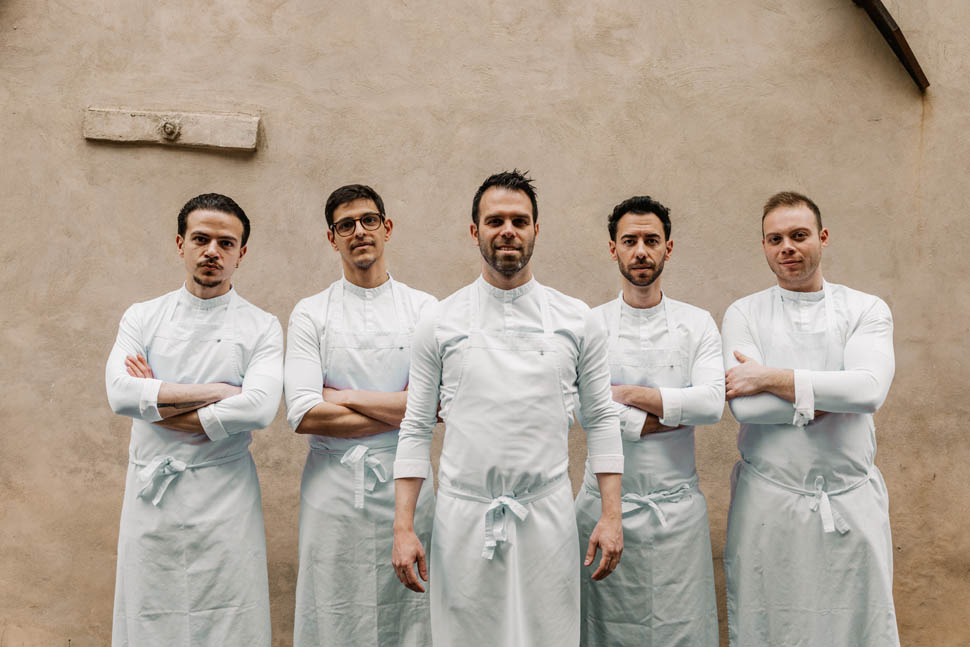
He stayed in London with Jason Atherton at Marina Solstice and then flew to Dubai, until “the opportunity at Noma came up, so I spent more than two years between Copenhagen and Mexico for the Tulum pop-up. I was lucky enough to work on Noma version 0.1, then I returned to Copenhagen for the opening of 2.0.” But the call of home grows stronger: “It’s nice to meet people, nice to see new things, but in the end, home is home—even though when I left, I said I’d stay abroad. My emotional ties began to take shape, and so I came back.” Before arriving here, Bacciottini spent five years at Castello di Velona: “Monteverdi captivated me right away because, talking with the owner, we found we were very much on the same page—with the same ambitions and the same determination—so I accepted the job. It’s been three years, and I’m very satisfied.”
Key figures alongside Bacciottini are Giuseppe Iannicelli, a maître d’ with a ready smile and great expertise, and Adriana Valentini, the wine director who has crafted a wine list of impressive depth, featuring 450 labels. In addition to a significant selection of Tuscan, Italian, and international wines, the list includes those from Tenuta Valdipiatta, a Montepulciano-based winery recently acquired by Cioffi. The cohesion of the kitchen team and the harmony with the dining room are fundamental: “Many of them have been with me since my time in Montalcino—six years with some, seven with others. Being fortunate enough to retain key members of the team year after year is of immense value. It’s also a relationship of mutual trust: when everyone embraces the project together, it becomes theirs as much as the chef’s. You can feel it in the relationship with the dining room as well: there’s a wonderful synergy.”
Precision and a sense of place expressed clearly—not merely stated as a meaningless slogan, as is all too often the case—is what makes Bacciottini’s cuisine so surprising for its consistency and freshness, as well as its distinct identity: “I have a close connection to the mountains and their history, so I try to bring that into my dishes too, through little stories and anecdotes. We have a lot of fun.” And we have fun with him, during a dinner of surprising finesse, starting with a series of exquisitely crafted amuse-bouches that can precede one of the two tasting menus, both offered at 150 euros (Vegetable Discovery or History and Territory), but also by selecting 4 dishes at 100 euros from each of the two.
The dishes
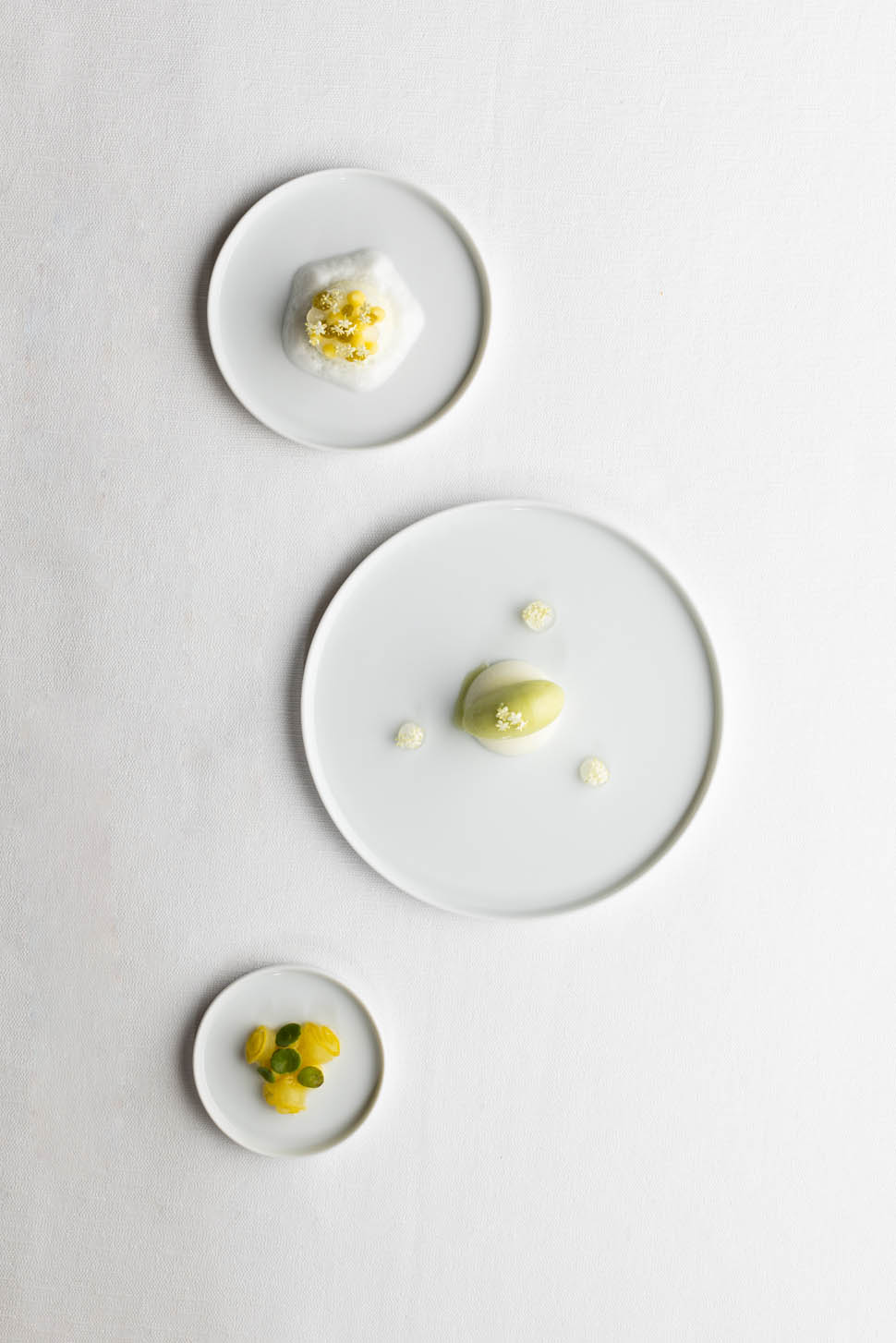
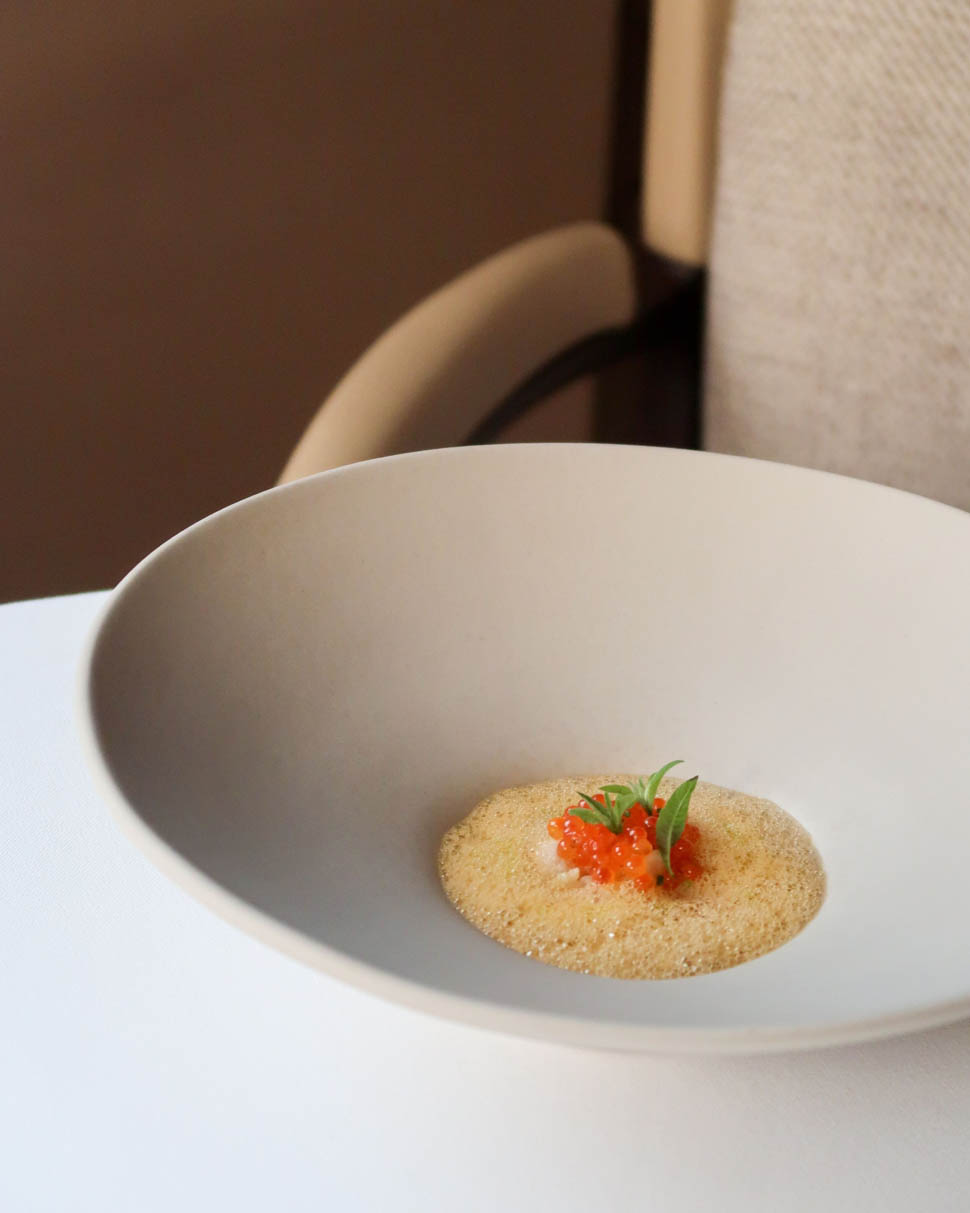
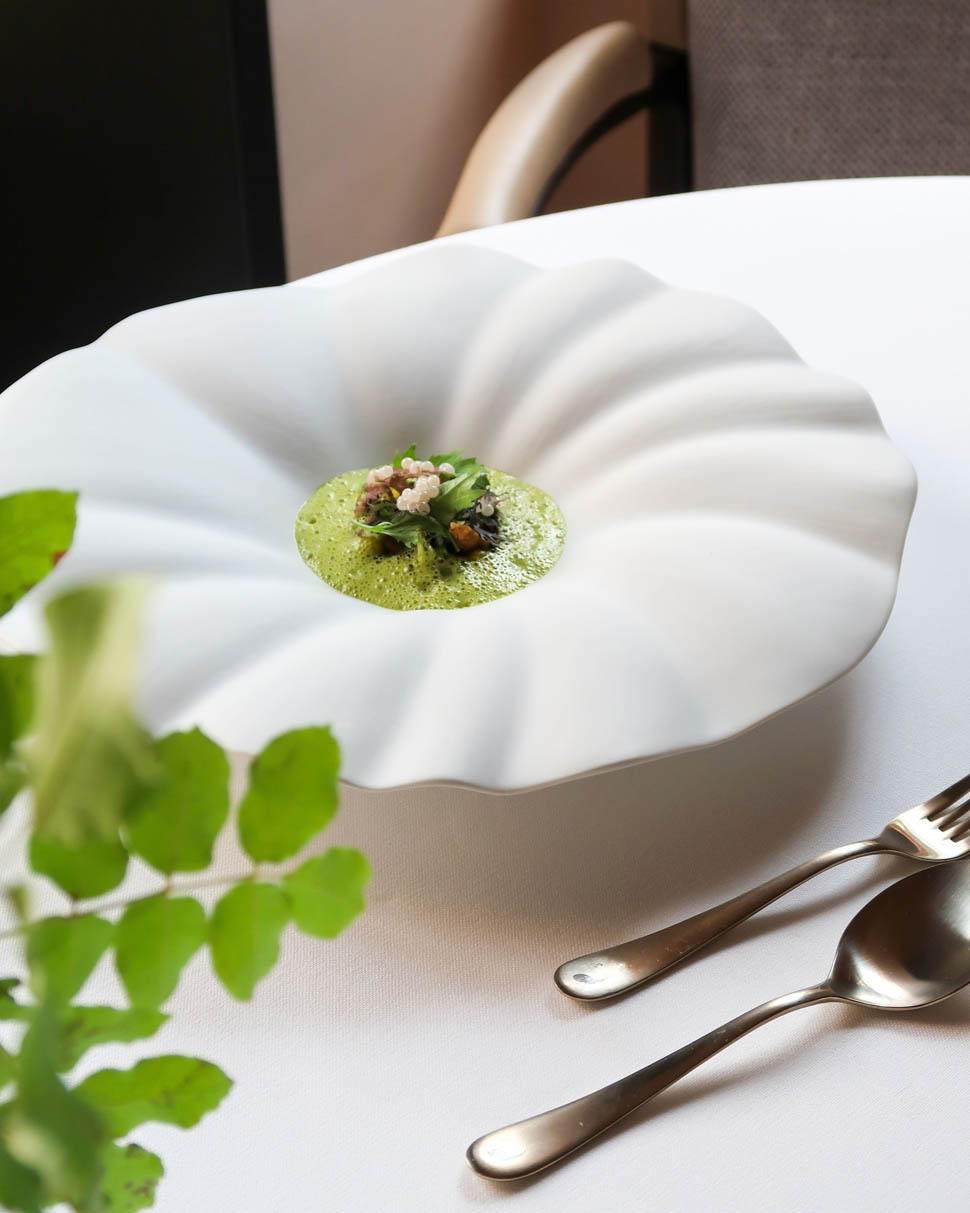
We began with ‘asparagus’: “linked to the myth explaining the birth of spring, also depicted by Gian Lorenzo Bernini in *The Rape of Proserpina*.” In ancient Greece, it is said that when Persephone (Proserpina), daughter of the earth goddess Demeter (Ceres), was abducted by Hades (Pluto), her mother stopped the fruits of the earth from growing, the fields withered, and the world entered winter. Only when mother and daughter were reunited did the earth begin to breathe again, and shoots emerged anew from the soil. We drew inspiration from this story to depict the first awakening of the Val d’Orcia, when the timid tips of this vegetable emerge from the cold surface of the earth. The asparagus is first cooked sous vide, then grilled over charcoal and glazed with lacto-fermented koji, served with hollandaise sauce and daikon marinated in chamomile. Deliciously refined. We continue with the flavorful smoked eel, apple, and dill salad, complemented by a soup of wild field herbs that vary depending on availability: in our case, dandelion, wild fennel, and wild parsley. The dish is finished with dill oil and caviar to accentuate the savory and aromatic notes.
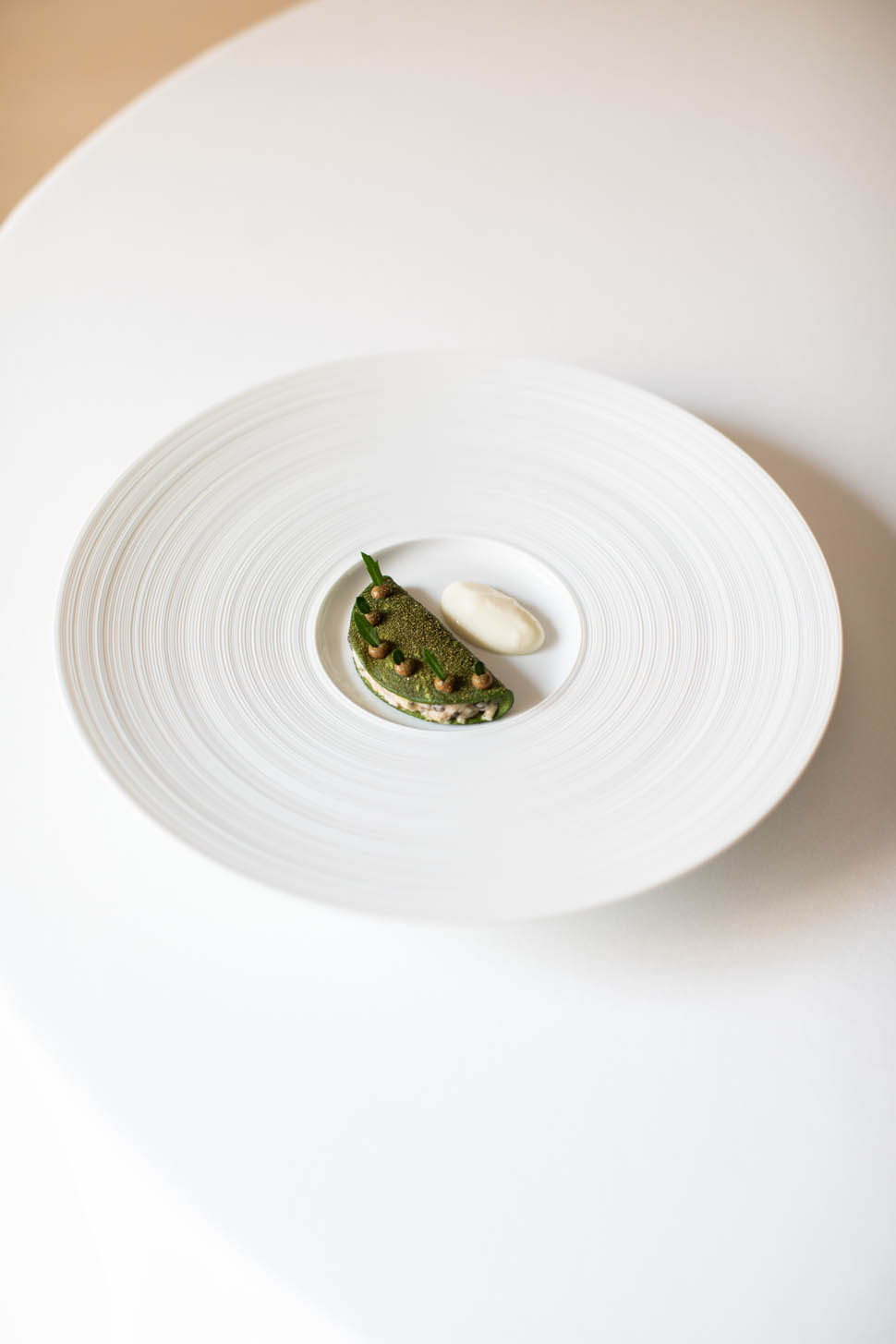
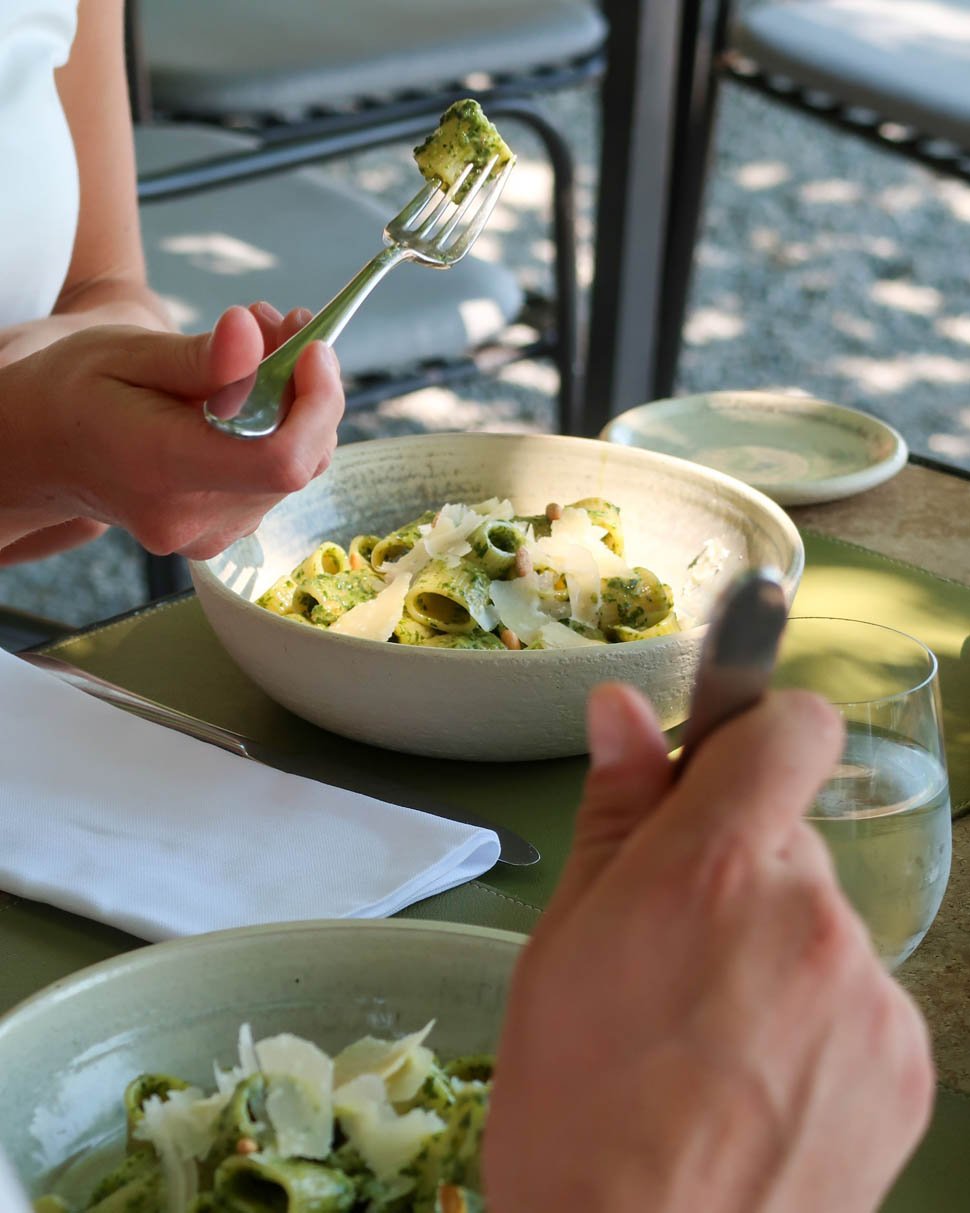
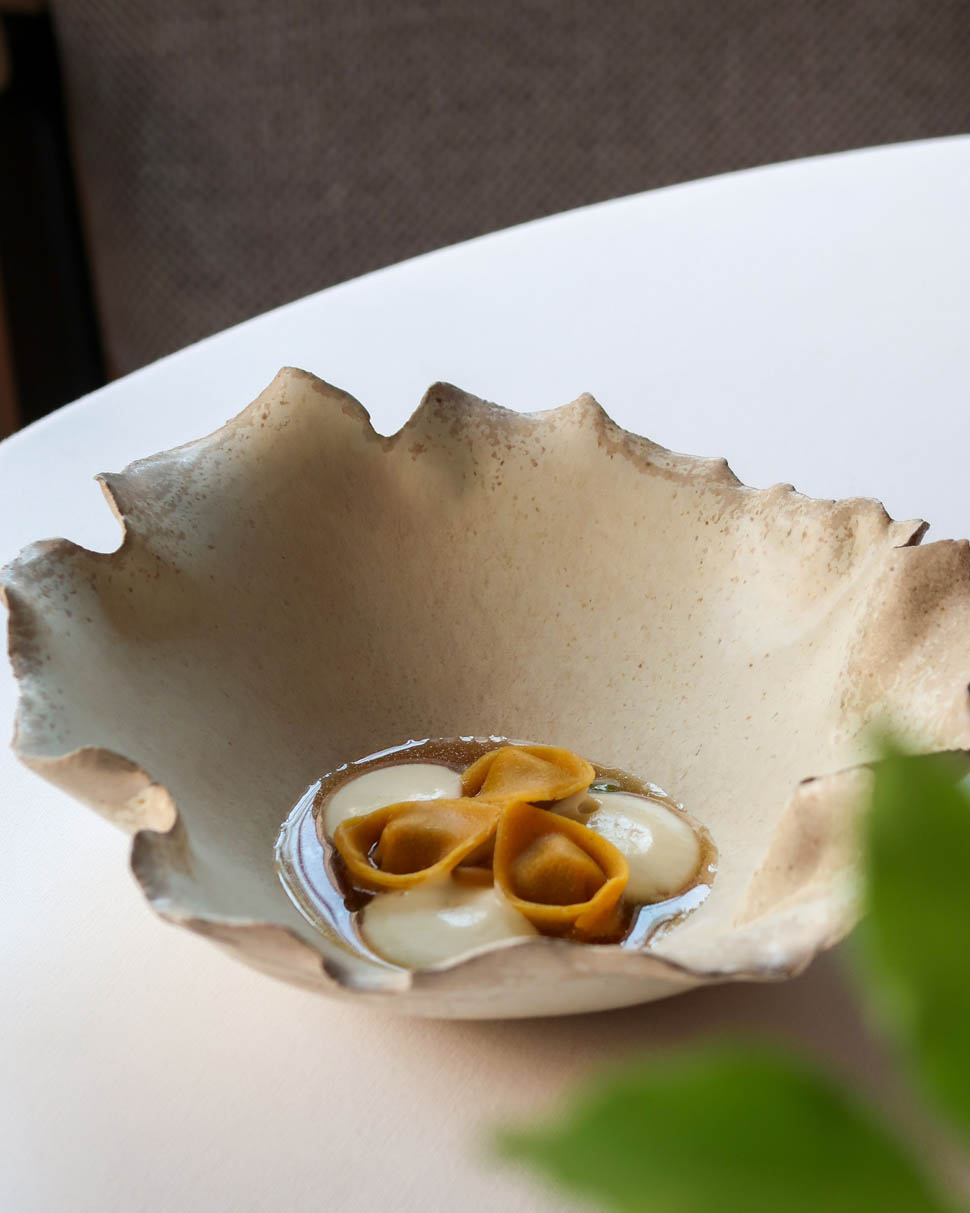
Carrot and Kale, a dish of essential goodness, draws on the vegetables that gave rise to traditional Tuscan peasant cuisine: “As basic as the ingredients in this dish, yet elevated by contemporary techniques. The carrot becomes the heart of a tortello, while the kale pesto evokes the tradition of the vegetable garden. Koji and honey mustard introduce more contemporary notes.” Sea Urchins and Almonds “is meant to be a sensory map of Tuscany, uniting water and land, rocks and hills”: chitarrini pasta tossed with almond cream, sea urchins from the Argentario, sage, preserved lemon, and pepper. Absolutely delicious. The monkfish is succulent: “Let’s return to the Renaissance, when trade along the Tyrrhenian Sea began to develop and ports grew increasingly important. Products from the Val d’Orcia, such as wheat, wine, and oil, began to be transported as a source of sustenance. This access to the sea fostered trade with the Val d’Orcia, leading to the increasingly frequent use of fish—not just freshwater varieties. In this dish, we find a classic mugnaia sauce, monkfish grilled over charcoal and glazed with shrimp garum, morelle, and razor clams.”
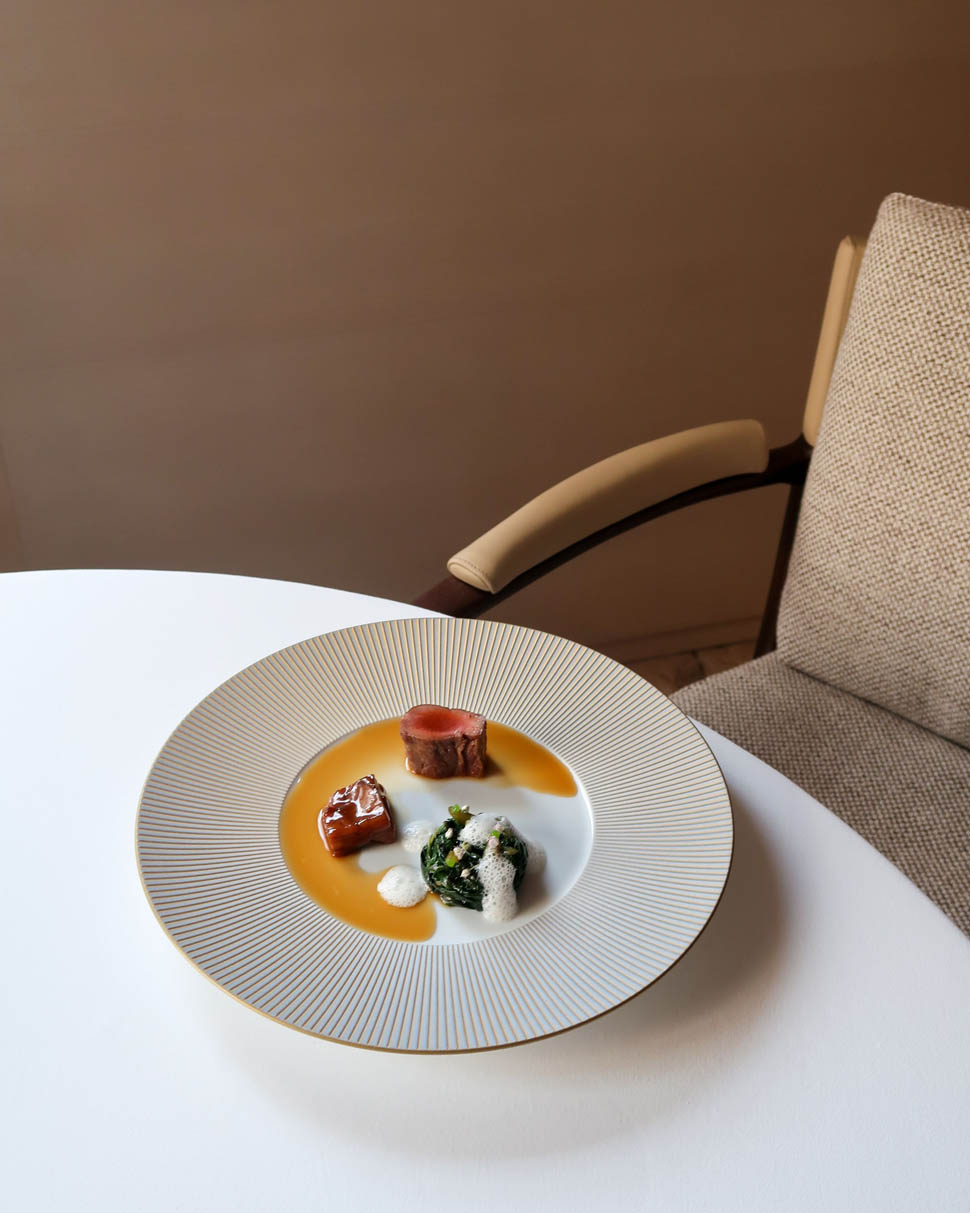
Probably the best lamb dish of the year: grilled lamb loin and porchetta-style lamb belly, served with a tangy salad of fermented scorzonera and a sauce flavored with pillotto: “Thinking of the Baroque period—not only in terms of painting and architecture, but also social rituals and gastronomy, with food as a symbol of wealth, generosity, and collective celebration—we associated lamb with the perfect banquet dish, the star of spectacular tables where every element spoke of celebration, the land, and tradition.”
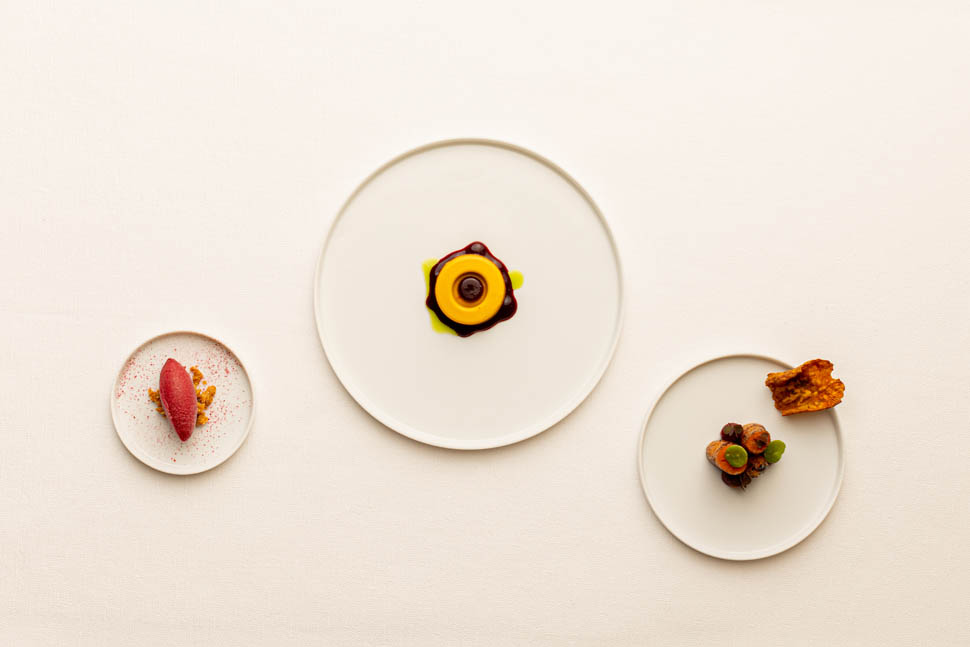
The desserts, which are truly remarkable, are crafted by the excellent pastry chef Luigi Margiovanni; in our case, olive oil, orange, and vermouth, skillfully playing on contrasts: an extra-virgin olive oil mousse is served on a sweet radicchio base that adds a subtle bitter note. The orange is presented as a zest cream, semi-candied zest, and vermouth sorbet. It is finished with a radicchio and mandarin sauce. Also delicious is miso, hazelnut, and coffee: “Hazelnut, a staple in Tuscan pastry, is prepared in various textures and combined with coffee from the Vannelli roastery. The miso, produced by our research and development department, adds a savory note that balances the sweetness”. A cuisine that is sure to make a name for itself.
Contacts
Monteverdi Tuscany
Via di Mezzo, 2, 53047 Castiglioncello del Trinoro SI
Phone: 0578 268146