Not just a restaurant and not just a hotel: many customers come to La Pista between trips, given its proximity to Malpensa Airport, yet when you arrive there, when the journey seems to be over or has yet to begin, you discover that it is inside the Osteria that you really start to unwind. It is in the breakfast prepared as a gesture of welcome, in the dining room that feels like home, in the hotel that transforms the technical night before a flight into a warm, narrated, memorable experience.
*Content with promotional purposes
If the Pista is a busy restaurant in the evening, in the morning Silvia oversees one of the most delicate moments of hospitality: the hotel breakfast. “For me, the restaurant is first and foremost home,” she says, recalling a childhood spent among tables, waiters, and parents who worked seven days a week, in a world where nannies were not an option and the extended family consisted of pizza makers, cooks, and restaurateurs. This is where her visceral connection to the dining room comes from, her difficulty in “detaching” herself from the business, and her desire to always be around people.

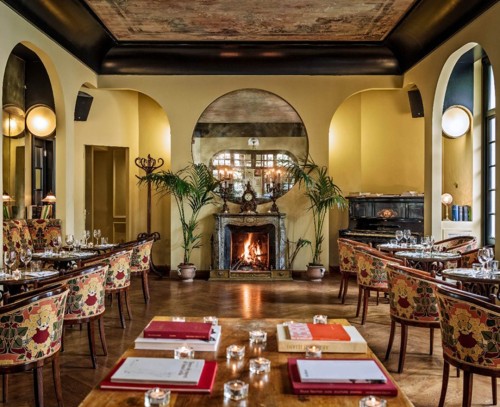
With the rebirth of the Osteria, the work has been structured: each of the four partners has a specific focus, but they all know each other's roles and pursue complementary visions. Silvia has embraced breakfast, “the last touch” that a guest has before leaving the hotel: “The ideal opportunity to end your stay with an extra treat, from attention to children to small, tailor-made details. From the welcome chips, which often win over the little ones even before the menu, to visits to the bakery with a piece of dough to play with, to the packet of sweets that children now know where to find at the cash desk, breakfast and the dining room become a natural extension of the concept of home.” The restaurant has a large family clientele and La Pista unhesitatingly defines itself as a “family-friendly” establishment, but with an interesting twist: "today's young customers are often true gourmets, asking for tuna tartare, minced meat, dishes that were once the preserve of adults, while their parents are happy with pizza. The relationship of the younger generation with food is changing, and the dining room sees this every evening."

In addition to breakfast, Silvia oversees all health and hygiene matters, an area that has become increasingly technical and complex. Food safety starts with the choice of suppliers—documentation, certifications, consistency between quality and quantity purchased—and continues in the kitchen with preparation, blast chilling, vacuum packing, batches, production dates, and internal expiration dates defined on the basis of constant tasting. Each dish arrives at the table after a journey that the customer rarely perceives: bags, cold rooms, freezers, sanitization, records, allergens compiled with each menu change. It is an unspectacular but indispensable job that requires continuous training of kitchen and dining room staff, who are increasingly knowledgeable in theory but often struggle when it comes to putting it into practice. This is where the dream of an internal “Osteria Academy” was born, consisting of constant training sessions rather than monolithic courses, to transform rules and manuals into living tools.

The hotel and the equestrian spirit
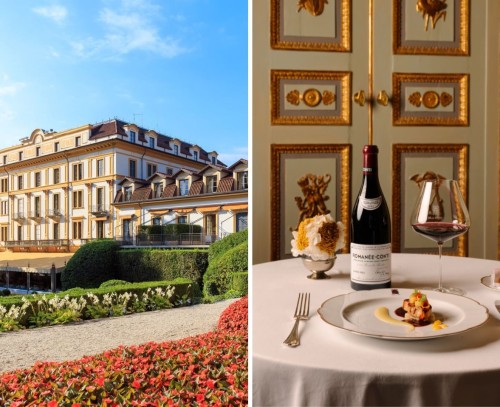
On the hotel front, Celeste has the floor. The hotel is celebrating its 150th anniversary and is one of the longest-running establishments in the province of Varese and Lombardy, with a rare feature: it has always had the same name, Osteria della Pista. "In the early decades, it was a typical post stop: horses to rest, travelers to feed and accommodate before the advent of airports, mass tourism, and fast connections. Today, the house has been transformed into a contemporary hotel with around thirty rooms, a shuttle service to Malpensa, a carefully prepared breakfast, dinner until late—essential for those arriving on an evening flight—and a solid reputation among travelers looking for something more than the usual airport hotel."

The theme that makes it unique is horse riding. While the large chains in the area—Sheraton, Hilton, Crowne Plaza—offer efficient but often cold facilities, La Pista has chosen the horse as its aesthetic and narrative theme. "Rooms named after famous horses raised in Casorate Sempione, paintings and equestrian details, a historic saddle donated by Countess Toto Badini, which belonged to her grandfather, an infantry cavalryman in the First World War, displayed as an icon between past and present. Children, on their way down to the bathrooms, stop in front of the saddle, are enchanted by the well, and ask to see it again; for many, it is the first time they have ever seen these objects up close."

The connection with the world of horses is not just aesthetic: Casorate has always been an equestrian center, and Osteria della Pista is still the official FISE hotel for exams and certifications, judges, and riders. The restaurant is a meeting place for historic names and new champions, from Marina Sciocchetti to the Orlandi family, to foreign Olympic guests passing through. At the same time, the theme of horses fascinates those who are not familiar with horse riding, precisely because it conveys something warm, noble, and “real,” far removed from cold, replicable concepts.

Celeste sums up the hotel's vocation as follows: "My father used to say that the hotel industry is female: when I see businesswomen, alone and busy, choosing us because they find security, stability, and a pleasant evening here, I understand what my father meant. Those who come to us feel that their vacation starts a day earlier and ends a day later." Given the type of clientele—average stay of one night, 30 check-ins and 30 check-outs per day—that phrase is much more than a slogan. Those who book usually consider the night at Malpensa as a neutral transition, a technicality. At the Osteria della Pista, that night becomes an Italian dinner surrounded by locals, a glass of wine shared at the table, a final limoncello, a breakfast that tastes like home, a scent that lingers. Literally: the hotel has chosen a specially created room fragrance from an Apulian maison, with notes of champagne and hay, a simultaneous tribute to the hotel's wine-making tradition and equestrian spirit. Every now and then, a few samples travel in your suitcase along with your memories of your stay.

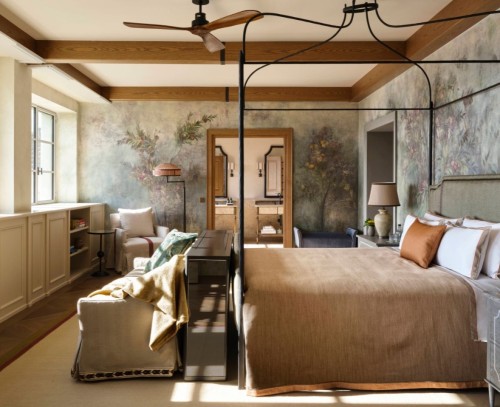
The ongoing restyling pushes even further in this direction: new upholstered benches with leather inserts reminiscent of bridles and harnesses, rocking horses placed on the piano, wallpaper designed to abstractly evoke nature, greenery, and equestrian accessories. Formally, the hotel still has a license to stable horses. Today, where reins were once tied, cables for electric cars are connected: the place where animals used to drink now houses a Tesla charging station. “Once upon a time, horses were stabled here, now Teslas are parked,” jokes Celeste, reminding us that the world moves on, but certain symbols can be translated rather than erased.

Numbers and the new generations
Francesca Colombo is responsible for keeping track of accounts, suppliers, staff, training, and that less romantic but crucial part of the company. She handles administration and human resources, manages shifts, liaises with schools, and coordinates projects that connect students with the real world of work, such as the “project work” that involved young people in creating a menu and cocktail list with a story and concept, from theory to practice, which was then presented to a committee and rewarded with a significant contribution. The basic idea is simple and at the same time rare: it is not enough to talk about young people, you have to put them in a position to get their hands dirty on a protected workbench, where there are people who observe them, guide them, and tell them, “throw yourselves into the arena, ask everything you want to know.”

Looking at the younger generations, Francesca often notices a block: "Young people who seem to have stopped dreaming, suspended in an uncertain dimension between theory and reality. The task of La Pista—also from this point of view—is to reopen a space for curiosity, for imagination oriented toward the profession. Those who show a desire to grow find scope, responsibility, and opportunities to gain experience that can then take them far, to international restaurants and hotels. The fact that some of them now work at great heights, in Italy and around the world, is one of the greatest satisfactions for the family."


In everyday life, shift management is another element that distinguishes Osteria della Pista from certain “old school” restaurants: no one denies that the work is hard, but it is done according to criteria that take quality of life into account. Five days a week, full days off and half days off, holidays in August, and the chance to relax at the weekend when the organization allows it. It's a choice that requires energy and time – “sometimes we spend hours just to coordinate shifts” – but it pays off, builds loyalty, and lends credibility to the message we often give to young people: we work hard here, but if you want to grow, this is a place that gives you the tools, the confidence, and a different way of imagining your future in the world of hospitality.

Between Milanese cutlets and scialatielli pasta from Salerno, between rare Champagne and hay transformed into an olfactory note, Osteria della Pista continues to align past and present on the same trajectory. The horse, a hot and noble theme, has become the common thread that unites the dining room and bedrooms, dishes and objects, children and great champions. The rest is done by a family that never stops planning, a team that divides tasks without losing the sense of “us,” and a clientele that, coming off the highway or an intercontinental flight, discovers that in Casorate Sempione there is still hospitality capable of transforming a simple night of transit into a story worth telling.
Contacts
Osteria della Pista
Via Verbano, 1, 21011 Casorate Sempione VA
Phone: 0331 295054