Sitting down at the table means much more than just eating; it is a social act, a language made up of glances, pauses, and small gestures that build relationships. But Mugaritz, which has always been a laboratory of ideas even before being a restaurant, has decided to question this fundamental gesture, taking it beyond the physical boundaries of space.
The news
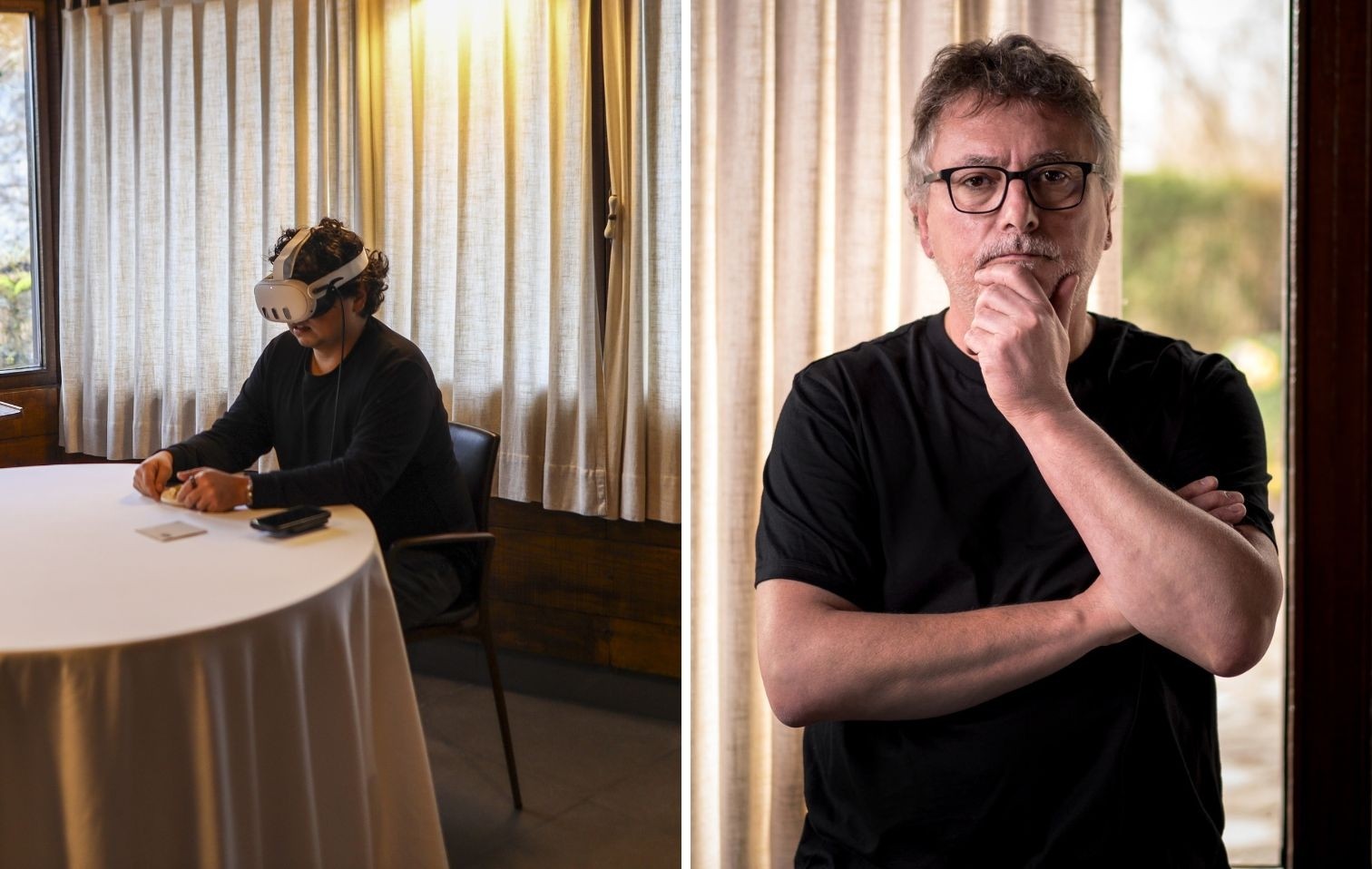
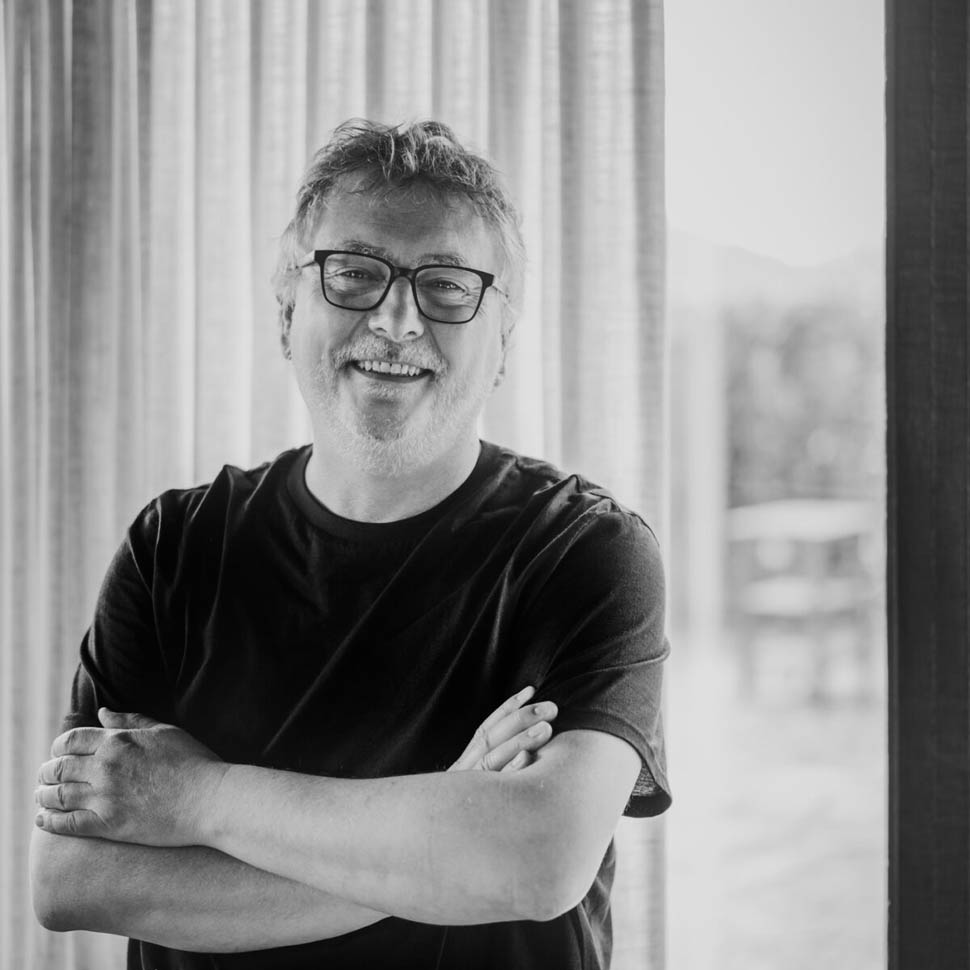
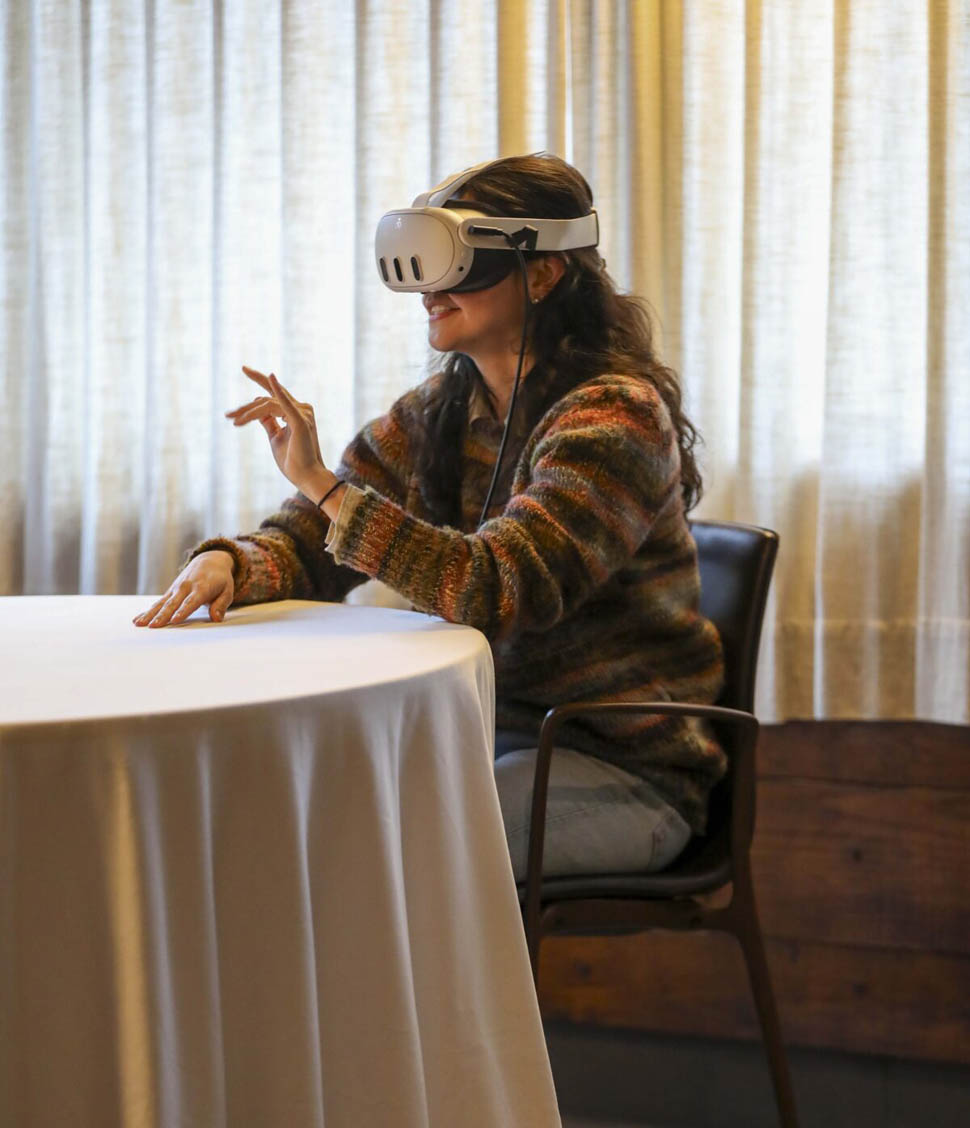
Together with the Vicomtech technology center, the restaurant run by Andoni Luis Aduriz has created Bazkaria, an experimental project that attempts to answer a question that is as simple as it is radical: what happens when the table is shared remotely, but the experience remains authentically collective? Bazkaria was not created as a futuristic demonstration for its own sake, nor as an exercise in technological style. The project involves fifty people invited to participate in an immersive telepresence experience, designed to simulate the conviviality of a shared meal while in different locations. Not a screen to watch, not a traditional video call, but an environment built through mixed reality and volumetric video, capable of restoring three-dimensionality to bodies, movements, and the timing of the relationship. The technological heart of the experiment is the VHOLO platform, developed by Vicomtech, which uses multiple cameras to generate three-dimensional holograms of the participants. The images do not just reproduce faces and voices, but also recreate postures, micro-gestures, and body angles. These are elements that, at the table, are just as important as words. This is where Bazkaria finds its strength: shifting the focus from the technology itself to the human experience that technology makes possible.
The participants share an interesting detail: after a brief initial period of adjustment, the technical equipment ceases to be the focus of attention. Perception changes, the brain recalibrates, and what remains is the feeling of truly eating together. Conversations pick up pace, silences become natural, gestures return to being spontaneous. The meal resumes its original function as a relational space, even if the table is no longer physically unique. For Andoni Luis Aduriz, this type of experimentation is not a deviation from Mugaritz's path, but a natural extension of it. Over the years, the Basque restaurant has built a reputation based on its ability to question certainties, rituals, and habits related to food. Bazkaria fits into this trajectory as a reflection on the social value of eating together, rather than on the dish itself. Cooking remains central, but it becomes a tool for investigating how people relate to each other. The project also operates on a broader level, linked to well-being. Numerous studies show that sharing a meal strengthens social bonds, reduces feelings of loneliness, and improves the quality of the dining experience. Bazkaria attempts to transfer these benefits to a context where physical distance is a fact of life, not a choice. Separated families, distributed work teams, communities that cannot easily meet: the project explores scenarios in which technology becomes an ally of relationships, not an impoverished substitute for them.
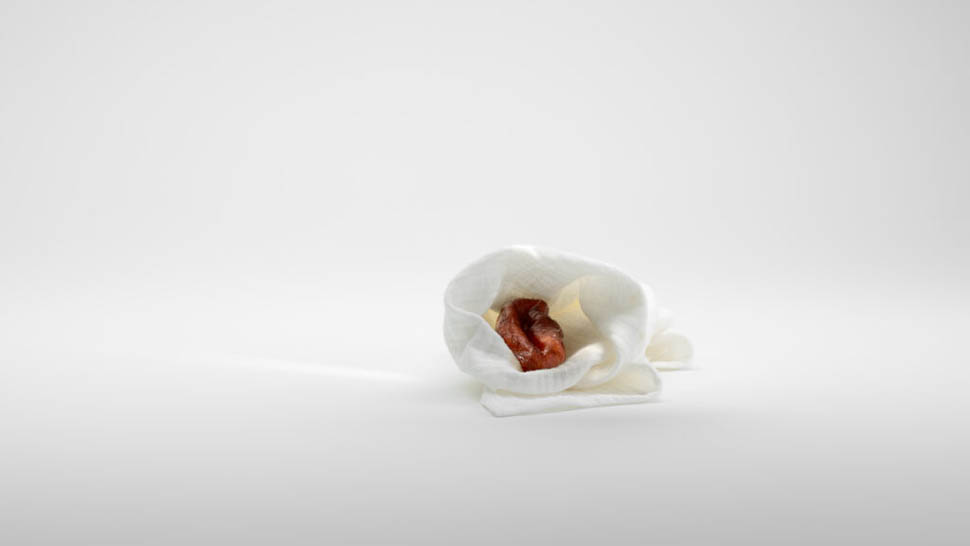
It is no coincidence that Bazkaria is part of the European SPIRIT initiative, which focuses on researching new forms of social interaction through immersive technologies. The stated goal is not to replace physical encounters, but to expand the possibilities for connection when the latter is not feasible. In this sense, meals become a privileged field of experimentation, because they encompass emotional, cultural, and sensory dimensions that are difficult to replicate artificially. From a gastronomic point of view, Mugaritz maintains its role as a silent director. Food is not described as a spectacular protagonist, but as an element that marks the time of the experience. Eating together means sharing a rhythm, synchronizing gestures, and respecting pauses. Bazkaria works precisely on this aspect: technology does not accelerate, optimize, or fragment. On the contrary, it seeks to reconstruct the slowness and attention typical of a convivial meal. One of the most interesting aspects that emerged during the experiment concerns the perception of space. Participants report feeling as if they are seated around a common table, despite their rational awareness of the distance. The three-dimensionality of the holograms and the quality of the visual interaction contribute to creating a sort of “third space,” neither completely real nor purely virtual, in which the experience takes shape. A place that exists only during the meal, but which leaves an emotional trace similar to that of a physical encounter.
Bazkaria thus opens up a broader reflection on the future of dining and conviviality. In an increasingly connected yet fragmented world, the act of eating together risks losing its centrality. Mugaritz and Vicomtech reverse this perspective, showing how technology can be used to reinforce this act, rather than trivialize it. The project does not propose definitive solutions, but asks necessary questions, with the awareness that the value of the table lies not only in physical presence, but in the quality of the relationships that are built around it. Bazkaria does not speak of the future in an abstract sense. It speaks of the present, of real needs, of how haute cuisine can dialogue with technological research to explore new territories without losing depth. An experiment that confirms Mugaritz as one of the few places capable of using food as a tool for thought and technology as a means of expanding, rather than reducing, the human experience.