A dinner at Atelier Moessmer showcases the success of the Cook the Mountain project, created in 2008 by the renowned South Tyrolean chef. It is a journey of unprecedented consistency, featuring exclusively local ingredients and a deep respect for the region and its people.
The chef and the story
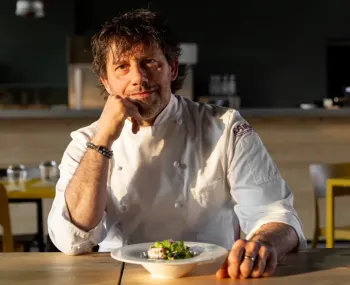
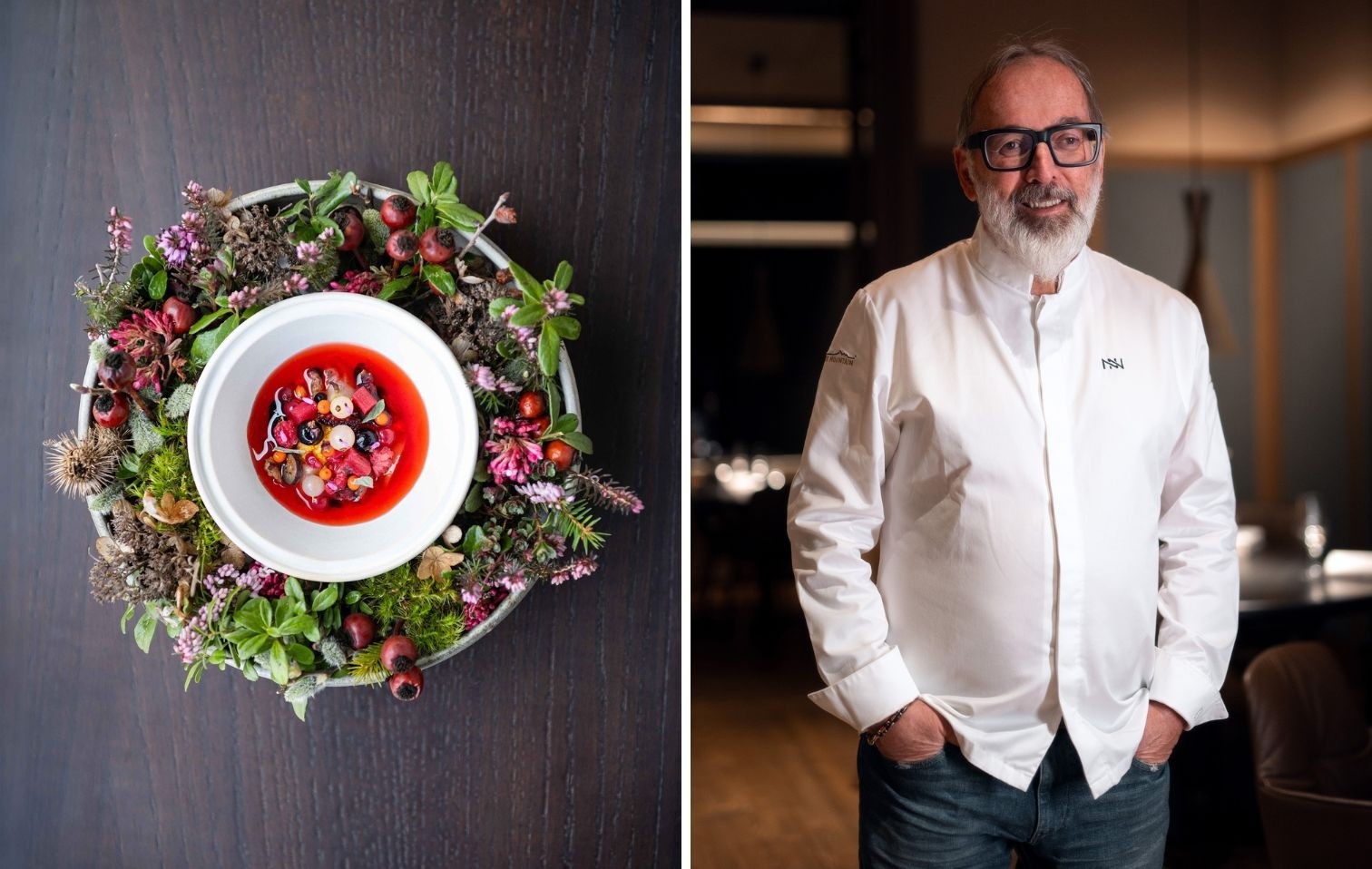
He discovered his Italian identity one step at a time, Norbert Niederkofler. And now that he loves cooking risotto and pasta, let's hold on to him. He discovered his Italian identity when, after a first life as a promising skier and a second one that began with the death of his father when he was only 17 (an episode that made him want to leave his homeland and travel the world, something that cooking—he discovered—could guarantee him), he returned to South Tyrol. “I left South Tyrol and rediscovered Italy,” he once told me. “I also struggled a bit with the language, but I learned Italian with Giancarlo Morelli.” Once back home, he found himself working first at Ciastel Colz and then at St Hubertus in San Cassiano, Alta Badia, where he put his culinary and life experiences from around the world to good use, becoming skilled and knowledgeable and, indeed, realizing that being South Tyrolean was one of the many ways of being Italian, as well as a citizen of the world.

One Michelin star, then two Michelin stars, then the desire to make the definitive leap towards absolute excellence. Yes, but how? It was 2008. He lacked the money for communication, and it was already a miracle that he had managed to bring so many customers and critics up there to certify the growth of the project. So? Norbert came up with the idea of doing something that no one had ever really done before. He started asking customers: why do you come to eat here? The answer was more or less always the same: for the mountains, for nature, for the cuisine. In that order, usually. The light bulb moment had arrived.
The philosophy and the restaurants
That was when “Cook the Mountain” was born, a manifesto that will come of age this year, based on the idea of a powerfully territorial cuisine, guardian of identity and biodiversity, attentive to people, seasonal, slow, thoughtful, never random, a catalyst for cultural processes aimed at a profound idea of sustainability, never a victim of fads and the pure pursuit of profit, but charged with producing fair remuneration for all actors in the supply chain. “The goal,” he says, “became immediately clear: to rethink economic and social development by investigating the relationships between production, product, territory, and consumption.” Thus, cuisine as a living laboratory for the development of a sustainable development model through a new lifestyle.
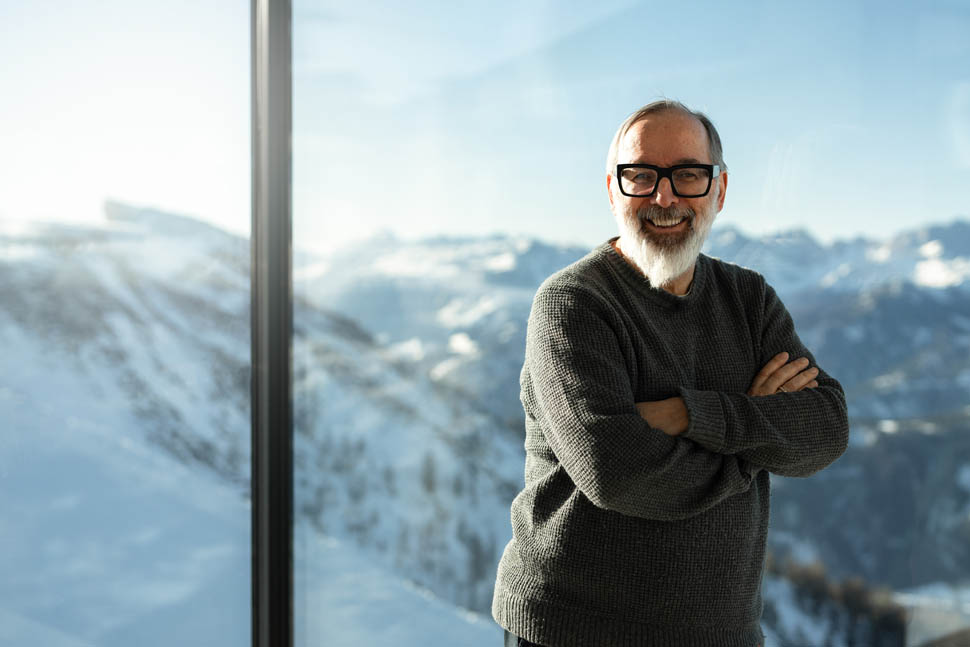
“Cook the Mountain” took several years to establish itself as a true manifesto for a new gastronomy. At first, there were more skeptics, those who asked the chef from Lutago, in the Aurina Valley, why he was doing it after all. He had achieved two stars, did he want to lose them by chasing a utopia? It must be said that these were also the years of the explosion of the chef as a solipsistic creature, self-sufficient and self-celebrating. And so Niederkofler's project was particularly out of step with the times and therefore visionary. It took time, but today “Cook the Mountain” is one of Italy's main contributions to the global gastronomic discourse.
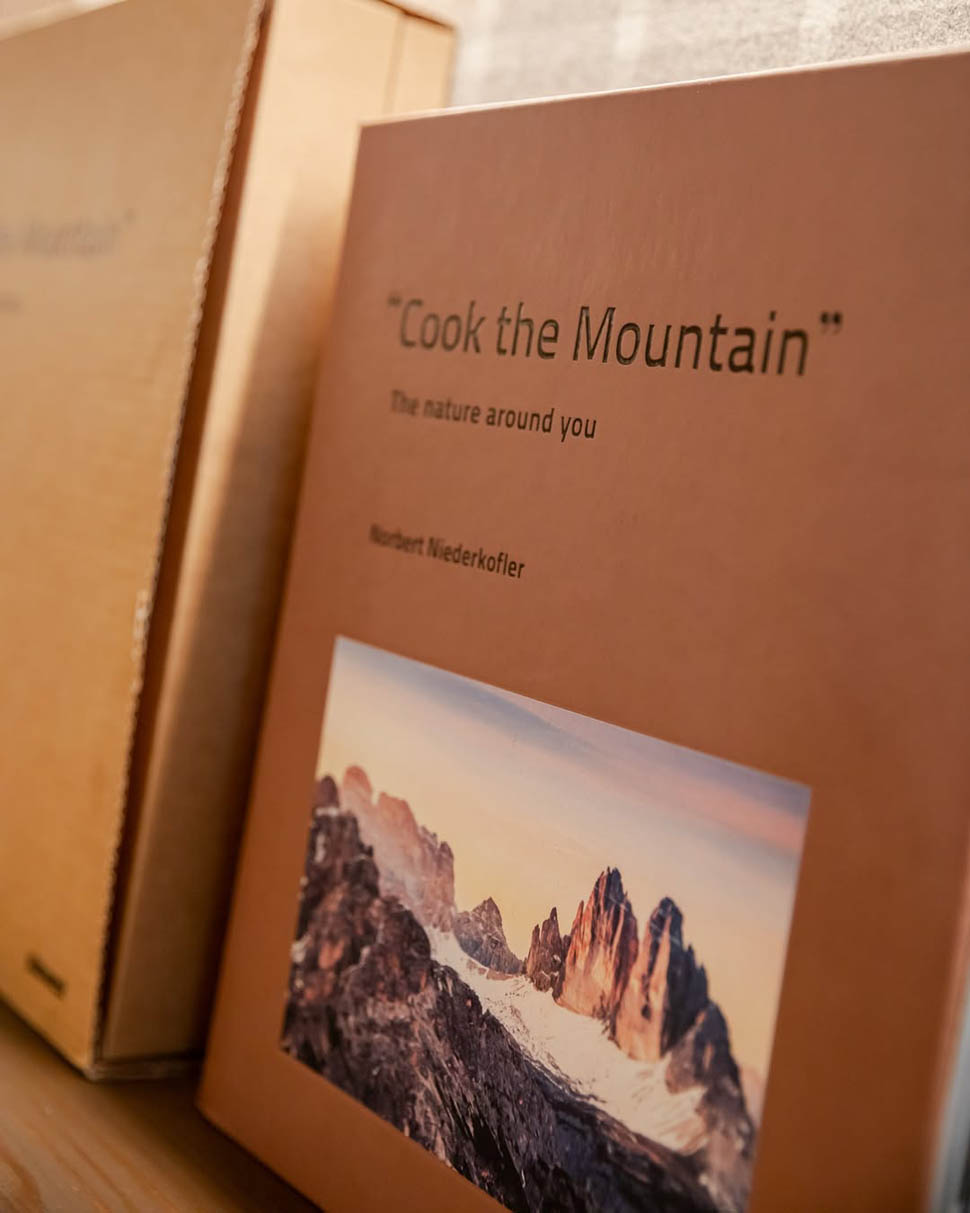
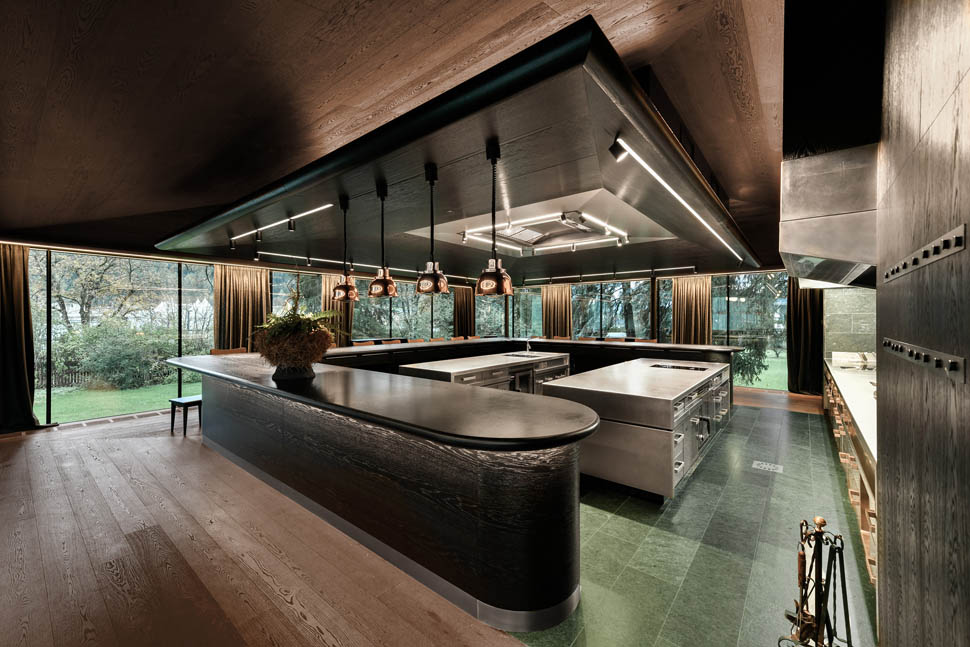
Niederkofler deservedly earned his third star, naturally assuming the posture of a master. He happily speaks Italian (years ago, interviews with him were more complex, but now they are a blast). He left San Cassiano and St Hubertus to move to Brunico, to Atelier Moessmer (which we will visit shortly). a quick move that took place in a matter of months in 2023, leaving his three stars intact (plus the green one, which would have no reason to exist if it weren't awarded here), further refined his adherence to the rules he imposed on himself, opened AlpINN, a vessel of contemporary style in Plan de Corones, and took over a Renaissance building in Rasun-Anterselva, transforming it into an alpine refuge combining elegance and monastic austerity, the Ansitz Heufler, with a trattoria and stube that interprets the concept of “Cook the Mountain” in a less avant-garde way.
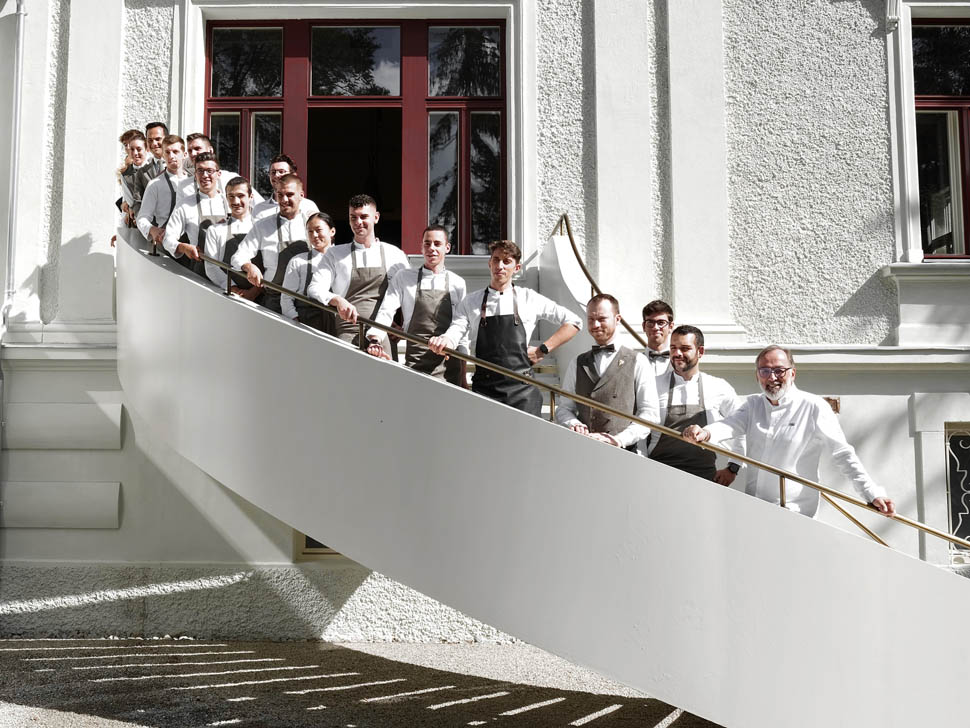
Then there is Horto's strategic direction in Milan, where “Cook the Mountain” becomes “Ora Etica” (Ethical Now), because every ingredient served comes from places that can be reached in less than sixty minutes from the Duomo. And there is always Care's, the annual event for exchanging ideas and inspiration. In short, everything seems to be going great in this corner of the Dolomites, in the ecosystem that Niederkofler has created and populates. And the cuisine of the Atelier has never seemed so accomplished and focused, a version that is, if not definitive (that would be too grandiose), then almost definitive of the project. And this is the story of our walk in this paradise.
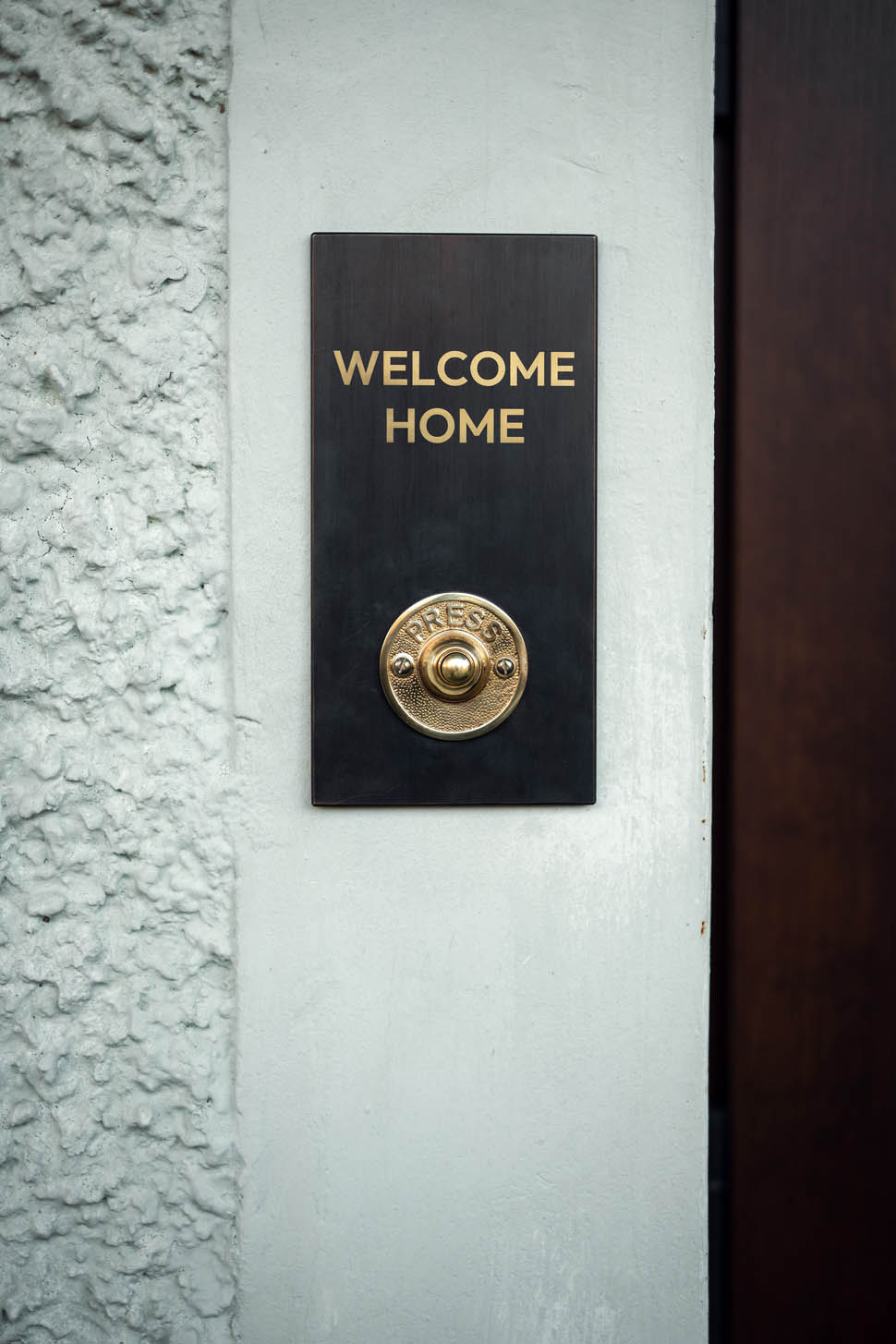
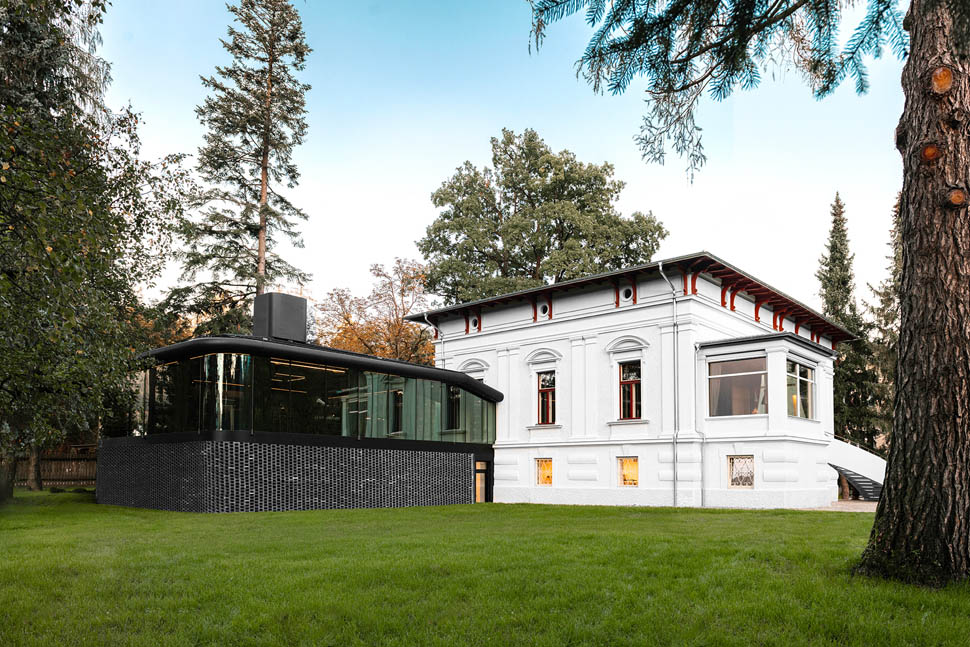
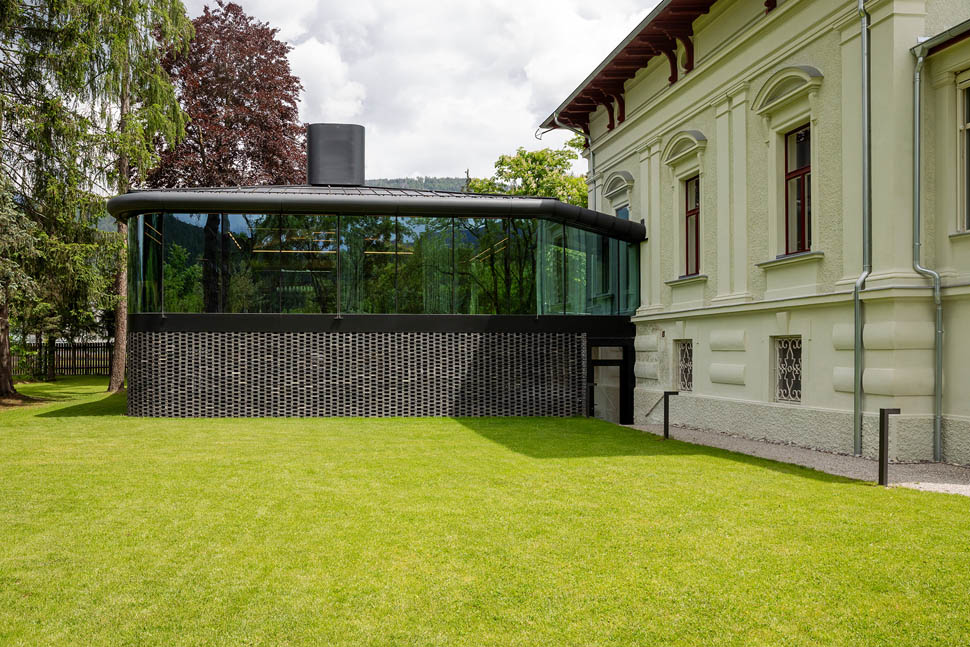
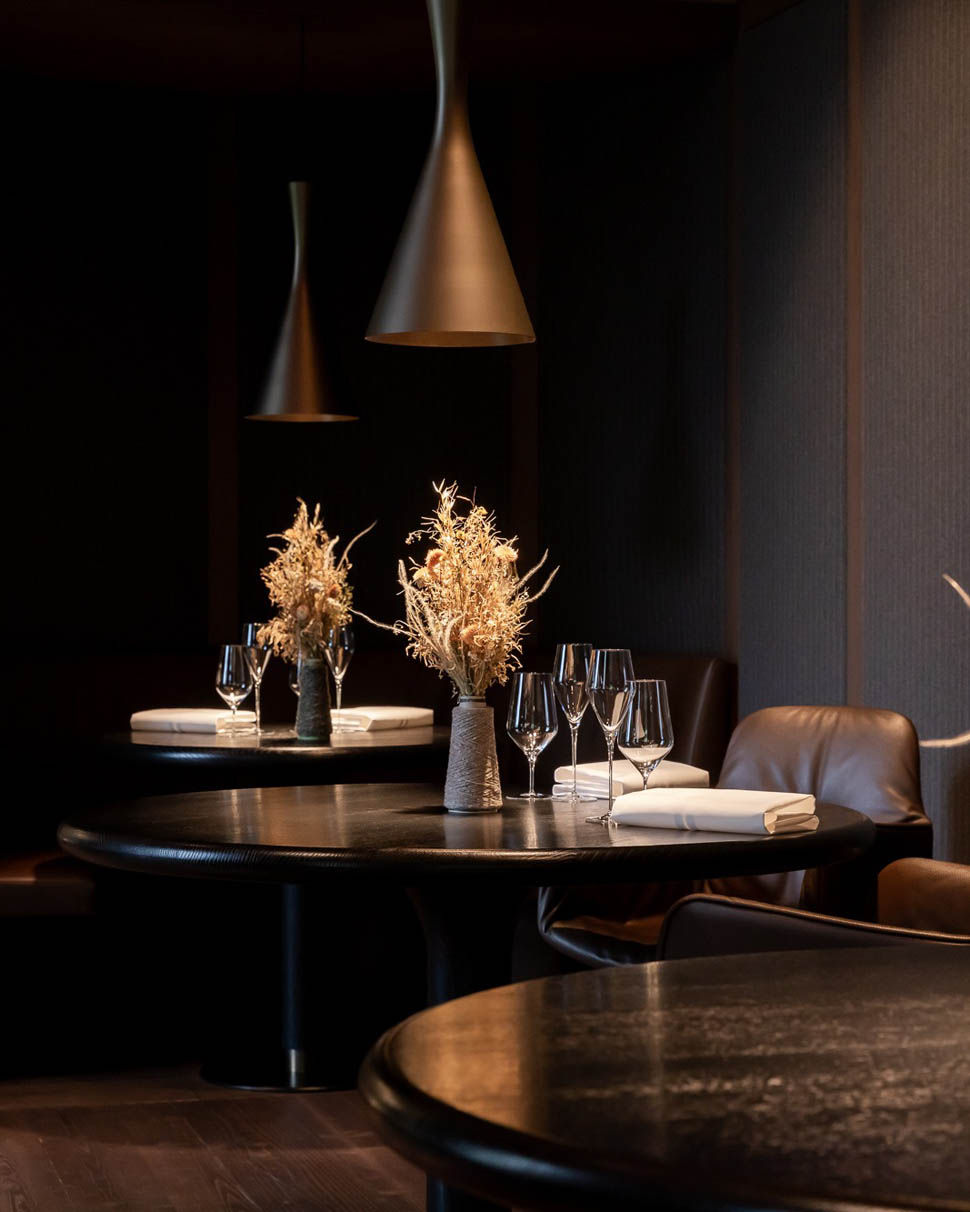
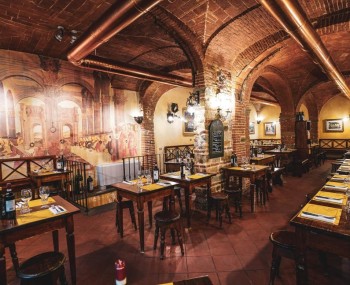
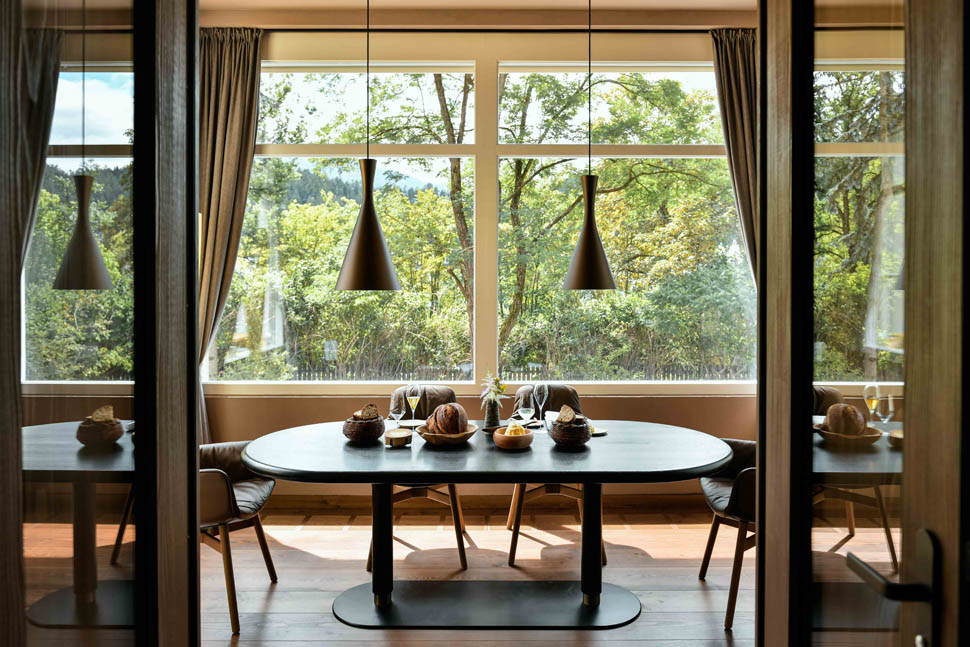
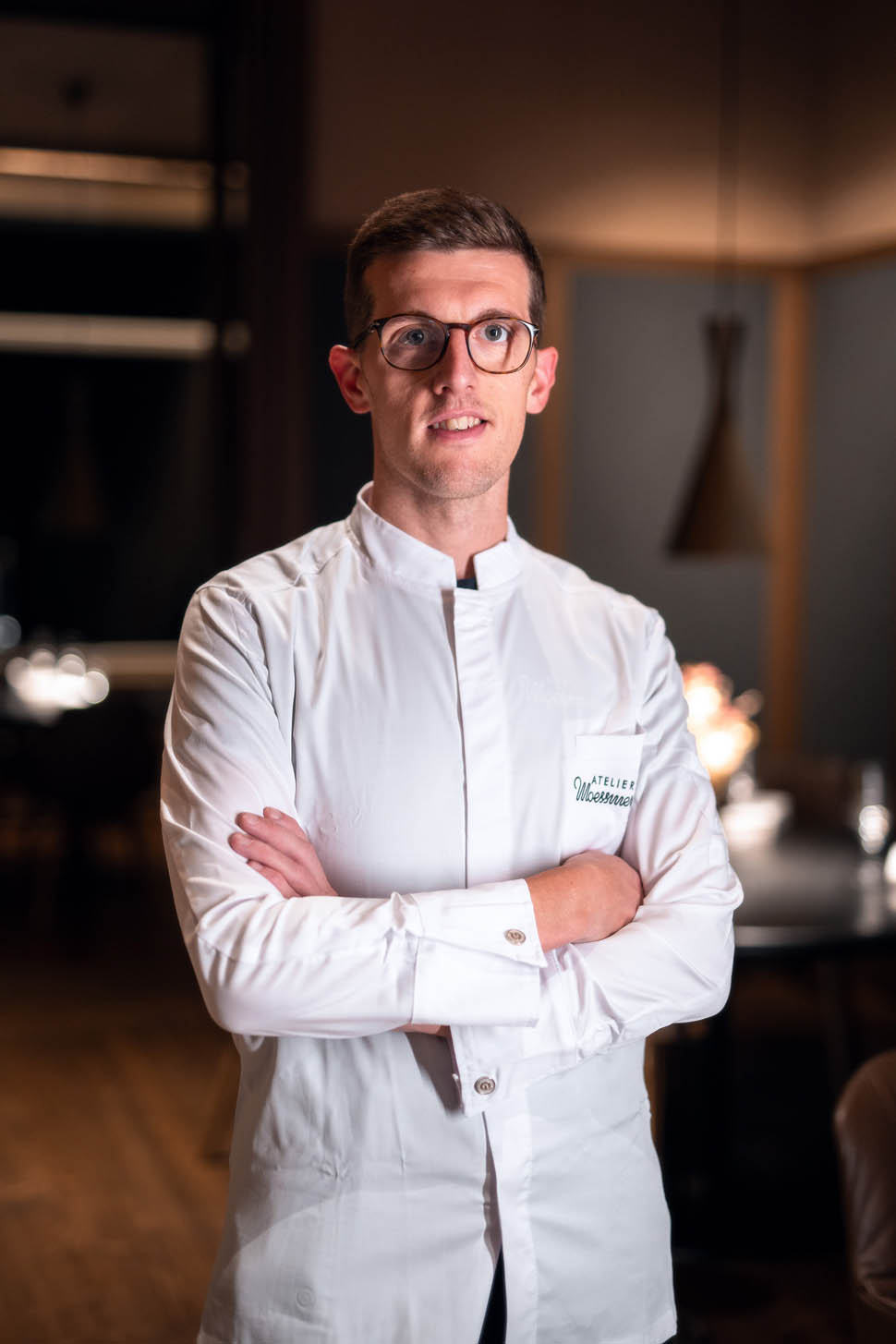
Atelier Moessmer is located within the walls of the nineteenth-century Villa Moessmer, a renowned textile company that is still reflected in the frequent use of loden for the upholstery of the rooms and “props” and in the large sample collection that dominates the library. Outside, there is a 6,000-square-meter park; inside, a series of well-organized rooms including the kitchen, the workshop, and spaces for up to 35-40 guests, divided into: a lounge for aperitifs and desserts, a library that can be used as a private space and is filled with books and works of art, a more traditional dining room with round tables for four guests, a table on the veranda for six, and finally the heart of the restaurant, the Open Kitchen, a vast, deep counter surrounding the large kitchen where the young NN brigade bustles serenely under the watchful eye of executive chef Mauro Siega, born in 1992, from Maniago, in Friuli. Oh, and then there's also a wine cellar. Open to visitors. Beautiful, like everything else here.
The menu
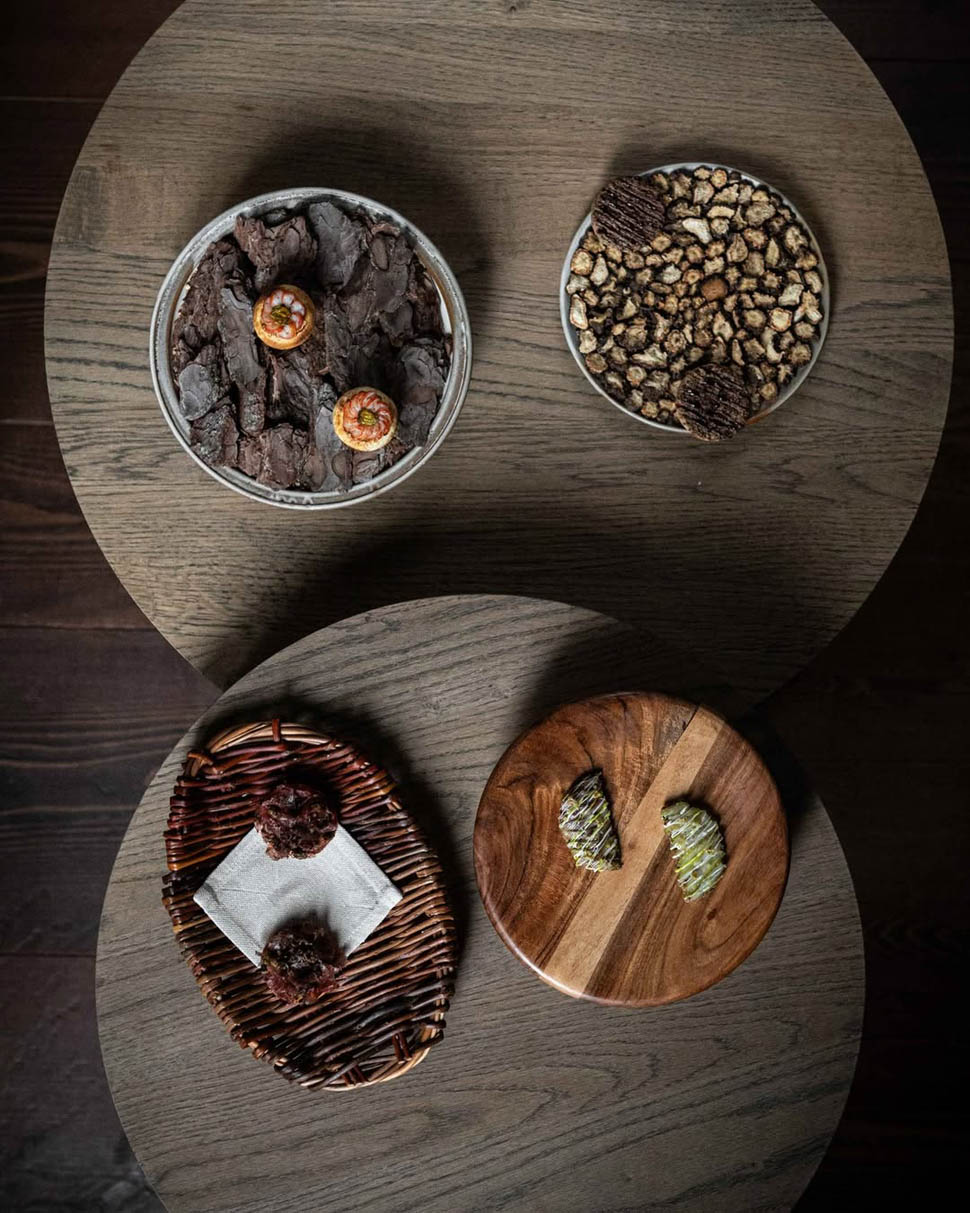
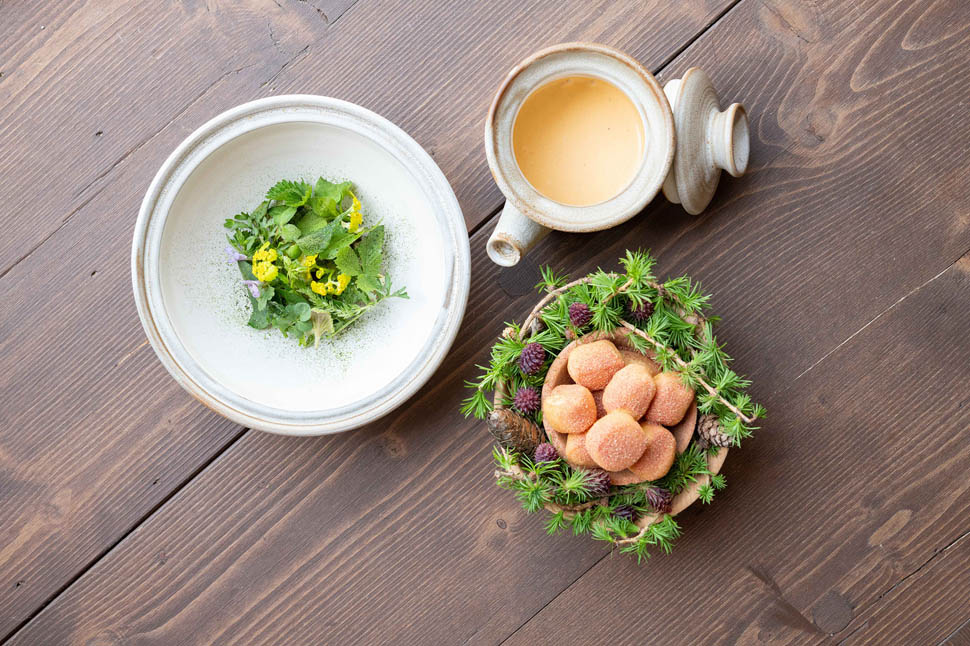
Aperitif in the library, which, we are told, was long the creative workshop of South Tyrolean writer Joseph Zoderer. A Strauben, usually a dessert but in this case a savory version: chestnut flour toasted in embers, topped with a chutney made from black mountain figs slightly acidified with apple balsamic vinegar, all complemented by a goat's milk cheese, aged for about six months in this World War I bunker, which has a humidity level of 90 percent, making it particularly creamy; all complemented by larch buds. Then Smorrebrod, a Nordic-inspired open sandwich with lake agone marinated in lichen salt for almost four hours; topped with two emulsions, one lightly smoked with elderberry kombucha and the other with chives and wild garlic capers. Then a waffle made with black cabbage dough cooked over embers, topped with a salad of marinated, seasoned, and smoked venison, to which fir buds picked in summer add a balsamic touch.
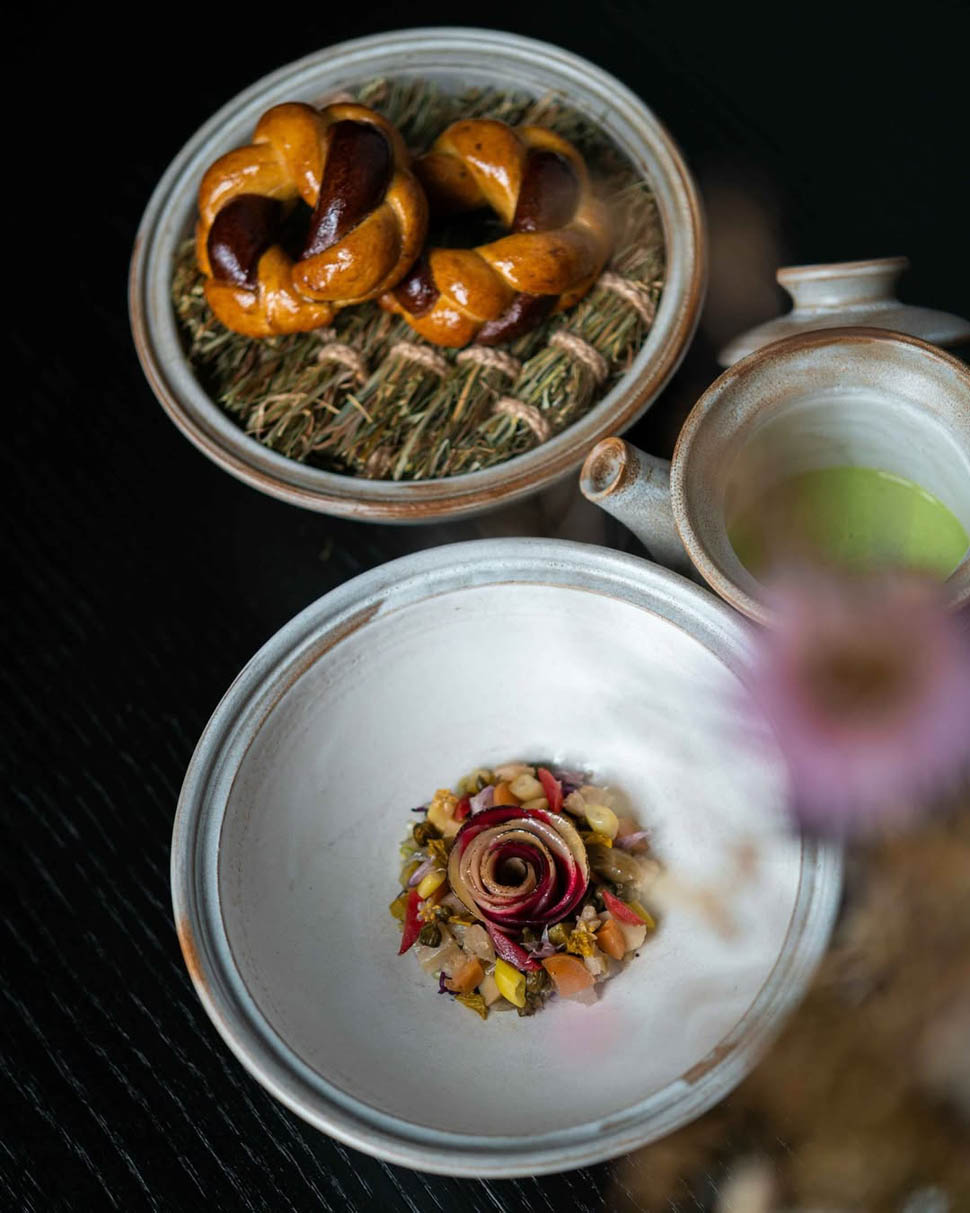
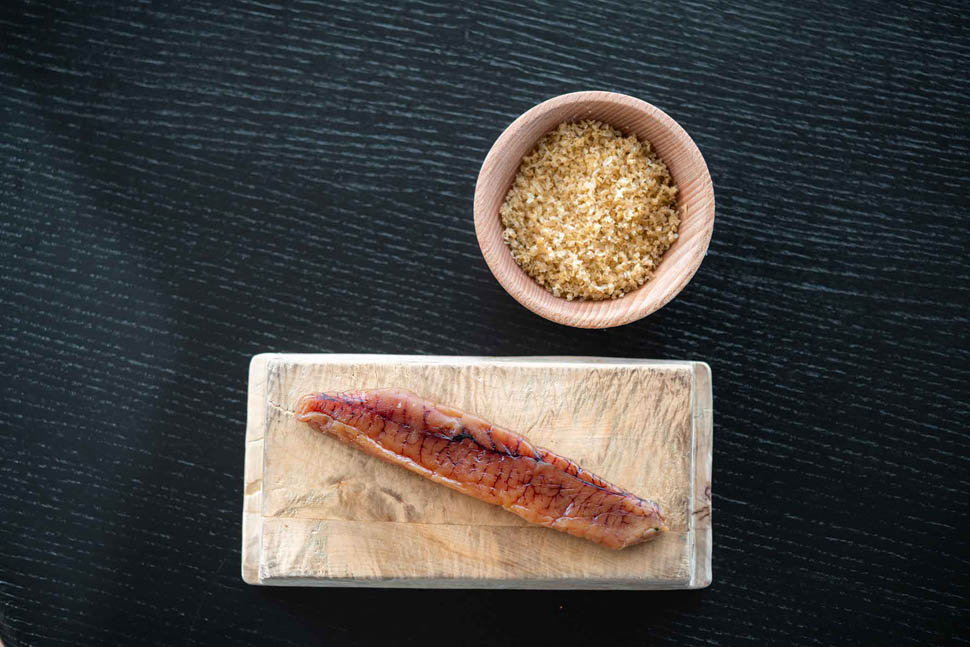
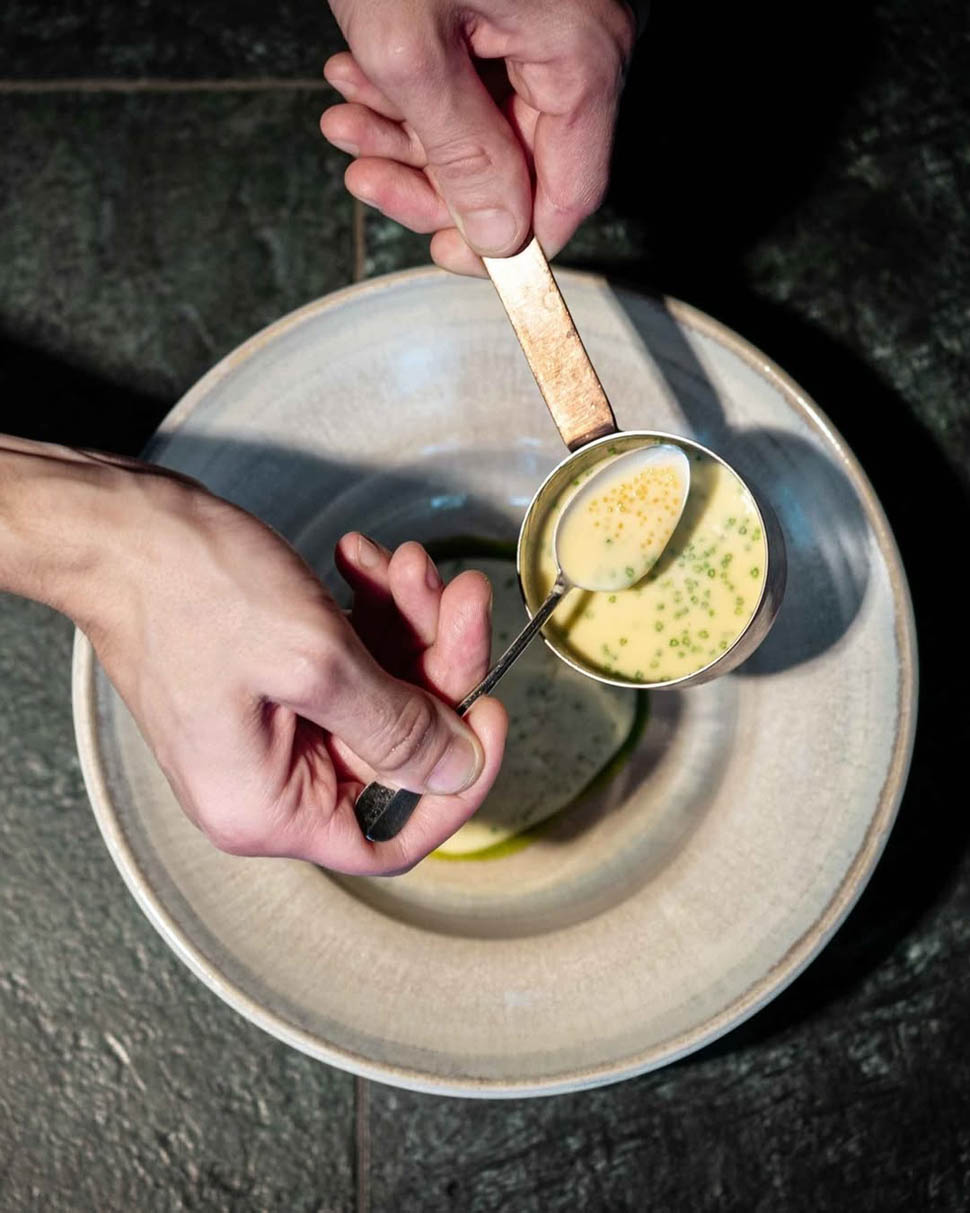
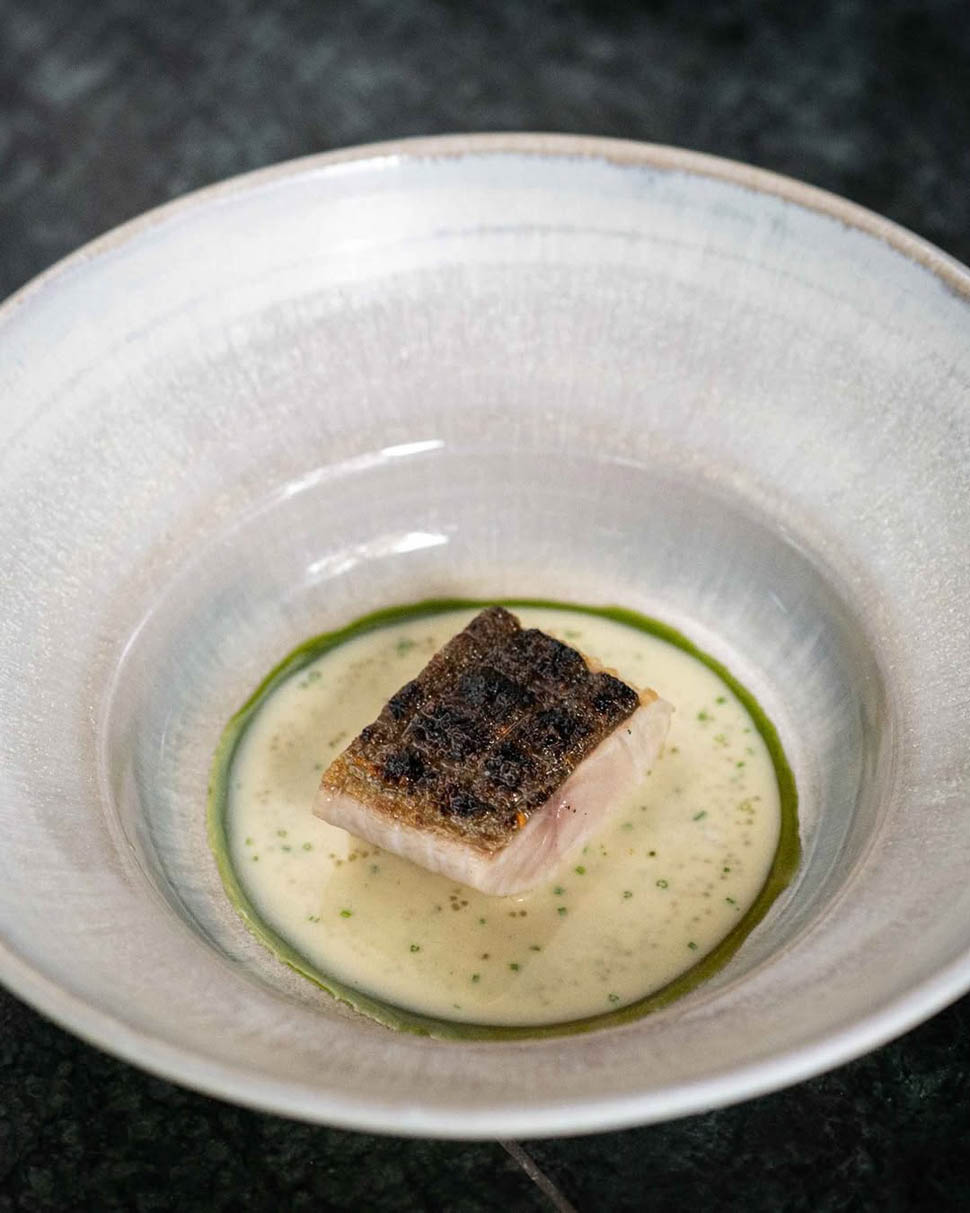
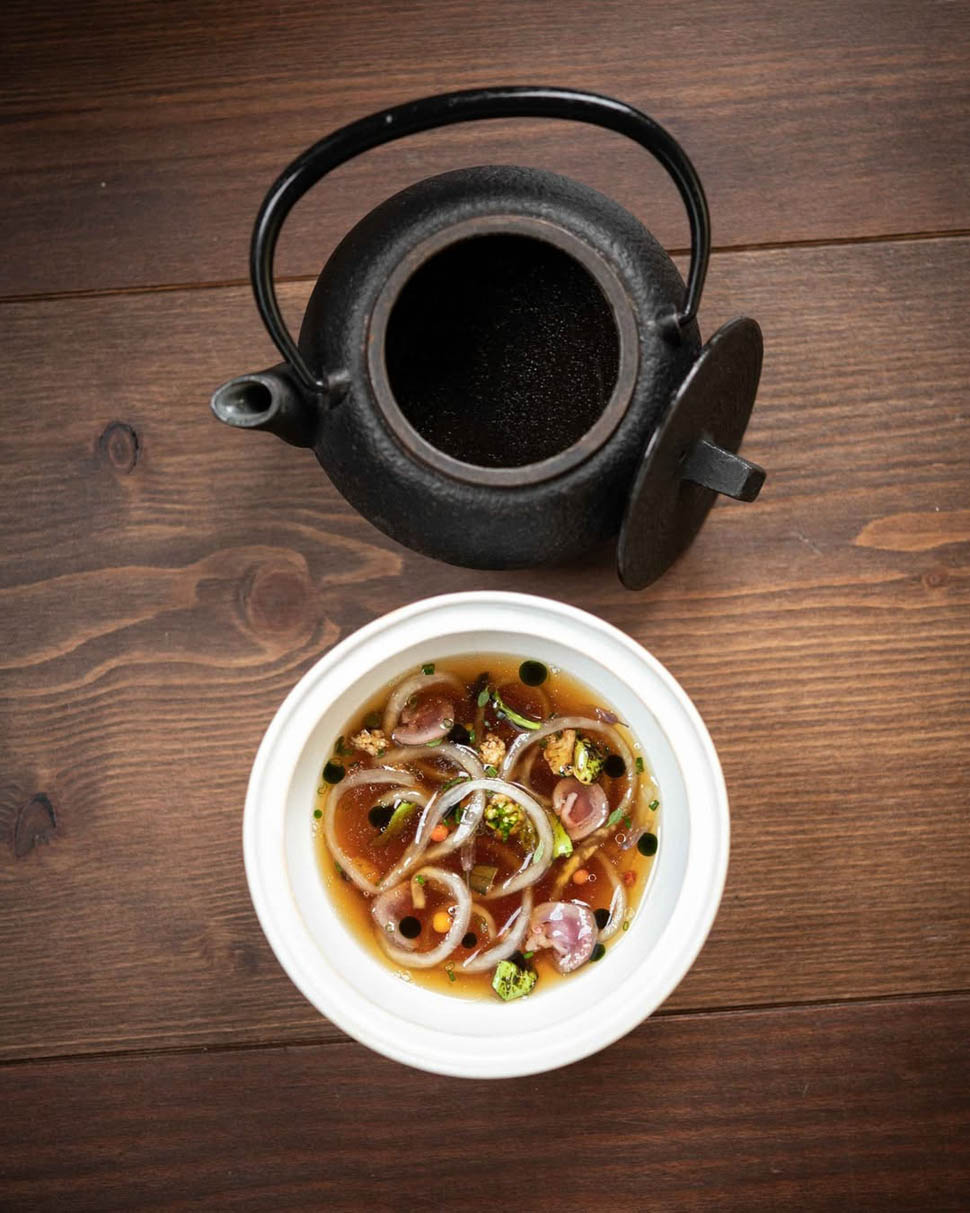
Then there is Takoyaki, an Alpine grey meatball with braised tail inside and the outside glazed with a sour sauce made from Swiss stone pine cones. The heart of the same beast is marinated, smoked, grated, and dried. Inside is apricot kimchi. We change rooms, where the counter and the great theater of the kitchen await us. A stunning start with a memorable minestrone that is a compilation of all the vegetable ingredients harvested in summer and preserved: twenty-five vegetables in oil, vinegar, fermented, immersed in a broth of fried cauliflower with mushrooms seasoned with homemade shioiu and vegetable garum. All accompanied by a puff pastry with Lamon bean cream and cream cheese. It's hard to do better than that. Or is it? Here is an Armanini char, marinated with mountain salt and lightly seasoned; on a bed of sauerkraut pesto flavored with white currants and gooseberries, topped with a sauce made from fish scraps enriched with lightly smoked speck and a cold extraction of bay leaves that gives it a certain herbaceous note; all complemented by crispino berries that balance the richness of the sauce itself.
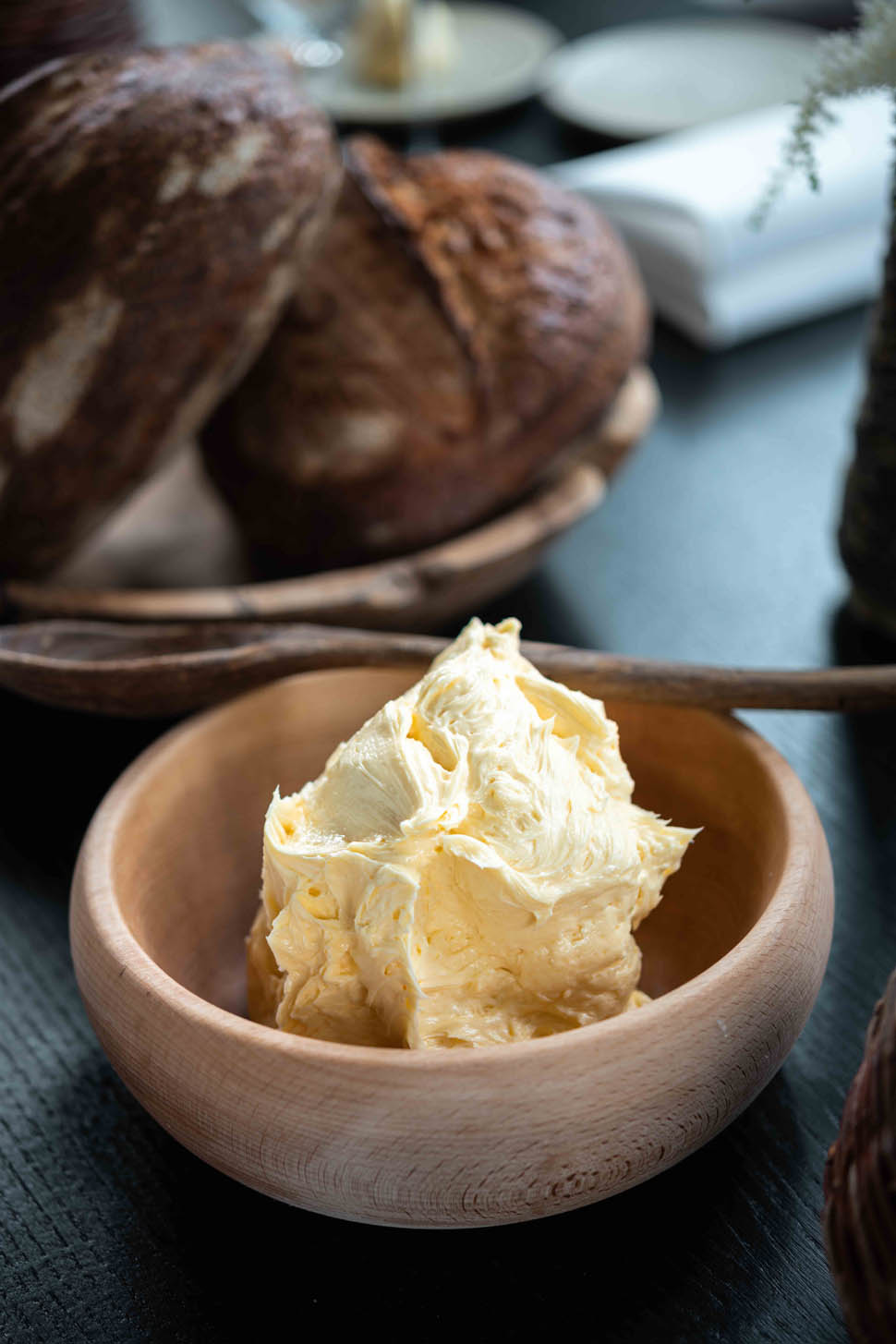
And the bread? It arrives at this point, made from white flour, prepared with a starter dough pre-fermented the day before and enriched with pumpkin purée and seeds. It is memorable when spread on lard with laurel powder and black garlic. A real dish, which not surprisingly finds its place on the menu. Then there are the Spatzlan, gnocchi made with wild garlic grown at 2,000 meters, with pork fat melted inside using a French technique that involves the use of a red-hot cast iron cone injected into the gnocchi themselves. The crispy part is provided by black Alpine pork crackling, followed by a savory zabaglione made from wild garlic koji, whose burnt leaves are reduced to powder.
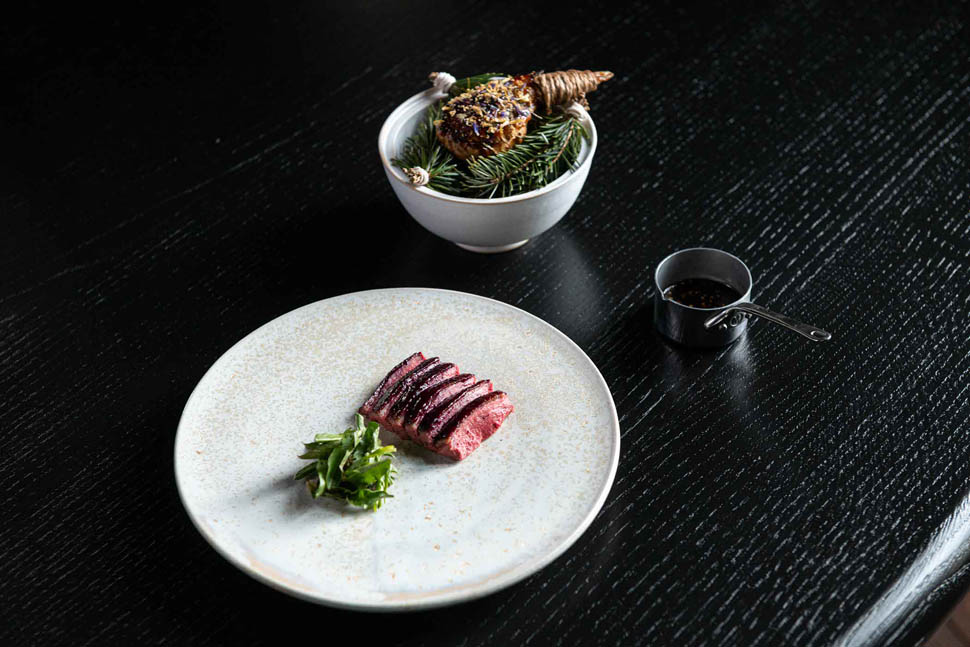
Another marvel is celeriac (in this case, Prestìth friulano, a Slow Food presidium) and porchetta, with horseradish adding a spicy and piquant note, a sauce made with the animal's bones and fruit, and aronia berries adding a pleasant tannic note. The pork rind adds crunchiness and “porchetta-ness.” Then there is tripe with XO sauce, made from a bisque of Noce river shrimp roasted in embers, with a black part that is an infusion of thyme-lemon, verbena, chives, and fermented black garlic. The last savory dish is pork with eggplant and tomatoes harvested at the end of summer and roasted in the embers, wild garlic capers, a sauce made with bones infused with wild garlic capers, and a drizzle of seasoned and smoked lard. On a stone, a skewer made with the less noble parts of the pork and stewed savoy cabbage, all finished with peeled walnuts. As a side dish, Rosa di Gorizia, a winter radicchio, assembled with red turnip petals roasted in embers and marinated with turnip root oil and a sauce made with a reduction of thick turnips and wild strawberries. Did you say turnip?
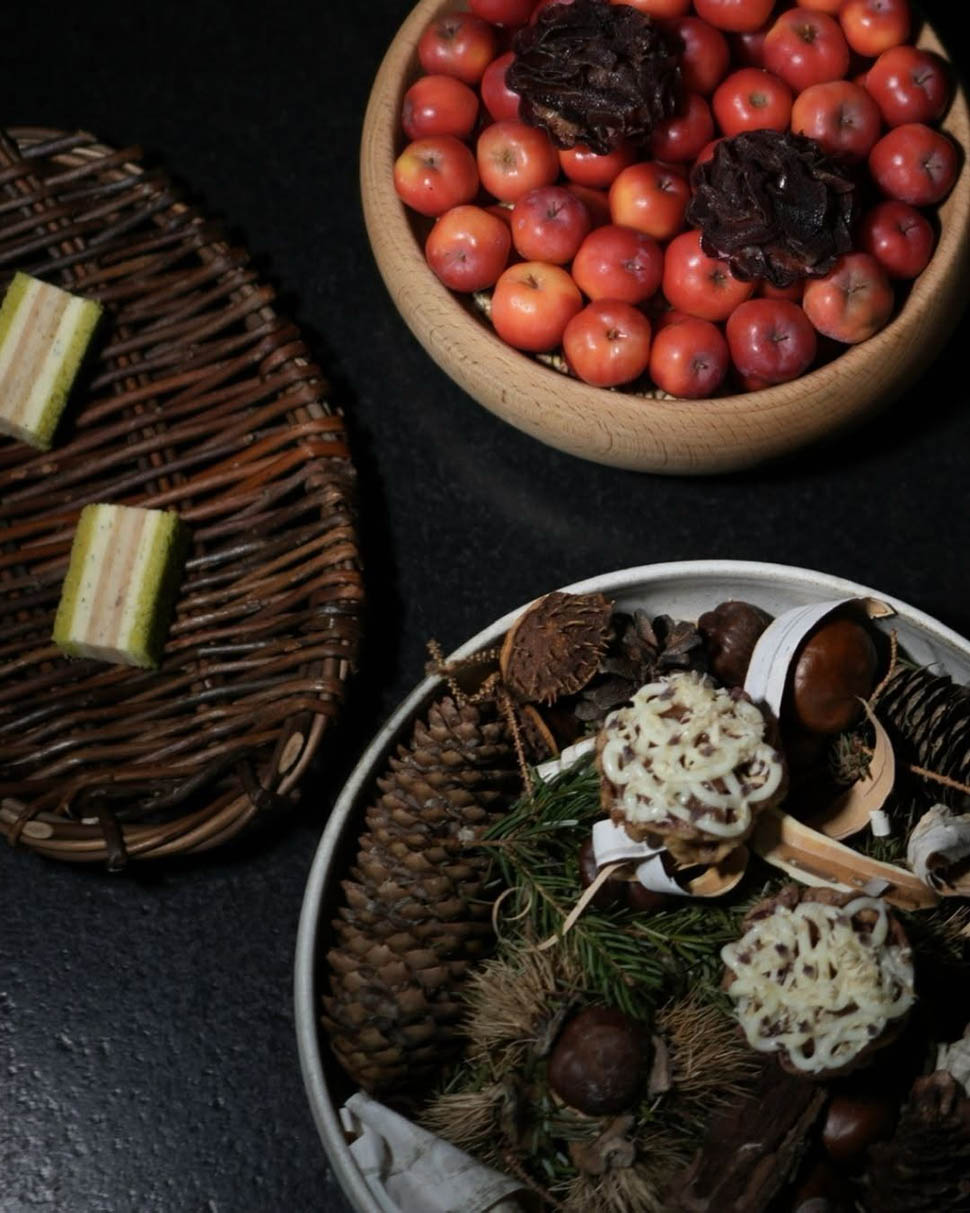
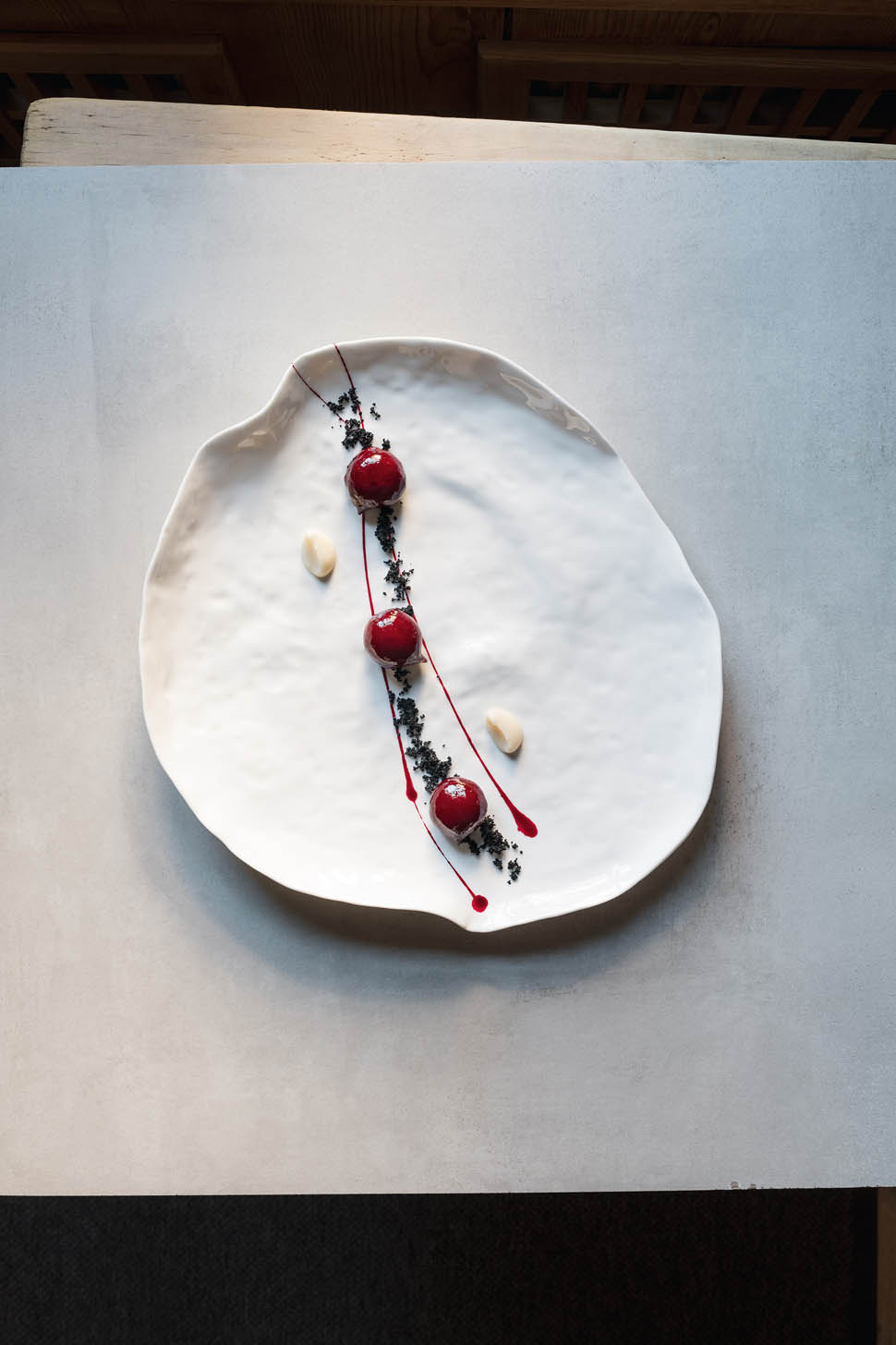
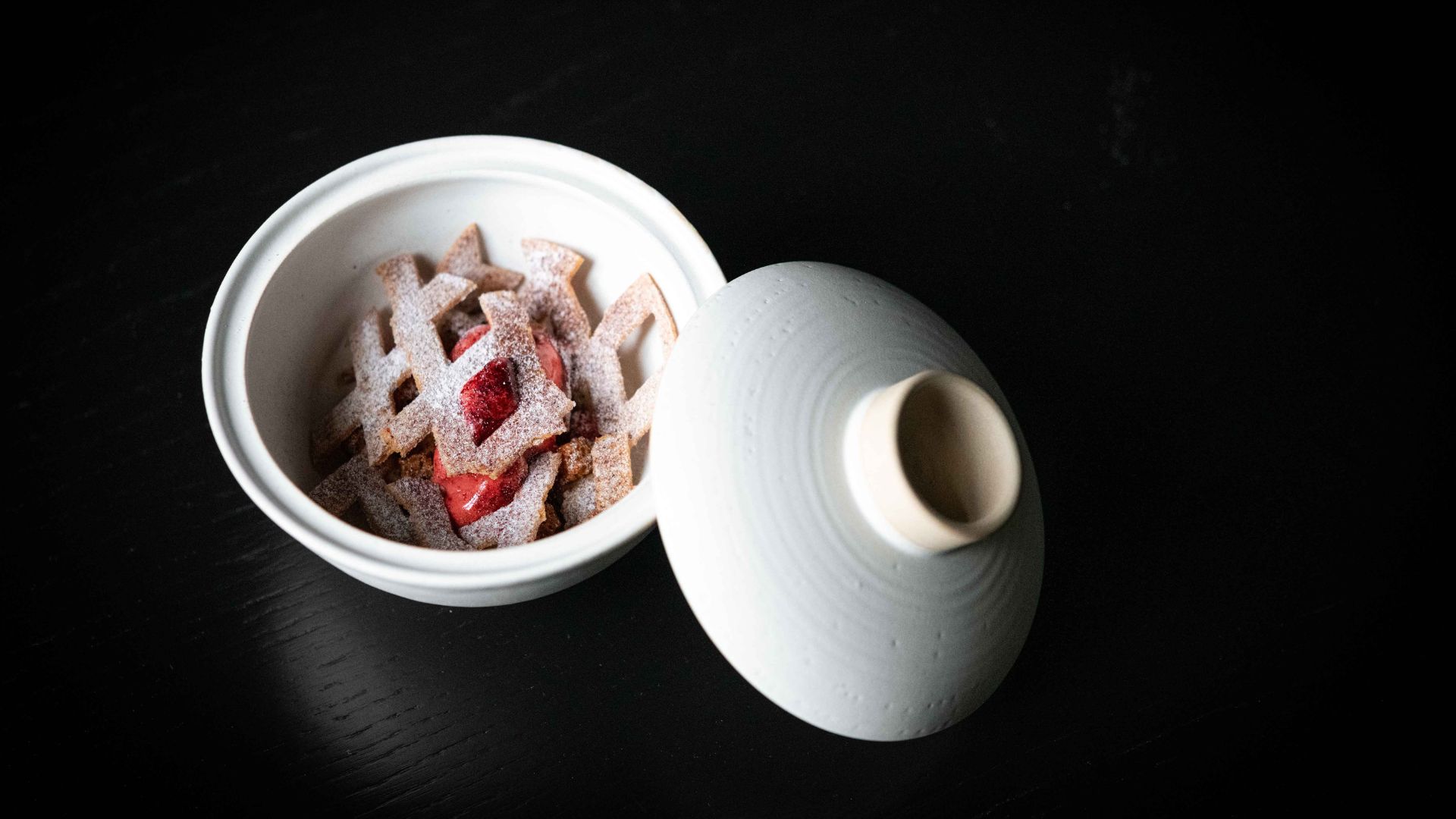
The dinner was long but not tiring, and the desserts arrived with a little appetite still left. Just as well, because Heisse Liebe (hot love) is really worth it: it is a reversed version of a traditional South Tyrolean dessert, normally vanilla ice cream topped with a warm raspberry sauce, here with the vegetable part in the center (beetroot, sorb, and sea buckthorn, the acidity contrasting the bitterness) and a slightly warm sauce with smoked crème fraîche. Finally, a Linzer with cranberry, hazelnut, and cinnamon, which, as it is not available in the area, is replaced with juniper, whose balsamic flavor goes very well with the bitterness of the cranberry. And Norbert's classic Tarte Tatin, made with puff pastry, golden apples, and vanilla ice cream. The meal ends with a few small touches: Appenliebe/Craquelins and Lemon?-Tart/Pino.
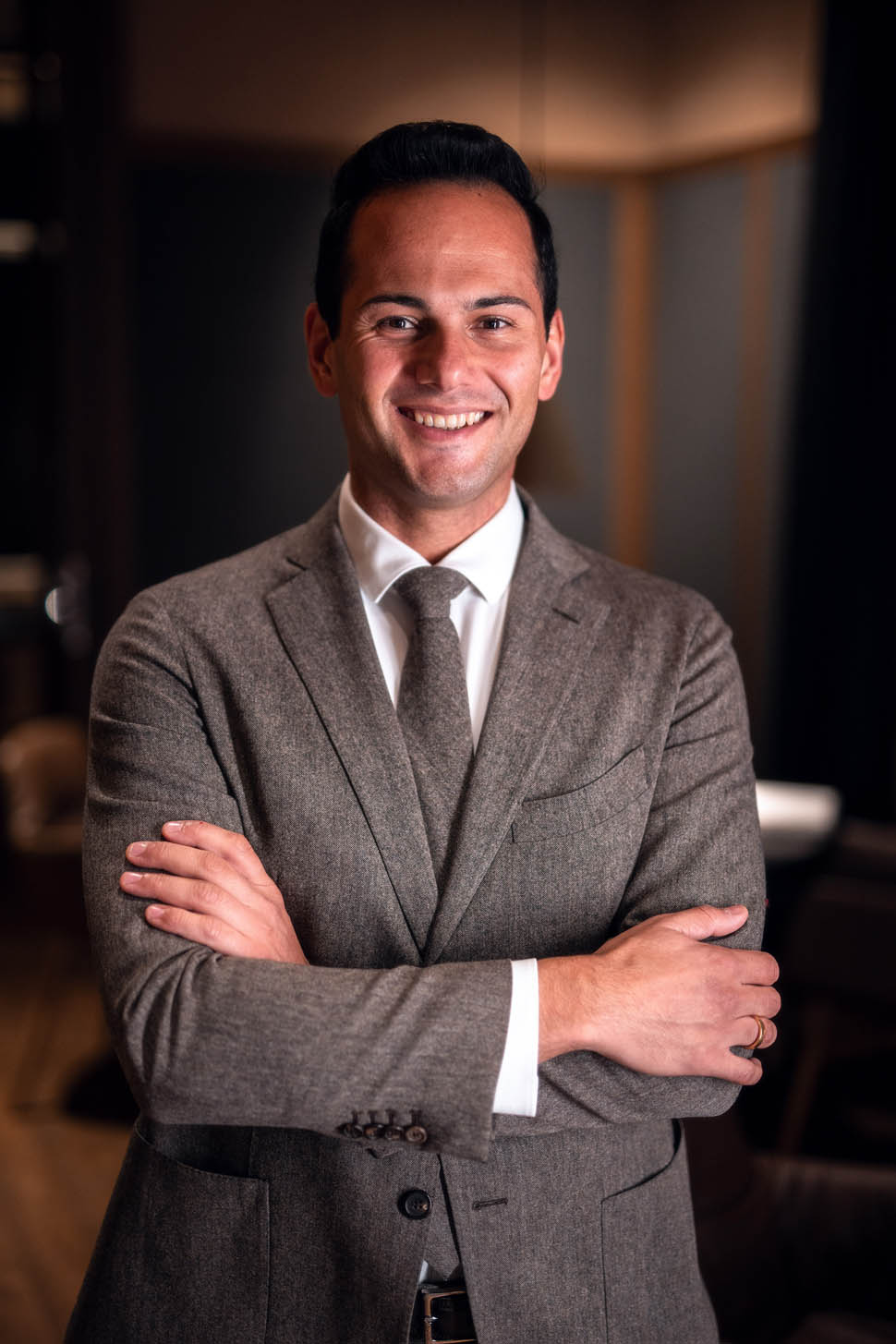
The service is attentive and engaging, and the counter certainly helps to break the ice. The memorable wine cellar is extensively plundered by Lukas Gerges, who is the restaurant manager and sommelier. The menu we described costs €320 without drinks. The alcoholic pairing costs €220, the non-alcoholic pairing €160, and it's really enjoyable.
The mountains have never been so enchanting.
Contact
Via Walther von der Vogelweide, 17, 39031 Brunico BZ
Phone: 0474 646629