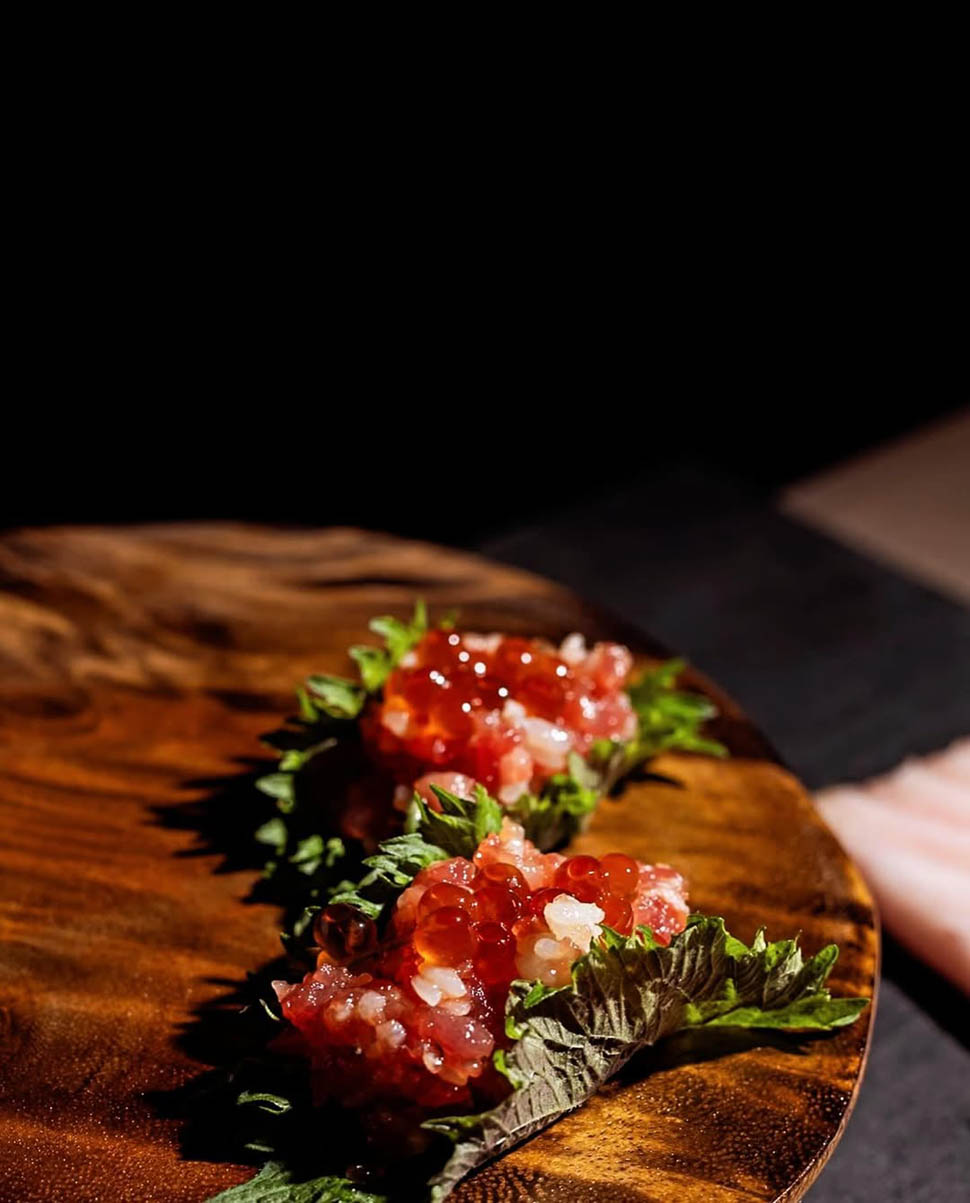
Anbā was founded on the Lower East Side as a ten-seat omakase restaurant, hidden behind a cocktail lounge inside the Concord building, and chose a clear path: Japanese cuisine with a high level of technical expertise, created and carried out by an all-female team. Not as a loud declaration of intent, but as the backbone of the project.
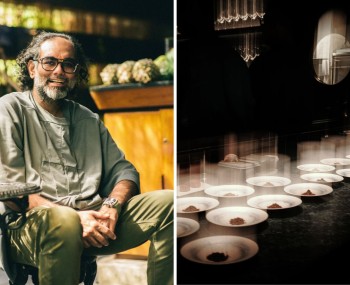
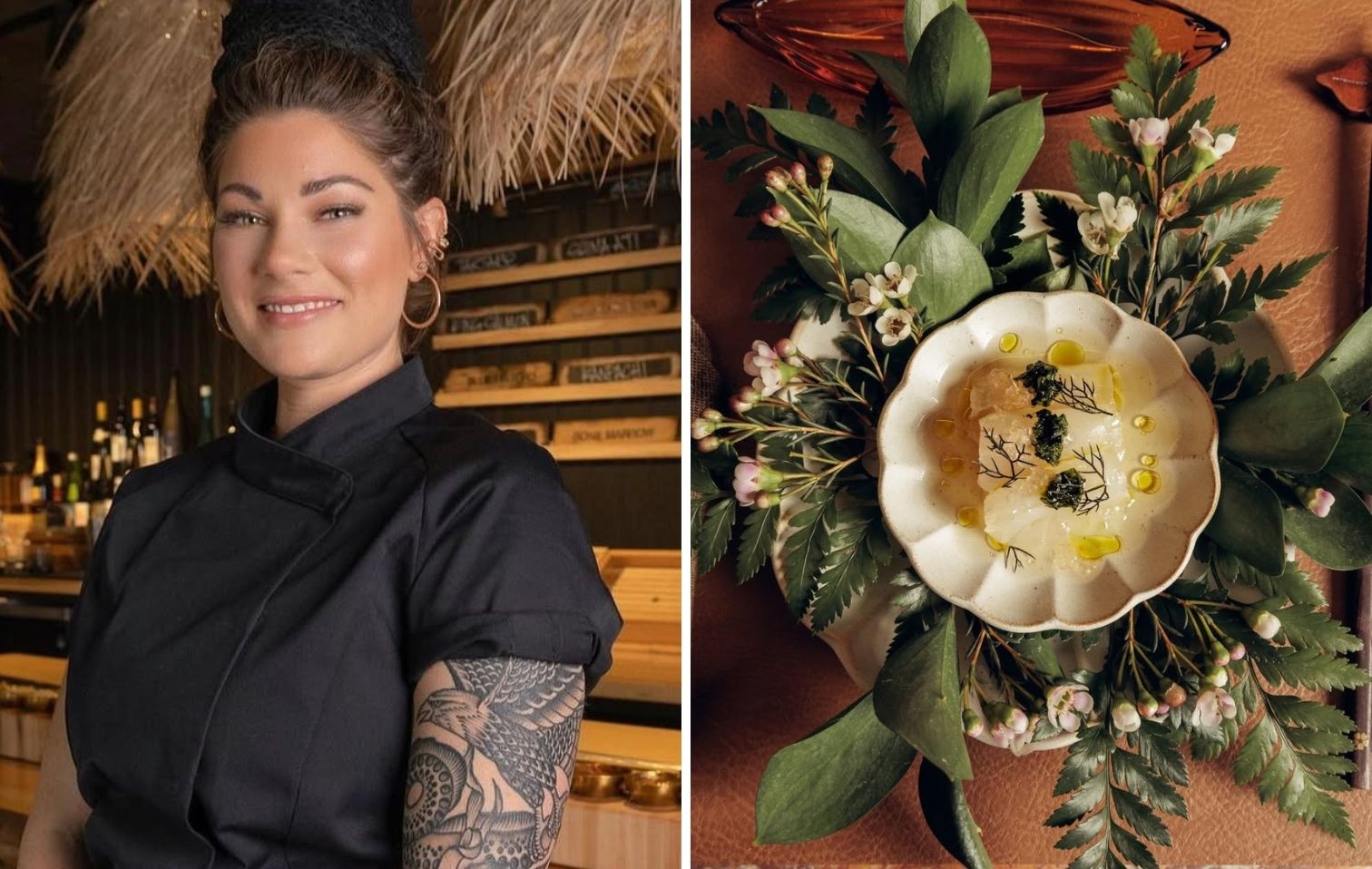
Photo of the chef on the cover: taken from Ambrely Ouimette's official Instagram profile and shot at the former Sushi Bar in Austin.
The chef
At the helm is chef Ambrely Ouimette, who officially opened Anbā on Thursday, February 12, introducing a sixteen-course tasting menu to the city, priced at $220 (approximately €190 at the current exchange rate at the time of writing). The menu is based on classic Japanese techniques, with a strong focus on fermentation and the progressive refinement of ingredients, elements that require time, precision, and a deep relationship with the raw materials. Omakase, in its most authentic form, implies total trust in the chef. But here, that trust takes on an additional significance, because it breaks with the still strongly “masculine” image associated with this type of experience—we will return to this topic in a few lines.
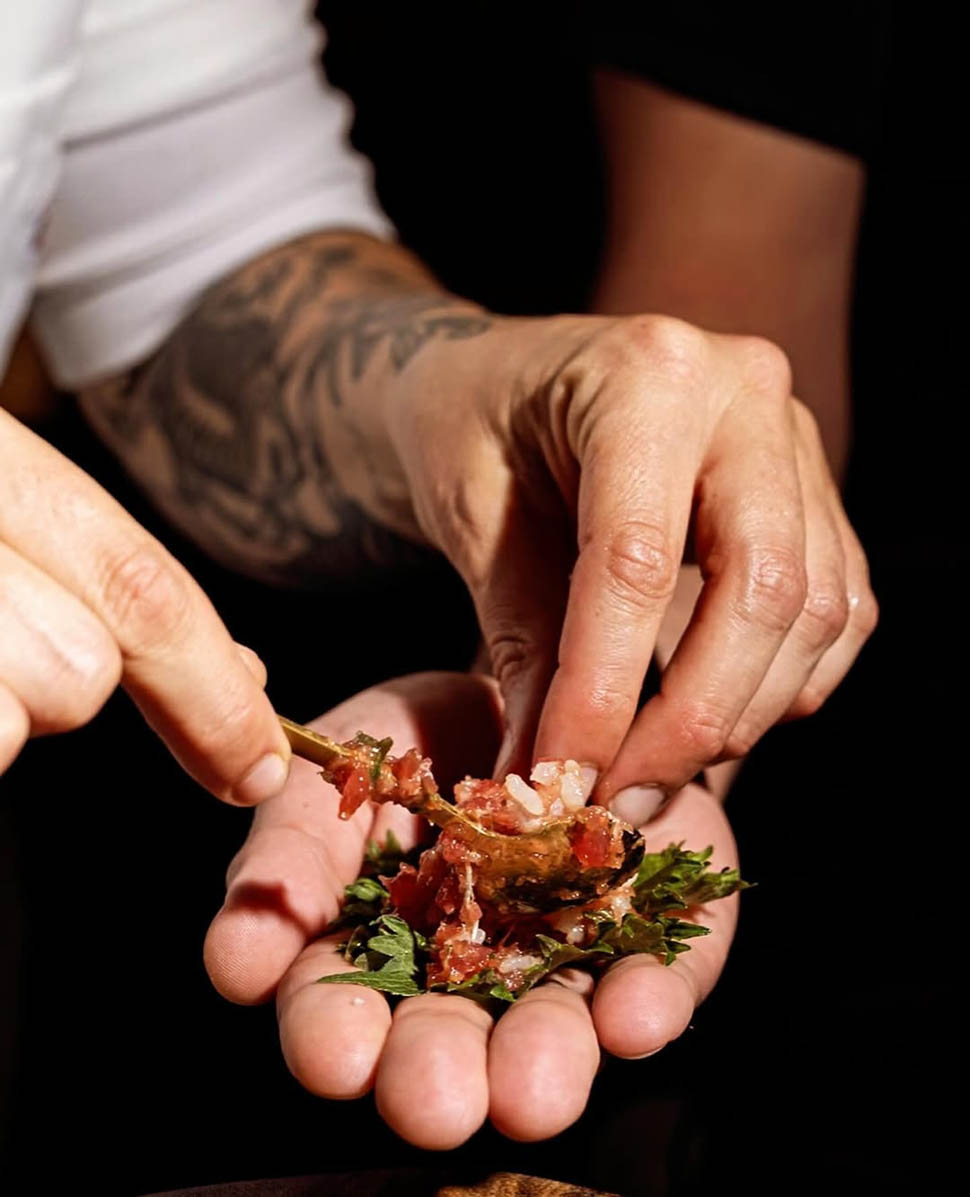
Ouimette's professional career tells a story of training built on layers, not shortcuts. His experience with chef Norio Ishii at Latitude 43 in Massachusetts was a fundamental first step in learning Japanese techniques, followed by his contribution to the opening of Matsuhisa Denver under the guidance of Nobu Matsuhisa, a name that has left an indelible mark on the international spread of contemporary Japanese cuisine. Added to this is his former management of Sushi|Bar ATX in Austin, a role that consolidated his leadership skills, enabling him to move in different contexts while maintaining consistency and rigor. Anbā fits into this trajectory as a mature synthesis, not an experiment. The ten-seat counter encourages close, almost confidential interaction, where every gesture becomes legible. The decision to start with a single seating, from Thursday to Saturday, reinforces the idea of an extended, controlled time, dedicated entirely to the experience. Future expansion to two seatings does not appear to be an immediate goal, but rather a natural evolution, subject to maintaining the pace and quality, given the growing demand.
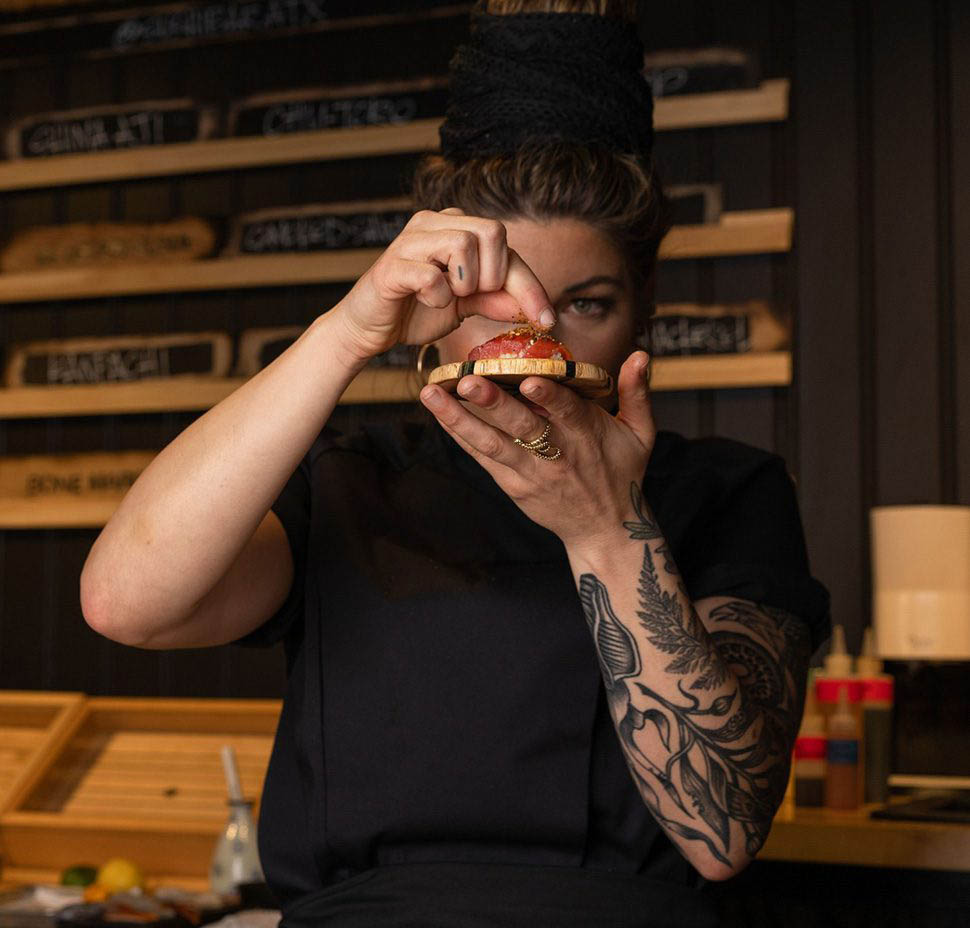
A small, big revolution
However, what makes Anbā particularly significant is not limited to its culinary offerings. The team is composed exclusively of women, a choice that, in a context such as omakase, takes on both symbolic and practical value. High-end Japanese cuisine, especially in its most ritualistic form, remains one of the areas most resistant to change in terms of gender representation. Here, however, competence is not presented as an exception, but as the norm. It is not a question of overturning a paradigm through opposition, but of occupying a space with continuity and authority. Each course in the sixteen-course menu becomes part of a narrative that works on precision, anticipation, and memory. Fermentation and refinement require planning weeks, sometimes months, in advance of service, and tell the story of a cuisine that prefers silence to speed.
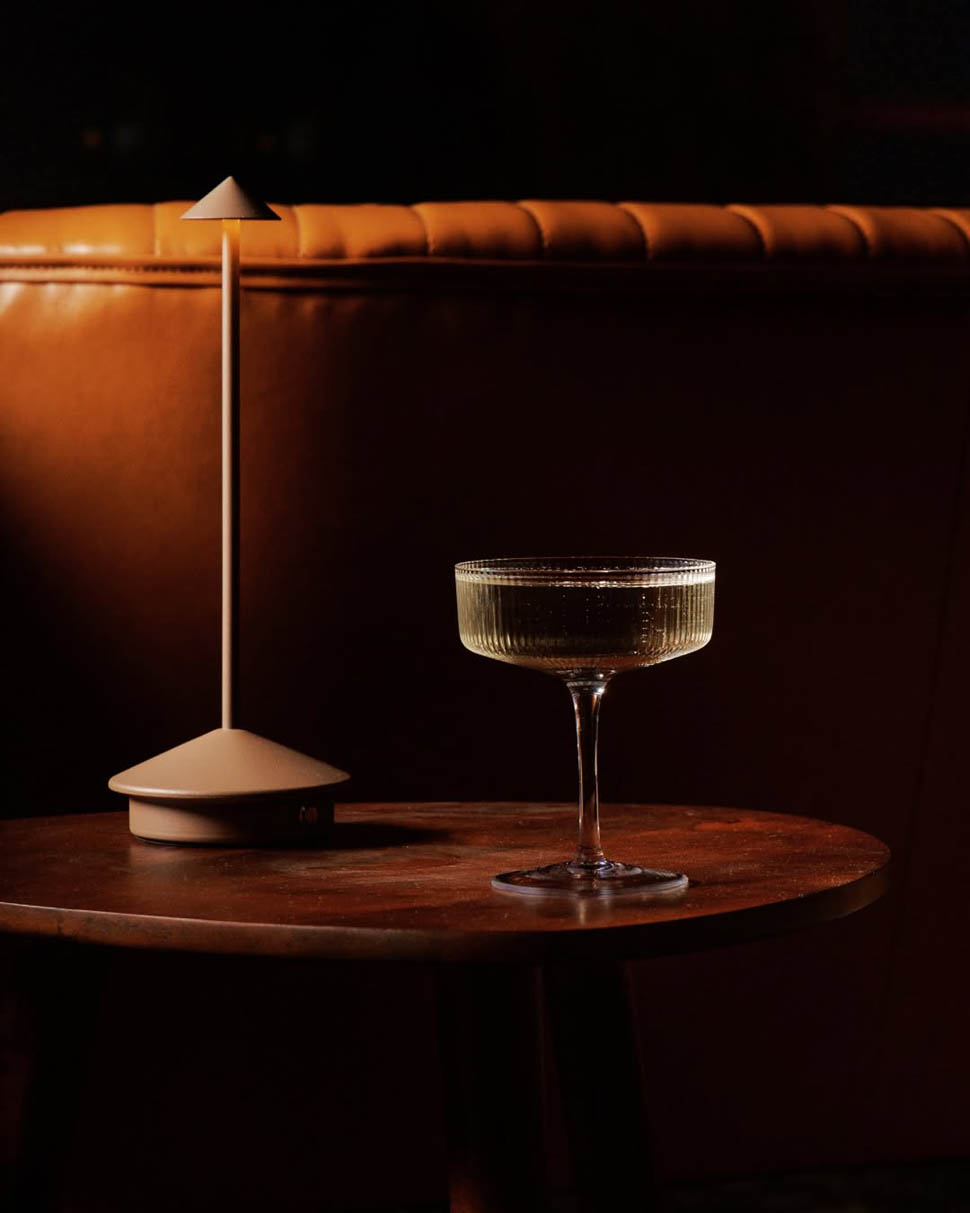
The physical space helps reinforce this approach. Guests enter through a cocktail lounge that serves as an antechamber, almost like a sensory filter. After 11 p.m., that same environment changes register and transforms into a nighttime program with DJs, marking a dual identity that dialogues with the neighborhood without interfering with the concentration of the omakase counter. Two distinct times, two modes of enjoyment that coexist without overlapping. Anbā thus places itself in a Lower East Side that continues to be a laboratory for hybrid formulas, but does so by choosing subtraction. Ten seats, a single menu, a compact team, clear guidance. The female presence is not highlighted through slogans or external narratives, but through the daily act of working in the kitchen. It is a structural fact, not a decorative element.
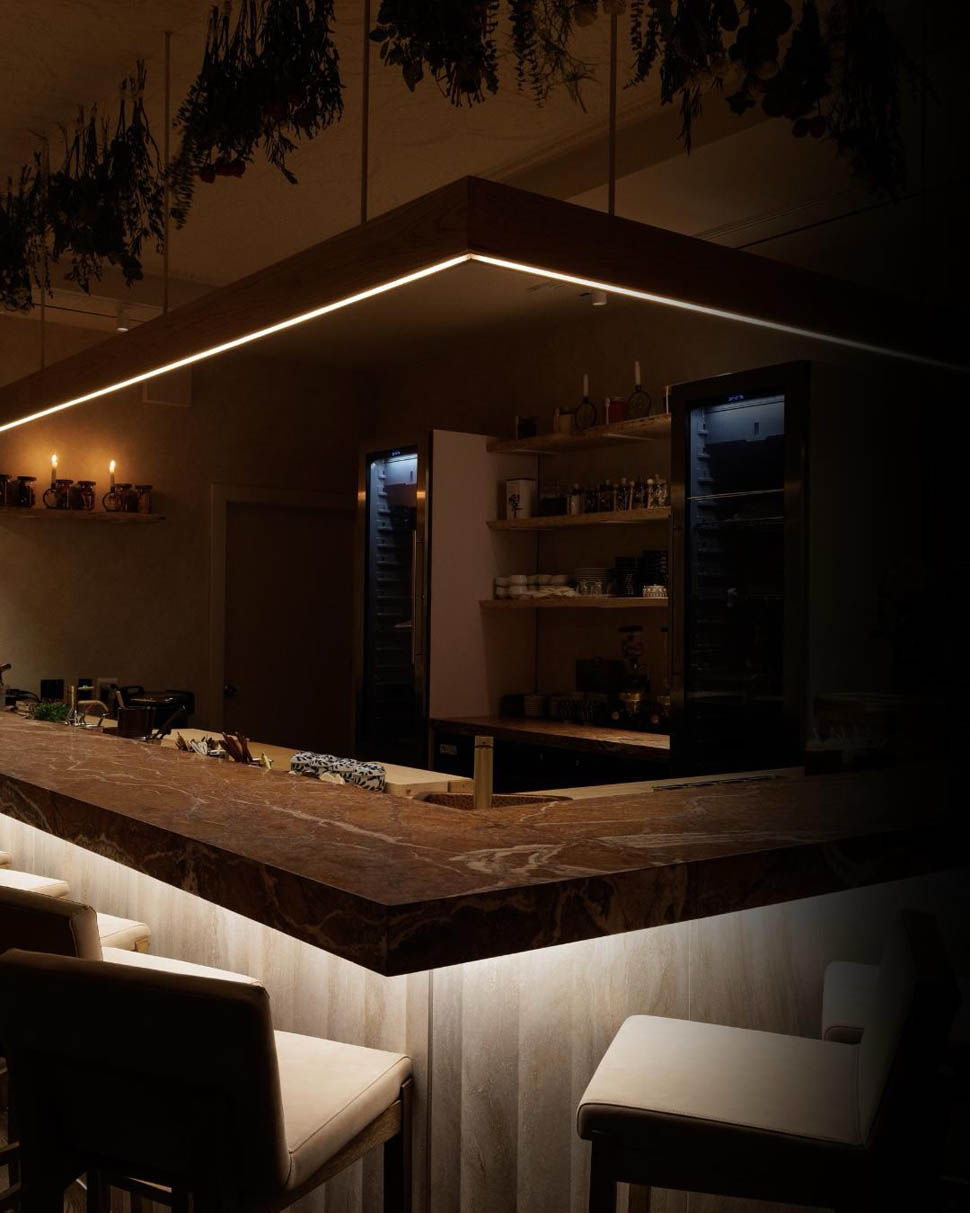
This aspect takes on even greater significance when viewed in the context of the new New York openings in February, often characterized by expansive formats, hybrid identities, and immediate visibility strategies. Anbā takes the opposite approach, focusing on high density and a direct relationship between those who cook and those who sit at the counter. In this sense, the project dialogues with a part of contemporary catering that sees omakase not so much as an exercise in style, but as a form of personal, almost autobiographical storytelling. Anbā does not ask to be read as a manifesto, but as a practice. Its existence, in a complex market such as New York, demonstrates how excellence can also come about through a silent redefinition of roles. Omakase, entrusted entirely to female hands, ceases to be an exception to be explained and becomes an experience to be enjoyed, with the same naturalness with which one accepts to entrust oneself to a chef, without further questions.