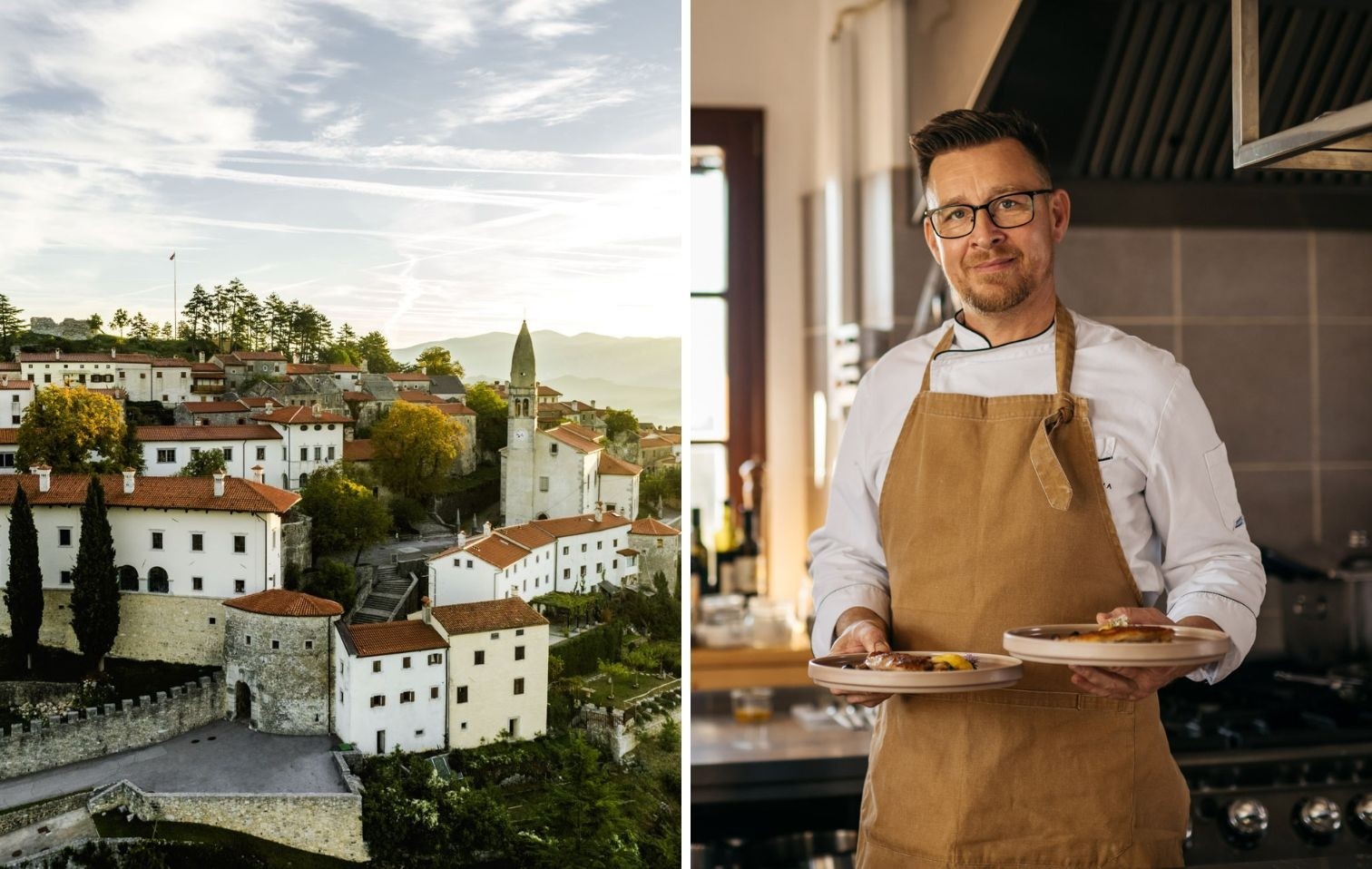
Self-taught and deeply attached to Italian cuisine and its interpreters—in particular Emanuele Scarello of Agli Amici in Udine—Simo Komel also manages the wine cellar inside the castle, dedicated to Italian and Slovenian Karst wines. This is yet another element that reinforces the idea of Grad Štanjel as a meeting place, where cuisine is never isolated but interacts with the landscape, history, and people who inhabit it.
The history
The entrance to Štanjel is nothing spectacular in the contemporary sense of the word, and perhaps this is its first gesture of seduction. You climb slowly on foot along a short road that seems to filter your gaze and your steps, as if the village were asking for attention before revealing itself. The medieval walls, the karst stone reflecting a dry light, the low roofs and the silence that is never empty set the stage for a story that speaks of stratification, memory and measure. Within this setting, which has spanned centuries without ever becoming a backdrop, the experience of the Grad Štanjel Restaurant & Lounge takes shape, led by the Komel family and the cuisine of Simo Komel, a self-taught chef with an elegant touch and a surprisingly lucid vision. Štanjel is one of the oldest settlements in the Slovenian Karst, built in terraces on the hill of Turn, a compact organism where architecture, nature, and everyday life continue to dialogue without constraint. The medieval castle, the defensive towers, the Church of St. Daniel with its lemon-shaped bell tower, the streets that house the oldest Karst houses, and the famous Ferrari Garden, designed between the two wars by Maks Fabiani with a then futuristic water system, make up a cultural landscape that is now experiencing a new season. Galleries, museums, events, and shops keep the spirit of the place alive, transforming it into an active cultural center, far from the idea of a crystallized village.
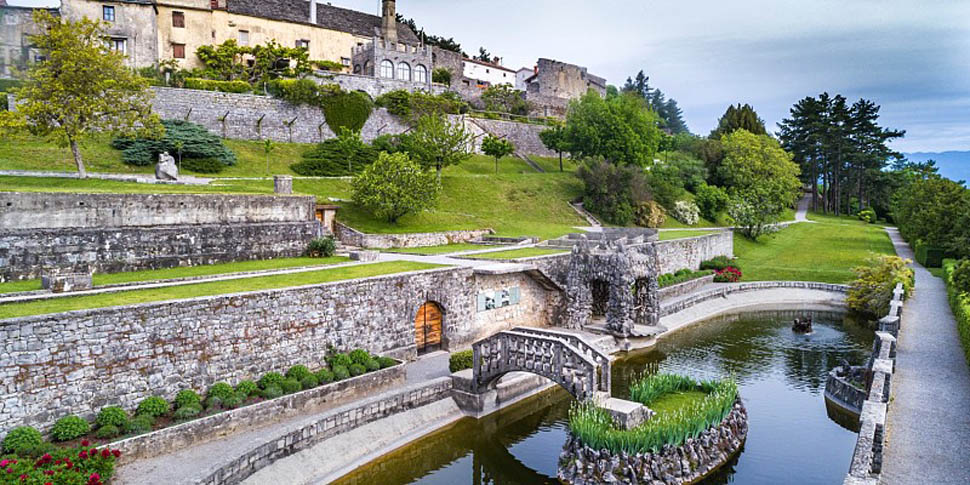
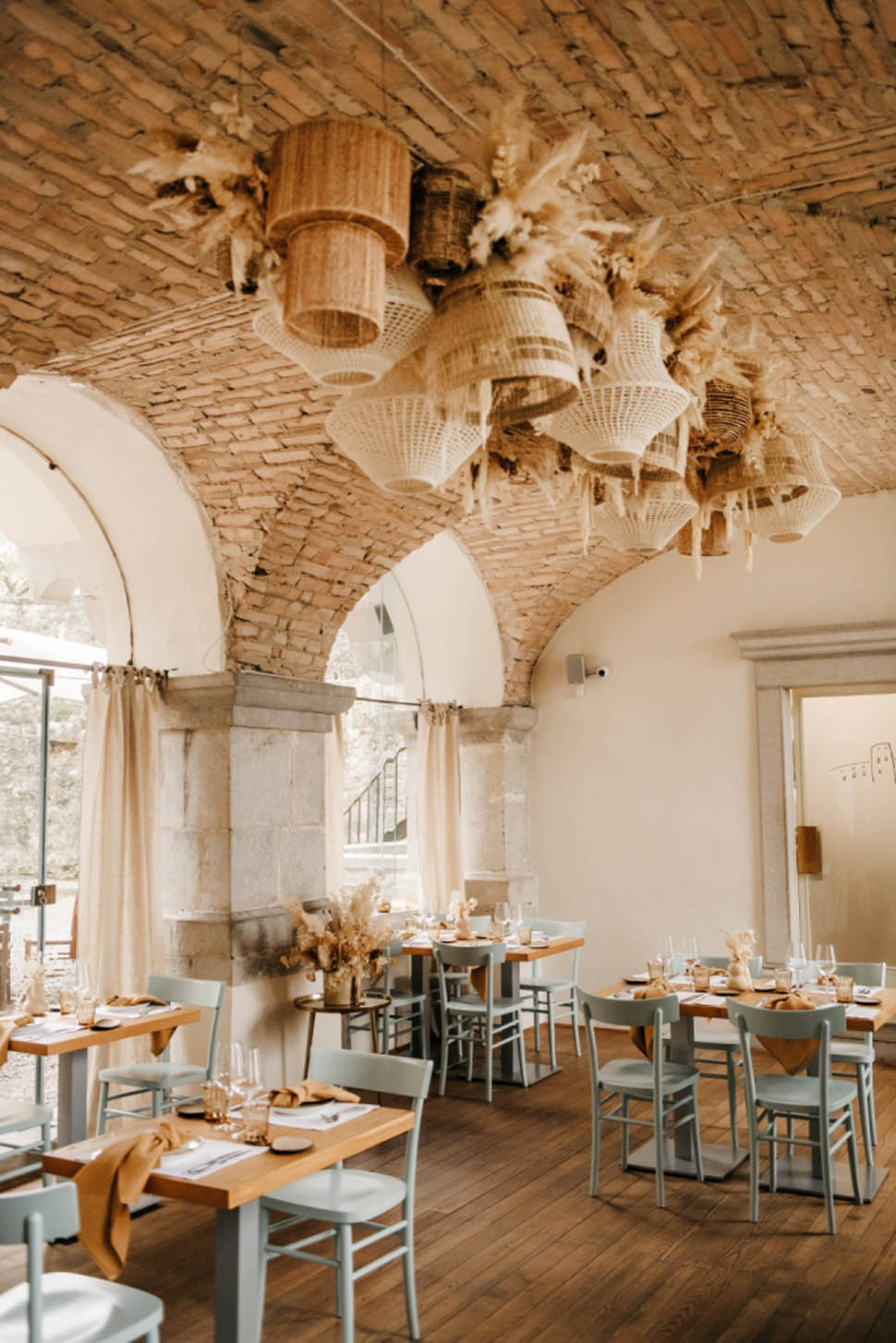
Inside the castle, the restaurant operates with discretion and consistency. Pastel tones, unobtrusive background music, a view that opens onto the karst hills, and attentive service led by Gaja Komel create a sense of measured elegance, made up of thoughtful details and a pace that invites you to linger. In summer, the large outdoor courtyard becomes an integral part of the experience, while in the colder months, a dedicated room welcomes guests with the same attention. The impression is that of a place that does not seek to amaze, but to accompany, letting the cuisine tell the story of the territory.
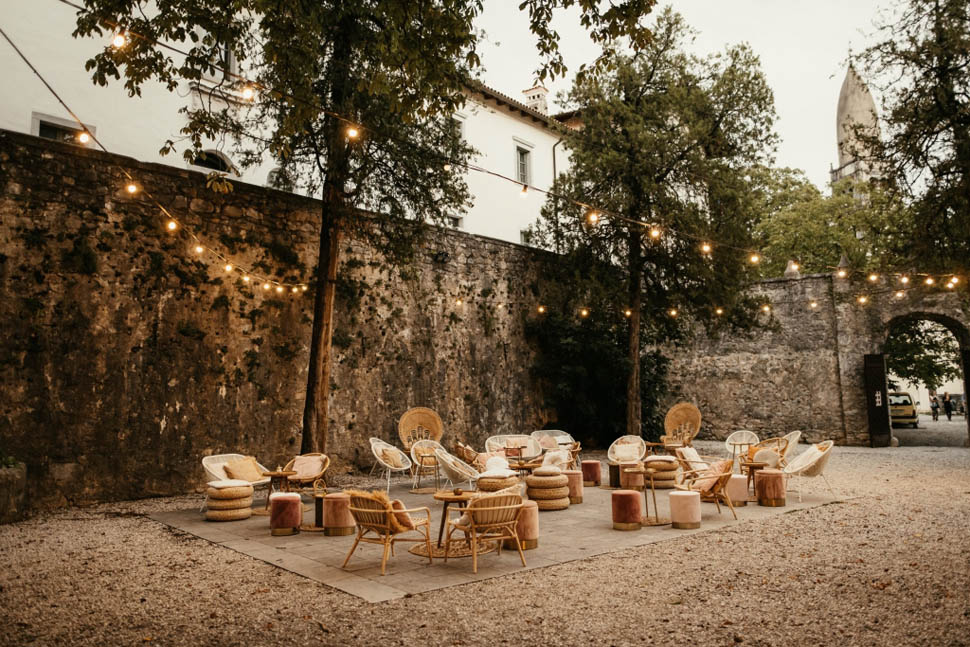
“My cuisine is an expression of the territory, of what our grandparents used to eat, and is part of the local culture,” says Simo Komel to Michelin, summarizing in a few words a philosophy that avoids grandiose statements. The Karst region, explains the chef, has historical ties to the sea, which is why his table features both land and sea dishes, sometimes even on the same plate, without ever needing to separate the two souls into distinct menus. “For me, they represent a single narrative of these places,” he adds, clarifying how cuisine becomes an instrument of continuity rather than rupture. The menu follows the seasons and the daily market, changing constantly, with the exception of a gesture that opens each experience and says a lot about Komel's approach. A small glass of Gregor Lisjak's extra virgin olive oil, accompanied by Piran salt and an olive, arrives at the table as a welcome. “There used to be many olive trees here too,” explains the chef, “and for about fifteen years now, their cultivation has been resuming. Putting oil at the center of the plate, as if it were a course, means giving it importance and making it an integral part of the tasting.” A simple but deeply symbolic act that brings attention back to an ingredient often relegated to a side dish.
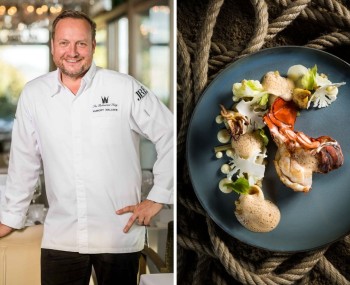
The cuisine of Grad Štanjel moves naturally between fish from the Adriatic and meat from the local area. The menu may feature turbot, Fonda sea bass, sea bream, shrimp, and scampi, alongside meats that follow the seasonal calendar: beef and veal in spring and summer, game in the colder months—wild boar, deer, pheasant, hare—and pork, a central element of local tradition. The dishes reflect this richness without any superfluous additions: the venison fillet with onion purée and berries plays on depth and acidity, while the mosaic of pork neck wrapped in pancetta, with vegetable charcoal, dehydrated pork skin crumble, celeriac purée, and beetroot foam demonstrates a technical skill that always remains at the service of taste. The ravioli stuffed with chicken stomach, served on a cream of milk and garlic and parsley, reveal a cuisine that is not afraid to work with less noble cuts, transforming them into dishes of great elegance. These preparations are part of a gastronomic ecosystem that involves local artisans and producers. Bread by Pedja Kostić from Trieste, Jamar cow's milk cheese from Zidarič, also featured in an eggplant and tomato dish, gin from the Slovenian distillery Brin served with Terrano sorbet, a wine that also accompanies the dessert made with pears cooked in their own liqueur, pear ice cream, cinnamon crumble, Terrano raisins, and caramelized walnuts. Each element finds its place without forcing, as part of a shared story.
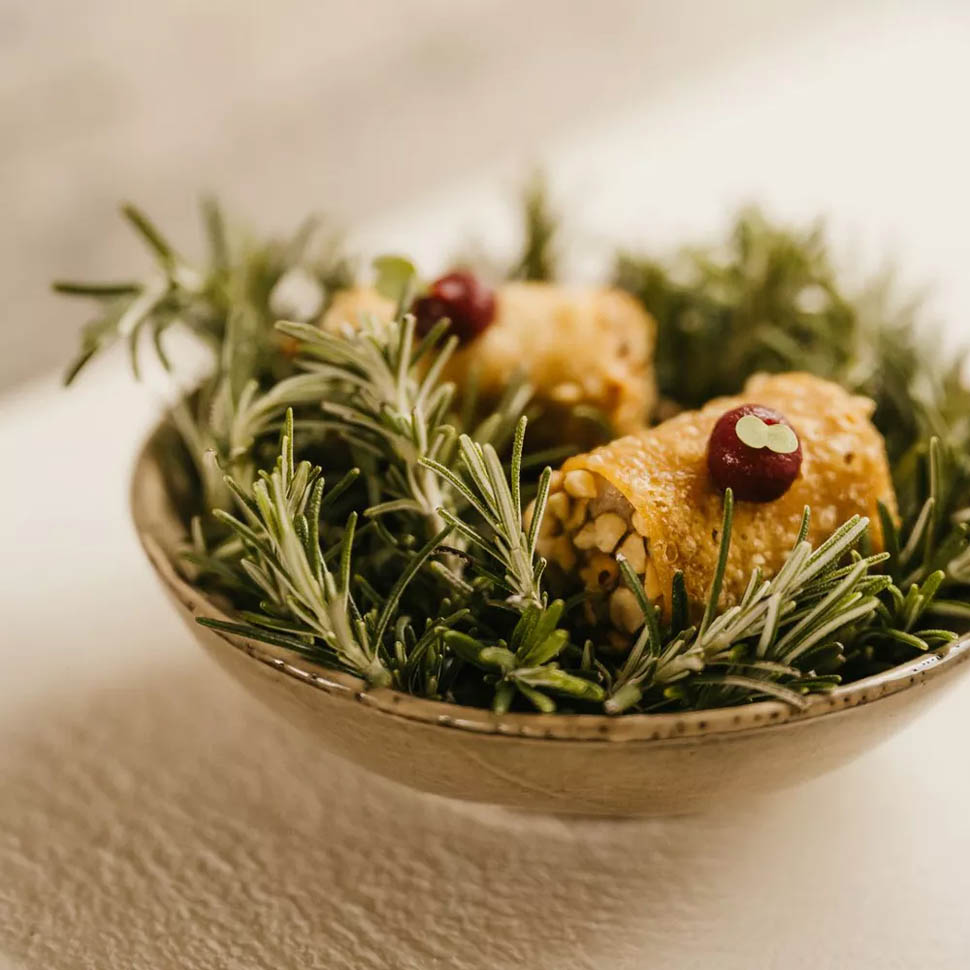
The creamy corn soup with ginger, roasted red pepper, homemade sour cream, and polenta chips remains emblematic, a dish that encapsulates the soul of the Karst, as does the Q Komel ham, produced directly by the family. The link with tradition is personal and profound: the grandfather, in the Vipava Valley, was an expert butcher, and pork processing was part of everyday life. Today, the family produces about a hundred prosciutto hams a year, as well as salami and pancetta, mainly for the restaurant. The hams, aged between two and four years, often appear as off-menu items; among these, one aged 81 months, the longest ever produced, is a true testament to patience and care. Self-taught and deeply attached to Italian cuisine and its interpreters—in particular Emanuele Scarello of Agli Amici in Udine—Simo Komel also manages the wine cellar inside the castle, dedicated to Italian and Slovenian Karst wines. This is yet another element that reinforces the idea of Grad Štanjel as a meeting place, where cuisine is never isolated but interacts with the landscape, history, and people who inhabit it.
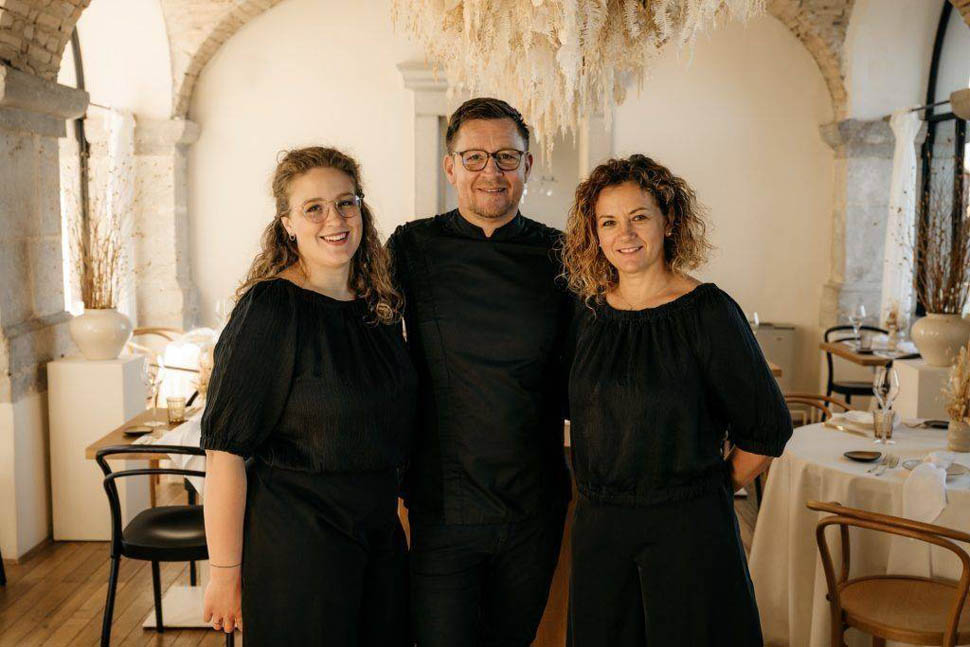
To sit at the table here is to enter into a story that unfolds without haste, made up of measured gestures and consistent choices. The feeling is that of a cuisine that does not seek definitions, but works by sedimentation, letting the Karst speak through the dishes, the stone, the oil, and the wine. An experience that restores a human and territorial dimension to fine dining, capable of leaving a lasting impression without raising its voice.