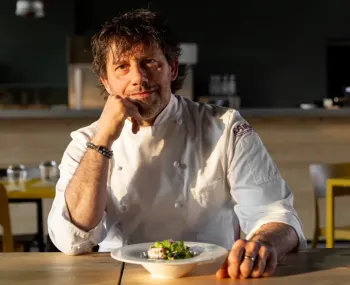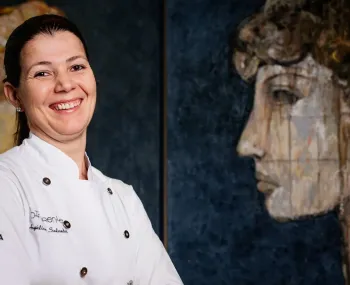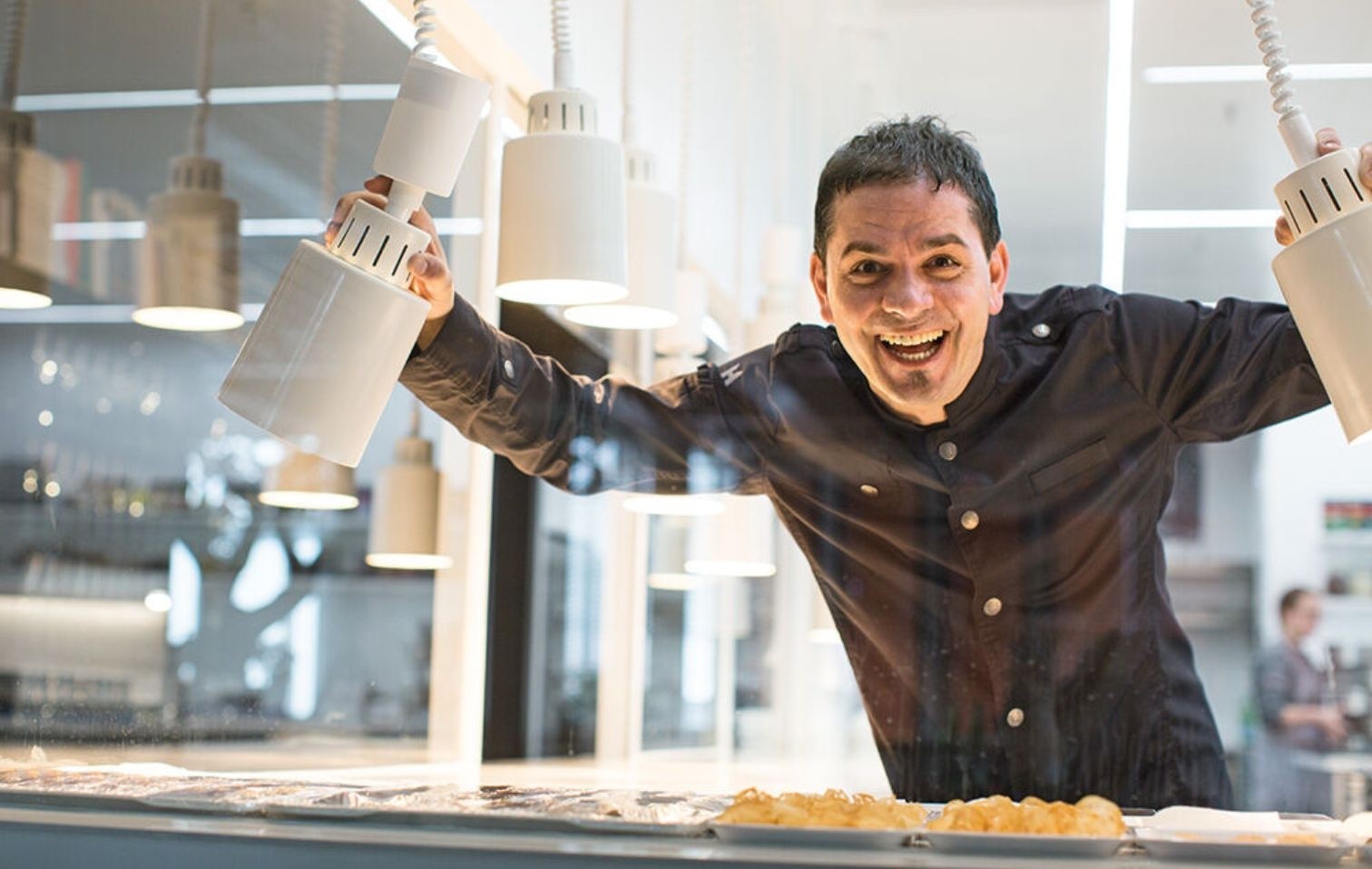
The noise that is sweeping through Hamburg's fine dining scene is not a scandal, but a sharp, almost orchestral blow. A Paukenschlag, as the Germans call it, which carries with it an emotional vibration even before a professional one: Matteo Ferrantino announces his departure from bianc, a restaurant that in just a few years has become a recognized and respected institution, capable of earning two Michelin stars and showcasing a cultured, personal, deeply European Italian cuisine without ever losing its identity.
The news
The words used to communicate the decision reveal a controlled melancholy, never theatrical. “Leaving you has been one of the most difficult decisions of my life,” writes Ferrantino in his farewell message to guests and staff. A farewell with a specific date, December 31, which closes a chapter that lasted eight years, intense and layered, like certain reductions that need time to find balance. It is not a definitive farewell, and those who know his trajectory know this: Ferrantino is a chef who moves out of expressive necessity, not inertia, and his silence about the future has the flavor of a fertile pause. Il bianc began as a gamble that few would have imagined would be so successful. Ferrantino arrived in Hamburg after a journey that took him through some of the most iconic kitchens in European gastronomy: his experience with Roland Trettl at Hangar-7, a laboratory of visions and influences, and above all his years at Dieter Koschina's Villa Joya, a place of rigor and obsession with detail, where the Italian chef grew to become Küchenchef. The legend, which in the kitchen often resembles the truth, tells of a guest who was so impressed by his talent that he offered to finance his own restaurant. From that moment on, the rest came quickly: opening, first year and first Michelin star, then in 2020 the second, confirming his already evident maturity.
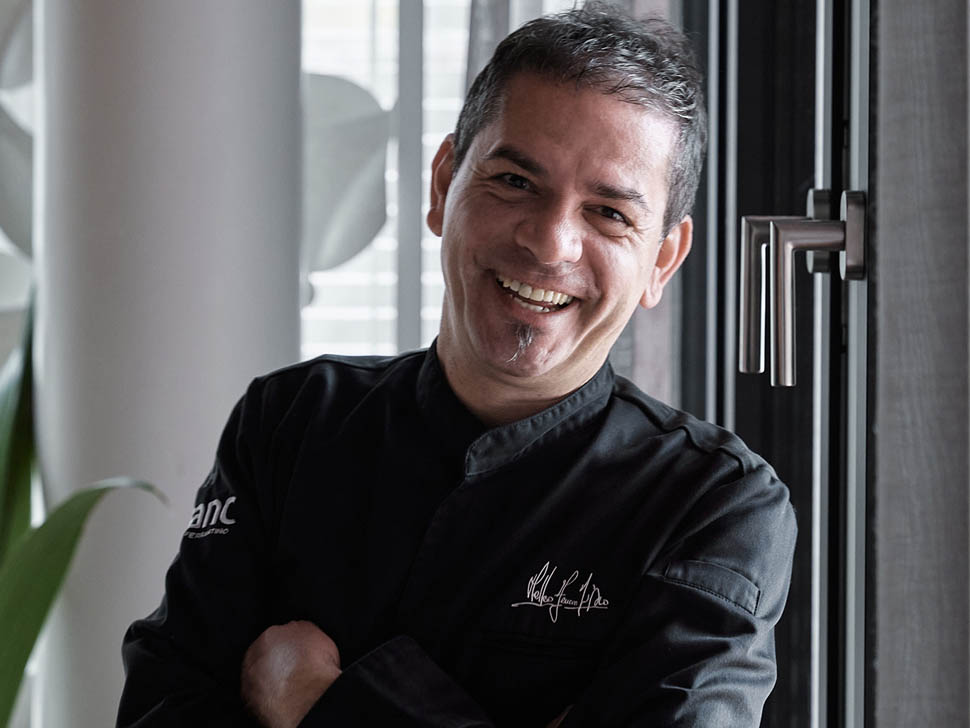
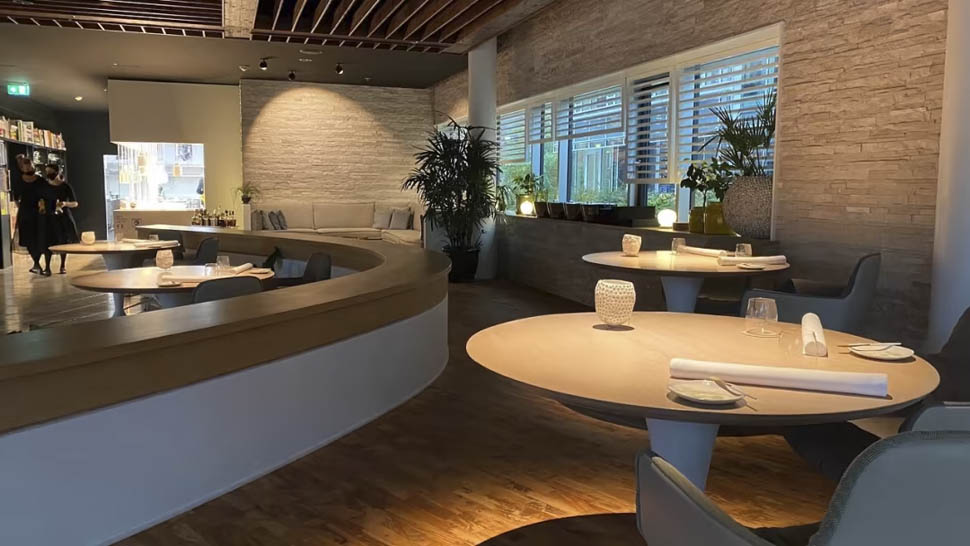
Bianc has thus become a destination, not only for Hamburg but for an international clientele that recognizes in Ferrantino a voice capable of moving between Italian memory, French technique, and Nordic sensibility, without ever forcing the narrative. A cuisine that has always rejected special effects for their own sake, preferring a constant dialogue between product, territory, and gesture. In eight years, the restaurant has built a strong, recognizable identity, capable of evolving without betraying itself, and its success has never appeared as a sudden result, but as the consequence of consistent work. Ferrantino chooses silence on the reasons for his departure. No official statement, no explanation that seeks to influence interpretation. In the restaurant's newsletter, the chef thanks everyone for their trust, loyalty, and support over the years, words that sound like a respectful, almost intimate farewell, closer to a personal letter than a press release. A gesture that confirms his approach to the restaurant business: always more interested in relationships than in forced storytelling.
However, the passing of the baton is not marked by nostalgia, but by generational continuity. Marvin Böhm, one of the most interesting names in new German cuisine, already known to insiders for his early and surprisingly solid career, will take up the mantle. Young in age but with an impressive CV, Böhm made a name for himself by winning the Junger Wilder title at just 24 years of age, an award that recognizes talents destined to leave their mark in Germany, and in 2023 he was named Sous Chef of the Year. Since 2010, he has been working at Aqua in Wolfsburg, a three-Michelin-starred restaurant and one of the temples of contemporary European gastronomy, where he has refined his technique, discipline, and vision, eventually becoming sous chef. It has been a long, quiet journey, built within a complex kitchen that requires absolute precision and management skills, qualities that are now essential when taking over the reins of a restaurant like bianc. His arrival marks a new phase, which could also include a name change, a hypothesis that is circulating discreetly but which suggests a desire for redefinition rather than a break with the past.

The choice of Böhm as his successor does not appear to be random. Entrusting the kitchen to a young but highly trained chef means recognizing that fine dining today needs new energy capable of communicating with an increasingly attentive, informed, and demanding clientele. The white coat is not handed over to a custodian, but to an interpreter, someone who can write a new score without erasing what has been. In this sense, Ferrantino's departure takes on an almost programmatic value: leaving space at the right moment. The question remains open as to the future of the Italian chef. Those who know him know that he is unlikely to stay away from the kitchen for long. Ferrantino is one of those chefs who need a project to express themselves, and the idea that he might return with a new opening, perhaps in a different context, perhaps with a new formula, is more than plausible. After all, his career has always been marked by courageous, never predictable choices, and his departure from the restaurant seems to follow the same logic: closing a cycle while it is still vital, leaving it intact in the collective memory.
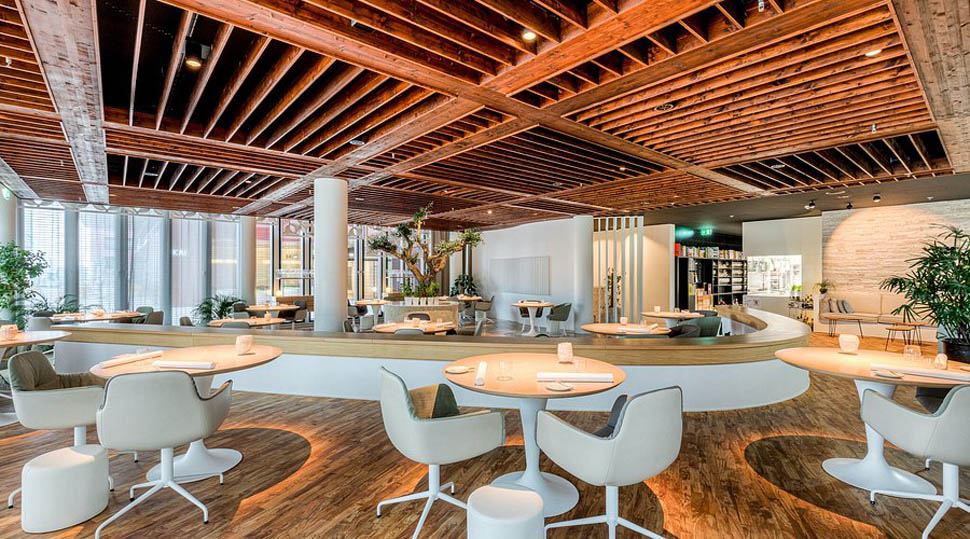
Meanwhile, Hamburg watches on. The city loses one of its gastronomic landmarks as it has known it until now, but gains a new chapter to follow closely. Bianc, with or without a new name, remains a place full of expectations, ready to be rewritten.