Top-quality ingredients, Italian taste, and French aesthetics: the recipe for modernity.
LIBERA PASTICCERIA, THE PASTRY SHOP FREE FROM DEFINITIONS
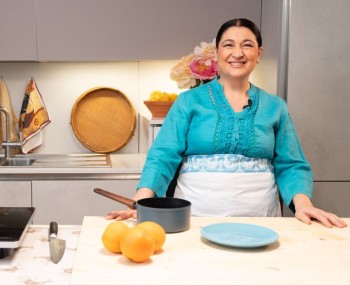
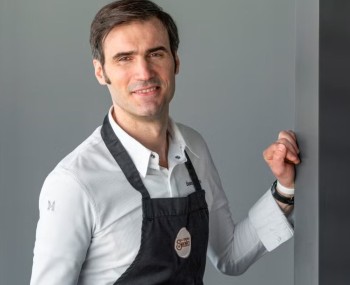
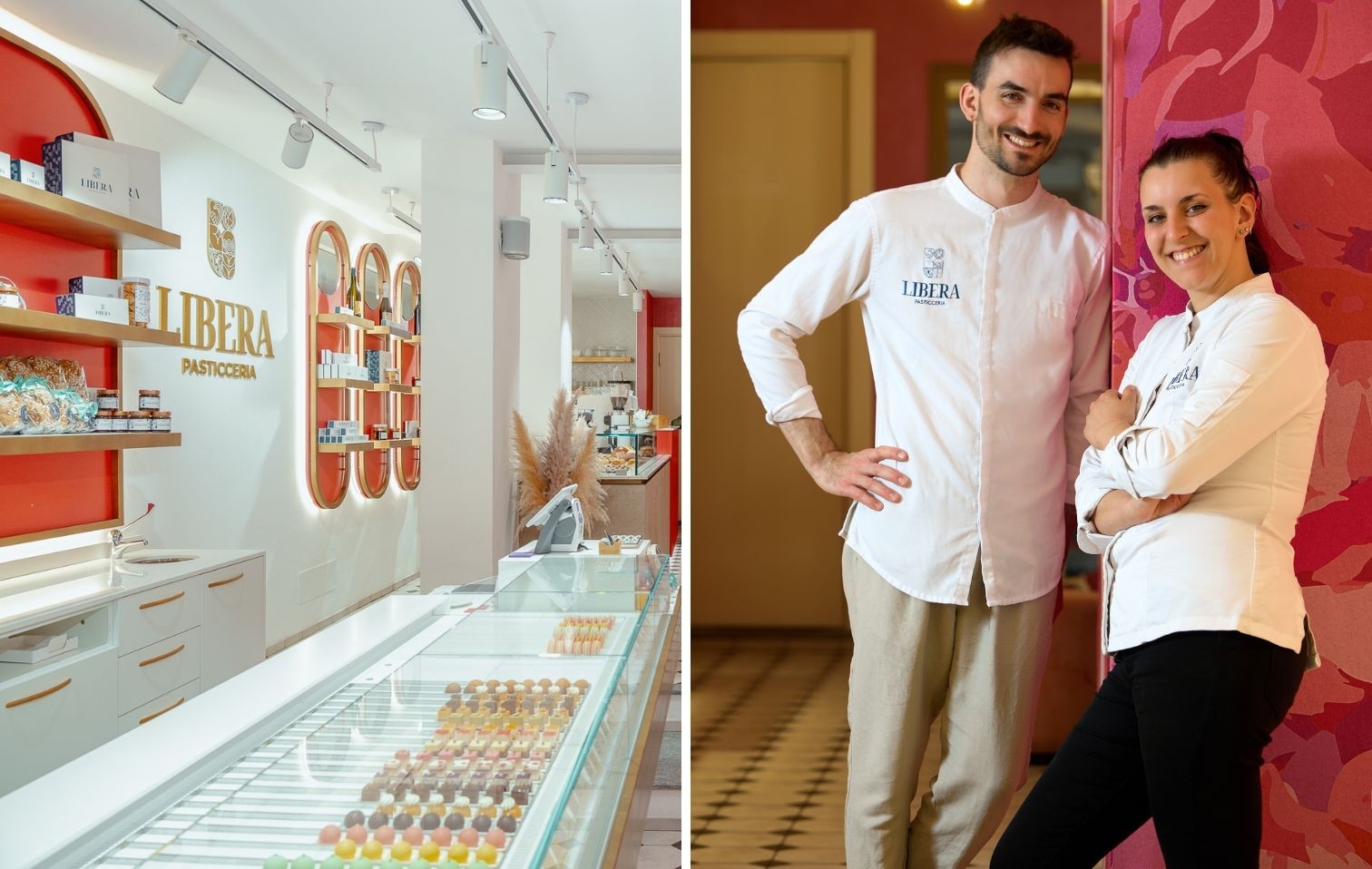
In the historic center of Asti, in Piedmont, there is a little gem for those with a sweet tooth. Libera is a decidedly contemporary pastry shop: neither French nor Italian, neither modern nor traditional. It is a combination of all these things, free from rigid labels. It caters to Italian tastes but is inspired by French aesthetics. It reflects the projects and strong identity of its two owners, Arianna Valente and Raffaele Gant. Opened in 2023, it has slowly won over the cautious hearts of the Piedmontese town, where Arianna grew up. Raffaele comes from the province of Belluno, but has always been in love with Piedmont, which is why they chose this as the location for their dream. It was a happy choice, which is giving them satisfaction in terms of customer feedback, but also in terms of recognition, such as the Gambero Rosso emerging pastry shop award, won last year.

Raffaele comes from a technical institute, but he has always had a sweet tooth. He discovered his passion for pastry by chance: one day he was invited to dinner by friends, asked his mother for a recipe to bring a dessert, and his passion was sparked. He realized that he was looking for something different in life and enrolled at Alma, where he met Arianna, who comes from a classical high school. Together they traveled extensively, gaining experience in Italy and abroad, in pastry shops, restaurants, and hotels, always in the dessert department. They also shared an important experience as pastry chefs in a luxury hotel, the Castello del Nero, mentioned in the Michelin guide precisely for its attention to desserts. From then on, the two shared a common vision.

The most important experience for them was in France, in a Relais Dessert laboratory with Sébastien Brocard, where they were introduced to high-quality pastry making and also acquired an entrepreneurial vision. There, they learned the French approach to texture and taste, a refinement that enriched their knowledge, combined with a rigorous approach to work, with precise organization of productivity and the goal of producing volume without compromising on quality. “It opened our minds to a way of working, to planning, and we acquired an important mindset”. Upon returning to Italy, they felt the need to go back to smaller-scale production and work on their own recipes.

“In the laboratory, there is an unwritten division of roles that suits each of our preferences,” they explain. Arianna has a preference for fresh single-portion pastries, mignon pastries, and chocolates, while Raffaele focuses more on leavened products and viennoiserie and takes great care of his live sourdough starter, a demanding job that few people do. “We are different but complementary, we have never argued about taste or how to create the product,” Raffaele and Arianna are on the same wavelength, heading in the same direction, and this is evident from the way the conversation unfolds, where sometimes one walks away while the other talks, and then they find themselves asking “what did you say?” and in the end the other would have used more or less the same words. “We put our heads and hearts into the same things, but with different sensibilities. Arianna and I are a team that works well precisely because we pay attention to different aspects, while following the same path,” says Raffaele.

Their pastries are meticulously crafted in terms of aesthetics, but “this must be supported by taste; it must not be a pure exercise in style, otherwise you lose sight of the ethics, which is to create products that are, above all, good.” The priority is to do well, as well as possible, with the content, with strong substance, and then the container, even if “it is difficult to educate the customer, the first reaction is defensive, following trends is more appealing.” The two young men attach great importance to raw materials, emphasizing that this is a recent focus in pastry making. They use French Lescure butter, which, they specify, is not a technical butter. This is a less “convenient” choice because technical products are designed for greater standardization and ease of reproduction of the artisan's gesture. For example, they help reduce problems caused by climatic variations, but the organoleptic difference is clear. “It changes the way it melts in your mouth,” says Raffaele. Natural butter starts with quality milk, which has different nuances depending on what the cows eat. “It's a choice of ethics, of supply chain, but also of taste.”

This type of pastry aims to achieve balance and enhance the elements - “all the ingredients must be noticeable” - highlighting the natural sugars in the fruit wherever possible, with an excellent balance of sweetness that makes you want to eat more. Sometimes, they tell us, aesthetics and taste come together, as in the Dalia with vanilla, pear, and orange blossom: it is in the flavor as it is in the form. It is a reinterpretation of the classic sponge cake with fruit, which was missing from the production line. At the beginning of summer, the two pastry chefs created the Alice cake, with lemon syrup, Chantilly cream, vanilla cream, and red fruits, which changed its appearance in the fall. This is because the seasonality of ingredients is also very important in pastry making, where it is often still overlooked.

When it comes to leavened products, the dough is also key: here too, the ingredients and technique are fundamental in order to obtain the right aromas, textures, and a digestible leavening. Their signature breakfast item is the croissant made with Italian dough (eggs and sourdough starter) and French laminating. Raffaele's favorite is the classic croissant, because it allows you to better appreciate the texture, aroma, and flavors of the raw ingredients. “With cream filling, it's pure pleasure.” It is the product on which they began to outline their pastry line. Arianna, on the other hand, loves the Venetian croissant for its lightness and balanced sweetness, even though it is based on a very rich recipe that requires careful and meticulous preparation. The most original for both of them is the nido, a puff pastry shell with a filling that changes according to the season. At the moment, it is apple and cinnamon, but there is also a treat for those who love savory breakfasts, with a rustic filling of béchamel sauce, potatoes, and sausage, enhanced by the elegance of the puff pastry.

Behind the work of these two talented young people lies continuous research and a great deal of study behind every creation. “You have to follow the creative flow. When it comes, you experiment. The display case evolves according to our taste and that of our customers,” they say, as they let us taste an opulent and delicious dessert: cocoa biscuit with salted roasted peanuts, peanut butter caramel, and caramel mousse, where sweetness and saltiness dance together in perfect balance. Their love for leavened products does not stop at viennoiserie. Throughout the year, you can taste the bauletto, which at this time of year has an autumnal twist, with pumpkin added to the dough during the first leavening, candied orange and chocolate chips. In summer, it is dressed with fruit and spice aromas, with Viatosto saffron, candied peaches and apricots, and lemon zest. And in December, production of panettone begins, Milan-style, with a crunchy glaze. “Panettone is a product to celebrate the holidays, opulent, rich, with a high fat content and lots of candied fruit. It is a delicious, very fragrant product”. Every year they offer different variations, such as peach and apricot or black cherries and chocolate.

Their plans for the future are to move the workshop so they can expand the shop and increase the number of tables for customers. They would like to add an ice cream counter, which is another of their passions, and allow people to enjoy a quality ice cream cone at their leisure, not just while walking. Above all, they would like to extend the chocolate counter in order to display their filled pralines. And then, who knows, maybe open a second small shop in Monferrato, to conquer the province a little too. The care, attention, and identity of Libera is encapsulated in the pictogram that represents the company and can be found on the packaging: “the bee, which represents craftsmanship, the leaf for the natural raw material, the sourdough starter, the origami symbol of creativity, and then two hands and a heart, simply us”.
Contacts
Libera Pasticceria
Via Pelletta, 21, 14100 Asti AT
Phone: 0141 233376