From ventricina in Tivoli's new Michelin-starred restaurant to soufflé at a historic Amalfi restaurant: Michelin's top dishes to try in 2026.
There is a certain electricity when a dish not only convinces, but lingers. It is not just technique or aesthetics: it is that strange alchemy that leads inspectors—now immune to most surprises—to hold their breath before writing down a review. The new MICHELIN Guide Italy 2026, in addition to distributing stars and consecrating talent, highlights five creations that have had the power to engrave themselves in the memory with the precision of a well-calibrated scratch. These are dishes that tell the story of territories and visions, but above all the direction in which Italian cuisine is moving: essential, conscious, immeasurably identity-driven.
Al Madrigale | Nuova Cucina Rurale – Tivoli
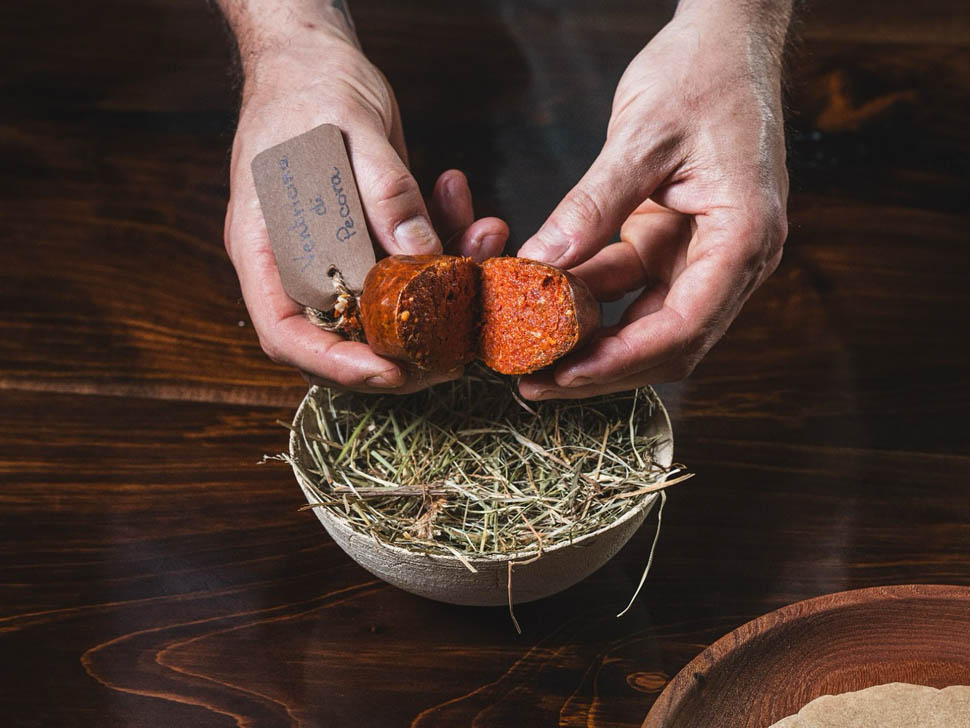
Bread service and ventricina amuse-bouche
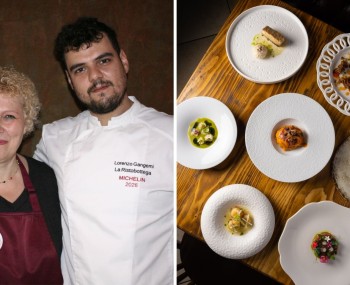
Al Madrigale (we just reviewed it here) earned its star and the title of opening of the year with a gesture that seems humble but hides a complex gastronomic plot: bread. A theatrical but not ostentatious entrance, built on selected wheat flours, different types and degrees of grinding, sourdough starter, and a structure that tells of days of patient care. It arrives at the table still warm, as if it came from a home oven rather than a fine dining kitchen. The flavor, full and layered, reveals clear aromatic notes, while the buffalo butter enriched with anchovy sauce creates a vibrant contrast between marine intensity and lactic sweetness. To seal the deal, local extra virgin olive oil adds a strong territorial profile, almost like a signature in the margin. Then comes the homemade ventricina—sheep meat, restrained seasoning, calibrated salting—and here the story changes tone, because what seems rustic becomes a taste of surprising elegance. The focaccia bread grilled over charcoal becomes the ideal base for a mixture that borders on sweetness, creating a bite that vibrates with its measured richness, its ancient memory made contemporary, its ability to bring together technique and nostalgia. It is one of those moments when inspectors understand that the restaurant is not just serving food: it is telling a story of its origins.
Abba – Milan
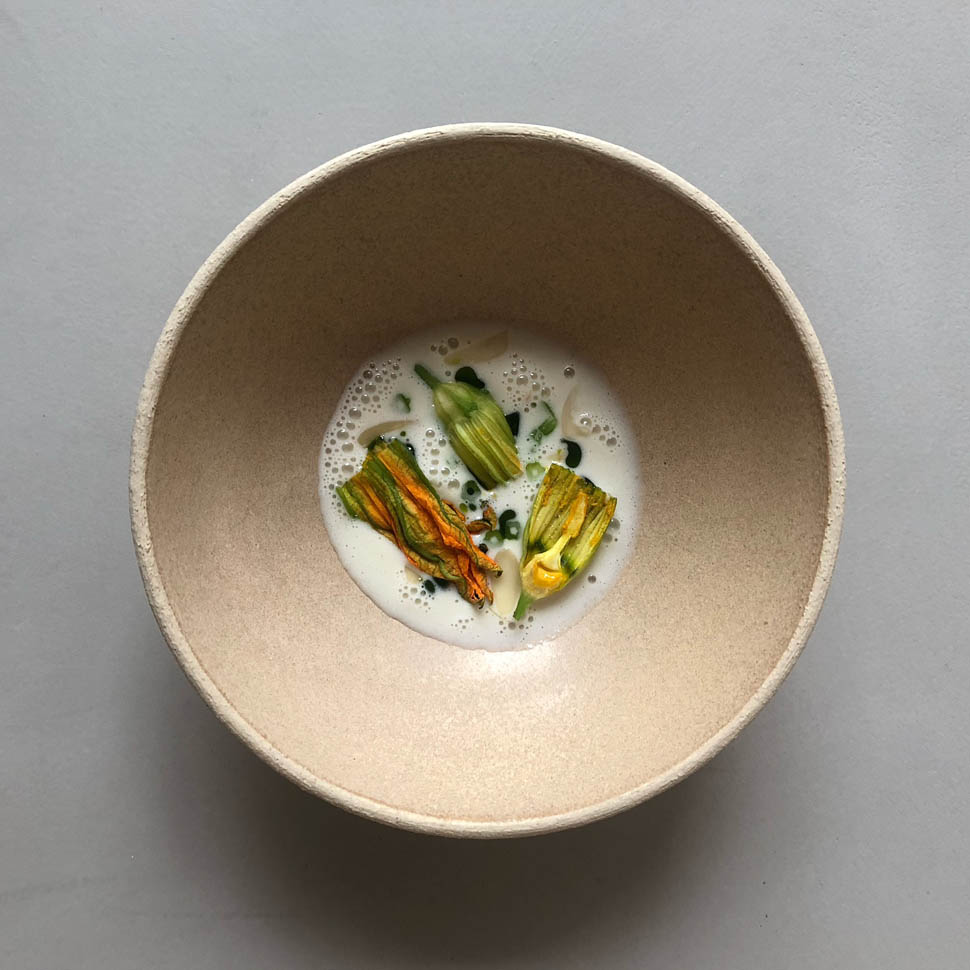
Zucchini flowers and almonds
In Milan, Abba's new star shines through a dish that strips away all excess to leave room for purity. Zucchini flowers and almonds: no virtuosity, no superstructures. The heart is an almond gazpacho obtained by extracting water, a milky liquid, ethereal and at the same time decisive, seasoned only with oil and salt. The slivers of fresh almonds emerge like details of an essential architecture, while the fig oil introduces a fuller, almost fleshy character that breaks the delicacy without overwhelming it. The zucchini flowers, cut in half and lightly steamed, retain that vegetal fragility that no cooking can artificially recreate. The result is a continuous interplay between savory and herbaceous, between intensity and lightness, between rigor and softness. A vegetable dish that requires no excuses or comparisons, because each ingredient is perceived with disarming clarity. It is a gesture of subtraction that becomes richness, a manifesto of contemporary cuisine that the inspectors recognized without hesitation.
The Rana Family – Oppeano
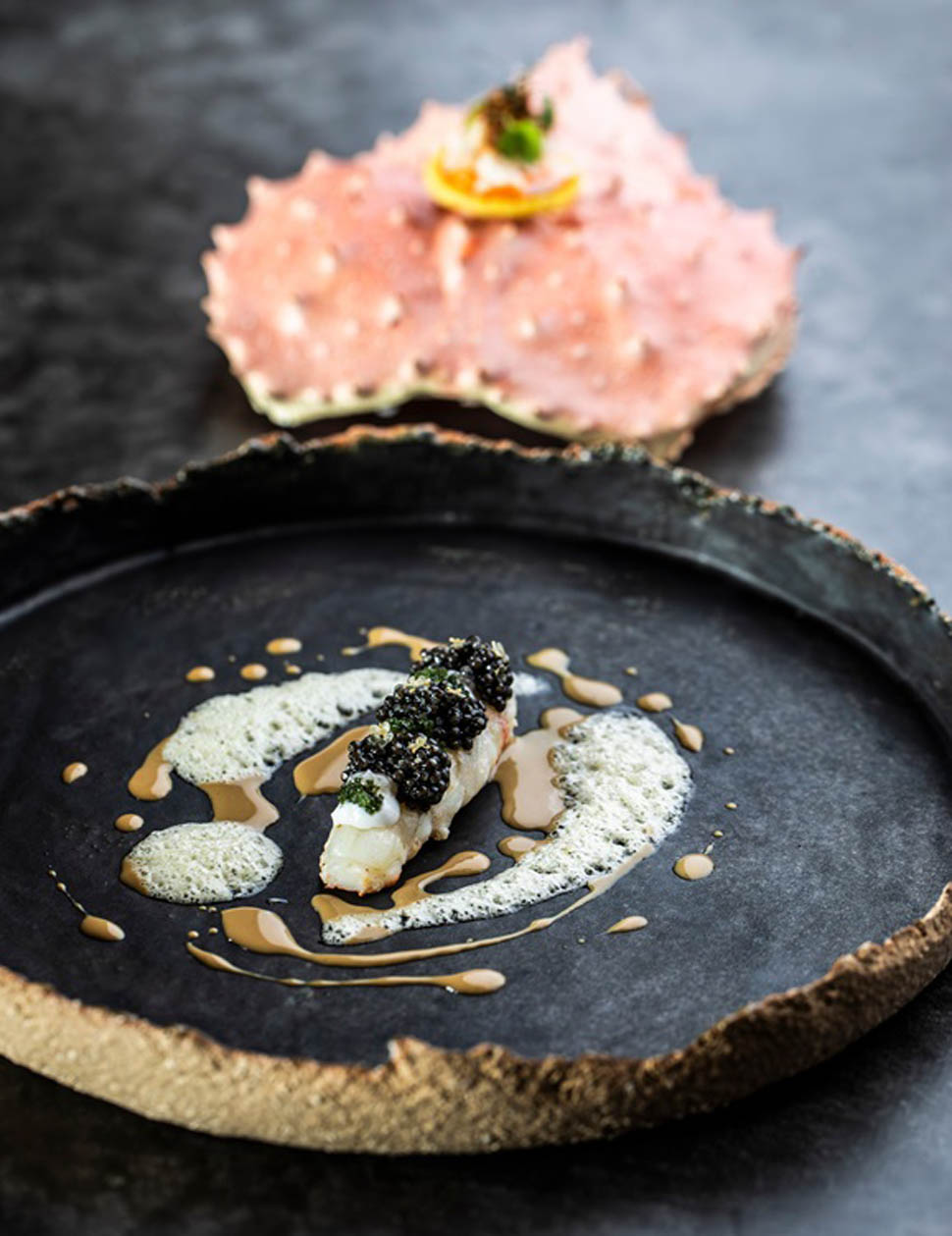
Scampi between Varanasi and Hong Kong
In Oppeano, the Rana family—new Two Stars—creates one of the most spectacular and cosmopolitan dishes in the 2026 selection. The langoustine, large in size and impeccable in quality, is marinated in beef fat and cooked with surgical precision to preserve its sweetness. The surface shines with details calibrated to the millimeter: Beluga caviar produced exclusively for the family, lime gel, small vegetables fermented with almost Zen-like precision. It is a mosaic that aims to impress not with quantity, but with the perfection of its proportions. Below, two sauces that are more than sauces: they are geographies. One is a gateway to the East with clean, deep aromas, the other—a foam—looks to India with a bright, fresh, aromatic green curry. Before tackling the other half of the dish, an iced lime marshmallow arrives, a detour designed to cleanse the palate and prepare it for perception. Only then do we move on to the puffed rice tartlet that welcomes the natural king crab, elegantly served on its shell, as a tribute to its purest essence. The construction is complex but smooth, bold but disciplined. It is a journey that crosses cultures and textures, without ever losing sight of balance. The inspectors spoke of international influences, technique, and refinement: three words that perfectly describe the restaurant's philosophy.
Zunica 1880 – Villa Corallo, Sant'Omero
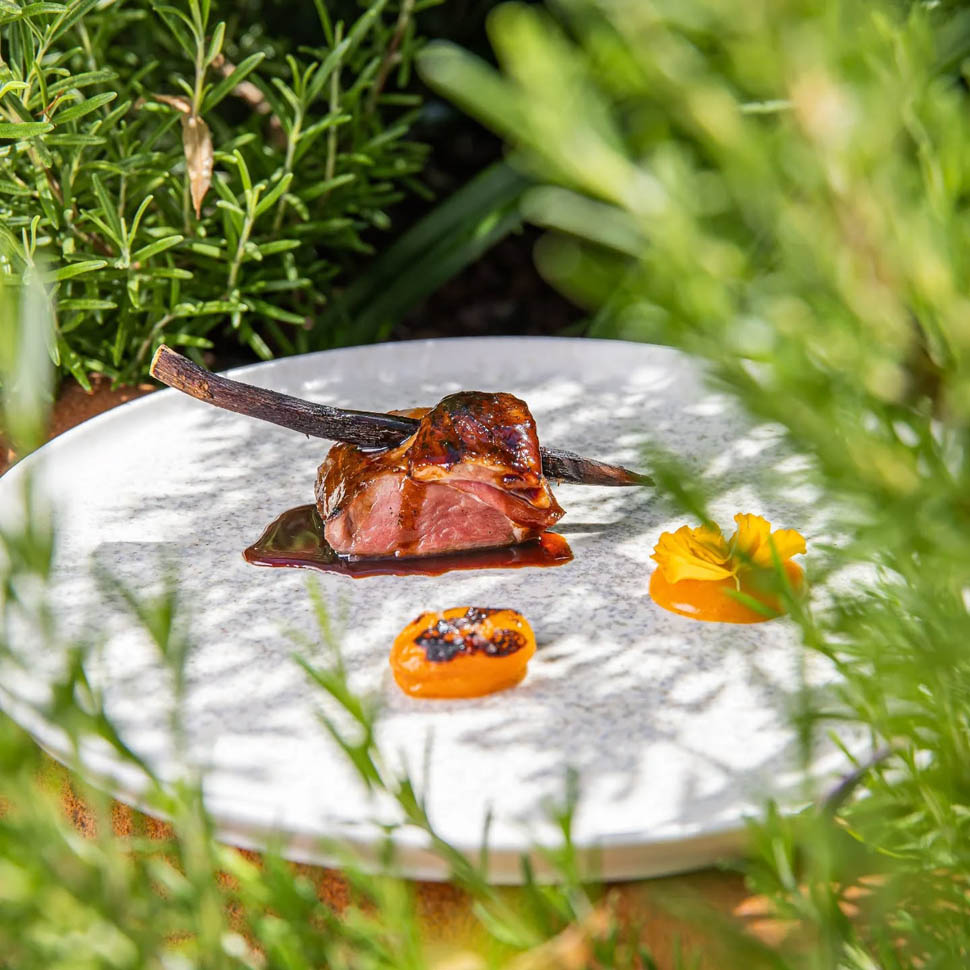
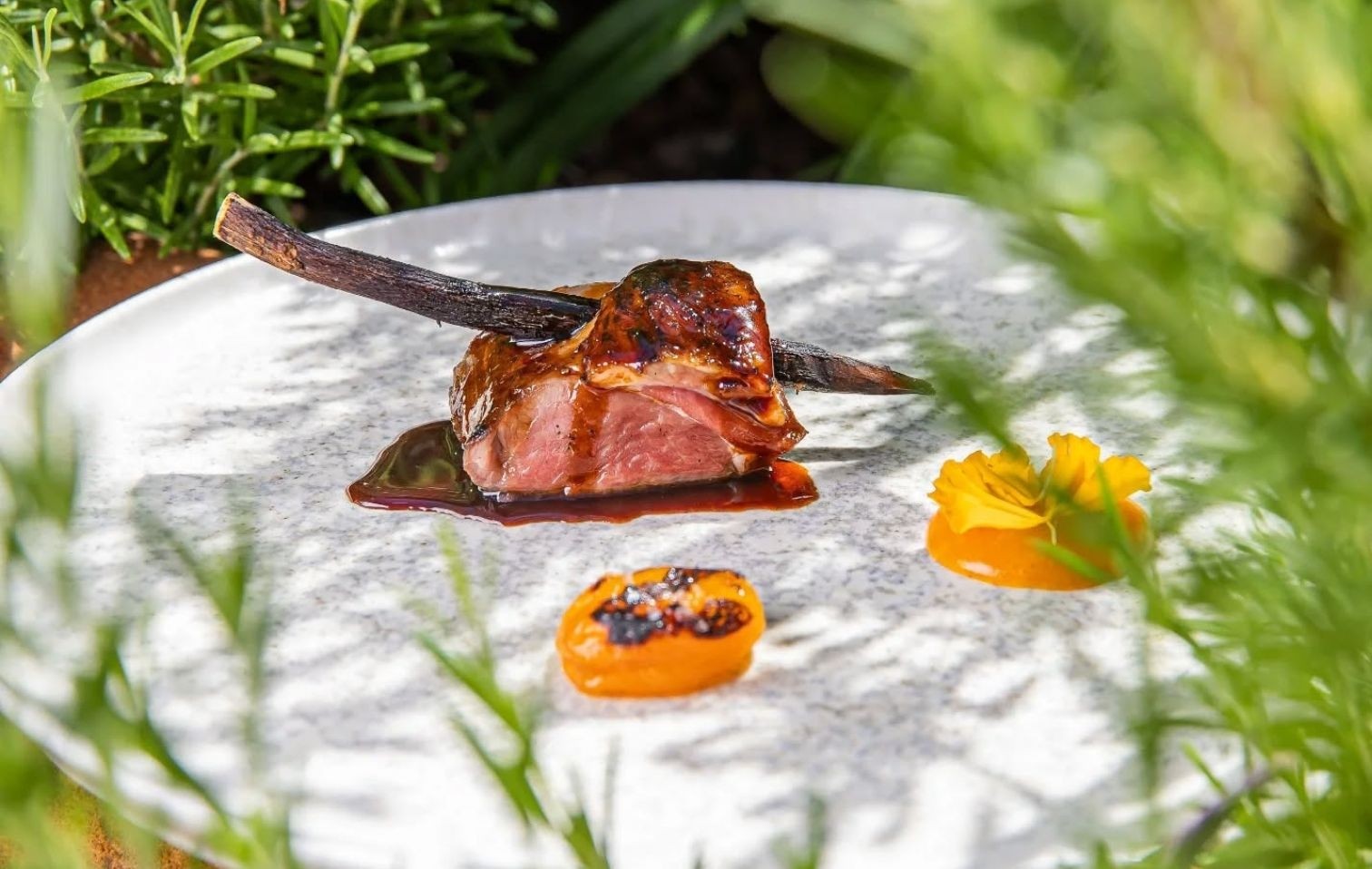
Lamb skewered with licorice and apricots
In Sant'Omero, Zunica 1880 interprets meat as if it were a short story in solid form. The lamb arrives as a compact, tender roll, held together by a stick of licorice that is not only a visual prop but an integral part of the aroma. It is a dish that focuses on the raw ingredient without reducing it to a pastoral cliché, because the sauce—thick, rich, and deep—adds an almost velvety dimension to the bite. The licorice blends with the apricot reduction, creating an aromatic curve that moves from sweet to balsamic with a slow but decisive pace. The whole apricot, pitted, marinated, and then charred, releases intense aromas and touches on a smoky note that accompanies the meat without overshadowing it. The presentation is clean, elegant, designed to enhance what really matters: the quality of the local meat and the ability to transform it into a dish with great personality. It is one of those moments when local cuisine proves that it does not need stereotypes to be haute cuisine.
La Caravella dal 1959 – Amalfi
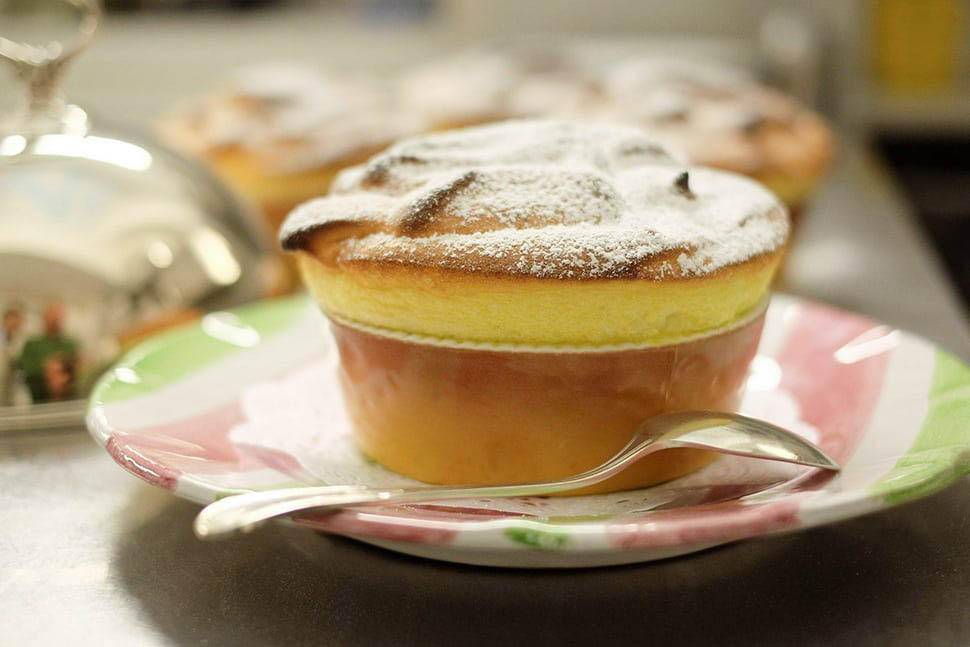
Amalfi Lemon Soufflé
There are desserts that become symbols of a place more than a postcard. The Amalfi Lemon Soufflé, the undisputed star of the historic Caravella, continues to seduce MICHELIN inspectors, who have awarded it the title of passion dessert 2026. It is not a dessert: it is an apparition. It is fluffy, almost suspended, with a visual lightness that anticipates its taste. The scent of lemon opens like a door onto Mediterranean gardens, with that aromatic brightness that only Amalfi can offer. On the palate, it is pure flight: ethereal, intangible, but capable of exploding into vibrant, fresh, and intense citrus notes. The sweetness never tires, the acidity is not aggressive, and the rhythm of the taste grows without losing its finesse. It is a dessert that demands slowness, attention, and complete abandonment. The last spoonful always comes too soon, and perhaps this is the secret of its irresistibility.