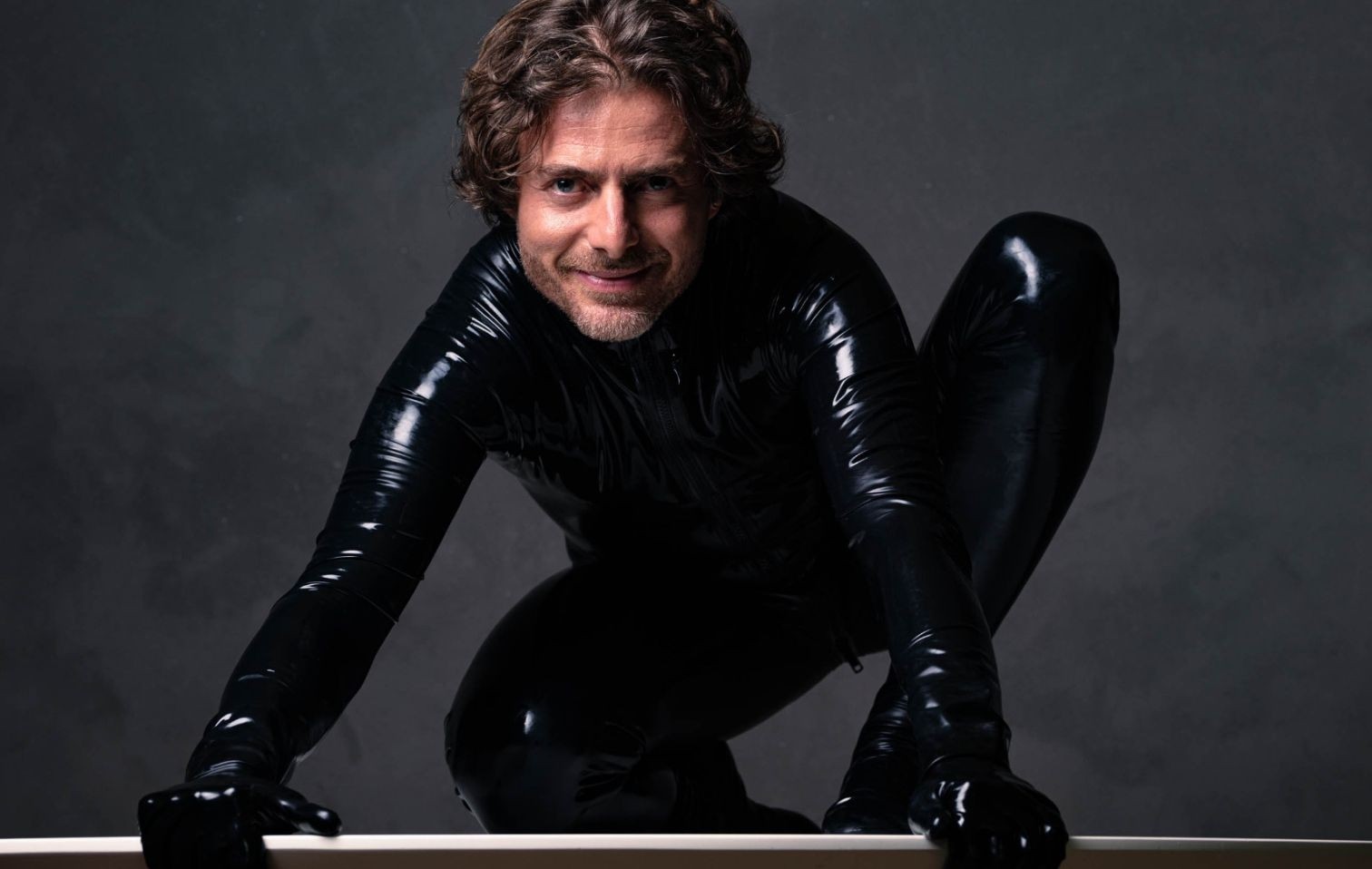
For Baldessari, latex is not eccentricity, but discipline. A second skin that inhibits sight, hearing, and smell to focus everything on the only sense that really matters to him: taste.
Photo credits: Lorenzo Noccioli
The chef
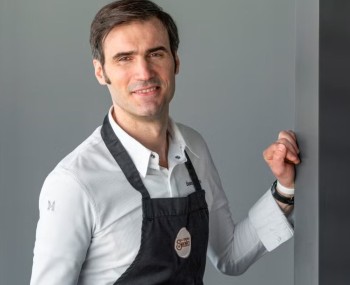
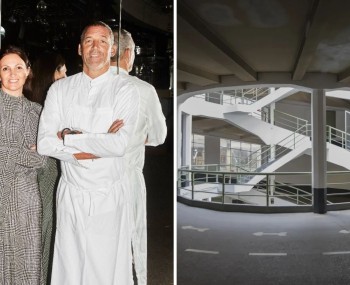
Reducing stories about chef Giuliano Baldessari to the famous latex suit he wears while cooking is a bit like remembering Glenn Gould not for his piano sonatas, but only for the very low chair he dragged around with him everywhere. For the Canadian pianist, the chair was not a quirk, but an indispensable tool for establishing the right relationship with the piano. Similarly, for Baldessari, latex is not eccentricity, but discipline. A second skin that inhibits sight, hearing, and smell in order to focus everything on the only sense that really matters to him: taste.

The essence of his thinking is that sensory limitations are a necessary condition for unleashing creativity. Of course, those who do not know him personally find it hard to believe that this choice is not an act of provocative extravagance, but after a few minutes of conversation, it becomes clear that this is not the case. Especially when he explains the reasons behind this choice.
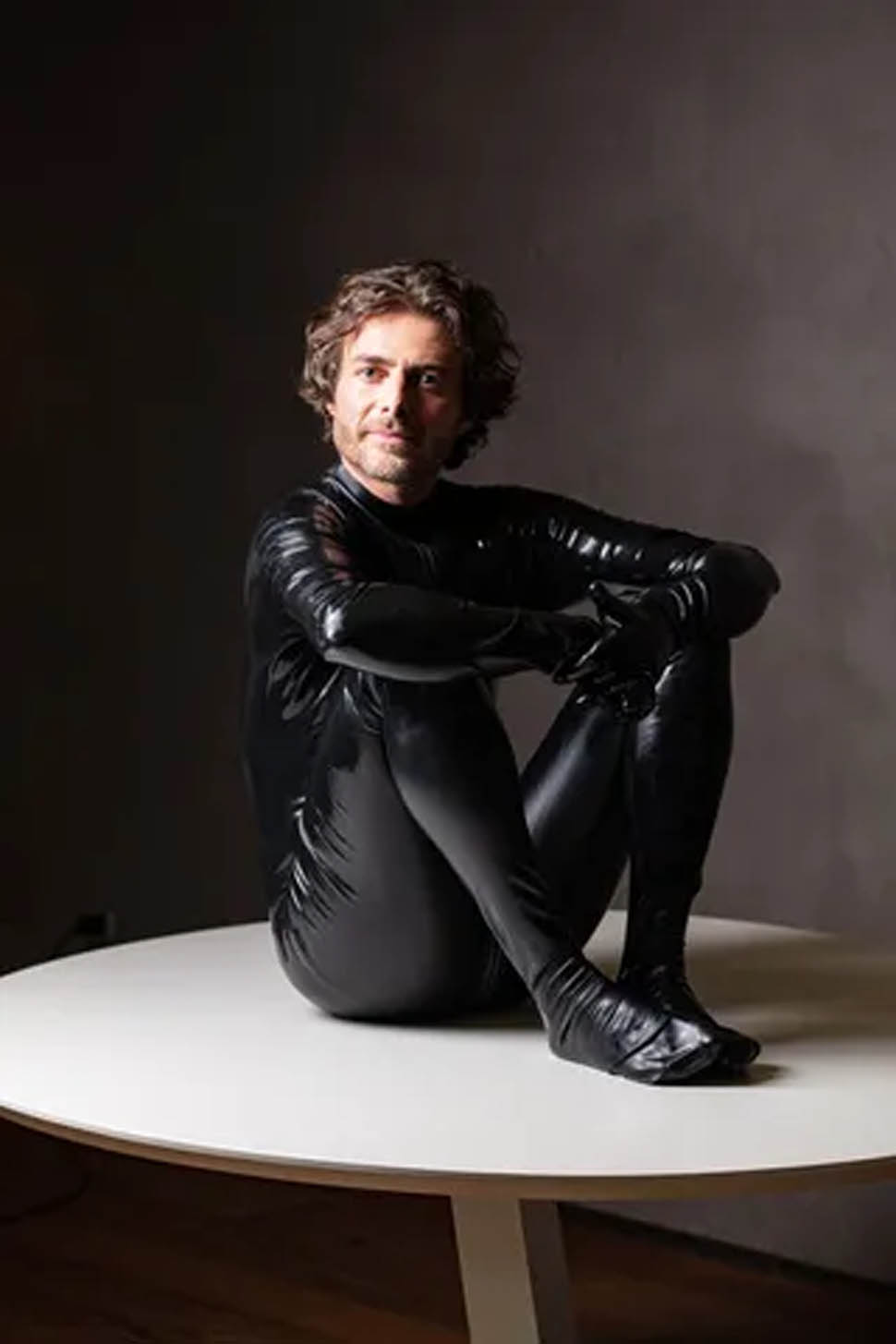
“My girlfriend, who works as a lawyer in Rome, told me years ago about a thesis written by one of her friends, which explained, on a scientific level, why fetishists have sex in latex. I asked her to let me read it and understood that it was to neutralize any sensory distractions that were not strictly related to the sexual act, amplifying pleasure to the maximum. That's when I thought I could link this practice to food, bringing the sense of taste to its purest perception. When I wear the suit, I neutralize any tactile, olfactory, or epidermal distractions and let taste dominate everything. For me, it's like a monastic discipline, a rigor that forces the mind to remain focused on the dish, in its most naked essence. It's my form of silence, my way of listening to food.

The restaurant
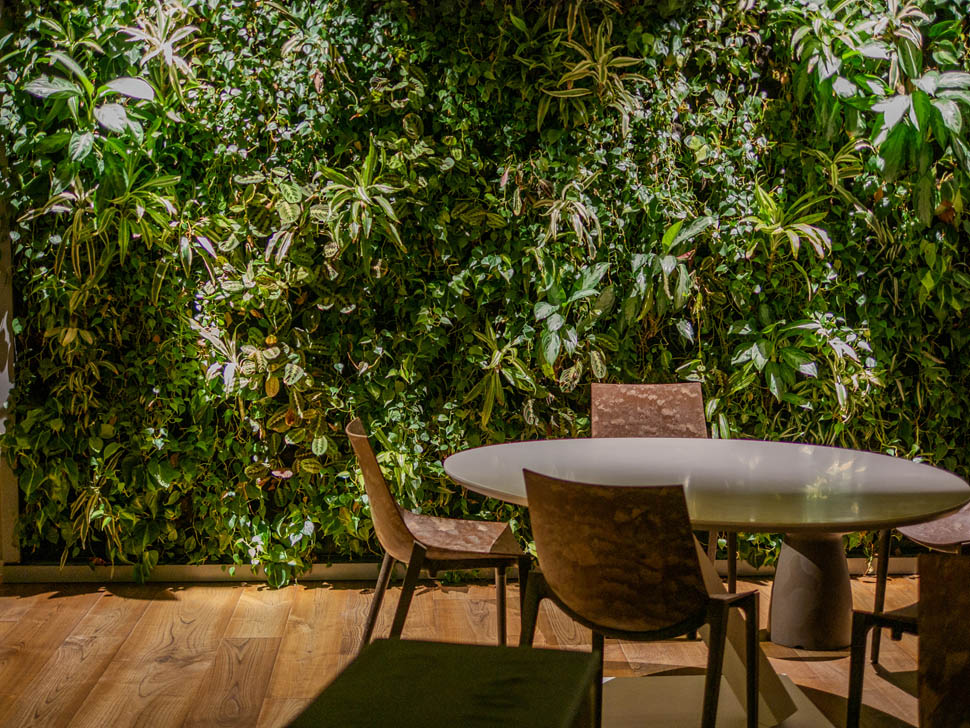
The garden of the 16th-century residence that houses the Aqua Crua restaurant in Marano Vicentino—the same residence that is said to have hosted Antonio Pigafetta, the chronicler of Magellan's first circumnavigation of the globe—is home to the plant species collected by Giuliano during his travels, transforming the outdoor space into a living herbarium of memories and discoveries. The soundscape at the entrance is provided by dozens of chirping parakeets in the large aviary, which is moved to the restaurant entrance in the evening, among furnishings, lights, and objects that have made design history.
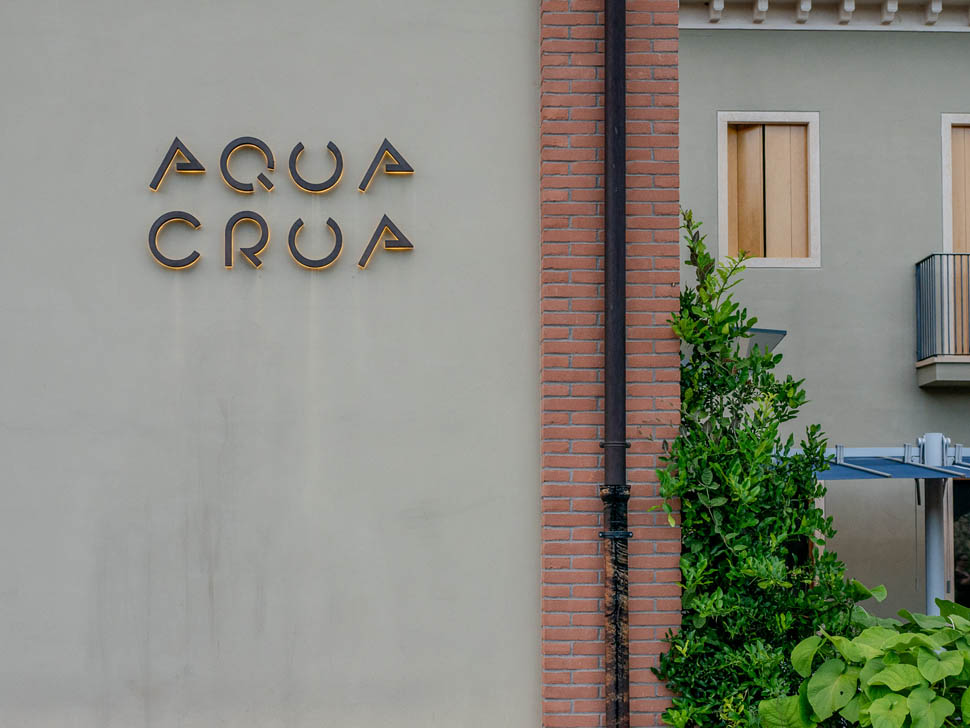
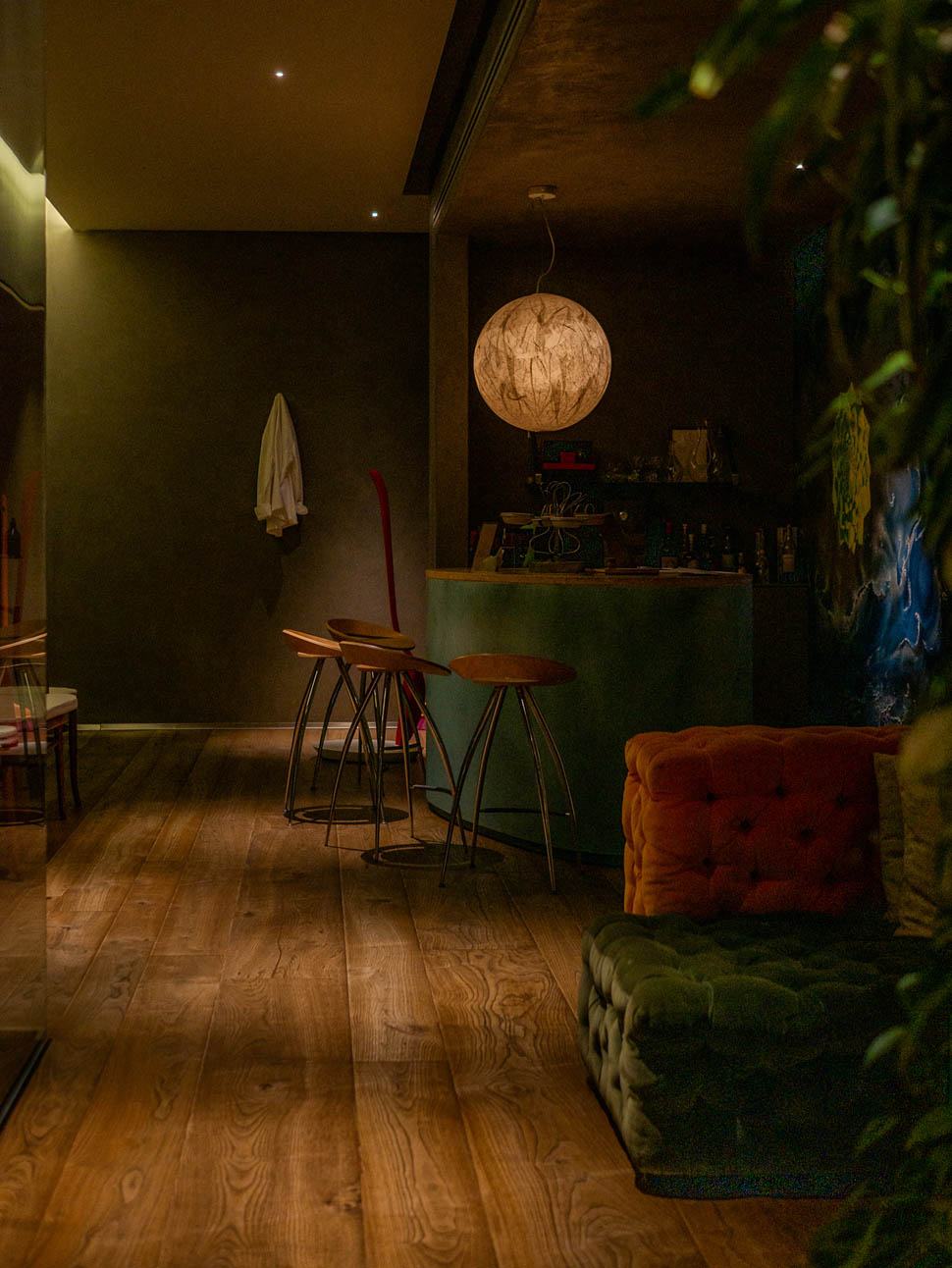
A rarefied elegance that blends simplicity and sophistication with a few whimsical details, while the backstage is a veritable gastronomic workshop, where experimentation is constant, among bottles of dew collected from large leaves in the woods 1,500 meters above Roncegno Terme, the chef's hometown. This is also where the vineyard from which he produces vinegar is located, which he tends personally, tying the vines with willow twigs, in that part of Valsugana crossed by the Roman road Claudia Augusta, which connected Venice to Augsburg. Here Baldessari collects snails and herbs, of which he has a deep and obsessive knowledge, and although today this is a trend followed by almost all chefs, his expertise is of a breadth that is not often encountered.
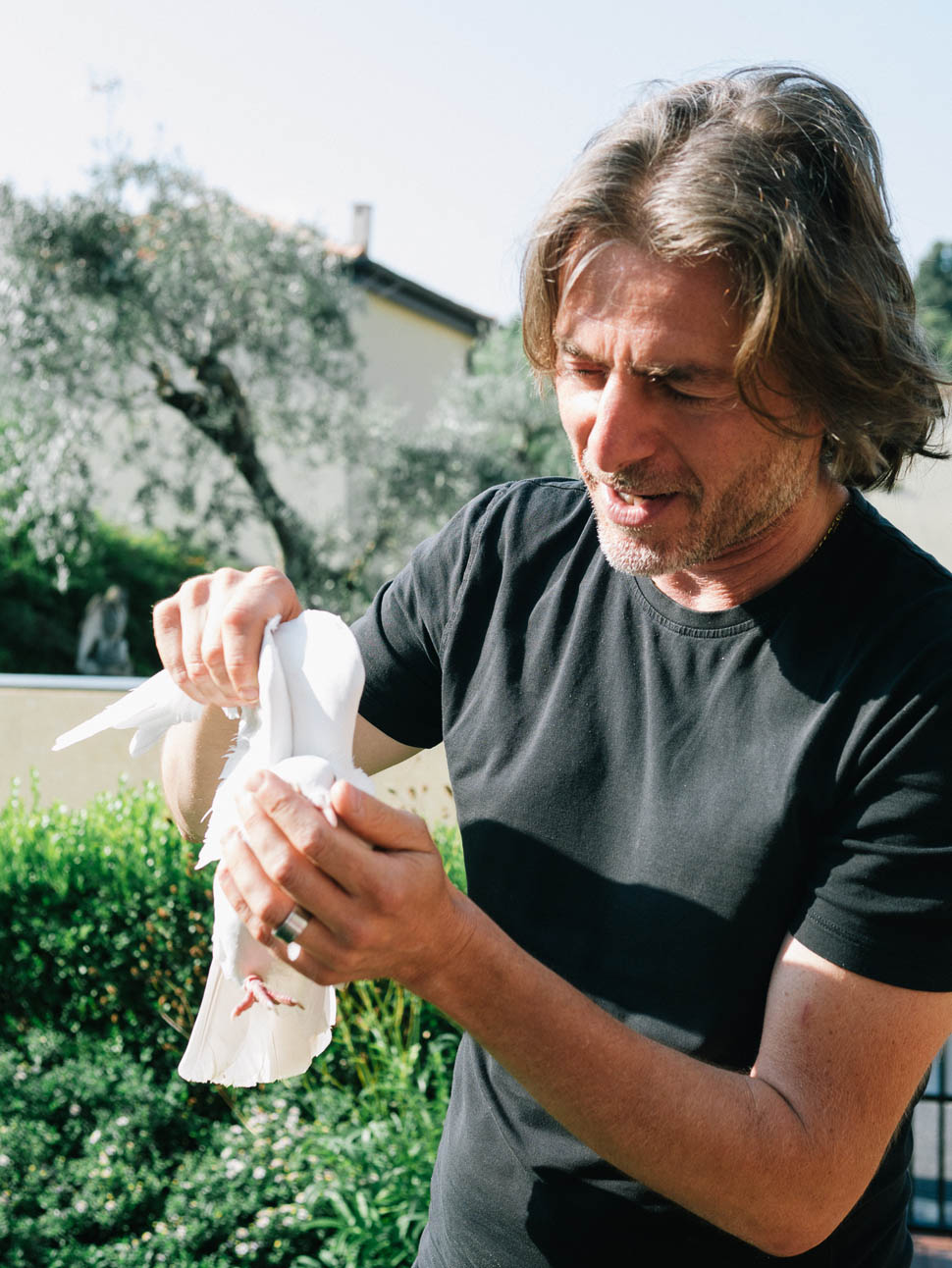
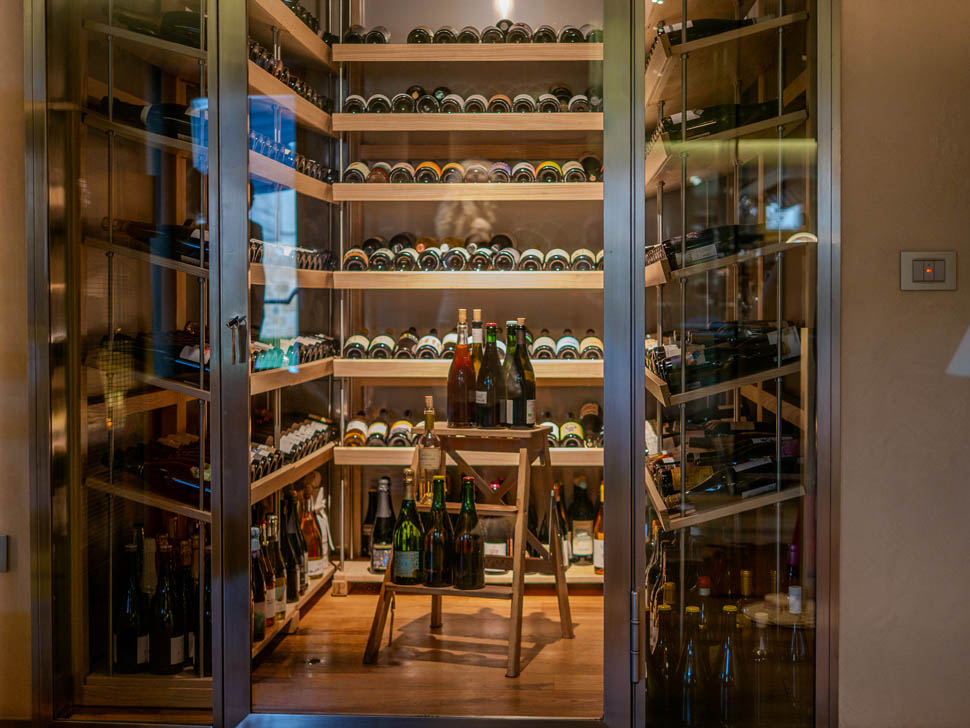
At the back of the restaurant, outside the kitchen, there are stacks of wood being piled up. "Whenever I can, I go up into the mountains to cut down fir trees infested with bark beetles, the epidemic that broke out in Trentino after Storm Vaia in 2018. The only remedy is early felling, so in my own small way I help to reduce the infestation," says Giuliano as he accompanies us to two friends for a tasting of local wines, Alessandro Pialli, from the winery of the same name inherited from his grandfather, and Andrea Visentini, from Adagio, who together are trying to boost wine production in the Berici Hills. They share a commitment to sustainable production and minimal intervention in the vineyard, manual harvesting with careful selection of the grapes, to restore pure authenticity and recognizability to Tai Rosso and Garganega. Extremely pleasant, during our meeting they facilitated a lively conversation about life as a chef (“I have a habit of writing down everything related to consumption in the kitchen, electricity, water - reveals Baldessari - so I always have a complete and up-to-date picture of costs”), life in the kitchen, and ending with hilarious stories of paranormal phenomena that occurred as soon as work began on the restaurant and anecdotes from Giuliano's childhood.
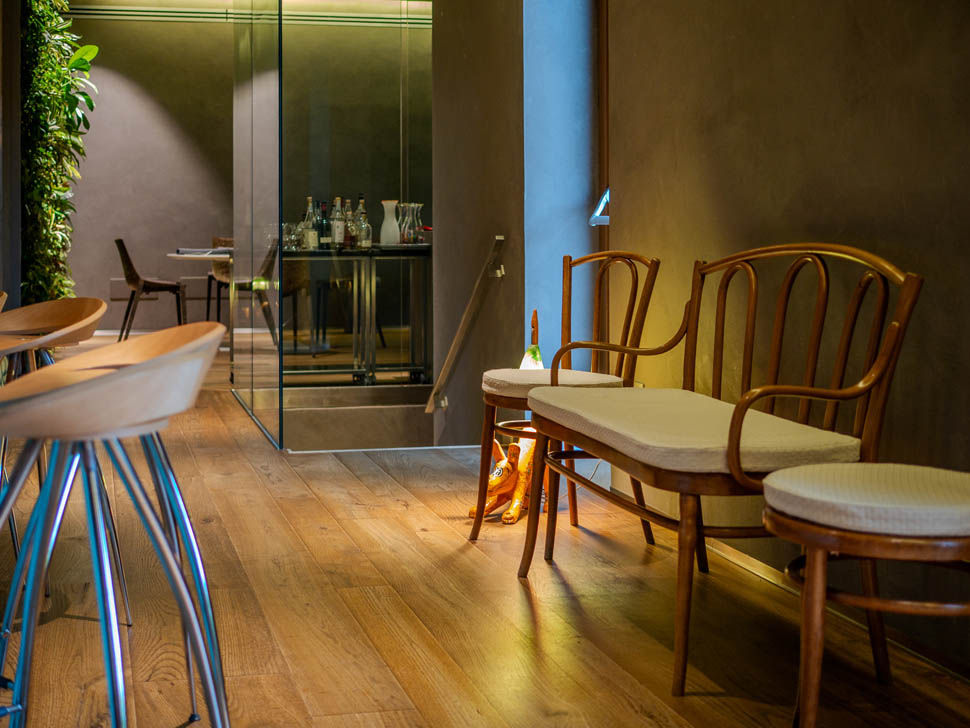
Lively and tireless, characteristics that remain unchanged to this day, his adolescence was marked by his parents' separation, his father's alcoholism, and a period of excess that dragged him into a vortex of rebellion, escapism, and risky relationships. A time when, as he likes to recall, “many friends didn't make it to their twenties” and when he himself came close to not making it. Cooking then became a refuge and a saving discipline: from his first apprenticeship in a village restaurant to his experiences in international contexts, Baldessari learned to transform his anxieties and fragility into creative energy. The years spent alongside masters such as Aimo Moroni, Marc Veyrat, and Massimiliano Alajmo consolidated his rigorous and poetic vision. In 2014, Aqua Crua was born, not just a restaurant but an inner laboratory, where the much-talked-about latex suit also fits in, not for eccentricity, but to silence the other senses and let taste dominate everything. His biography, marked by falls and comebacks, is reflected in a cuisine that is both confession and creation, meticulousness and recklessness, evolving into a creative fury that is decidedly distinctive, divided into three menus.
The dishes
Initiation I, an introduction to Baldessari's clear and immediate lexicon, where the raw ingredients reveal themselves and the flavors speak for themselves. Initiation II is an act of trust: bolder flavors, unexpected textures, and complex fermentations push diners beyond their comfort zone, without ever losing sight of the goal of total satisfaction. Initiation III is a sort of initiatory summit: unusual ingredients and radical techniques compose a gastronomic ritual that disorients and reconciles at the same time. Our initiation starts with menu two, then, the following evening, we proceed to the advanced level, which is extremely daring and entertaining, as well as immediate. Observing the neighboring tables, we realize that it is also enjoyable for the children present. Yes, several families with children, groups of young friends, and couples of all ages fill the room on both evenings in the middle of the week. In a small village, a merger of two villages with about six thousand inhabitants in the province of Vicenza.
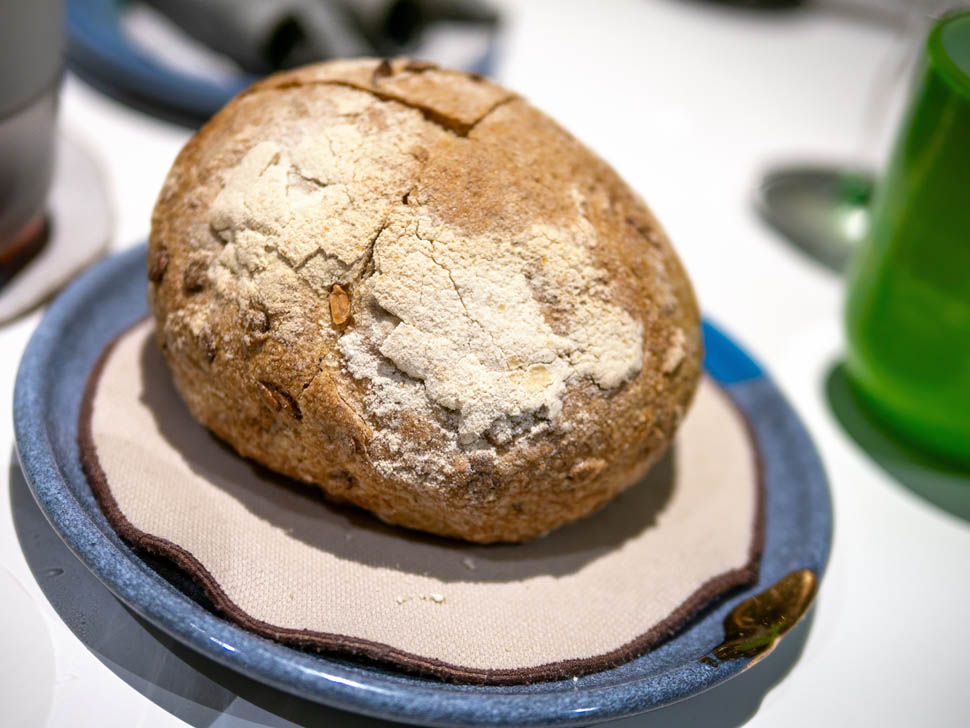
The amount of research, experimentation, and testing that goes into Baldessari's cuisine is immediately evident in his baked goods. The loaf is kneaded with Timilia flour, the oldest Sicilian durum wheat, stone-ground, with its distinctive dark color, and is served with cannoncini alla Cenere, a burnt wheat fresella, a soft pizzaiola breadstick inspired by Dalí's clock, and a bite-sized piece of fried bread. To be dipped in U Trappitu oil from Trapani or spread with alpine butter from Malga Trenca, where the chef took us the next day, 1,700 meters above Roncegno, passing in front of his childhood home, his grandmother's house, where arsenic-ferruginous waters with great beneficial properties flow.
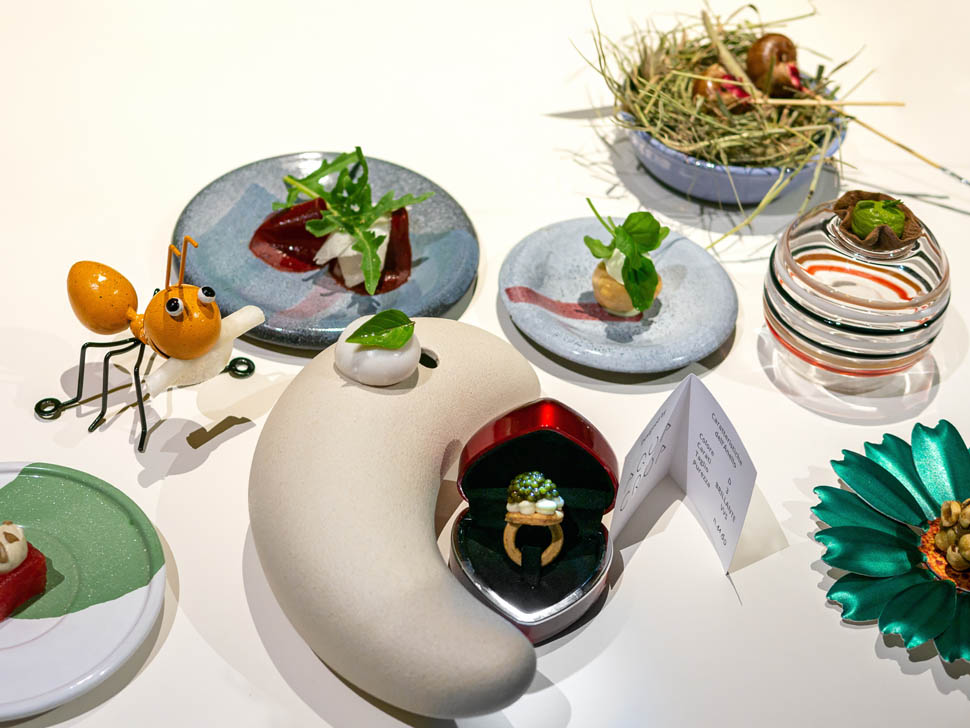
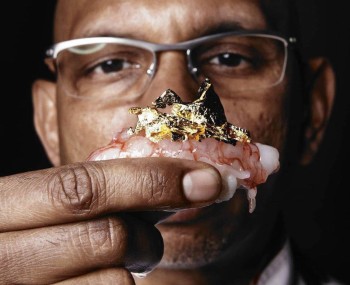
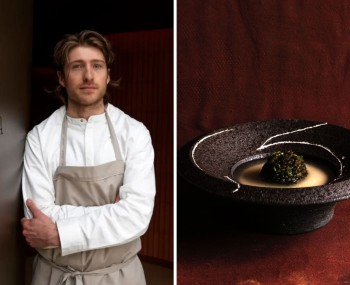
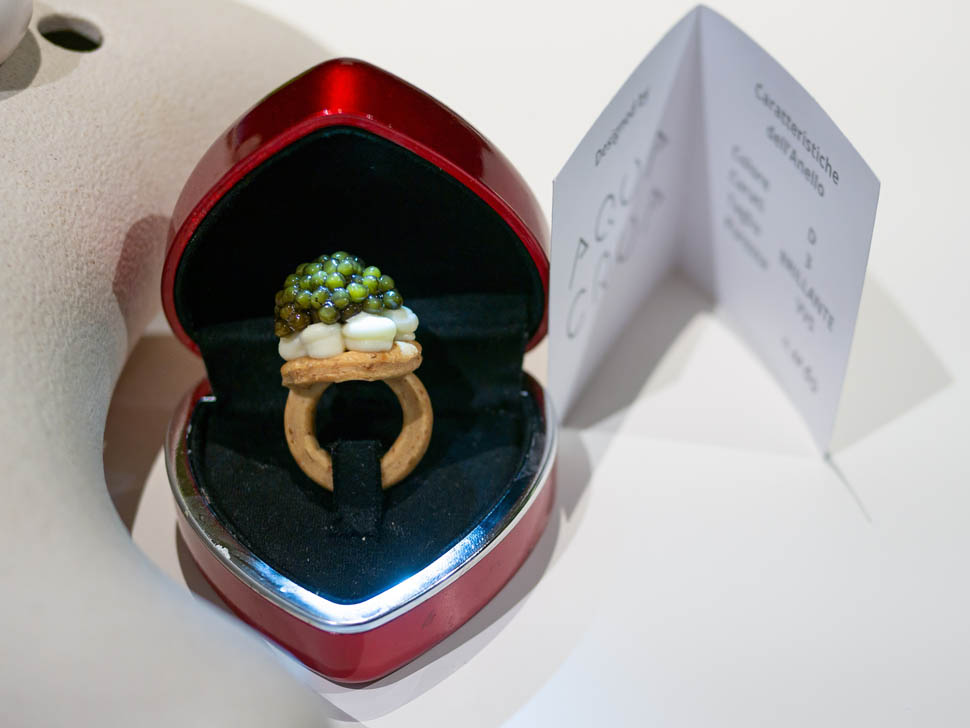
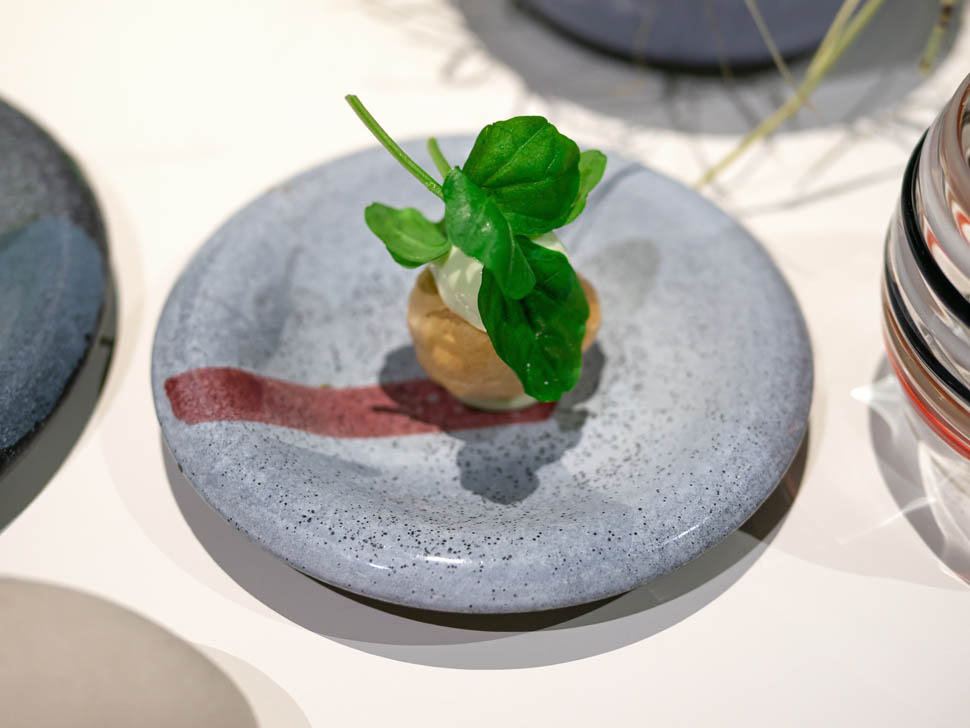
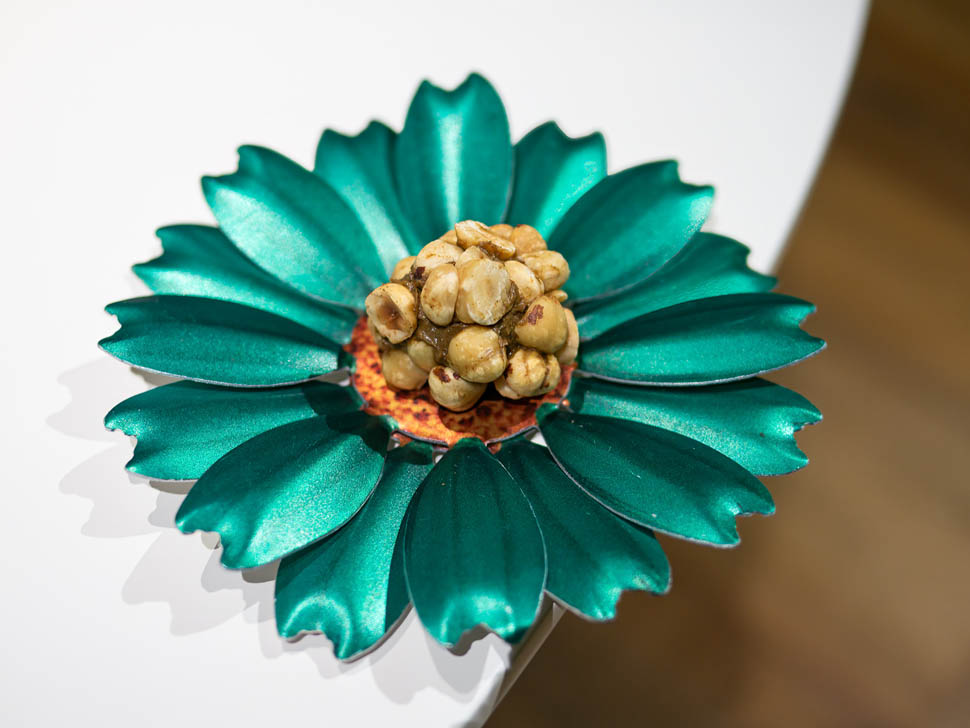
In a small jewelry box, a savory pastry ring with cauliflower cream and Beluga caviar is served as part of the Fellini-esque welcome, which also includes vegetable bresaola, a soft tomato paste wafer with Parmesan cheese and wild arugula, and a crispy rice zeppola, mayonnaise, and watercress harvested in a mountain stream, where Baldessari has also placed a pot with a wasabi plant brought from Japan. A reishi mushroom tartlet, coconut zucchini cream, cuttlefish ragout; a rocher pâté of chicken livers covered with hazelnuts; a mozzarella ball with tomato water, garusolo with chickpea cheese, and to finish, watermelon carpaccio, smoked herring sauce, and sunflower seeds.
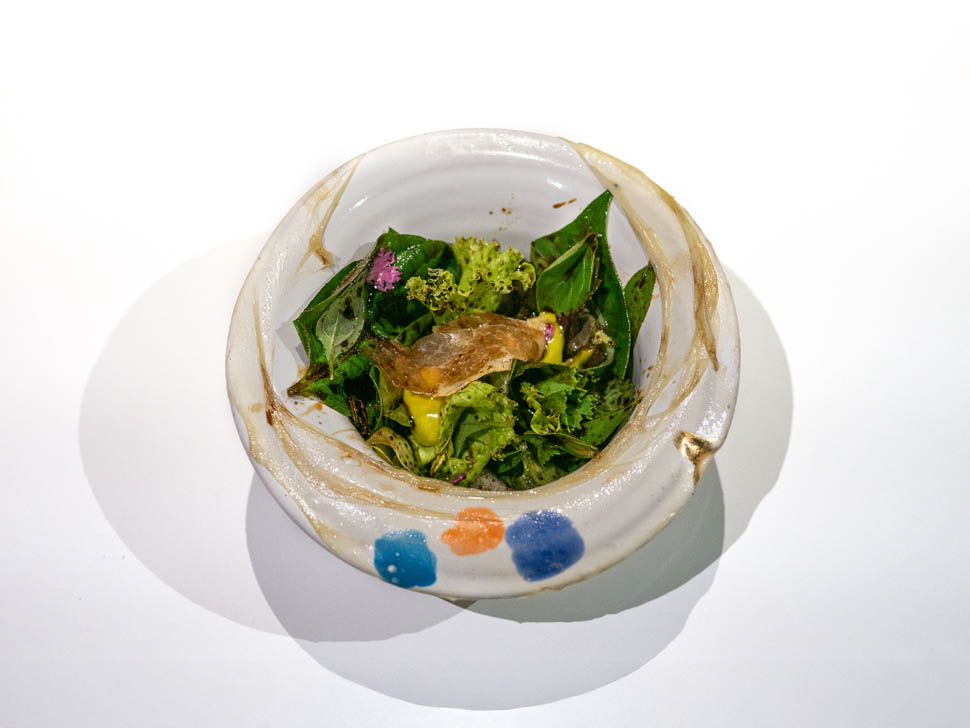
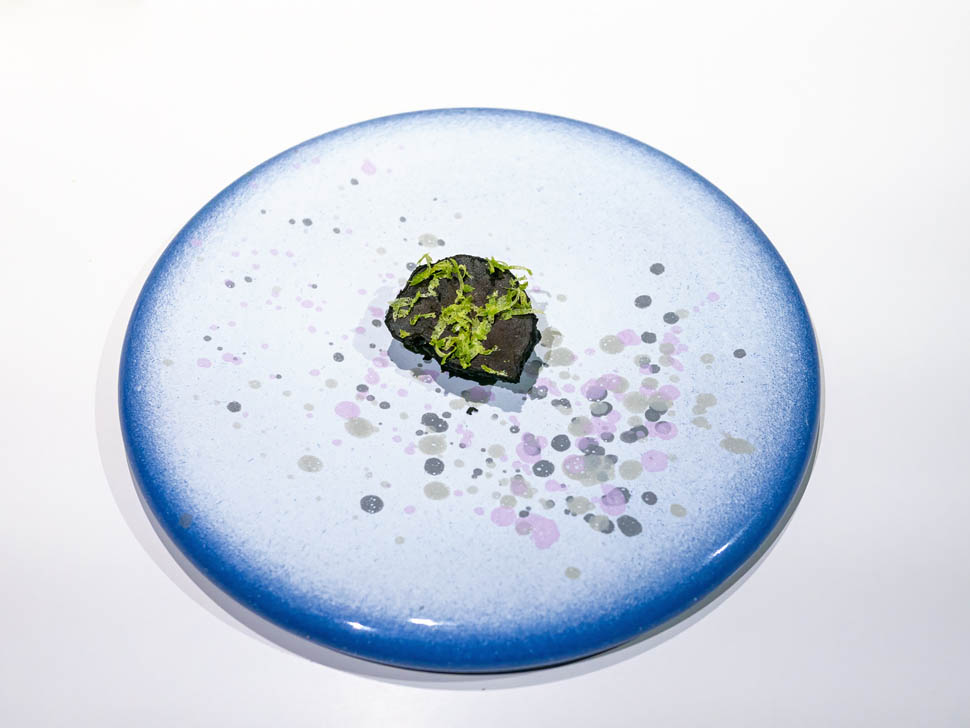
Hidden under a film, the salad with 22 varieties of herbs harvested in the mountains and in the restaurant's garden from all over the world, seasoned with homemade aged vinegar, pistachio cream, and guanciale. Jerusalem artichoke is processed like black garlic and presented with lime zest, an intense bite that is sweet and umami at the same time, with a hint of citrus acidity.
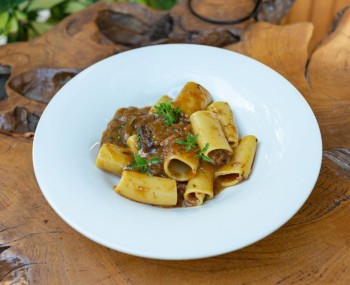
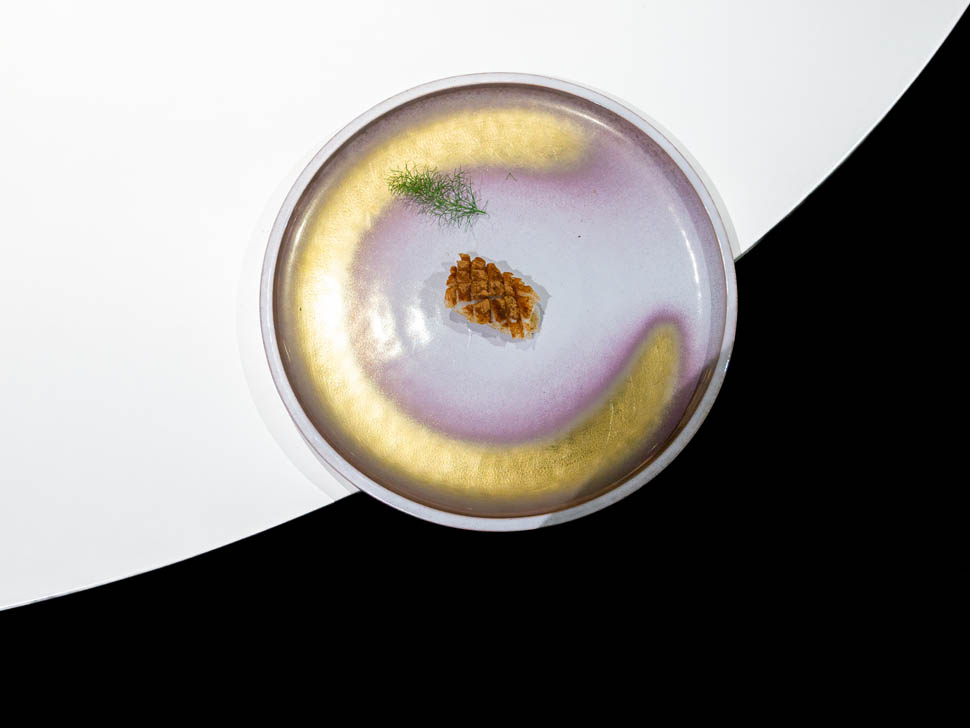
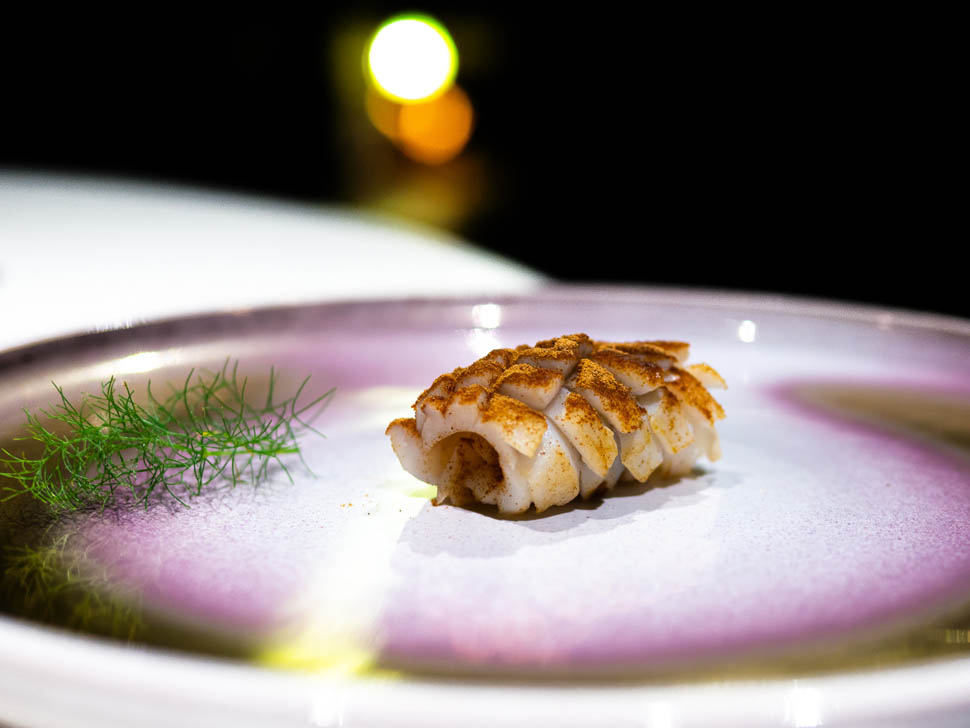
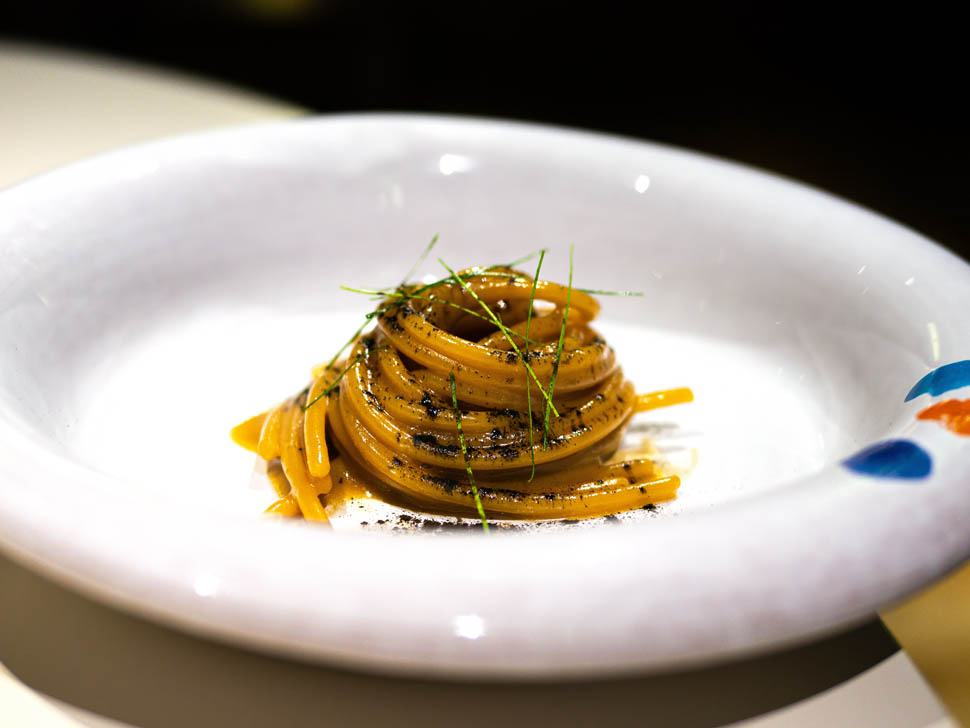
It is cordyceps powder, a parasitic fungus that attacks insects and spiders, that gives the squid a boost of flavor, with an almost woody bitterness. La Muffa is actually a small slice of beef marinated for three hours in sugar and salt, which is then inoculated with a mold that develops on the surface, similar to brie, with a strong bite and a distinctive flavor. Mancini spaghetti is seasoned with a miso made from barley, to which veal is added and fermented for four years, giving it a very elegant flavor.
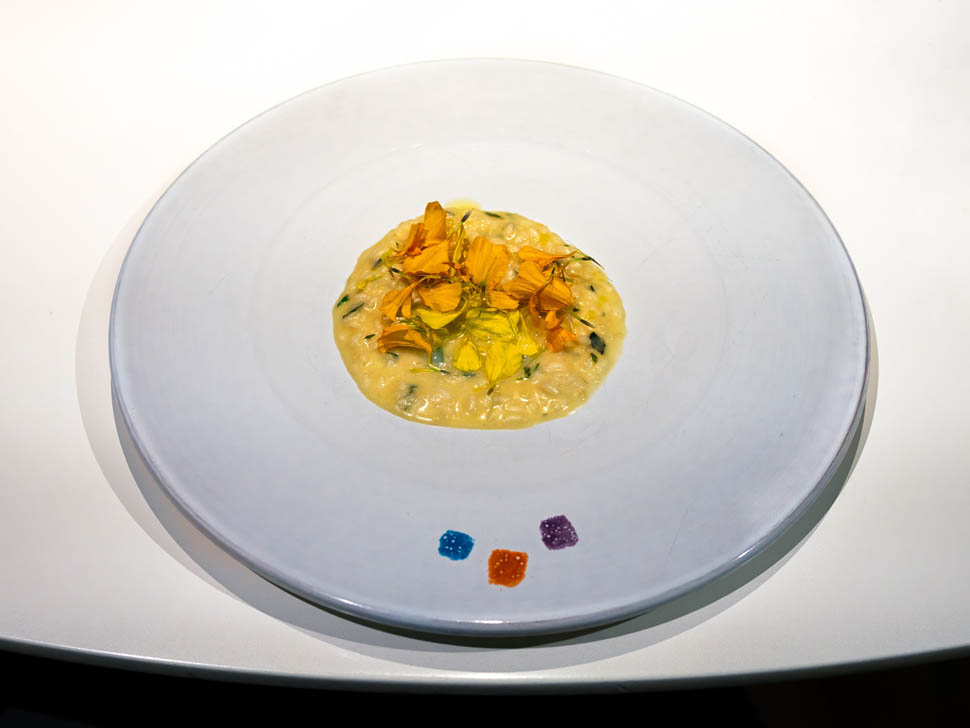
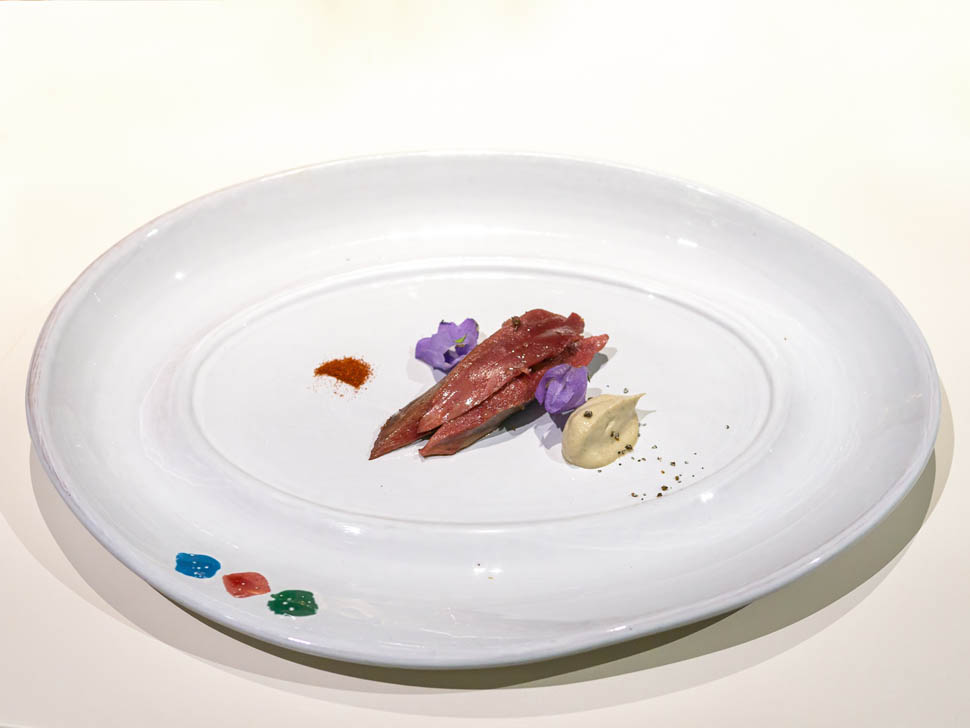
A risotto with polyphonic citrus notes, proposed by the chef, which veers towards spicy thanks to ginger and chili pepper, with Parmesan cheese to round it off as needed, garlic, watercress, and marigold. The wild pigeon fillet is accompanied by a cream of scopettone, a salted herring that enhances the flavor of the bird's meat, alongside a cube of eggplant parmigiana.
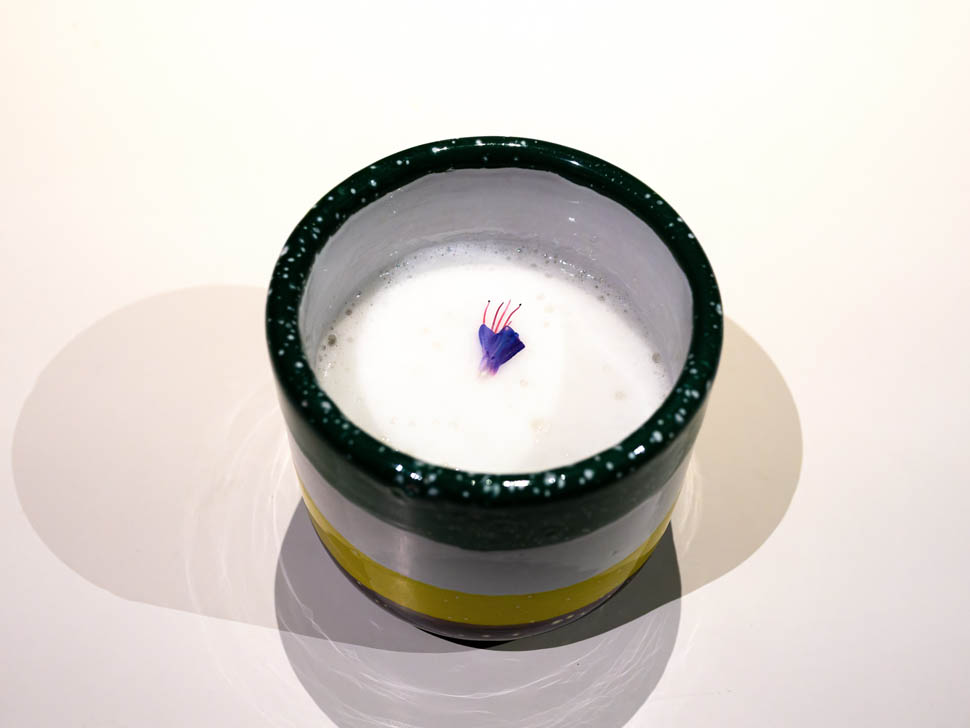
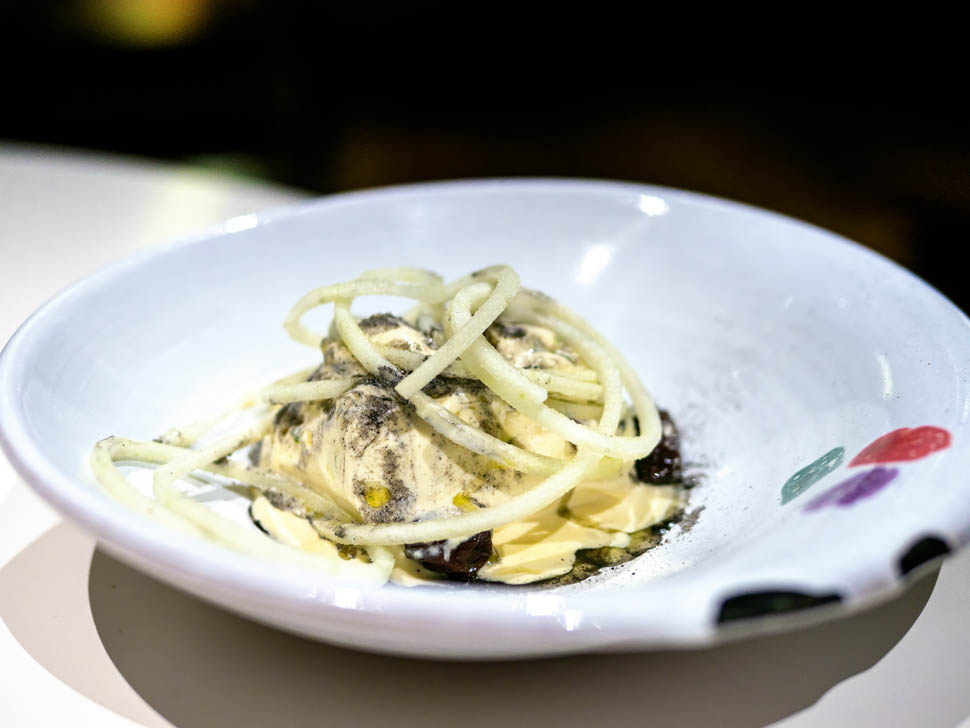
The dessert is preceded by a turmeric sorbet, lemon foam, orange, mezcal, and a viper's bugloss flower with a hint of cucumber. Apple spaghetti, vanilla and lemon ice cream, Zibibbo raisins in alcohol, and cinnamon make up the Baldessari-style strudel. Latex or no latex, we don't know if its presence is really decisive, but what is certain is that when seated at the table at Aqua Crua, taste reigns supreme, and it does so in the most persuasive way imaginable. Without forcing or narcissism, everything flows naturally in the most total enjoyment.
Contacts
Aqua Crua
P.za Calcalusso, 11/a, 36048 Barbarano Vicentino VI, Italia
Phone: +39 0444 776096