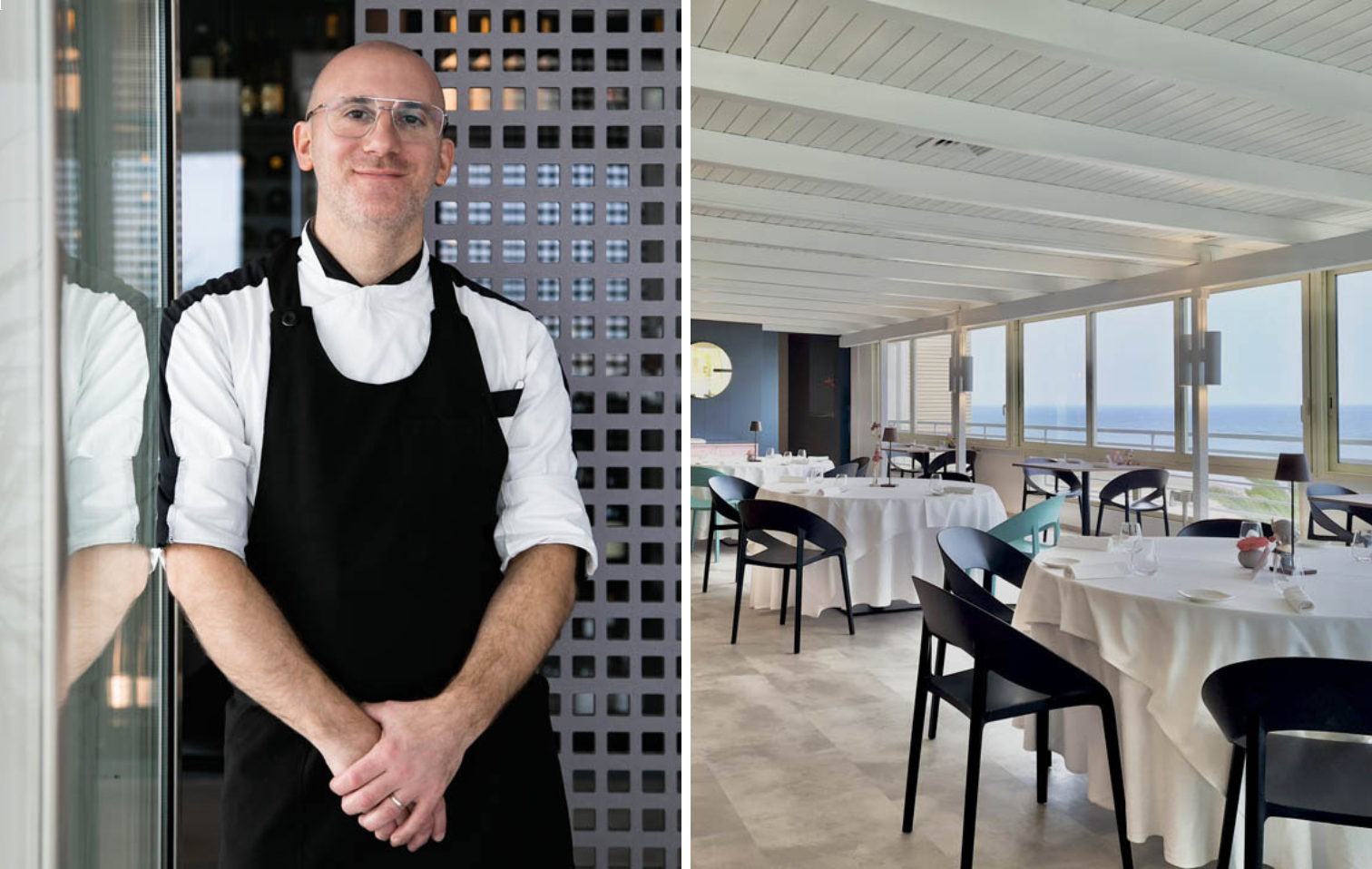
In Grottammare, the Marconi brothers and chef Tommaso Melzi transform family memories into a traveling gastronomic experience, between their own vegetable garden and sea views.
Family and the evolution of memories at the table
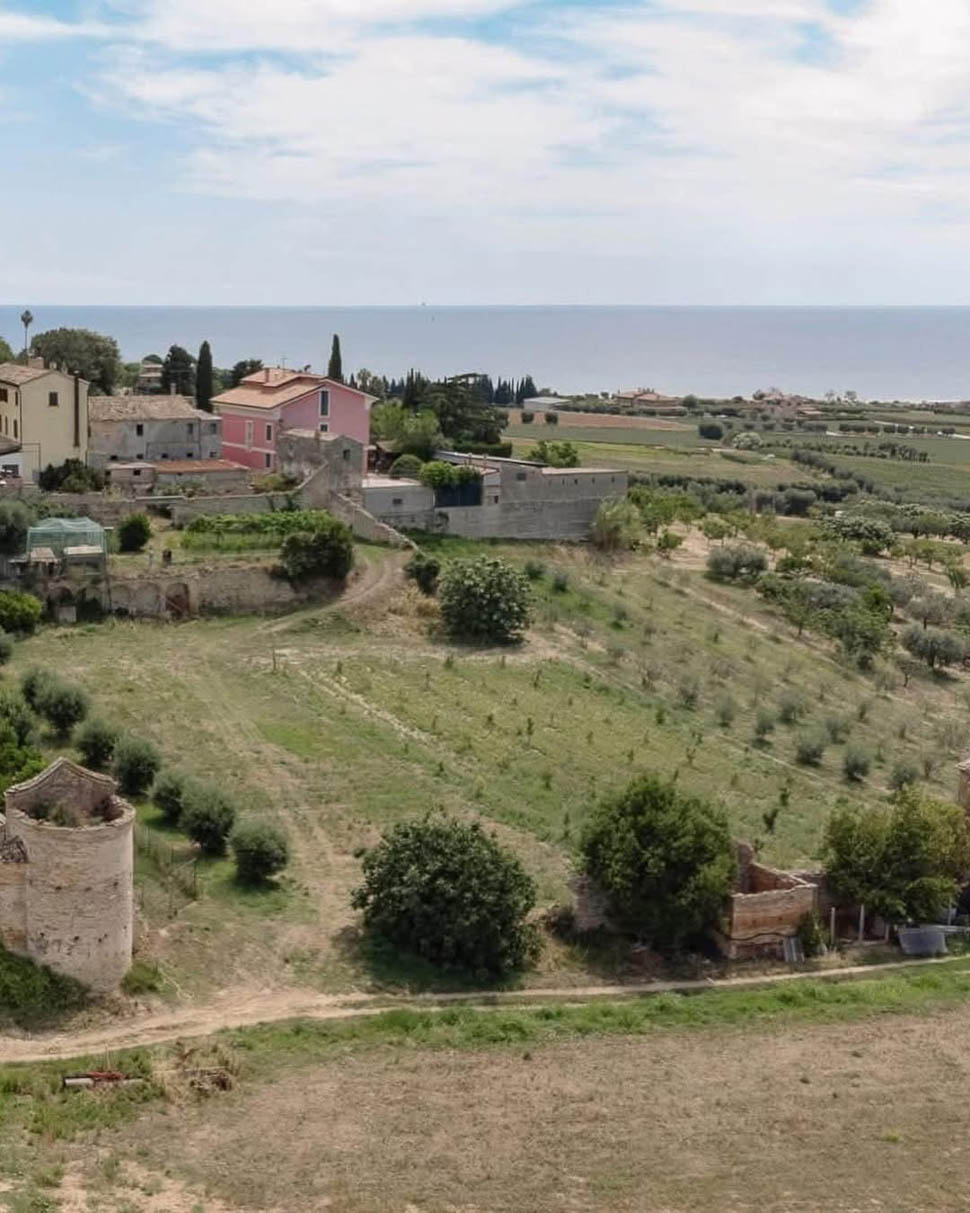
The Marconi family moves along the solid axis of family memory, interpreting local tradition in a personal and modern way, with attention to raw materials, which are very often produced directly. Most of the ingredients come from the family farm in Massignano, just a few kilometers from the restaurant. The vegetable garden is now a historic garden recognized by the Ministry of Culture and the FAI (Italian National Trust): a place that is not only agricultural but also cultural and an integral part of the culinary story.
Hortus, an agricultural enterprise as a manifesto
The citrus garden, now open to the public, and the family farm, renamed Hortus, represent the productive heart of the Attico sul Mare ecosystem. Here, the vegetables and farm animals featured on the menu are grown and raised. It is precisely from this reality that one of the three tasting itineraries is born: “Hortus giardino,” a menu that narrates the biodiversity of the Marche region through dishes such as “anatra all'arancia bionda picena” (duck with Piceno blonde oranges, the oranges grown furthest north in Italy).
Hortus completes the trio of menus proposed in 2025: Ormai classici (a best of the iconic dishes of the last 18 years); Connessioni (a free-hand journey where the chef explores influences and seasonality); and, of course, Hortus (a reflection on plant matter). To mark its eighteenth year in business, the menu has taken on a three-dimensional form thanks to the work of students from the Academy of Fine Arts in Florence, who have paid homage to the three arches that symbolize Grottammare, as the skyline of the village.
The Attico sul Mare restaurant
With the old town behind it, perched on the edge of a hill and facing the Adriatic Sea, this fine dining destination is located in the most classic of holiday settings: a long stretch of palm trees, well-equipped beach resorts side by side, children playing in the streets, people riding along the bike path and enjoying the tranquility of the sea at sunset. The atmosphere, as mentioned, is in full “Italian vacation” style, yet here you will discover a decidedly fine dining cuisine that is equally traditional, albeit “evolved.”
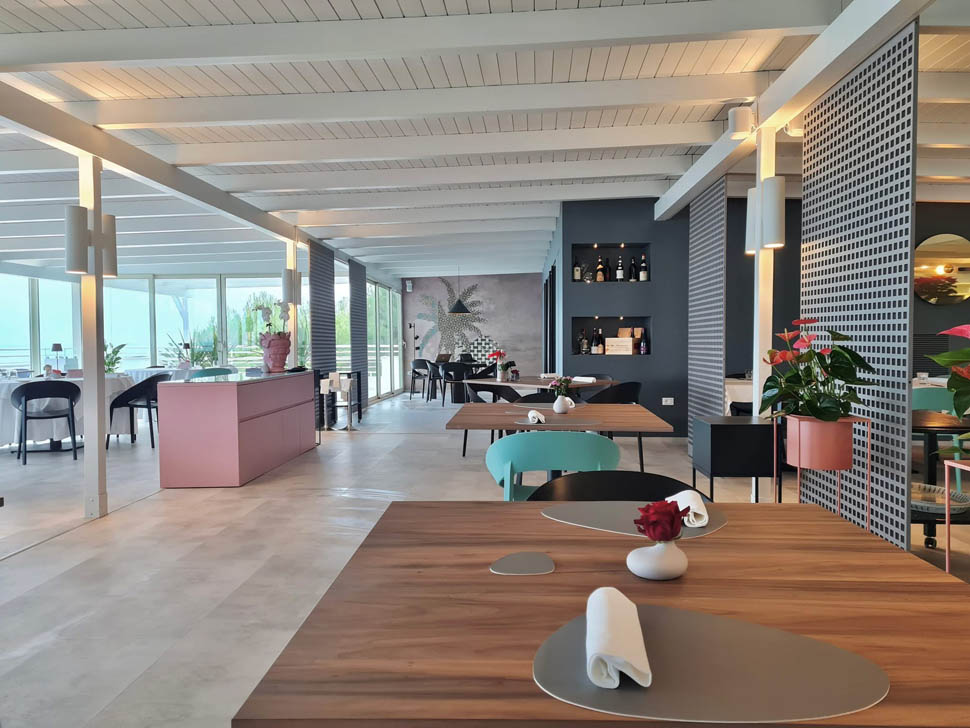
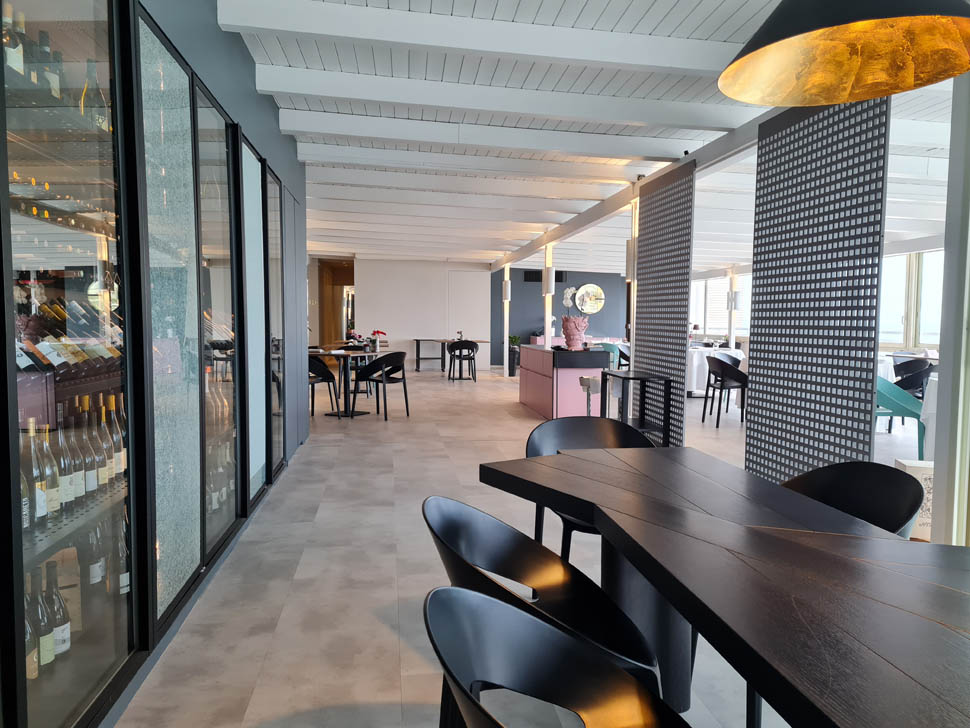
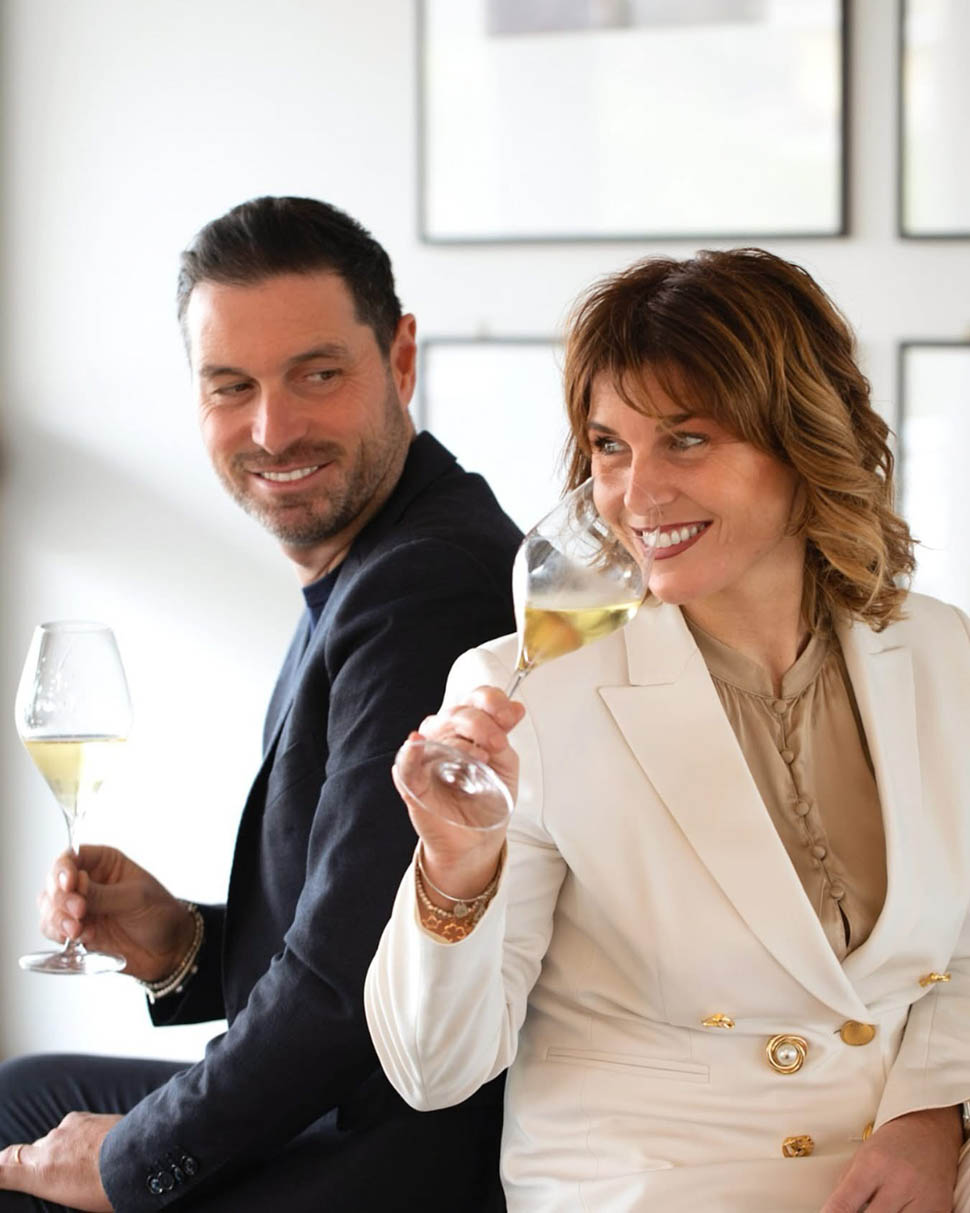
The spaces, carefully renovated by architect Luca Troiani, have been designed with clean lines, soft colors, and rooms surrounded by large windows overlooking the sea, all of which are modular. Each room can be transformed into many different spaces thanks to removable wooden panels that allow you to create small intimate rooms or more open spaces, as needed. The panels also rotate around the open wine cellar, which houses over 1,500 bottles (all at serving temperature). In the center of the main room is a large black grand piano, which hints at the authentic spirit of Attico sul Mare. But let's take it one step at a time. Dinner begins on the terrace, where a panoramic tower welcomes guests. As Simone Marconi explains, “We like to offer a journey, starting with an aperitif on the terrace, followed by the main courses in the dining room and ending with a sweet treat at the bar.” Here, with a priceless view of the Adriatic Sea at Grottammare (European Blue Flag since 1999), the amuse-bouches are served. They are accompanied by drinks or mixed wines recommended by Sara Marconi, sommelier and creator of the extensive and carefully curated wine list since 2007.
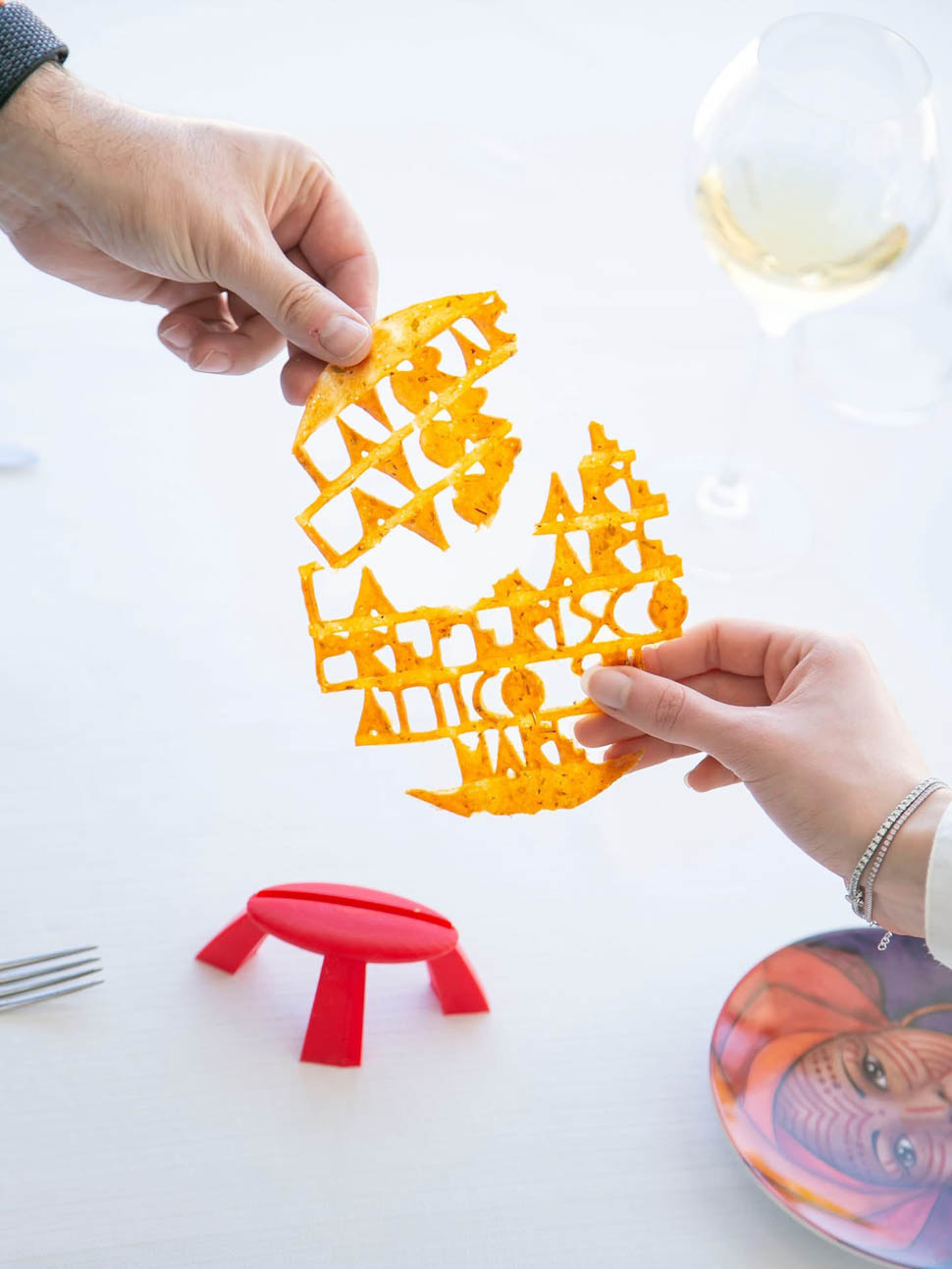
We start with an olive stuffed with San Benedetto-style fish soup, fried in a batter made from dried fish bones from the soup itself. Next comes cod liver, prepared like foie gras and disguised as an Italian-style appetizer. Everything is wrapped in a surprising Campari jelly, orange zest and chopped peanuts; finally, mixed seed tacos stuffed with salted ricotta and seasonal vegetables from the garden (zucchini alla scapece or grilled artichokes, depending on the season). A welcome that immediately defines its mission statement: territory, Italian spirit, and renewed tradition. Back in the main dining room, among minimalist tables and white tablecloths, the real menu takes center stage. First, stone-ground semi-whole wheat bread served with soft pizzaiola butter. Next to it is a tribute to and reinterpretation of the egg-shaped sculpture by artist Dino Campana, located on the northern seafront of San Benedetto del Tronto. A wafer of pasta sheet echoes the quote: “Work, work, work, I prefer the sound of the sea,” cleverly adapted to “I prefer Attico sul Mare.”
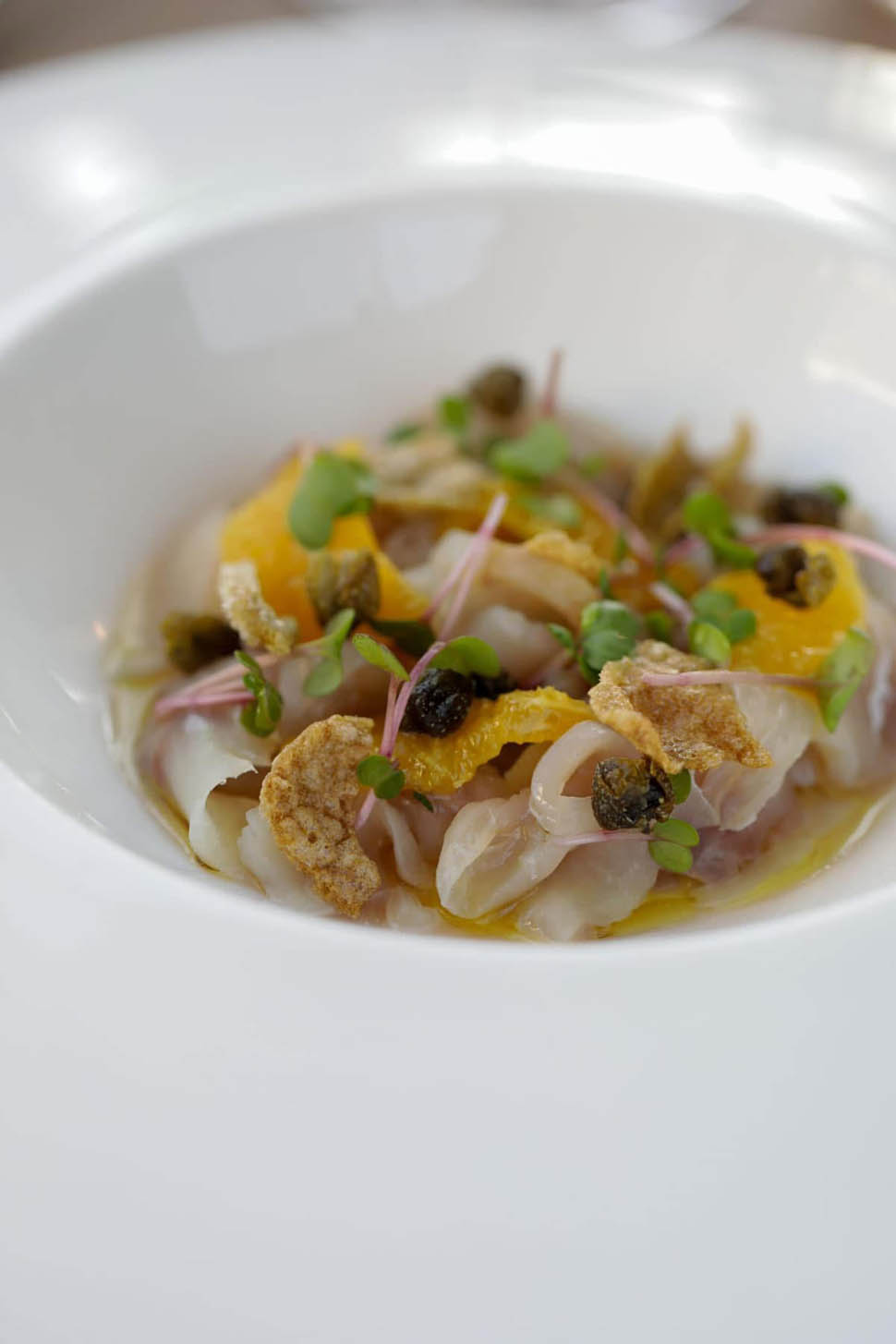
The chef then begins with a dish that recalls his family origins: carpaccio of amberjack marinated in vinegar from Sicily to Piedmont. The oak-smoked amberjack enjoys contrasting textures thanks to its crispy skin and dried capers. The flesh of Piceno blond oranges and homemade mayonnaise add fat and acidity. The second course is marked by an hourglass. The fresh fish of the day is placed in a small pot and steamed directly in the dining room. All this while the hourglass, placed on the guest's table, marks every second with a fine shower of sand grains. Once ready, the seafood salad is assembled on the plate on a citrus misticanza.
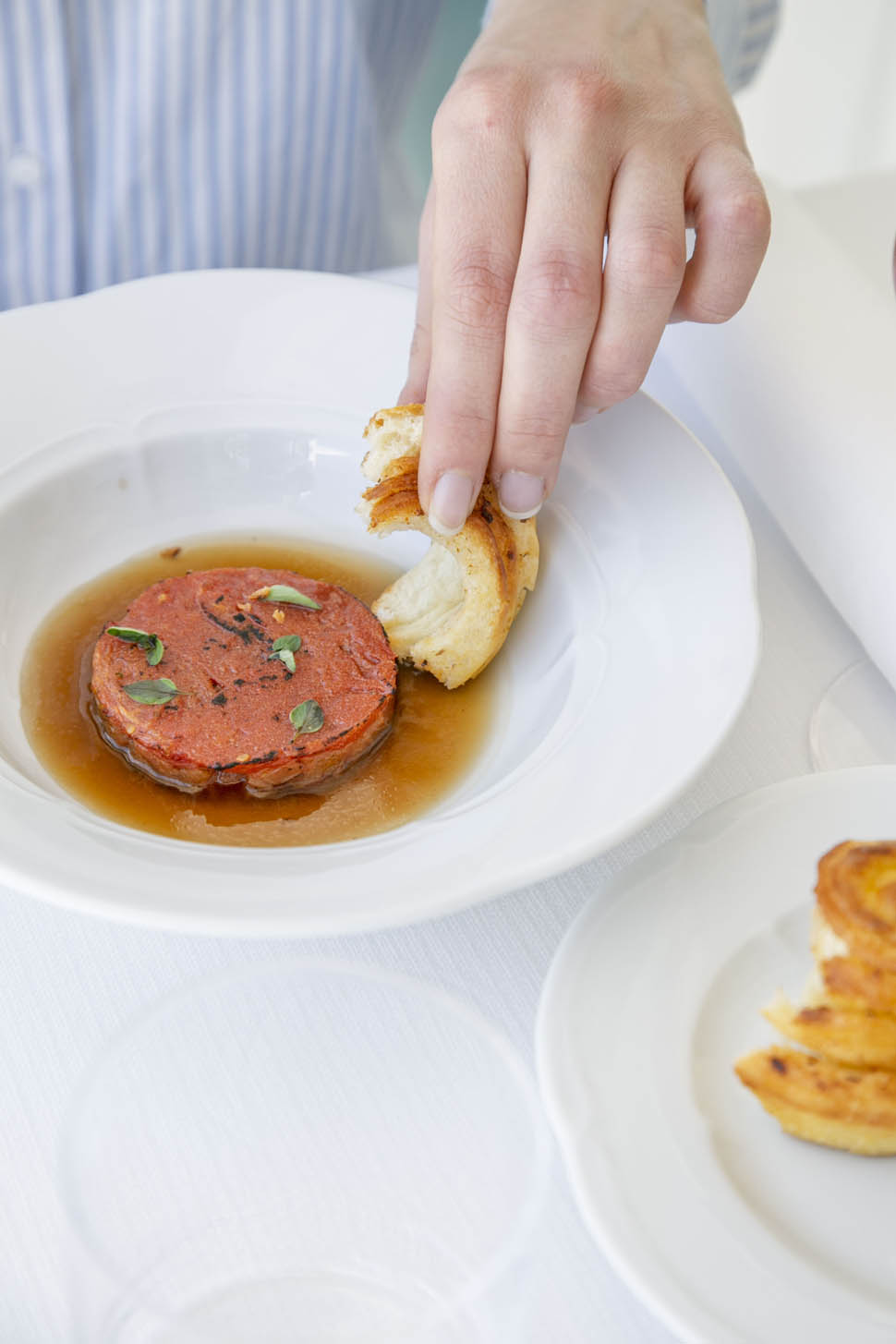
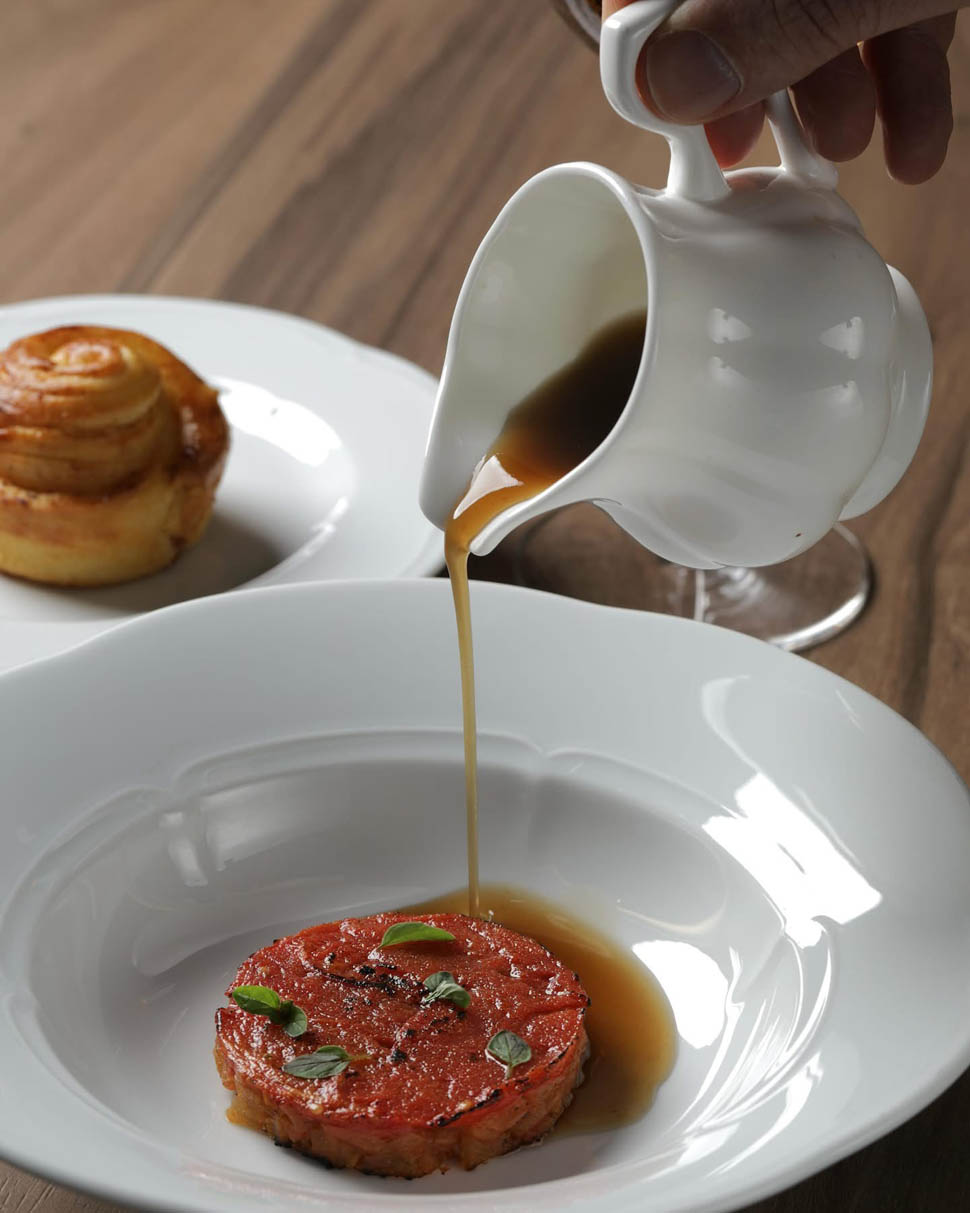
Then it's time for bread, tomatoes, and salami. Or rather, a concept that has been reworked with skill and flair. Tartare of three varieties of grilled tomatoes, smoked bread broth, and infused tomato scraps. Accompanied by a pasta sheet sandwich with ventricina (in the Teramo version, spreadable and a little spicier). A spoon is provided, but the chef recommends: “it should be eaten by dipping the bread in the broth and mopping up the plate!”
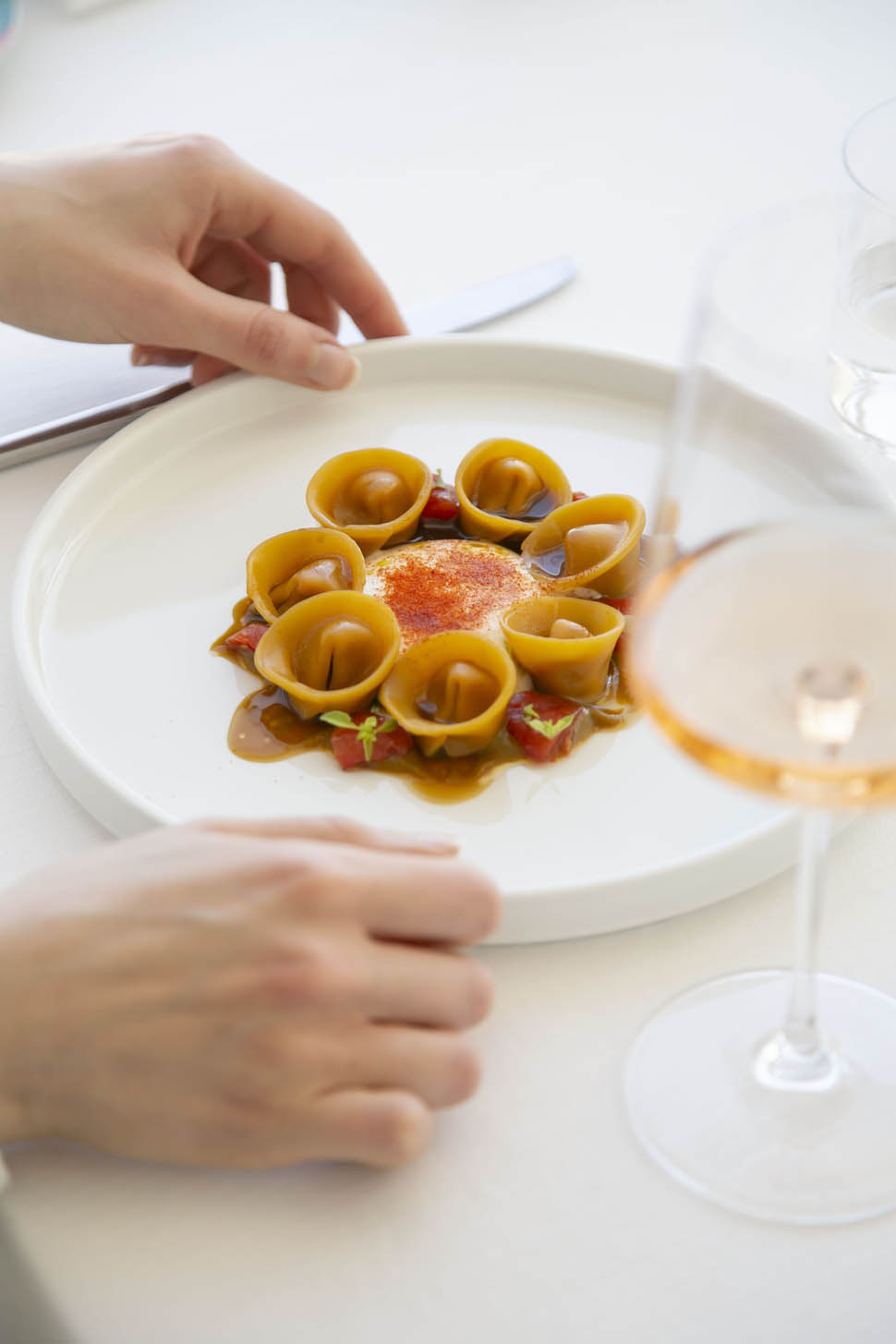
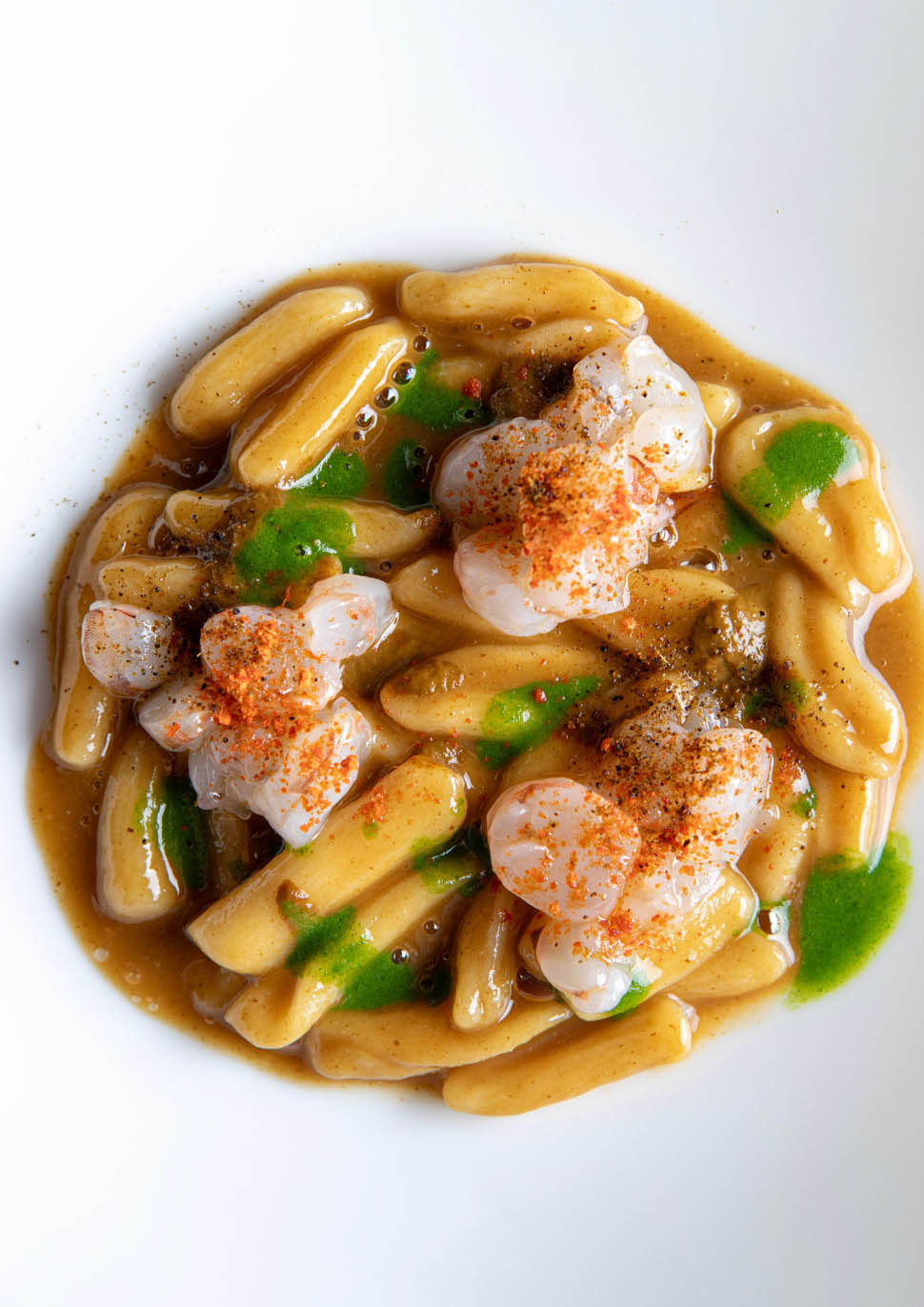
The spoon leads us to the next course, the undergrowth of bomboletti (sea snails). Tradition dictates that they should be eaten with a toothpick, but it is also customary to feed them to children already shelled and “spooned.” To evoke this childhood memory and its gestures, San Benedetto-style bomboletti are wrapped in a soft potato and mushroom mousse, dotted with toasted pine nuts and hints of sage. The deliciousness of umami makes its presence felt in the first courses: cavatelli alla quintessenza di mare, sautéed in a sort of naturally savory fish juice, and tortelli alla puttanesca, with the strong smoky flavor of buffalo mozzarella mousse and grilled pepper cream.
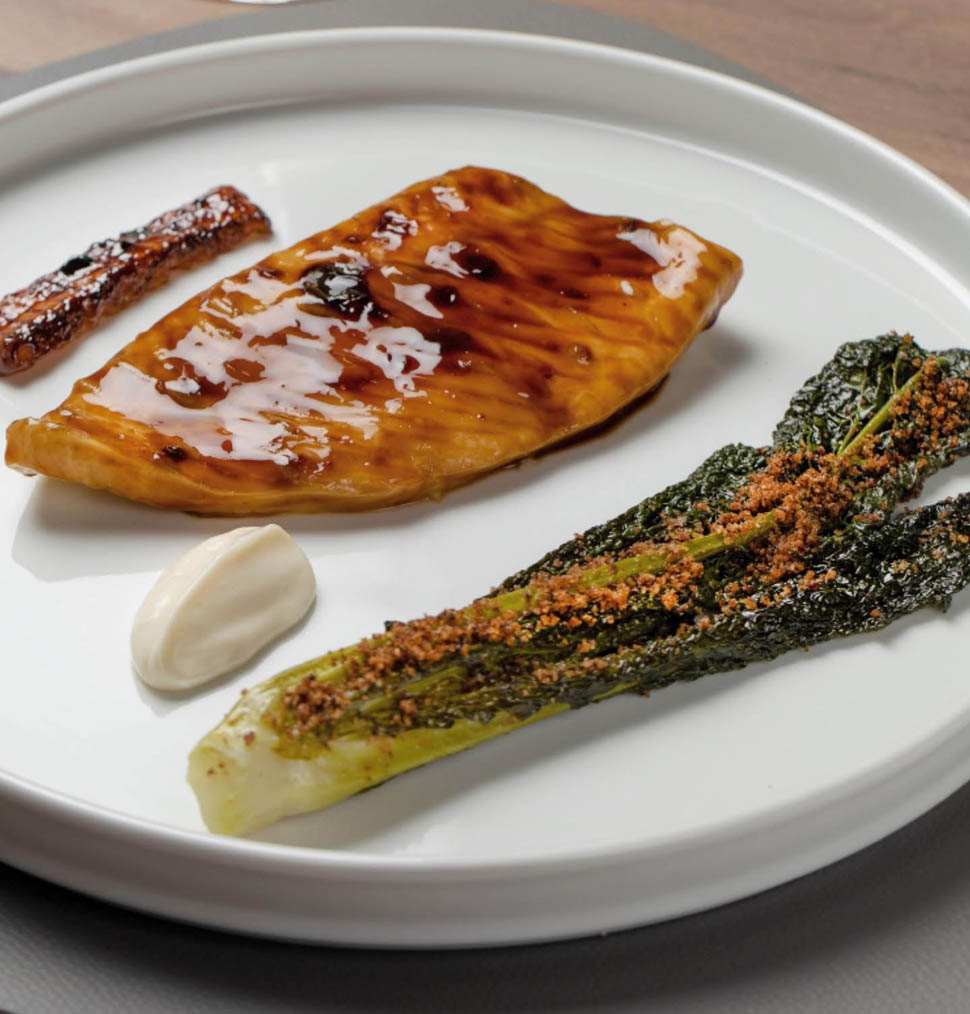
However, it is with the variation of “rombo dalla testa alla coda” (turbot from head to tail) that the chef expresses what he finds most exciting to do lately: recovering every part of the raw ingredient. There is the lean part glazed at the bottom, the marinated and toasted fin, the dried cheek wrapped in grilled lettuce, and the mayonnaise with the excess cooking oil.
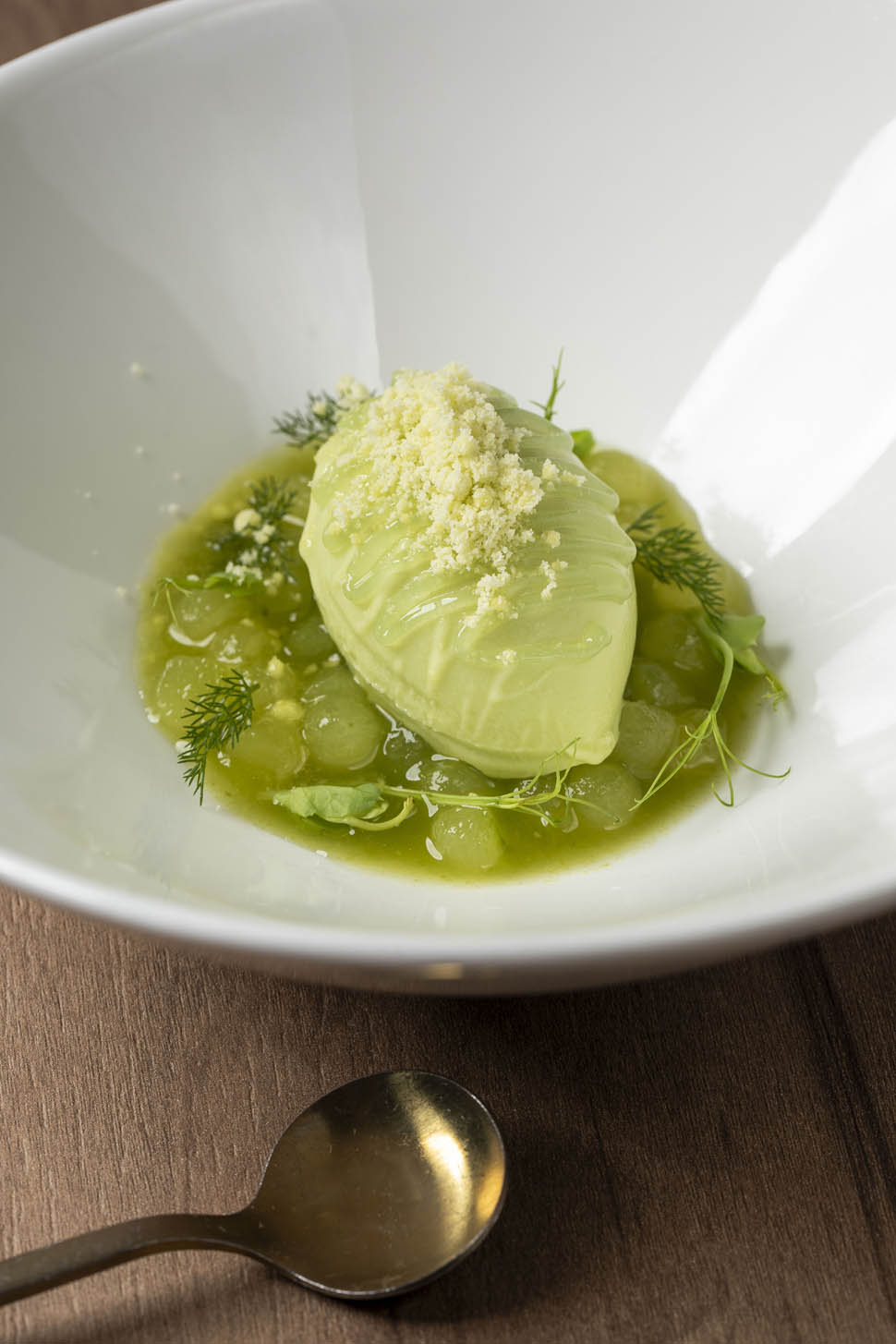
Perhaps the fat is a little too pronounced on the palate, but this is quickly remedied by the celery and avocado sorbet with cucumber salad, gin, mint, and lime, which cleanses the palate before the dessert. To finish, a creamy yogurt and white chocolate dessert with meringues and frozen raspberries covered with a veil of red turnip and accompanied by a cube of three chocolates. The final farewell is at the counter, with an espresso cream puff filled with Castignano green anise chantilly cream.
Suddenly, however, Simone strikes the first notes on the piano, because, as he loves to repeat, “People come to Attico sul Mare to eat well, but above all to feel good.”
CONTACTS
Attico sul Mare
Piazza Kursaal, 6 – Grottammare
Phone 0735 736394 / info@atticosulmare.it