A menu surpassed only by its counterpart the following year: Uliassi's Lab, extremely complex yet open to immediacy for total sensory involvement. From the “new” wafer with rabbit liver to the dessert with rosemary and coffee, the story of the 2025 tasting.
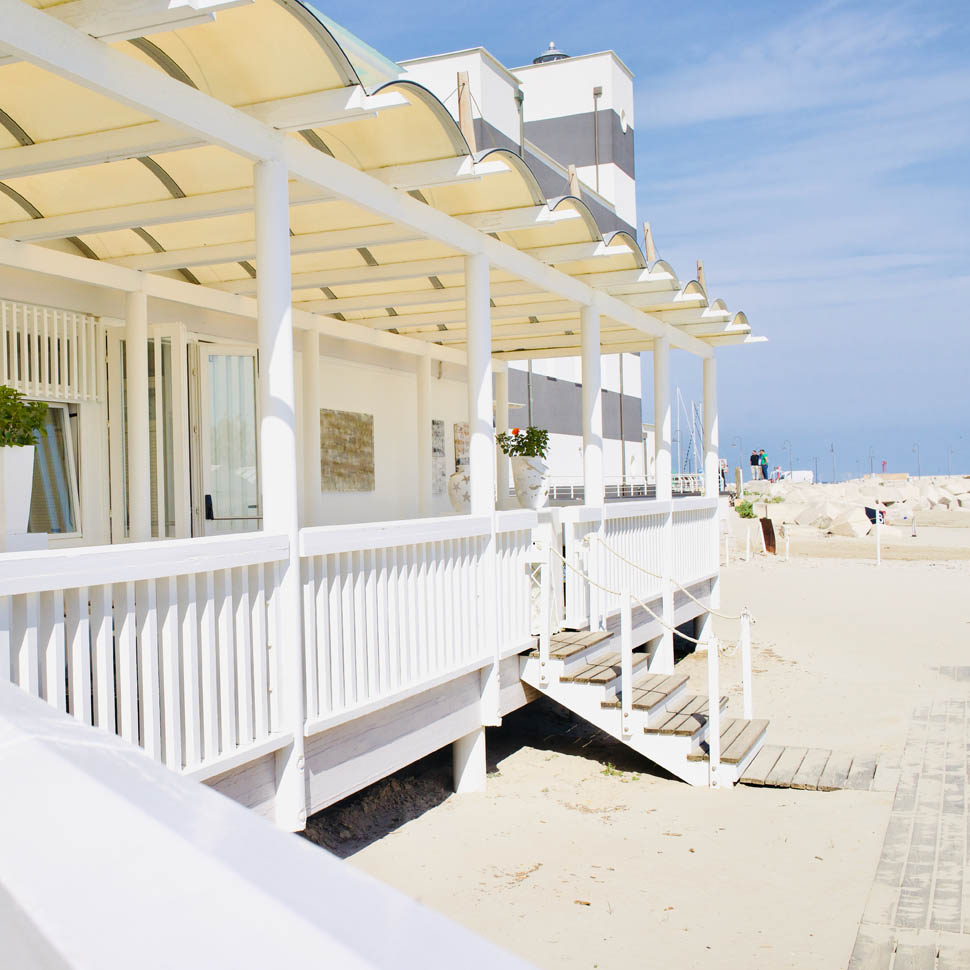
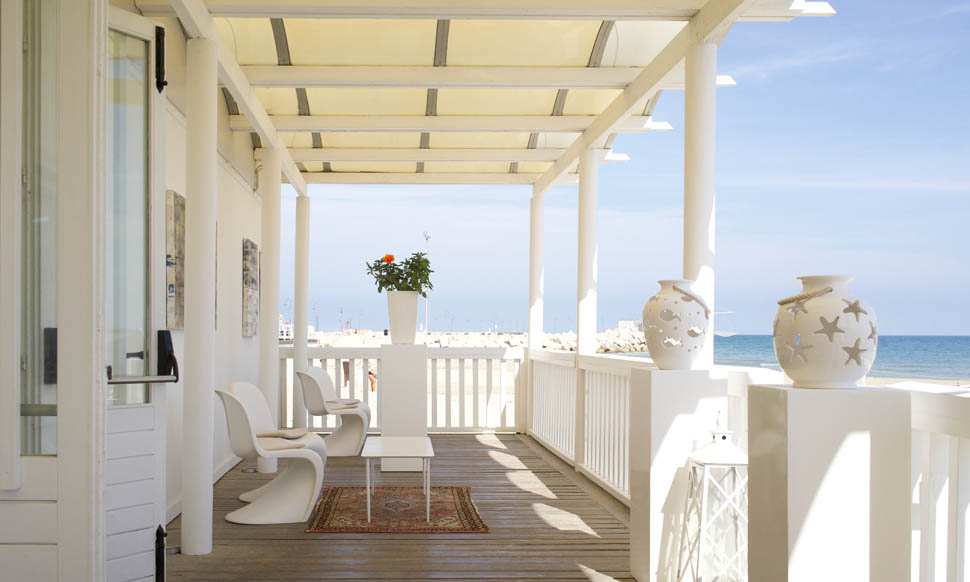
The sun blazes down as you cross the canal on the wooden walkway leading to number six on the Banchina di Levante, on a Wednesday in June. At the Uliassi restaurant, at least five different languages come together in a soft murmur that bounces off the linen curtains fluttering in the light. The Adriatic breeze is always welcome during summer lunches on the veranda, with the most radiant blue view in world haute cuisine.
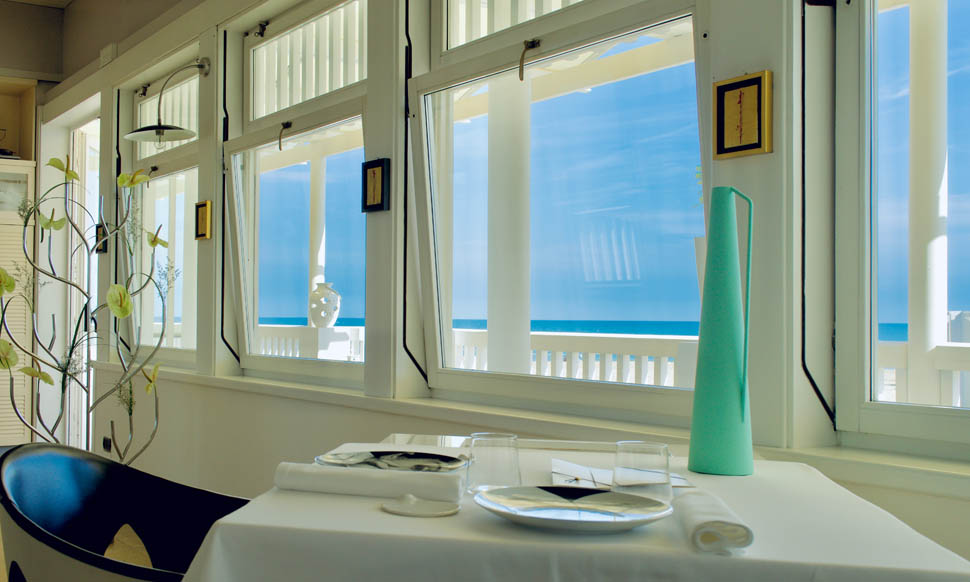
Most of the dishes served in the dining room are from LAB 2025, the result of the imagination that has been practiced for twenty-two years by the entire team of the three-starred restaurant, when they literally lock themselves in the kitchen from February 10 to the end of March. And they don't move from there until the most comprehensive avant-garde menu ever is ready, a menu that is distinctive, with a conceptual and technical complexity that is unrivalled, but which can be understood immediately. It can only be surpassed by its counterpart the following year.
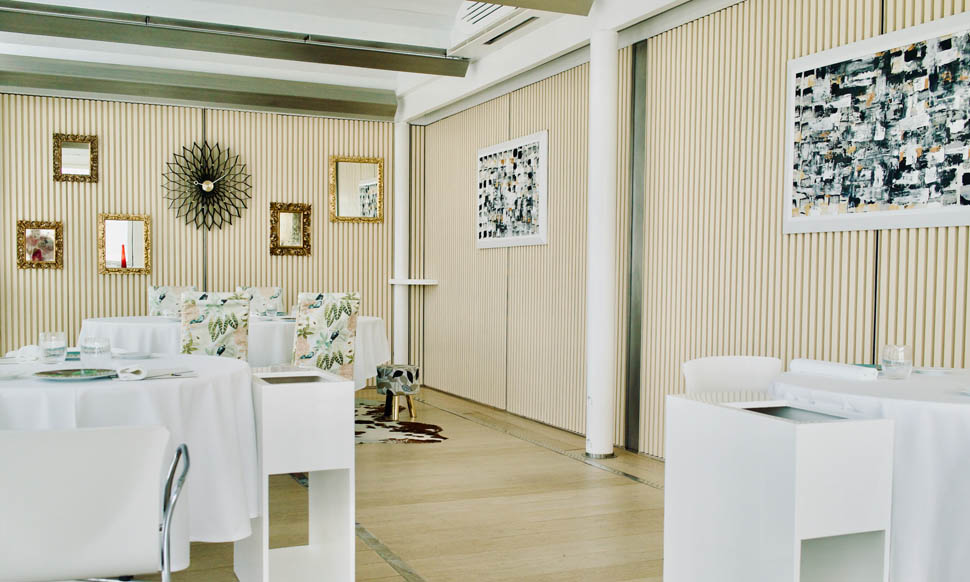
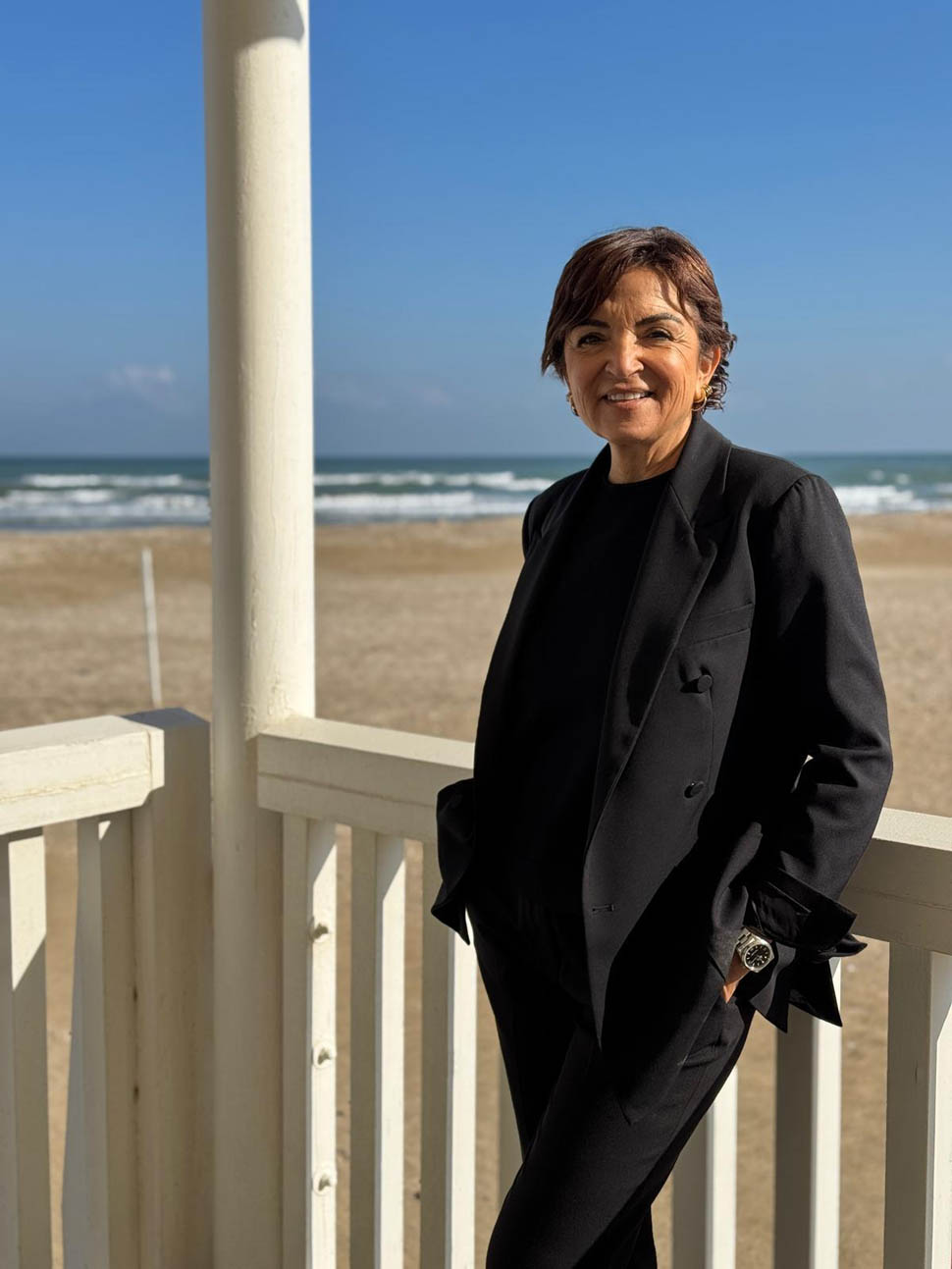
Each LAB menu is created as a natural evolution of previous experiments: a compendium of reflections, experiences, and progressive refinements. A true integral sensory exploration, designed to engage and satisfy all five senses. “In recent years,” explains Uliassi, "we have studied almost obsessively how a dish is perceived not only on a gustatory level, but also visually, tactilely, olfactorily, and even aurally. We asked ourselves how we could intervene in the dining experience to transform it into an immersive act, rooted in the here and now of the act of eating. Each dish is created with the specific intention of capturing the diner, suspending them in the moment, preventing them, for a few moments, from letting their mind wander elsewhere. Tasting thus becomes an experience that captivates and enchants, leaving you with a single desire: to discover the next dish. Here, pure pleasure is ignited, evoked, desired, and alongside satisfaction, a longing is created, a tension that stimulates an almost urgent need for the next dish. This is how, with the utmost lightness, almost without realizing it, you come to enjoy a harmonious sequence of ten or fifteen dishes, each an integral part of a broad gustatory design.
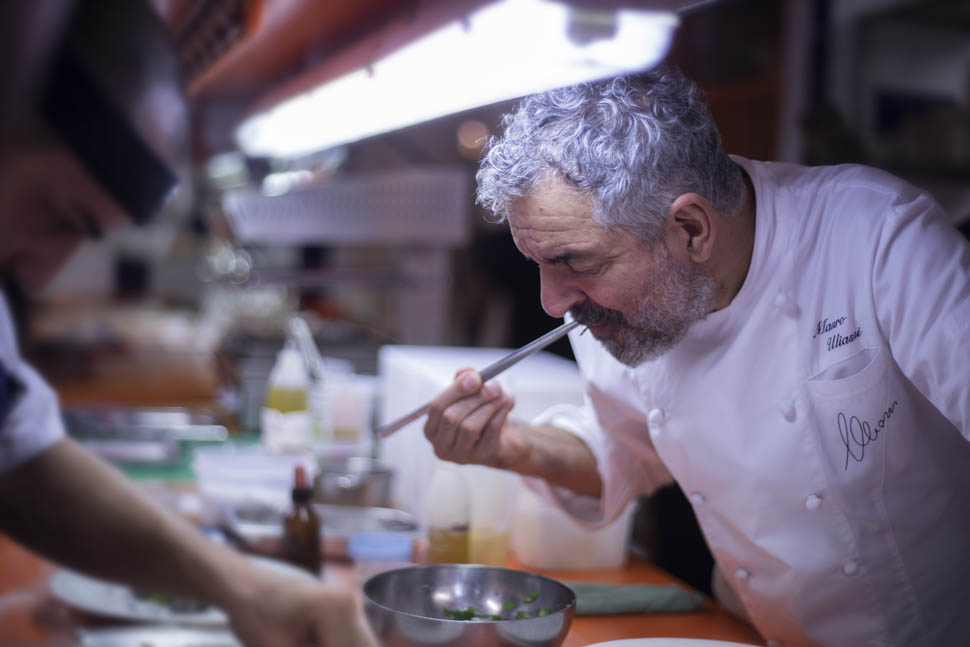
No exhausting explanations at the table are necessary or preparatory to eating, although they are provided promptly, knowledgeably, and technically if requested, but there is no need for them. The more primitive the diner's approach, the more ecstatic the tasting experience. What is striking about LAB 2025 is that it is a sequence of peaks, where dizzying heights seem to be the minimum allowed, the courses do not follow each other in ascending order, but are established from the very first on a qualitative ridge that remains stable and explosive until the end. There is no “strong” or “connecting” dish: all are equal in their expressive depth and converge in a complete orchestration. There is no hierarchy, but a balance that radiates evenly throughout the experience like a full light that leaves no shadows.
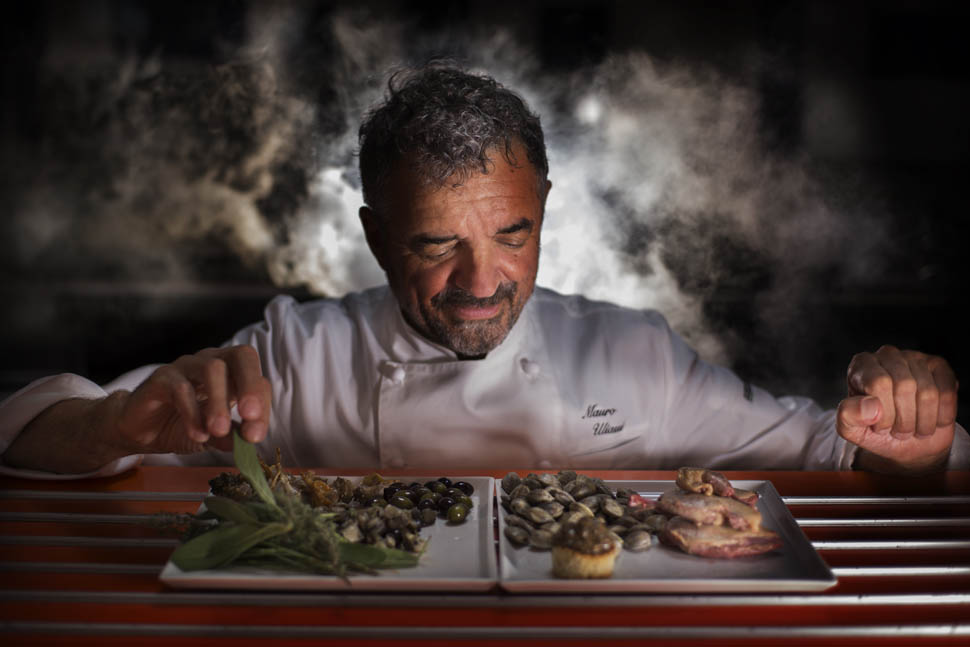
The dishes
To make the wait for the new LAB races even more exciting, there is the reassuring certainty of the welcome aperitif, the legendary wafer with hazelnut praline and liver, this year made with rabbit, accompanied by a shot of Kir Royal. Next, in a carefully calibrated succession of textures, come breadsticks and puffed corn, accompanied by a gel made with extra virgin olive oil and burnt rosemary, and the irresistible whipped butter with plankton, seaweed, and lemon zest: an ideal emulsion in which to dip the fragrant homemade breads — from ancient grain bread to seaweed bread, from cheese pizza to crackers embellished with seeds. The herring milkshake takes shape from an emulsion of almond milk and burrata, whipped until it achieves a milky, airy yet structured texture that turns smoky thanks to the herring.
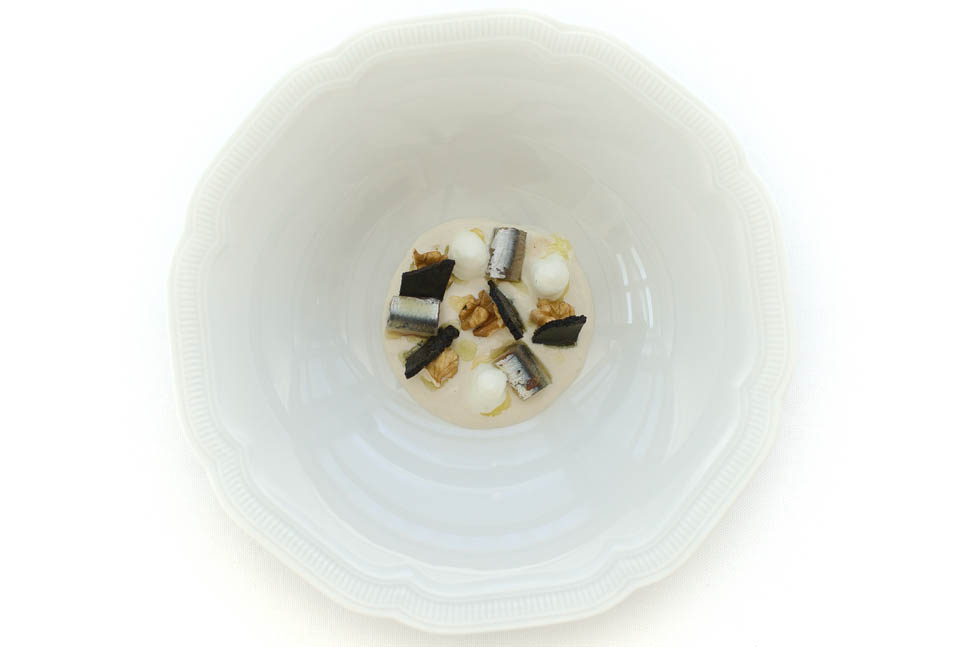
Adriatic anchovies, previously marinated in salt, are immersed in the mixture, adding their full flavor. A hop foam introduces a surprisingly elegant and persistent bitter note, while walnuts left to soak in carbonated water for 36 hours regain the original texture of fresh fruit, still wrapped in their husks. The result is a dynamic texture that oscillates between the velvety smoothness of the lactic mixture, the meaty flavor of the anchovies, and the tempered crunch, almost callous, of the rehydrated dried fruit. “Years ago, if you went to the beach early in the morning at low tide,” says the chef, “you would see kilometer-long lines of people, knee-deep in water, bent over fishing for razor clams. The most acrobatic ones did what my grandfather Vittorio did: he would go where the water was two meters deep, dive in and catch them with his toes.”
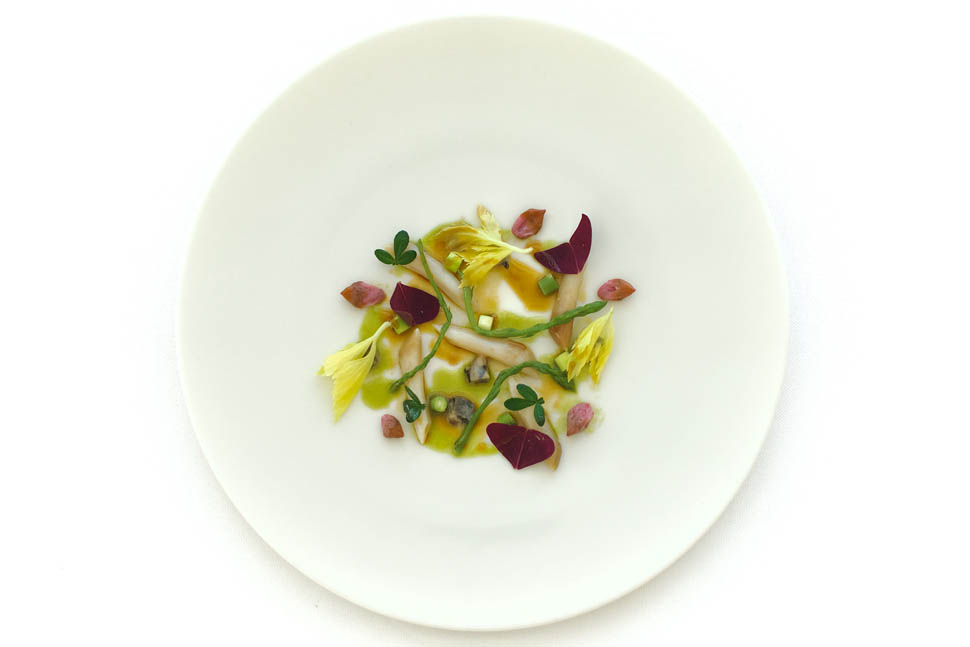
Today, however, those same mollusks seem to have retreated elsewhere, perhaps disturbed by the acoustic frenzy of the beaches. They have sought refuge in more remote seabeds, 40 or 50 meters deep, where silence still allows life to go on undisturbed. The specimens used in Uliassi's kitchen come mainly from Northern Europe and are vacuum-packed with a drizzle of extra virgin olive oil and a little water, left to open gently at 55°C, so as to maintain their structure and obtain a tender and succulent texture. The innards are carefully removed and, together with the shells, reduced to a concentrated sauce that becomes pure marine umami. The razor clam, tender and pure, is placed on the plate with its iodine sauce to maximize its natural salinity, paired with a green tomato sauce with a sharp acidity and the depth of peach blossom sprouts, subversive because they are frozen, with Sil Timur pepper-scented oil for a citrus kick, red clover, the most tender and pale leaves of celery and chopped celery heart. A cult dish since time immemorial, this year the snails are paired with an even wilder and more intense component, wood pigeon hearts.
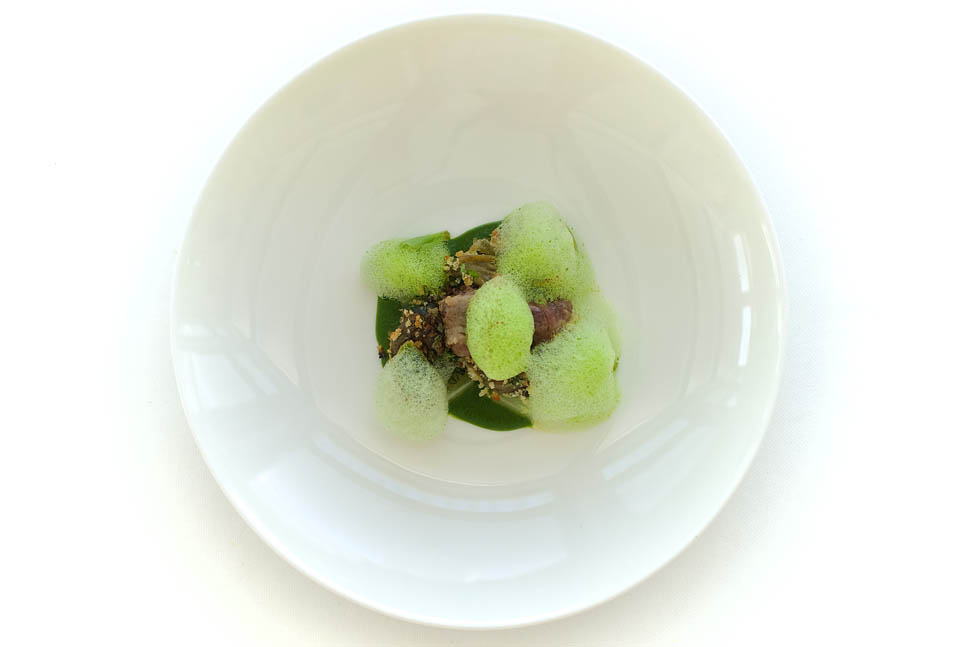
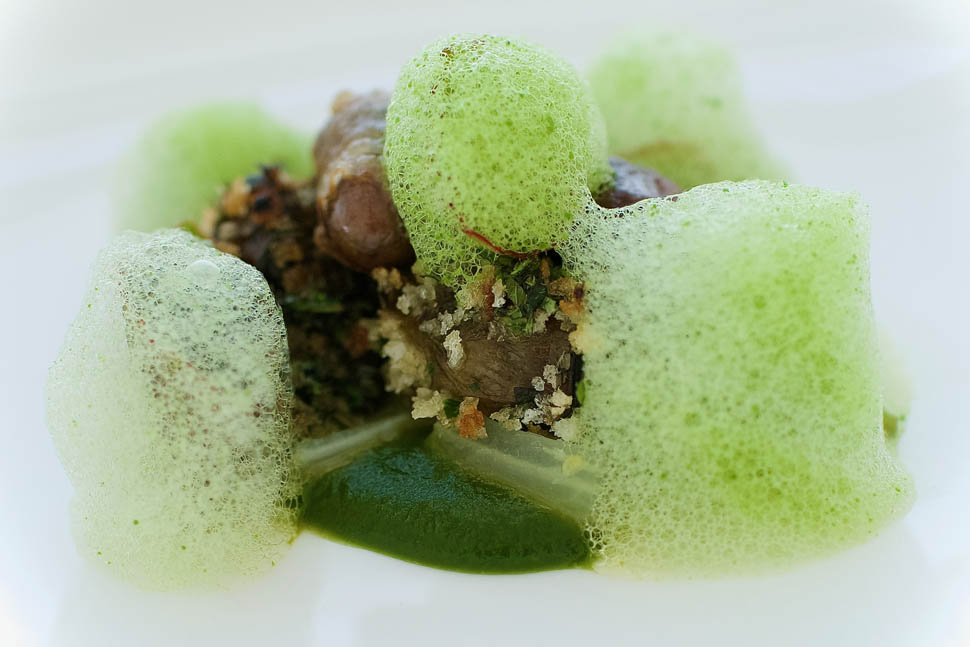
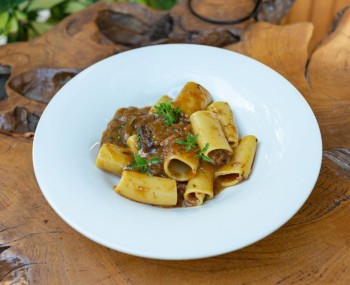
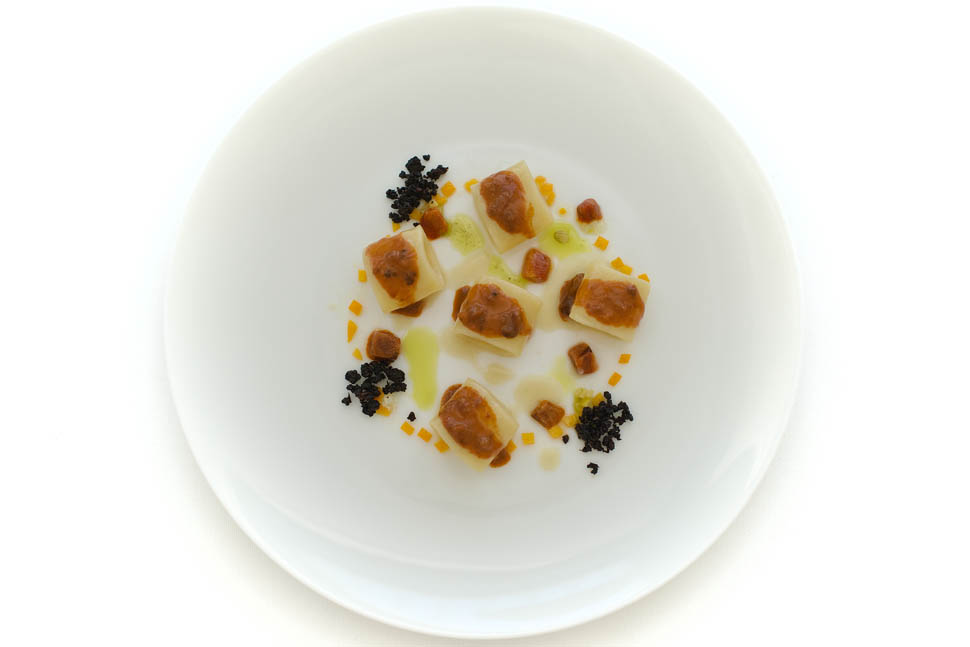
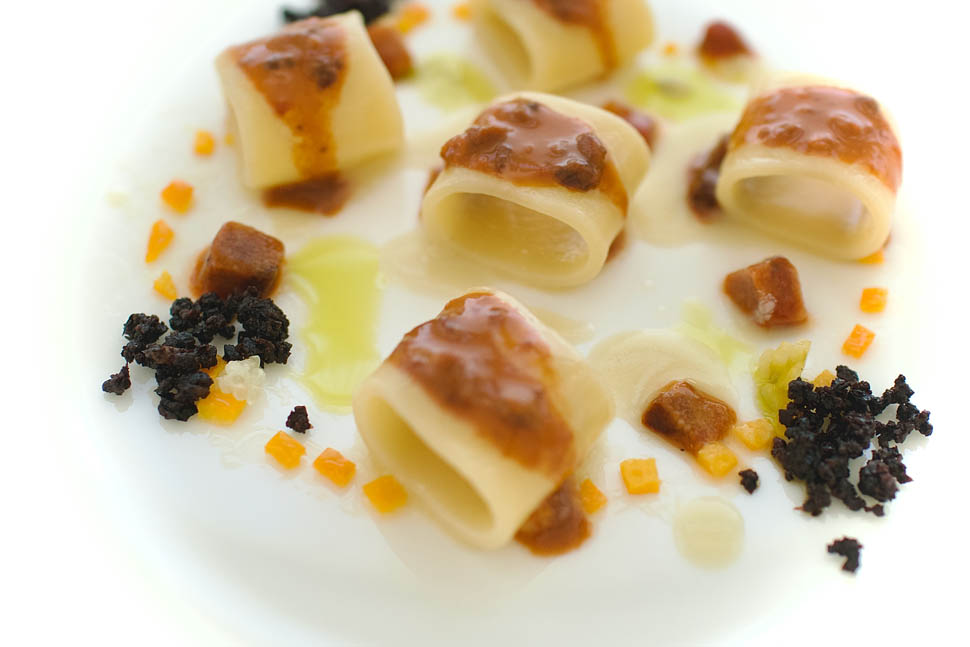
Both expressions of a rugged nature, they are cooked over charcoal, which emphasizes their iron flavor, and arranged on a bed of slightly bitter crispigni, with a parsley foam, lettuce ribs, and the electrifying, tart crunch of begonia leaves. The muse behind this indomitable and magnetic pasta is Chantal, the chef's wife, who loves sea urchins. Then comes Massi's mezze maniche, which is not overpowered by the cream, but is wrapped, once on the plate, in the buttery, metallic flavor of the sea urchins, mandarin and bergamot extract and peel, finger lime, a powder of dried black olives, juniper oil, and shiso. A sharpness of flavor, between citrus acids and stoic bitterness, capable of exerting a growing attraction on the palate.
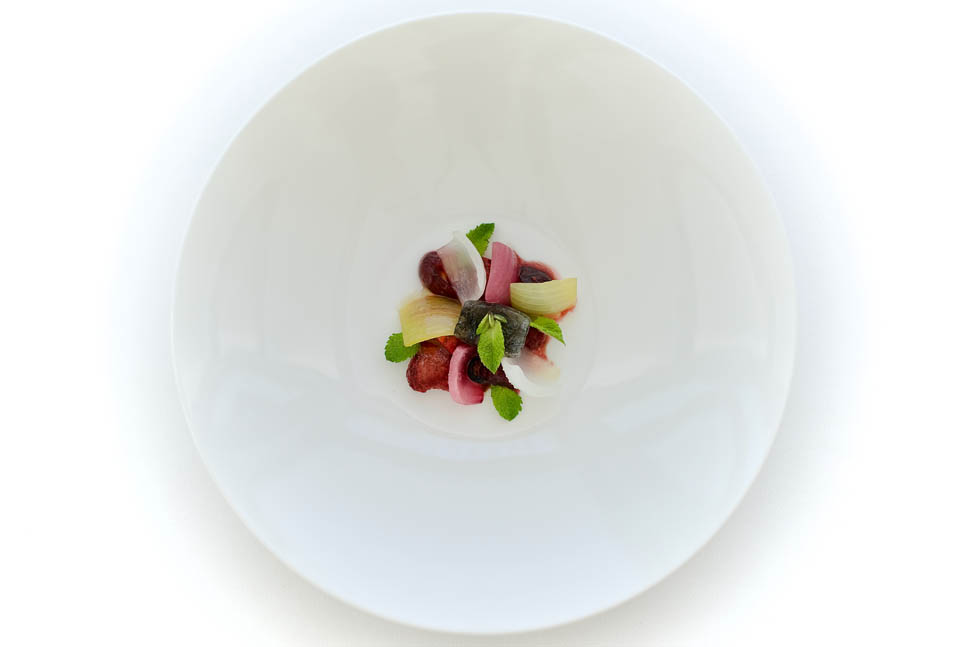
The fifth course was intended to serve as the hub of the menu, a dish linking the two halves of the LAB, but it is so powerfully disruptive and unimaginable in its apparent simplicity that it is unforgettable. The star ingredient is the onion, in four different colors and varieties: red Tropea, white Cannara, and two variations of white onion, colored with squid ink and saffron respectively. Sliced into small wedges, they are blanched for just one minute in boiling water, followed by immediate cooling, which preserves their crunchiness and removes any harshness.
They are then wrapped and refreshed with an emulsion based on tosazu, a Japanese sauce in which rice vinegar and mirin bounce off each other with lively acidity and roundness. This is counterbalanced by a fruity mélange of wild strawberries, blueberries, cherries, raspberries, and strawberries, which are first dehydrated at a low temperature (50°C for three hours) to concentrate the sugars and reduce the water content, then frozen to give them a cold but not glassy, elastic, almost chewy texture. A finely chiseled balance between temperatures, acidity, and texture, in which the onion reveals an aristocratic allure never seen before.
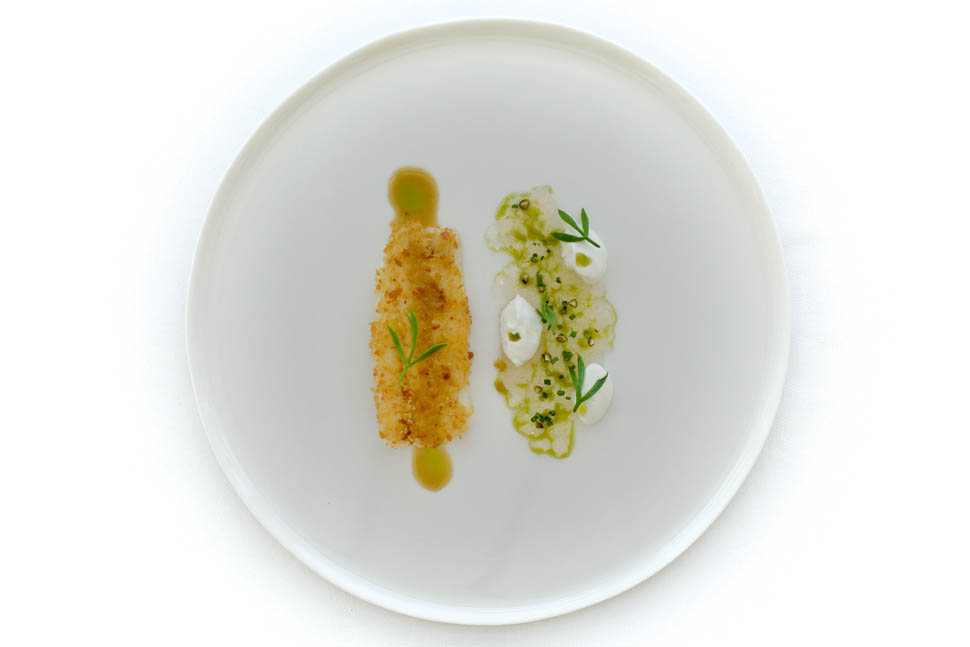
A flashback to the 1970s brings us back to the legendary filet with green pepper, which Uliassi reconfigures in 2025 with sole, whose slice is breaded on one side and roasted in an iron pan, then laid next to a flavorful green pepper hydrosol, to which grains of the same pepper in brine are added.
This is followed by an intensely umami sauce made from blue fish cooked in salmì: mackerel and anchovies, which are lightly toasted in oil and then covered with white wine. The liquid is completely reduced, then filtered, resulting in an acidic, marine-flavored stock that is perfect for drizzling over the fish.
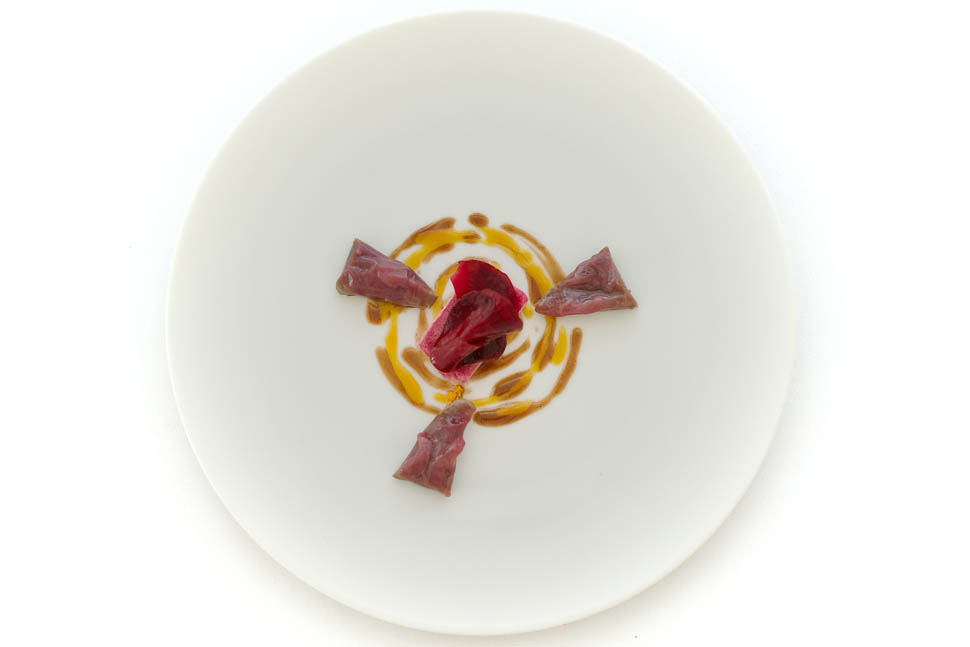
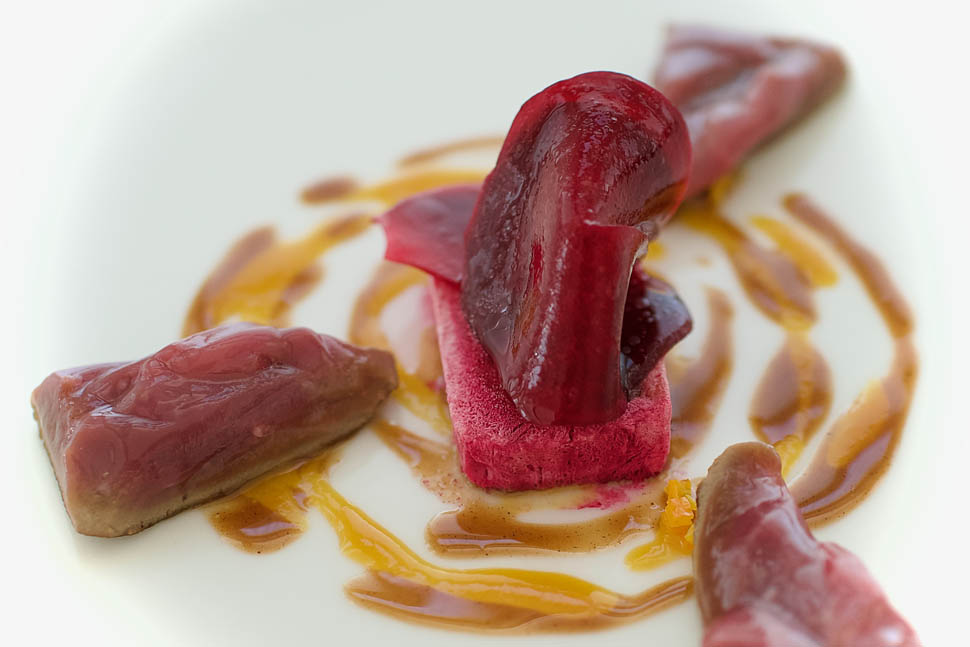
A bold tribute to an ancestral memory, evoking deep and “impure” aromas, those visceral scents that the food industry has gradually removed from the collective sensory horizon. Kidney, now almost completely disappeared from contemporary tables because it does not conform to the accepted standards of pleasantness (sweet/salty, creamy/crunchy), invites us to rediscover the most archaic dimension of taste. Specifically, it is sheep kidney, which is stronger and wilder than beef kidney, and is seared on one side only to preserve its succulence and integrity. It is accompanied by a caramelized orange sauce, which adds brightness to the iron flavor of the meat, and an oil extracted from toasted hazelnuts. To add vigor, an icy red turnip parfait, earthy and vibrant, is topped with crispy raw turnip leaves, finely sliced.
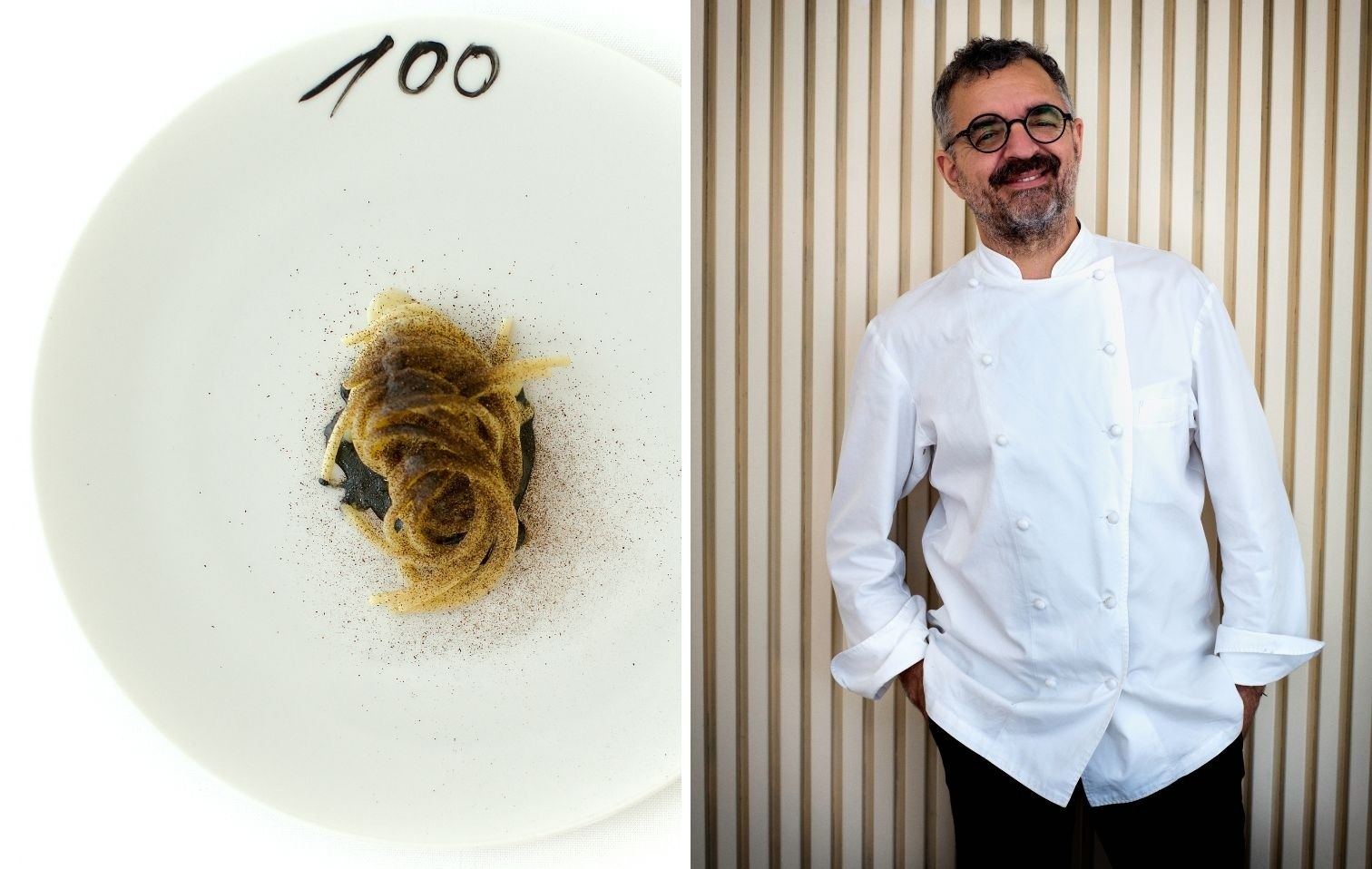
Among his crystal-clear talents, Uliassi has a gift for figurative storytelling, so remarkable that it is the envy of great professional writers. With his words, he can paint a picture, or rather, a film of what he is describing. His stories of the sea, hunting, fishing, or the creation of his dishes instantly captivate you and transport you to the scene he is describing. The text posted on Facebook in 2020, on the occasion of the restaurant's 30th anniversary, describing his first days of work in the “hut” between the river, the sea, and the city, is a distillation of clear, concise prose so poetic that you read and reread it over and over again, with that sort of fabulous, almost Manzonian anacoluthon that describes the precariousness of the building ... “if you wanted to open a window, it was better not to.” Some witty newspapers reprinted it word for word, without adding anything else, because none of their editors could have told the story better. This year, one of the dishes is dedicated to Mario Giacomelli, and the spaghetti that bears his name is preceded at the table by a print by the Senigallia photographer/painter, with Mauro writing on the back how he met him.
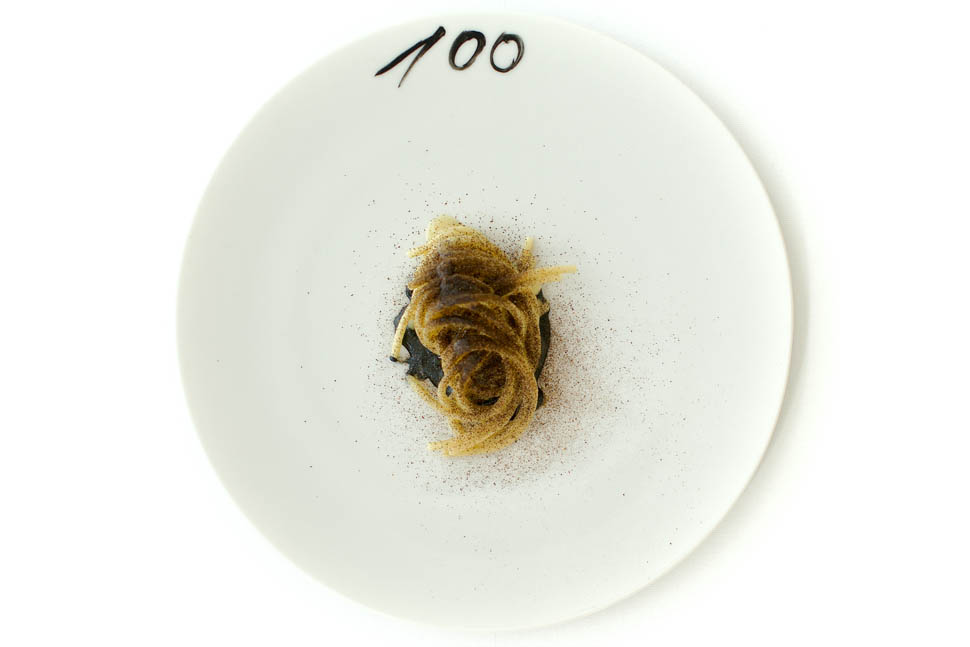
"On a dazzlingly bright day, Mario Giacomelli entered our lives.
A week after we opened, he arrived at the restaurant like an apparition: his skin burnt by the sun, dressed in white, with the aura of an artist. He ate by the window, gazing out at the sea. At the end of the meal, he left us a drawing on the tablecloth made with squid ink and berry sauce, signed ‘Giacomelli 90’.
A precious gift, the beginning of a luminous friendship.
Mario died on November 25, 2000, after a period of illness.
On the centenary of his birth, we dedicate this dish to him to celebrate his incredible work on photography and the landscapes of the Marche region. Because certain encounters remain forever.
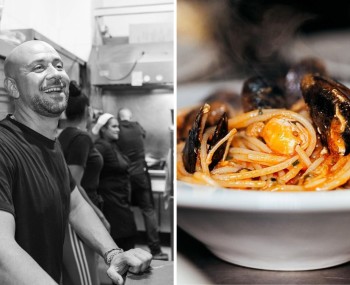
As you read, Giacomelli, with the sea in his eyes, inevitably appears before you, and in the meantime, the dish arrives. The spaghetti is cooked and tossed in extra virgin olive oil with rosemary, garlic, and a hint of chili pepper, then comes the powerful flavor of the sauce, thick and visceral, made from squid ink and a generous amount of cephalopod liver, emulsified with thyme-scented oil. The spaghetti is then laid on this dark blanket, which acts as a visual and gustatory counterpoint to its simplicity.
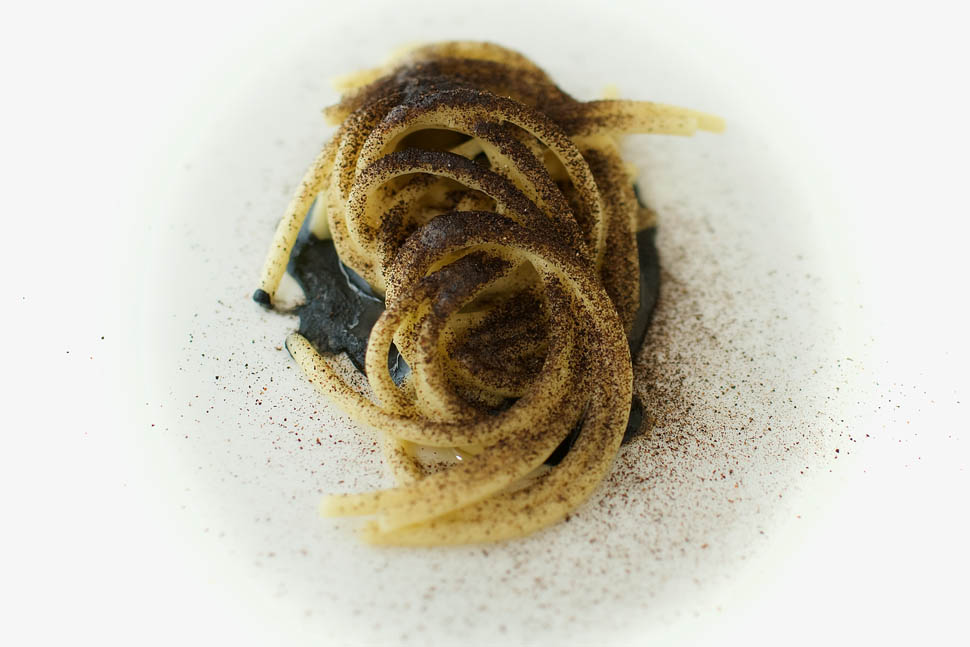
A sprinkling of dried Iranian black lemon, which releases a penetrating aromatic note, triggers all the flavor of the dish. At the end, a visual trace remains on the porcelain, surprisingly evoking the aerial views of the Marche countryside immortalized by Mario Giacomelli. “We increasingly encounter customers who ask for lamb that doesn't taste too much like lamb,” says the chef, “and this sparked my desire to prepare one that really tastes like lamb.” This dish therefore asserts its essence with authenticity, expressing a primordial taste, without compromise.
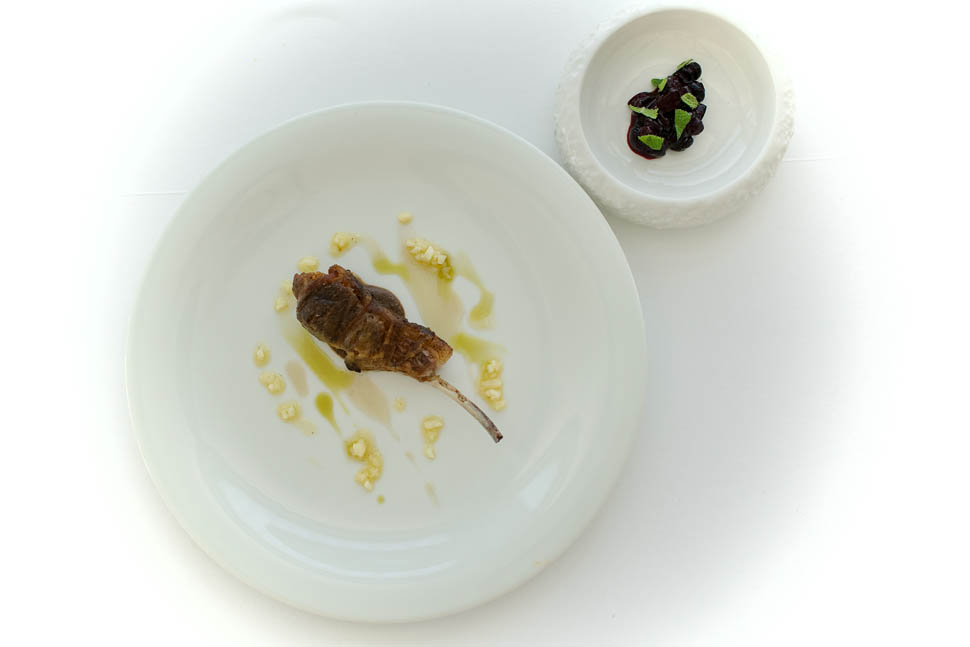
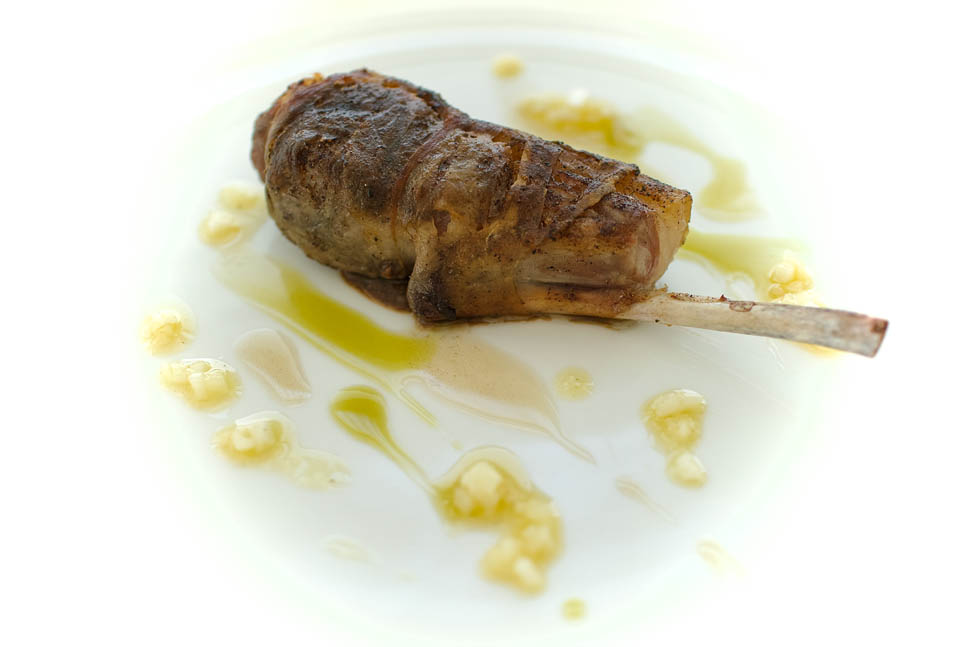
The lamb is cooked on the grill with an oil obtained by infusing the most oxidized parts of prosciutto, with hints of rancidity, and slightly moldy rinds of aged cheeses for 24 hours at 60°C. Small cubes of very fresh pecorino cheese, aged for one week, are added to give a milky and animal flavor. It is also brushed with Dijon mustard and wrapped in a veil of guanciale, then roasted. It is accompanied, for contrast, by a chutney of blueberries slowly dehydrated in the oven and bound with a reduction of orange and blueberry juice, to balance the fat with a burst of acidity. The pre-dessert, carried over from last season, is an apricot granita and ice cream that is totally infused with a velvety saffron cream, while small cubes of dehydrated biscuit add a crunchy component in a compelling synergy of textures and temperatures.
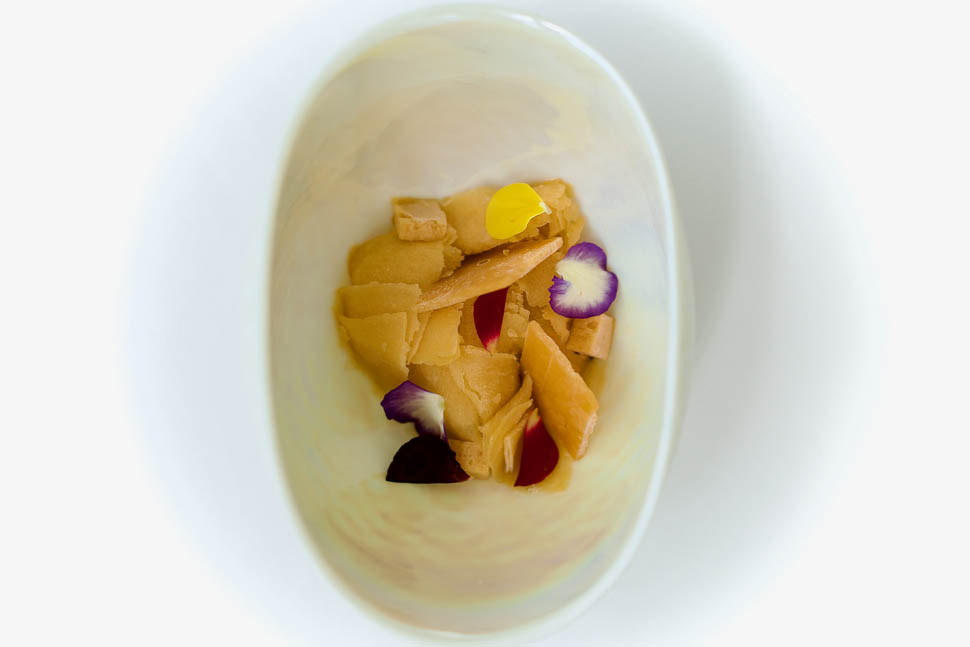
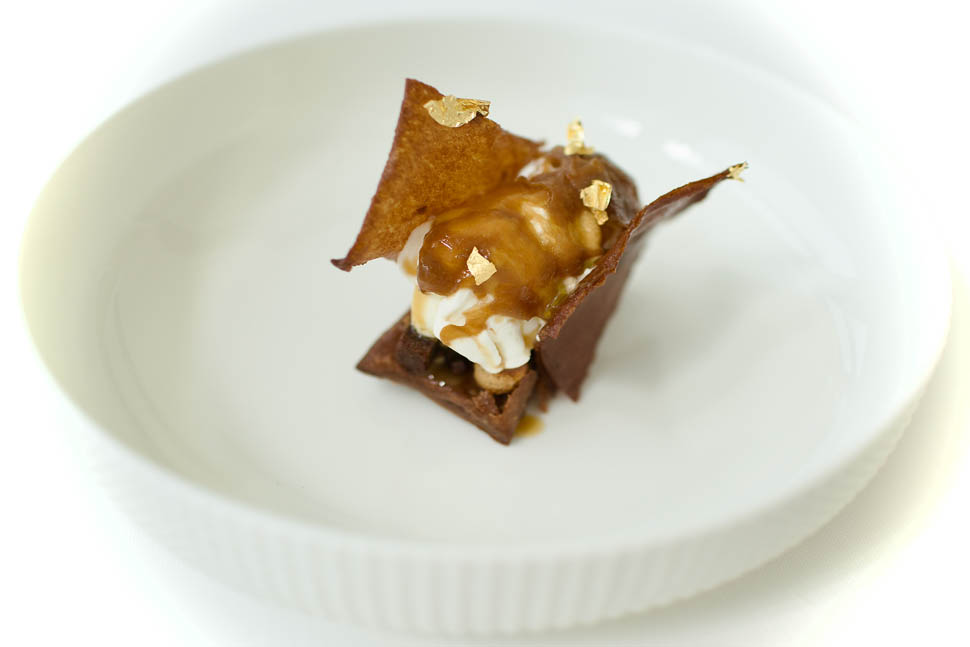
Mattia Casabianca conceives this dessert starting from a bold exploration of flavor. Crispy chocolate and coffee pasta sheets meet a sauce with a surprising aromatic profile, infused with the intensity of ginger and rosemary. Flakes of ethereal granita, created with the Kakigōri machine, the Japanese equivalent of a “grattachecca.” Rolled up together, they complete the dish, creating a crunchy, cold dessert with the amazing notes of ginger and rosemary combined with coffee. “Do you remember the song La Peppina fa il caffè, Fa il caffè col rosmarino... we were inspired by that,” smiles Uliassi, with that profound lightness that only the greats possess.
Contacts
Ristorante Uliassi
Banchina di Levante, 6, 60019 Senigallia AN
Phone: 071 65463