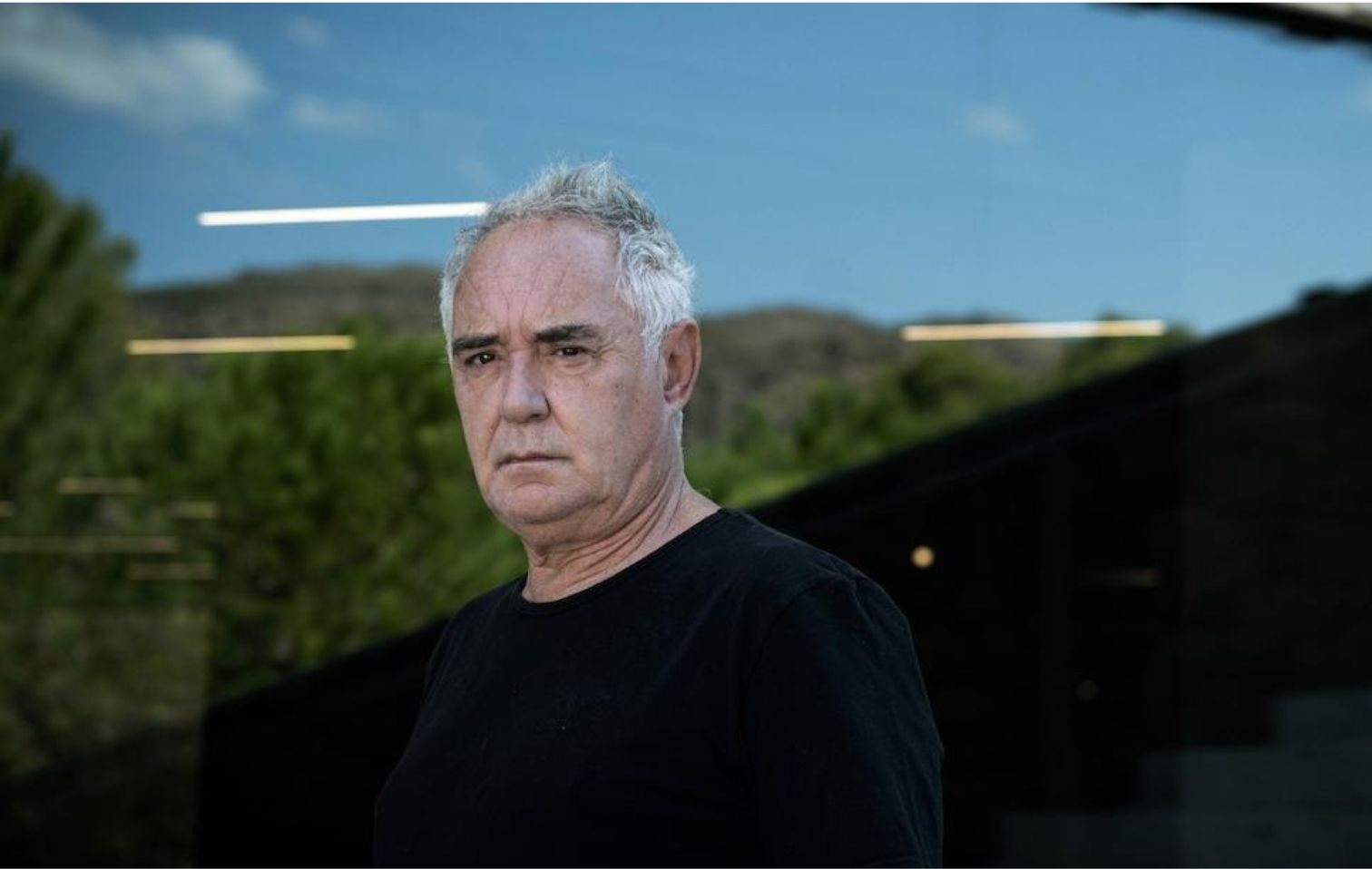
The Catalan genius of contemporary cuisine is at the heart of Gènesi, the series that retraces the story of elBulli, the restaurant in Cala Montjoi that became an ideas laboratory and went on to transform fine dining. But for Adrià, talent alone is not enough: what Spanish cuisine has lacked above all is the ability to tell its own story.
For Ferran Adrià, the word “genius” became familiar largely because other people were the ones who applied it to him. At least in the early days, his mind was elsewhere: working, experimenting and pushing cuisine beyond its established boundaries.
“I only realised I was good at what I did when other people told me so,” the Catalan chef explains in an interview with El País, describing a certain detachment from recognition that, at least in his own view, has accompanied him throughout his career.
Today, his name is synonymous with one of the most influential experiences in contemporary gastronomy. elBulli, the restaurant in Cala Montjoi that closed in 2011, was named the best restaurant in the world five times and held three Michelin stars from 1997 until its closure. Adrià has received hundreds of awards and accolades, but insists he never worked to collect them. His real interest, rather, lies in understanding what legacy the culinary revolution he set in motion might leave behind.
This is also the perspective from which he approaches Gènesi, a six-part series telling the story of elBulli and the group of people who turned it into much more than a restaurant. After premiering on Catalan broadcaster TV3 on 21 September, the series will be released across the rest of Spain in November. For Adrià, the project serves one main purpose: to bring renewed attention to techno-emotional cuisine and to the period when Spanish gastronomy stopped being regarded as a peripheral force.
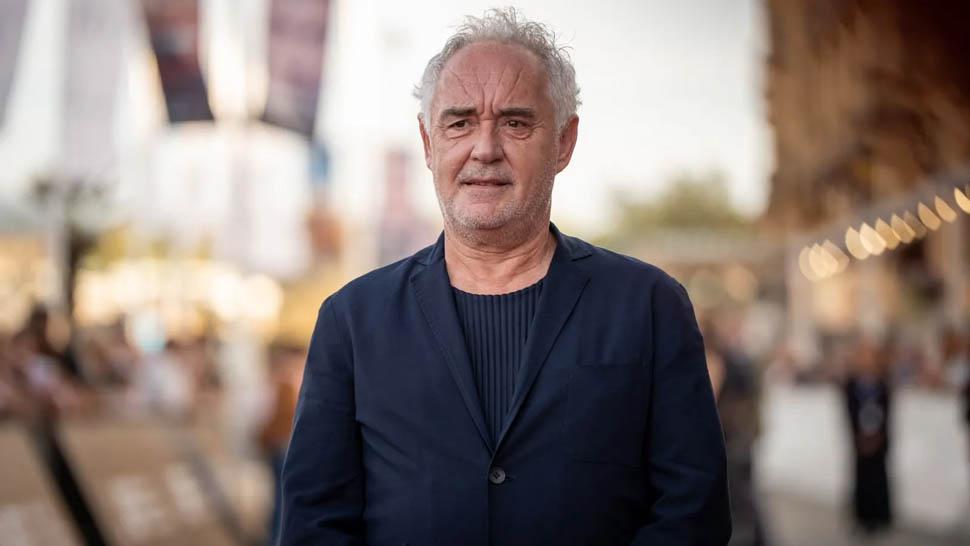
From humble beginnings to the elBulli revolution
When Adrià joined elBulli as a station chef in 1984, he had never attended culinary school. He had worked washing dishes in Castelldefels and preparing meals during his military service. His training came largely through hands-on experience and books, beginning with the writings of the French nouvelle cuisine movement, which made a profound impression on him. His encounter with this new approach pointed him in a direction, rather than providing a model to imitate.
“The better the teacher you have, the harder it is to innovate,” he observes. The real challenge was to build on what he had learned and then venture beyond it, ultimately questioning the very way a dish was conceived.
His research received its first major recognition in 1996, when Joël Robuchon identified him as a potential successor at the pinnacle of world gastronomy. The endorsement carried particular significance: for centuries, Adrià recalls, France had dominated the world of fine dining. The rise of a Spanish chef helped challenge that balance.
In the years that followed came the 2003 New York Times cover that described Spain as “the new France”, and, in 2004, his inclusion in Time magazine’s list of the 100 most influential people in the world. For Adrià, the latter achievement mattered because it meant his influence had reached far beyond the world of cooking.
The transformation extended well beyond his dishes. In the chef’s view, the elBulli experience helped reshape menu formats, the organisation of service and even the design of professional kitchens. “In twenty years, we accounted for 80% of the world’s innovation,” he claims, asserting the scale of a legacy he continues to champion through the elBulli1846 museum and other projects.
“Spain is the worst country in the world at communicating”
There is, however, a contradiction that Adrià believes remains unresolved. Spanish cuisine has secured a leading position on the international stage, but, in his view, it has failed to develop an equally recognisable narrative.
“Spain is the worst country in the world at communicating,” he says, adding: “Our cuisine has never even had a name.” His criticism also points to the ability of other countries to promote their culinary traditions through a clearly defined identity. While elsewhere a term has emerged that makes an entire gastronomic movement instantly recognisable, Spain, he argues, has failed to give its achievements the same coherence in the way they are communicated.
Adrià is following the International Plan for Spanish Gastronomy with interest and suggests giving greater prominence to the casa de comidas, which he describes as the Spanish equivalent of the French bistro.
Promotion, after all, is one of the stated aims of Gènesi. “The series was funded by the Generalitat to promote Catalonia and, consequently, Spain,” he explains, making no attempt to present the production as a critical portrait of its central figure. The series openly celebrates the elBulli experience, but what satisfies Adrià most is its depiction of the work behind the kitchen doors, which he considers credible and faithful to the dishes documented in the restaurant’s catalogue.
A legacy built on relationships, too
The series also explores Adrià’s relationship with Santi Santamaria, once a friend and later an adversary in the debate over molecular cuisine. Adrià still remembers the accusations levelled against him during that period of controversy, but is careful not to reignite the dispute from a distance. He says the story has been treated with affection and makes no secret of his regret at not having reconciled with Santamaria before his death.
Another painful memory is that of Juli Soler, his business partner and a pivotal figure in elBulli’s history, who died in 2015 after living with Alzheimer’s disease. “I think of Juli every day,” Adrià says. It is a moment that reveals a less celebratory side of his story: behind the gastronomic revolution were people, friendships and relationships that helped shape the restaurant’s journey.
Since elBulli closed, the chef has felt no nostalgia for the daily pressures of service and continues to work on numerous projects, from the museum in Cala Montjoi to the Madrid Culinary Campus. Nor has he lost his gastronomic curiosity: he travels, tastes and experiments, although he believes that, today, fine dining must offer something genuinely new to surprise him.
His idea of innovation, meanwhile, leaves room for tradition. At home, he prepares dishes such as boeuf bourguignon and rabo de toro, and believes that Spain’s traditional repertoire of recipes can also be reimagined. It is a journey that continues without the need for an open restaurant or another award to win: for Adrià, his work has never been defined by fame alone.