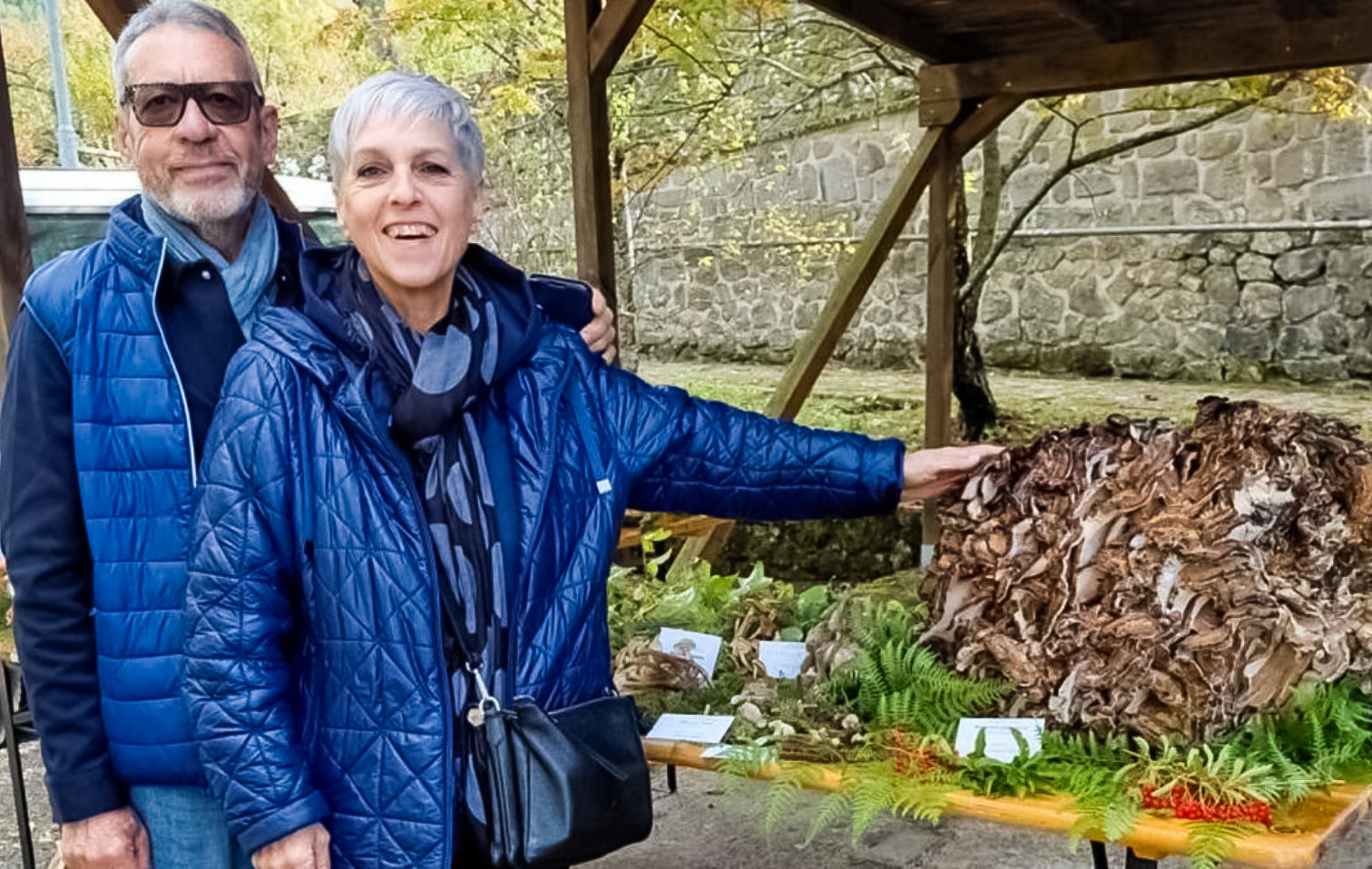
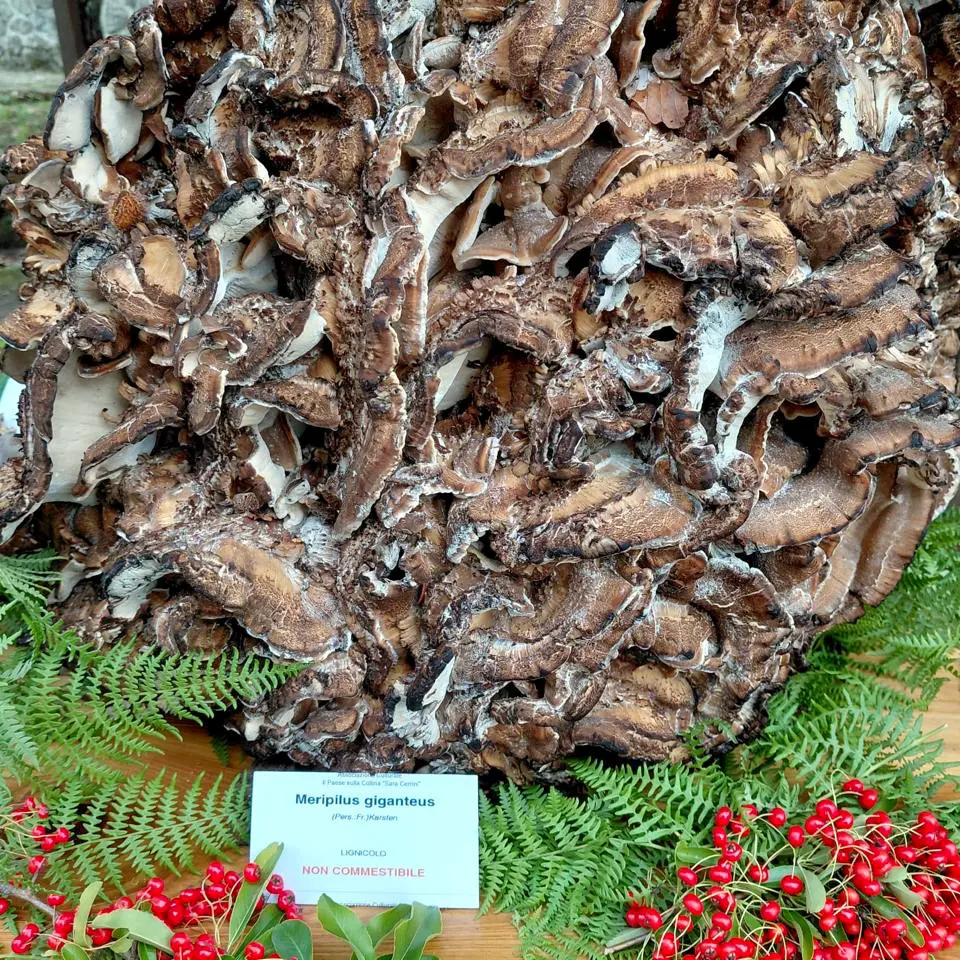
An exceptionally heavy specimen of Meripilus was collected in the Florentine mountains and presented in Castagno d’Andrea, while in Umbria, a scientific discovery of equally significant “weight” has been made: two new species of the genus Pseudosperma have been identified in the vicinity of Città di Castello.
Photo by La Nazione
A mushroom weighing over 25 kilos doesn’t go unnoticed. Tiziana and Valter Cammilli, two enthusiasts, came across this specimen in the Vallombrosa area, in the mountains near Florence, as reported by La Nazione. The star of the harvest is a Meripilus, which was later taken to the mycological exhibition in Castagno d’Andrea, a hamlet in the municipality of San Godenzo, in the province of Florence. The news comes at a time when discoveries of particularly large mushrooms are sparking the curiosity of enthusiasts, with reports coming in from various parts of Italy. In this case, what’s most impressive is the specimen’s weight, which exceeds 25 kilograms. After being harvested, the mushroom was displayed to the public, turning a walk in the woods into one of the highlights of the mycological event. The source does not specify the exact species of Meripilus nor provide further details on the specimen’s dimensions. The find remains remarkable for its size, however, while the exhibition offers the opportunity to observe up close a mushroom that is decidedly out of the ordinary.
From the Florentine Mountains to the Upper Tiber Valley
From Tuscany to Umbria, news about mushrooms ranges from foraging to scientific research. Near Città di Castello, two new species belonging to the genus Pseudosperma, of the family Inocybaceae, have been identified. They were documented in a study conducted by mycologist Giovanni Battista Galeotti and biologist Andrea Rubini, along with Roberto Para, Tomaso Lezzi, Beatrice Belfiori, and Claudia Riccioni. The team examined the specimens using a method that combines morphological observations, microscopic analysis, and molecular DNA testing. The integration of these methods allows for a comparison of the specimens’ characteristics at different levels, going beyond what can be identified through external observation alone. The results were published in the international journal Mycological Progress. The two specimens come from different locations within the Città di Castello area: one was collected in Casella, at an elevation of 288 meters, while the other comes from Candeggio, at 666 meters.