A Gentle Heresy: Mauro Brina and the Contemporary Renaissance at Sant’Agostino in Piacenza.
The Place
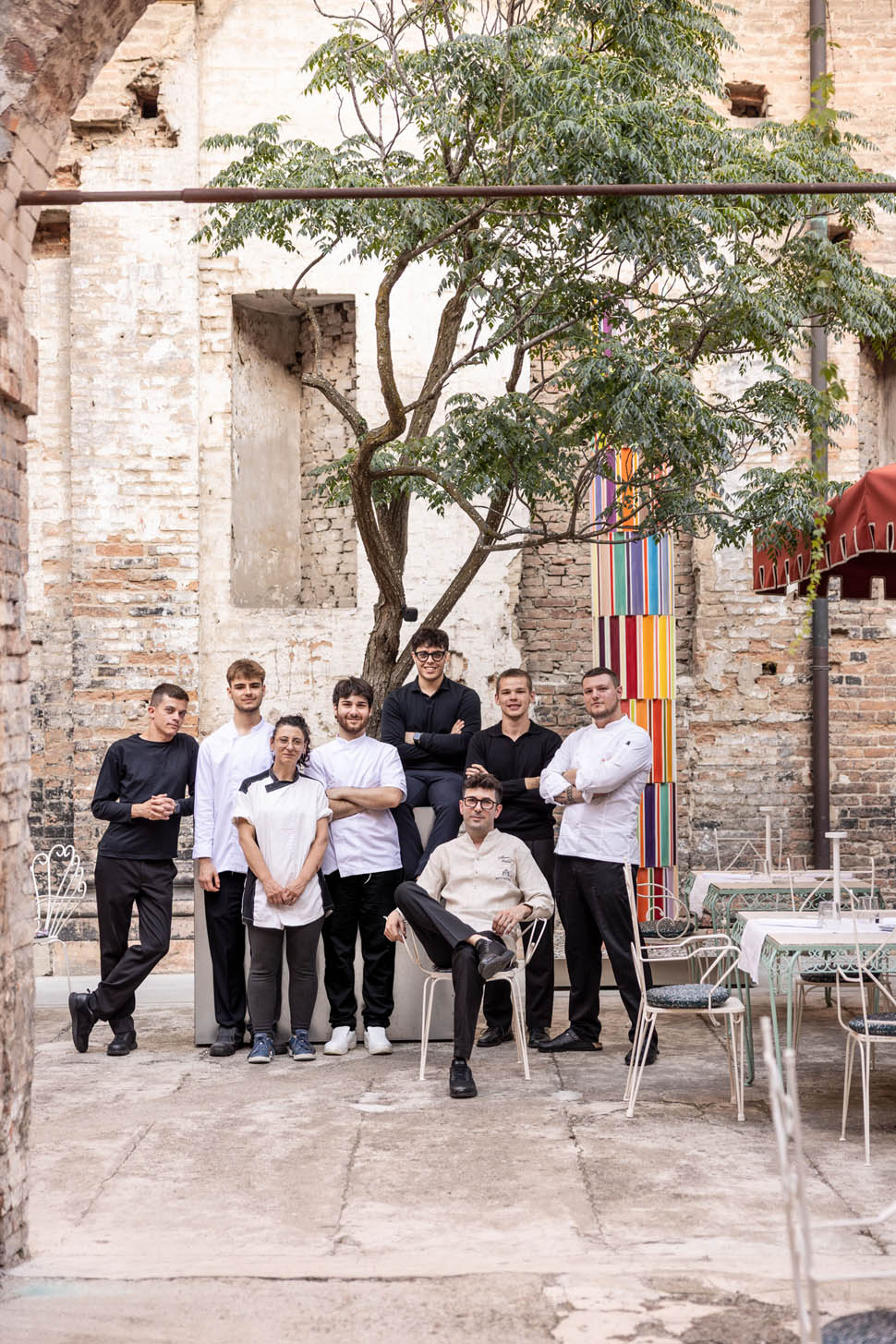
Piacenza has always been a land of passage and secrets guarded behind heavy doors, encapsulated in that popular and sly saying that dubs it the “city of the three Cs”: Churches, Barracks, and Brothels. A triad that for centuries has shaped its urban landscape, social spirit, and daily rhythms. The sacred and the profane, the rigor of military discipline and the shadow of pleasure hidden in the alleyways, immersed in the monumental tranquility of the Po Valley. One need only cast one’s gaze toward the Stradone Farnese to catch sight of the massive silhouette of the former ducal riding school, just a stone’s throw from monastic complexes of austere grandeur—a lasting testament to that past in which the military garrison and conventual liturgy shared the same cobblestone streets.
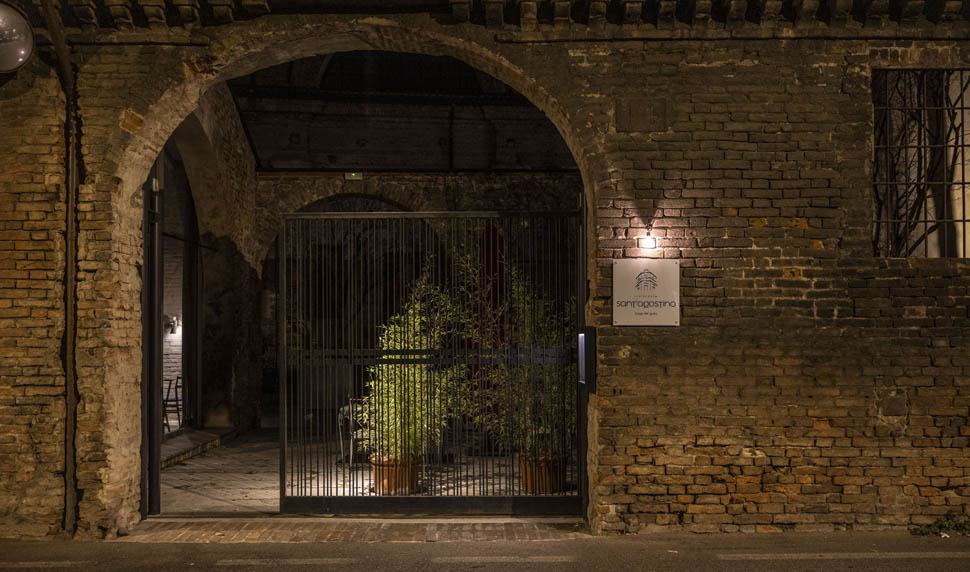
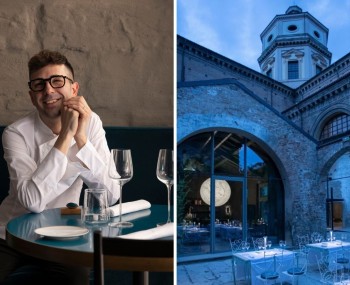
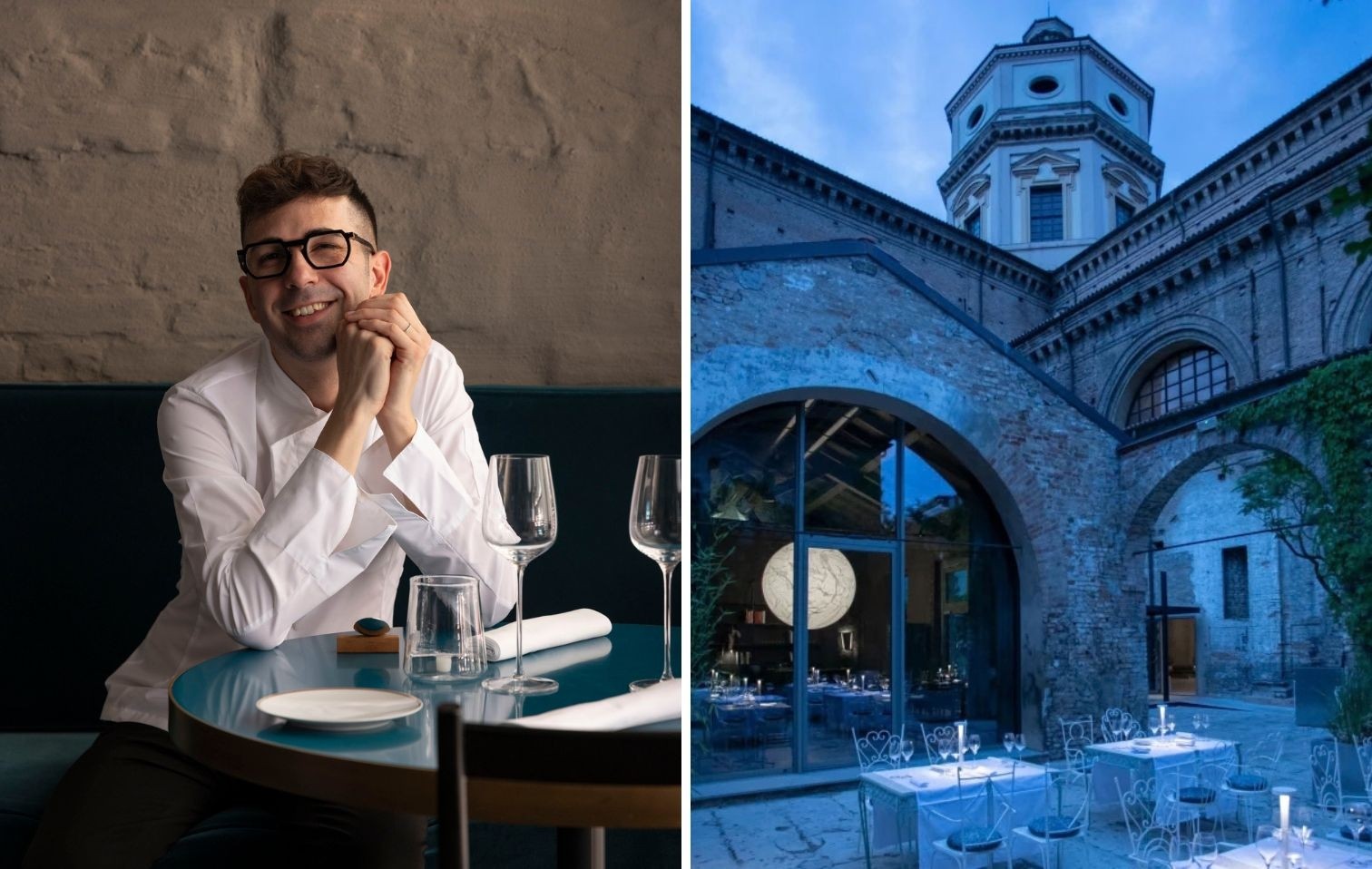
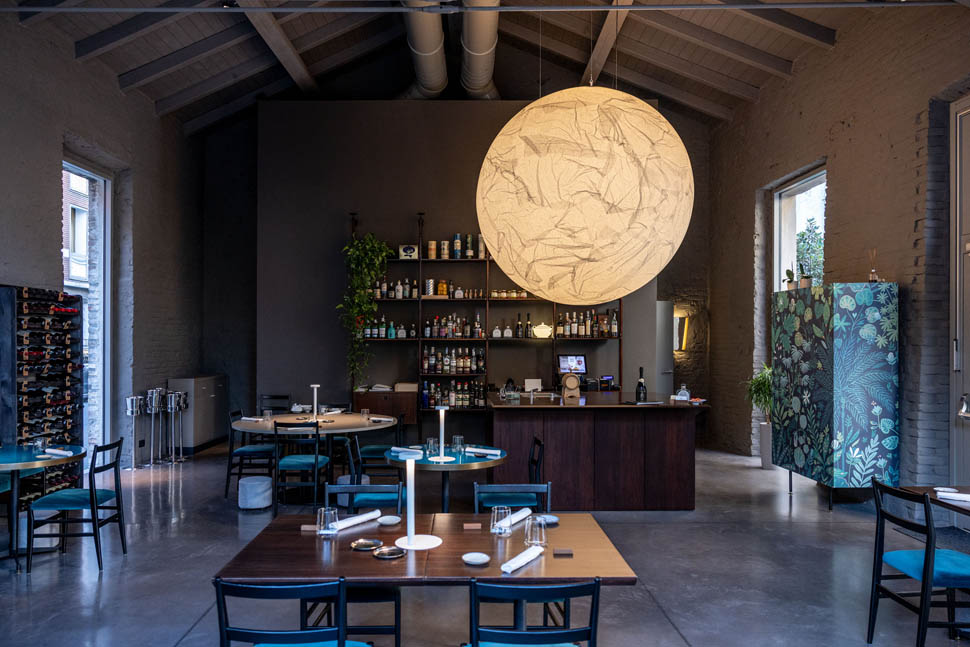
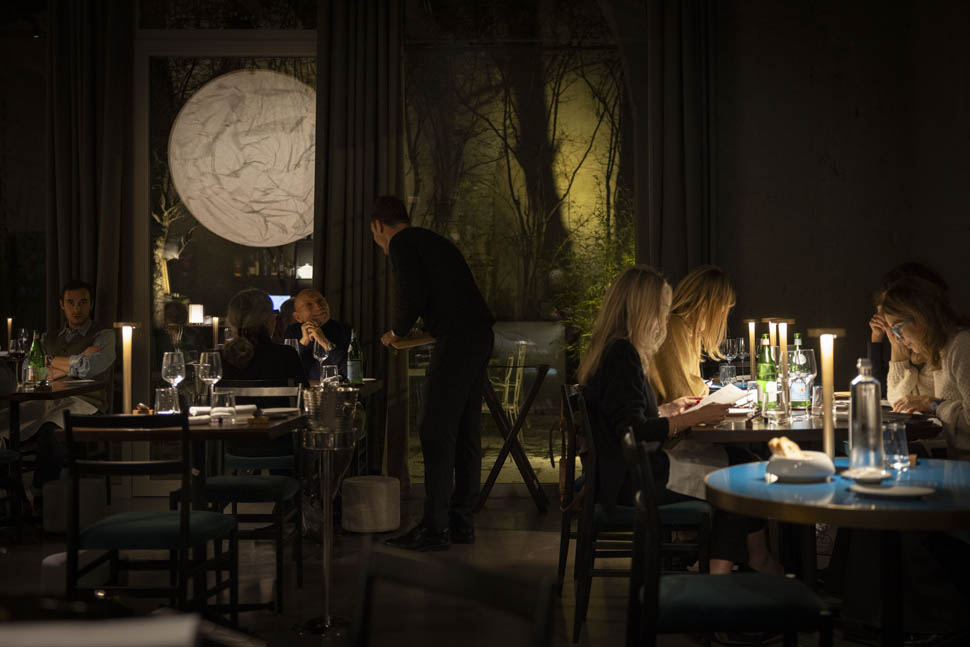
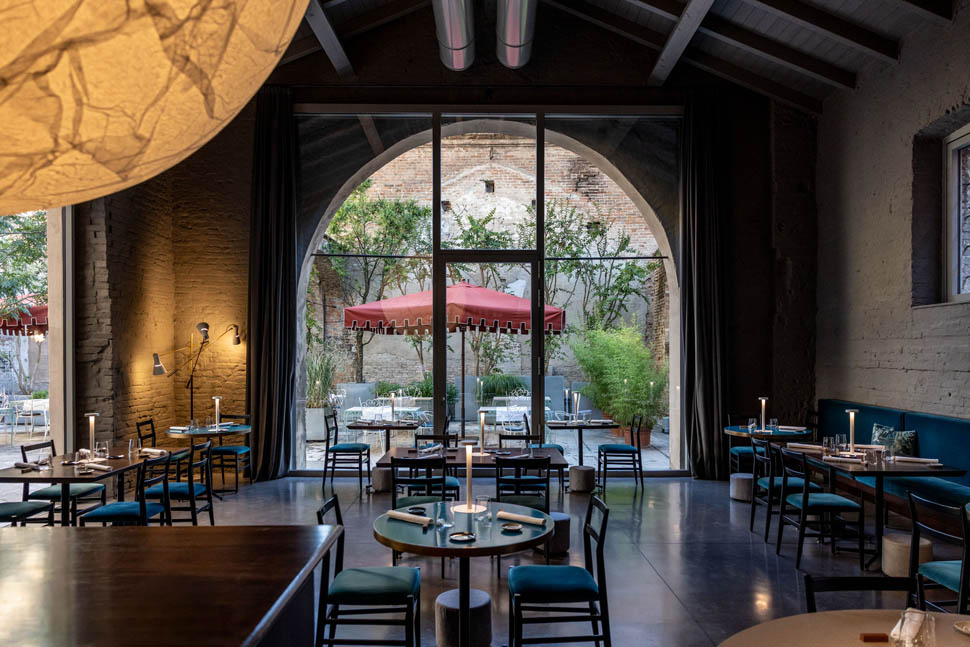
Amid these brick giants stands the monumental Church of Sant’Agostino, a five-nave Renaissance masterpiece conceived by the architectural genius of Alessio Tramello toward the end of the 15th century. A grandiose temple that once enjoyed unparalleled religious splendor, before the Napoleonic era decreed its suppression and plundering, transforming the solemn naves into barracks, warehouses, and military storage facilities, vividly sealing Piacenza’s metamorphosis from a stronghold of faith to a military fortress. And it is precisely here, in the cloistered spaces rescued from the silence of desecration and restored to civic life, that the ethereal, suspended light of Moon, the iconic creation by Piacenza’s master of lighting design Davide Groppi, glides like a celestial body over centuries-old courtyards. A dialogue between the minimalism of modern design and the austerity of the Farnese legacy: a stage set where art meets matter, the ideal prelude to the culinary experience orchestrated by Mauro Brina.
The Restaurant and the Chef
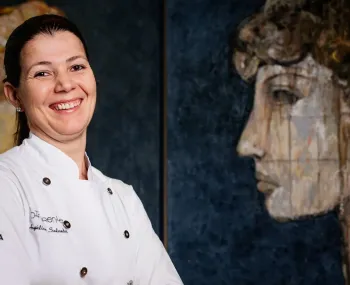
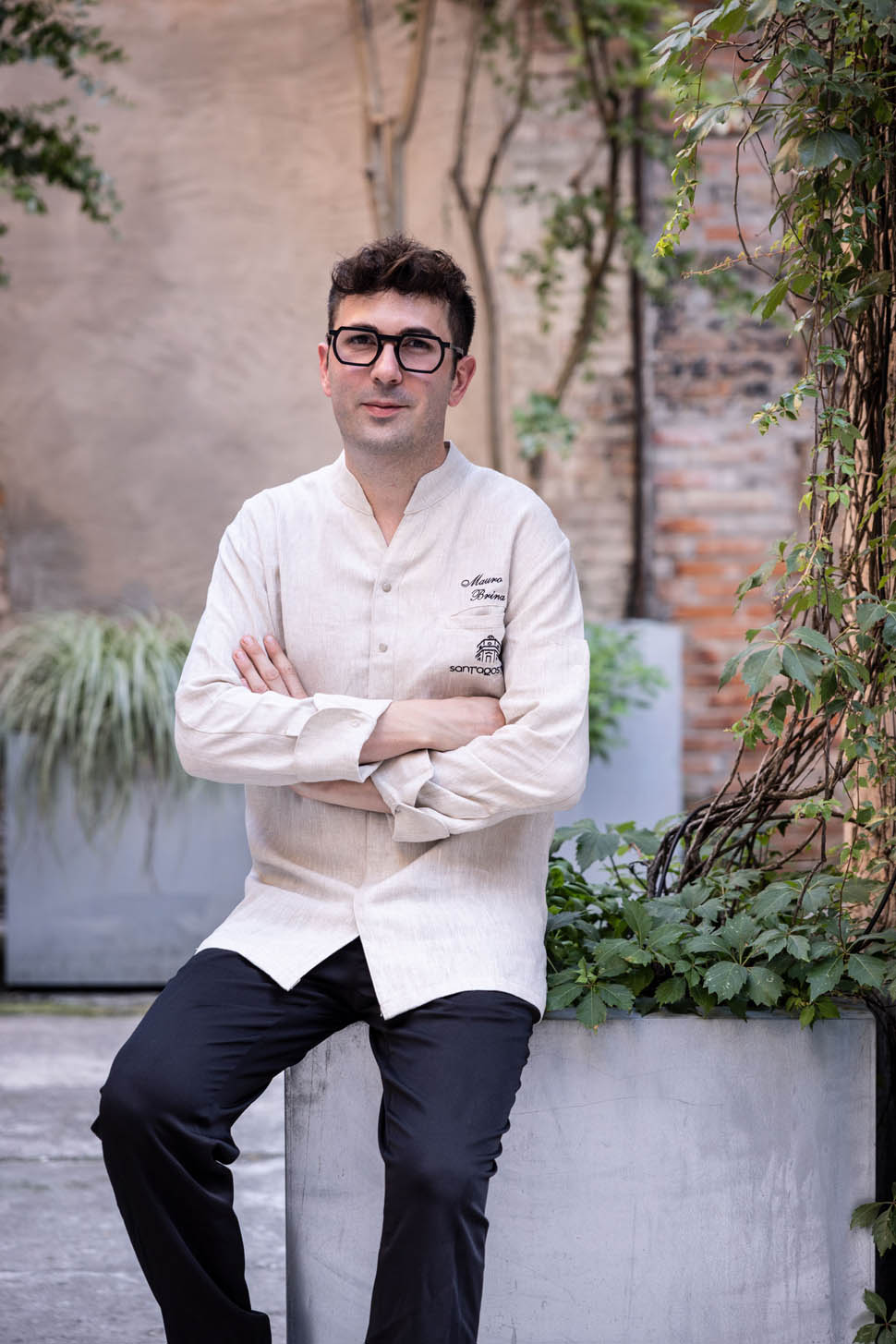
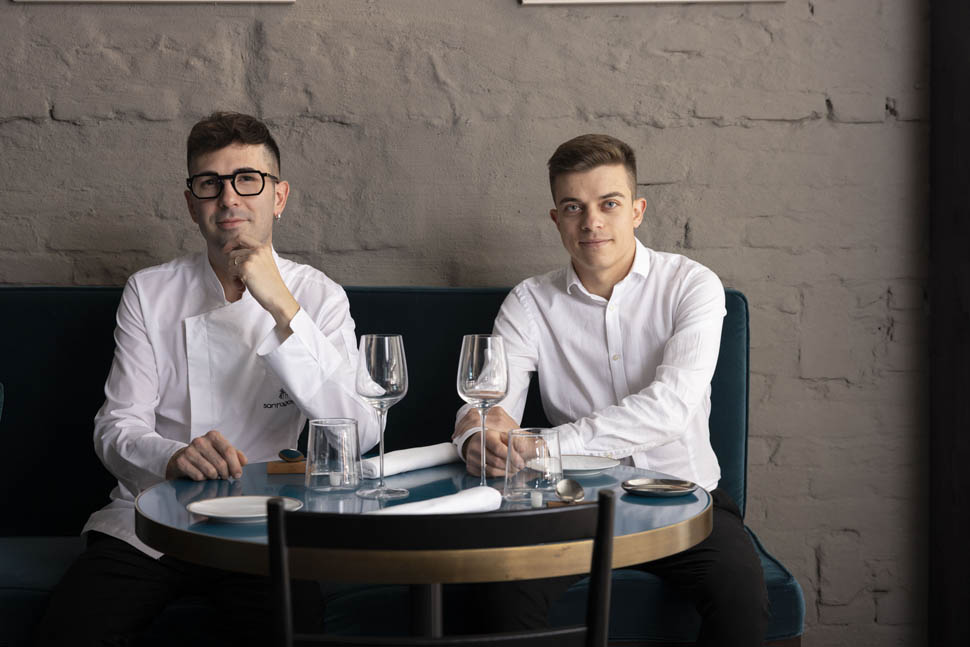
To make one’s mark in the culinary world in a place like Piacenza means, by definition, to operate on the crest of a complex fault line. Piacenza has an unbreakable umbilical cord connecting it to its culinary tradition: a gastronomic culture that is solid as granite, opulent, proud to the point of obstinacy, and viscerally loved both in the provincial capital and in the surrounding valleys. For many, the local recipe book is an untouchable canon, a fortress impervious to any seismic shock that might threaten the supremacy of tortelli con la coda, pisarei, anolini in broth, and DOP cured meats. In such a context, Mauro Brina’s approach at Sant’Agostino neither succumbs to the lure of provocation for its own sake nor takes the easy path of conservative conformity. His cuisine boldly positions itself right on the threshold:the region sheds its role as an inviolable sanctuary before which one must prostrate oneself and transforms into a flexible and responsive launching pad. Anyone who fails to question Piacenza—who listens to it with respect and then gracefully pushes it beyond its cartographic boundaries—fails miserably.
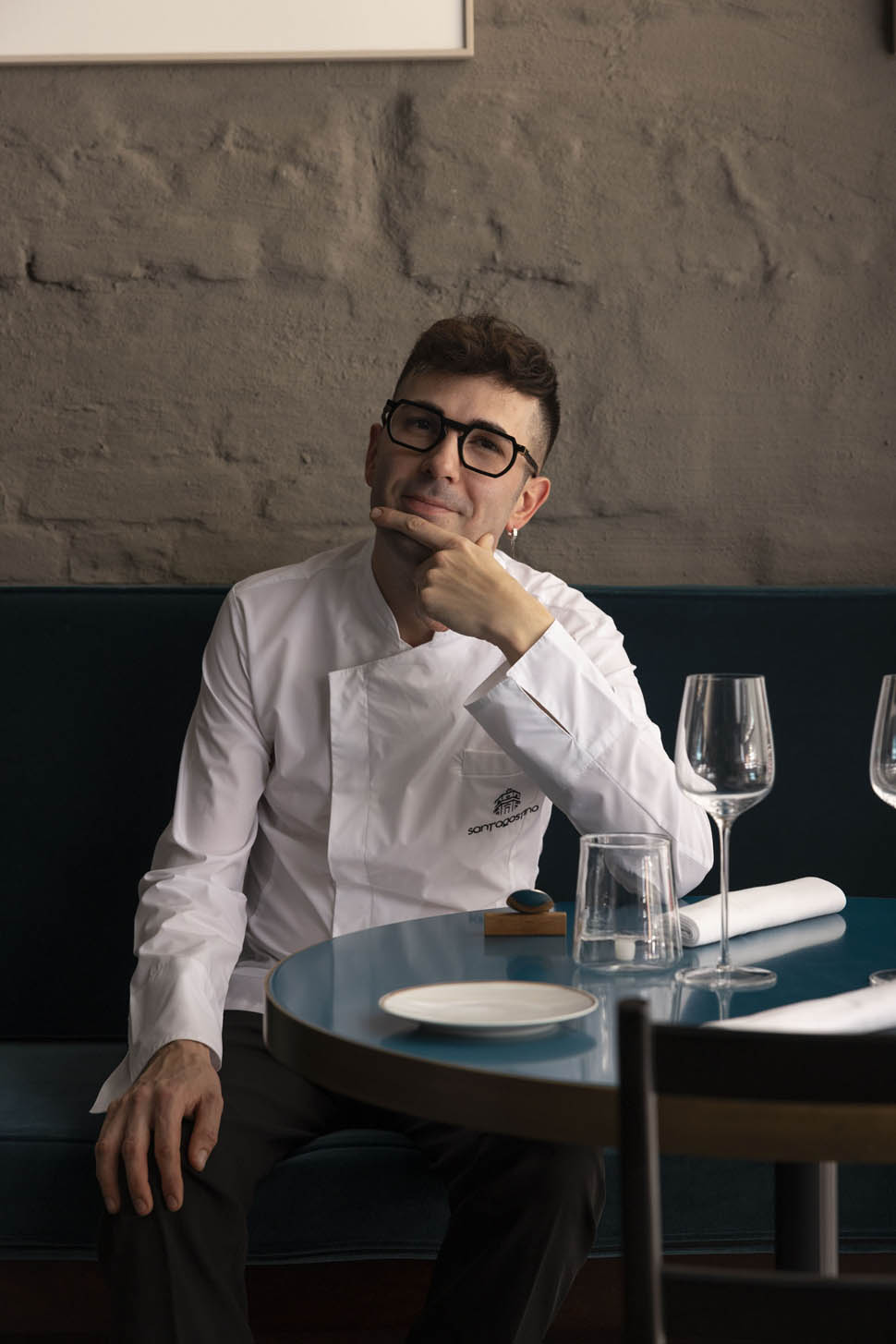
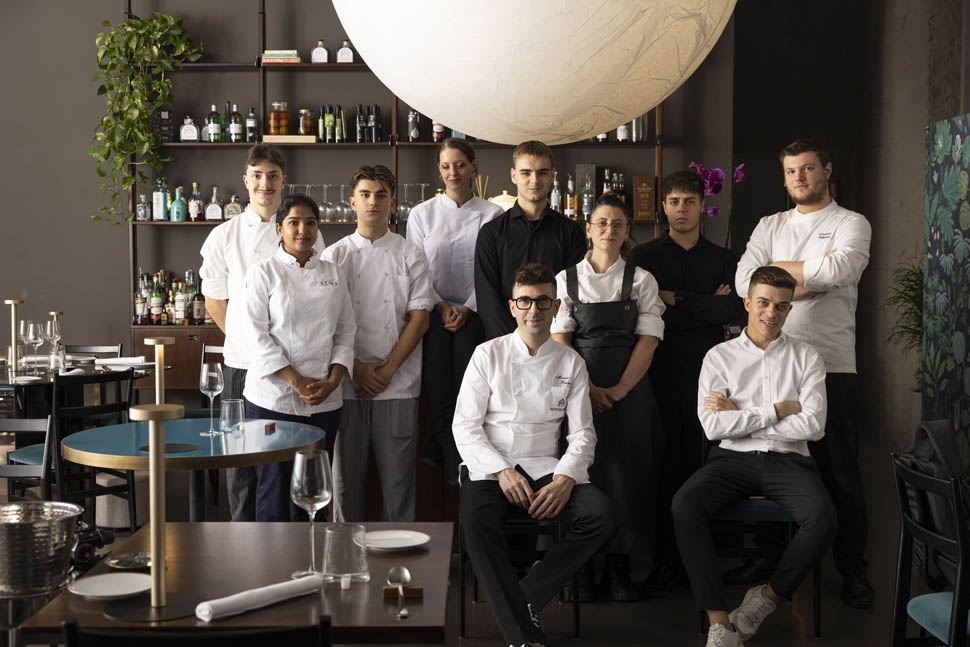
Mauro reaches out to capture that ancient saltiness that the sea winds carry up from the Ligurian ridges of the Trebbia Valley, or to embrace the rougher, grassy breezes that descend from the Orobic region of Lombardy, from Bergamo and its valleys inlaid with pastures and woods. He has none of the didacticism of a university professor, nor any desire to intimidate his guests with verbose, self-congratulatory conceptual alchemy that is inaccessible. On the contrary, his culinary exploration aims for an immediate, intimate emotional connection, the cornerstone of which lies in simple indulgence and the desire to leave a vivid and lasting impression on the palate.
The Dishes
My dining experience began with a declaration of freshness and aromatic subtlety that set the mood for a sensory journey. The kitchen’s welcome dish was a ravioli of ethereal delicacy, wrapped in a translucent veil of cherry gelatin that enclosed a silky center of fresh goat cheese. The bite, vibrant with milky savory notes and fruity acidity, found a balsamic echo in the accompanying infusion of lemongrass and mint, served in a delightful pairing with homemade elderflower kombucha. The drink’s natural effervescence and delicate fermentation cleansed the palate and awakened the taste buds with an elegance that eschews the clichés of the conventional aperitif.
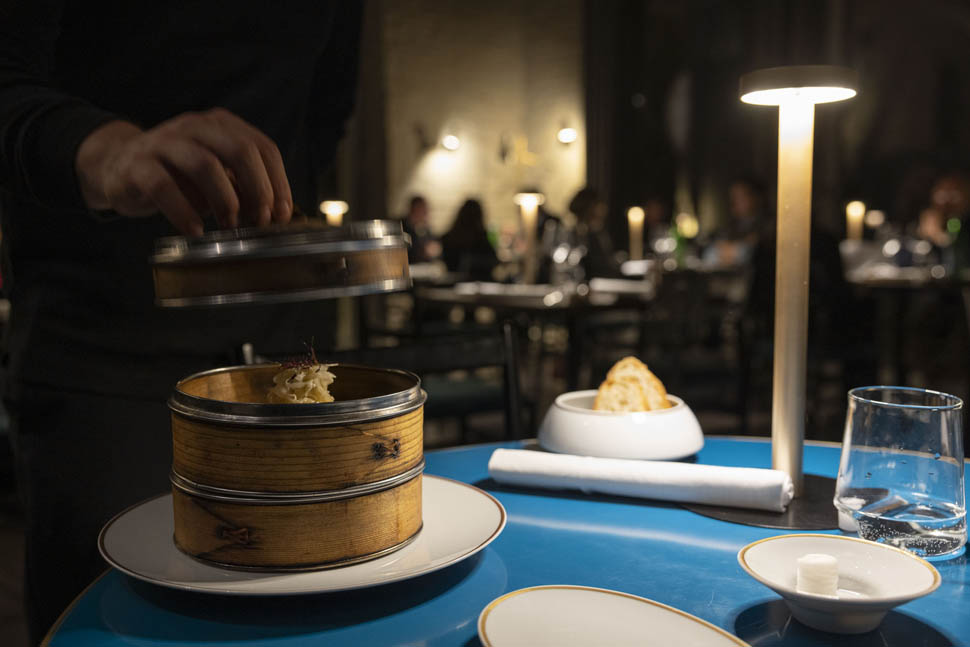
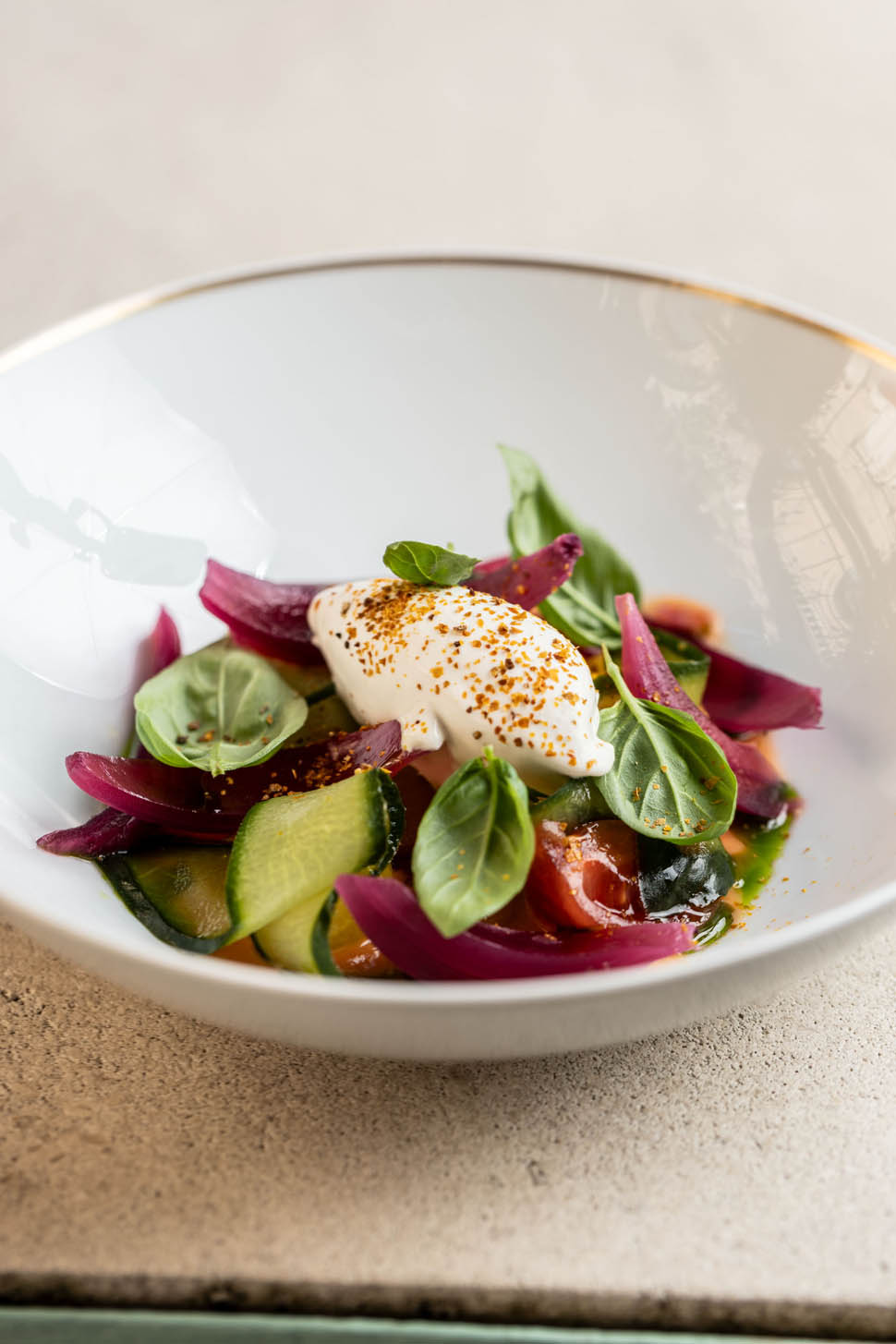
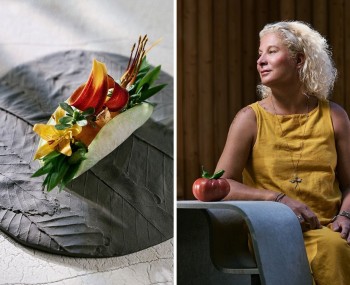
With the appetizer, the concept of reinterpreted tradition manifested itself in a panzanella that transcended Tuscan rusticity to become an aesthetic and sensory masterpiece. The dish rested on a tomato coulis with a carefully balanced spicy note, atop which danced yellow and red cherry tomatoes prepared in various textures, cucumber slices softened by a bright orange marinade, and the sweet-and-sour touch of red onion. The conceptual centerpiece of the dish was a bread ice cream enriched with sun-dried tomato powder: a surprising temperature contrast that captured the humble essence of soggy bread, sublimating it into a creamy texture, where the umami of the sun-dried tomato balanced the citrusy kick and the vegetal note. The first courses featured smoked potato gnocchetti, a masterclass in earthy balance.
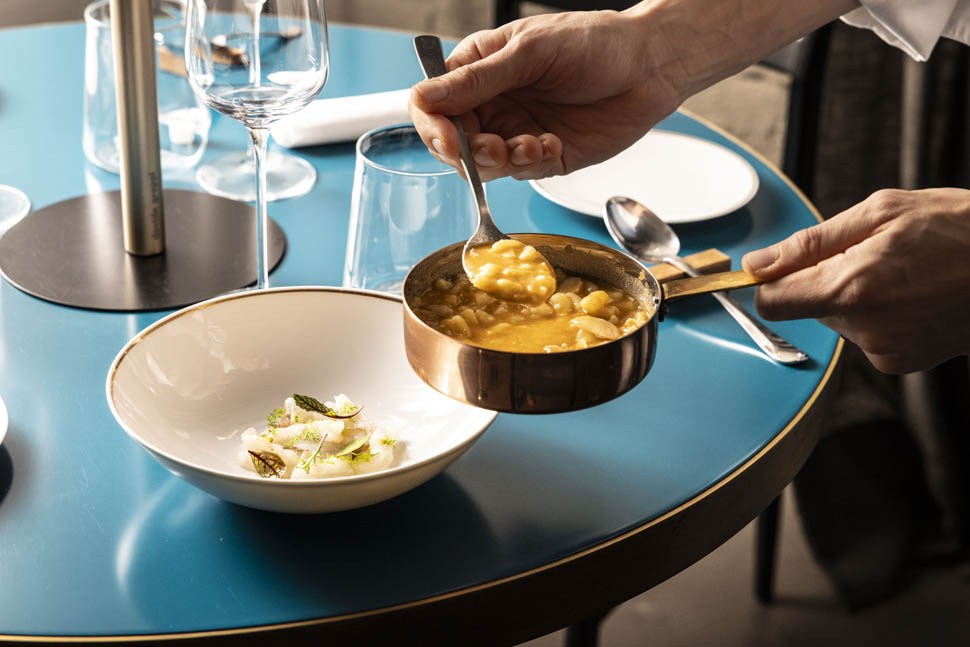
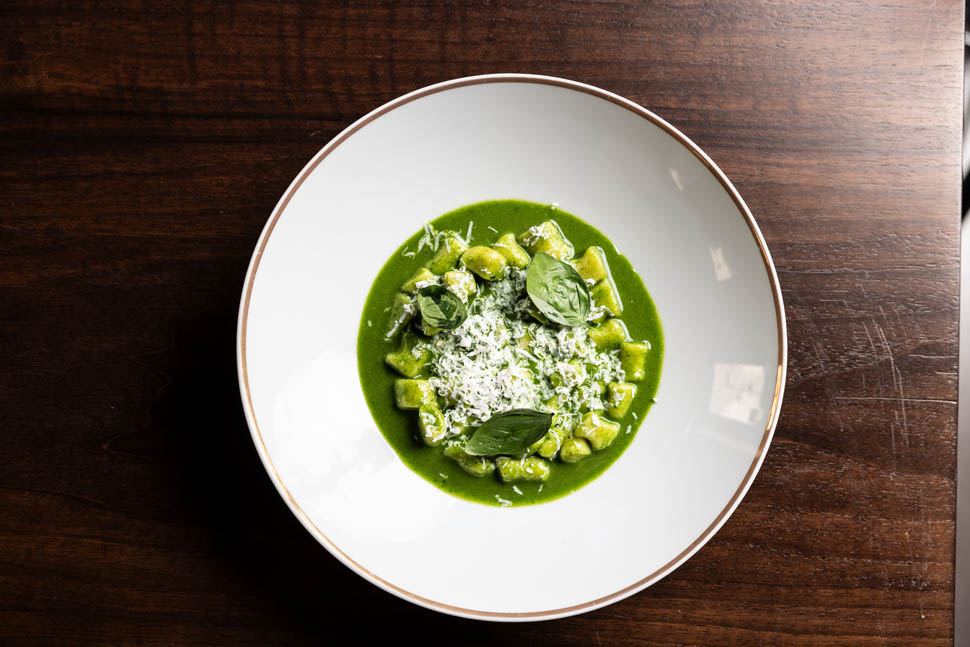
The pasta, with its soft yet firm texture, gave off a gentle aroma that was immediately balanced by the deep green notes of a cream made from stinging nettles and wild field herbs. The earthy richness was cut through by the aromatic zing of lemon and the milky freshness of goat’s-milk ricotta, added in flakes to provide a crumbly creaminess that melted in the heat of the gnocchi. A woodsy interlude that evoked alpine pastures and Apennine trails with remarkable technical finesse.
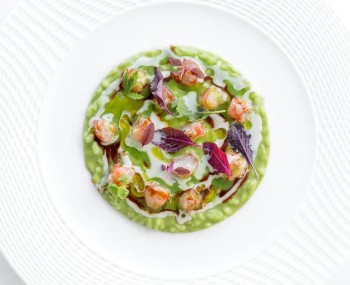
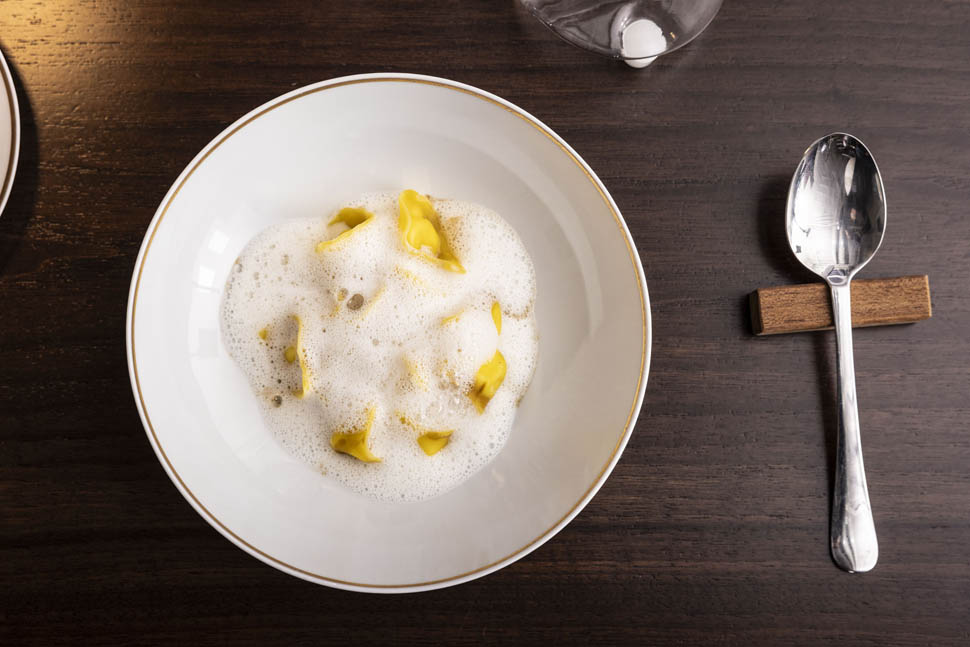
The pinnacle of this culinary dialogue came with the spirulina-stuffed cappelletto, a dish that redefines the very meaning of boundaries. The emerald-green shell of the seaweed enclosed a hearty, traditional filling made with caciocavallo from Basilicata, a savory and complex stretched-curd cheese. Contrasting this southern verve was the sweet, briny, and crystalline richness of the red shrimp from Mazara del Vallo, laid raw atop the steaming pasta. Binding the entire creation together were a few carefully measured drops of Traditional Balsamic Vinegar of Modena and a generous grind of black pepper: the result was a whirlwind of flavors where Northern and Southern Italy conversed seamlessly, finding a point of dazzling harmony between noble acidity, marine sweetness, and the opulence of the cheese.
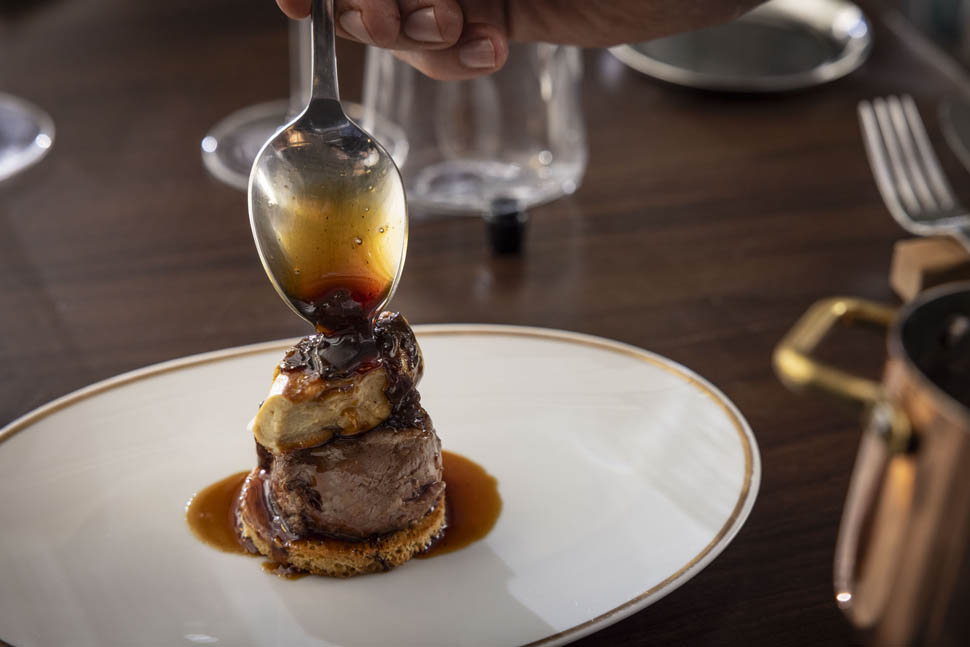
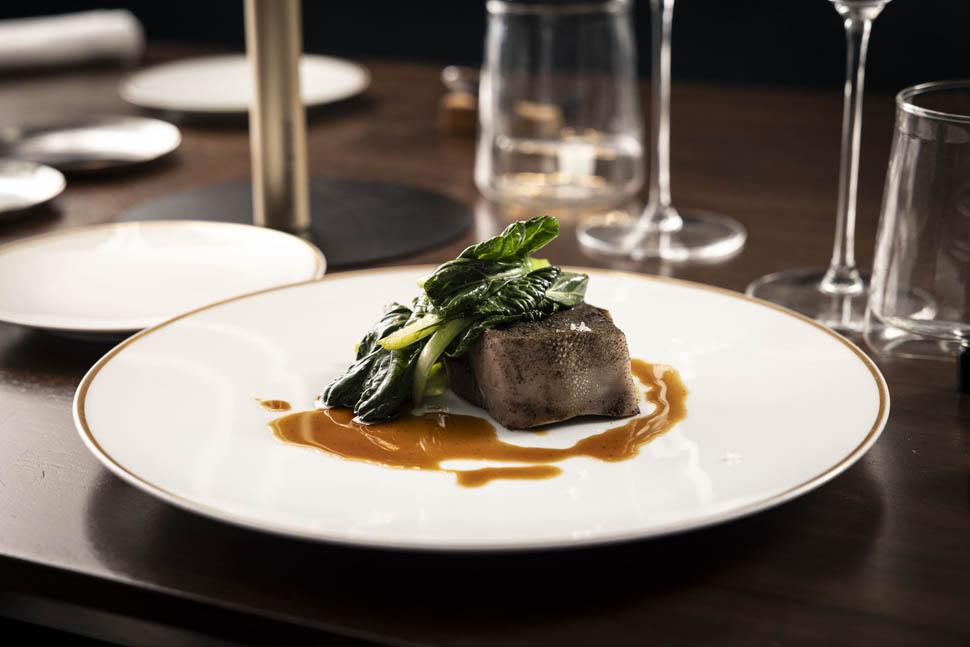
The main course demonstrated a mastery of classic cooking techniques adapted to a contemporary vision: the sliced duck breast. The meat, treated with reverential care, featured a melt-in-your-mouth, crispy skin and a red, succulent, and incredibly tender center. It rested on a silky French-style mashed potato, rich and indulgent, while the perfectly reduced brown sauce added depth and toasty notes. An orange emulsion brightened the dish; with its citrus acidity and the hint of almond from the zest, it cut through the richness and imparted an aristocratic, rounded finish, evoking the archetype of duck à l’orange but stripped of any anachronistic heaviness.
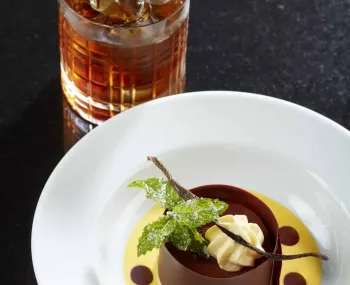
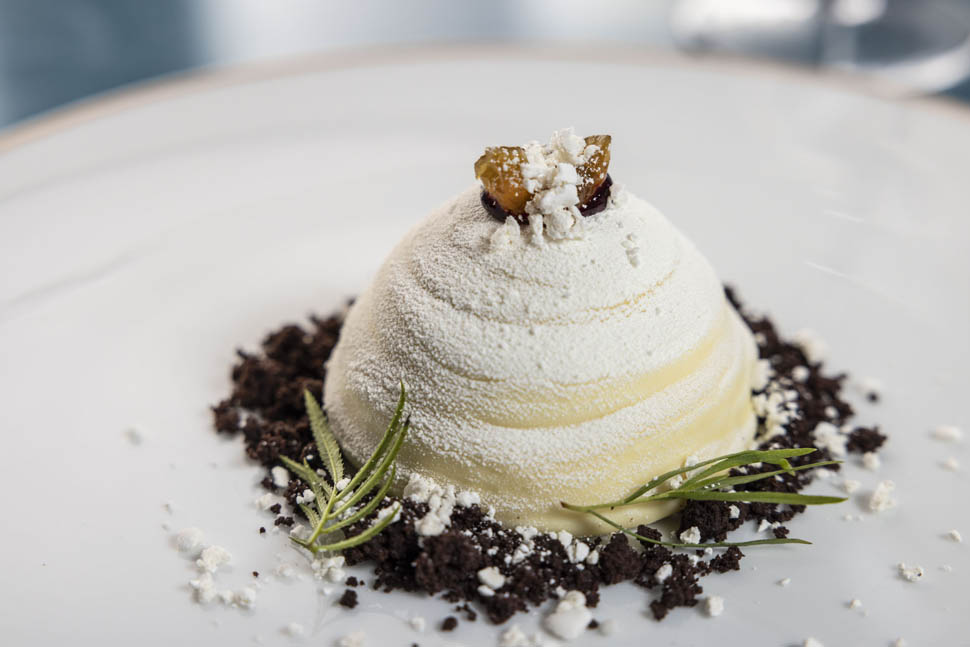
The finale was an exercise in clever culinary irony: a mille-feuille masquerading as tiramisu. The crispness of the caramelized pastry encapsulated all the iconic elements of the quintessential Italian dessert. A delicious, sophisticated dessert that didn’t skimp on the fun and sealed the meal with that sense of satisfaction that doesn’t weigh you down.
Mauro Brina’s cuisine at Sant’Agostino demonstrates that even in the most traditional heart of the Emilia region, it’s possible to pursue innovation and avant-garde cuisine without raising a fuss. Within the memory-laden walls of a Tramellian church rescued from the dust of military barracks, beneath the magnetic glow of Groppi’s moon, a gastronomic narrative unfolds—one that does not sever its roots but chooses to let them breathe in the open air. A dining experience that restores Piacenza’s place as a distinctive voice in the landscape of contemporary Italian cuisine.
Sant'Agostino
Address: Via Pietro Giordani, 14, 29121 Piacenza PC
Cell: +39 333 2003603 (Landline: 0523 604703)
Website: https://www.santagostinoristorante.com/