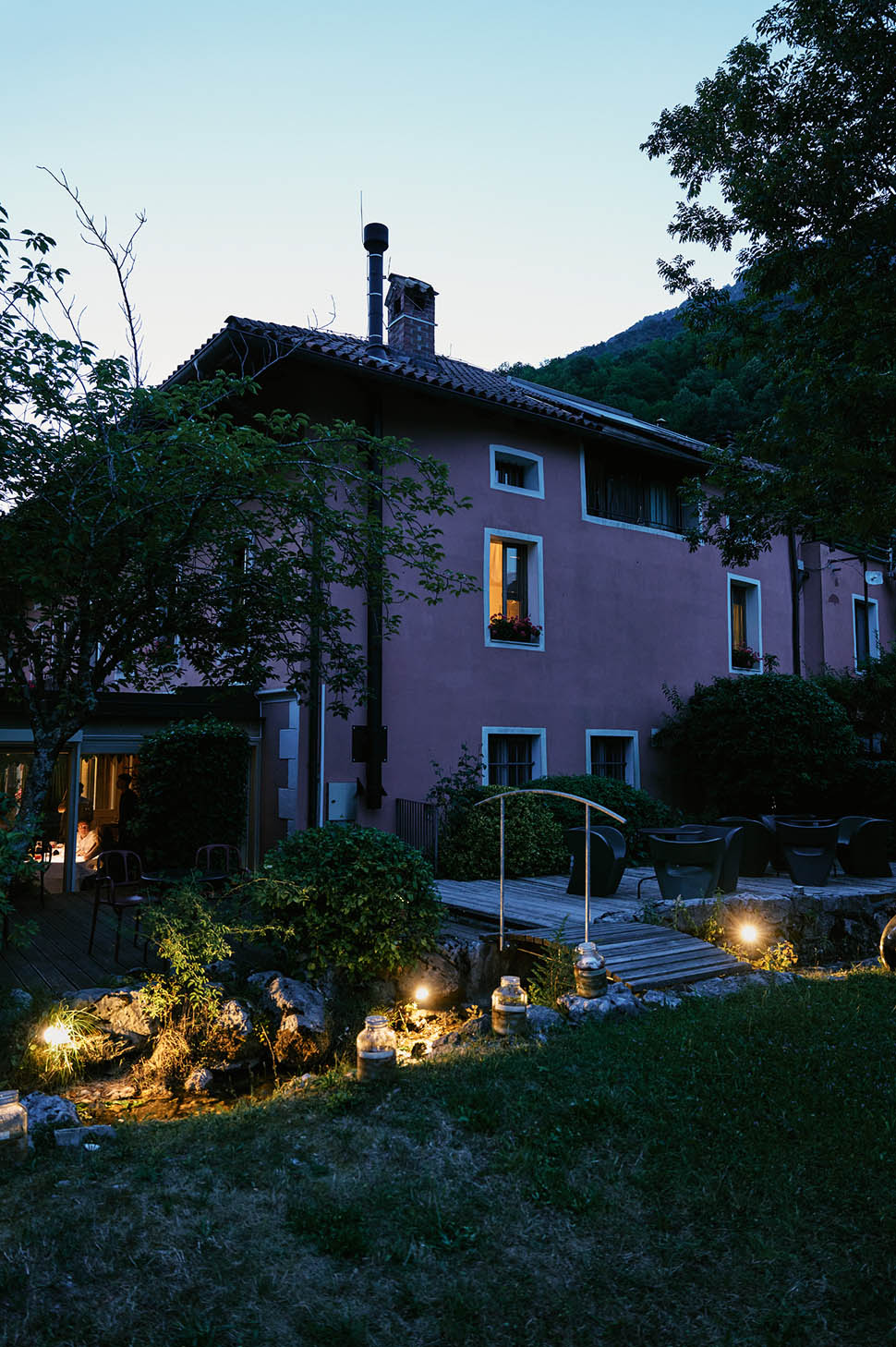
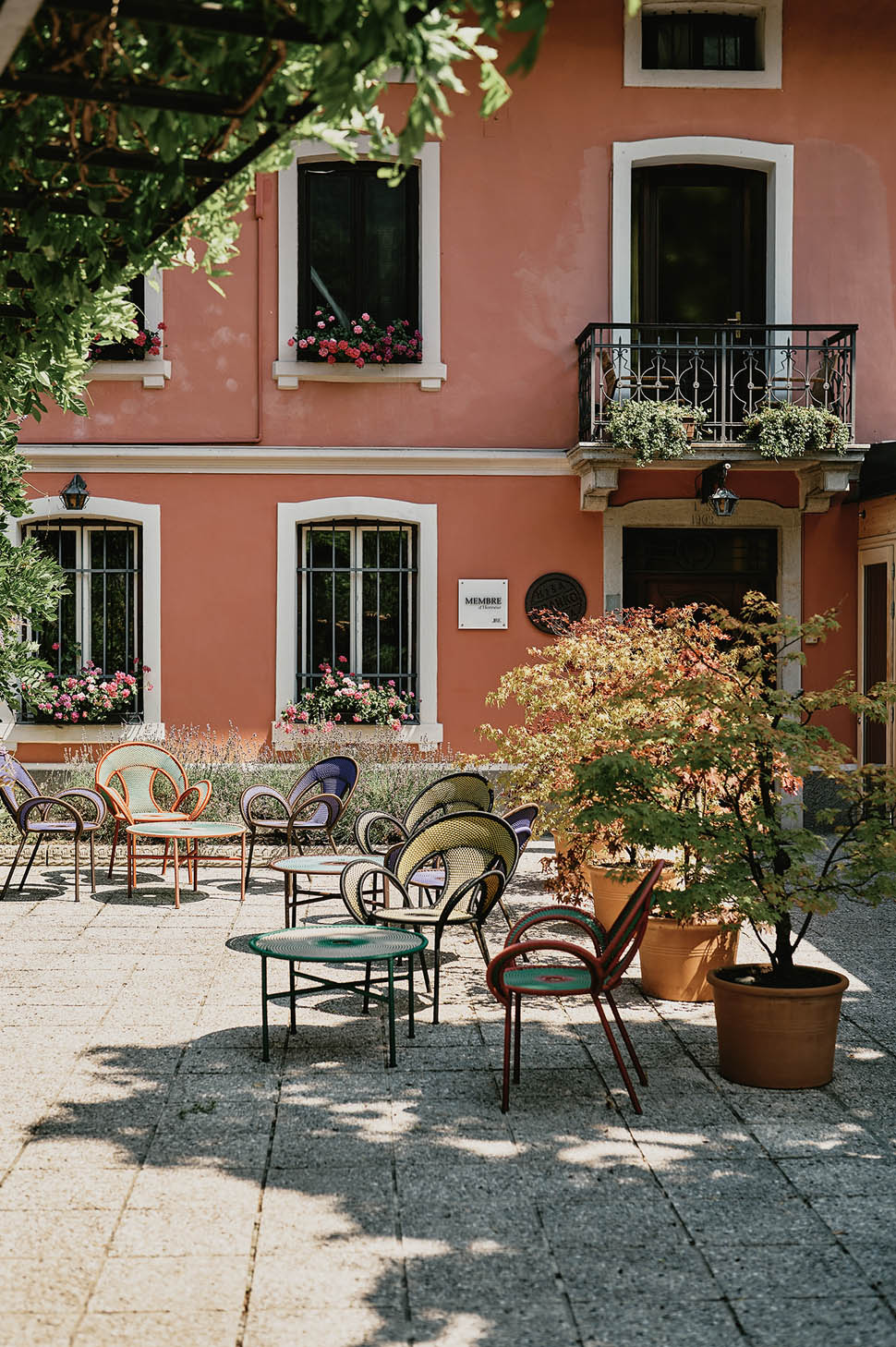
Kobarid—known as Caporetto in Italian—is located in the enchanting Isonzo Valley, less than half an hour from the Friuli border. Hiša Franko, housed in a beautiful building not far from the town center, is the first and only Slovenian restaurant to have earned three Michelin stars: Ana Roš, who was essentially self-taught at the time, took the reins of the kitchen in 2002. This top accolade from the Red Guide was reaffirmed in 2026, and the restaurant also became the first in Slovenia to receive five Gault&Millau hats.
From a 3-star restaurant to a microcosm of dining venues: Ana Roš’s team
Running a restaurant like this—alongside several other culinary ventures in both Slovenia and Istria—is no small feat. In addition to Hiša Franko, the group now includes Pekarna Ana and JAZ in Ljubljana and the ready-to-drink beverage line Ana Roš Drinks, launched in 2025; a second JAZ location opened in Poreč last spring. Joining these is Stara Škola, housed in the old elementary school in Krasica, near Buje, where Ana began working as a consultant in October 2024. The chef recounts a phrase she repeats to herself on sleepless nights—one she says in English because it probably sounds even more stark that way: “You know, the restaurant has been kidnapped.” The restaurant has been kidnapped: in her metaphor, the very people who bring it to life every evening are the ones holding it hostage. “There’s a frustration that many of us suffer from—the dependence that all chefs have on their team”.
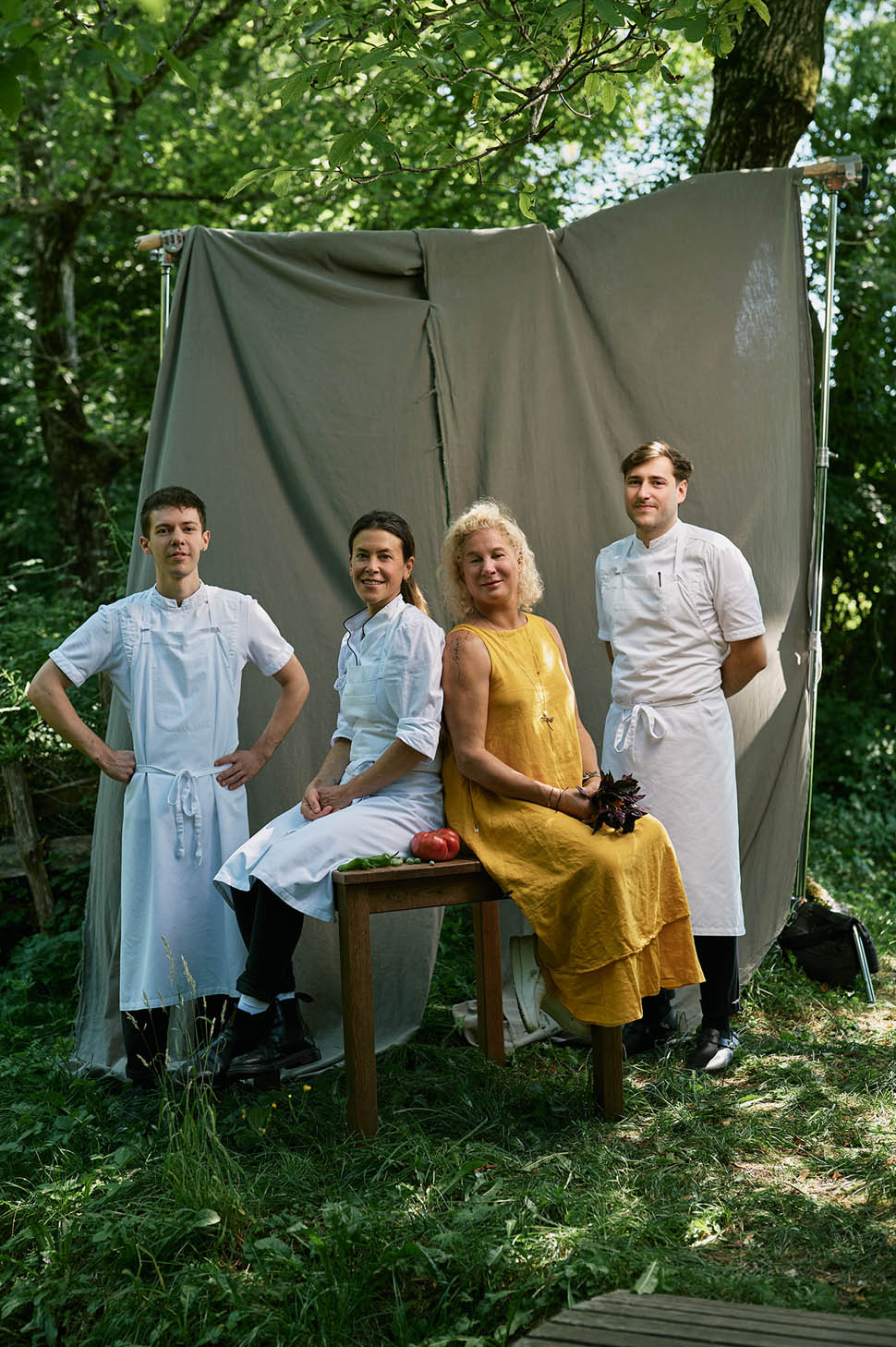
The fear has nothing to do with the quality of the work but with its continuity: it happens that someone leaves mid-season, after having been supported during the slower months; then it happens “when you’re always busy—lunch, dinner, lunch, dinner.” Ana puts it bluntly: “I’m afraid of people, because I can’t read their minds.” It’s a weighty admission, coming from a woman who has built her reputation precisely on her ability to hold together an international group in a remote valley. But there are happy exceptions: “They’re just a few examples; most of them are Italian.”
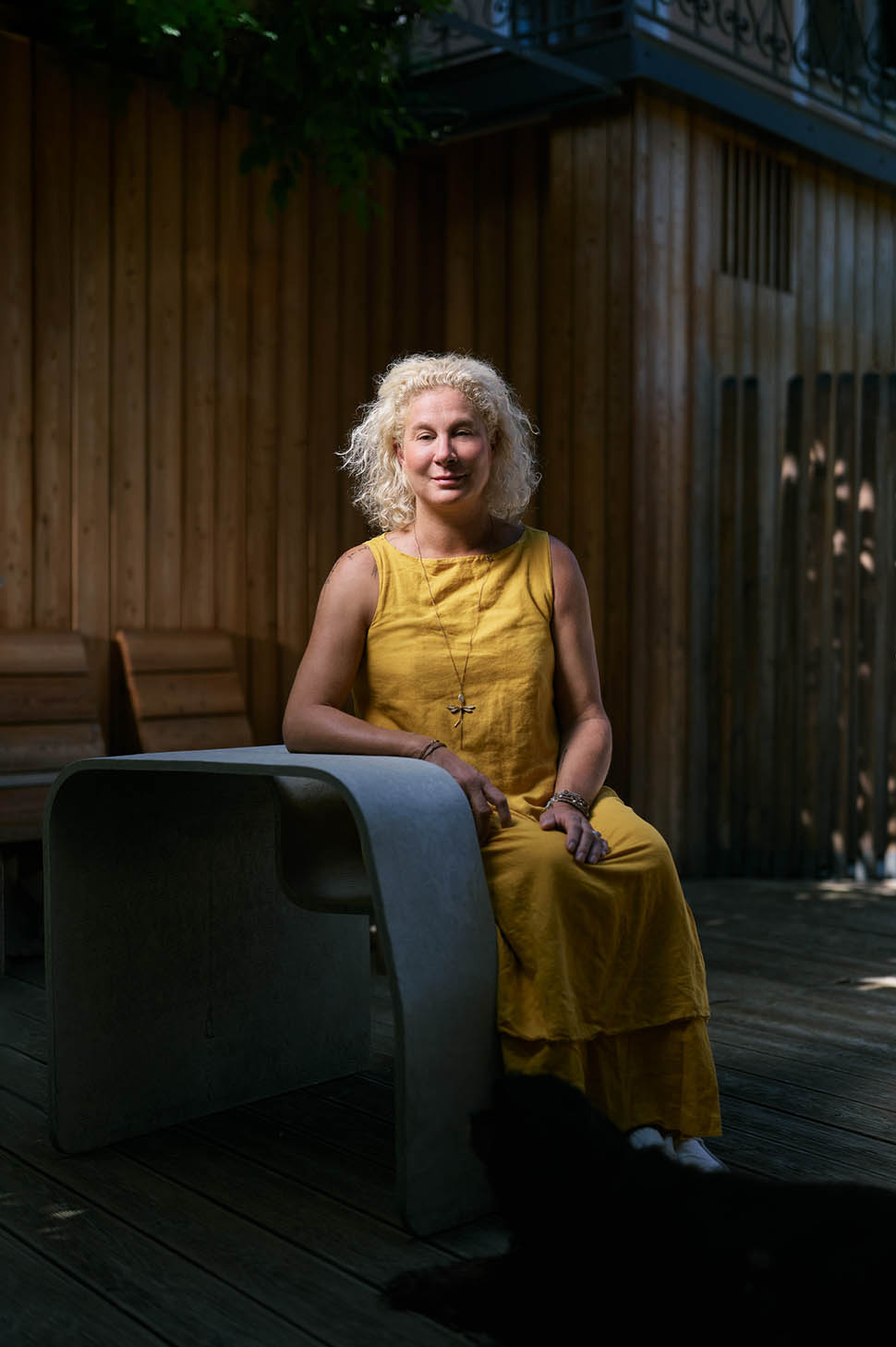
True Ethics in a Remote Valley in Slovenia
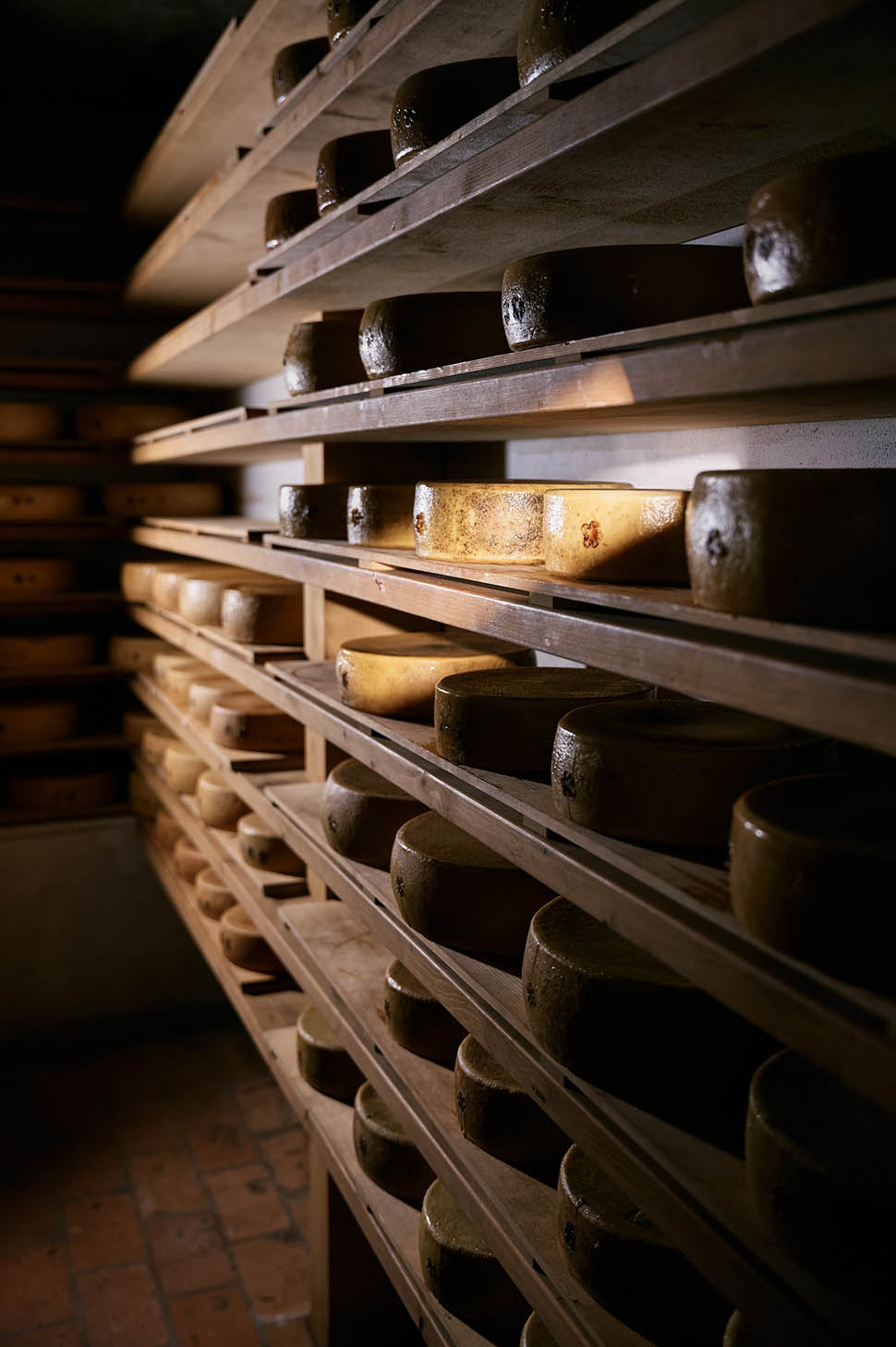
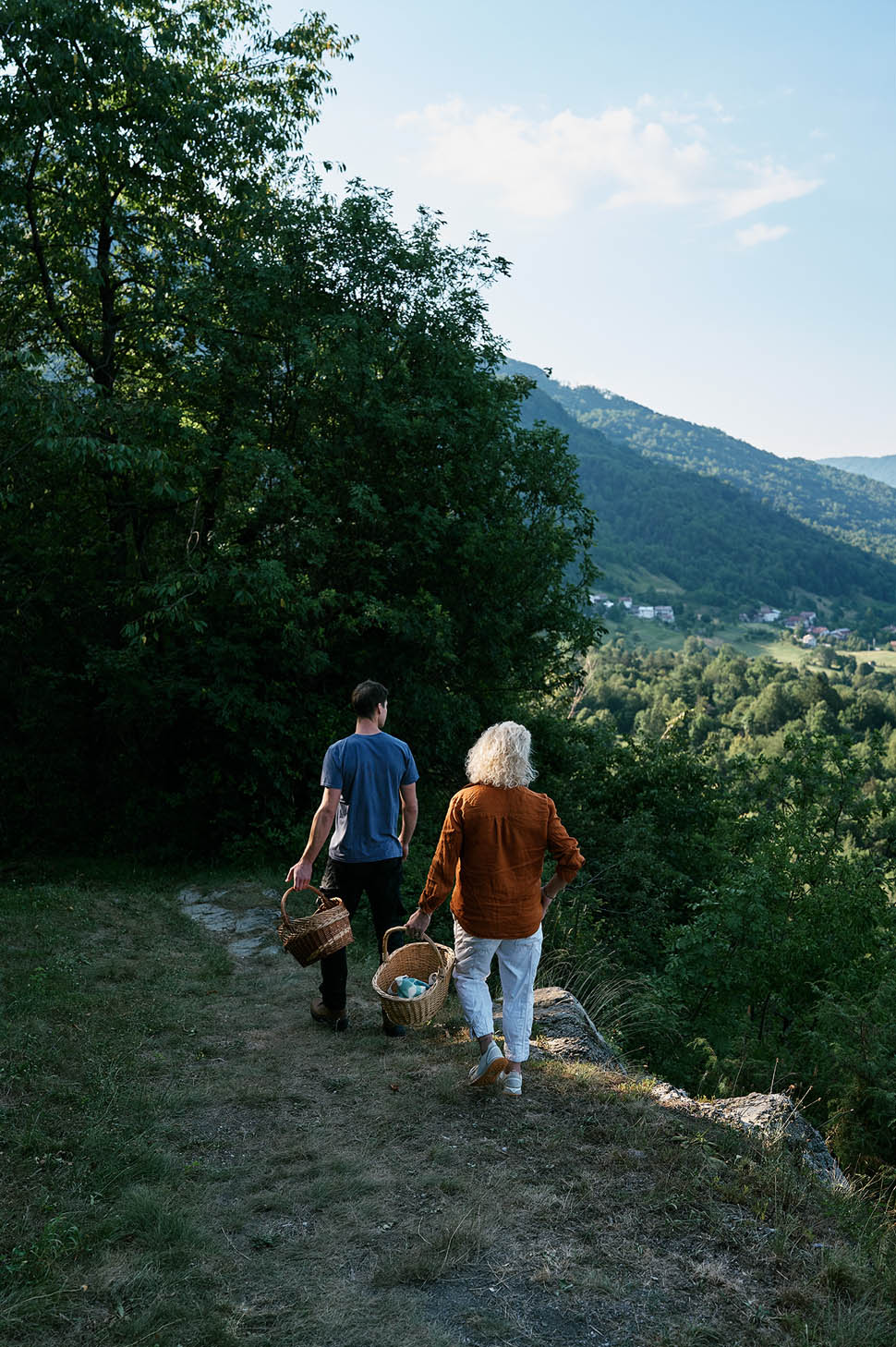
Then there’s the question of creativity, since here the constraints have more to do with availability than with imagination: “If you want to be consistent with what you sell, if you want to be able to truly say, ‘This cheese comes from there, and this tomato grows fifteen kilometers away,’ it becomes difficult because you have little choice in products. The mountains yield little, and only for a few weeks.” The solution comes from the organization: every week, a driver sets out from the mountains above Kobarid with dairy products, produce from the “Orto Felice” garden and the home garden, plus whatever else has been harvested. He heads down to Ljubljana, where he unloads some of the goods for the JAZ kitchen and picks up produce from two biodynamic farmers at the market; then he picks up bread from Pekarna Ana and continues on to Poreč, in Istria, where he drops it off and picks up fish, if any good catch has come in; then he stops by Ana’s house in Istria to pick up olive oil, sauce, and tomato water destined for all the locations.
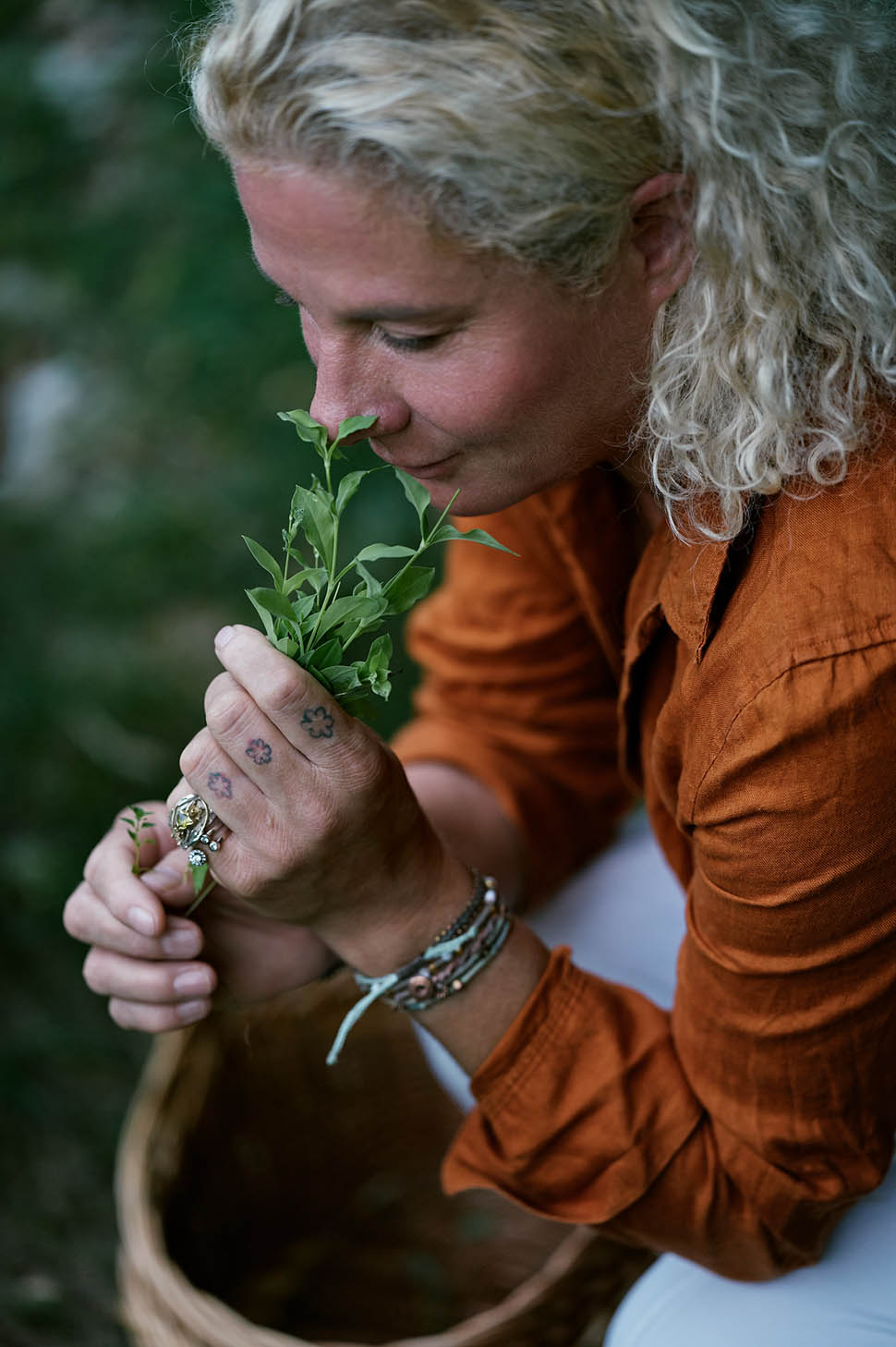
Finally, before heading back, we stop at Stara Škola, in Istria, where a young gardener and his two assistants tend a Mediterranean vegetable garden. “It’s an investment, but it’s given us a little more freedom to use ingredients that are always local”. Along with the produce, ideas are flowing; and it’s likely that the new chapter set to begin at Stara Škola will be a wonderful addition, with views of olive trees and the sea and an art collection curated by the owners. Here, starting November 1, the kitchen will be led by a new head chef who trained at Uliassi and also worked on the creative side of Contrada Bricconi. Ana speaks of him with curiosity and enthusiasm: “I can’t wait to work with him to see what results we’ll achieve”. Another pressing issue Ana is dealing with—and one that likely takes up more of her time than she’d like at this stage of her professional life—is managing to spend less time in the kitchen: “To some extent, the reality of the business pulls you away, but it’s important because, without business partners or investors backing you, if you have a bad year—or two bad years in a row—they’ll force you to close the restaurant.” She gets a lot of help from Urban Stojan, her husband, an entrepreneur with a background in contracts and finance who keeps a close eye on the numbers for all their projects.
“She did it in a very interesting way, even by excluding me from conversations that are useless to me”. The only statistics she receives are the results—for example, numbers that can help her manage food and labor costs. The same approach has been introduced to staff in leadership positions within the company: “People aren’t interested anymore in just saying, ‘Okay, I have three tables; I spent eighteen hours preparing.’ But why did you spend eighteen hours preparing for three tables? How much energy did you waste—is it really worth it?”. The company is also making progress on the marketing front: a team of professionals with significant experience and a meticulously crafted newsletter help determine which markets to focus on when the season is uncertain. The result, after a year and a half, is that Hiša Franko has set at least three record-breaking months in its history. Furthermore, meetings are no longer confined to a closed room: “Anyone interested in Hiša can be part of it.” All of this comes at a cost, which Ana reflects on with a clarity rare in her profession: it’s necessary to energize people all day long, to the point of being exhausted by evening. That’s why she’s borrowed a principle from yoga that helps her cope: “I embrace only what I can. It’s important to find a balance—it’s very important”. Behind the kitchen door, things return to simplicity: “The problems are out there. This is my job.” And the work in the kitchen yields a result that does justice to this marvelous, complex machine.
The new tasting menu and inclusive food-wine pairing
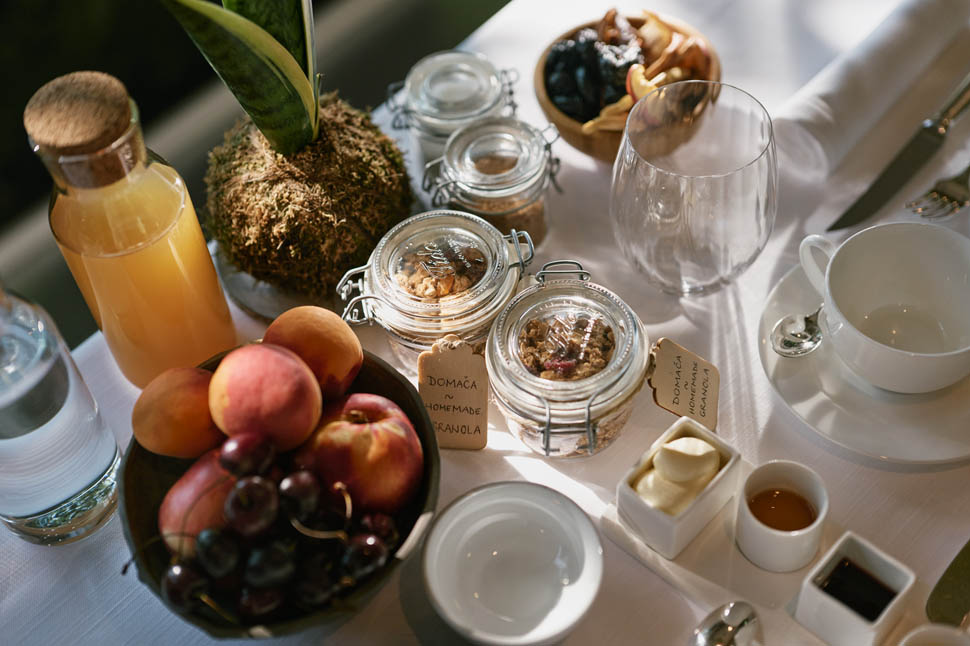
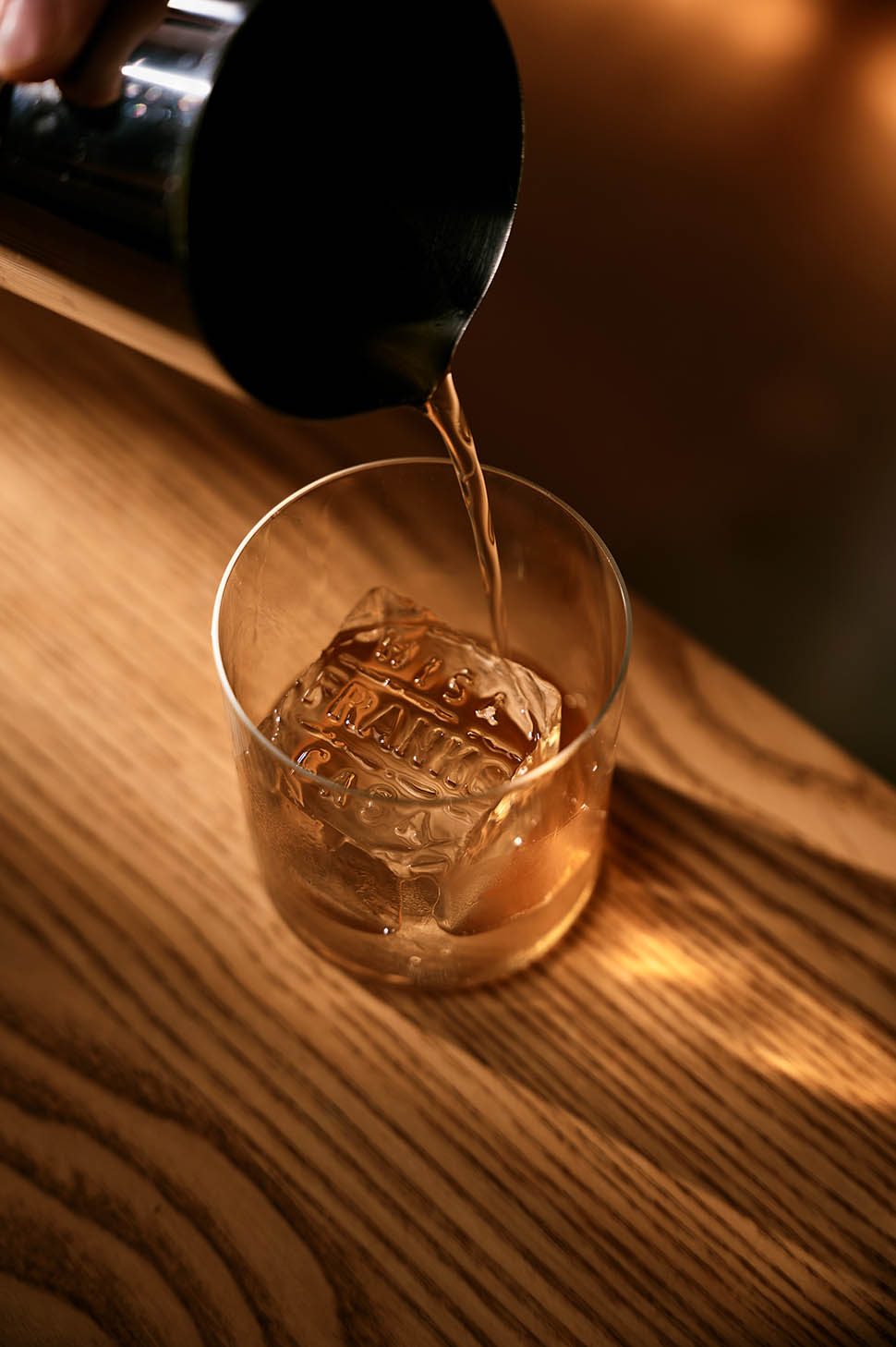
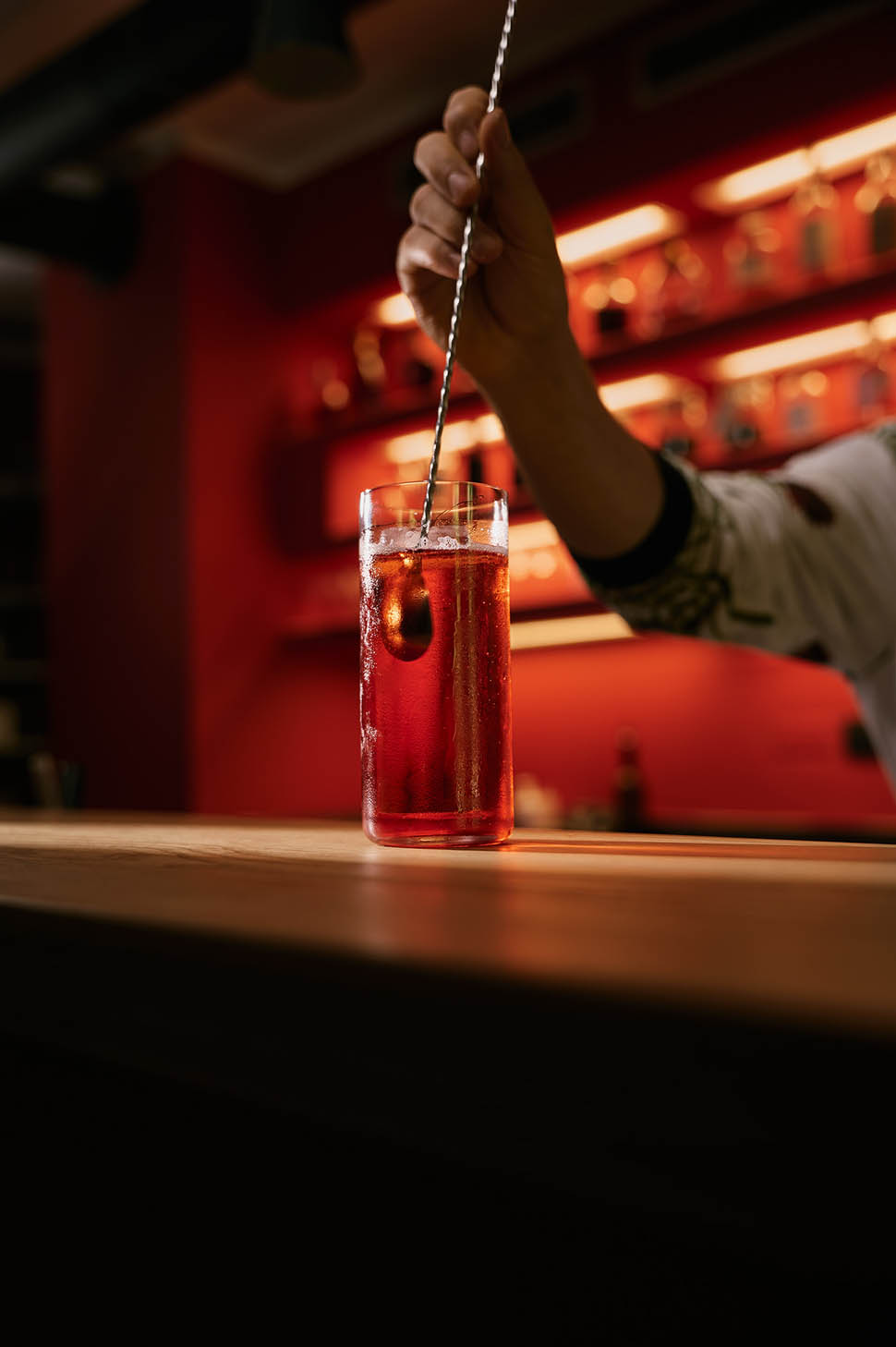
The current menu is called Euphorest and bears two signatures: Ana’s and that of head chef Yvonne Melee Simon. At the beginning, an emblematic phrase explains its origin: when you enter a forest, something changes—your burden lightens, your breath deepens, and your senses awaken. It is there, the text reads, that ideas are born. And once again, after so many visits, this Kobarid cuisine thoroughly impresses, intrigues, and captivates with the refinement of its countless details and a masterful use of every plant-based ingredient, serving as the backbone and harmonious foundation for nearly every course. It’s a menu built around what grows locally, featuring two house classics and everything else in constant evolution. Less than ten kilometers in one direction and you’re in Italy; a little further on lies Istria, which they call “our new country” here. There are three pairing options: two alcoholic options renamed “Classy” and “Funky” (the choice of names speaks volumes) and one non-alcoholic option crafted with great intelligence, resulting in an excellent blend of juices, kombucha, infusions, and fermented beverages—all made in-house.
The Dishes
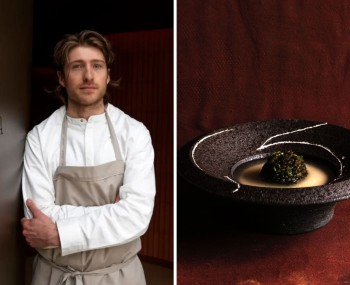
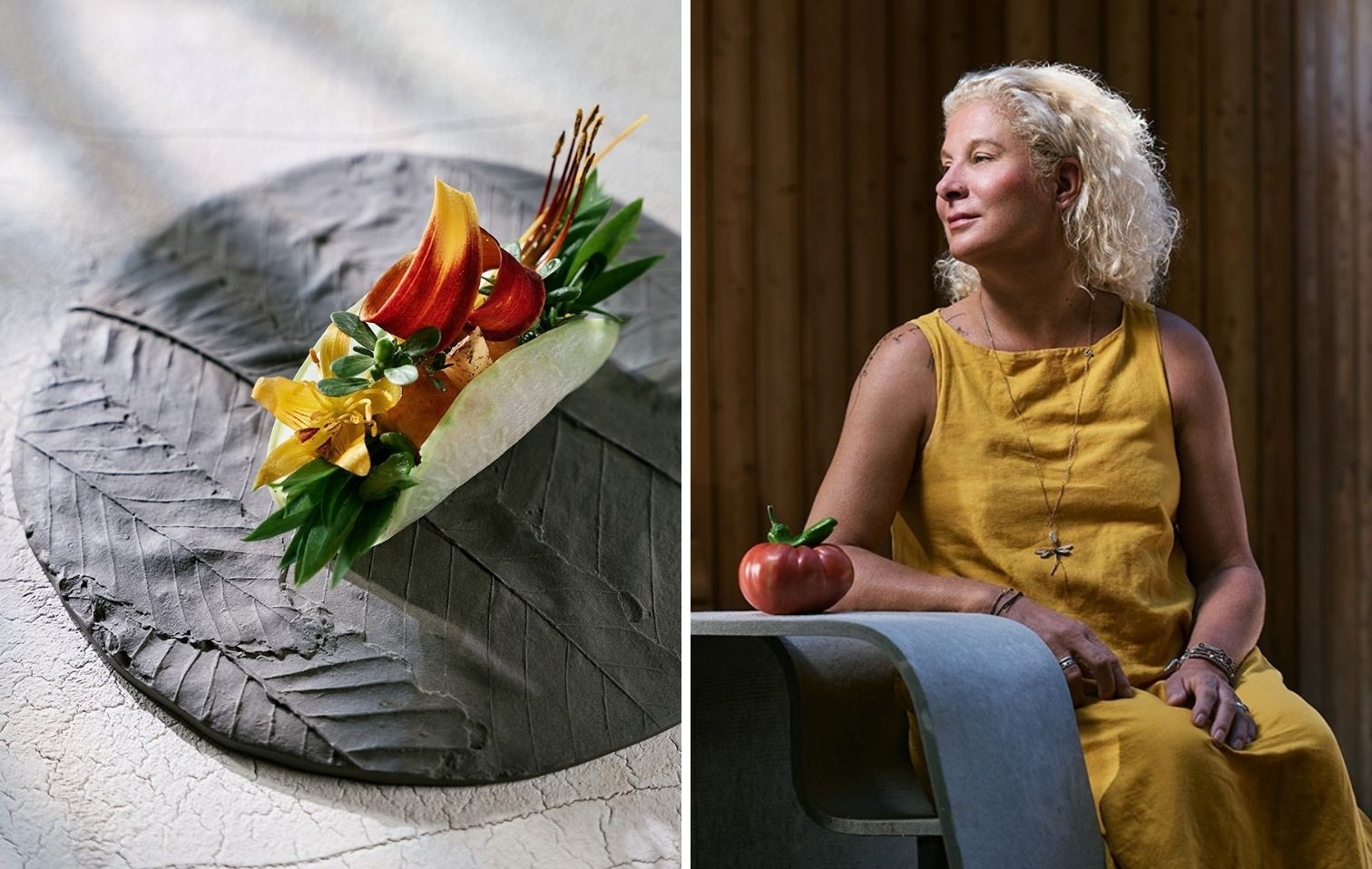
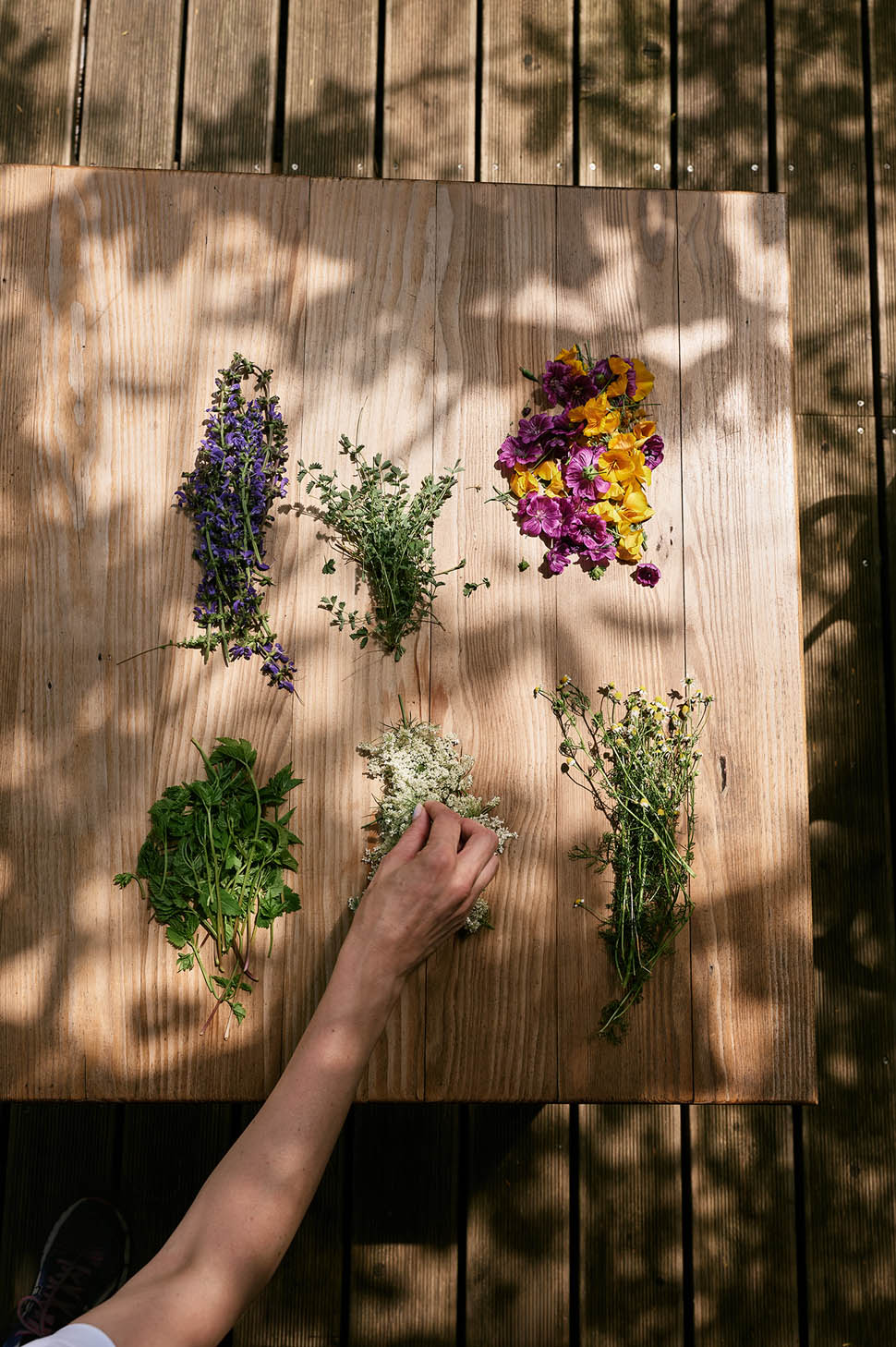
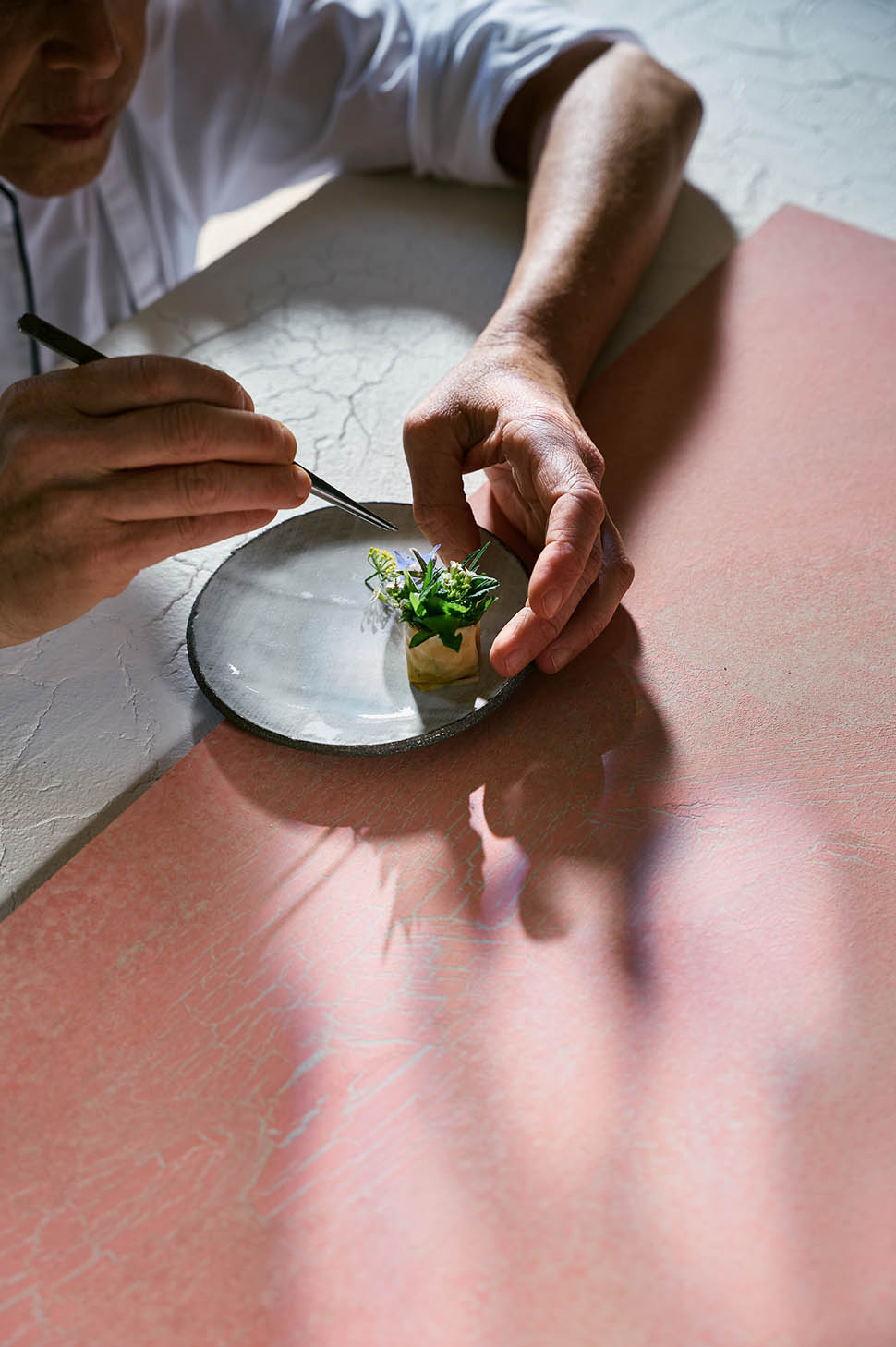
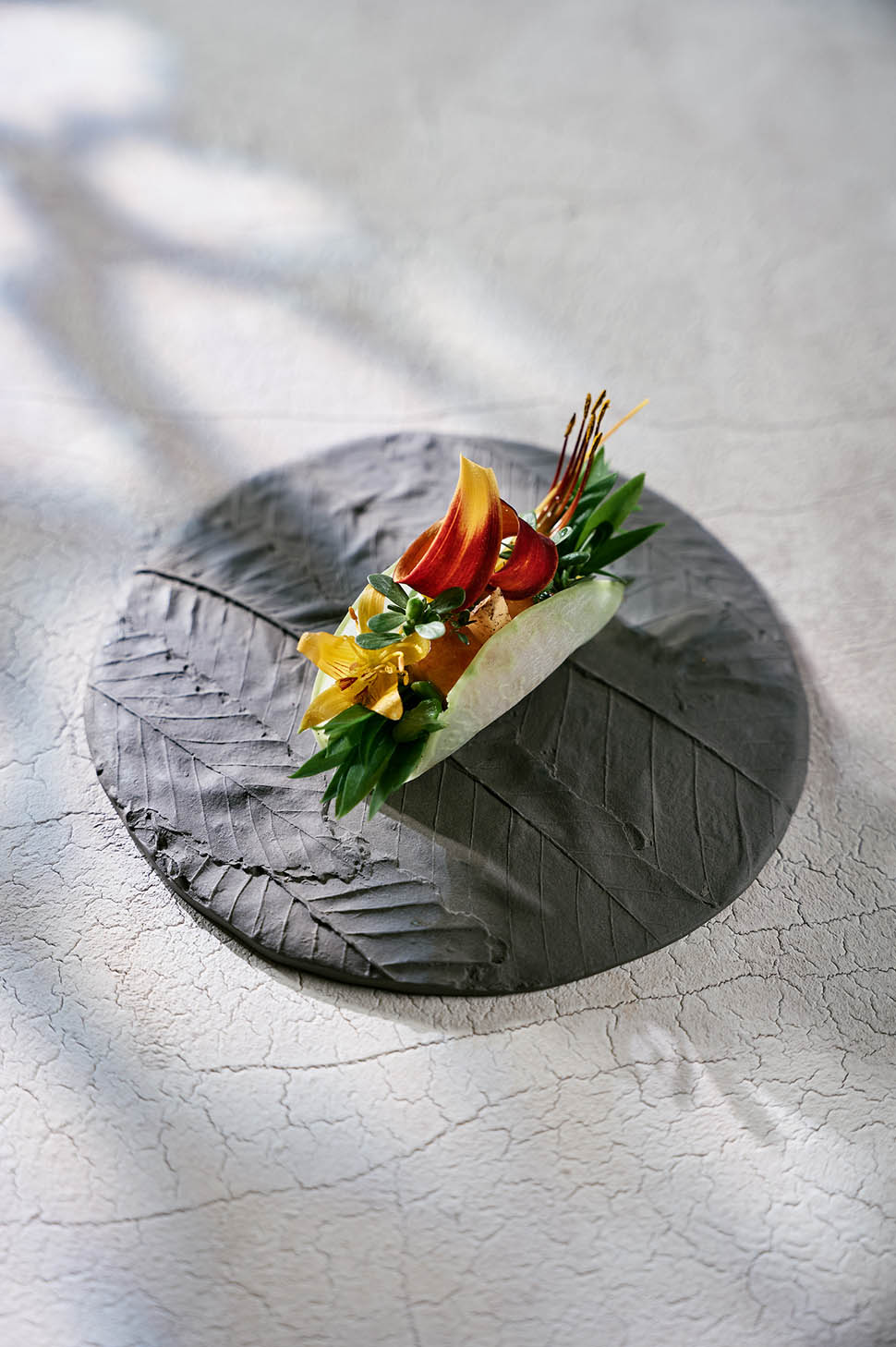
Among the first bites are brioches stuffed with Tolmin cheese. The meal continues with a focus on greenery and freshness, featuring a bouquet of aromatic herbs and garden flowers with amaranth leaves and a seed cream. The “garden leaves” kick off the main courses after the amuse-bouche—still meant to be eaten with your hands to fully savor every nuance. One leaf is stuffed with a small quail egg, topped with an egg yolk emulsion and a tomato-raspberry gel, and further layered with fresh tomatoes and raspberries, along with flowers from the garden. Next comes “celery and pumpkin seeds,” where the vegetable is paired with cuttlefish from the northern Adriatic and a cream with oregano and savory, topped once again with herbs and flowers.“Kohlrabi, horseradish, and wild herbs” is a sort of taco, whose shell is a thin slice of kohlrabi. Inside are roots and vegetables from the garden and nearby farms, tarragon, campion, and small white flowers on top.
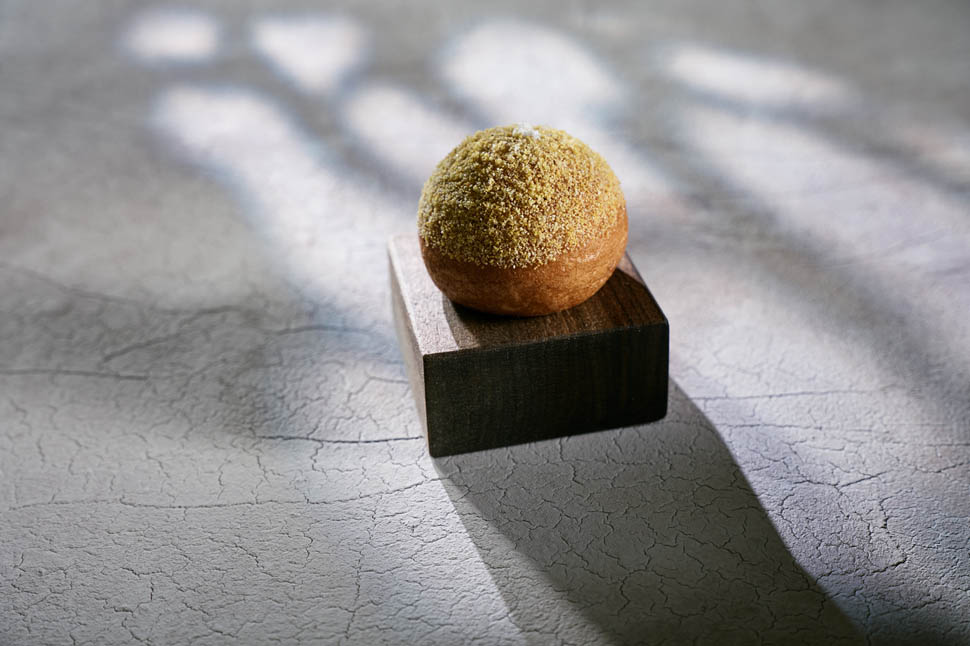
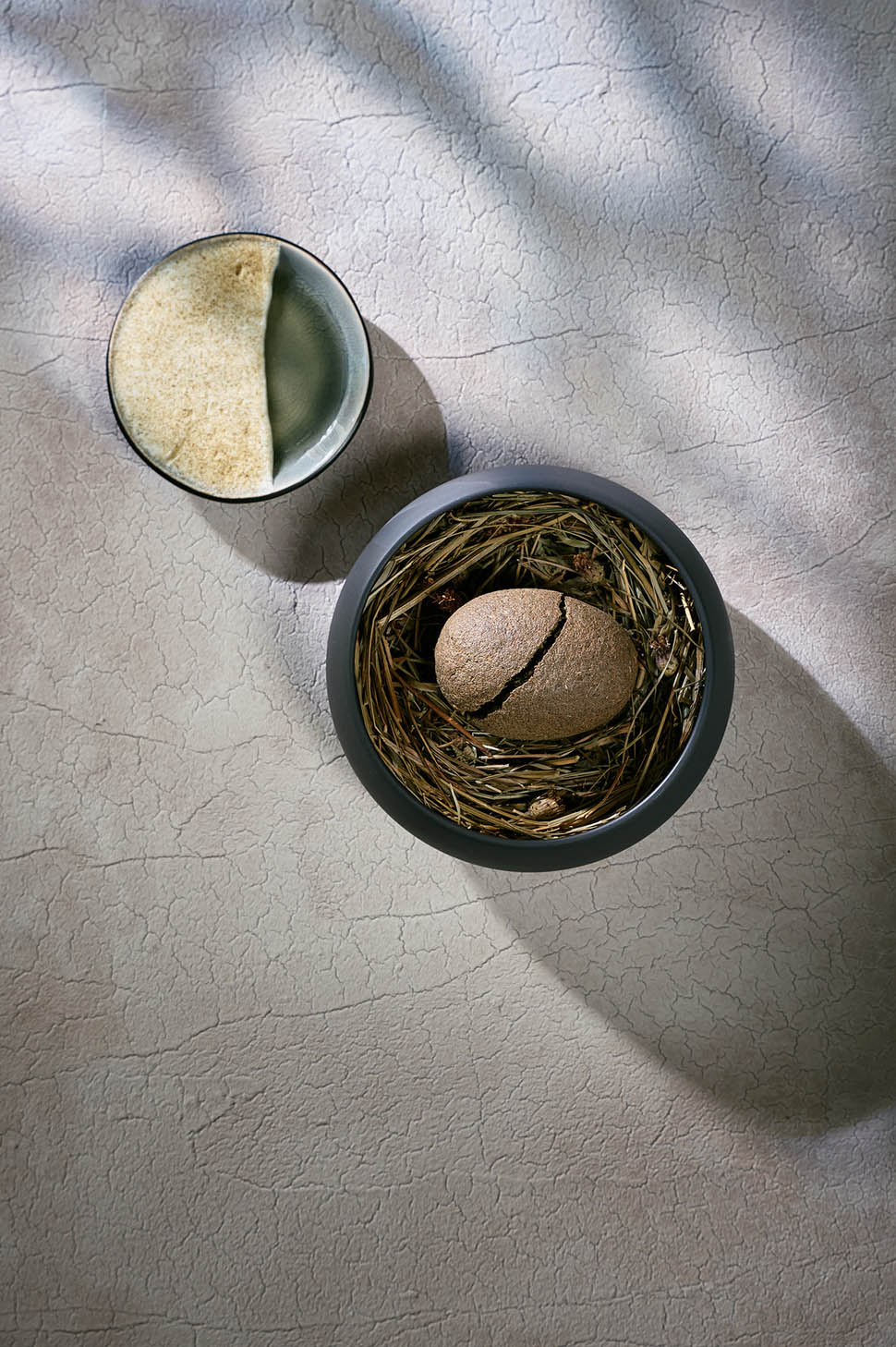
Now it’s time for the classics: the irresistibly delicious cream puff is filled with smoked skuta and trout roe. “Potato and Hay” has a story that’s just as good as the dish itself. When Ana perfected the recipe a few years ago, she was looking for potatoes weighing thirty to forty grams at most, so she went in search of a farm that could grow them for her. When she asked for a price, the answer was “one euro”; she objected that one euro per kilo was absurdly low. The misunderstanding was cleared up right then: it was one euro per potato, not per kilo. The potatoes, of absolute excellence, are served in a hay crust, accompanied by sour cream flavored with fenugreek and honey. For the non-alcoholic pairing, in this case, the tomato water is infused with hay essence.
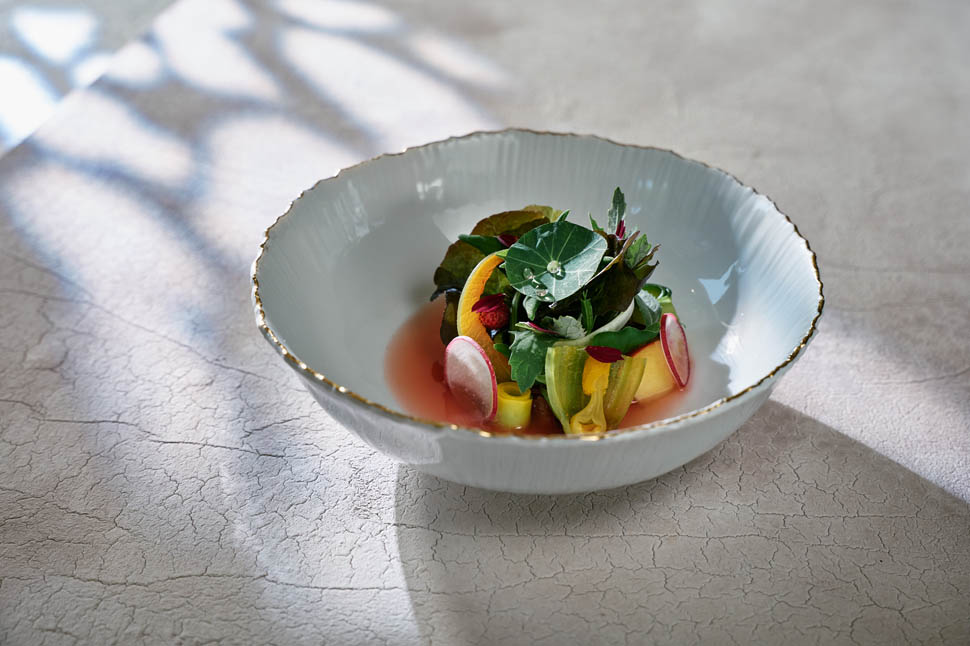
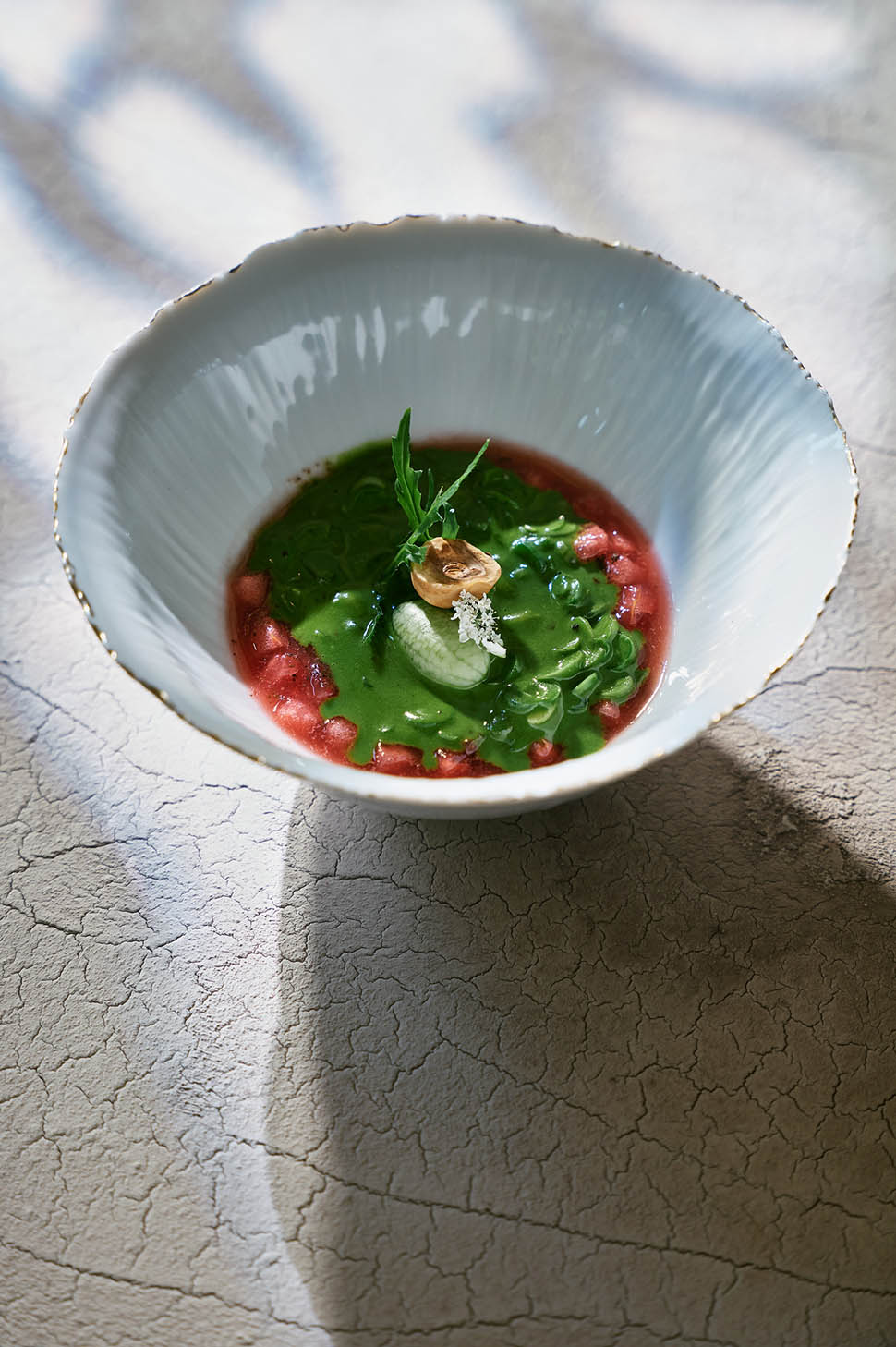
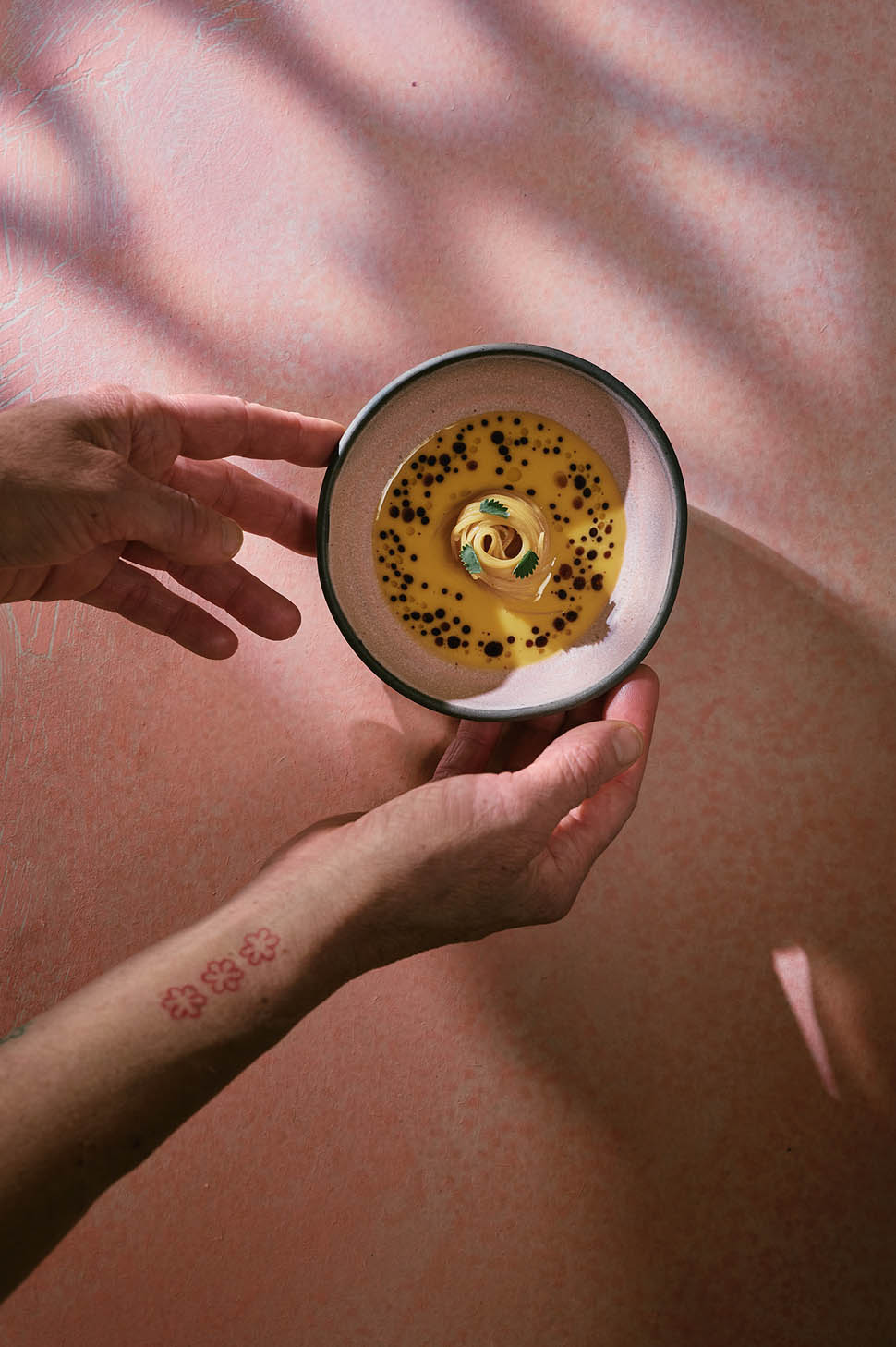
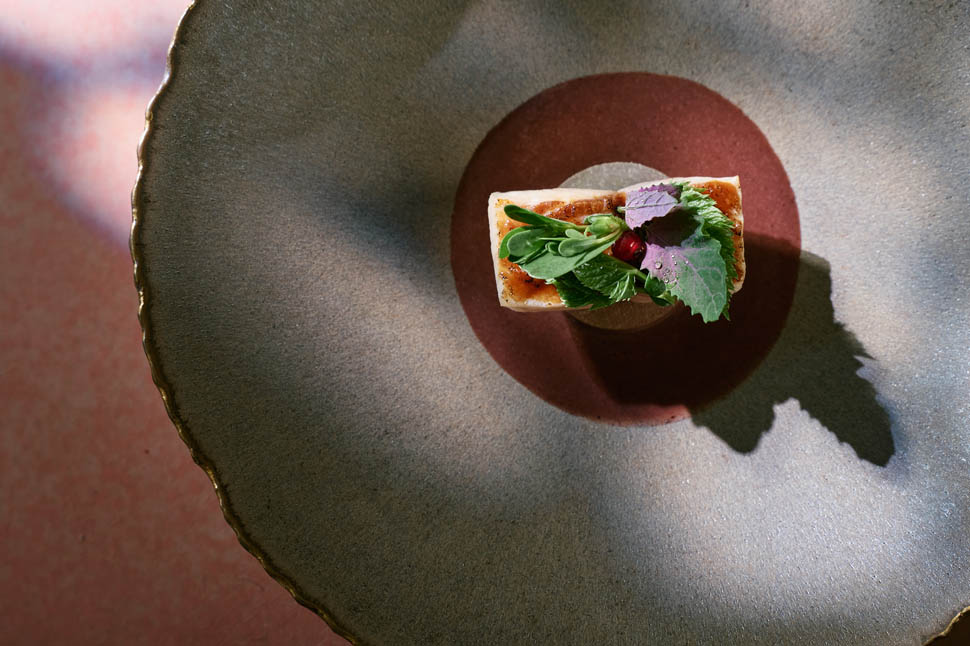
“Summer Harvest” is the most seasonal dish—a salad that showcases whatever is in season that very week: fruits, vegetables, herbs, flowers, a toasted cream, watermelon juice, and a melon gel at the bottom, all topped with an extraordinary Istrian olive oil sourced from the chef’s neighbor. There are two pasta dishes: the farfalle are served with two sauces—gorgonzola and strawberry—to be eaten together so each bite is full of flavor. The tagliolini are hand-rolled and served with a sauce made from pork and fresh and dried stone fruits, including apricots and peaches. Rice isn’t grown in Slovenia, which is why barley is used instead—toasted and creamed like a risotto, with black pepper, chanterelles, and black Istrian truffle. The ‘trota la regina’ comes from the tank outside the restaurant, fed by water from the stream flowing right next to it. After aging for a couple of days, the fish are grilled; served alongside are lentils in various textures, a selection of herbs and flowers—including Malabar spinach and blue borage—and a sauce made from a reduction of vinegar and butter.
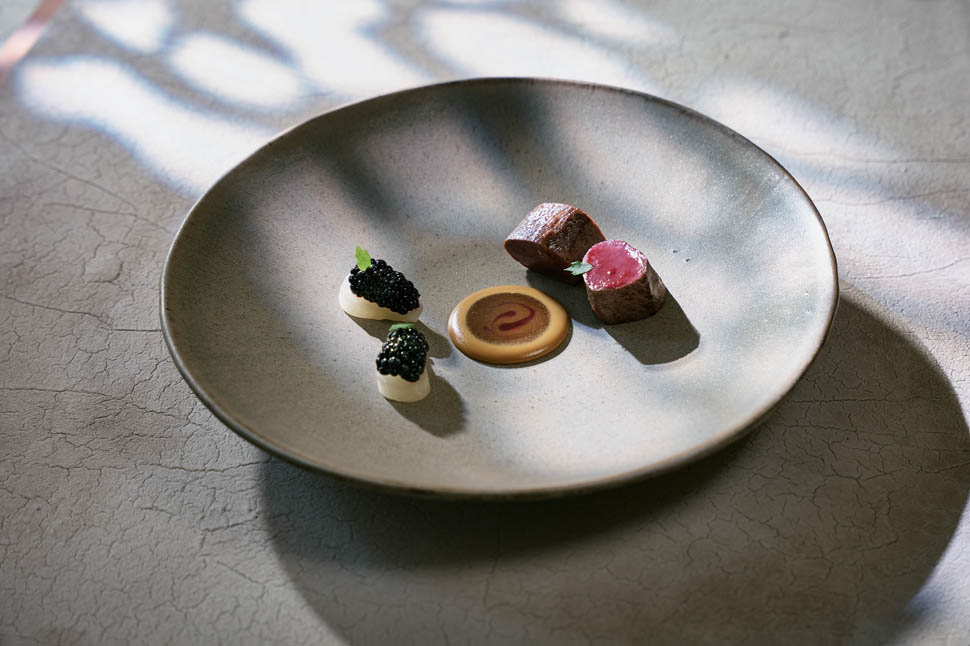
For Ana, roe deer is the game of her childhood: cooked on a sizzling griddle, it’s finished with a roast sauce, daikon, and garden herbs like nasturtium and epazote, with the vegetables distributed evenly so that every bite has the same texture. The non-alcoholic pairing is truly a success: pure red bell pepper juice, which has body and structure, balanced by a maceration of fresh raspberries and then fresh chili peppers and their juice.
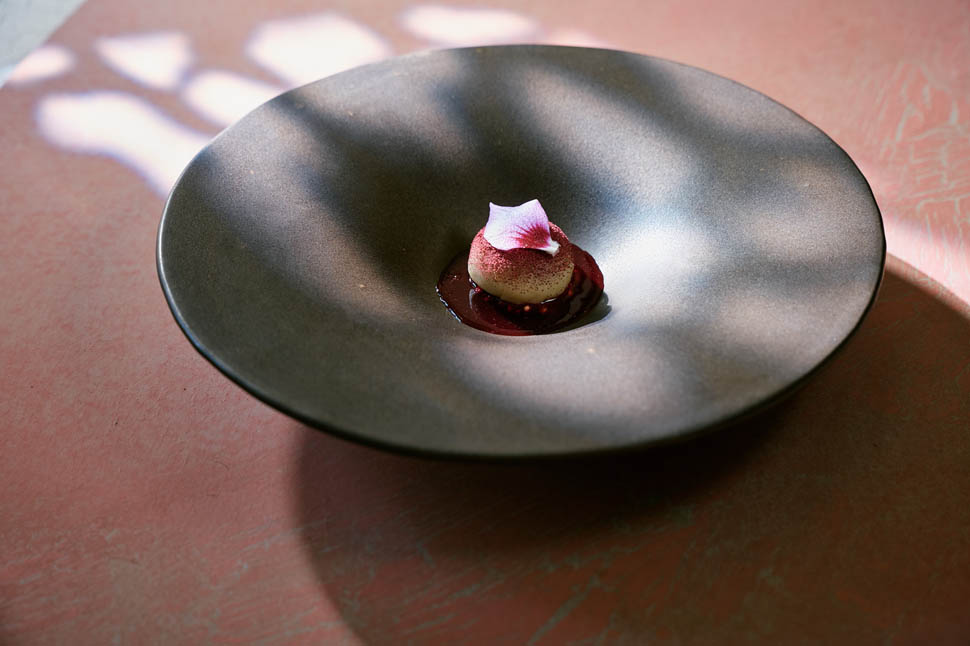
The dessert course begins with “beans, chestnuts, and cola,” which introduces the theme of homemade cola, a key ingredient in the gelato. “Beeswax” is a magnificent dessert: the wax comes from a local producer and gives the ice cream a very distinct aroma, accompanied by a poppy seed sauce. Character, determination, sacrifice, and a dining room staff that is punctual and exceptionally kind: it’s clear just how much effort it takes to keep this restaurant running, but at the table, the result is more impressive every time.
Address
Hiša Franko
Staro selo 1, 5222 Kobarid, Slovenia
Phone: 386 5 389 41 20
Website