Three complementary facilities catering to every type of traveler, a 2,200-square-meter spa, and an eclectic dining experience that culminates in Michael Gollenz’s dishes: Appenzeller Huus is a small, welcoming retreat, named the best hotel of 2027 by Gault&Millau.
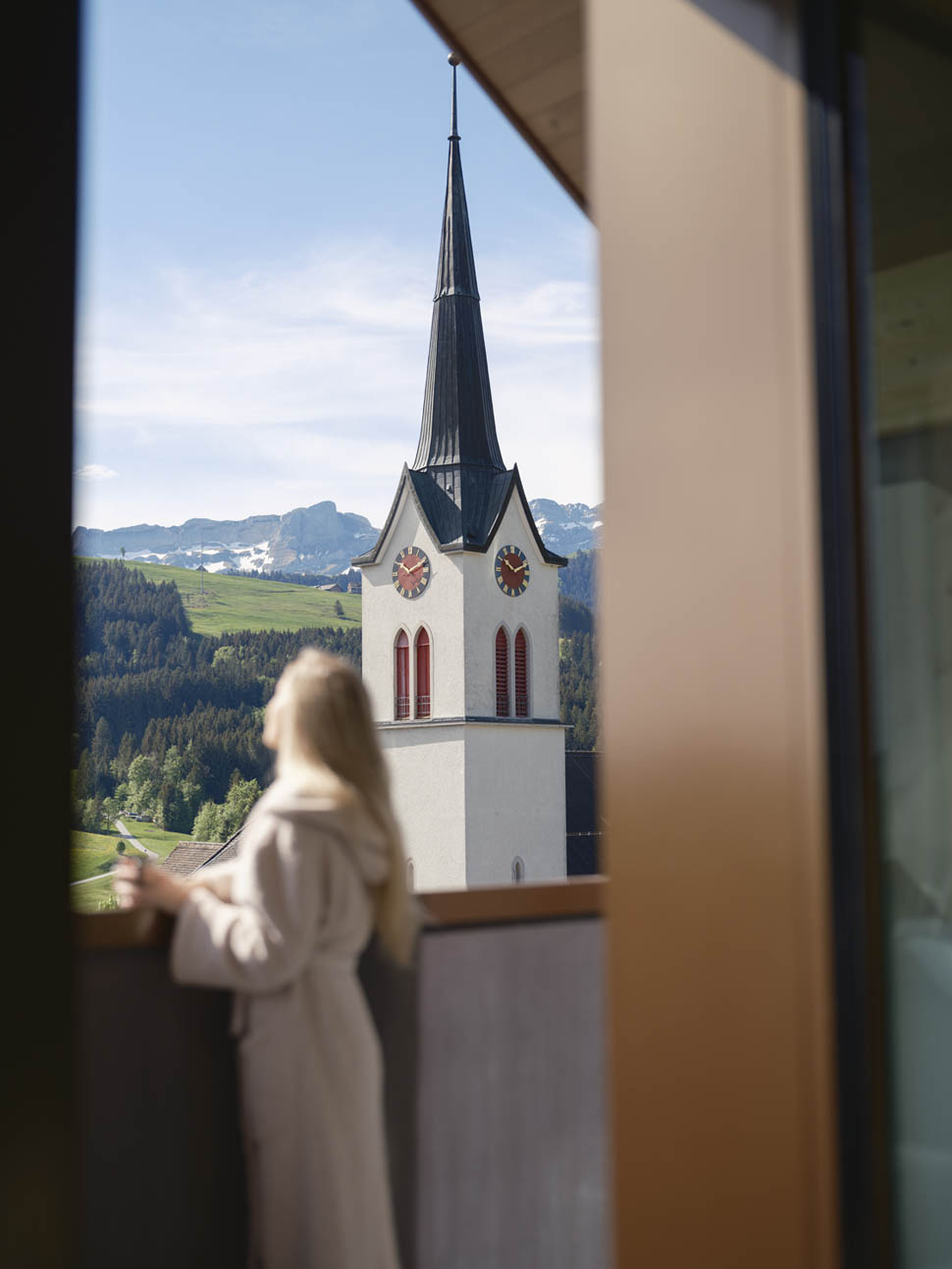
Gonten is a charming village at an elevation of about 900 meters, nestled between the hills of Appenzell Innerrhoden and the Alpstein, just five minutes from the district capital, which is certainly worth a visit. It’s a delightful experience to travel there on the little red train of the Appenzeller Bahnen: the landscape is just as you’d expect—idyllic and picturesque, surrounded by nature amid wooden houses and pastures. Appenzeller Huus is one of the most ambitious hotel projects to emerge in Switzerland in recent years. Its most recent accolade came on August 24, 2026, when GaultMillau named it “Hotel of the Year 2027,” highlighting the perfect blend of hospitality, cuisine, wine selection, and an exceptionally well-equipped wellness area. Behind it all is Jan Schoch, an entrepreneur who grew up in the region, with extensive experience in finance in Zurich and New York and a personal connection to this place: his parents were married at the Bären in September fifty years ago.
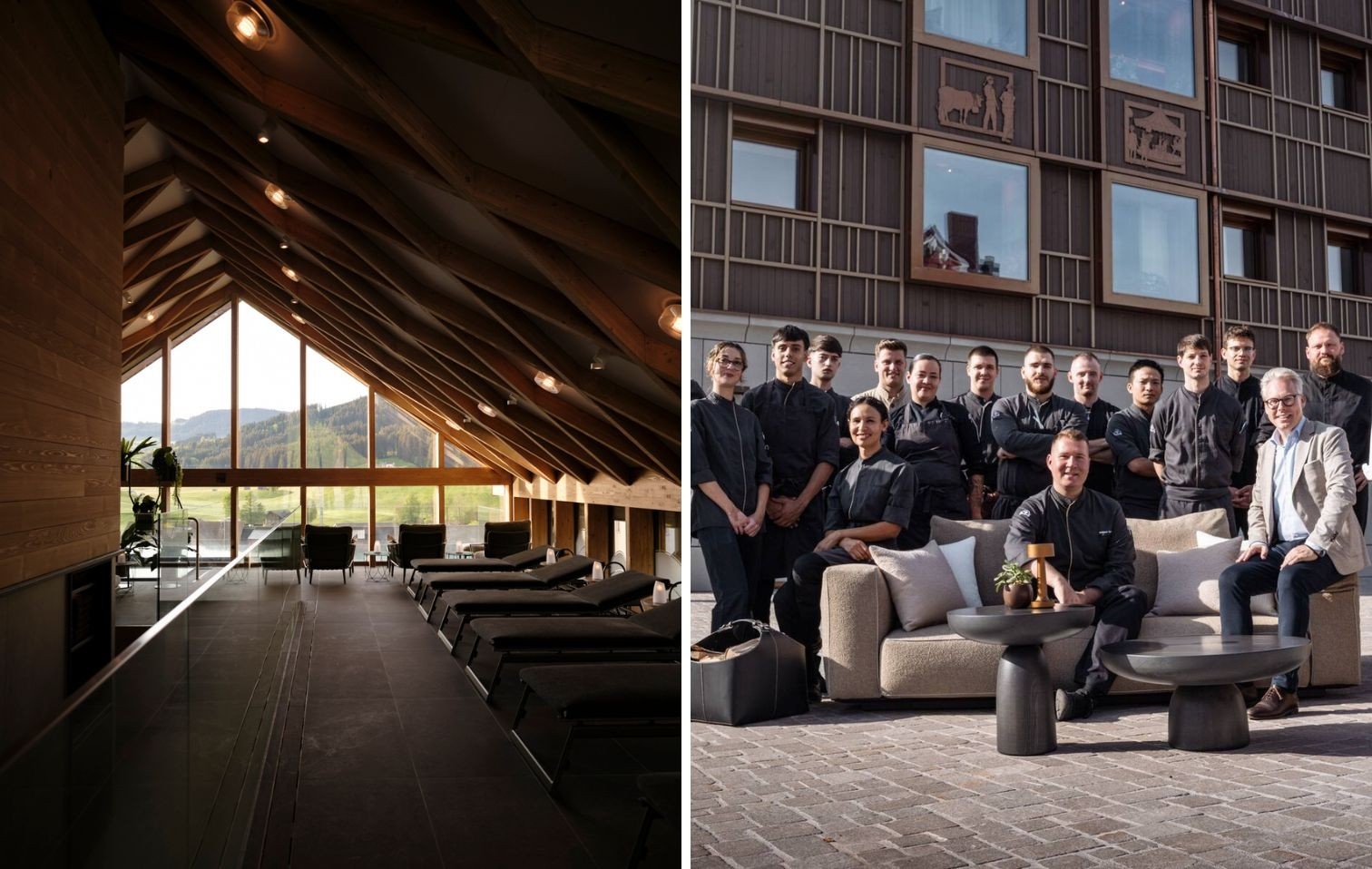
When the historic inn was in danger of closing its doors in 2014, Schoch decided to take it over, expanding the project into a small hotel group in the center of Gonten. Huus Bären, Huus Löwen, and Huus Quell vary in category, size, and atmosphere, but they share a common underlying concept: to embody the local identity: this is the essence of the term “Lifestyle Wellness Community,” chosen to capture the world of Appenzeller Huus.
Accommodations: Three Complementary Spaces for Every Need
Huus Bären is the historic heart of the property: the building dates back to 1602 and is the oldest in Gonten. Today it is a three-star superior hotel, reopened in 2020: the original structure coexists with a contemporary addition and the adjacent Residenz. The restoration was carried out with meticulous attention to historical accuracy, so much so that in some rooms the ceiling height remains the original 1.80 meters, and the old manger, protected by glass, can be seen behind the bed. On the ground floor are the Bärenstobe and the Lehnerstobe; the 17th-century Schmitte houses the cigar lounge, while the Taverne is an intimate gathering place. Across the street is Huus Löwen, a four-star superior hotel opened in 2023 following the restoration of the 1878 inn. The twenty-four rooms consist of nine double rooms, seven historic double rooms, seven family rooms, and one suite in the attic featuring its splendid wooden beam structure. The Löwen also houses the Löwenstobe, the Appenzellerstöbli in the village’s historic bakery, and the Jakob Schlaepfer Lounge, featuring fabrics and wallpapers from the historic St. Gallen-based design house. Finally, Huus Quell, which opened on October 15, 2025, is Appenzell’s first five-star superior hotel, with thirty rooms and suites, and was immediately affiliated with The Leading Hotels of the World.
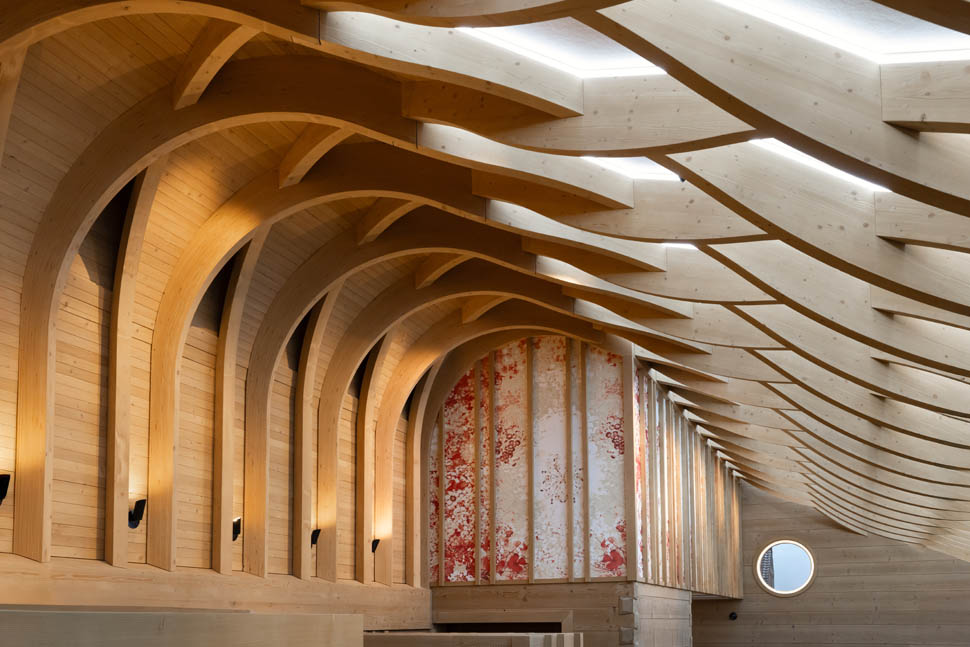
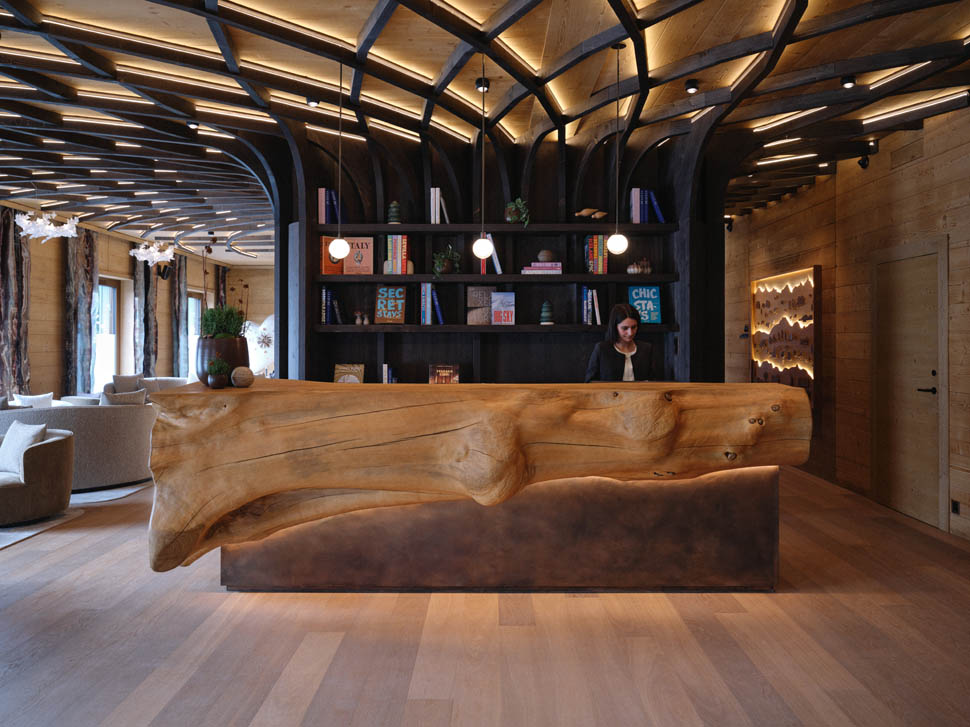
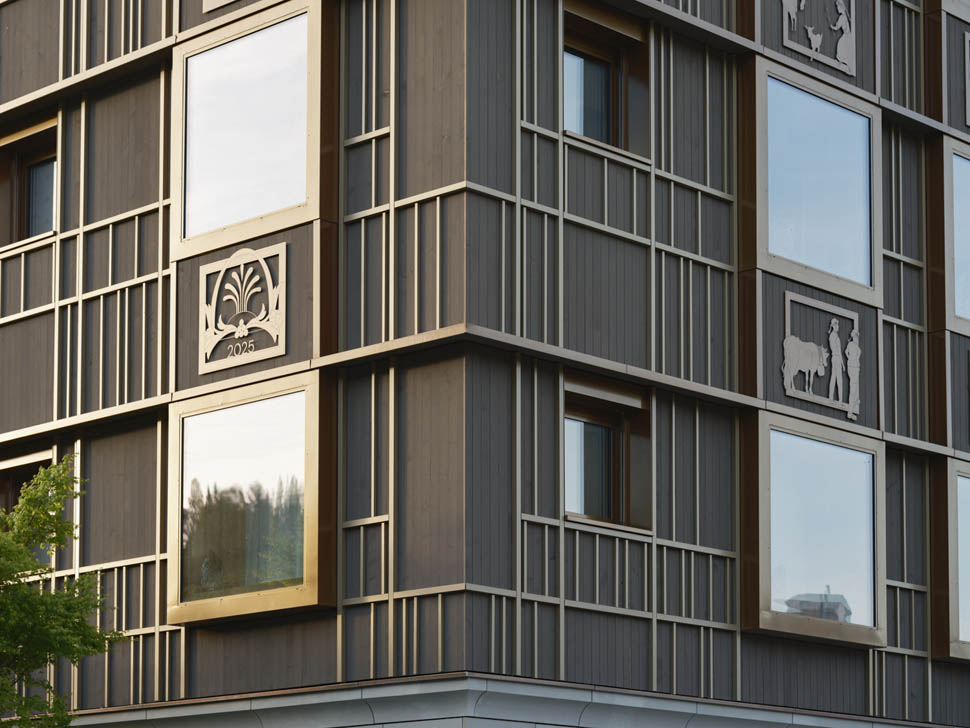
The Quell was designed by Rüssli Architekten using “Strickbau,” the traditional local construction method that employs solid beams stacked and interlocked: Mondholz—so-called “moon wood”—is used extensively, sourced from trees felled during their dormant season according to a precise calendar rooted in Alpine tradition. This project stands as a significant example of the revival of a building tradition that was in danger of disappearing. The load-bearing structures are, in fact, assembled without nails or screws.
From the wellness center to the wine cellar, all the way to the cocktail bar
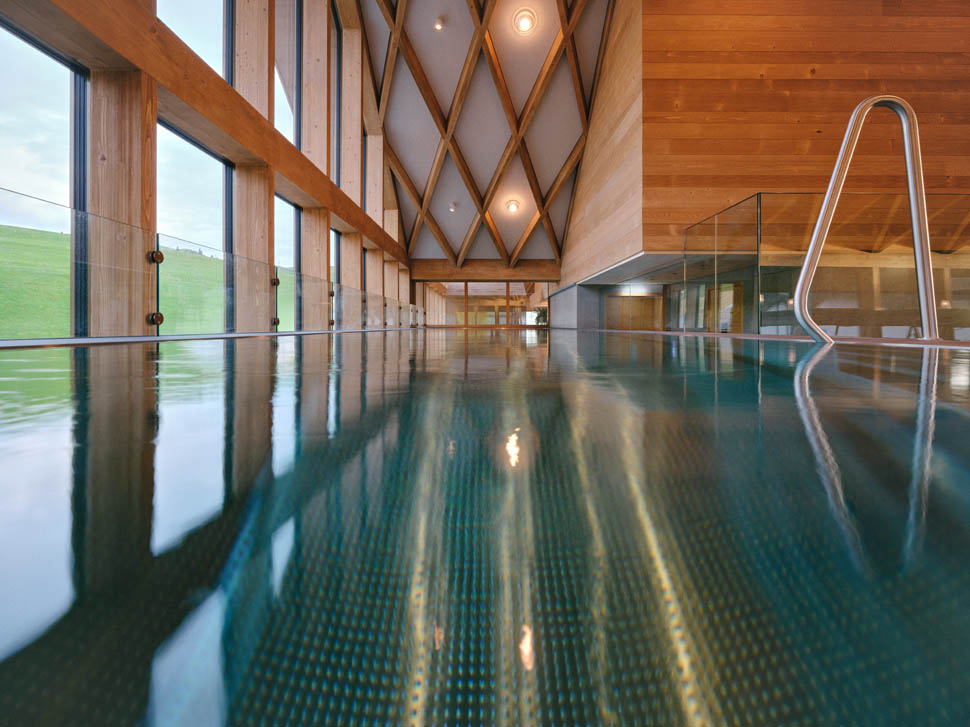
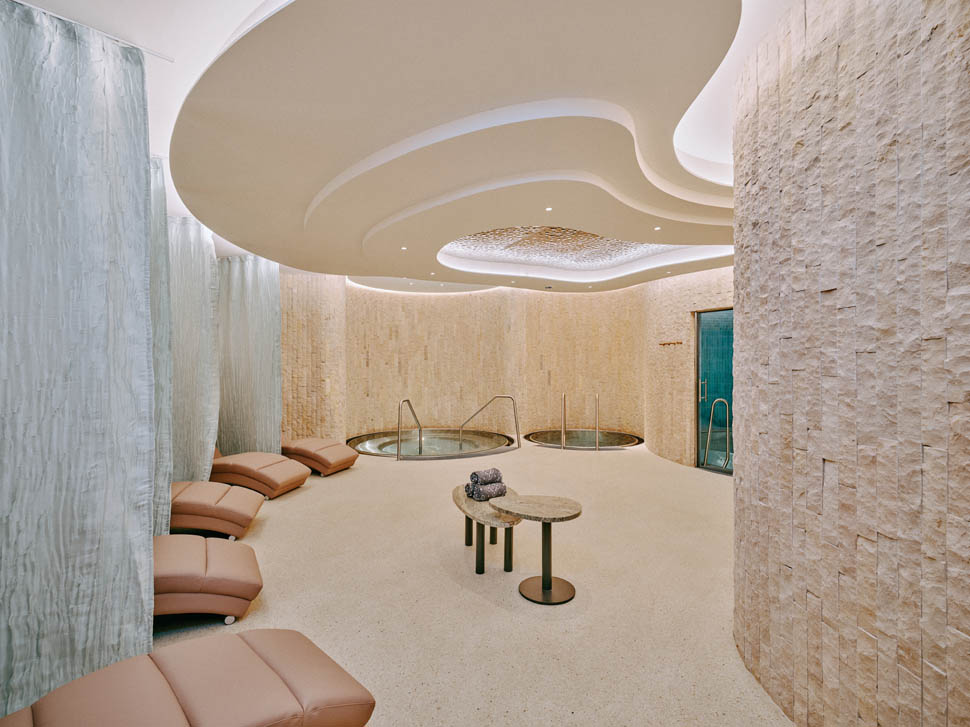
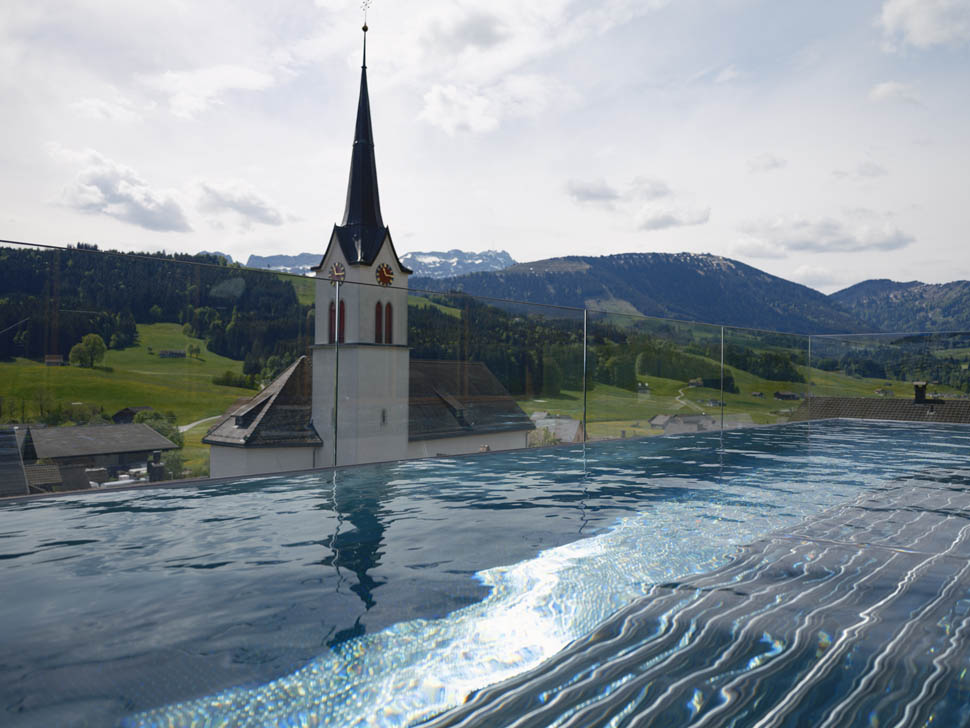
The Quell Spa is impressive: 2,200 square meters spread across three levels, featuring nine pools, eight saunas and steam caves, fourteen treatment rooms, and a yoga platform, as well as a rooftop panoramic pool overlooking the Alpstein massif. We tried the L3 program—Long Lasting Lifestyle Circle—which combines a series of treatments focused on longevity and so-called “biohacking”: an infrared cabin, cryotherapy at minus 110 degrees, hyperbaric oxygen therapy, compression therapy, and body diagnostics. A memorable (and quite cold) experience.
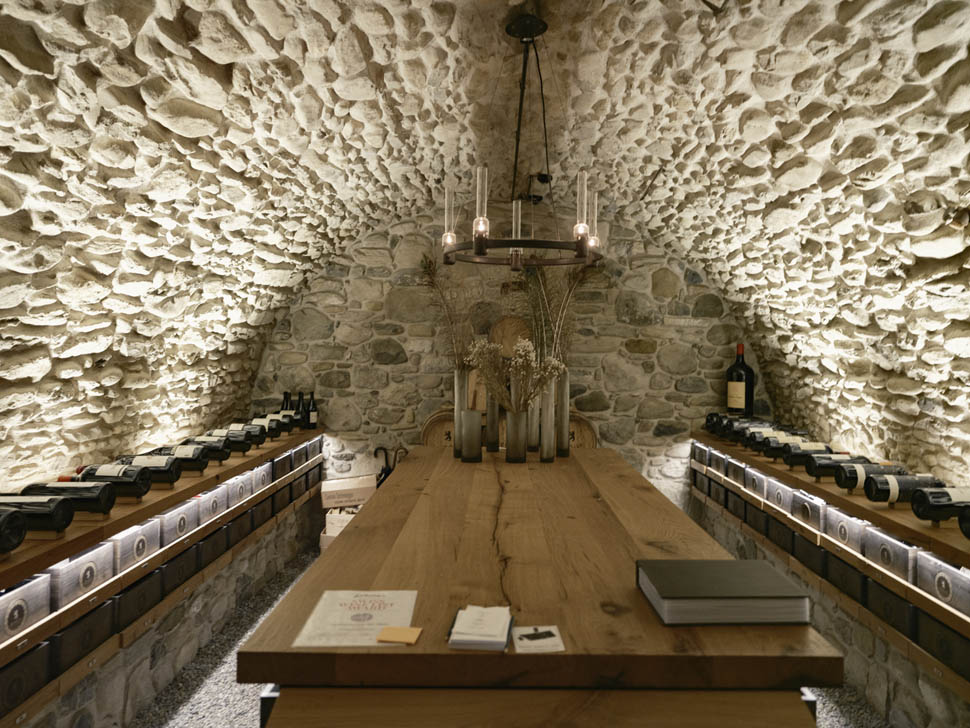
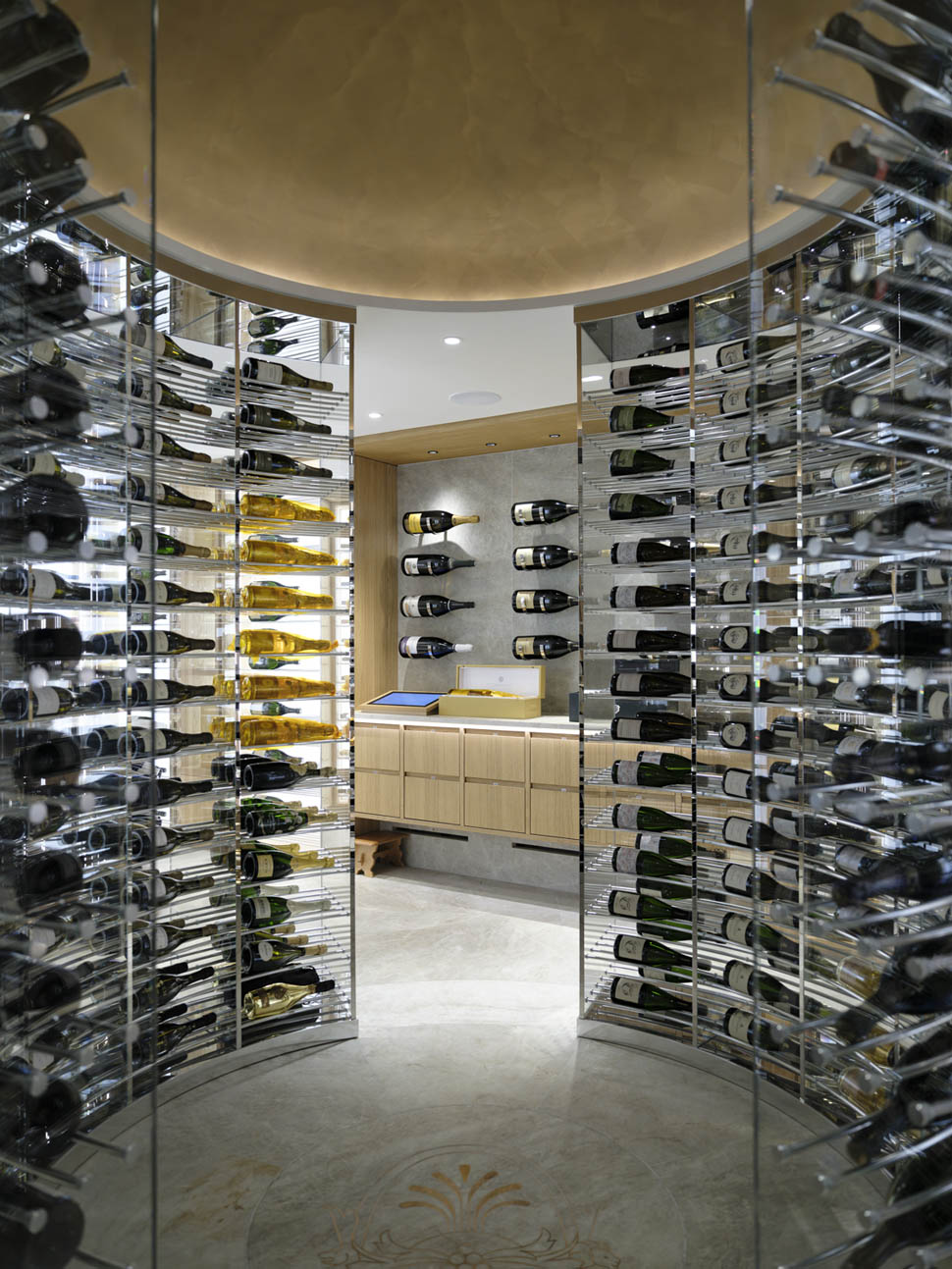
The world of wine is a chapter unto itself. In fact, beneath Huus Quell, there are seven wine cellars spanning approximately 350 square meters, managed by Hans Rhyner: the collection includes over 2,000 labels, international rarities, and a section dedicated to Switzerland that brings together 135 producers. The private room carved out of a large wine barrel, designed for tastings and private dinners, is particularly charming.
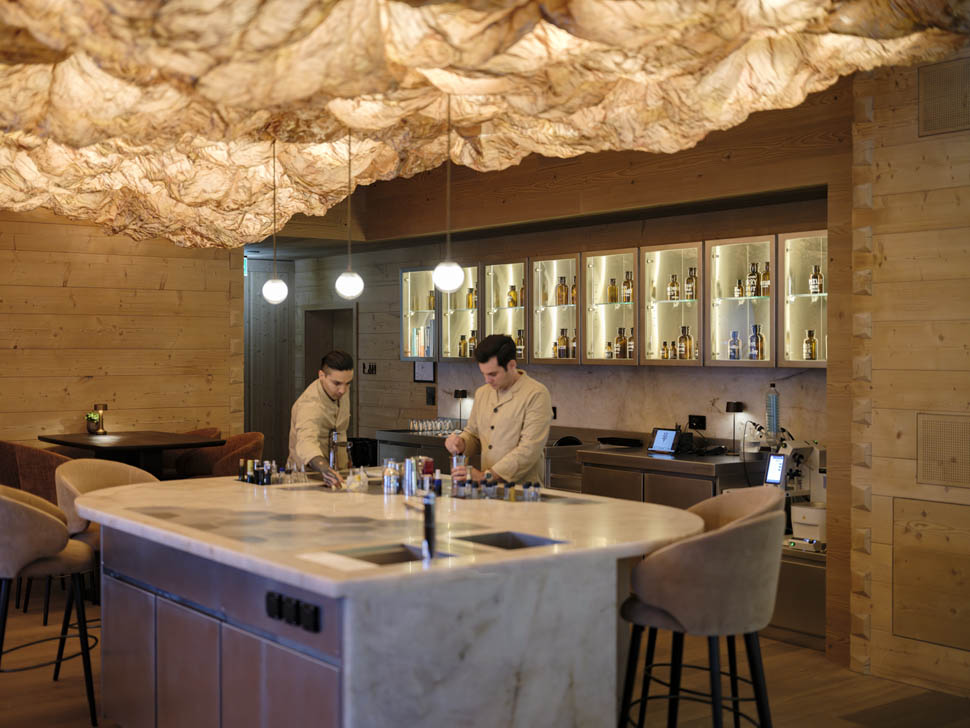
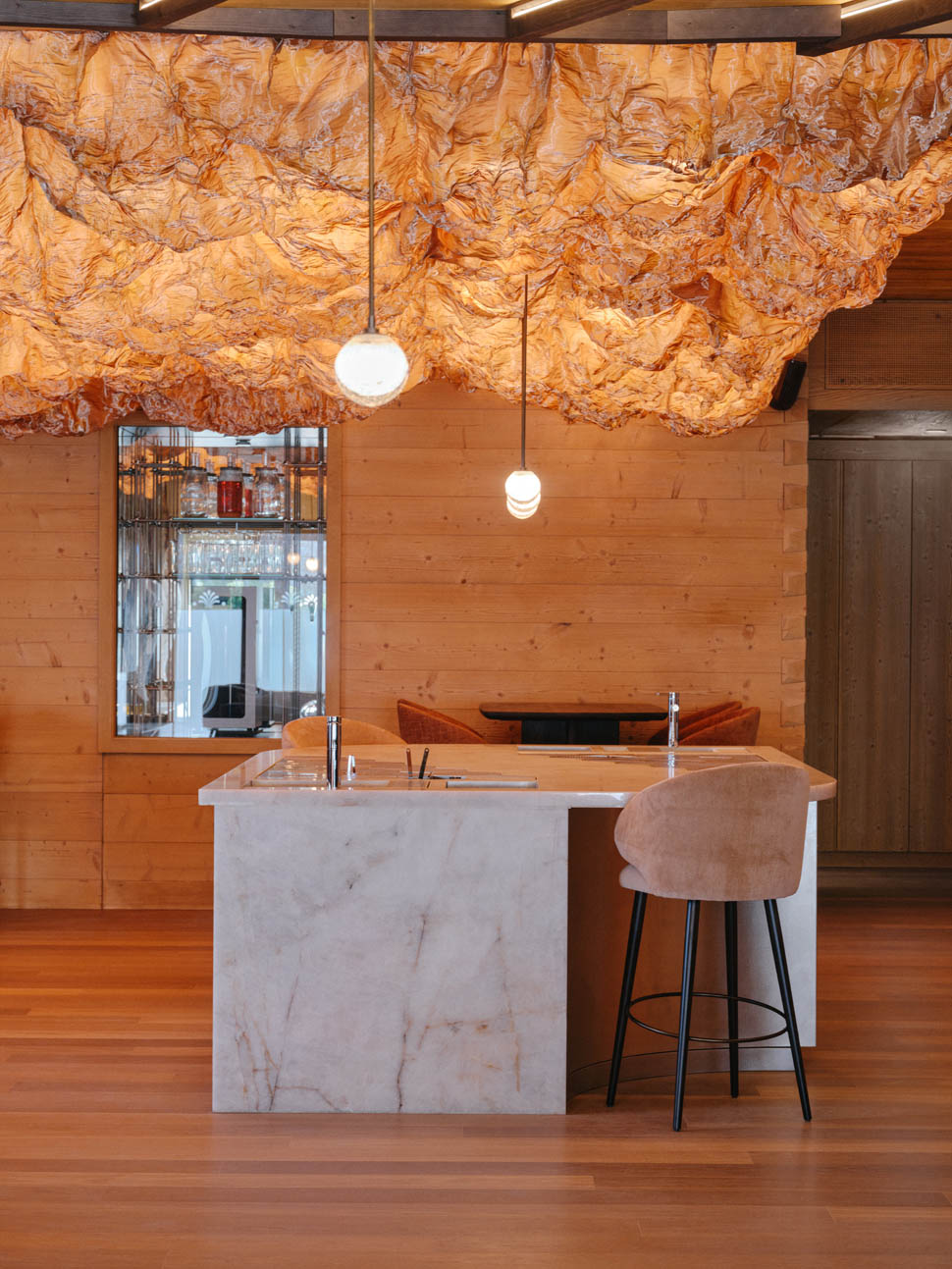
It’s also worth mentioning the Botanicum, a bar managed by Elmir Medunjanin, Director of Bars and Lounges, who personally designed the large quartzite bar counter. Suspended above it is a metallic cloud with one hundred light bulbs, programmed to respond to changes in the outside light; a living wall features one hundred forty-four planters, and a sound system creates different atmospheres in various areas of the space. He tells us: “Traditionally, the hotel bar has always been just a place for a pre- or post-dinner cocktail. We wanted to give it its own voice and identity. We wanted to place the bar at the center of the space to create a gathering place. There are no barriers between the bartender and the guests: the counter isn’t meant to divide, but to encourage conversation.” The menu is based on a radical principle focused solely on local products:“We don’t use lemons, limes, or oranges. We look for a different way each time to showcase what the region has to offer.”
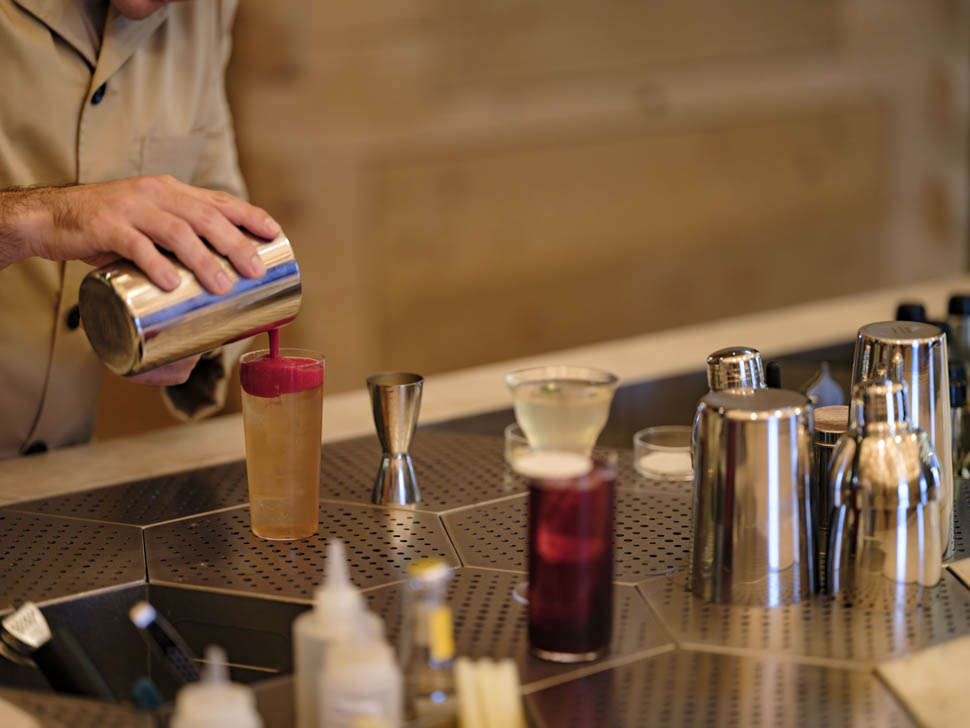
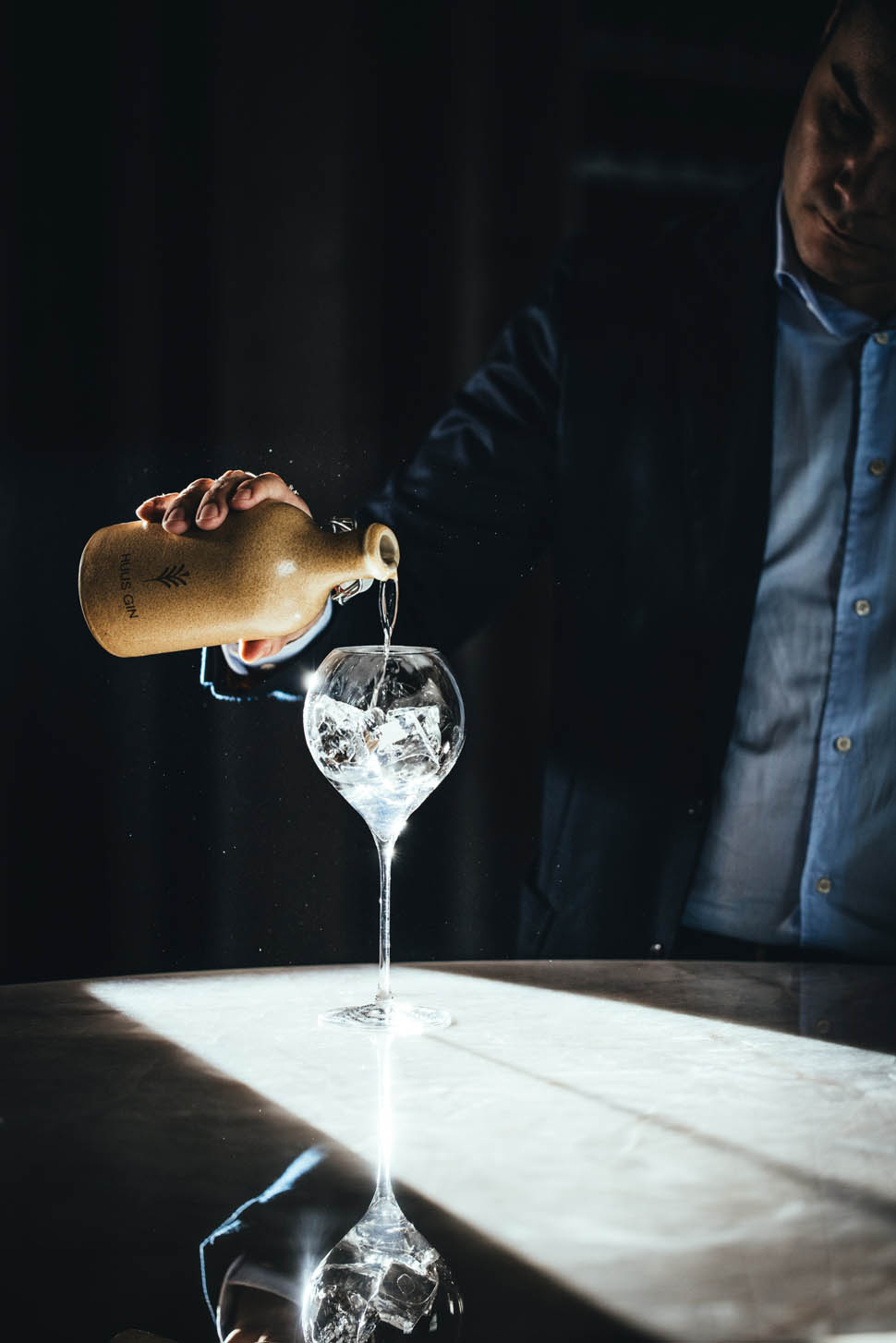
Verjus from local vineyards provides the acidity, while quince, sea buckthorn, wild herbs, and fermentation create an alternative blend: the Piña Colada uses quince and oat milk, and in the “Gonten to Garibaldi,” sea buckthorn replaces the orange. “We don’t want to replicate cocktails you can find anywhere. We prefer to reinterpret the great classics using only ingredients that grow right here.”For the soundtrack, they recorded the wind, water, and natural sounds of the area. “We live in an increasingly fast-paced world. Here, we want to offer people a moment to forget everything that’s happening outside and rediscover tranquility, relaxation, and well-being.”
The Dining
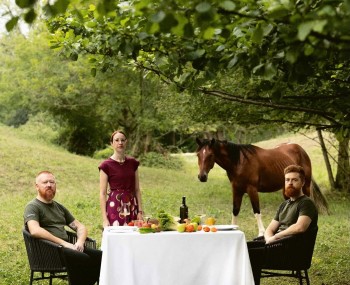
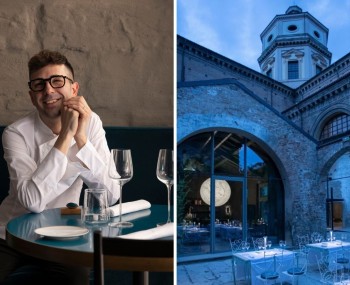
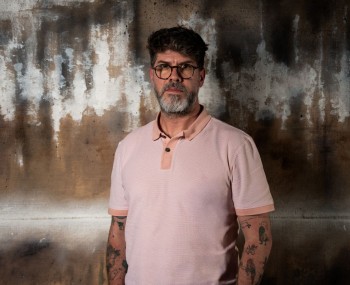
Since March 2026, Michael Gollenz has been in charge of the culinary side of the entire complex. Born in 1995 in Hochburg-Ach, Upper Austria, he grew up in a family of chefs: “We had animals and practically every kind of fruit that grows in Austria. As a child, I’d put an apple from my garden in my backpack before going to school—I could already tell the difference between that and the ones from the supermarket.” His calling became clear when Michael was still very young: “I was four years old, and my father was a chef; he cooked very traditional Austrian cuisine. I always admired him and wanted to be just like him.” He would have liked to start his apprenticeship at Hangar-7 in Salzburg, but his father brought him back down to earth:“Before you even touch an oyster or a scampi, you need to know how to make chicken soup or goulash.”
To this day, Gollenz recognizes the wisdom of that advice and began his training by learning the basics at a hotel near Salzburg. He moved to Switzerland and worked at the Aphrodite restaurant at the Hotel Giardino in Ascona, then joined Stefan Heilemann’s kitchen staff, working with him for five years at the Ecco restaurant at the Hotel Atlantis by Giardino and the Widder in Zurich. “After five years, my chef told me, ‘It’s time to spread your wings. You’ve learned everything you could here.’”. So there he was in Croatia, on Lošinj, at the Alfred Keller restaurant in the Boutique Hotel Alhambra, under the supervision of Christian Kuchler, owner of the Taverne zum Schäfli in Wigoltingen. Gollenz arrived in a fascinating yet complex environment, where he had to build a team almost from scratch and learn to navigate a cuisine very different from Alpine cuisine. “At first I was skeptical, but when I saw the producers, the olive oil, the fishermen, and the freshly caught scampi, I realized the potential. We were used to having fish flown in from all over Europe, but there it was right in front of me.” The Croatian experience is also significant on a personal level.
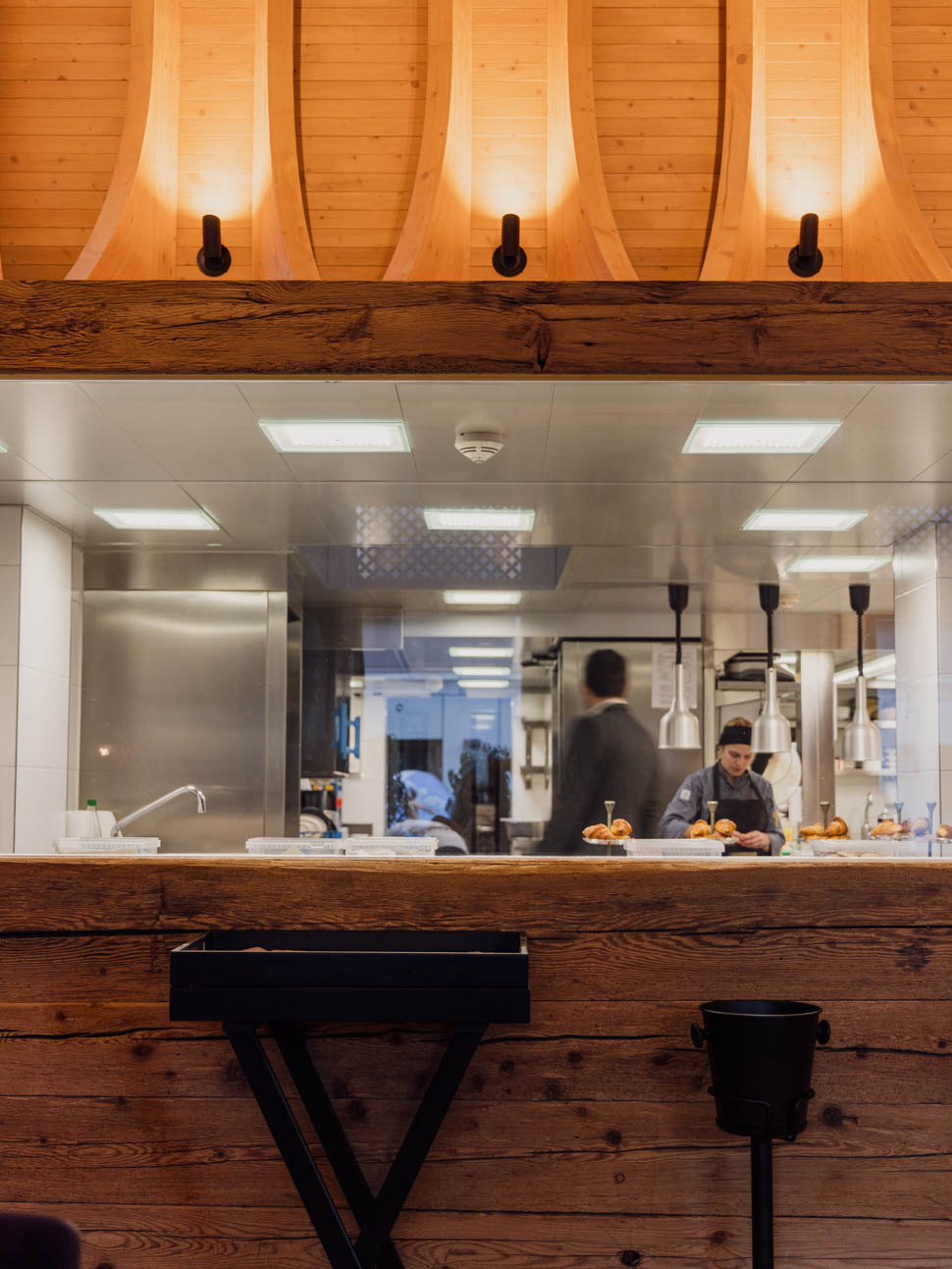
“The first few months were incredibly tough. The team was practically nonexistent, and at first I expected everyone to work the way I did. Then I realized I had to adapt: you can’t expect everyone to cook the same way. You also have to be a good leader.” At Alfred Keller, he earned a Michelin star, reached 17 GaultMillau points, and in 2022 was named “Great Chef of Tomorrow.” He stayed there for five years, though his connection with Appenzeller Huus had begun before the project was even completed. “They had already contacted me three years ago. When Jan called me back and showed me everything, I immediately felt the spirit of the place.” Leaving a Michelin-starred restaurant on the Adriatic was by no means an easy decision. What convinced him, however, was the opportunity to run a system with a very solid foundation: “Here I feel like I’m driving a supercar, with all the power at my disposal.”
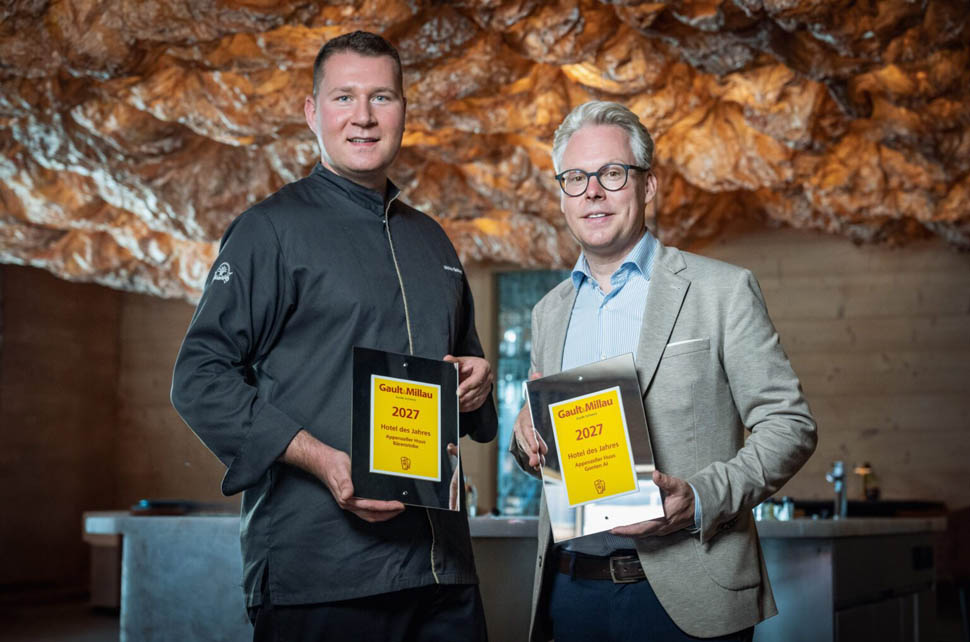
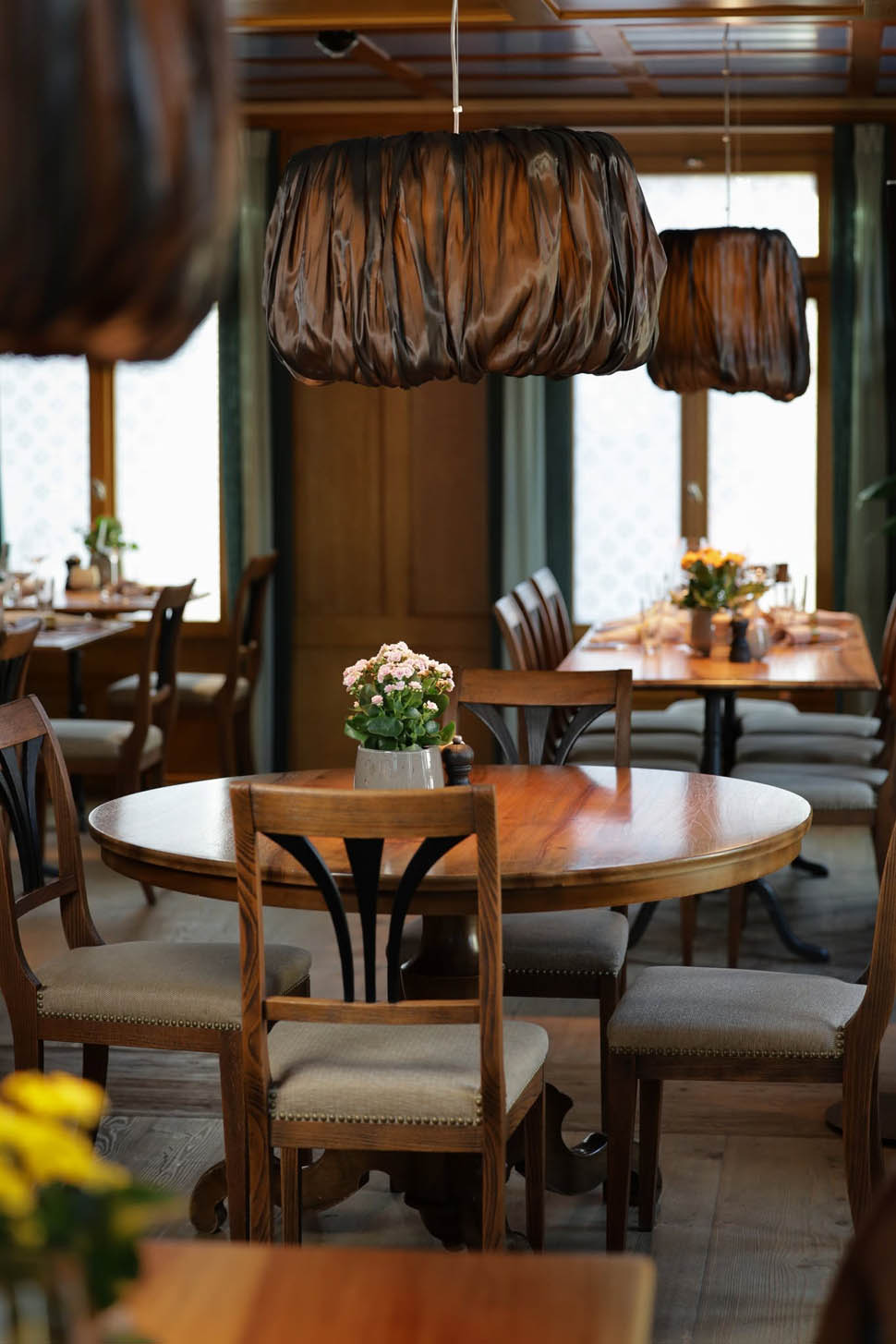
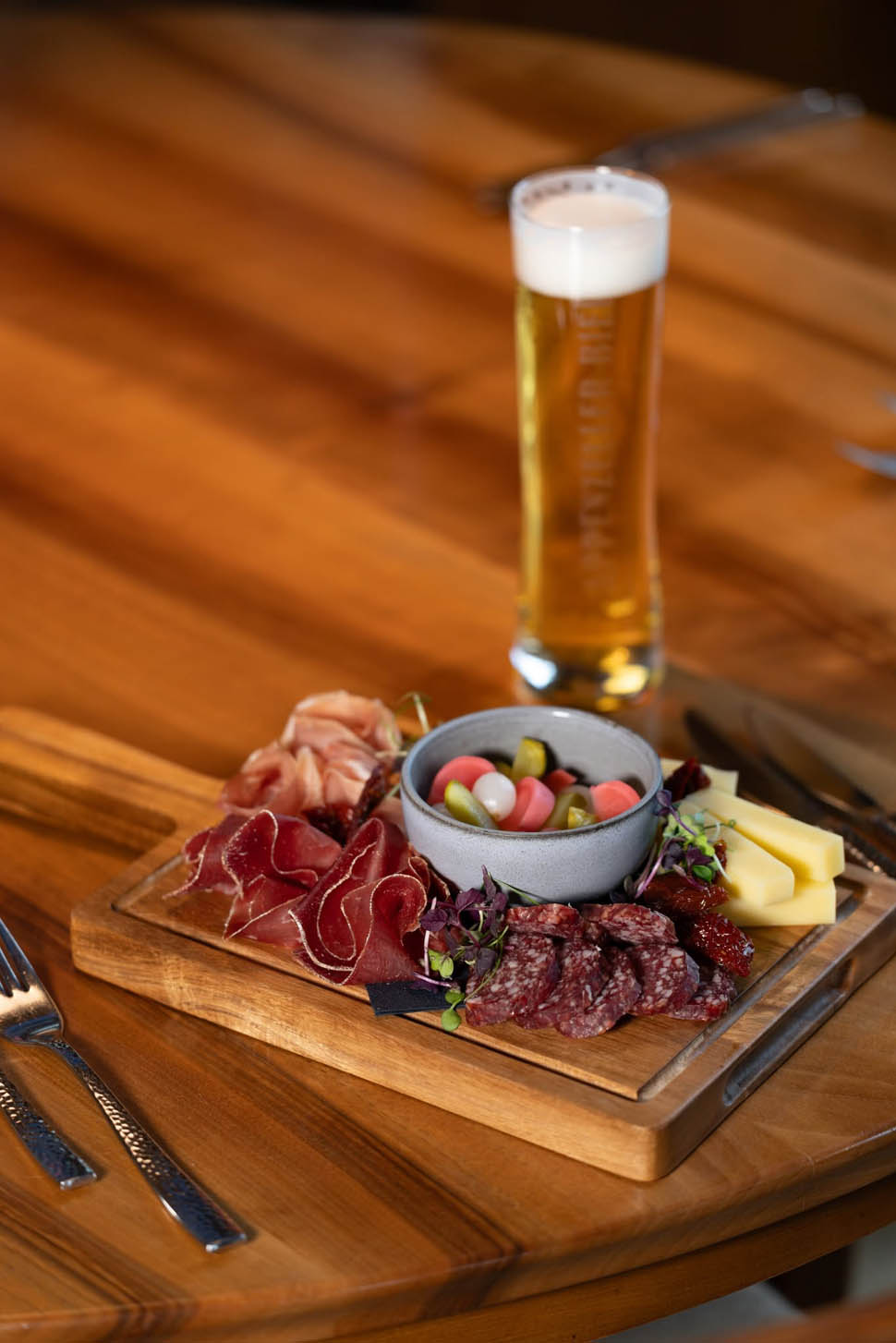
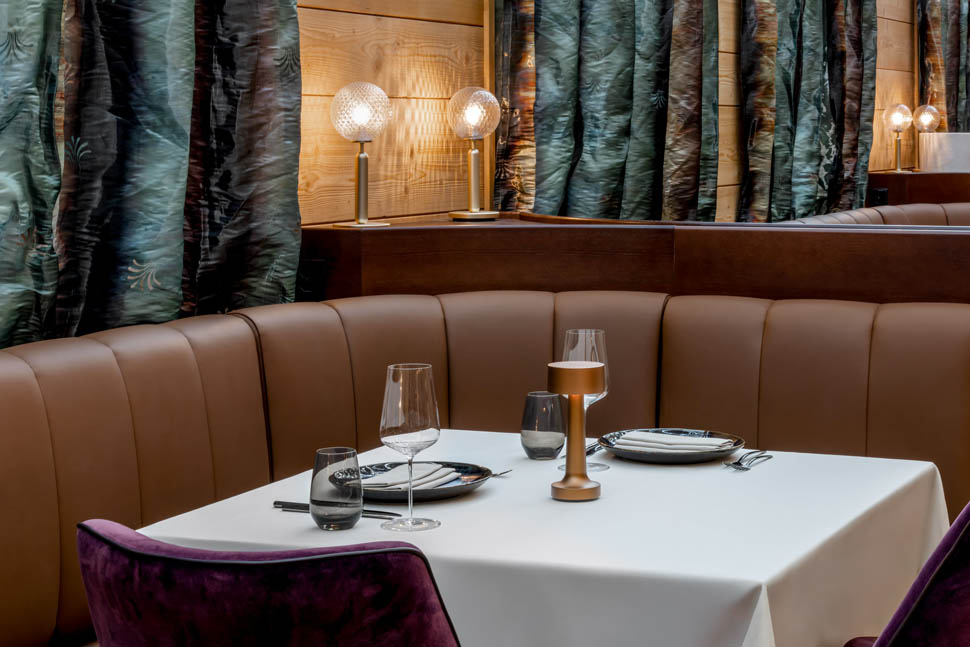
Gollenz oversees the kitchens that serve Bärenstobe, Löwenstobe, and Restaurant Quell, as well as the Schmitte, the Botanicum, room service, and breakfast. The menu at Löwenstobe features regional specialties: Chäshörnli with roasted onions and apple compote, Appenzell boiled sausage, cordon bleu stuffed with local cheese, and Mostbröckli. Restaurant Quell, adorned with fabrics by Jakob Schlaepfer, is instead a contemporary brasserie that emphasizes sharing, with dishes designed to be placed in the center of the table.
The Dishes at the Bärenstobe
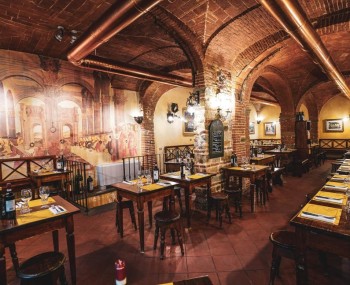
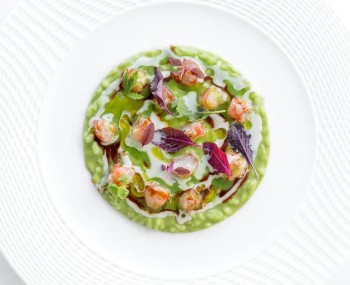
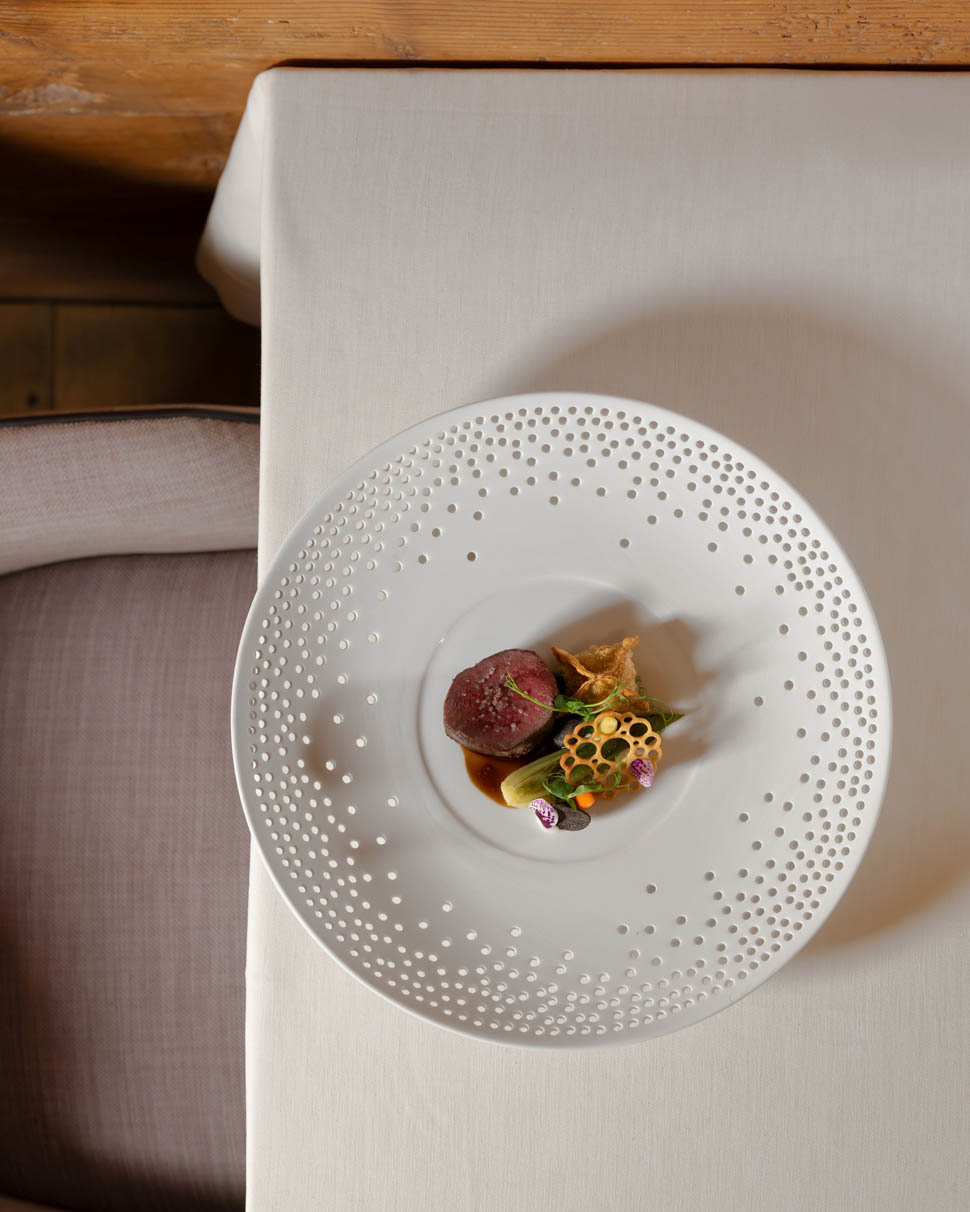
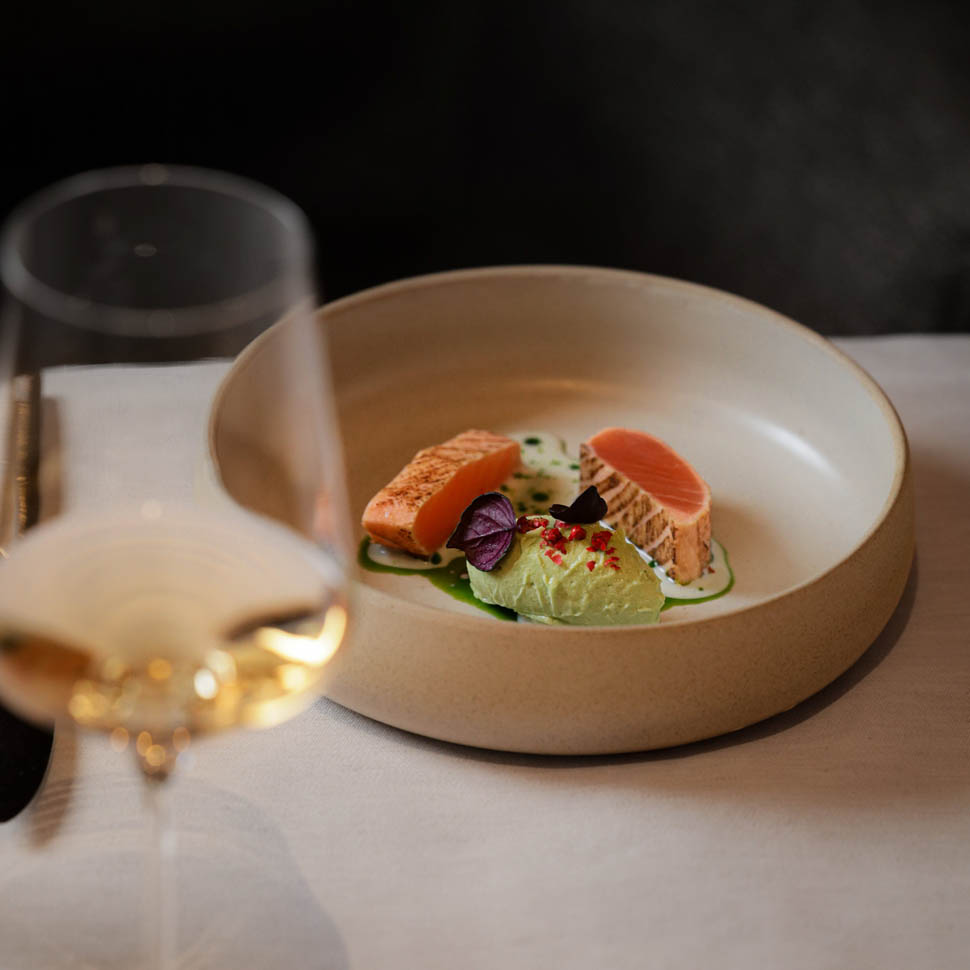
The heart of the culinary experience is the Bärenstobe, located in the historic dining rooms of the inn, which has been documented as early as 1751. Here, Gollenz offers a five- or seven-course menu, including a vegetarian option: “My foundation has always been French cuisine”. This is evident in the techniques, the stocks, the precision of the cooking, and above all, the sauces. The current menu blends Swiss flavors with influences from further afield. The flavorful Appenzell pasture-raised beef is served as tartare with crispy Ribel corn and a mole made with Swiss pumpkin seeds.
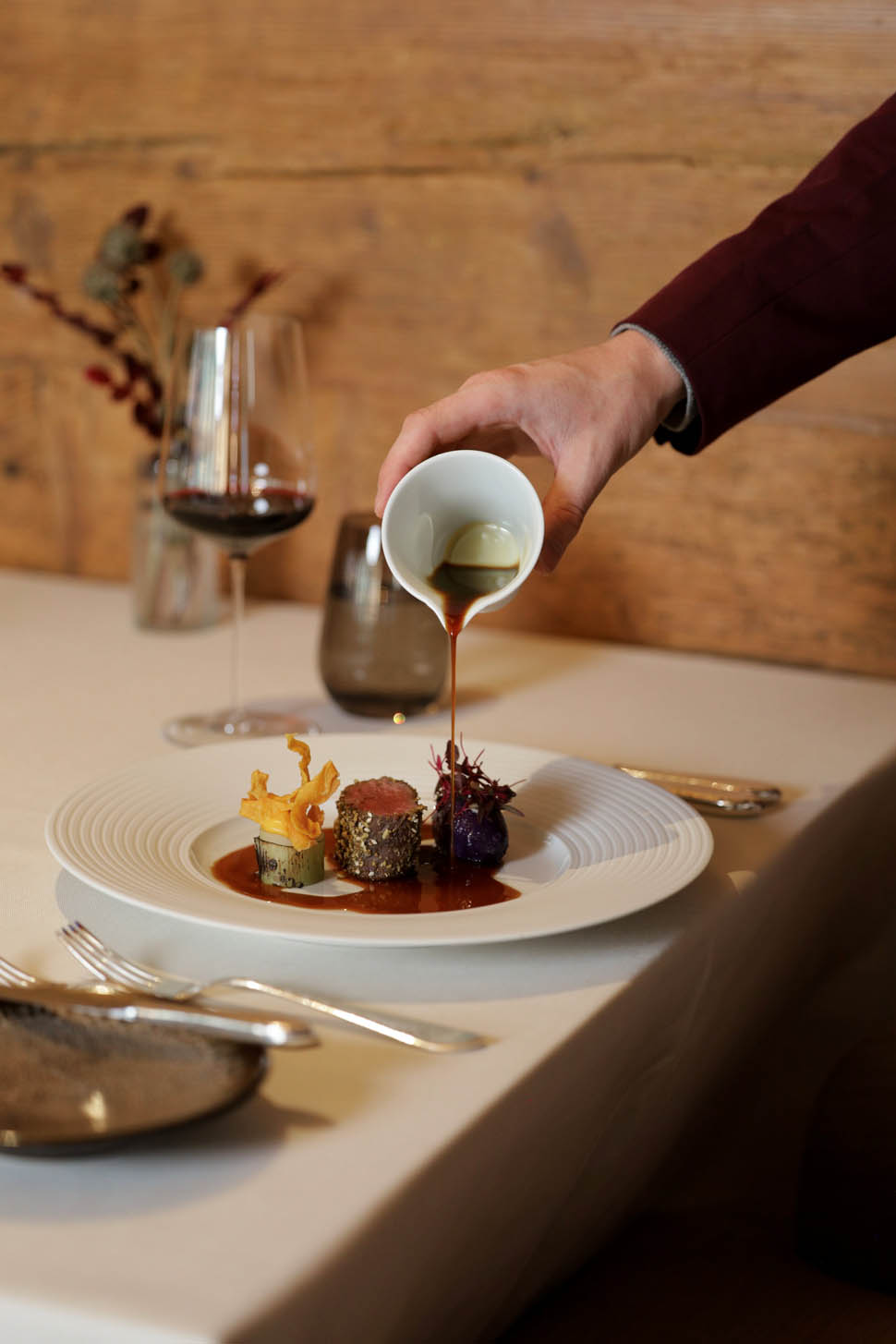
Gonten quail eggs are paired with porcini mushrooms, toasted whey, veal sweetbreads, and cauliflower. The Alpstein guinea fowl, raised on corn, is accompanied by a variation of zucchini and a vin jaune sauce. The chef is pragmatic: “For me, the three fundamental elements are the quality of the product, technique, and the composition of the dish. I like to work with local ingredients as much as possible, but I don’t want to set limits for myself. If an ingredient from outside the region can enhance a local product, I’m happy to use it.” Vegetables are not a secondary element: “I’m very satisfied with the vegetarian dishes. You don’t have to put meat in everything: if you can truly bring out the best in an ingredient like chanterelles or tomatoes, you don’t miss it at all”. Cheese, which is inevitably central to this region, is transformed into a fragrant foam, accompanied by ice cream and crackers made from hay-fed cow’s milk cheese, gooseberries, and buckwheat: “I love it; we’re in an extraordinary region for this product. That’s why I wanted to dedicate an entire menu to it.”
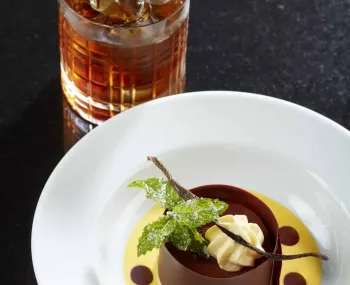
Before dessert—apricot with sorbet, semolina mousse, white chocolate, and verbena by the talented pastry chef Fabrice Ohlmann—comes a shot of amaretto made with apricot kernels, meadowsweet, and mountain salt. Together with sous-chef Kevin Wilk, Gollenz leads a young team. The goal of earning a Michelin star is undeniably in the background (and, it must be said, it would be a well-deserved achievement): “Leaving behind what I had built in Croatia scared me. It was a new beginning, and I didn’t know what would happen. Then I told myself: I’ll always be myself. I’ll cook the same way, and I know what I’m capable of. The most important thing is that the guests are happy. If the star comes this year, great; if not, it’ll come later”. The chef is not only talented but also a cheerful person: “I like to personally bring out the petit fours, talk to the guests, ask how dinner went, or finish a sauce right at the table. Getting this feedback every day is one of the best parts of my job.” A Swiss destination not to be missed.
APPENZELLER HUUS
Dorfstrasse 40
9108 Gonten
T: +41 71 511 05 00
E: info@appenzellerhuus.ch