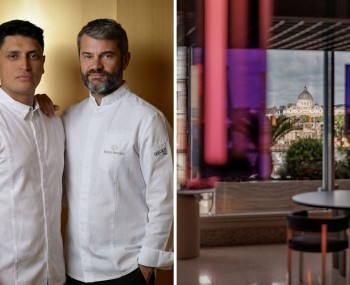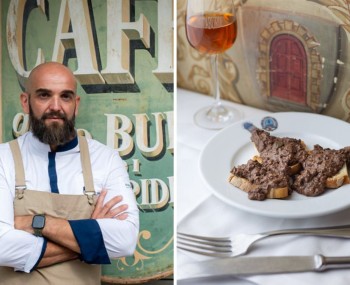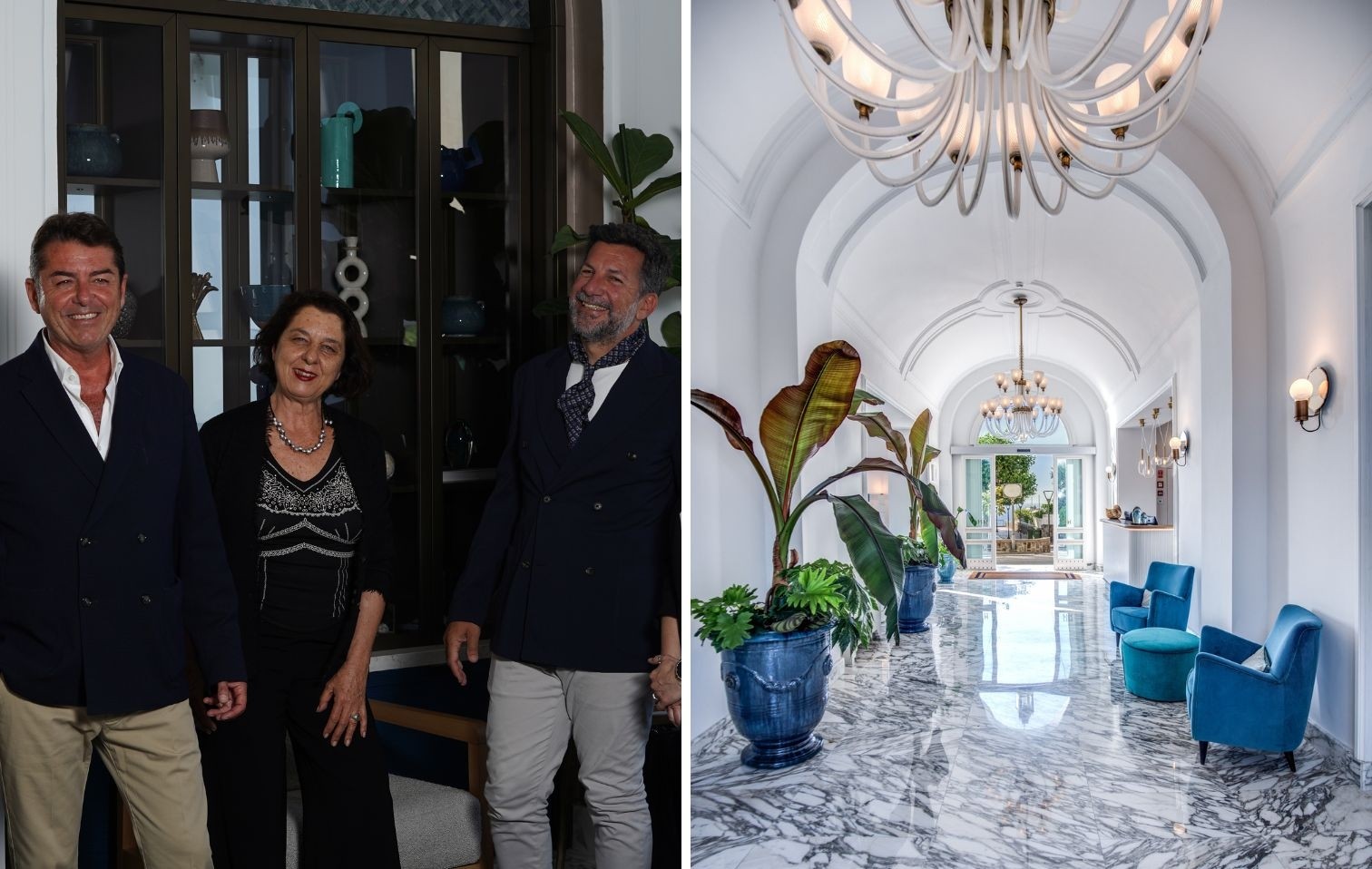
One of the highlights of this 1-Key Michelin hotel is the variety of spaces designed for different times of the day, from the Lepietre Cozy SPA to the outdoor pool and the garden filled with citrus trees and palm trees. But dining also plays a particularly significant role at the Mediterraneo, accompanying guests throughout the day under the guidance of Giuseppe Saccone and Nicola Celentano.
The hotel
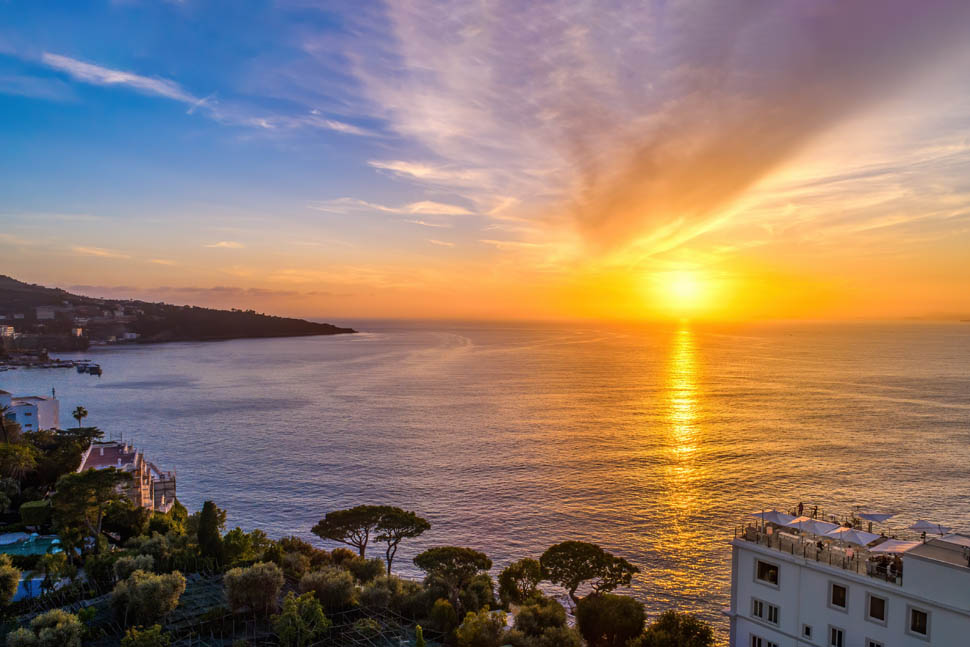
is located in Sant’Agnello, just outside the center of Sorrento, along one of the most scenic stretches of the peninsula: the Gulf of Naples lies ahead, with Mount Vesuvius in the background; on the clearest days, the view extends all the way to the islands. The town is a 15-minute walk away, though those who prefer not to walk can take the hotel shuttle; here, however, with its location on the edge of the cliff and a quiet Mediterranean garden, the pace is relaxed.
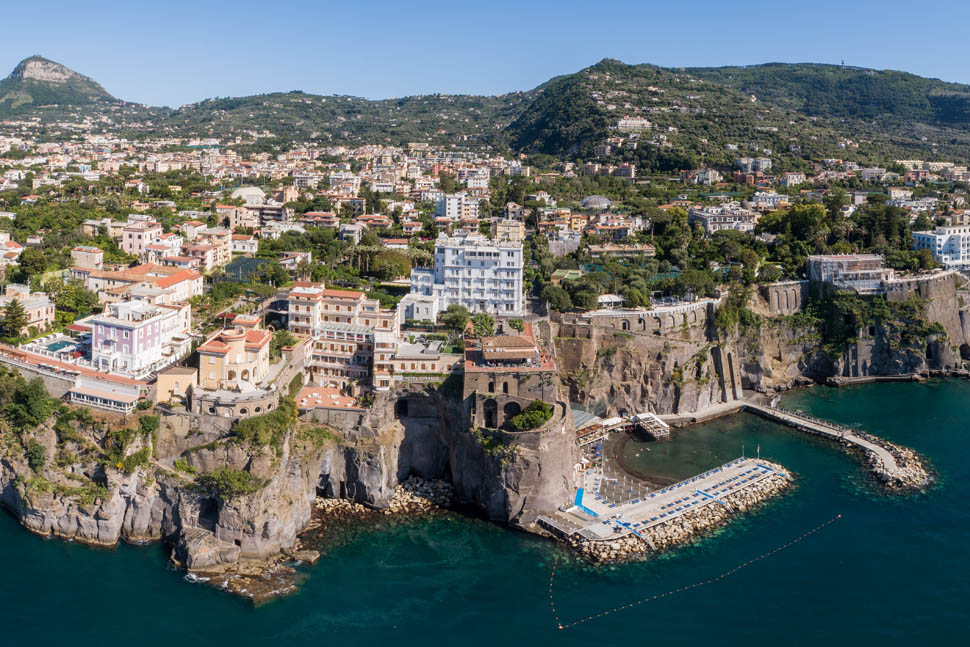
The building that houses the Hotel Mediterraneo—now a Michelin Key property and a member of the Virtuoso network—was built in 1912 as the private villa of Antonietta Lauro, known as “Nonna Etta” in family lore. During the final years of World War II, the house sheltered several displaced families, and it was precisely this connection to them that reportedly influenced her children’s decision to turn it into a hotel.
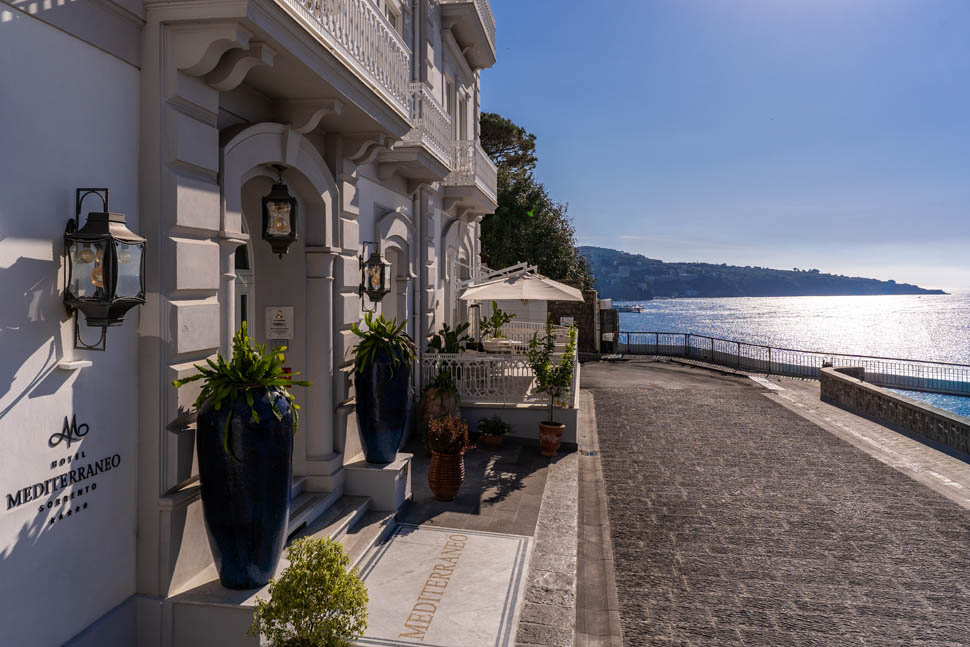
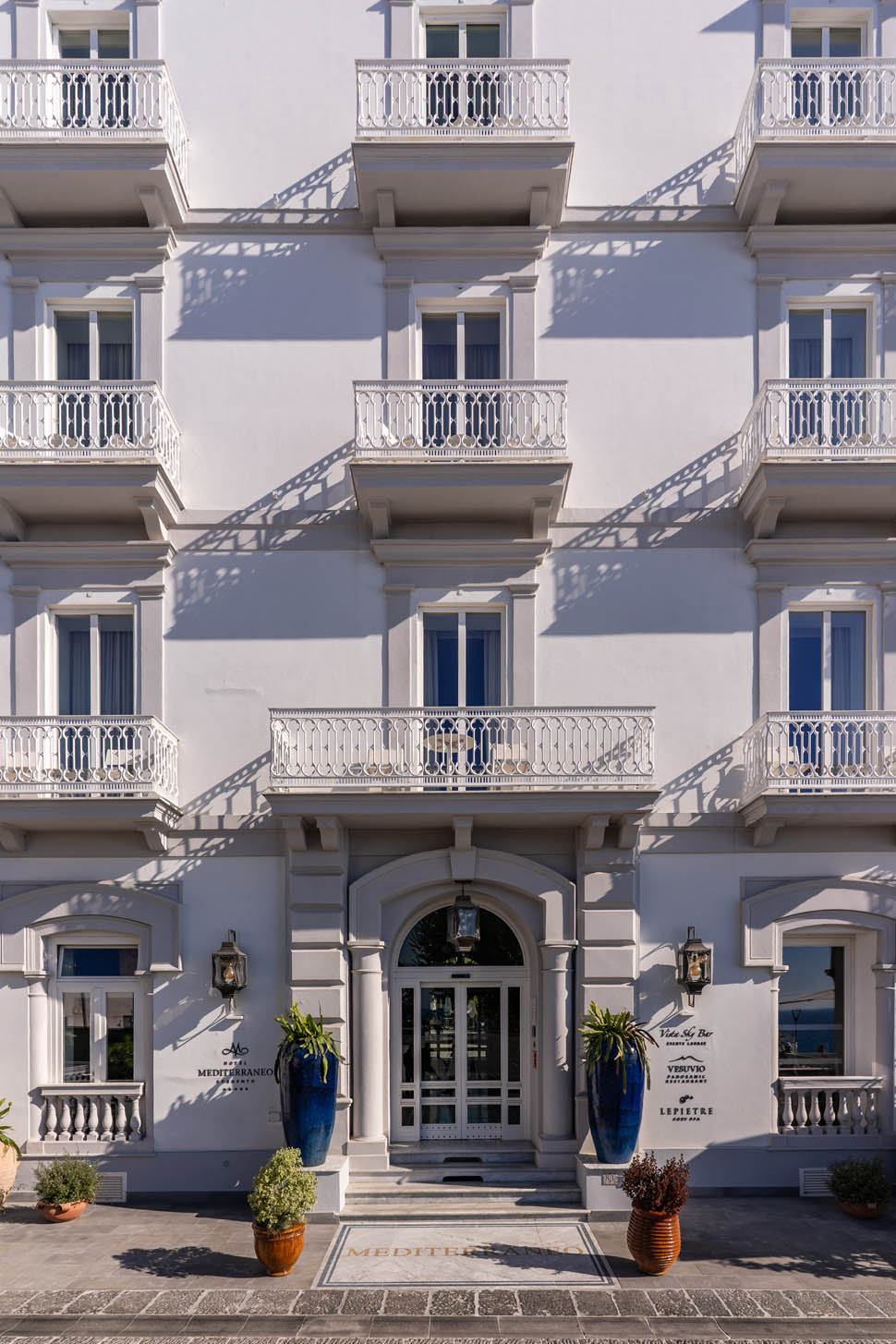
In 1950, it opened as a guesthouse with just ten rooms. Since then, the property has remained in the hands of Antonietta Lauro’s family and is now run directly by the Monti-Maresca family: an important detail for understanding the character of the Mediterraneo, which has grown into a five-star hotel without completely losing that homey feel that dates back to its origins.
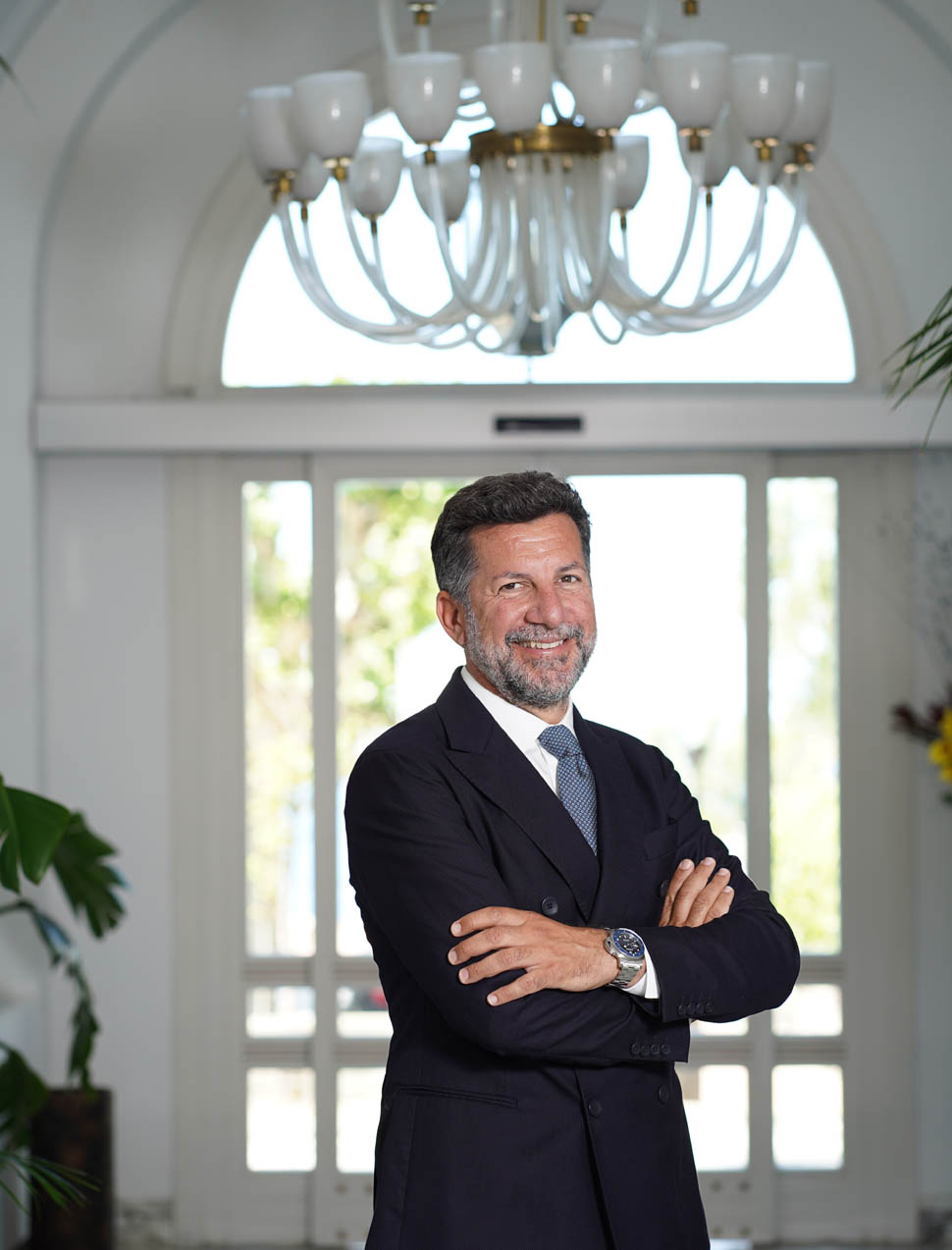
A family story that, for those who run the business today, began very early on a personal level as well. Pietro Monti recounts: “I started working at the bar way back in 1990, when I was 13, serving ice cream there during the summer months. In the years that followed, if I failed a class, my mom would say, ‘Go work for free—that way you can pay for your private lessons.’ That’s how it all started. I’ve been working in the hotel industry for many, many years now, though of course in different roles and situations. We’ve all dedicated our lives to it.”
The building itself also reflects this evolution because it was constructed in phases, with different architectural features—first in tuff, a traditional local material, and then in reinforced concrete: “You can see that the top two floors are different from the first three—first of all because they lack balconies, and also architecturally, since the building was originally designed as a three-story structure.”
The turning point came with the major renovation launched in 2020, and the following year, the Mediterraneo embarked on its first five-star season. The renovation continued in the years that followed, with the involvement of Manuela Mannino’s THDP studio: a significant project that was necessarily shaped by the historic structure: “When we upgraded from four to five stars, we tore everything out and started from scratch; even so, it’s difficult to change the original floor plan.”
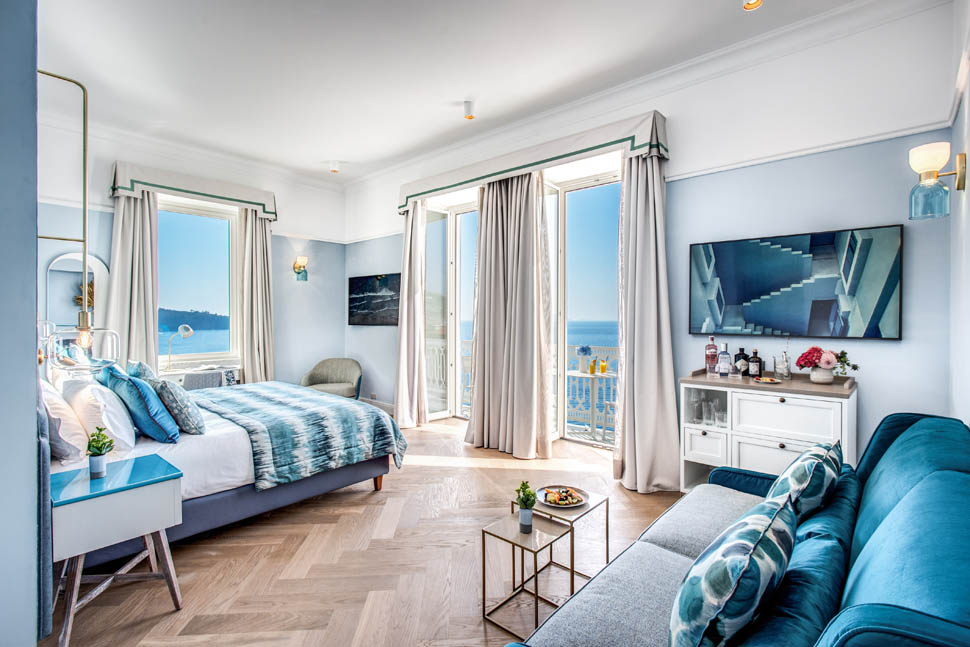
The result, however, is exceptionally elegant: today there are 60 rooms and suites, overlooking either the sea or the garden, and the interiors harmonize with the views from the windows—shades of blue, turquoise, and pastel, combined with marble, brass, Vietri ceramics, and volcanic stone: “Here we have four categories that are more or less the standard ones: classic, superior, deluxe, and junior suites, which are the largest.”
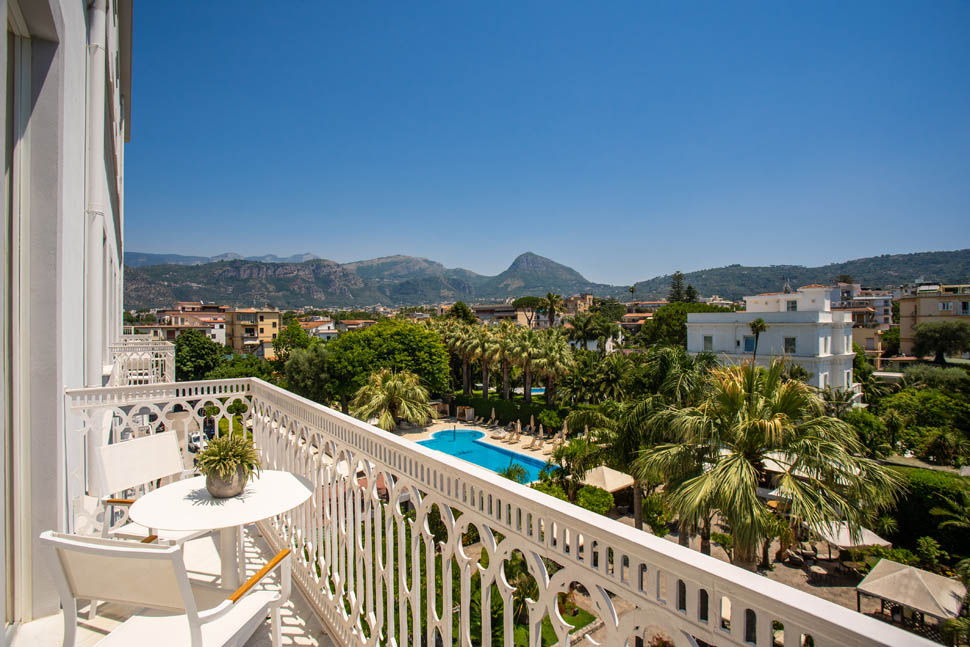
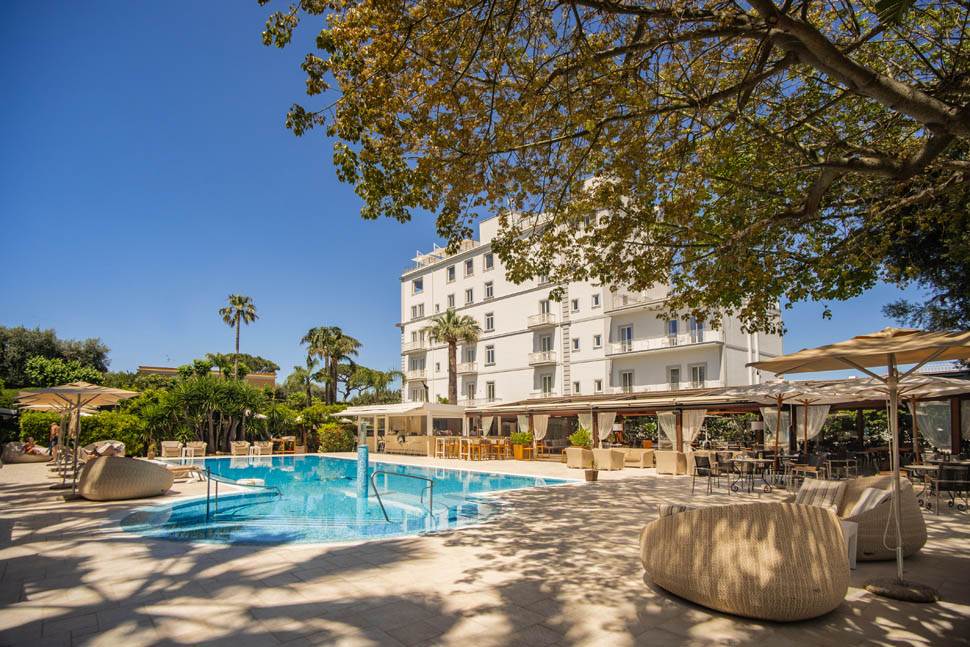
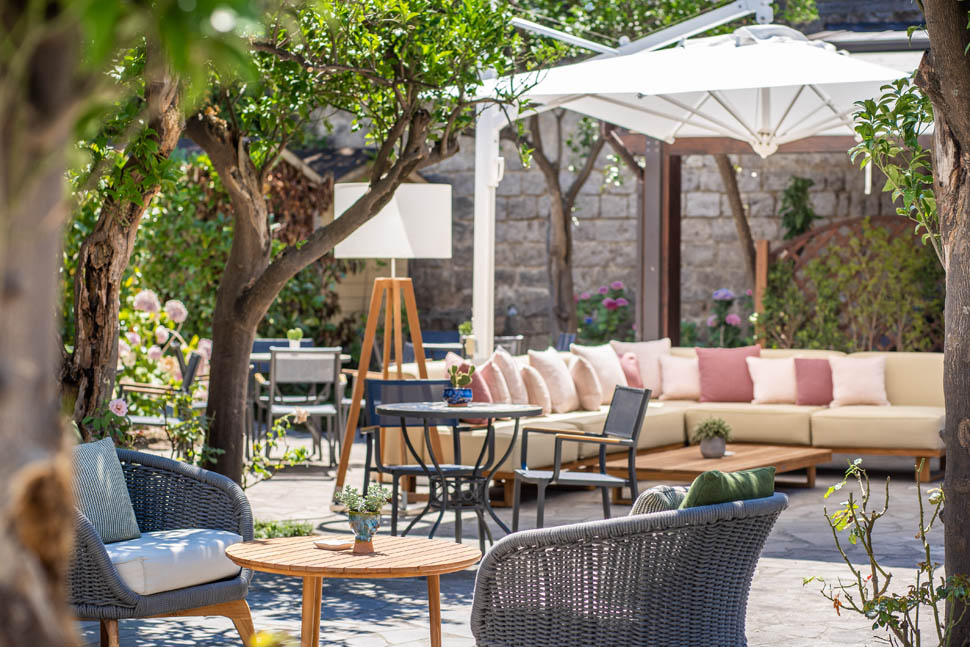
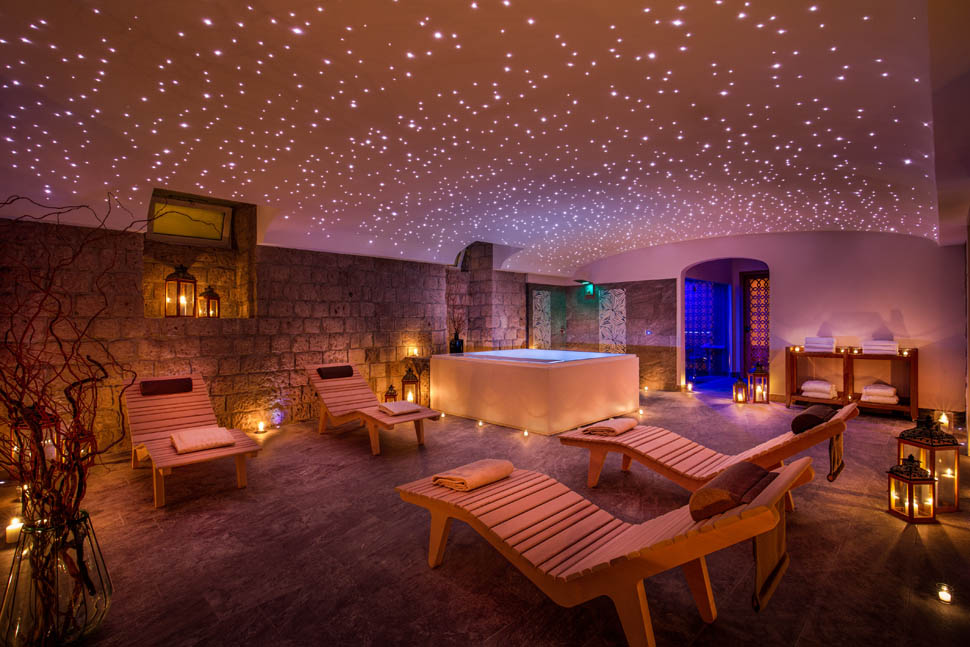
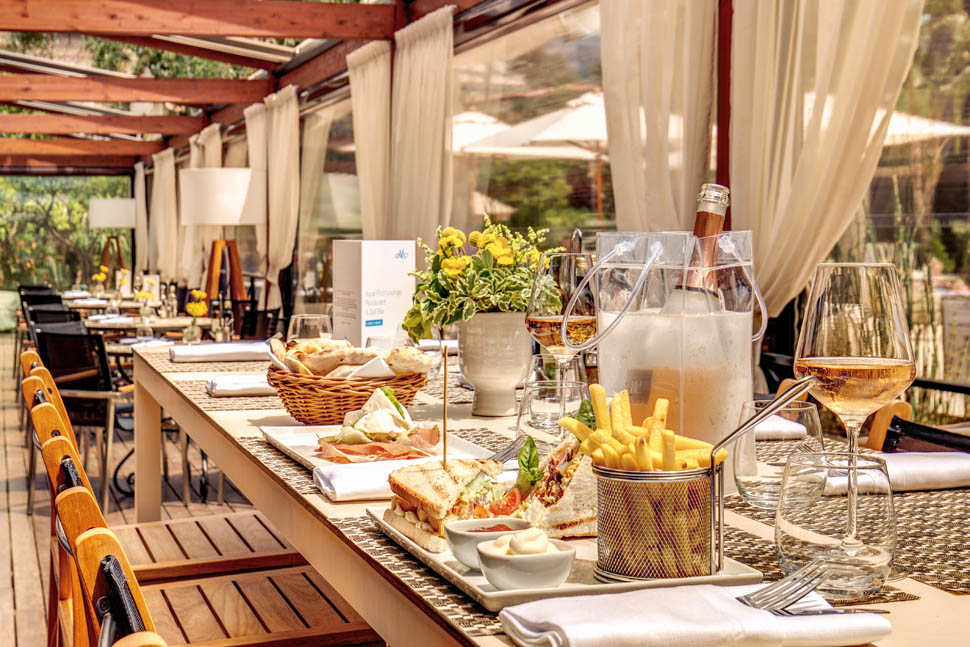
One of this hotel’s strengths is the variety of spaces available for different times of the day. In the garden, amid citrus trees and palm trees, lies the swimming pool, flanked by the Aqua Pool Lounge and the fitness area. Further down, almost hidden within the foundation, the Lepietre Cozy SPA is carved out of stone and tuff. From the cliff, across the street, a private elevator takes you directly down to the sea at La Marinella, a beach at the foot of the cliff where guests have access to a reserved, fully equipped area during the summer season. This is also the starting point for Mediterranean Charter’s sea excursions: guests can choose between the Princess Valeri, a 14-meter yacht, and the more traditional gozzo aMare to sail to Capri, Positano, or along the Amalfi Coast.
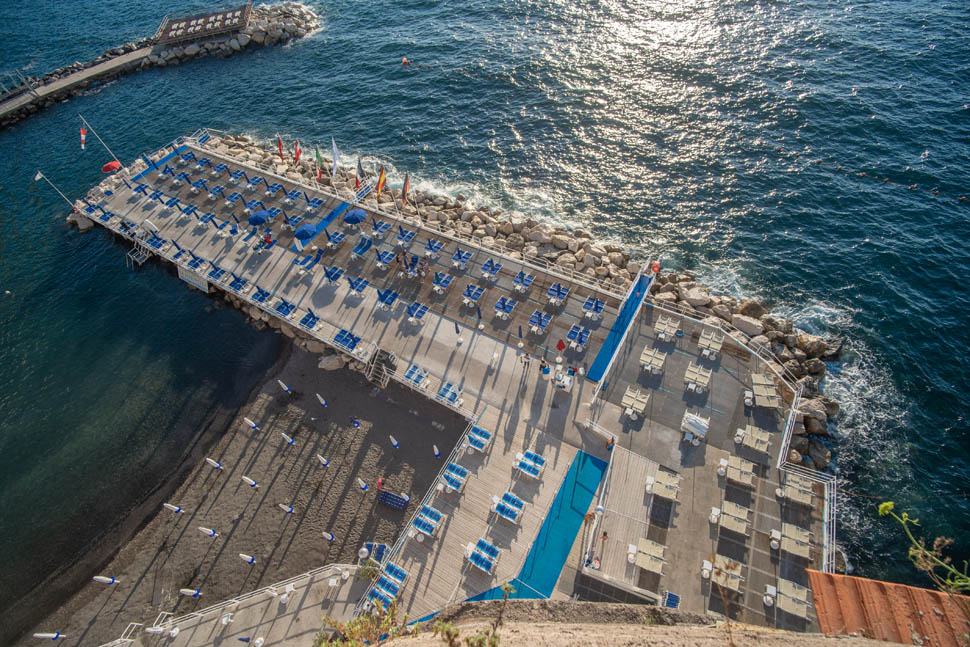
The number of outdoor spaces and amenities also influences the decision to maintain a strict seasonal schedule. “We’re open from April to October. Normally, we operate from April 1 through October 31. For a few years, we were open for a week around New Year’s: we’d close on October 31 and reopen from December 26–27 through January 2, depending on the dates. But now this approach is almost impractical, because the staff goes to work the season elsewhere. Besides being financially straining, we have a lot of space and many outdoor assets: my main concern is offering less to guests, and I don’t like opening the hotel in sections—if we’re open, we have to be fully open.”
The Kitchen
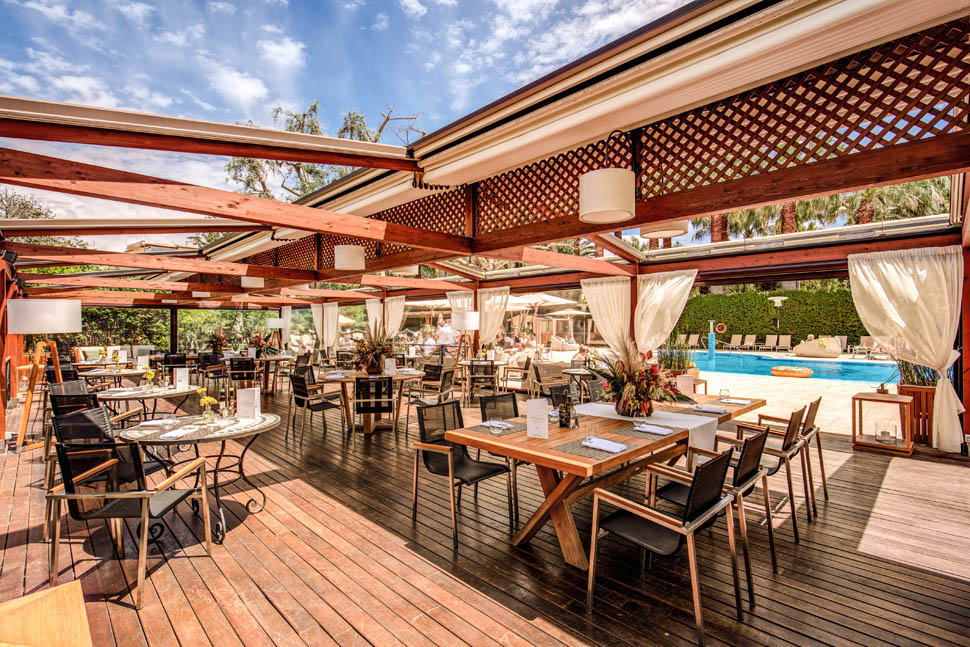
Of course, dining also plays a very significant role in the Mediterranean experience, accompanying guests throughout the day in a variety of formats: the entire culinary offering is overseen by Executive Chef Giuseppe Saccone.
Francesco Monti explains: “Obviously, food is at the heart of what we offer our many guests—both domestic and, above all, international.” It all begins with a sumptuous breakfast, naturally with a view, where the typical offerings of a five-star hotel are complemented by a strong local touch: yogurt from Campania, including buffalo milk yogurt, exquisite homemade jams, “eggs al purgatorio,” and other high-quality products. By the pool, the dining experience is more casual, featuring a wood-fired oven for pizzas and traditional cuisine.
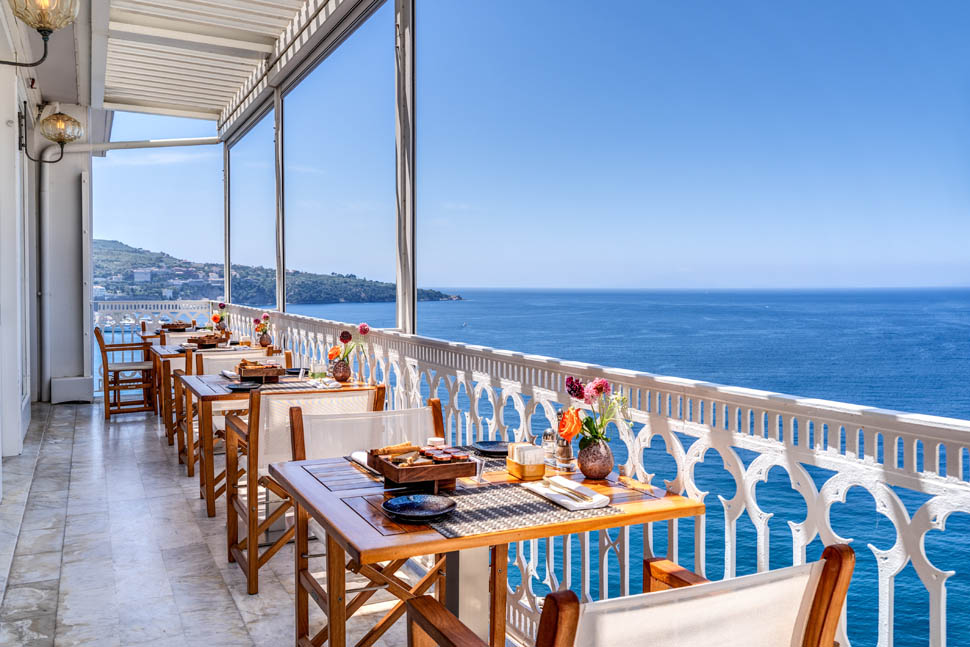
On the sixth floor, the Vista Sky Bar—completely renovated in 2026 and featuring a new dining concept—offers a spectacular view of the Gulf, a lively atmosphere, and a delightful menu designed for sharing: here, the view stretches across the entire Mediterranean basin, with dishes ranging from hummus to pata negra to jumbo shrimp in kataifi pastry.
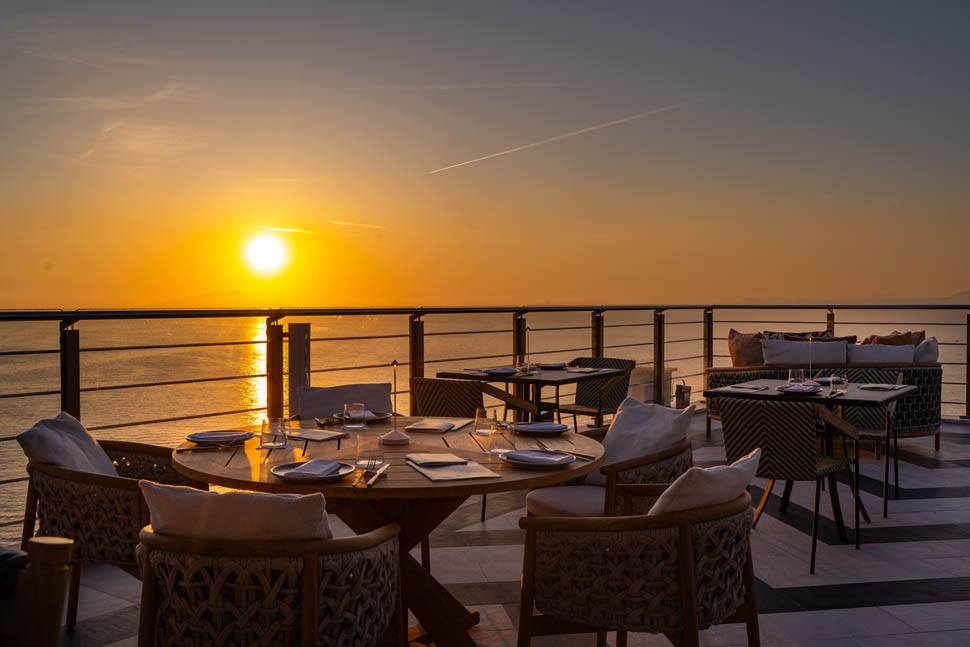
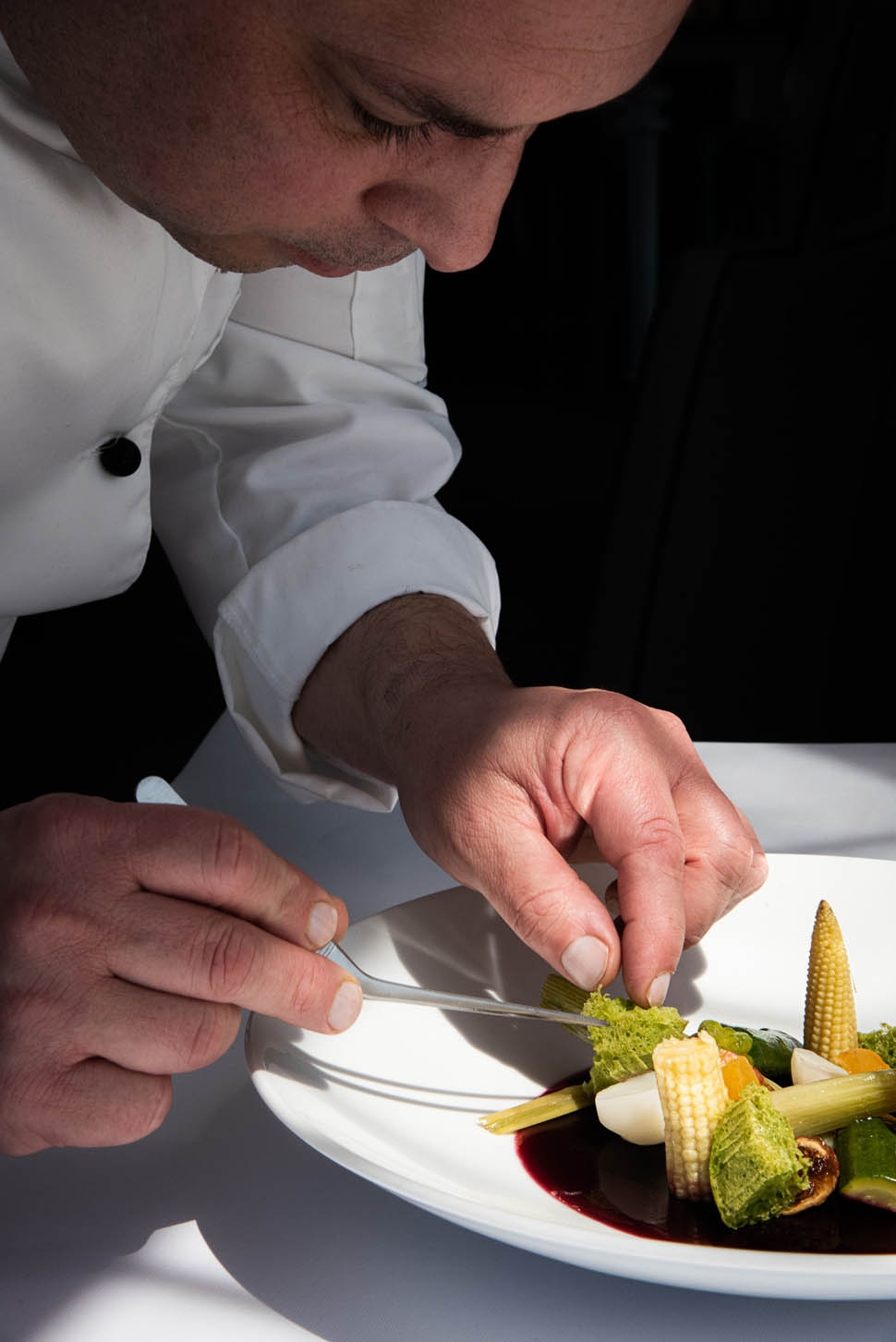
The most ambitious culinary project is that of the Vesuvio Panoramic Restaurant, which offers a refined menu entirely focused on the region. Francesco Monti explains: “Here, we wanted to present Campania’s cuisine in a contemporary style. The goal is to introduce guests to the flavors, ingredients, and traditional recipes of Campania, but with a modern twist, using culinary techniques as a tool to highlight the ingredients rather than turning them into an end in themselves.”
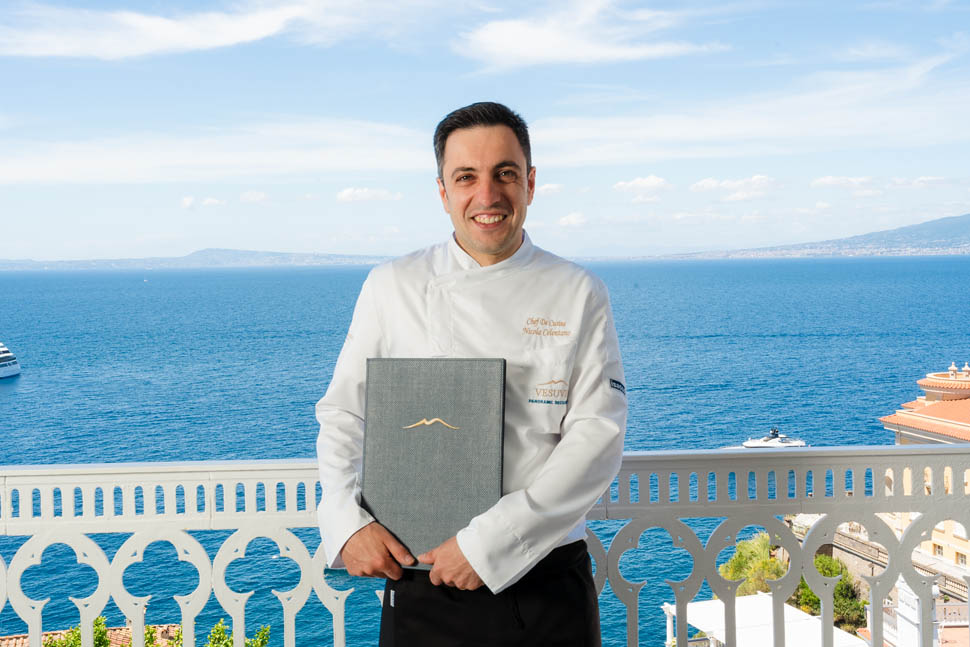
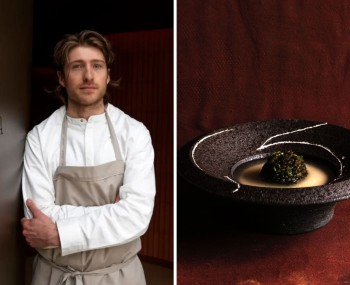
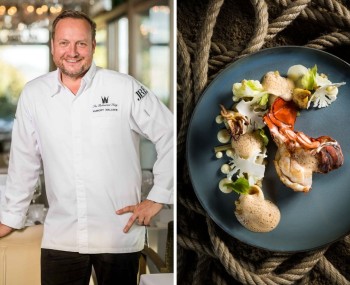
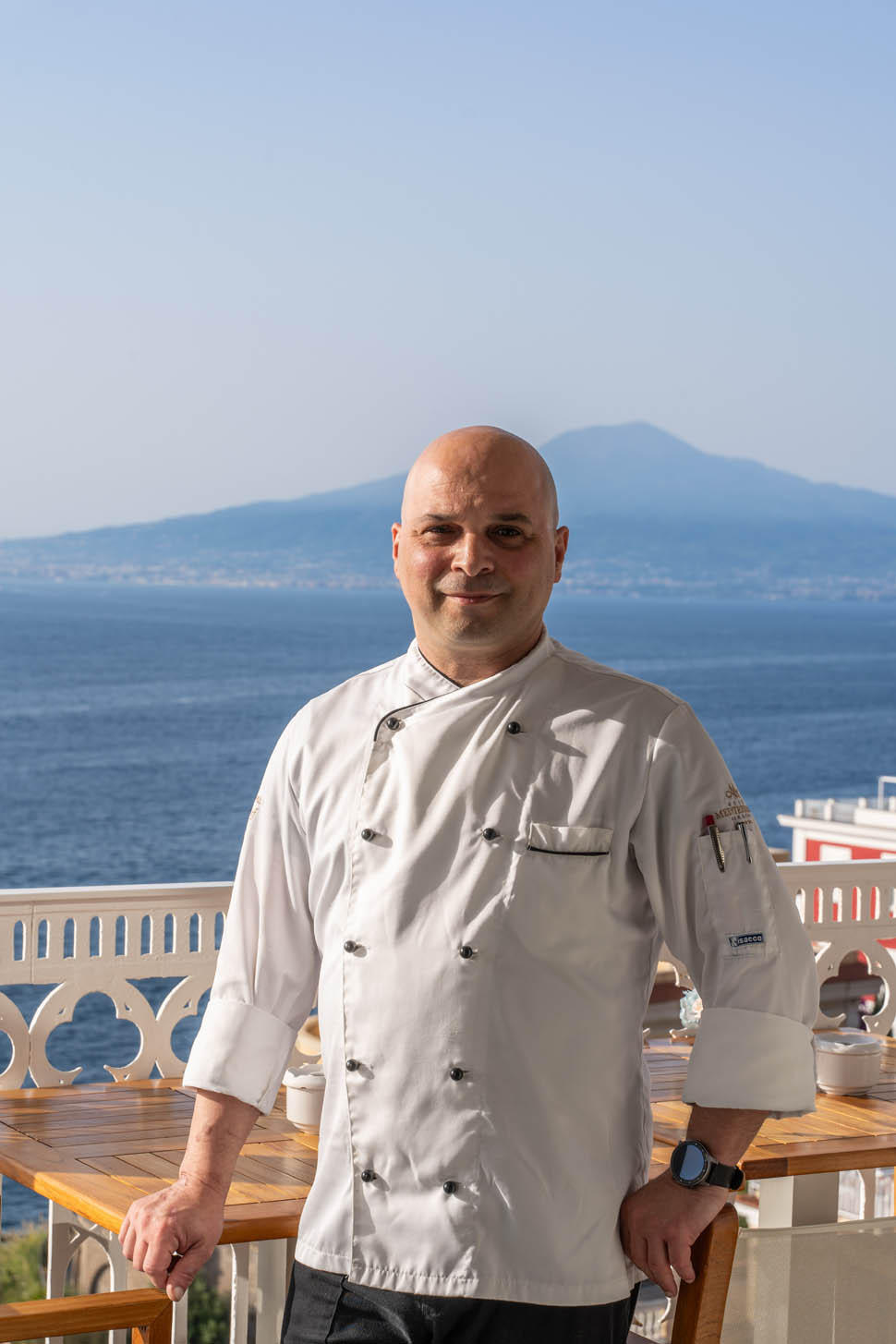
Since 2025, the kitchen here has been led by Nicola Celentano, born in 1988 and originally from Sant’Agata ai Due Golfi. Having honed his craft in renowned Italian kitchens, he has worked alongside chefs such as Nino Di Costanzo, Alberto Annarumma, and Roberto Allocca, and also gained experience at Quattro Passi in Nerano. His roots, however, lie in Sorrento: his father worked in the restaurant industry, in the dining room, while a key figure in his training was his grandfather, a farmer, who helped him forge a connection with the land that continues to this day. Together with his brother, he tends the family garden, which also yields herbs, flowers, zucchini, tomatoes, and Vesuvio potatoes. He himself says: “I don’t cook to impress, but to convey a connection through every dish: to my homeland, my childhood, and my family.”
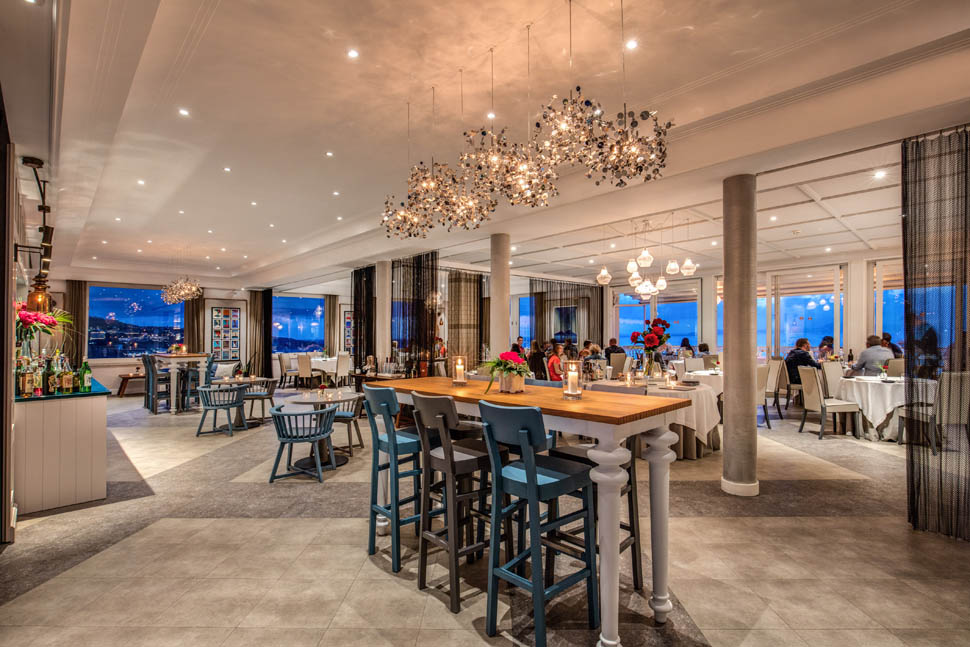
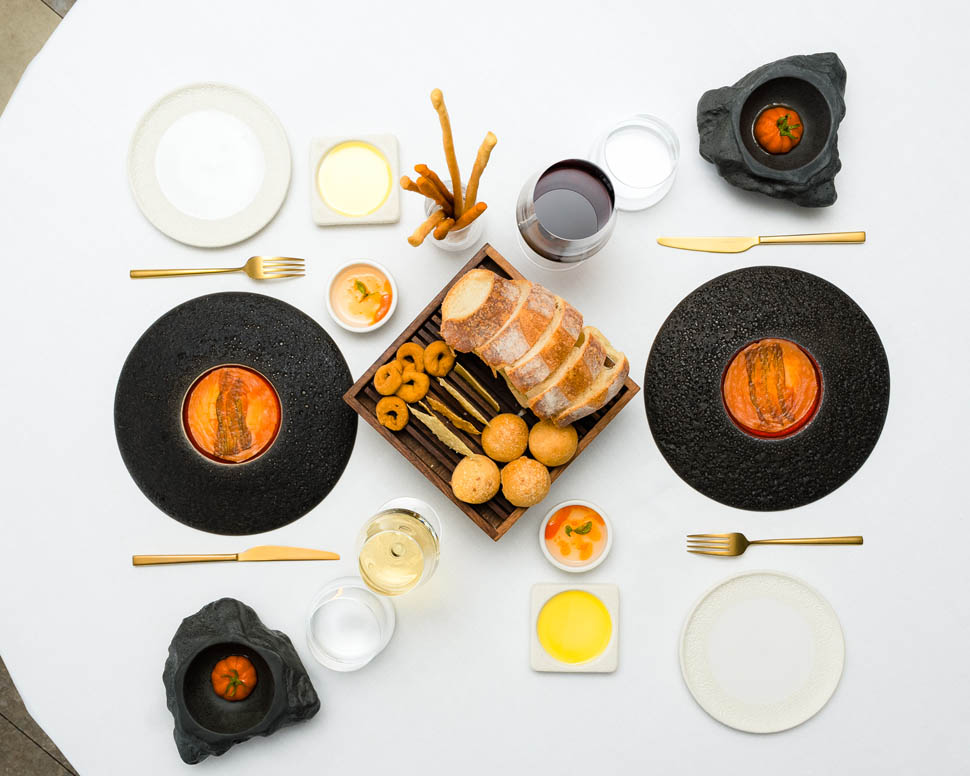
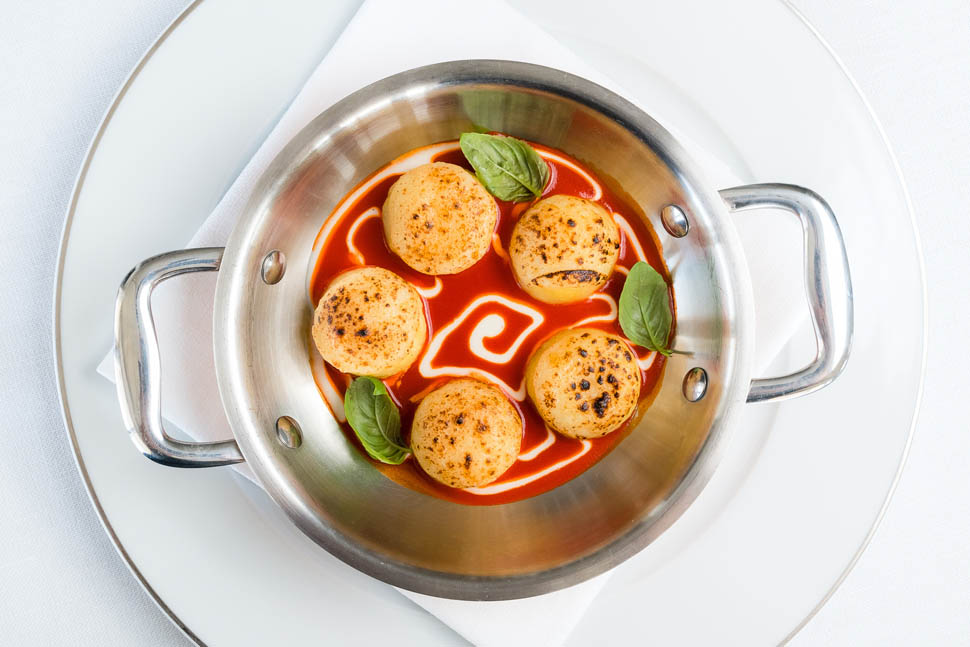
Several tasting menus are available—which can be viewed on the website—in addition to the à la carte menu. The delicious amuse-bouche—a reimagined version of stuffed zucchini flowers shaped like Mount Vesuvius—is emblematic: lighter than the traditional version and featuring a crispy texture, it retains the flavors of the original dish.
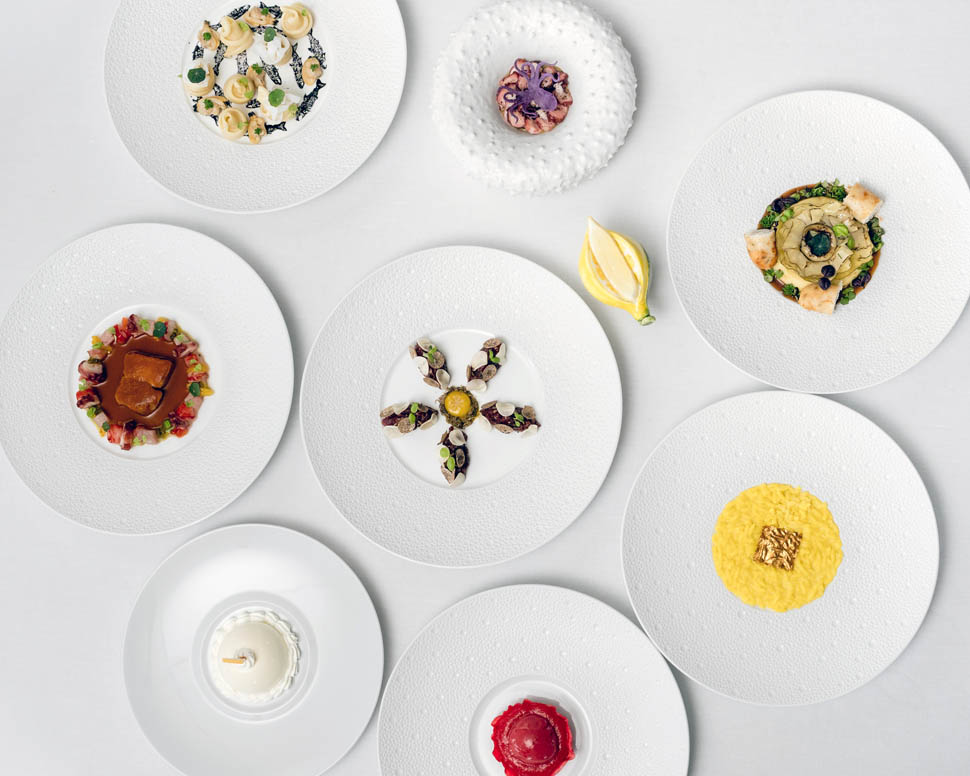
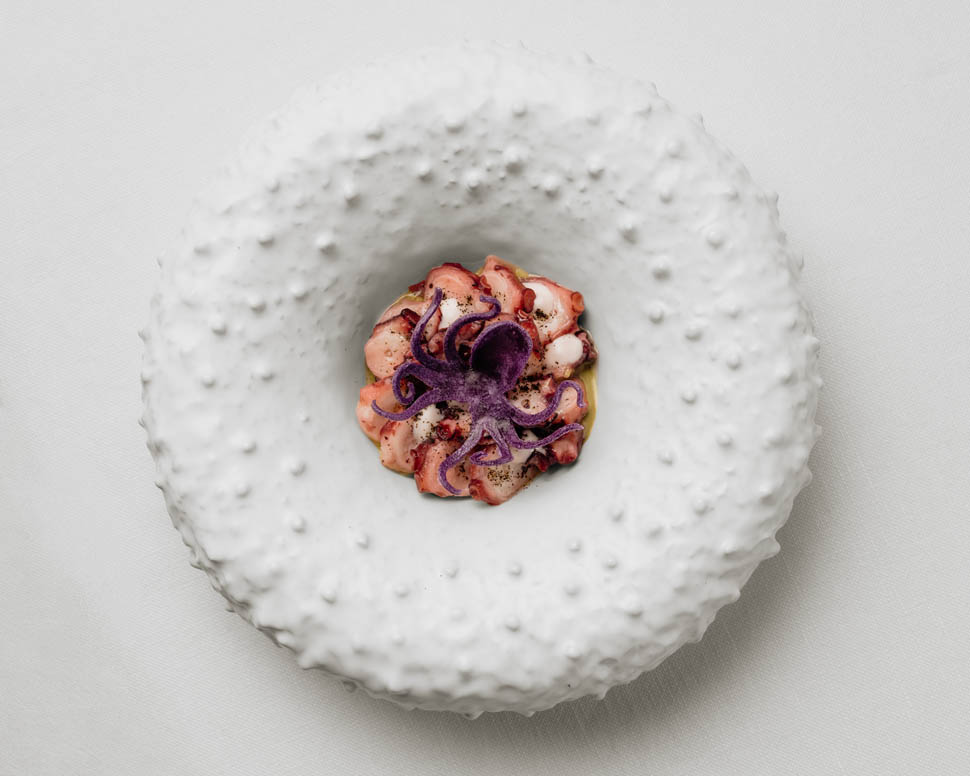
Among the appetizers, “O’ purpo s’adda cocere cu l’acqua soja,” a delicious octopus salad served with its own mayonnaise, a sauce made with green river chili peppers, and black lemon powder. A true treat for the palate is also “Sorrento-Capri,” red potato gnocchi stuffed with caciocavallo and ricotta, served with a Sorrento mozzarella fondue and Corbarino tomato sauce.
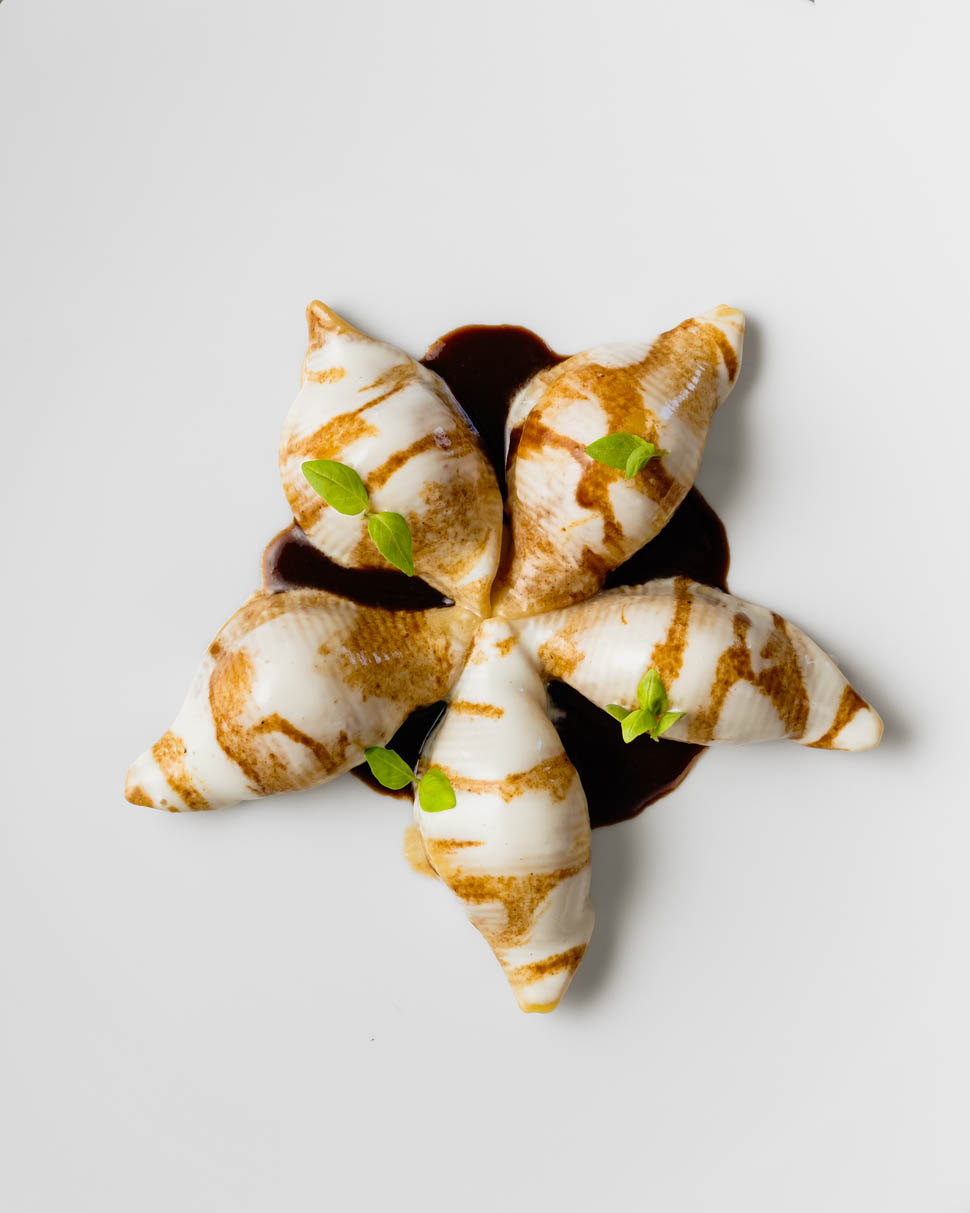
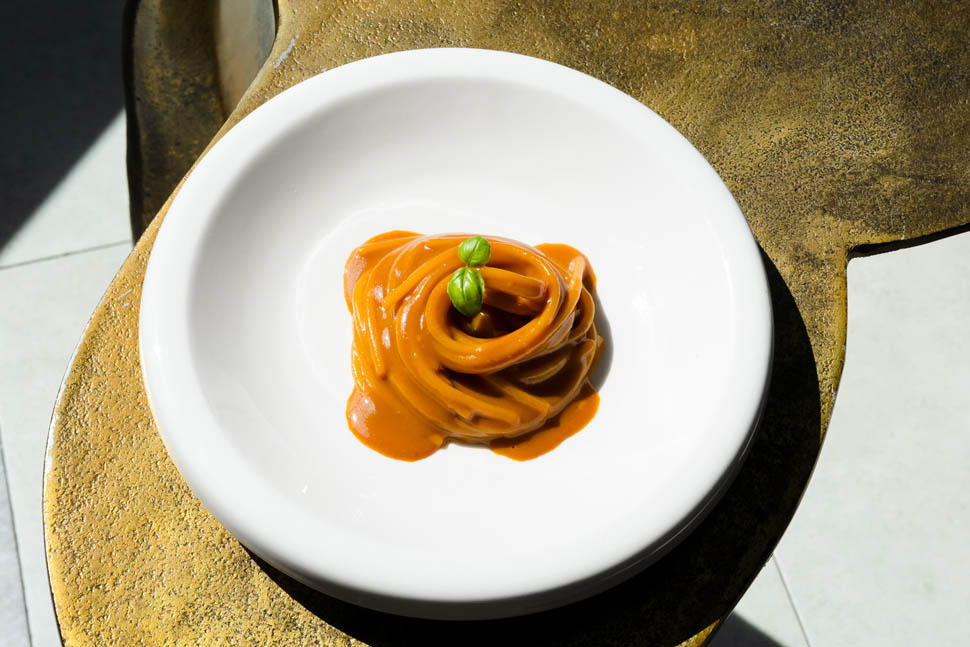
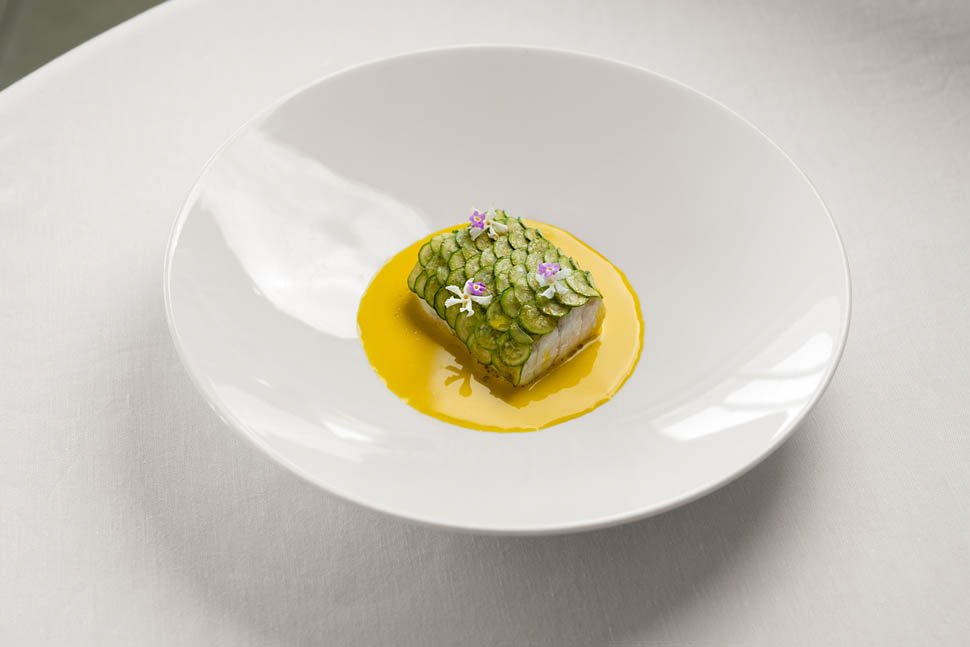
“Lo Scoglio,”—that is, the “vesuviotti” from Gragnano—is excellent, served with clams, squid tagliatelle with lemon, and squid ink. “Voce 'e mare” is an outstanding fillet of sea bass cooked at a low temperature with a fresh wood sorrel sauce and zucchini carpaccio alla scapece.
“It’s not a treat!”, among the desserts, plays on the famous dessert from Campania with a limoncello madeleine, lemon cream, mousse, and white chocolate crunch.
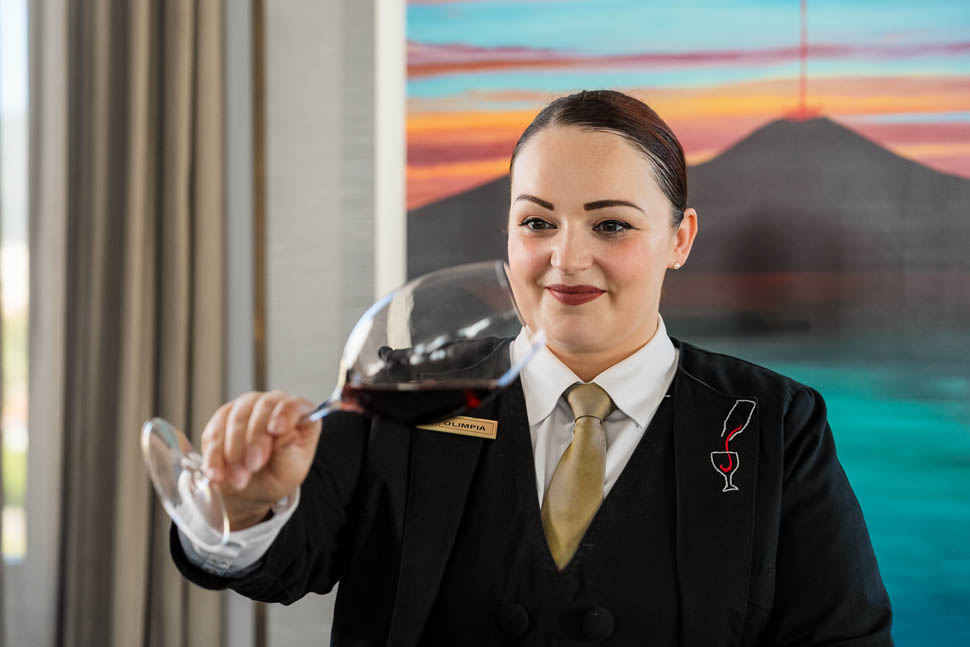
The young sommelier was truly talented and very knowledgeable, skillfully pairing the most suitable Campania wines with a variety of food pairings—from volcanic terroirs to historic wineries and up-and-coming producers—including “Scugnizzi e Mammasantissima.”
One thing that is very important to the owners is teamwork: the kitchen and dining room must grow together, building a shared culture. And the ultimate goal, according to Francesco, is to listen to guests, understand their expectations and desires, and strive, as much as possible, to tailor the experience to them: “Our luxury must be personalized.” A place to discover and experience.
Hotel Mediterraneo
Corso Marion Crawford, 85, 80065 Sant'Agnello NA
Phone: 081 878 1352