From the success of L'Arrogant Pub to the tranquility of the woods of Vezzano sul Crostolo: a journey into Alessandro and Elisa’s oasis, featuring cured meats aged in the rock, Serafina’s charcoal grill, and the rediscovery of authentic country cuisine.
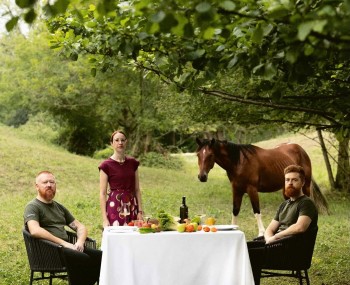
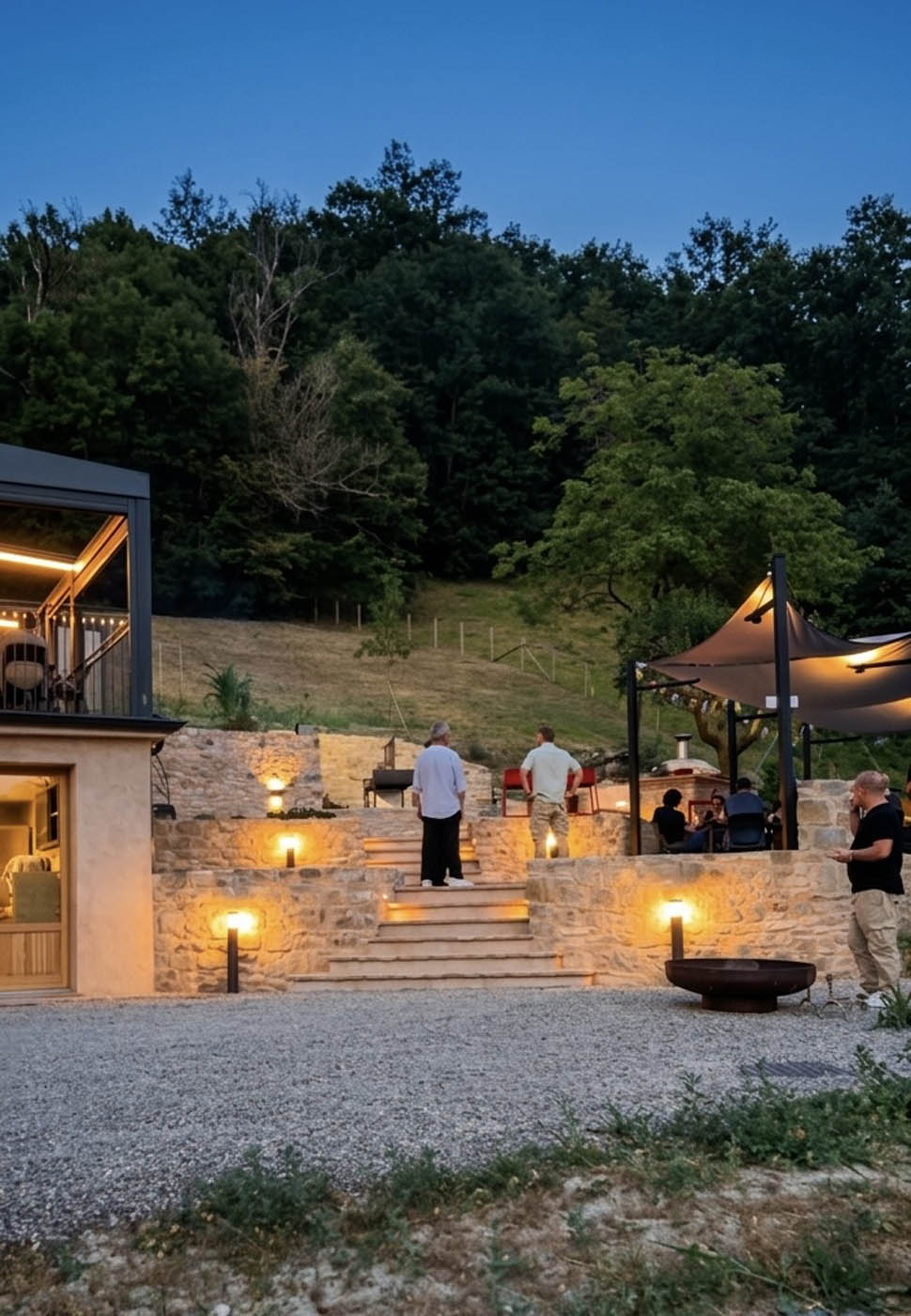
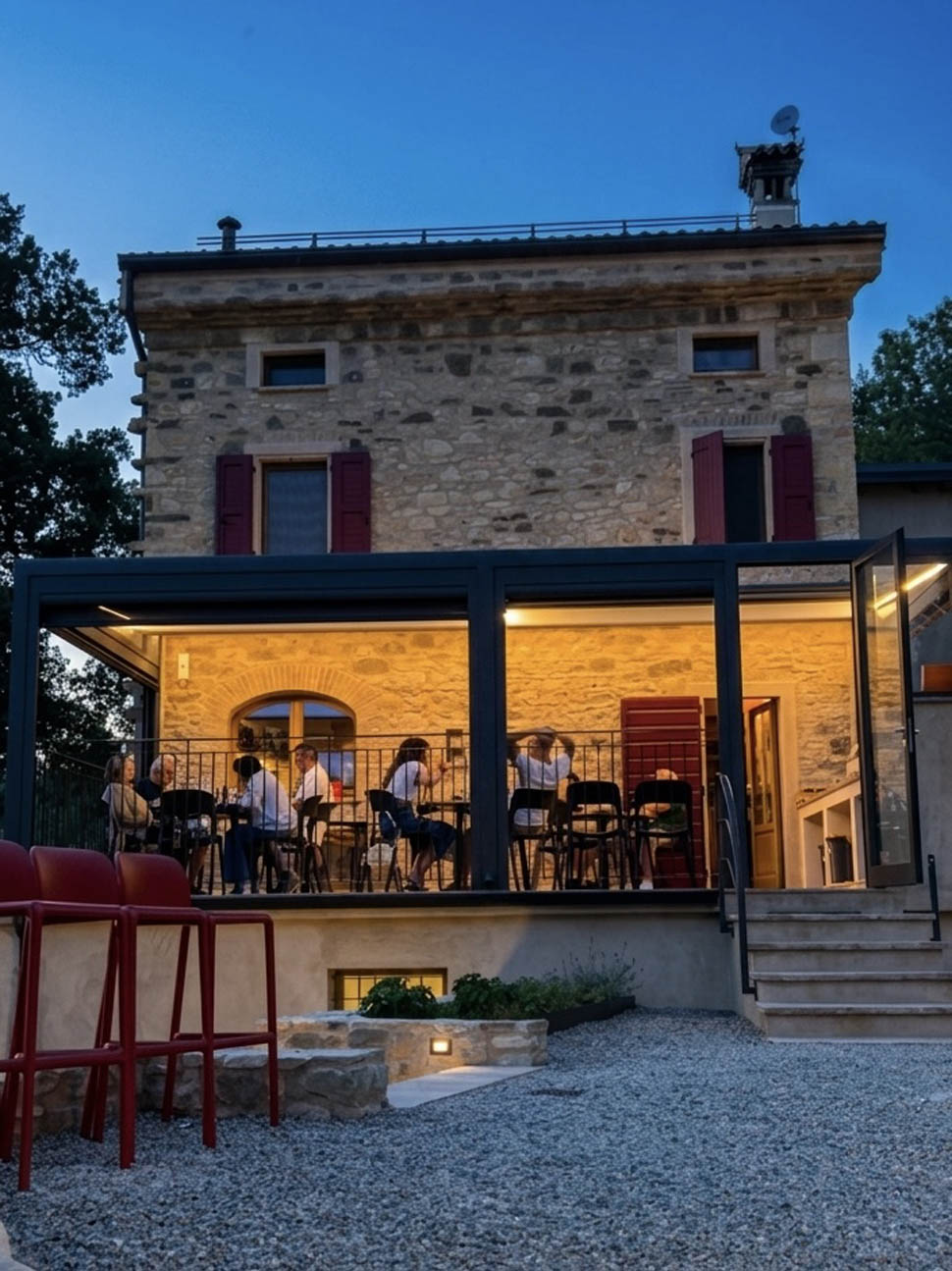
You certainly don’t end up there by accident. You don’t “stumble upon” it while filling up your car with gas or buying a newspaper. No, in certain realms of the spirit—and, exceptionally, in the geography of Reggio Emilia—you arrive there only through a deliberate, stubborn, and almost philosophical resolve. Take the road that leaves Reggio Emilia and climbs toward the Apennines. Pass the last stretches of the plain, leaving behind the traffic lights, the shopping centers, and the neurotic rush of those whose lives revolve around deadlines. About a half-hour’s drive from the city, near the hamlet of Monchio, in the municipality of Vezzano sul Crostolo, the asphalt decides it’s had enough of modern civilization and gives way to a dirt road—a sort of off-road “Way of Purgatory” (in other words: how to ruin your suspension and rediscover your soul). This is where the true first test of the traveler begins. If you’ve decided to drive up here in a low-riding car—a flashy sports car with mirror-polished alloy wheels—the Apennines will laugh in your face through the voice of its rocks. This road is a cathartic filter, a baptism of dust and gravel. Every pothole is a reminder that shouts at you: “Slow down, oh city dweller, or you’ll lose your oil pan!” But once you’ve passed the first kilometer of jolts and branches lashing against the windows, a miracle occurs. The sound of the engine fades into the woods, giving way to an archaic, dense, almost tactile silence. You have entered the Forest of Thoughts. And there, like a vision emerging from a simple, rustic fairy tale, appears the only house nestled in total greenery: Ca’ Barambon.
After L’Arrogant Pub, the journey to the Apennines
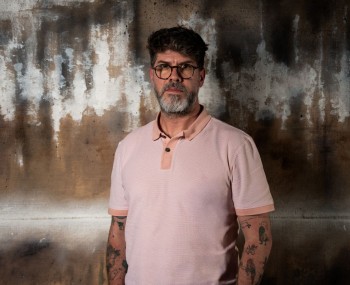
The journey itself is already a regenerative, stress-relieving experience; it’s the tiny price to pay to enter a realm where time has stopped racing and has finally begun to meander. To understand the alchemy that permeates Ca’ Barambon, you need to know its high priests: Alessandro “Alle” Belli and Elisa Magliari. For sixteen long years, these two indomitable champions of flavor presided over the bar at L’Arrogant Pub in Reggio Emilia—a place that was not merely a bar, but a veritable secular sanctuary of craft beer, an enclave of spontaneous fermentation, and a gathering place for gastronomic discussions and epic drinking sessions renowned throughout the peninsula. Then, one day, when success was at its peak, the big existential question surfaced between washing glasses and pouring a beer: “Are we truly happy? What are we missing?”
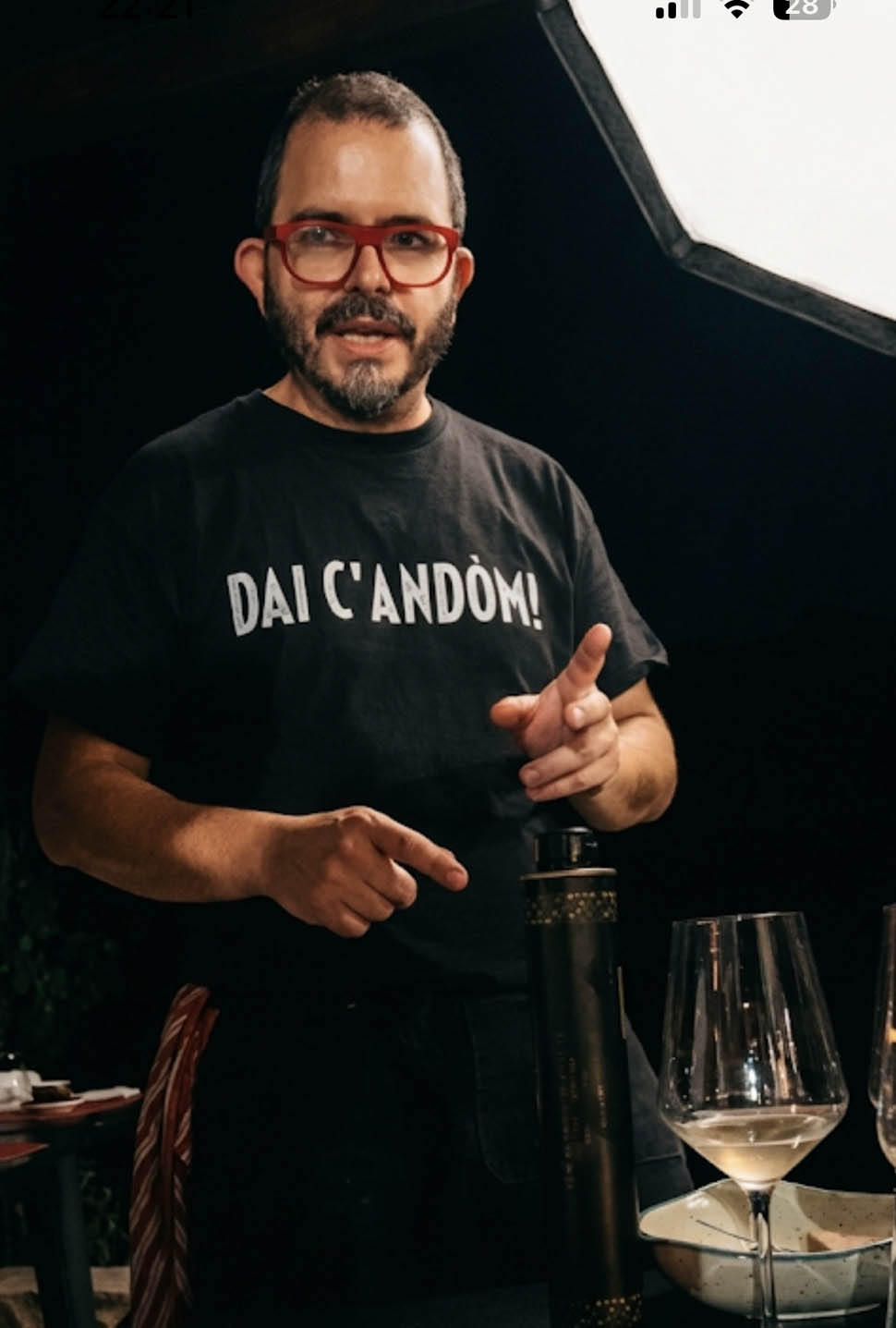
The answer wasn’t in the sales figures or the weekend crowds of city dwellers. The answer was the land, the rhythm of the seasons, the need to look people in the eye without someone breathing down your neck. After handing over the pub to their longtime employees, Alle and Elisa set off for the mountains. It took two years of skillful, patient, and heartfelt renovation of an old farmhouse before they officially opened their doors. But don’t expect the usual agritourism spot with checkered napkins and a photocopied menu. Ca’ Barambon is an ethical stronghold, a bastion of peasant resistance, and—let’s admit it with a playful smile—a den of delightful rural madness. If there’s one place where Alessandro’s “rustic metaphysics” finds its ultimate expression, it’s underground. Beneath the house lies an ancient cellar, hewn directly into the bare rock of the mountain. Stepping inside is like taking a leap back three centuries. There’s that ancestral scent of moss, wet stone, noble molds, and aged fat that would make even a die-hard vegetarian change their mind. It is here that Alle performs his sacred rituals of aging: cured meats hung like votive offerings, raw-milk cheeses set aside to rest in the cheese chest alongside straw—just as they used to do—waiting for the rock’s microclimate to work its invisible magic. The time required for this process is respected.
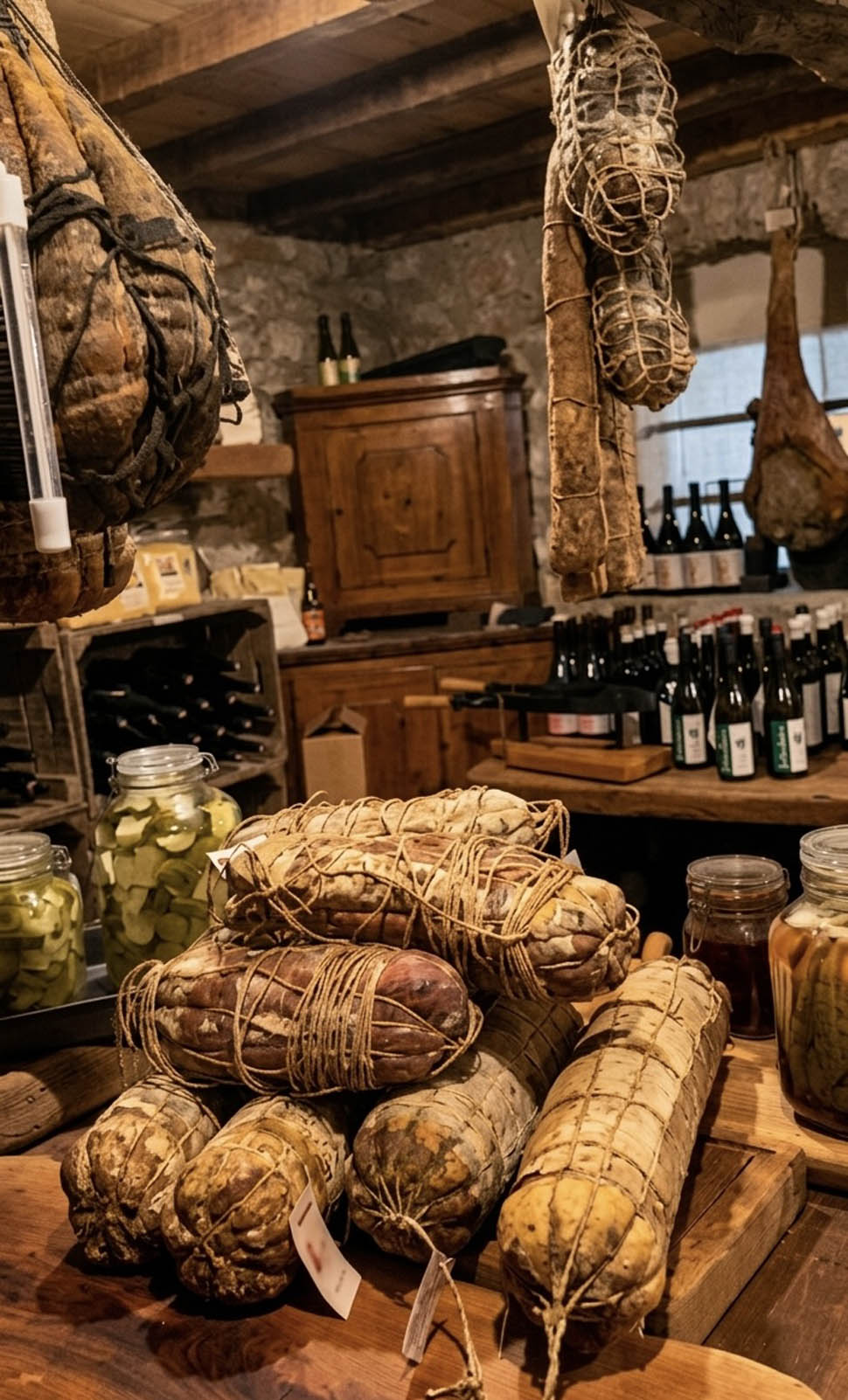
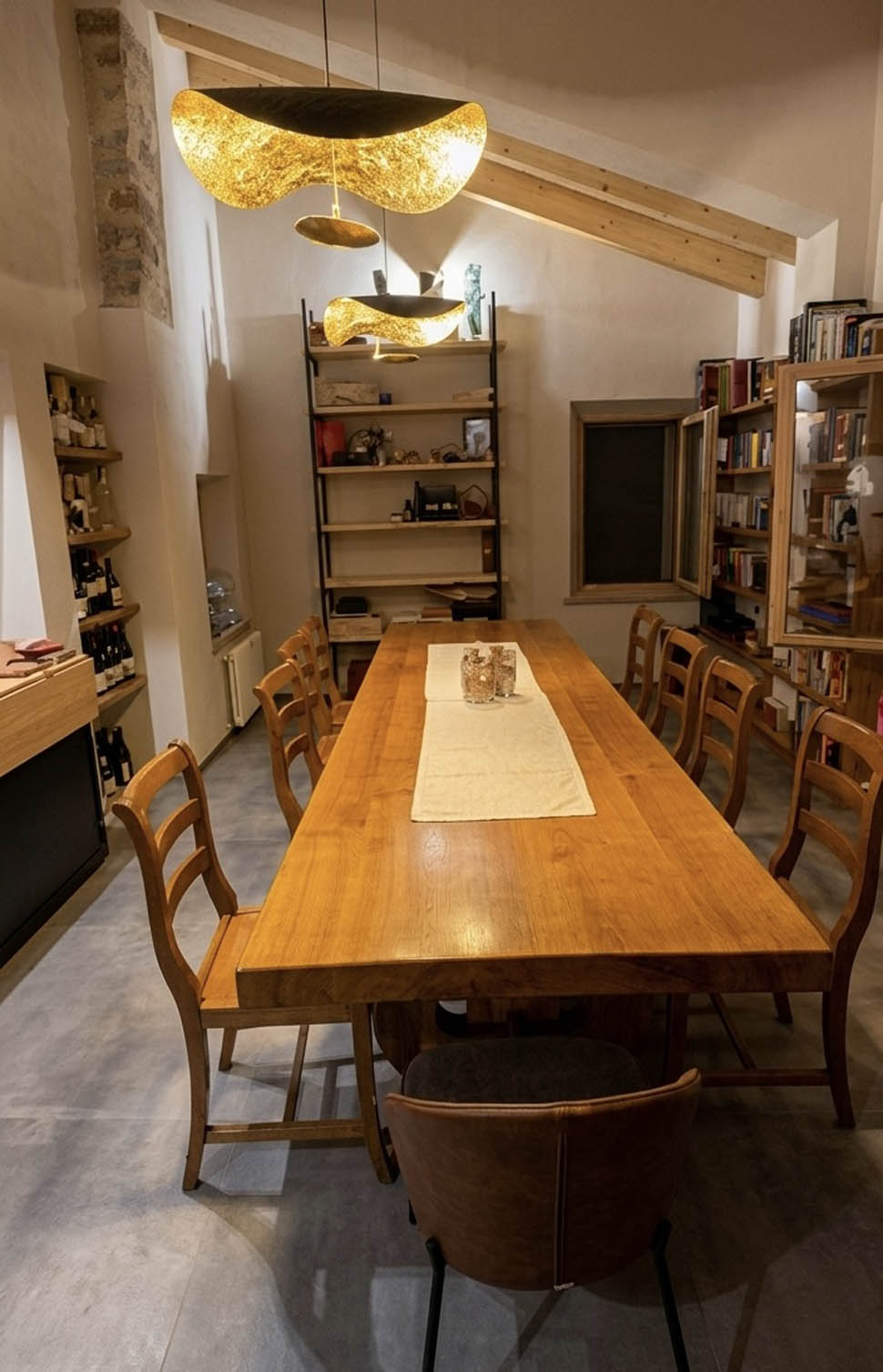
And alongside the cheeses and cured meats from ethical supply chains (Alle works almost exclusively with whole animals at the end of their lives, honoring their existence right down to the last cut), there is the alchemical laboratory of fermentation. Thanks in part to the contribution of his brother Davide Belli (the mind and driving force behind the Kekoji project), Ca’ Barambon is a forge where ancient garum, miso, lacto-fermented products, and preserves that evoke medieval alchemy are born. It’s a cuisine that looks to the future while taking root in the deepest past: “I call the farmer and serve whatever he has on hand at that moment,” Alle sums it up with that Emilian candor that brooks no frills. Stepping out of the dim light of the cellar and back into the garden’s sunlight (where, in the warmer months, about thirty lucky guests can enjoy the view of the Apennines amid ovens and terraces, while inside seating is limited to fourteen intimate and very cozy seats), you come across the farmhouse’s other great pagan idol: Serafina. Serafina isn’t just any grill. It’s the monumental grill to which Alle devotes himself with the dedication and grit of a true Emilian “pampa asador.”
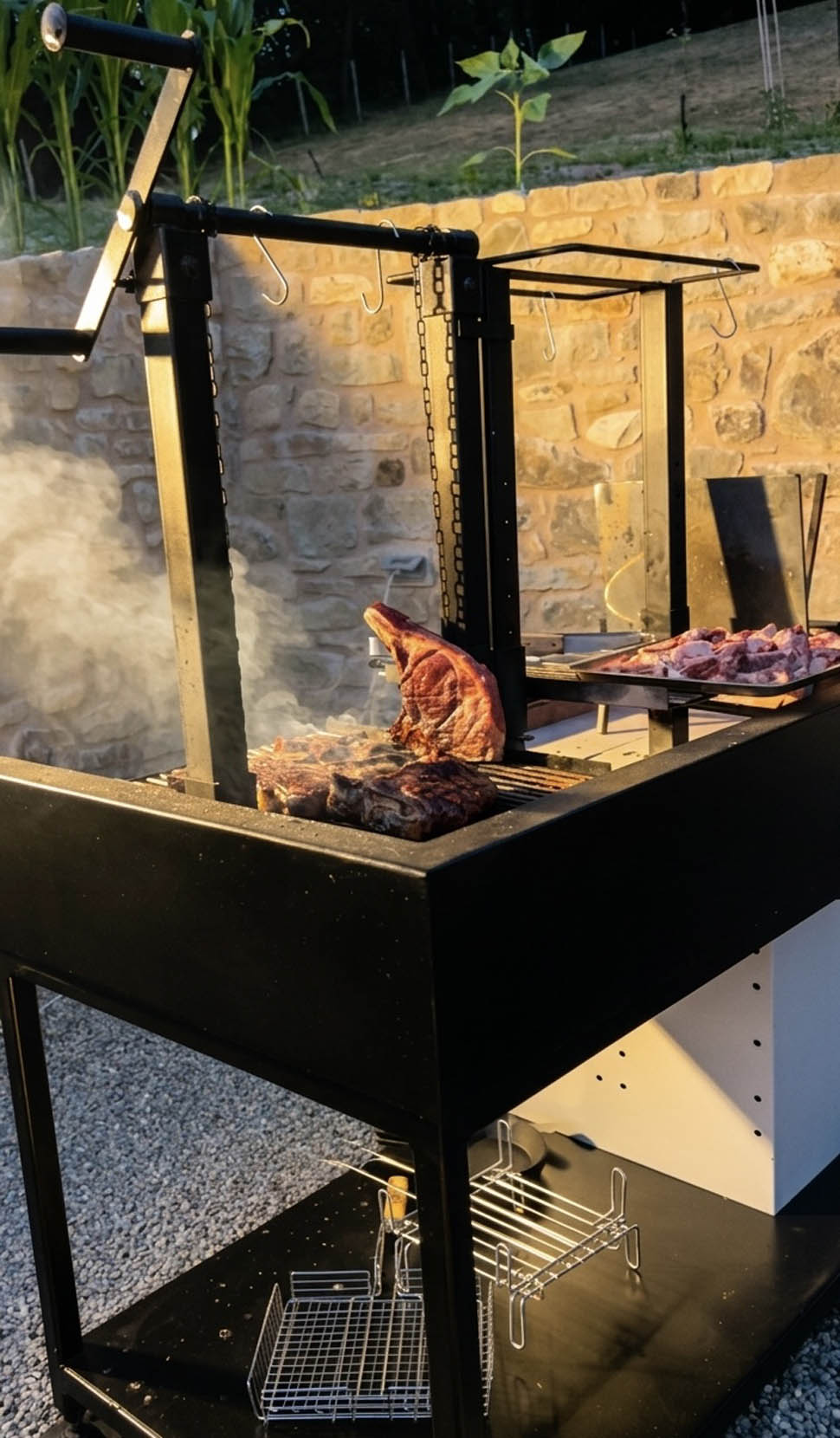
Next to her stands the wood-fired oven, built by hand, stone by stone, brick by brick. From this combination of bricks, dry wood, ash, and blazing fire comes practically everything baked that crosses the kitchen threshold. Cooking is a hands-on interaction between the cook, the wood from the Apennines, and the raw ingredients. It’s a return to the primordial element that smells of pleasant smoke, fat dripping onto red-hot embers, and golden crusts seared by the lively flame. Sitting down at the table at Ca’ Barambon is a playful participation in a sung celebration of authenticity.
The Menu
The menu is short and fluid—a daily script dictated by the weather, the garden, and the mood of the local farmers. It begins with a dish that celebrates the ever-changing nature of each day: “The Earth and Its Colors.” No bland, pre-packaged supermarket salads here. Here, fresh seasonal vegetables—picked just a few hours earlier—come together, minimally prepared to let the crispness, the earthiness, the bitterness, and the natural sweetness of what the garden has decided to offer speak for themselves. Alongside them is the restaurant’s true showcase: the Selezione and Invecchiamenti selections of their cured meats and cheeses, aged in the rock cellar. There’s the homemade giardiniera, crisp and tangy to perfection, and the lacto-fermented foods that rouse the taste buds from their urban lethargy with bursts of lively, complex, and deep acidity. The noble fat of the cured meat melts in your mouth, while the cheese aged in straw carries with it all the scents of the pasture and damp rock.
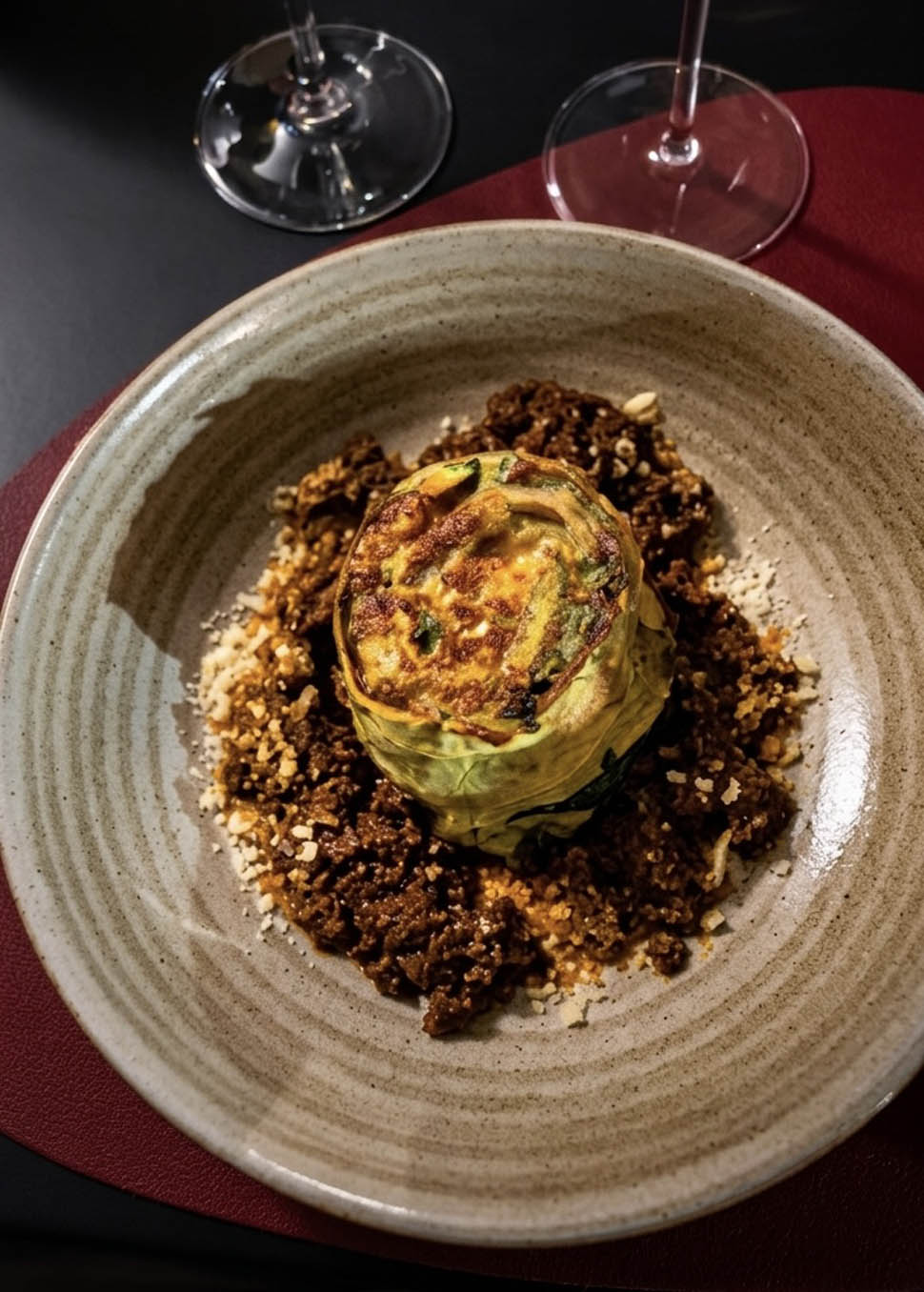
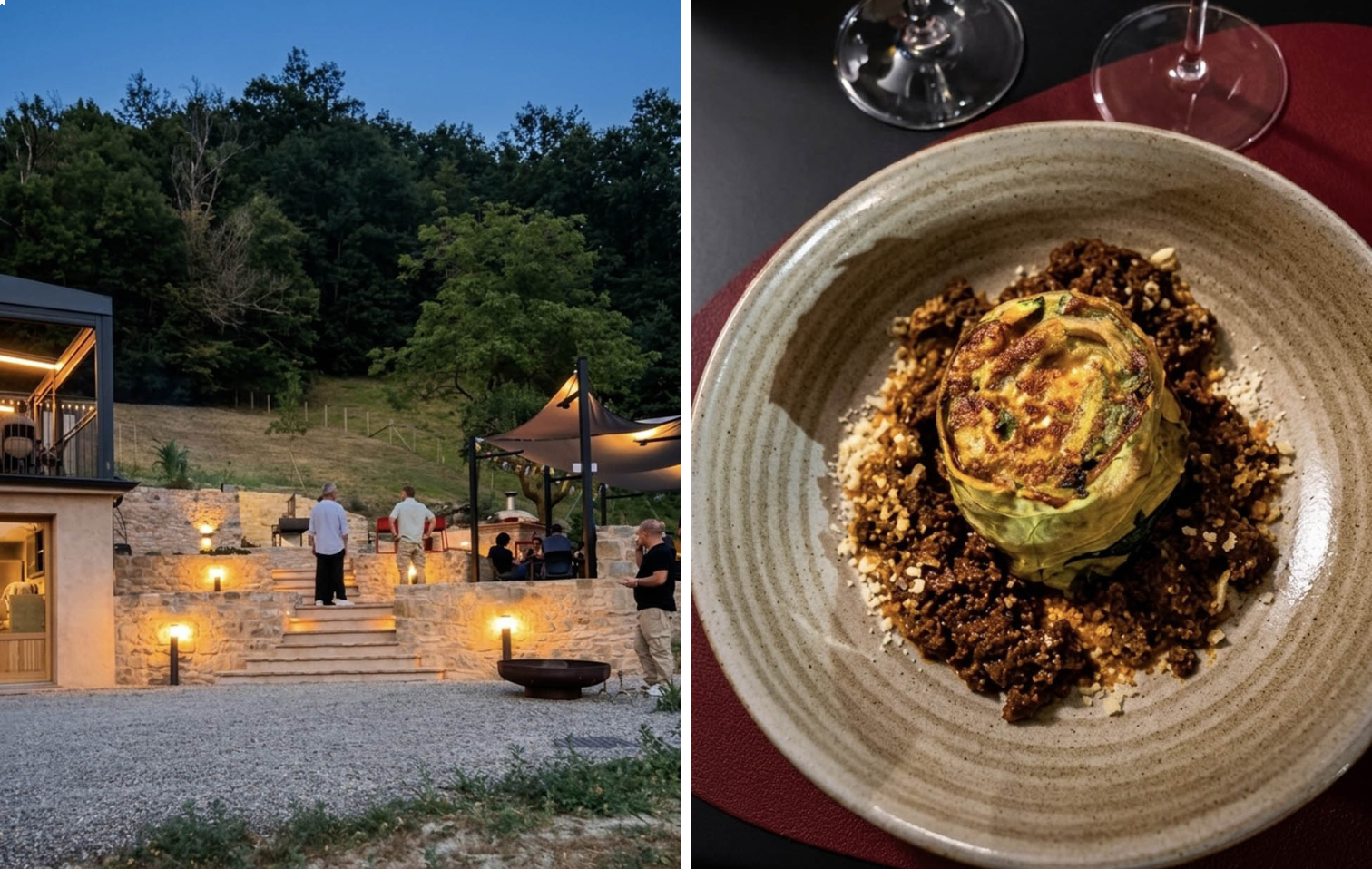
Then the first courses arrive. Or rather, the Rosette arrive—stuffed with tongue, Swiss chard, and a ragù made from aged beef, slowly cooked inside the brick-lined chamber of the wood-fired oven. To describe this dish in mere gastronomic terms would be a crime. The pastry, baked in the wood-fired oven, takes on those very slight surface char marks that give it a crispiness and an irresistible smoky aroma. The tongue offers an almost buttery tenderness, the Swiss chard brings a bitter, earthy note, and the ragù made from aged beef—deep, thick, reduced, and concentrated, the result of hours and hours of simmering over the fire—envelops the palate in a primal embrace. It’s a carefree, comforting dish—the kind that reconciles you with humanity and compels you to mop up the sauce with bread without a shred of shame. When it’s time for the main courses, Serafina takes the stage in all her charred splendor with Castrated Lamb Chops served with fennel and carrots: a dish not for the faint of heart, in which the lamb, seared over hot coals, expresses a majestic, wild, and unapologetic intensity of flavor. The seared fat crackles between your teeth, while the fennel and carrots—also cooked over the fire’s heat—balance the meat’s intensity with sweet and aromatic notes.
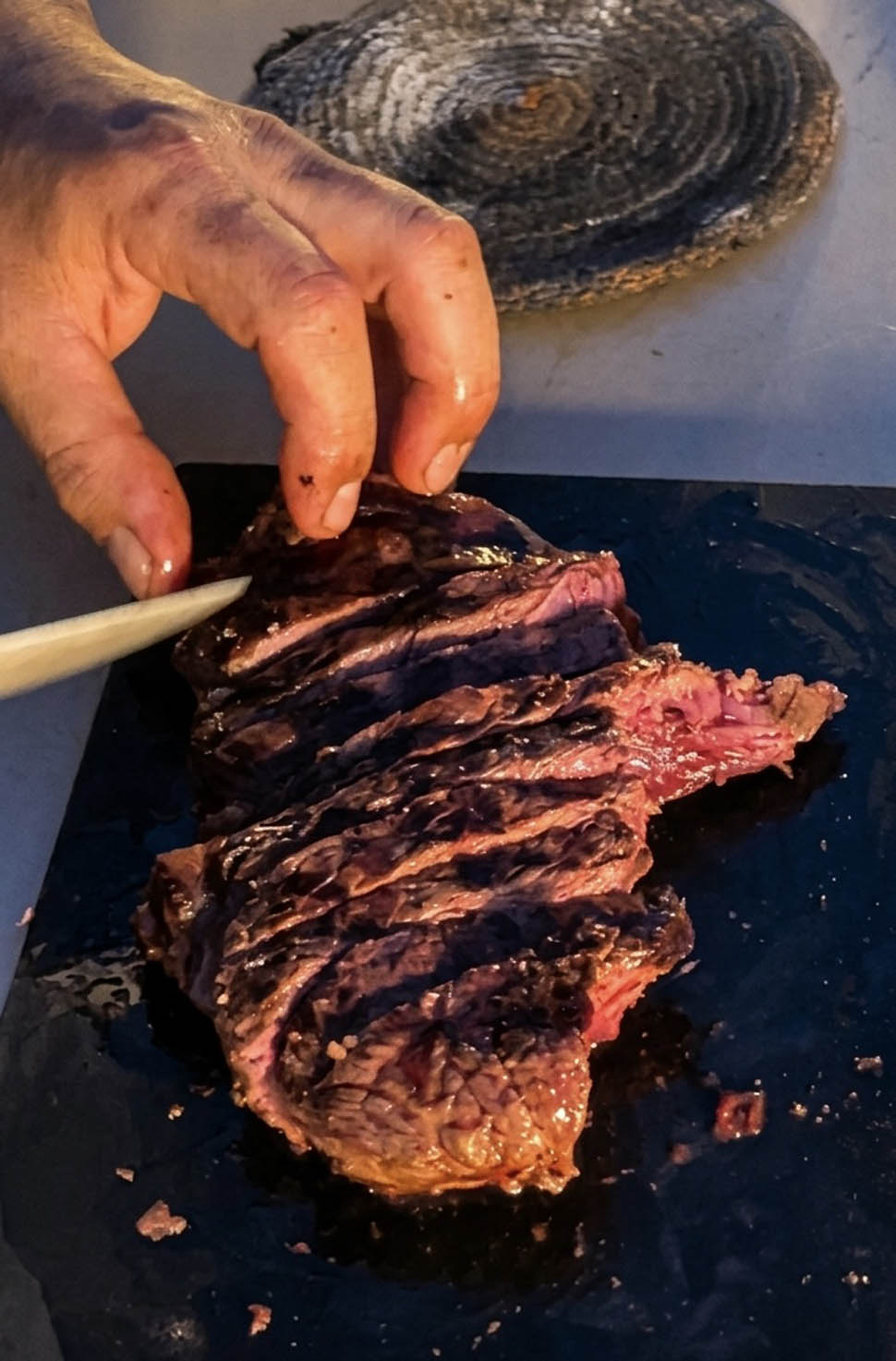
And then there’s the Rabbit Liver with fennel frond chimichurri and peppery carrots: a masterpiece of resourcefulness and rural ingenuity. The liver, cooked to perfection so it remains tender and juicy at the center, is enlivened by a lively chimichurri prepared not with the usual alfalfa found in cookbooks, but with fennel fronds, which impart an extraordinary balsamic freshness, bringing the dish full circle with the spicy, crunchy kick of the peppered carrots. A metaphysical, rustic, bold, and perfectly balanced dish. All of this is washed down—as the hosts’ philosophy and personal history dictate—with a lean yet lethal selection of beverages: true “natural” wines, free of chemical additives, and spontaneously or mixed-fermented beers that continue to converse beautifully with the rural soul of the place.
As the silence of the woods grows even deeper, we find ourselves chatting with Alessandro, a glass in hand. It is here that the vision behind Ca’ Barambon reveals itself for what it is: not merely a romantic lifestyle choice, but a crystal-clear manifesto on the future of the restaurant industry. “One of the aspects we’ve reflected on,” Belli tells us with the candor of someone who has finally squared the circle, “is that a certain type of restaurant business will never become more sustainable, due to its staggering fixed costs and inhuman demands. The future belongs to smaller establishments, with very few staff, where you can finally devote real time to people. And where people, precisely because of this time they’ve been given back, are happy to spend .” It is the philosophy of slowness rooted in gestures. Ca’ Barambon is living proof that the future of cuisine does not lie in gelling agents, conceptual frills, or twenty-four-course tasting menus. The future lies in the courage to scale back in order to expand the soul. It lies in knowing how to tend the fire of a wood-fired oven, in aging cured meats inside a rock, and in reestablishing the umbilical cord between people, the earth, and the table. If you have the guts (and that’s putting it mildly!) to tackle that narrow dirt road, if you have the patience to leave your cell phone behind and the desire to let yourself be swept away by Alle and Elisa’s uncompromising authenticity, Ca’ Barambon awaits you in the woods of Monchio, in Vezzano sul Crostolo. Just a heads-up: head up there in a sturdy car, with an empty stomach, and an open mind—you’ll come out feeling at peace with the world.
Contacts
Ca' Barambon
Address: Via Carri, 9, 42030 Vezzano sul Crostolo (RE)
Tel: +39 338 634 2542