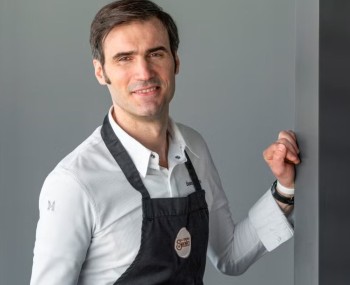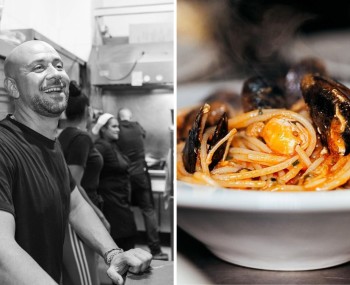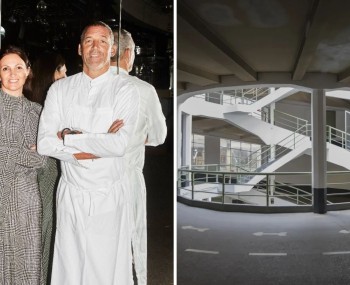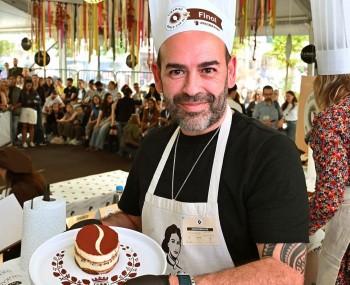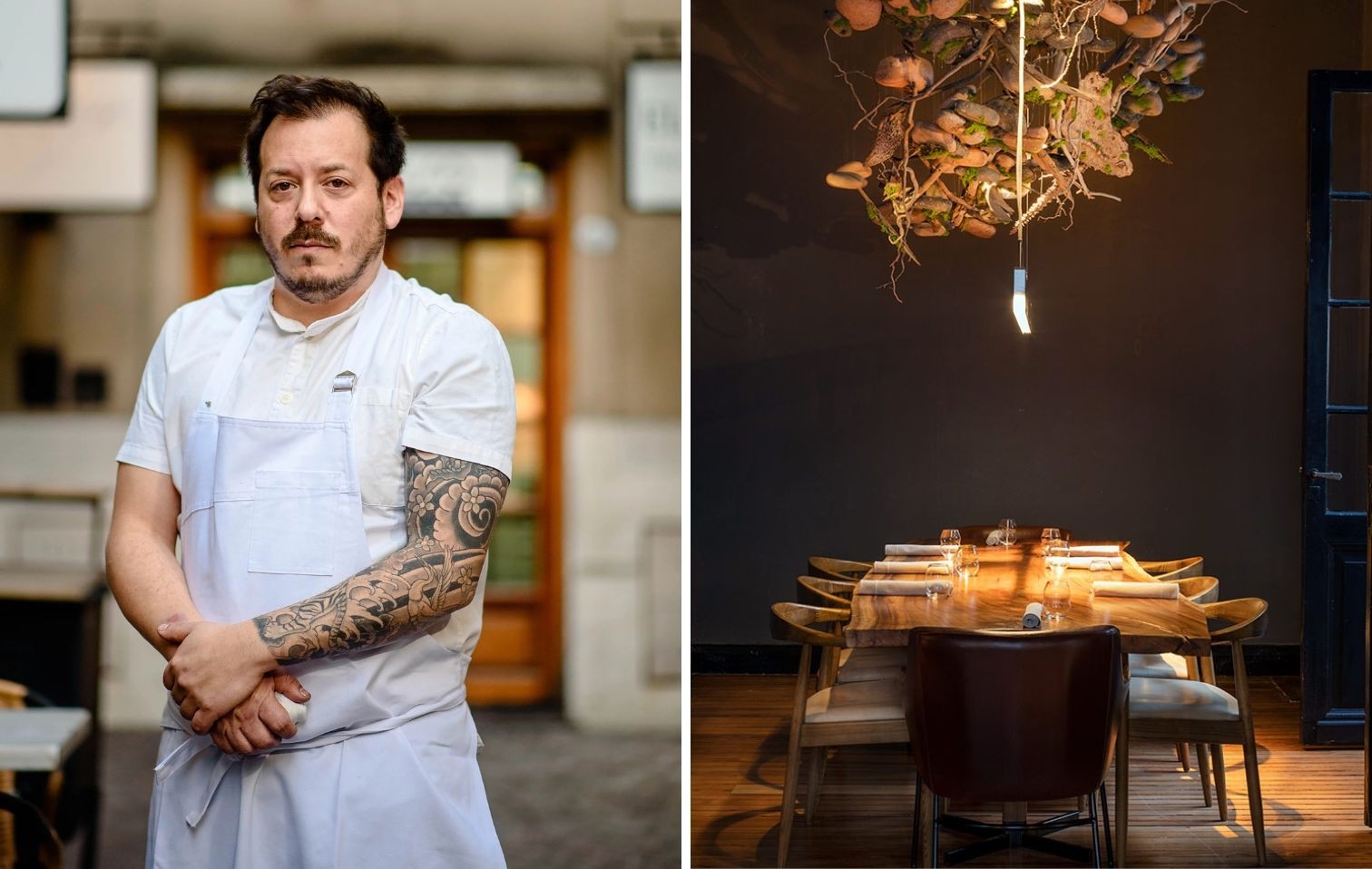
Gonzalo Aramburu’s story lacks the dazzling beginning of a precocious calling, but it has the rich depth of broths that simmer for hours. A leading figure in the South American culinary scene, the chef has charted his own course, transforming absence and uncertainty into a rigorous culinary aesthetic.
The Story
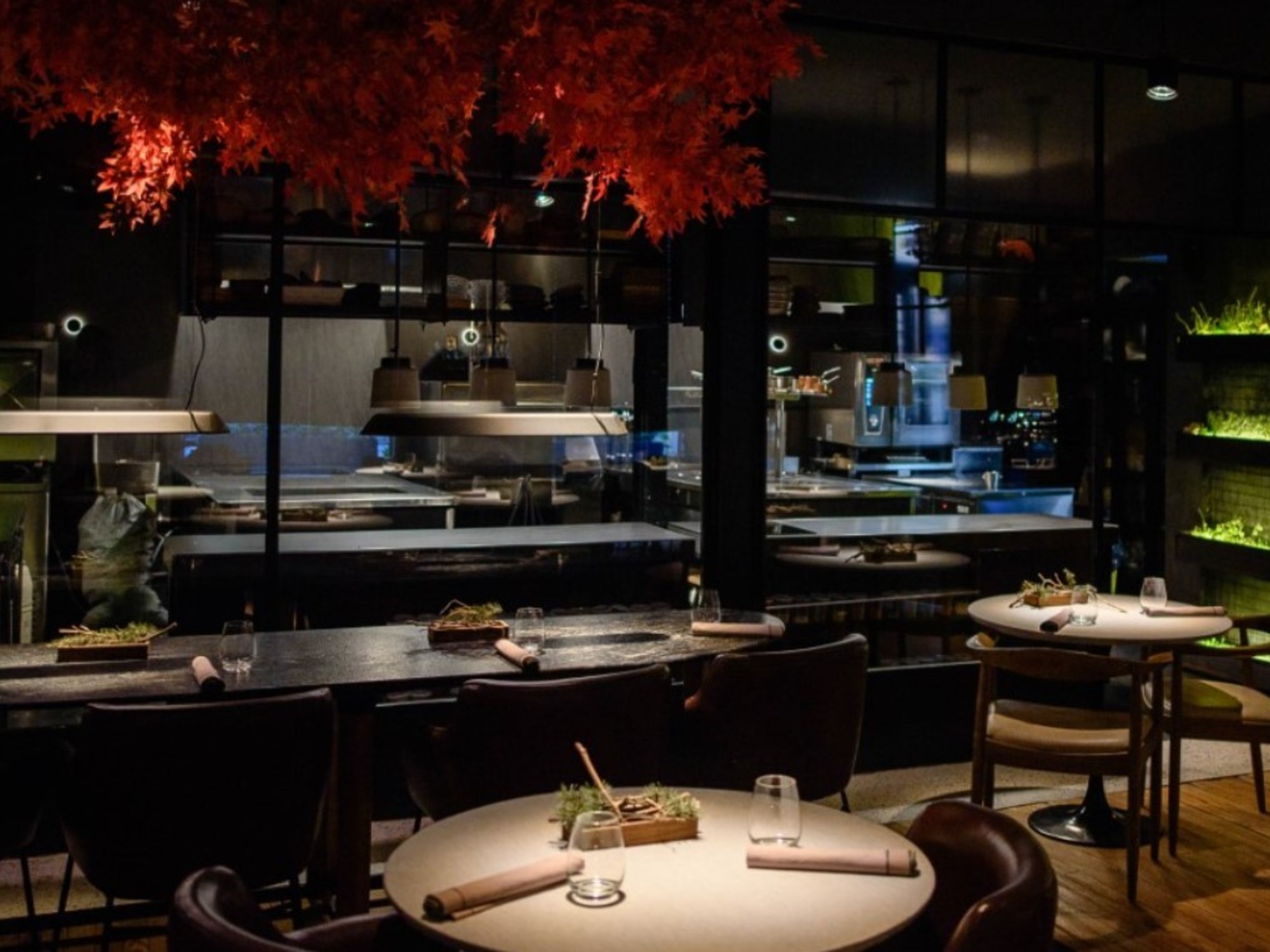
Today, amid the historic cobblestones of the Pasaje del Correo in the Recoleta neighborhood, his eponymous restaurant shines as the only Argentine establishment to have been awarded two Macarons. A monumental achievement that encapsulates twenty years of meticulous craftsmanship, near-misses, and an unwavering devotion to local ingredients.
For Gonzalo Aramburu, cooking did not emerge as an epiphany, but rather as a domestic refuge. The chef’s childhood was marked prematurely by the loss of his mother—an absence that reshaped the dynamics of home life and drew him and his sister to the family kitchen, driven by necessity and the instinct to be present. “My first foray into cooking arose more out of necessity than vocation. My father worked all day, and although there was a woman who took care of us, we would go into the kitchen. I’m not saying that’s where my passion was born; it was a time when I didn’t enjoy doing anything else. I was nine or ten years old,”he told InfoBae.
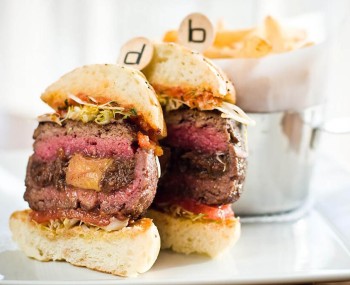
That experimentation with ingredients, which began almost out of childlike curiosity, did not take on its true form until years later. After an adolescence spent exploring fleeting paths—from law to the theater stage—the turning point came in the form of some brotherly advice that led him to the Argentine Institute of Gastronomy (IAG). It was in those classrooms that Aramburu discovered the discipline of precision, which he later perfected amid the bustling activity of the historic kitchens at the Hotel Alvear. From there, he made the leap across the ocean: a formative pilgrimage that led him to learn the secrets of the Lenôtre school in Paris, the geometric precision of Daniel Boulud in New York, Charlie Trotter’s obsession with detail in Chicago, and the Basque genius of Martín Berasategui.
In 2006, enriched by a cosmopolitan technical background but lacking significant capital, Aramburu returned to his homeland to found his own gastronomic haven in the Montserrat neighborhood. It was an austere beginning, almost Dostoevskian: to finance the initial purchases, his father’s Twingo was sold off, and every detail was shaped on an extremely tight budget. Yet the market didn’t respond, and the emptiness of the dining room threatened to extinguish the project’s flames before they could even take hold. “During the several years I spent abroad, I gained experience and dreamed of opening a restaurant of my own. I returned in 2006 and began putting everything together... We sold my father’s car, a Twingo, so we could buy what we needed. For the first three years, nobody came. I thought about closing down twenty times; it was very difficult. Until, over time, we started to get noticed, and gradually the restaurant filled up.”
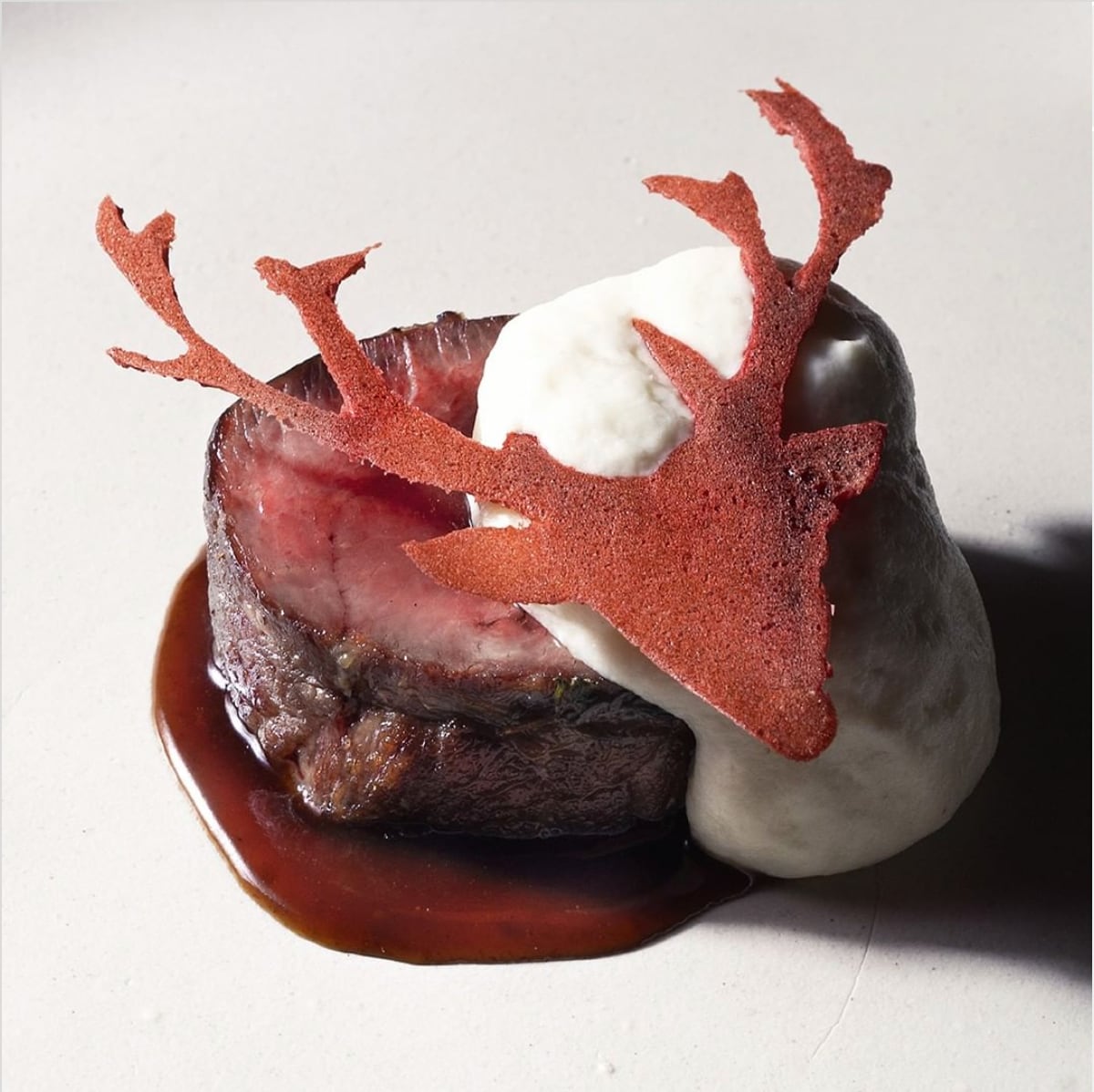
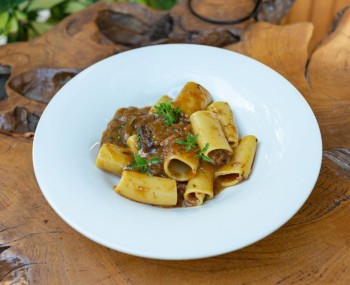
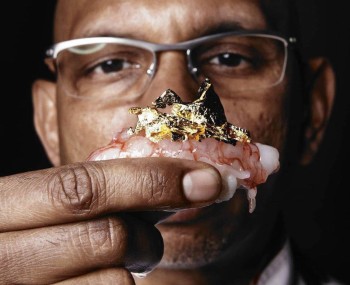
Salvation did not come through compromise, but by taking his vision to the extreme: it is haute cuisine, with its rituality and uncompromising complexity, that charts the path to redemption. The restaurant’s placement on the prestigious Latin America’s 50 Best Restaurants list and the subsequent attention from international critics transformed the silence into a buzz of reservations from all over the world. Aramburu’s tasting menu now unfolds as a symphony of 16–18 microscopic seasonal courses, conceived as snapshots of Argentina’s landscapes. Ninety-five percent of the ingredients used come strictly from local producers. The only geographical exception is the prized Uruguayan caviar, which the chef designates as “cultural heritage of the region” due to its geographical proximity and extraordinary organoleptic finesse. The arrival of the Red Guide in Argentina in 2024 officially marked the country’s entry onto the global fine dining map. For Aramburu, the two-star rating is not a monumental milestone, but rather an incentive to constantly rethink his culinary identity in a continuous process of evolution. “Receiving the two Michelin stars was a huge success. The first edition was in 2024. A massive, beautiful event—a grand ceremony… This Michelin Guide continues to be a dream. We’re committed to a race toward improvement. We’re always striving to evolve and grow, both professionally and in the culinary leadership of our teams.”
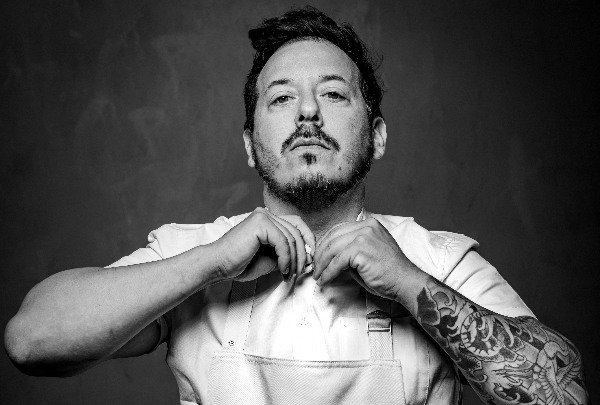
In addition to the creative hub in Recoleta and the bistro-style Bis, Aramburu’s horizons continue to expand: among his new projects, an innovative gourmet café at Aeroparque (the Bis Café) and an upcoming steakhouse in Recoleta—entirely dedicated to the refined art of fire and grilling—stand out. Yet, behind the complexity of his avant-garde menus, the chef retains a soul rooted in the simple joys of everyday life, candidly admitting that at home, dinners with his wife (also a chef) and children often consist of takeout burgers or a classic family barbecue, where light red wine and the ever-present butter in the fridge take center stage.