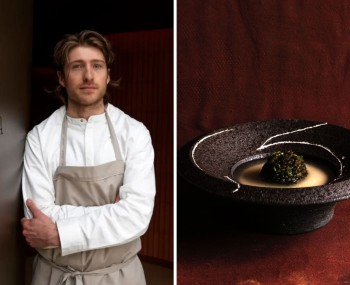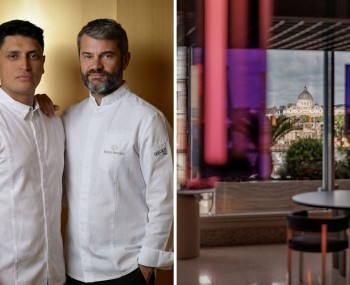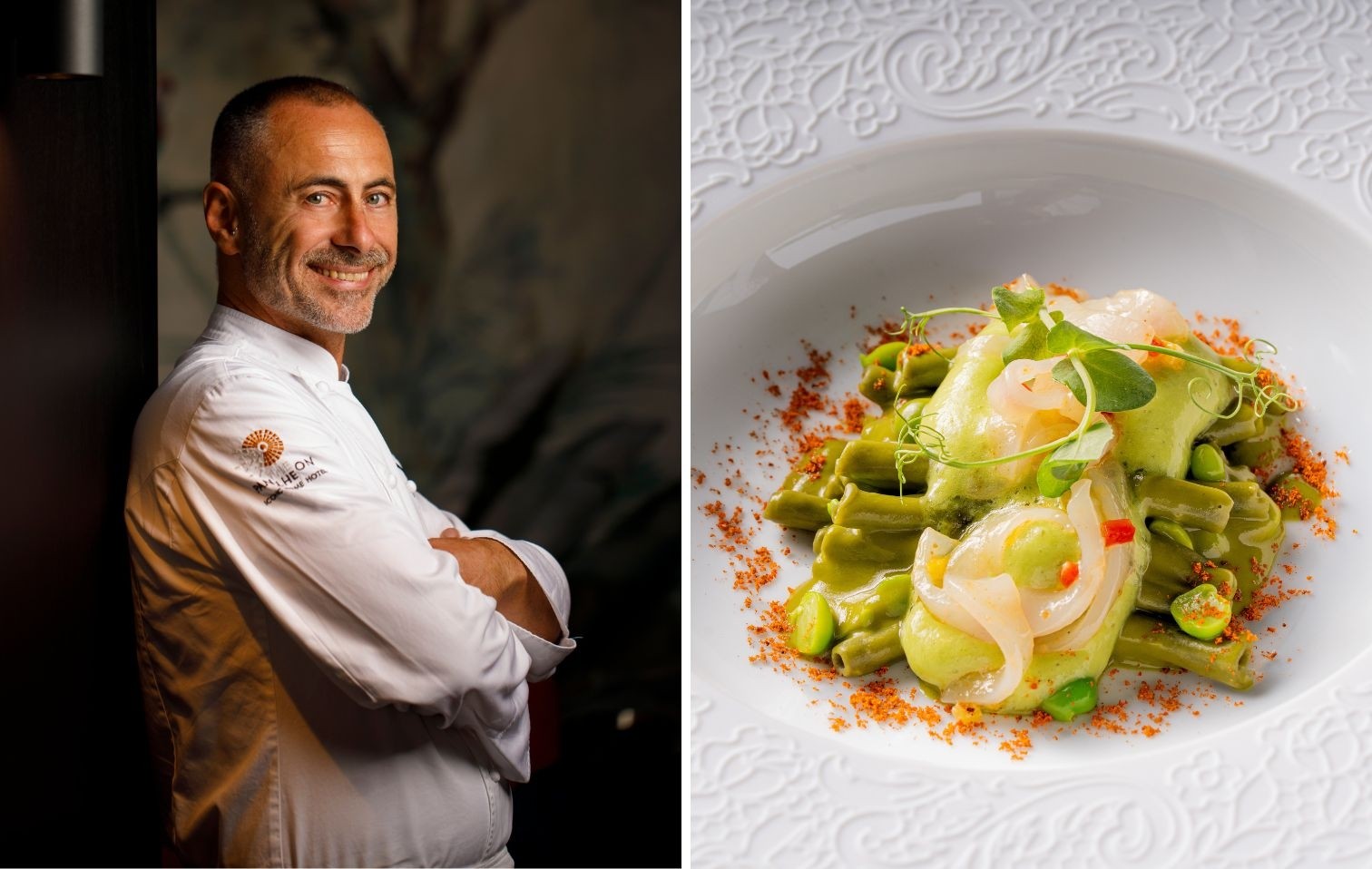
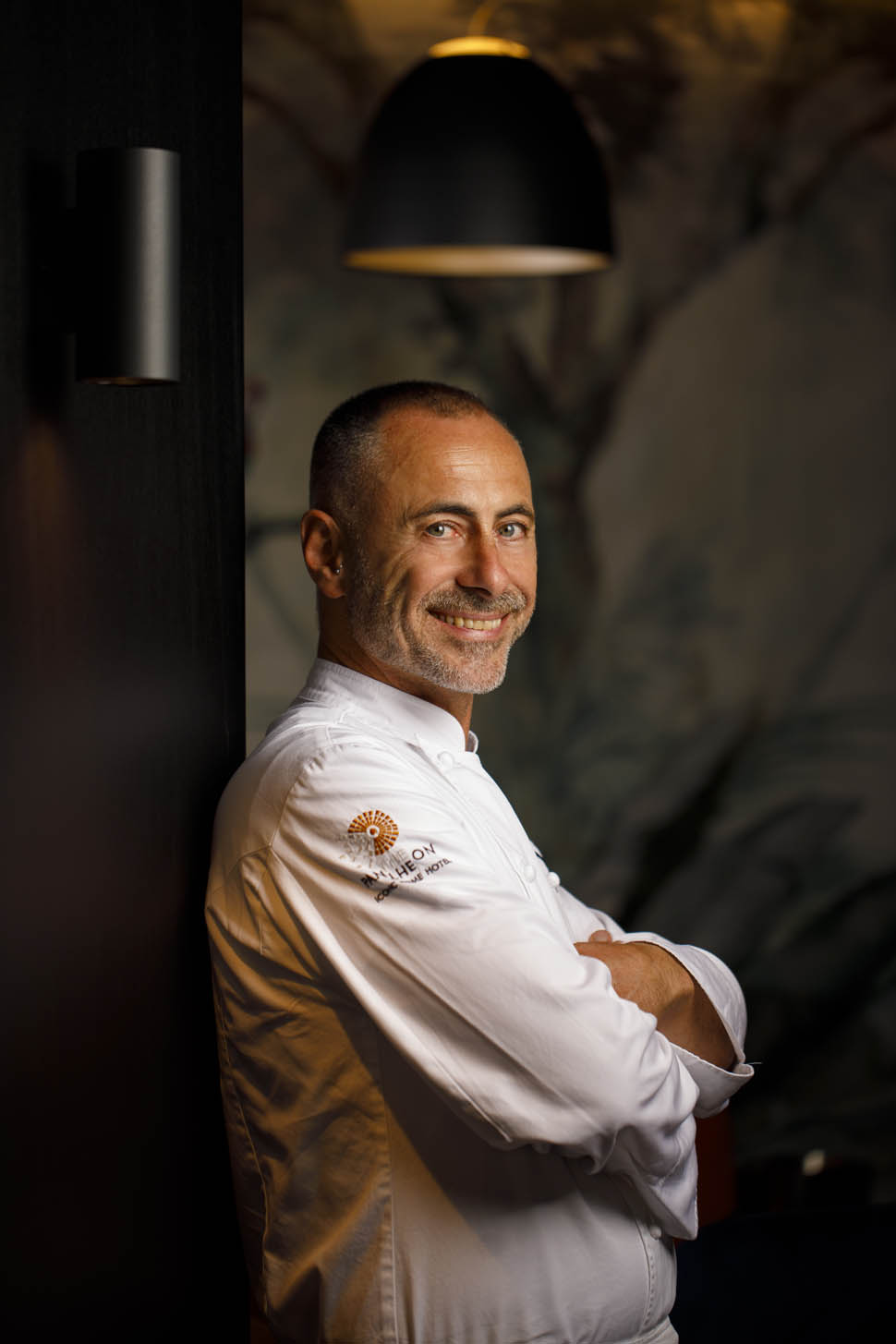
Born in Naples, a Roman by choice, with a long stint in London, Tokyo, and India. At the helm of Idylio by Apreda for seven years, Francesco Apreda has built one of Rome’s most distinctive cuisines and has very clear ideas about the Italian restaurant scene.
Portraits by Alberto Blasetti
When Francesco Apreda arrived in Rome in the 1990s, he had just graduated from the hospitality school in Formia. He was from Naples, where he had grown up, and Rome was the city that opened his mind. From there, his career path became one of the most consistent in the Italian culinary scene; he headed to London, where he worked in a small restaurant in the Marylebone neighborhood, then to Tokyo, and finally to India.
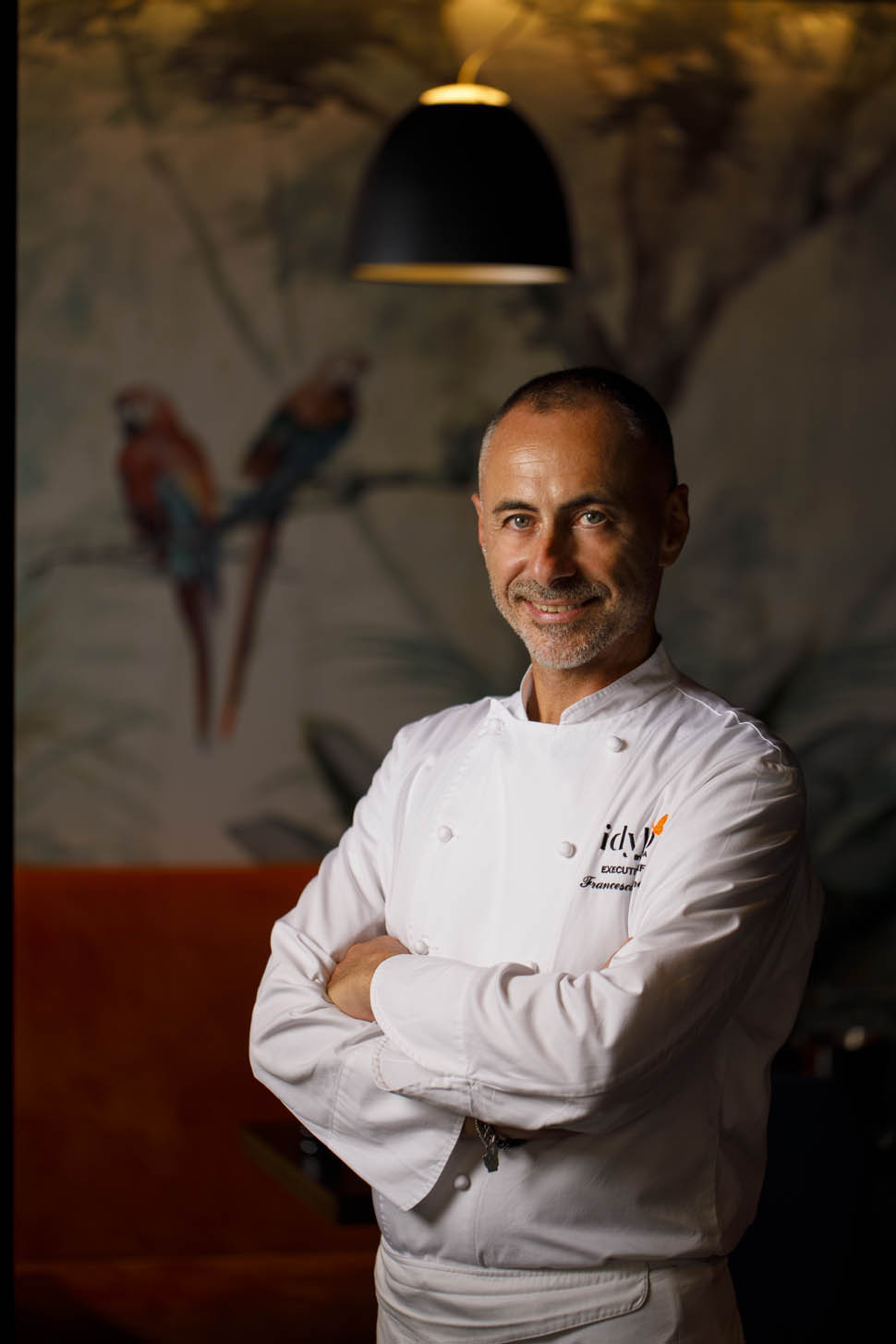
Experiences that don’t merely remain travel memories, but become a mental framework, a language, a method. Spices, in particular, have become what he himself calls a “superpower” in the kitchen. His return to Rome then led him to the Hassler, where he helmed Imago for ten years, earning his first Michelin star in 2009, and in 2019, he chose to leave the golden tower of Trinità dei Monti for a new project: Idylio by Apreda, which remains to this day the restaurant of The Pantheon Iconic Rome Hotel—a property owned by the Pacini family, just a short walk from the Pantheon.
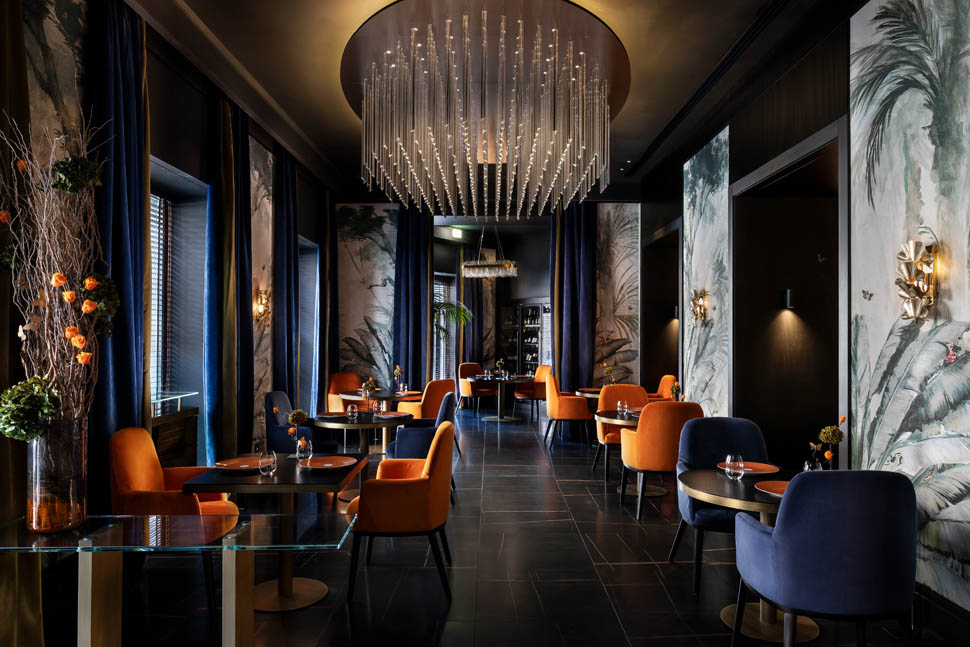
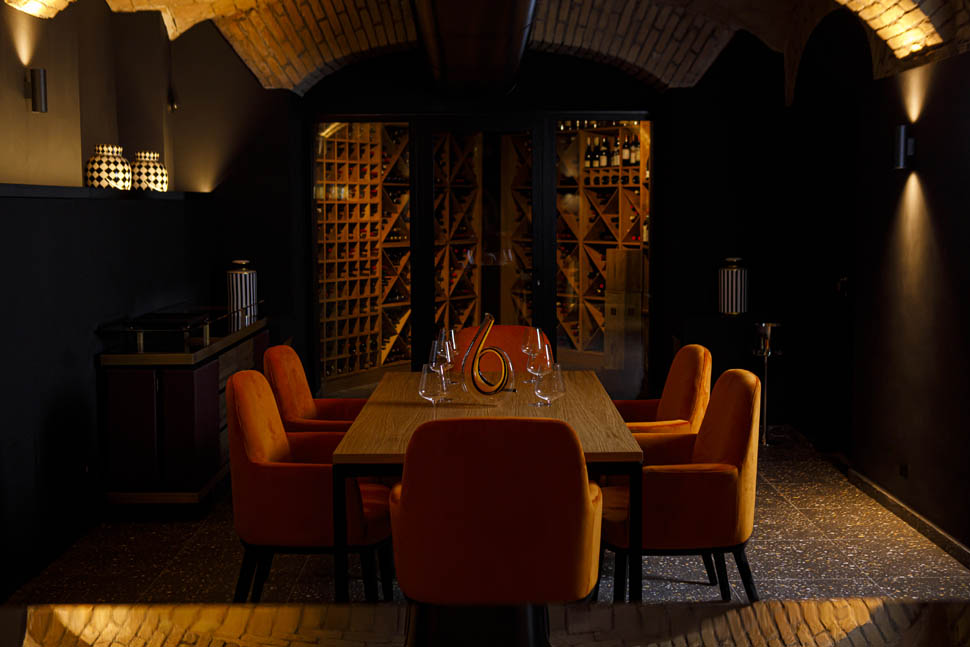
For the Neapolitan chef, Idylio by Apreda was like moving to a different city, even though he remained in the same neighborhood. “I felt more at home on the ground floor; I loved everything I did, everything I had in mind.” Here, the Michelin star arrived within six months, and in 2024, the restaurant took another step forward: it left its interior space within the hotel—which was barely visible from the outside—and moved to a street-level location with five windows overlooking Piazza dei Caprettari. Same identity, separate entrance, redesigned dining room, private dining area, and a basement for cooking demonstrations and events. The butterfly—the restaurant’s symbol since its inception—continues to fly with elegance.
No Salt: A Philosophy Born Out of the Pandemic
There’s a “before” and an “after” in Apreda’s cooking, and the dividing line runs through the pandemic. “During that time, there was a desire to come up with something different,” he says. “We also had a little more time to think things through back then.” And that reflection led to a seemingly trivial observation: the dishes that were most satisfying were those with very little salt—or none at all. So the question—“Why?”—became the starting point for a quest that continues to this day.
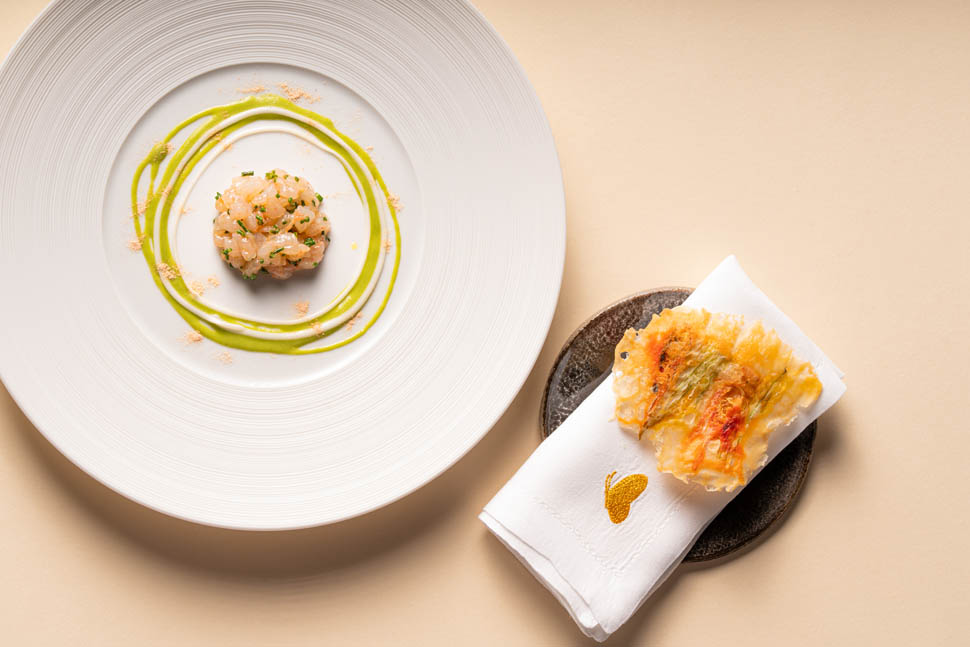
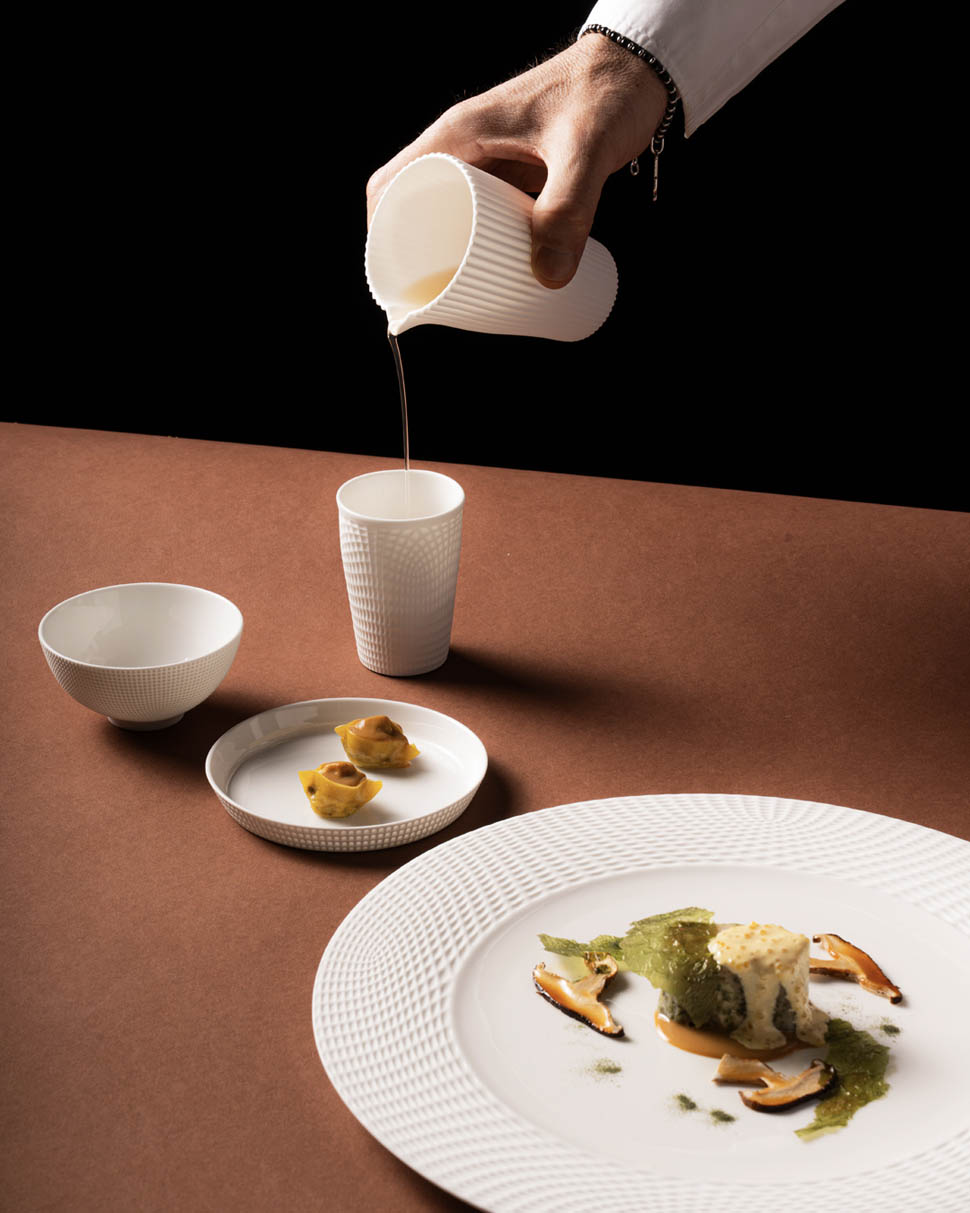
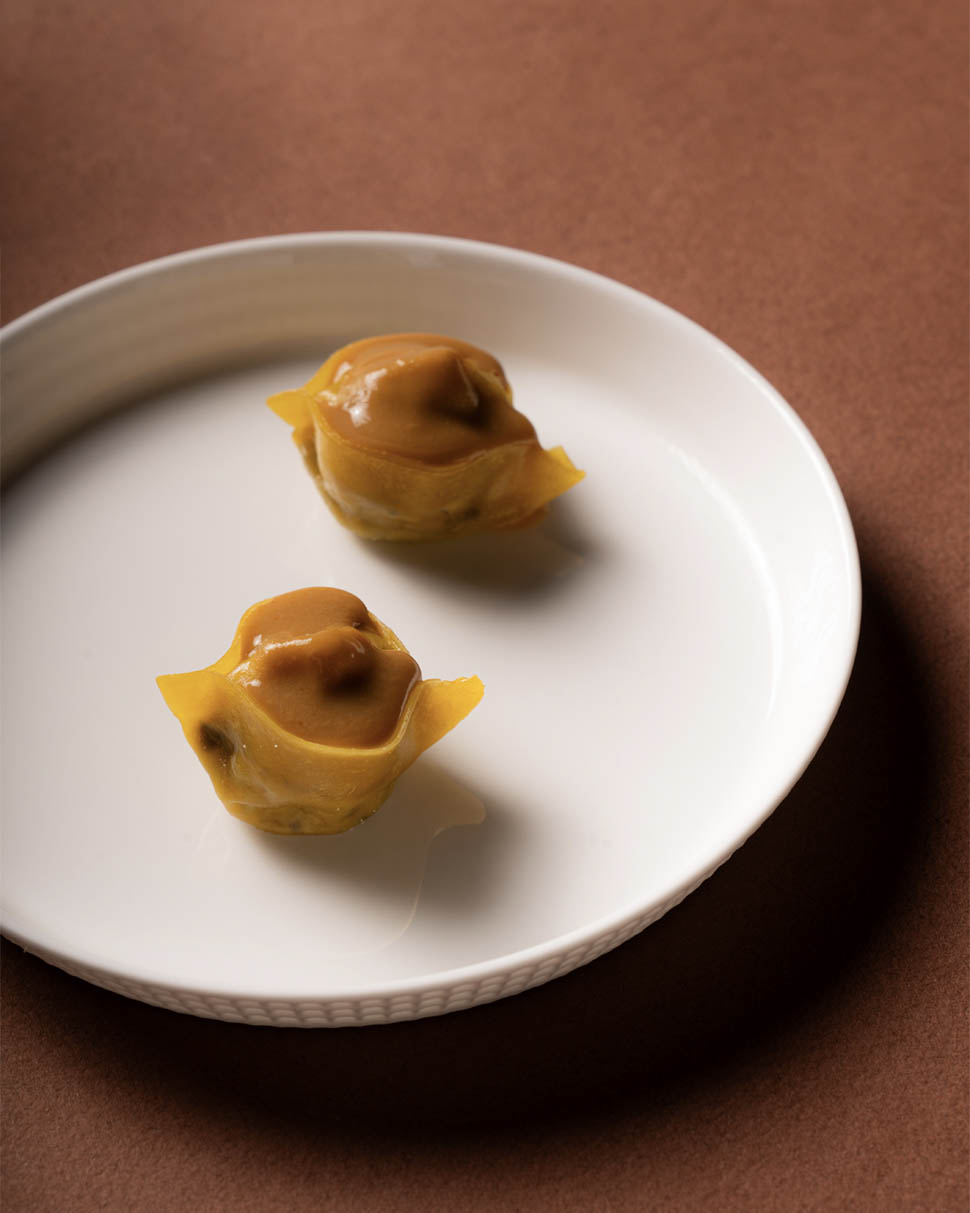
The principle is called “essential savory flavors,” which means building the dish's saltiness using ingredients that naturally contain it (seaweed, fish, fermented foods, spices) without adding salt directly. “Creating a dish where you haven't added salt—but when you taste it, you realize it's more savory than salty—made me think about a new direction for my research,”
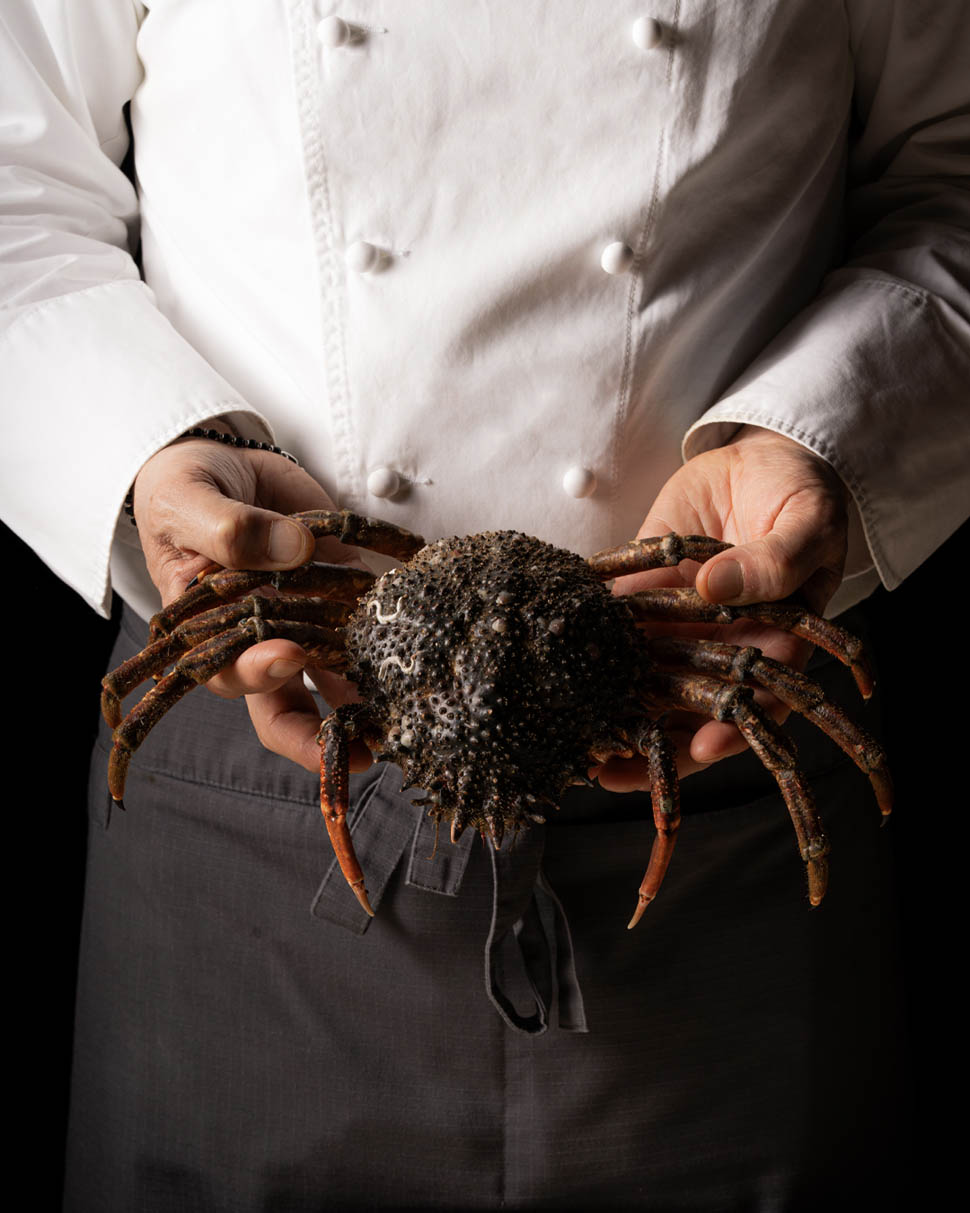
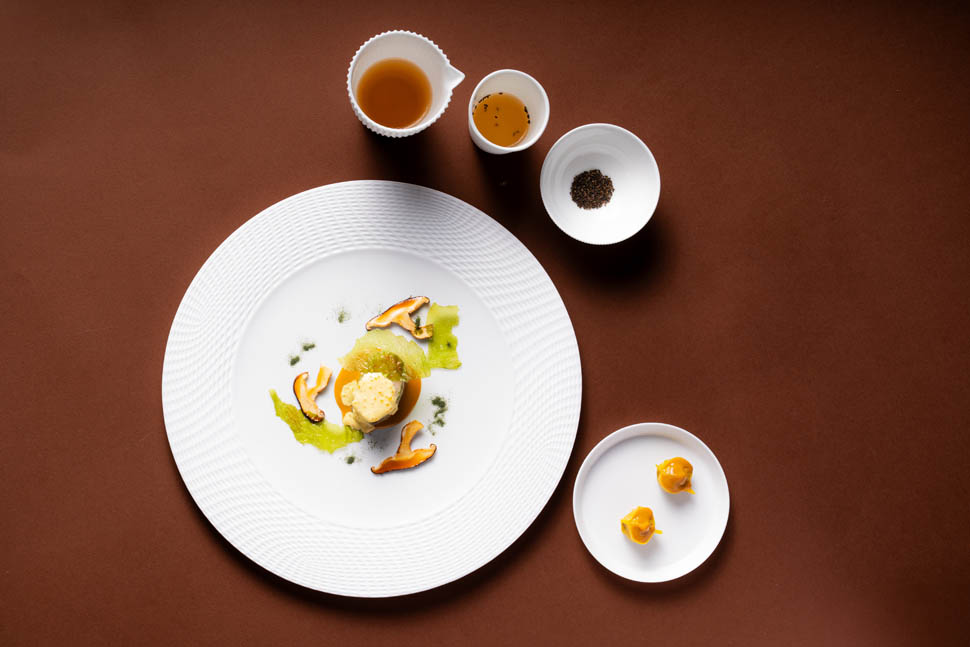
Apreda’s research has resulted in three distinct volumes. The first paved the way. The second—Speziale, the New Course—brought spice blends directly to the table, transforming them from a hidden ingredient in the kitchen into a means of communication with the customer. The third volume, Ego dal mare, is the current one: the sea as a territory for exploring natural flavors, from seaweed to shellfish, from fish to the saltiness of the wind.
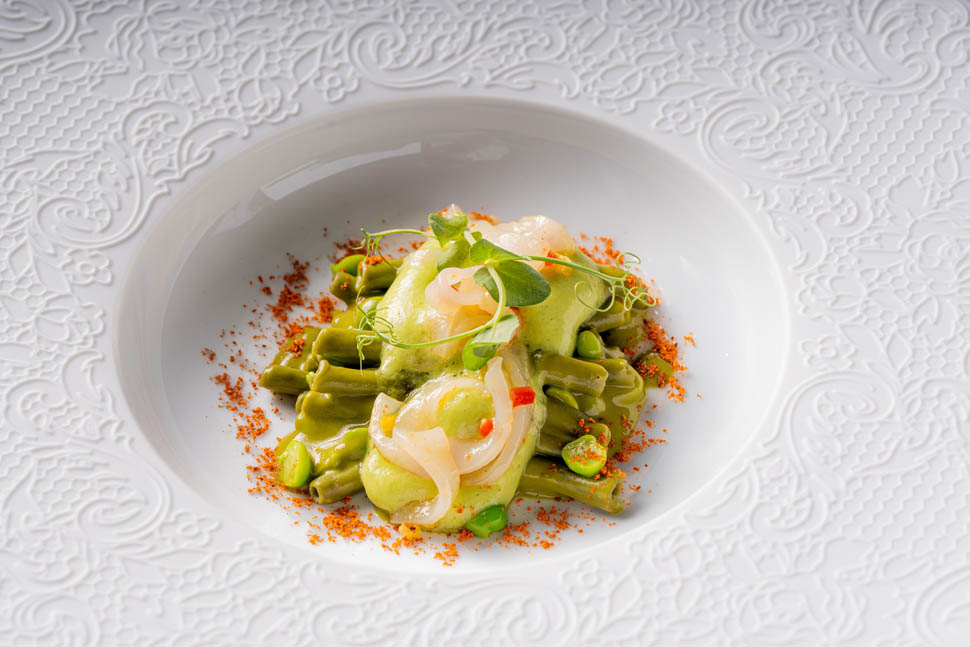
The practical result is a cuisine that incorporates as many as ten, twelve, or thirteen spices into a single dish—not for show, but with the specific purpose of replacing salt and adding depth.
On Fine Dining That Has Lost Its Way
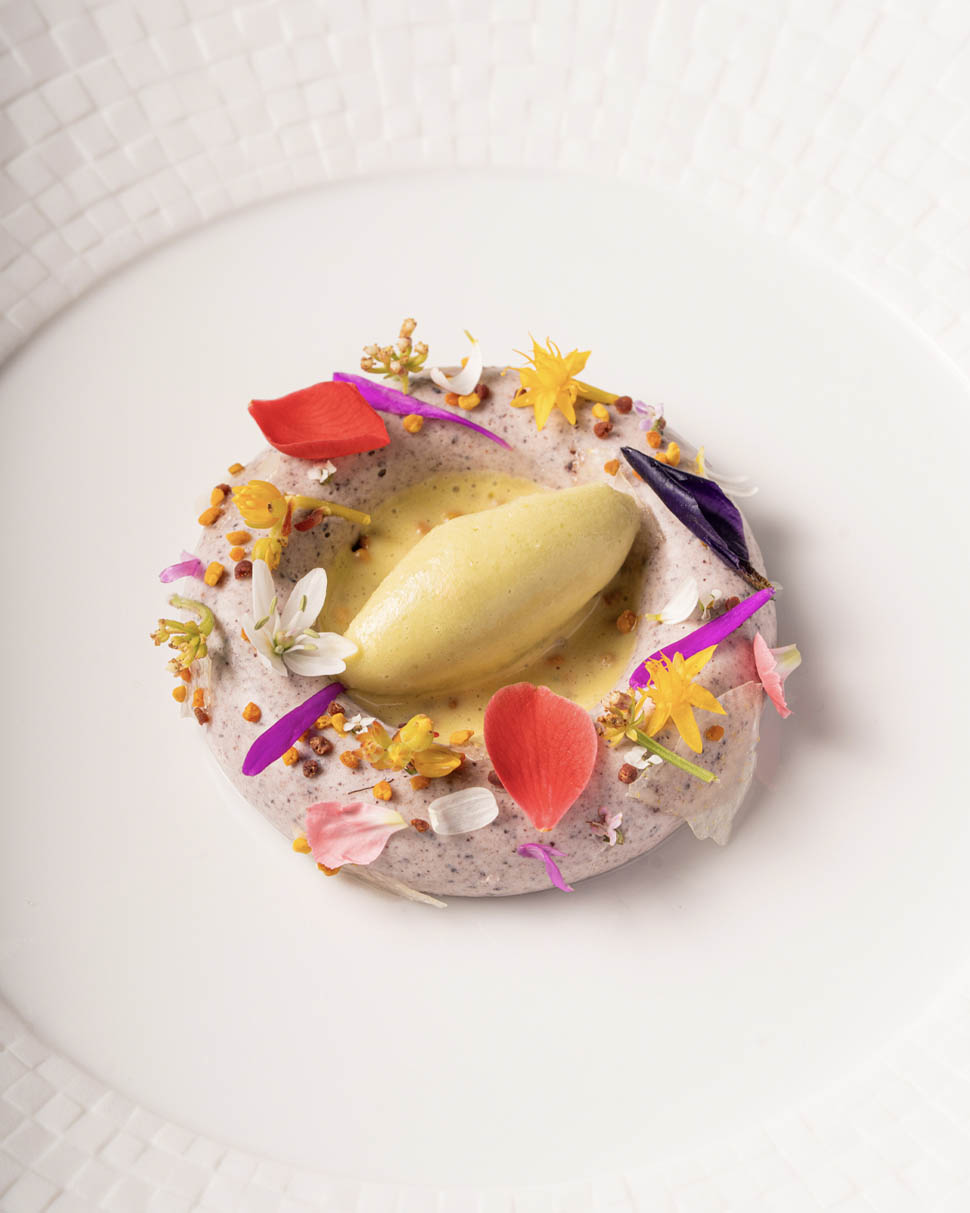
The dining experience is a delight; the entire meal follows a distinctive path that is mature, original, and features a range of flavor intensities. Francesco Apreda always strikes the right balance between elegance and vigor. It is that same vigor that he then channels into describing the current state of Italian cuisine in the interview.
"We’re in a very interesting phase, because ultimately, on the one hand, there’s the problem that we’re always moving too fast. The issue isn’t the amount of innovation, but the speed at which it’s absorbed, reworked, and reintroduced without the necessary maturity. – he continues – Before, maybe you’d go to Crippa, where you’d have twelve courses in a perfect sequence, with service tailored to that experience. Today, in certain places, you find yourself doing ten-course tastings, and there’s no sense of maturity in the kitchen or the dining room. It takes experience to pull this off. Then it’s easy to say people get tired—it’s true—but haute cuisine has nothing to do with it; the problem is those who chase it too quickly.”
The criticism isn’t directed at the young chefs’ talent; the chef is explicit on this point: “The talent is there, without a shadow of a doubt, and talented young chefs are always welcome. The problem is the system that trains them—or rather, that doesn’t train them enough. Internships last three months instead of two years. Kitchen rotations pile up, techniques multiply, but depth is lacking. – he continues – It took me six months to learn how to make a foie gras terrine. And today I can say I know how to make a foie gras terrine.” In Francesco’s eyes there is no nostalgia, no resentment, but an energy that he channels decisively into describing a pedagogical approach that the fast pace of today’s world is making impossible.
“The effect on the public is that of a gray area. People who go to a restaurant that wants to appear to be fine dining without actually being so don’t understand what to expect from a high-end restaurant, nor what they’d find in a down-to-earth trattoria. This system tears down what has been built so far, without building anything new. You can’t just call everything ‘fine dining,’” says Apreda. “Maybe that’s where we’re going wrong.”
When I ask him how he would explain fine dining to a ten-year-old, his answer is simple—just as it should be: “It’s not just about eating, but about stepping into a place where the details, the food, and everything around you are made possible by a group of people with incredible expertise, who work to give you a unique experience.” Not a word too many.
CONTACT
Idylio By Apreda
Piazza dei Caprettari 56/60, Rome;
Tel. 06.87807080;
https://www.thepantheonhotel.com/idylio-by-apreda/