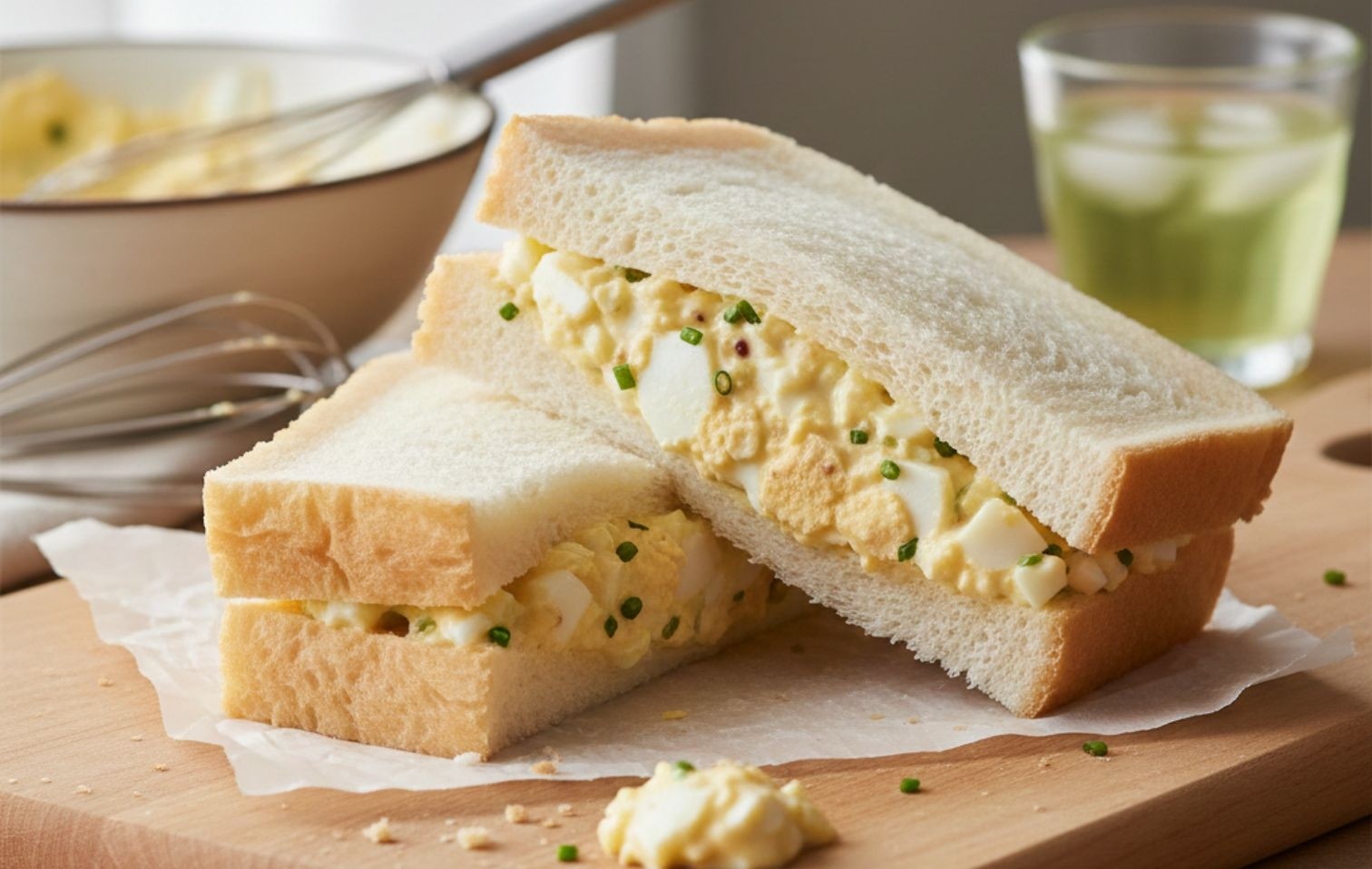
Can a sandwich tell you more about a country than many guidebooks? Definitely yes. This happens when simplicity ceases to be a shortcut and becomes an exercise in precision, care, and attention to detail. And it happens especially when all this takes place in Japan. Tamago sando, the Japanese egg sandwich that fills the shelves of convenience stores open day and night, was born from this very logic: few ingredients, no special effects, an everyday food so perfect that it has become a ritual.
It is one of those flavors that anyone who has been to Japan continues to seek out upon their return, not out of exotic nostalgia, but because that soft bread encapsulates a precise, recognizable, and consistent gastronomic philosophy. In konbini, the famous Japanese convenience stores, tamago sando is one of the cheapest, quickest, and most reliable ways to eat well. It is inexpensive, available everywhere, and never disappoints. Anthony Bourdain understood this years ago, dedicating one of his most quoted phrases to it: “The unnatural and inexplicable pleasure of Lawson's egg salad sandwich.” This statement helped transform this everyday snack into a small gastronomic legend, destined to become popular in various formats from Spain to Italy (so much so that La Vanguardia magazine decided to explore the phenomenon here).
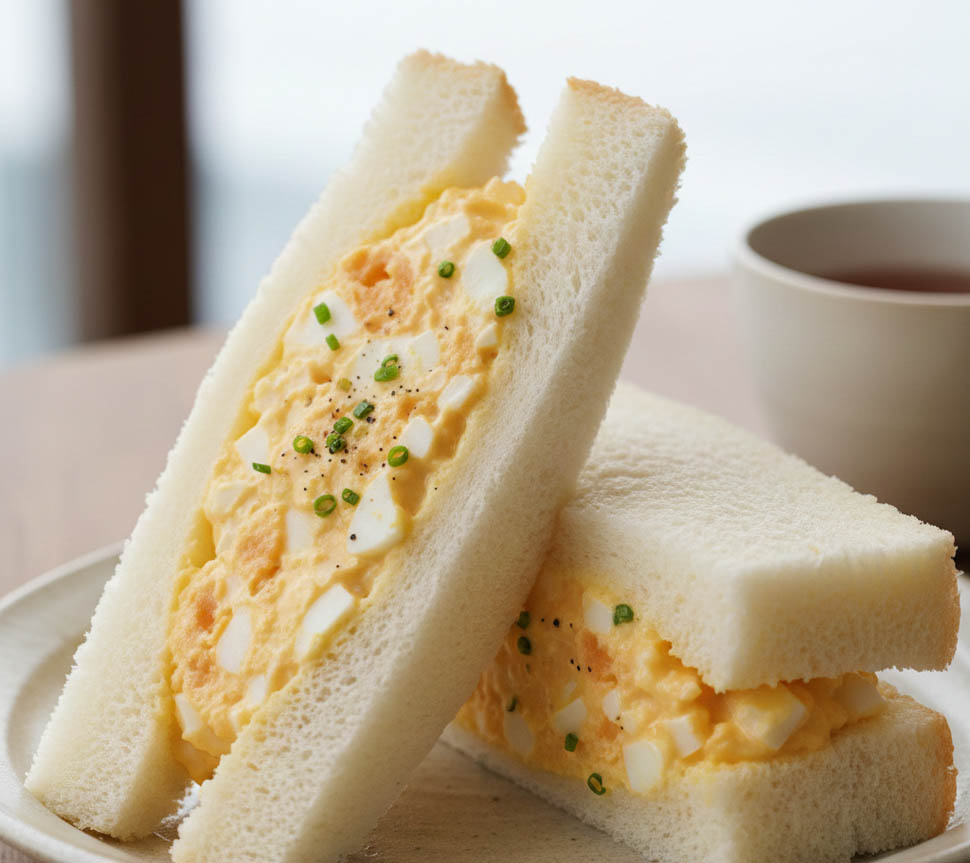
Tamago sando: where to find it and how it's made
Egg sandwiches fill the shelves of 7-Eleven, Family Mart, and Lawson, the three major chains that dot the urban landscape of Japan. At a glance, they seem identical, but those who know them well can spot the differences. “The 7-Eleven sandwich is more generous and also the most expensive, the Family Mart tends to be thinner and slightly cheaper, while Lawson is in the middle, with slightly thicker bread,” explained Laura Tomás, the driving force behind the Japonismo project and an expert on Japanese gastronomic culture, here at La Vanguardia.
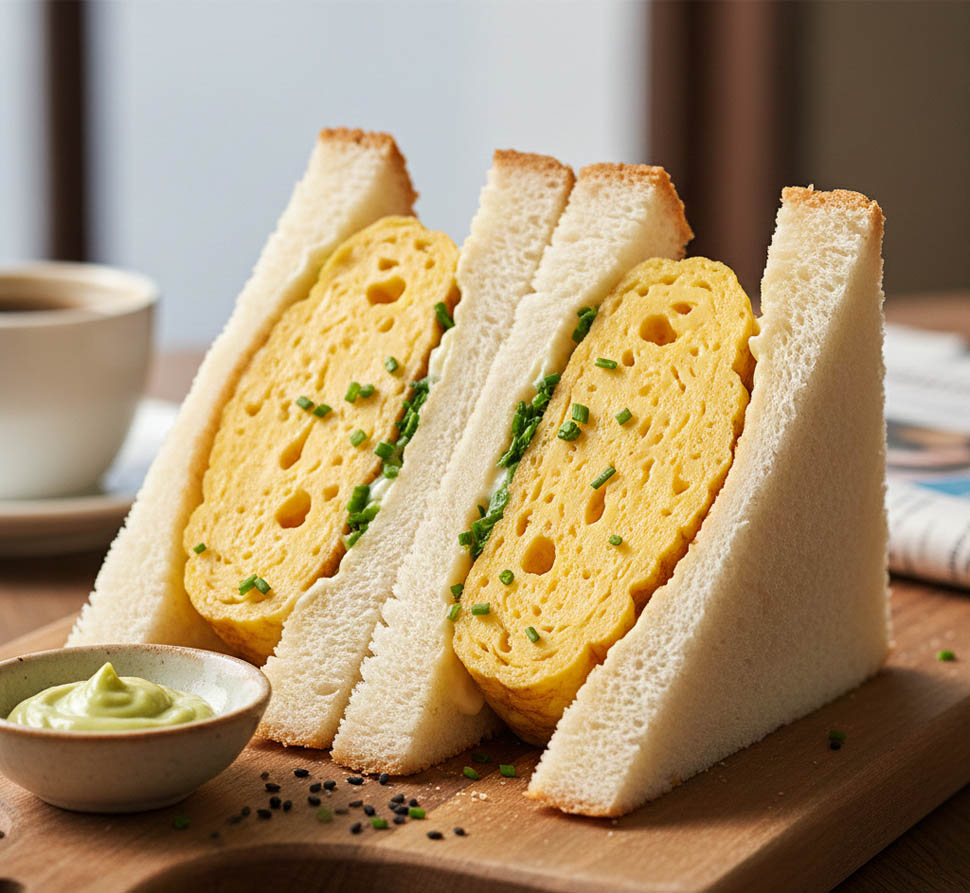
Minimal, almost imperceptible distinctions that nevertheless reveal the level of attention with which even a shelf product is designed. The charm of tamago sando lies precisely in this quiet perfection. No ingredient tries to impose itself on the others, no component is superfluous. “It is perfect in its simplicity, and this is precisely what allows the ingredients to take center stage,” observes Tomás. The first key element is shokupan, Japanese white bread with a soft and slightly sweet crumb, designed to accommodate the filling without overpowering it. It is not a simple support, but a soft and resilient structure, capable of absorbing without yielding.
Then comes the egg, treated with a care that surprises those accustomed to coarser versions of Western egg salad. The egg white and yolk are processed separately, then recombined into a uniform, smooth cream without lumps. This technical choice contributes to the sensation of harmony when bitten into, avoiding unwanted contrasts in texture. But all this would be incomplete without the element that more than any other defines the identity of the sandwich: Kewpie mayonnaise.
The secret of the taste: the umami of Kewpie mayonnaise
Kewpie is one of the most successful examples of how Japan has reinterpreted Western products, bringing them to a level of absolute recognition. Made only with egg yolks and rice vinegar, it is creamier, rounder, with a measured acidity that supports the taste of the egg without overpowering it. In addition, there is the umami of monosodium glutamate. This is a detail that is often misunderstood, but central to the creation of that full and persistent flavor that makes tamago sando so satisfying.
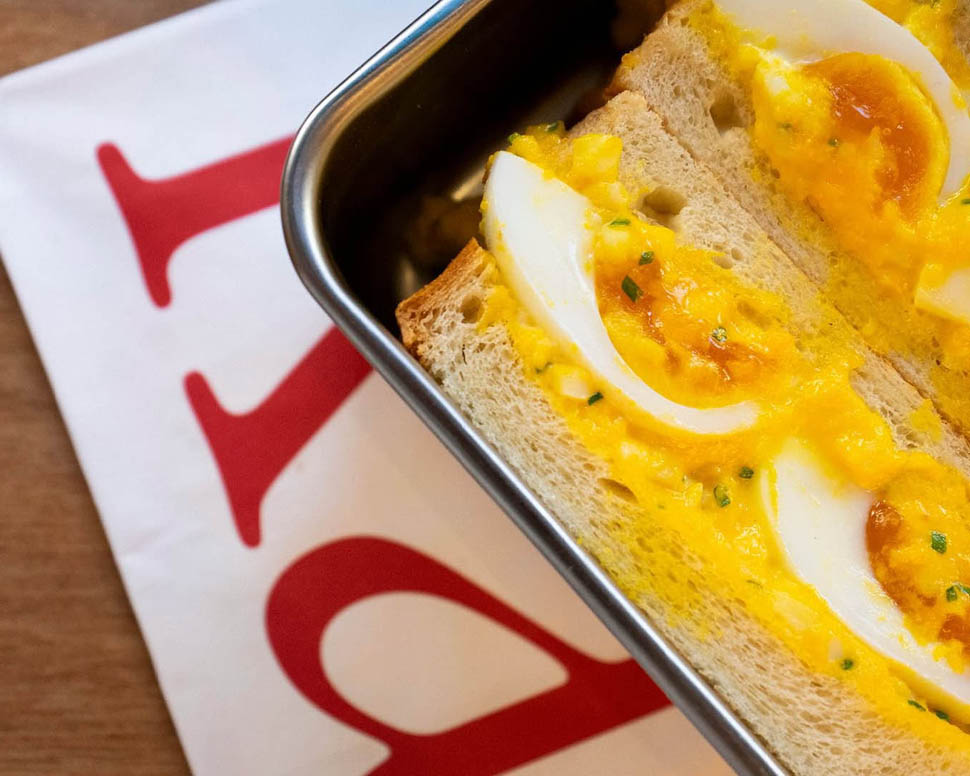
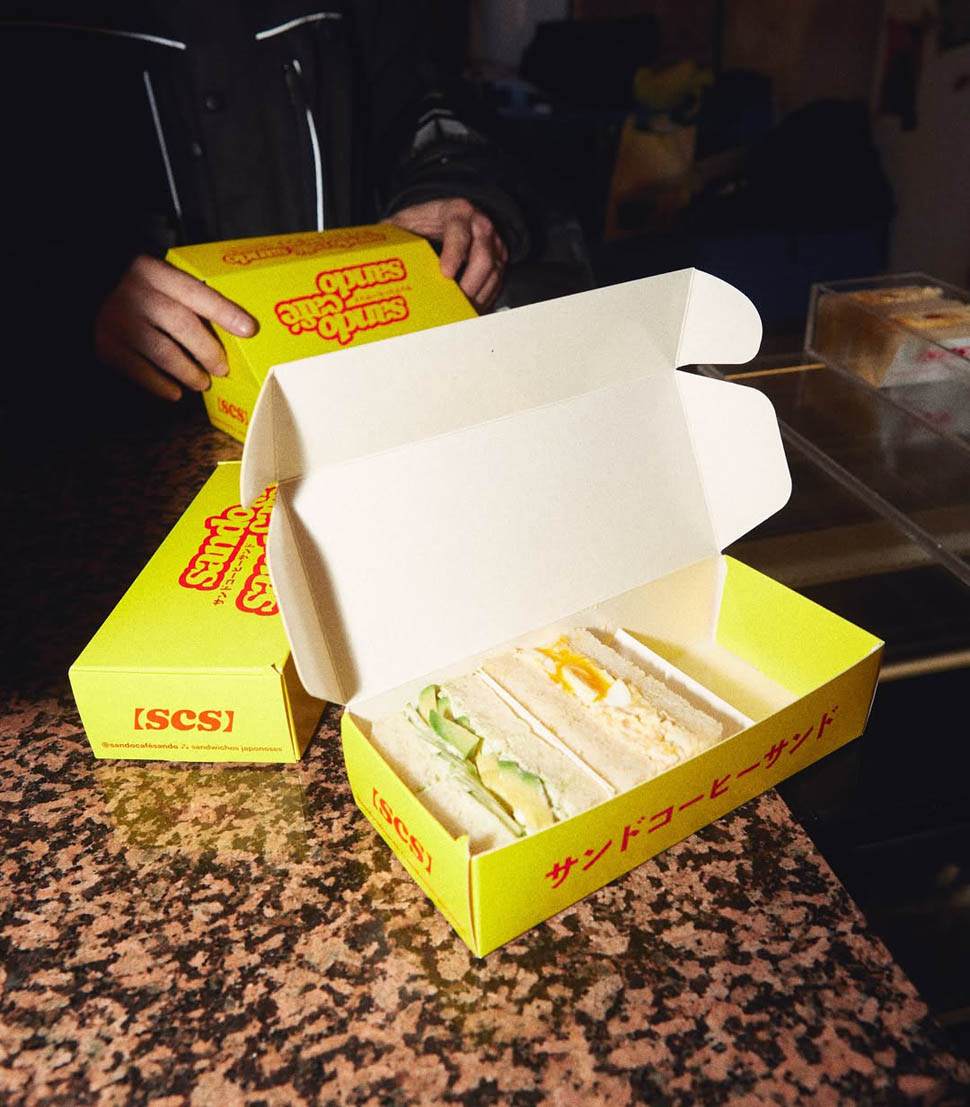
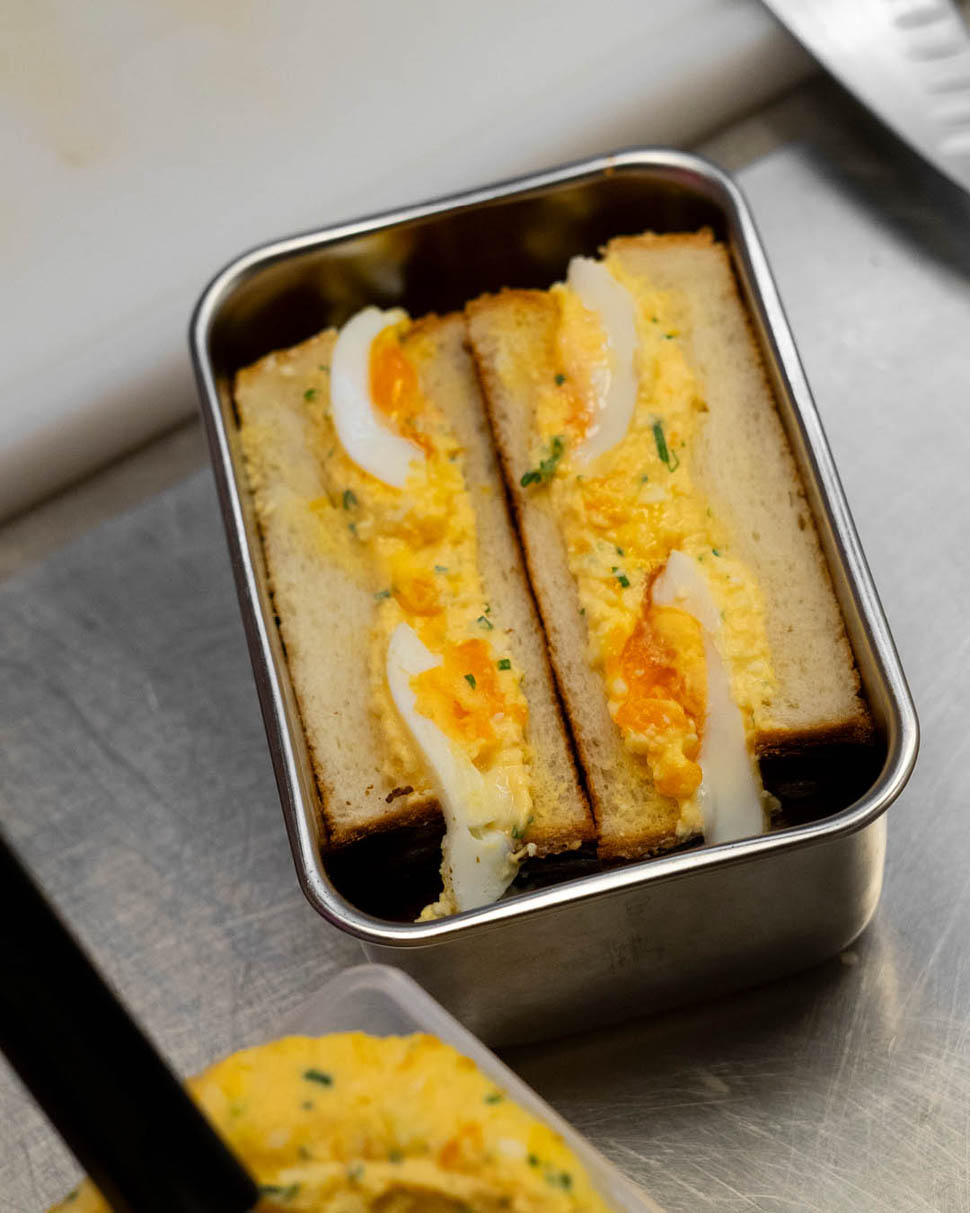
Outside Japan, replicating this experience is no easy task. Kewpie mayonnaise can be found in specialty stores, but it remains a niche product, much less widespread than other symbols of Japanese casual cuisine such as katsu sando. Yet some have decided to give it a try, with respect and method. In Barcelona, for example, Sando Café is one of the few places to have included tamago sando on a menu dedicated to Japanese sandwiches, alongside other iconic dishes such as fruit sandwiches. The café, which opened about a year ago near the Arc de Triomphe, was born out of a genuine passion for Japanese culture. Lepes recalls spending weeks in Tokyo before the opening, tasting every possible version of tamago sando. “When I got back, it took months to find the right balance,” he explains, pointing out that simplicity often takes more time than complexity. Here, the sandwich is prepared by hand, far from any industrial logic. In the kitchen, Micaela Ciar personally takes care of the filling, working with eggs from free-range hens, chopped separately and mixed with Kewpie mayonnaise. The bread is made to order by an artisan baker in Poble Sec, while a small addition of cream is the only personal concession, designed to increase the creaminess without altering the original profile. The result is offered in two formats: one more compact and generous, the other larger, with a whole hard-boiled egg and the option of adding ham or bacon, as is the case in some specialized Japanese restaurants.
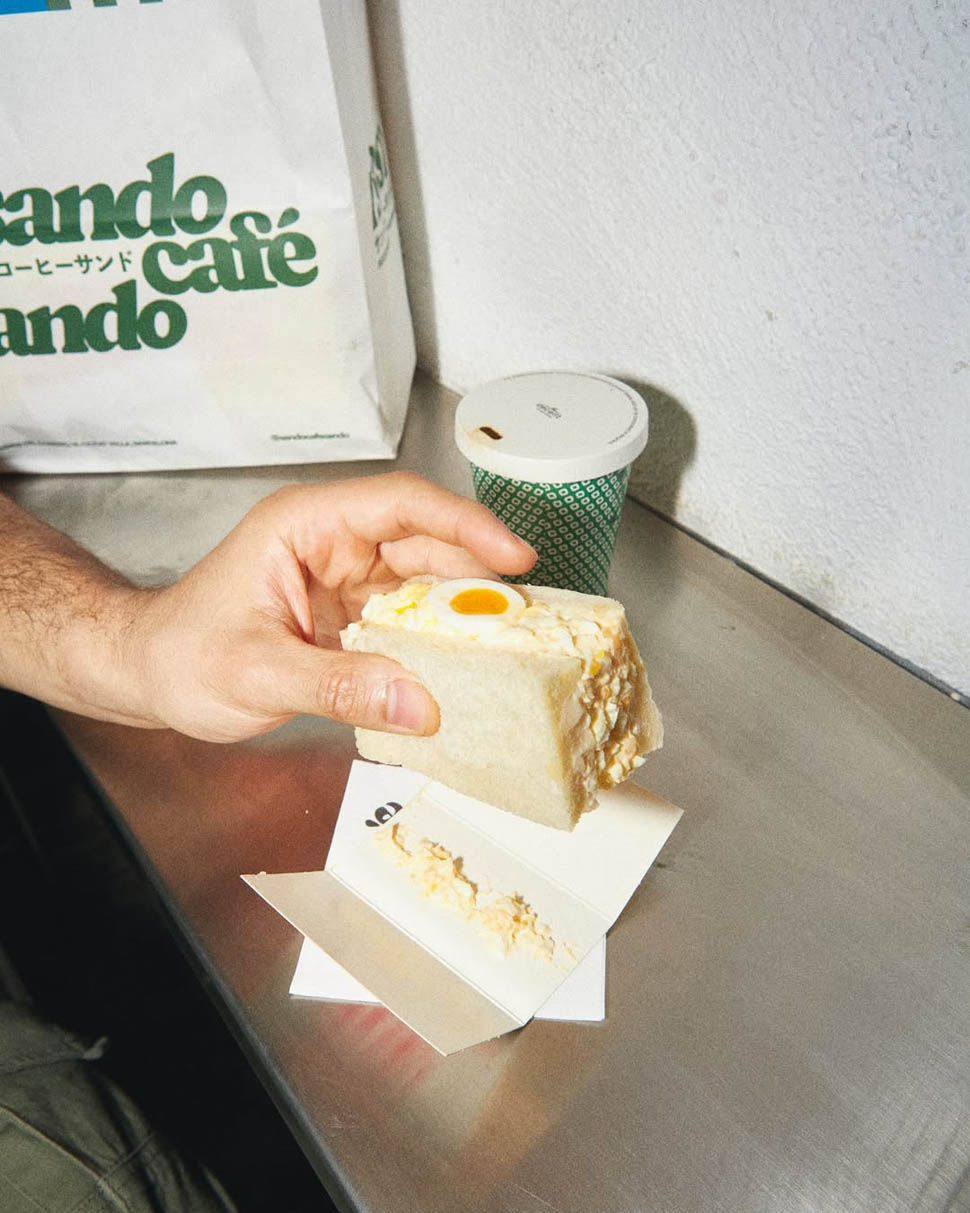
Even the temperature detail is not random. If the sandwich is already ready, a few hours of rest and slight cooling improve the overall texture, something that is taken for granted in Japan and explained to customers here as a matter of course. A final sprinkling of chives completes the dish without distracting from its essence. In Italy, numerous restaurants now offer Japanese tamago sando; examples include Yoji Tokuyoshi's Katsusanderia in Milan and Sushisen in Rome.
A philosophy enclosed between two slices
Tamago sando originated as a derivation of Western cuisine introduced to Japan in the 19th century, but over time it has undergone a profound transformation. What elsewhere remains an ordinary sandwich, here becomes an exercise in absolute dedication to the gesture. This attitude has a specific name: Shokunin, the constant pursuit of perfection through daily work, even when the object of one's commitment appears simple or marginal.
Inside an egg sandwich sold for a few yen, eaten standing up or sitting on a bench, there is a concept of cuisine that rejects approximation. Tamago sando does not demand attention, it conquers it. Without fanfare, without forced aesthetics, with the serenity of those who know that quality, when it is authentic, needs no explanation. All you need is an egg.