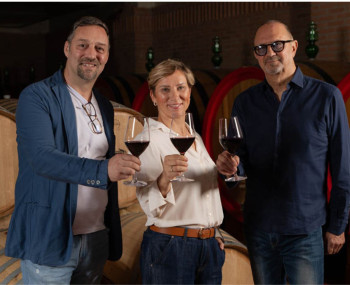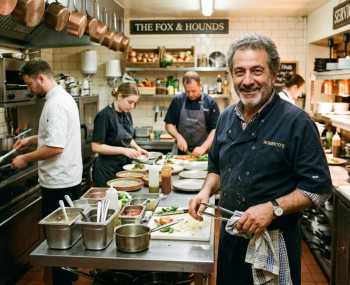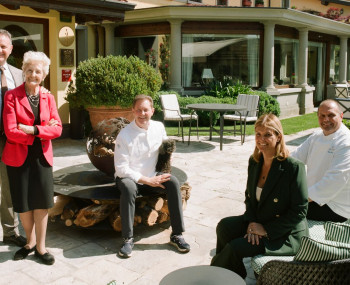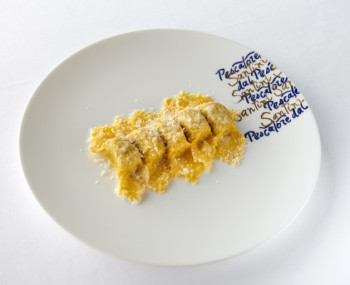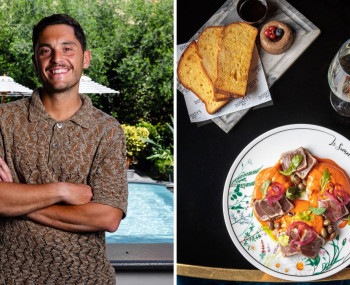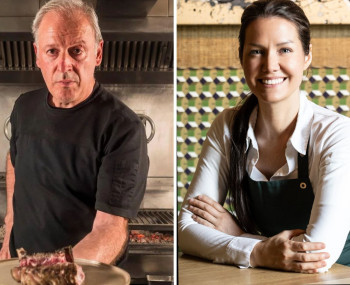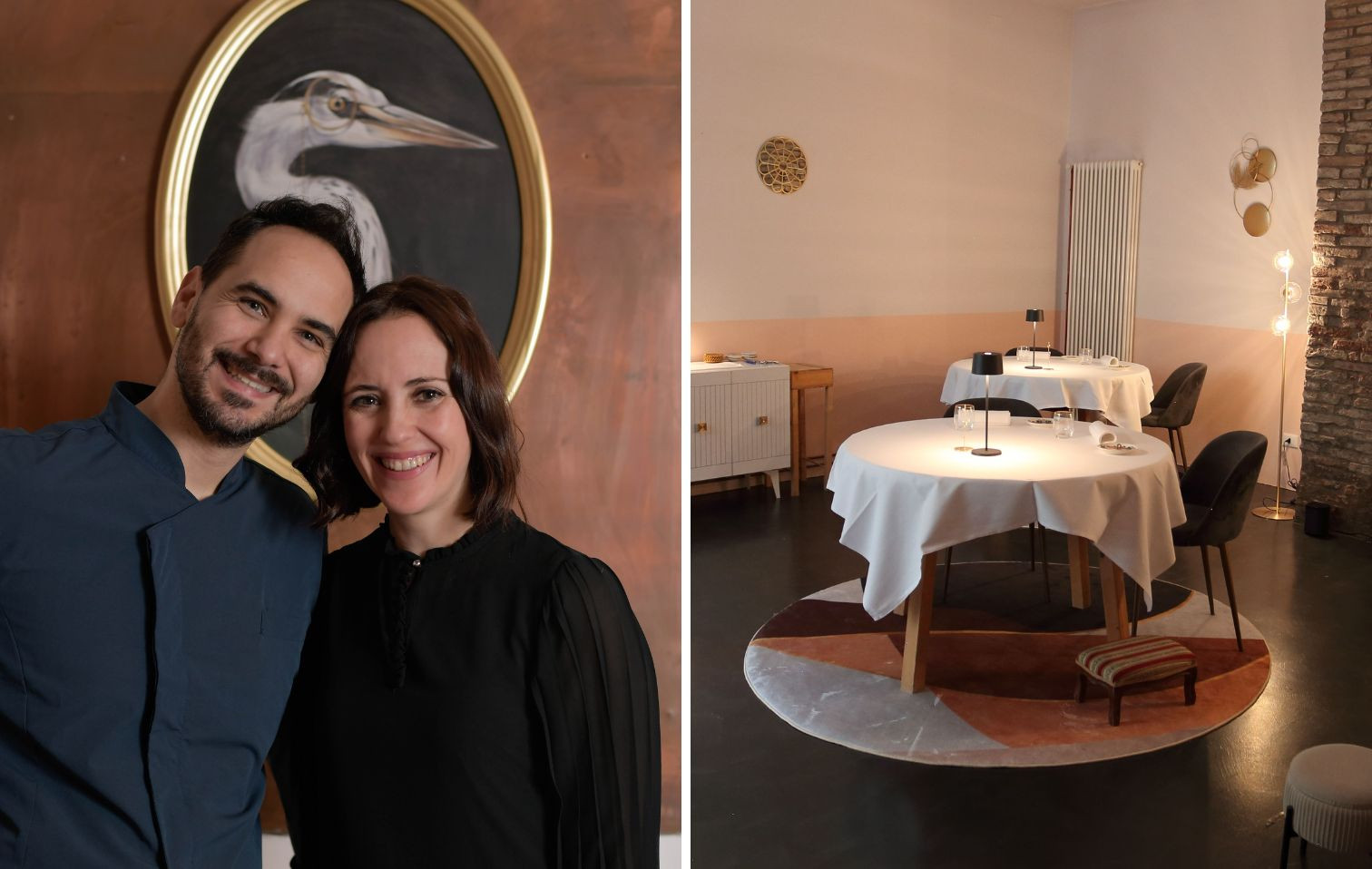
A couple, a restaurant in an 18th-century building, and a warm welcome that stems from the harmony between the kitchen and the dining room: a wonderful discovery in Rimini, where Luca Racis and Simona Saragoni have launched a venture worth keeping an eye on.
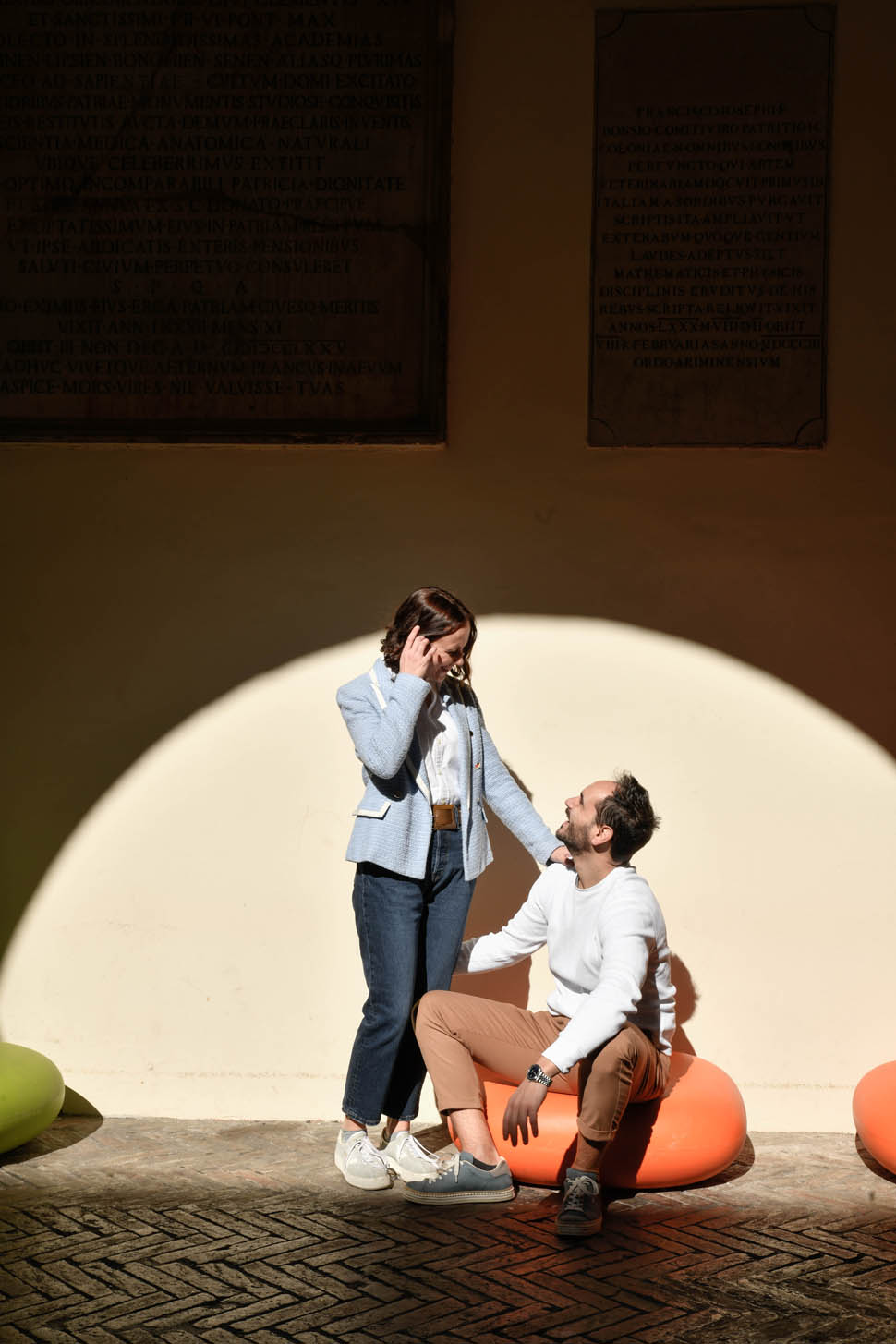
“I want a woman!”: that’s what Teo shouted, perched on the apricot tree, in one of the iconic scenes from Amarcord, the quintessential film of Fellini’s oeuvre, inspired by a poem by Tonino Guerra: The Cat on the Apricot Tree. Rimini is still Rimini: fifty years after the film’s release, it retains the same authenticity that characterizes the towns along the Romagna Riviera. In the historic center, inside Palazzo Ferrari, the restaurant owned by Luca Racis and Simona Saragoni—which bears this very name—has found a home. Thus the circle closes, with a tribute to two undisputed protagonists of Romagna’s culture and the Riviera “of yesteryear,” helping to recapture a part of that world and give it a completely new meaning.
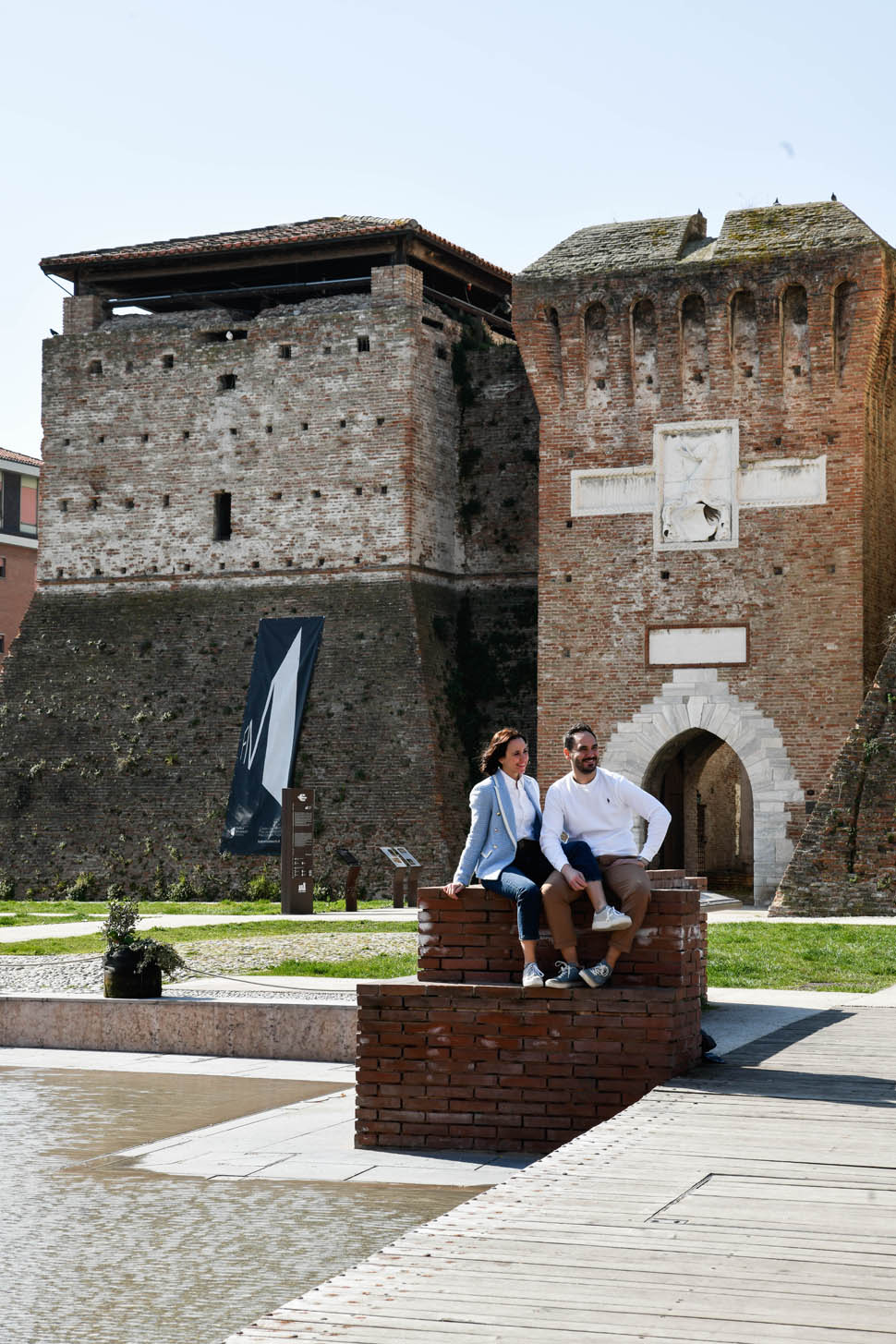
A shared vision that evolves from a family history into a life’s work
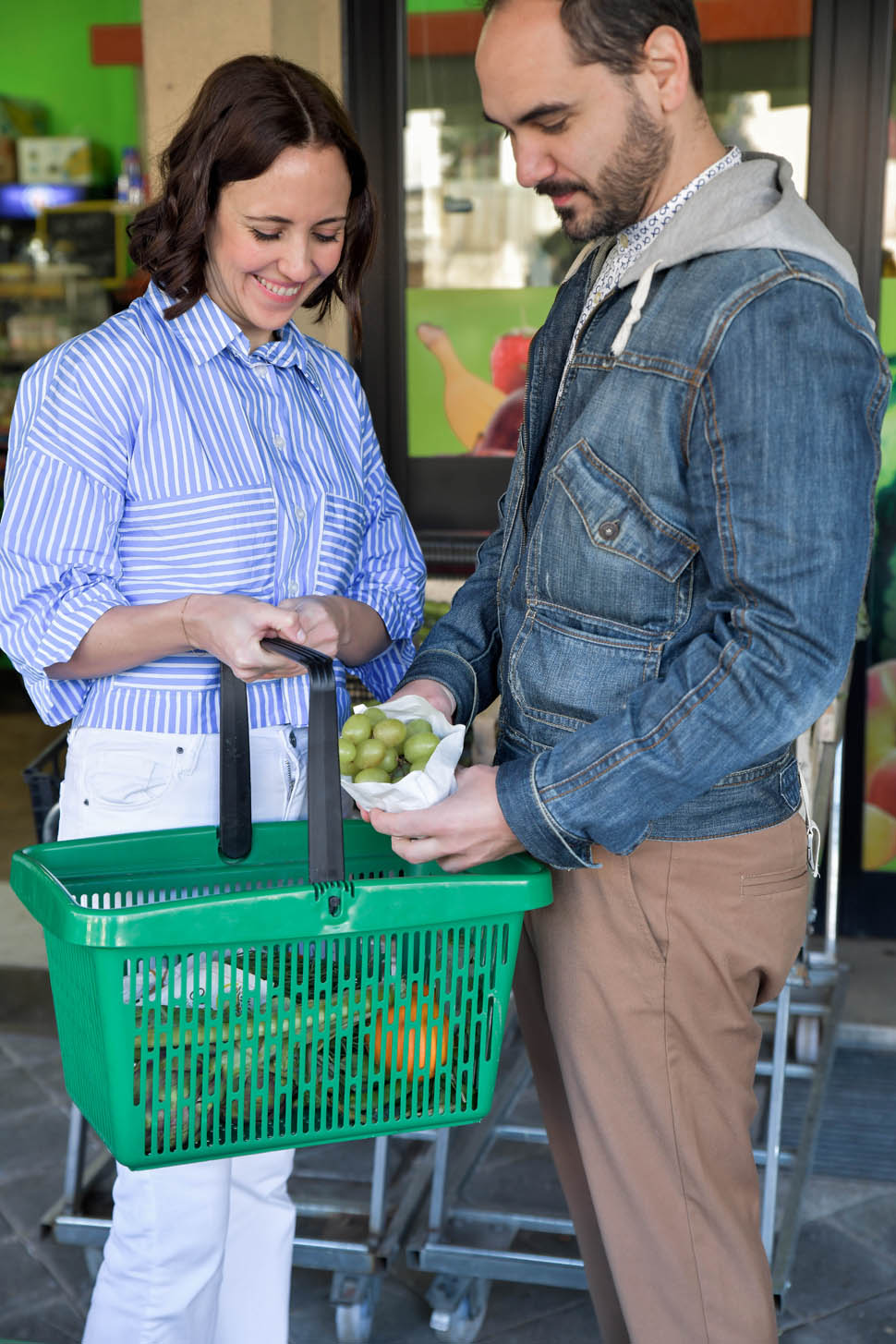
Luca Racis and Simona Saragoni, chef and hospitality manager, respectively, and owners of the restaurant, come from the world of hospitality. Their story weaves together Rimini and France, and is deeply rooted in the great tradition of hospitality and fine dining from across the Alps. From the Troisgros establishment, where Simona’s grandfather, Fernando, worked as a maître d’, to her experience at Bocuse, a journey emerges in which the culture of hospitality intertwines with that of gastronomy. A passion that Simona has made her own over time, transforming it into a personal vision of service and the relationship with the guest.
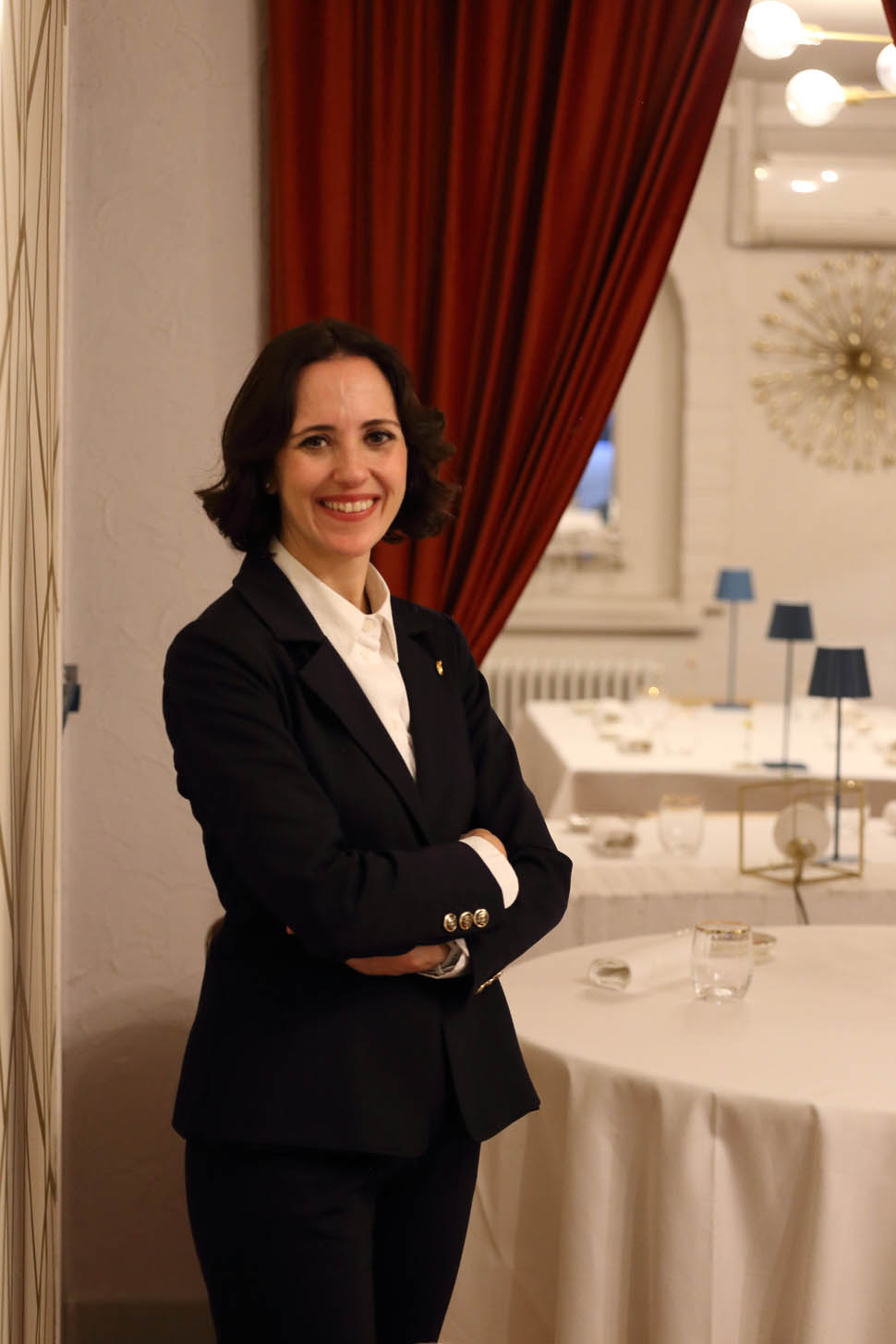
It was while sitting at a table in a small restaurant in Bordeaux that she and Luca began to envision a place of their own, shaping a project that would bring together their experiences, sensibilities, and memories into a shared vision of hospitality. “When you walk in here, you’re truly walking into our home. My grandfather passed down to me a spirit of hospitality—the way to be with people. I think that’s the most important thing he taught me,” says Simona Saragoni.
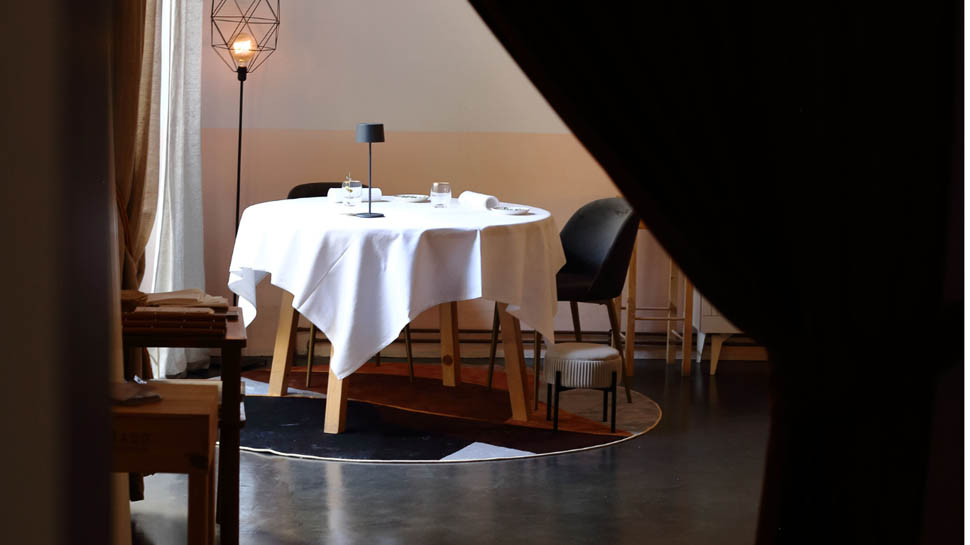
Hospitality is evident in the details, from the table setting to the wine cellar
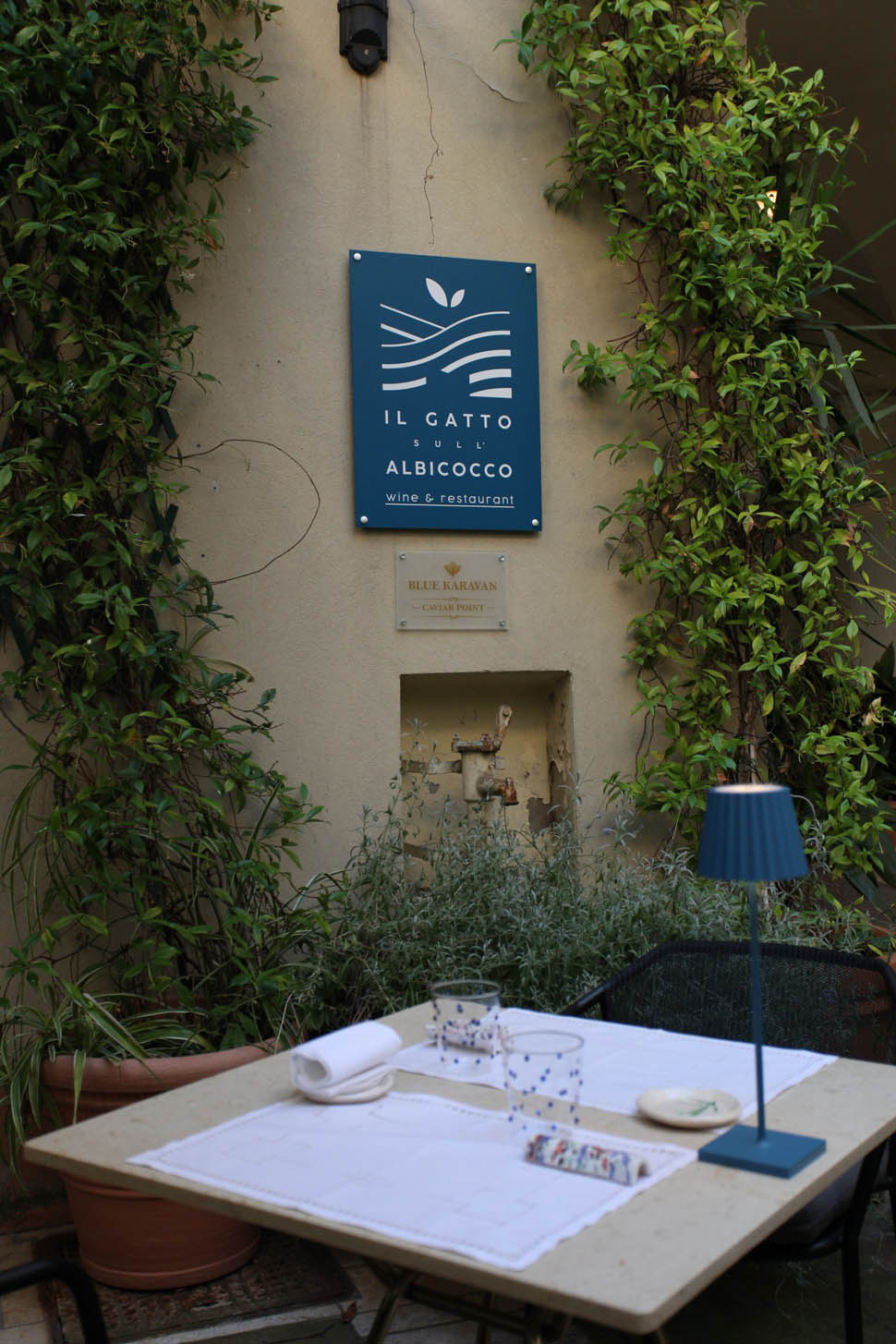
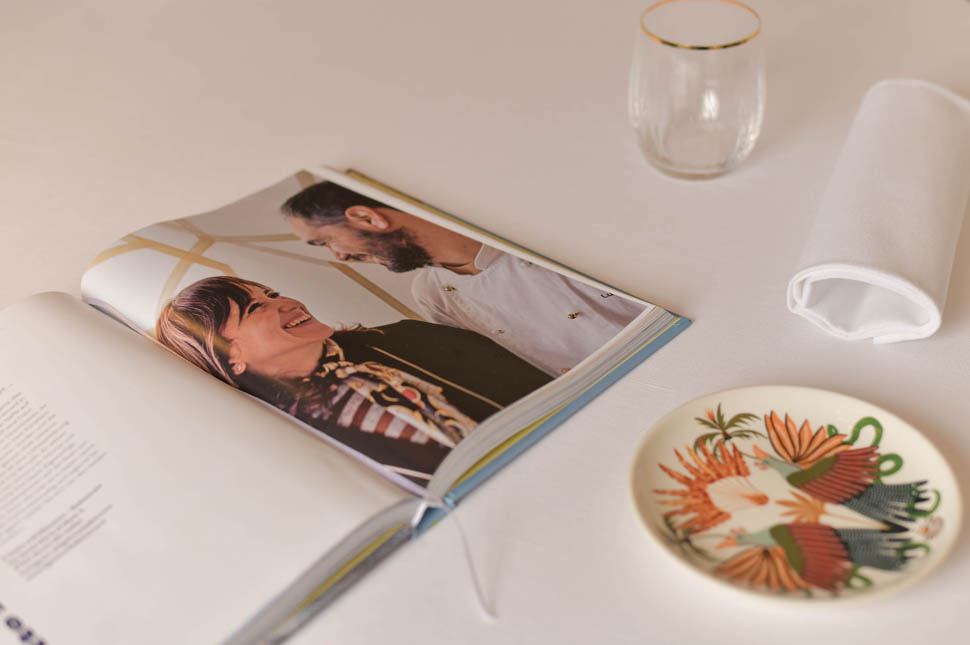
Inside the courtyard of Palazzo Ferrari, a small outdoor seating area, meticulously designed down to the last detail, welcomes guests amid plants and green spaces, setting the stage for the restaurant’s intimate and elegant atmosphere. The interior is divided into two dining rooms, each featuring a different table setting but united by the same attention to detail: for example, vintage linen tablecloths, cutlery rests, and ceramics crafted by a local artist. The restaurant opened in 2021, but it wasn’t until July 2026 that Il Gatto sull’albicocco found a home in Rimini’s historic center, in this 18th-century palace. Since then, it has become what it is today: a place where guests can feel at home.
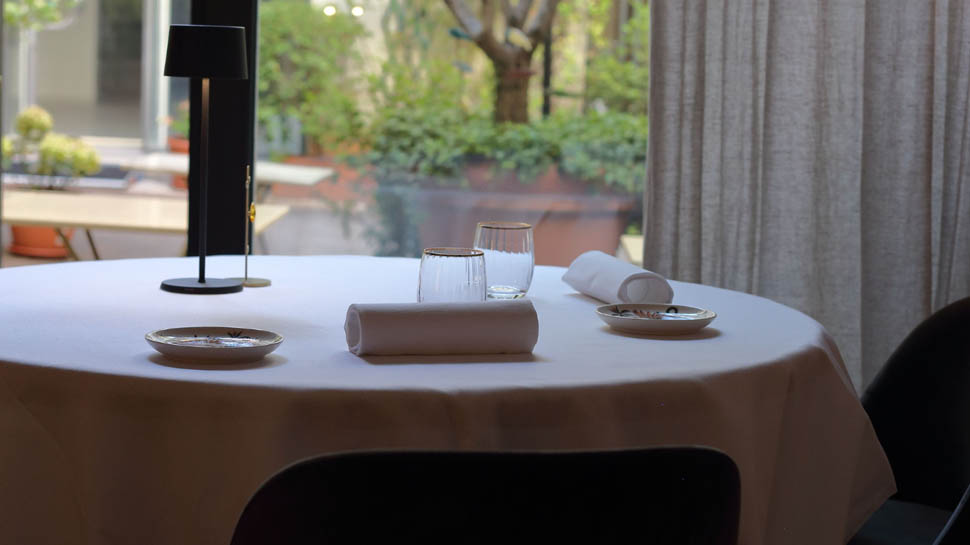
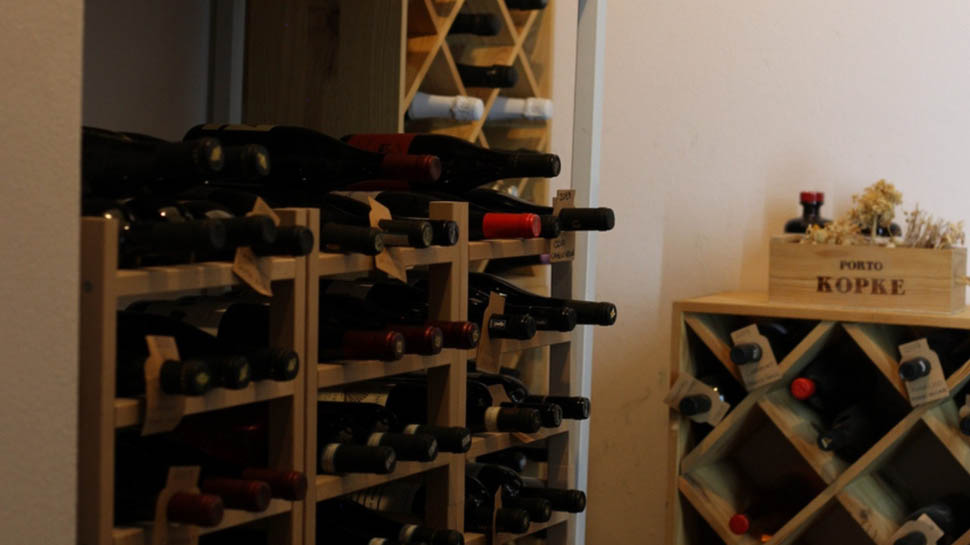
How does all this play out in practice? One example is the opportunity for guests to browse Simona’s small, carefully curated wine cellar directly, evaluate the bottles, and choose them on their own—a way to give customers the freedom to decide what to serve based on their own tastes. It’s a simple gesture, but it evokes the spontaneity of a home-cooked dinner and helps make every experience more personal and authentic. In the dining room, Simona’s professionalism shines through, combined with her personal touch—likely shaped by that special something in her DNA; the service is precise and attentive, never ostentatious, and what you sense is the perfect balance between the kitchen and the dining room.
“I want to draw attention back to something fundamental: when you’re at the table, you need to feel good, and that happens above all thanks to the service. If my dishes weren’t described the way Simona describes them, they wouldn’t have the same meaning—and the reverse is also true: without my dishes, her story wouldn’t convey the same message,” explains Luca Racis.
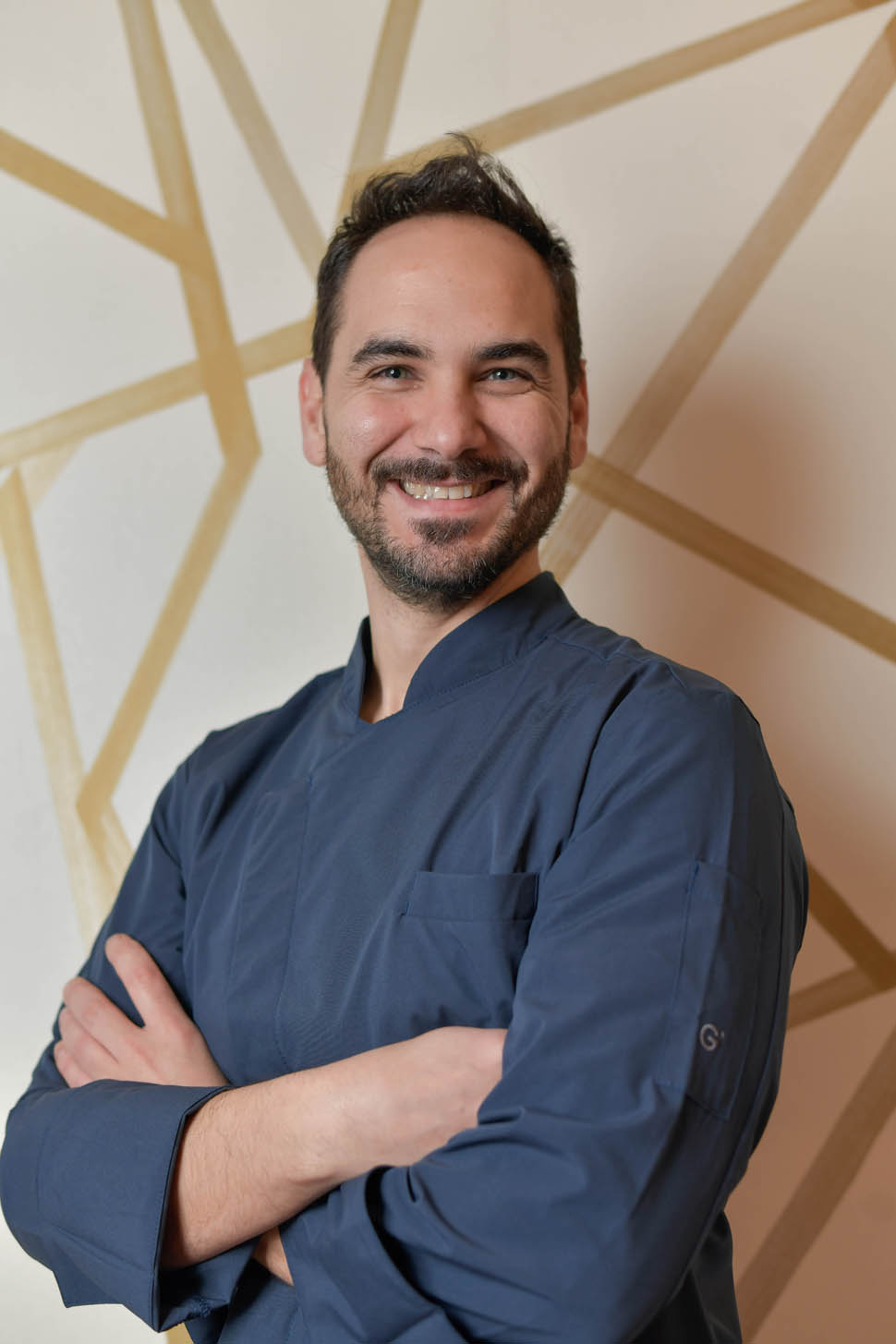
Luca Racis’s Free-Spirited Menu
But let’s get down to specifics and talk about the cuisine. Racis embodies the personality of a chef who pursues a personal and experimental culinary journey, rooted in the traditions of Romagna and enriched by influences from his homeland, Sardinia. These are two regions that are distant not only geographically but which, in this menu, find the opportunity to meet on equal footing: flavors, techniques, and memories give life to a cuisine that does not simply seek to reproduce tradition but to reinterpret it through his own life experiences.
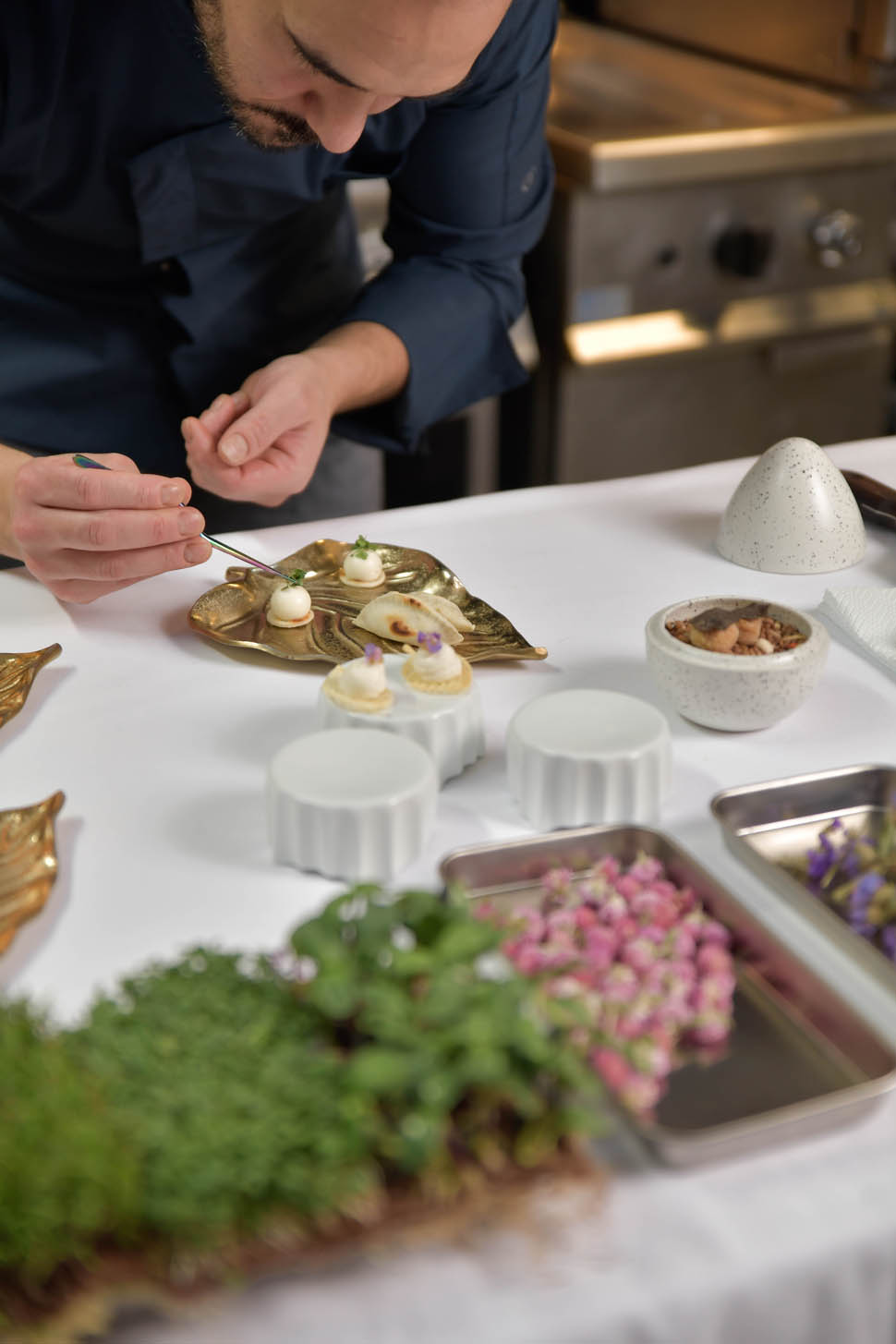
The amuse-bouches draw on the flavors of traditional Romagna home cooking, creatively reimagined and enriched with elements that offer a fresh take on them. We start with the passatello bonbon with black truffle, followed by the piadina with a ball of stracchino, gel, and a rocket leaf, the “Bacio di dama” with fresh goat cheese and smoked pear jam, and finally, rice chips with Iranian saffron and “formaggio di fossa”.
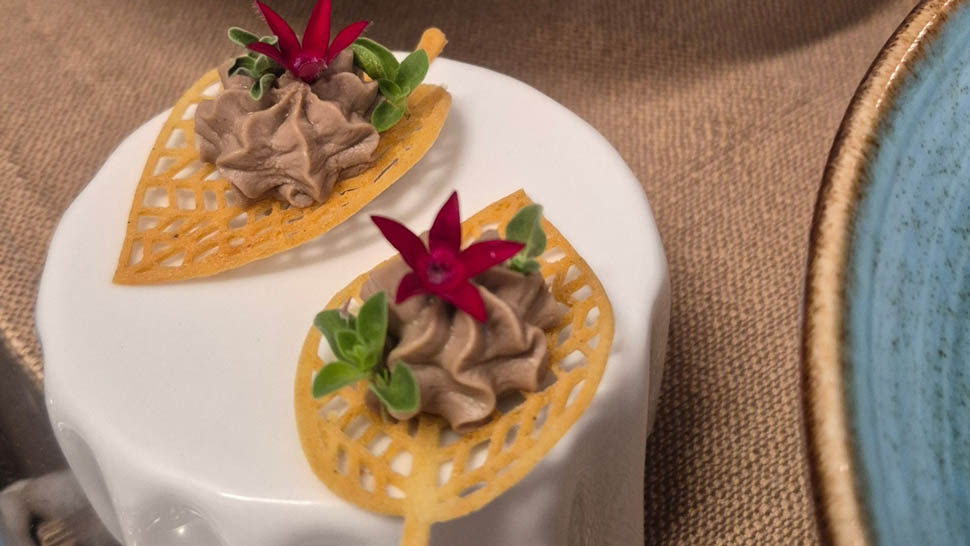
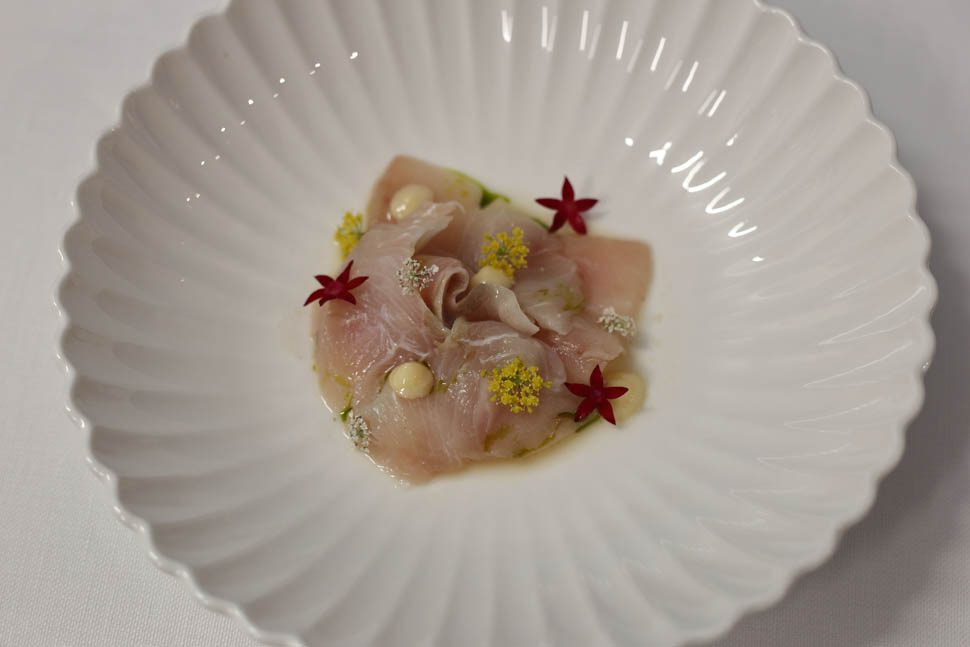
Accompanying the tasting is Colletto’s Blanc de Noirs, a 100% Pinot Noir aged for sixty months on the lees, whose bubbles prove to be a balanced and perfectly matched pairing. The tasting continues with Sea Bass, candied lemon gel, Adriatic Sea water, smoked brown stock, and fennel flowers and leaves—a raw dish where the exceptional quality of the ingredients shines through, enhanced by the carefully selected accompaniments. The seafood dish gives way to Quail in Three Textures: a double-breaded fried thigh with Sardinian salt, Pentas flowers, and Alisso; a double-cooked breast with its own sauce, accompanied by a piadina wafer and Piedmontese salsa verde; and, to conclude, a piadina wafer with quail pâté and Sicilian oregano.
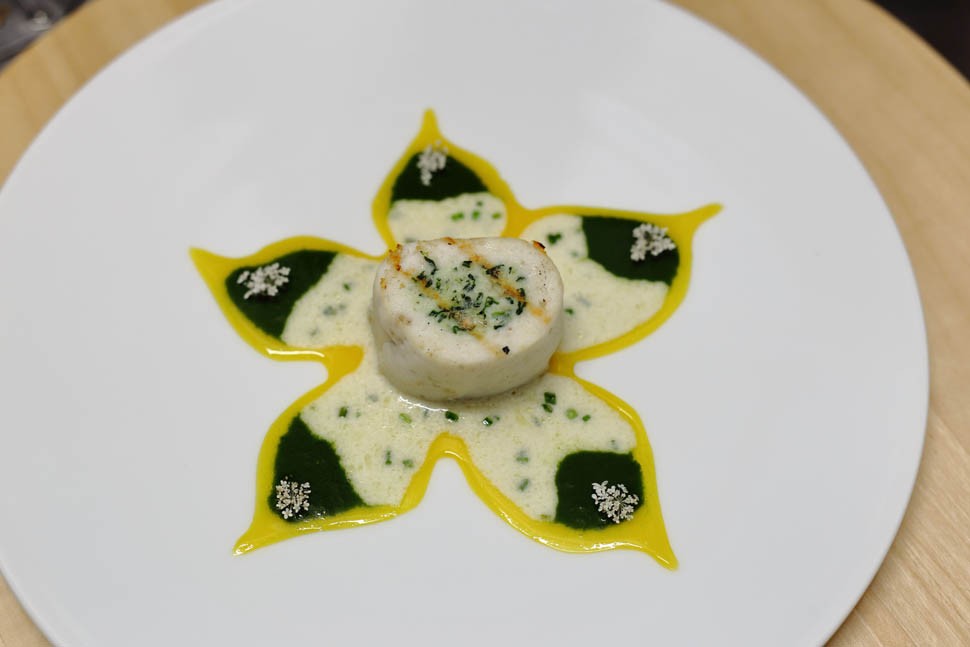
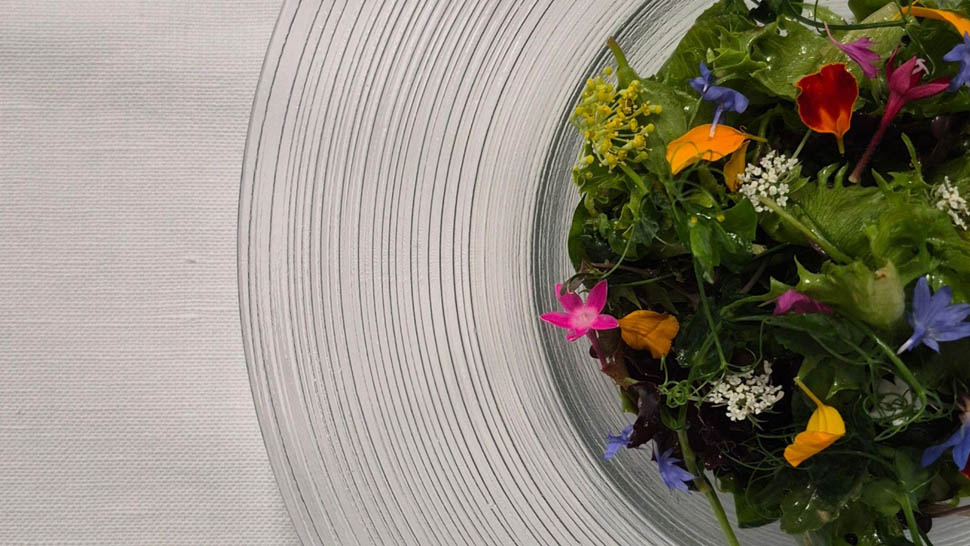
The Risotto described below is a first course intertwined with a family history; it is finished with oyster gelato à la bourguignonne, caviar butter, caper powder, and dried caviar—a creation in which the various savory notes are balanced by the sweetness of the oysters and butter. We’ll let Simona tell the story of the dish’s origins; no one can convey its true meaning better than she can. Double-cooked pork belly: first cooked in oil and then finished on the kamado, it is served with a reduced sauce of almonds and sprout vinegar, made with the pork’s cooking juices, ginger, almonds, and scallion oil. On the side, a salad of vegetables and flowers—strictly seasonal and locally sourced—dressed with an emulsion of oils, local balsamic vinegar, and ginger.
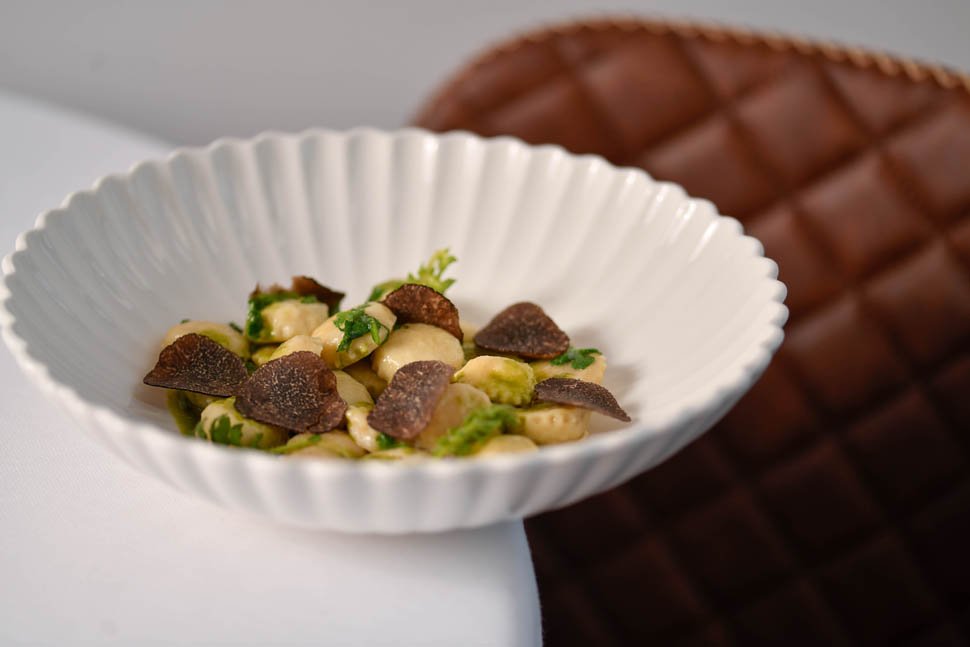
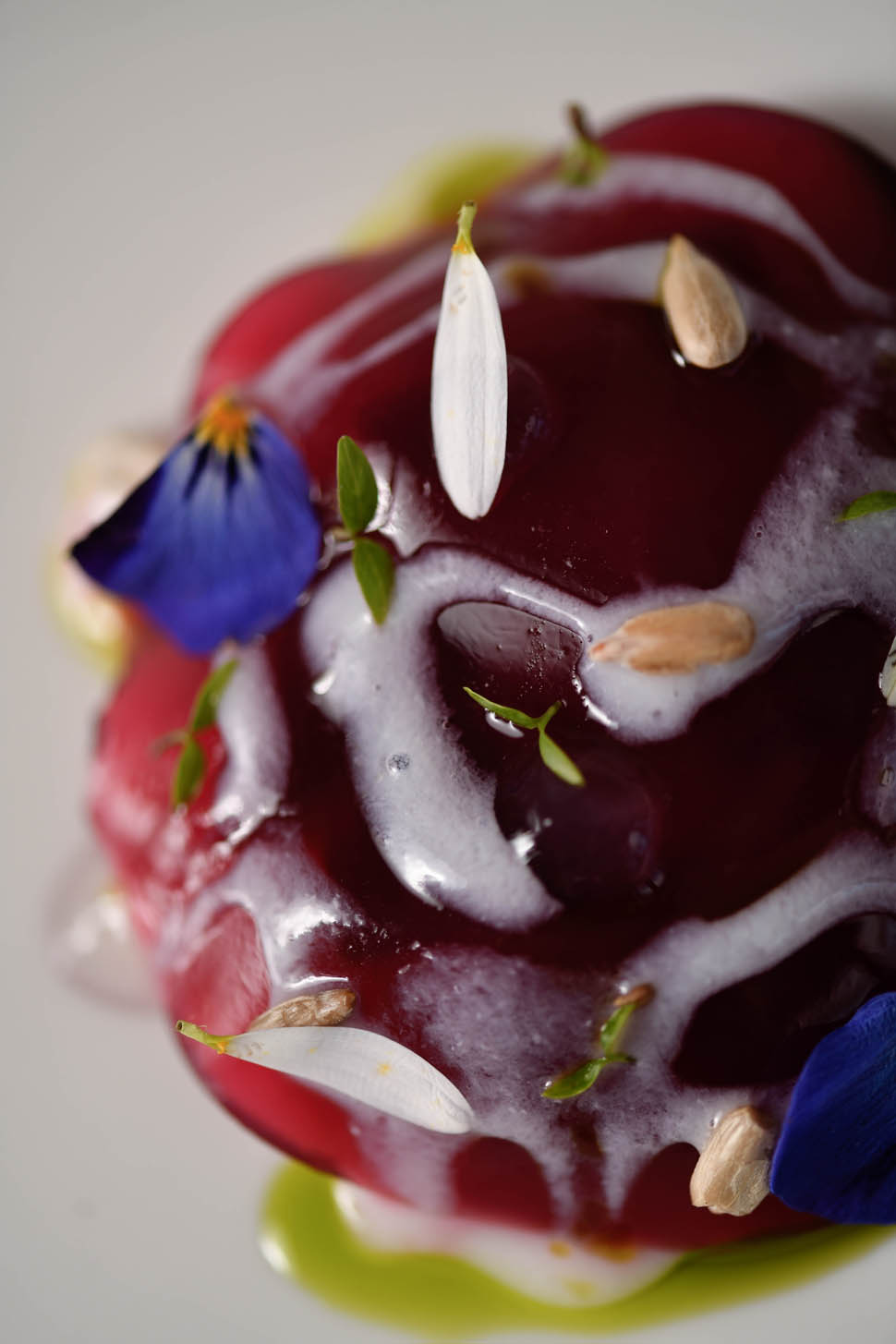
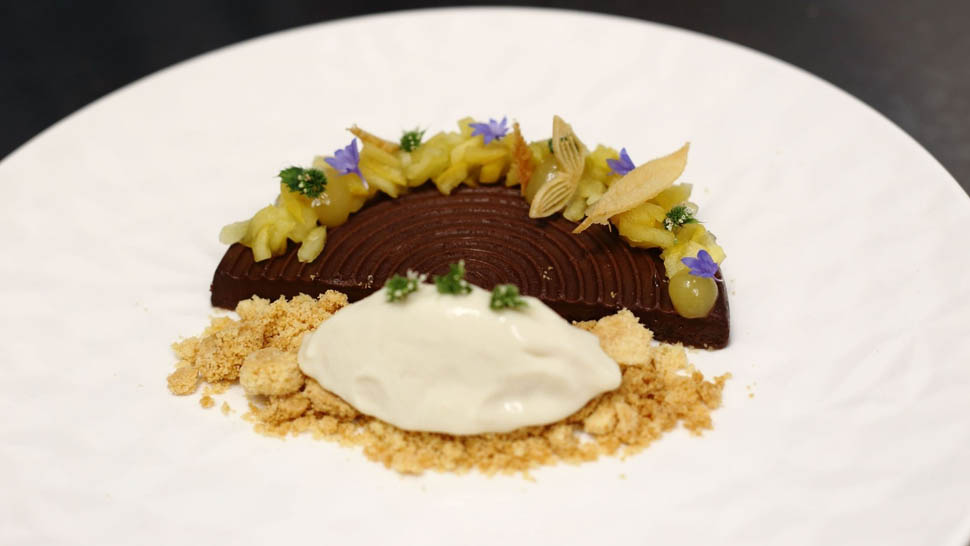
The dessert selection also reflects the attention to detail mentioned earlier: Chocolate, wasabi, apple, chamomile and mascarpone ice cream, figs, and Madagascar vanilla are two offerings in which the sweetness is perfectly balanced with the delicacy of chamomile and the aromatic richness of vanilla. The Cagliata with lemon, candied capers and olives, fennel, and olive oil is, quite simply, a dessert where the tartness of the cagliata is perfectly tempered and balanced. The wine pairing was entrusted to the Donna Teresa label, produced by Fattoria del Piccione—a native passito wine that guided the dessert service with impeccable balance and persistence, concluding with Coffee and Sambuca Gelée, Our Peanut Treat, and Torta della Nonna.
Woman in Hospitality: When the Dining Room Takes Center Stage in the Culinary Story
Simona Saragoni is the Emilia-Romagna ambassador for Noi di Sala, and three years ago, together with Luca Racis, she launched Woman in Hospitality, a project that highlights the role of hospitality in the culinary experience. While traditional four-hand dinners typically feature the kitchen as the star, here the focus shifts to the work and professionalism of those who guide the guest throughout the entire experience. This is why the balance we mentioned earlier is so important: at this establishment, you can clearly see just how essential service is. Woman in Hospitality is a concrete example of this and has featured the participation of fine-dining professionals such as Catia Uliassi, Davide Franco, Andrea Fiorini, Claudia Bucci, and Francesco Cioria.” “The dining room definitely becomes the focus because people usually concentrate on the kitchen. We’re revitalizing a sense of professionalism and giving it added depth, because often you go to a restaurant and eat well, but I always say: you come back if you’ve had a positive experience—not just because of the food. If you sit down and eat wonderfully but the service comes across as arrogant, or if something goes wrong, it’s hard to come back,” explains Simona.
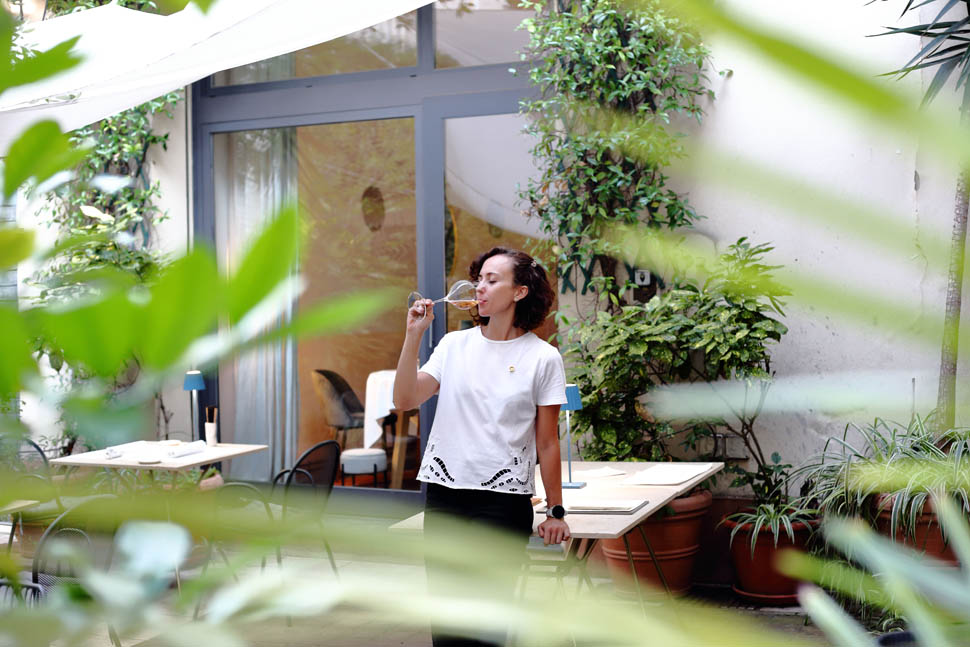
Luca Racis and Simona Saragoni have made cuisine—and the story behind it—the centerpiece of their life’s work; their concept of hospitality draws on the past without becoming trapped by it, thus avoiding the risk of falling into facile anachronisms. This is perhaps the trait that best defines Il Gatto sull’Albicocco: a place rooted in a deeply Rimini-based history, woven through with family memories and culinary exploration, and open to diverse influences, experiences, and sensibilities.
Il Gatto sull’Albicocco
Corso d’Augusto, 76, 47921 Rimini RN
Phone: 333 475 5915