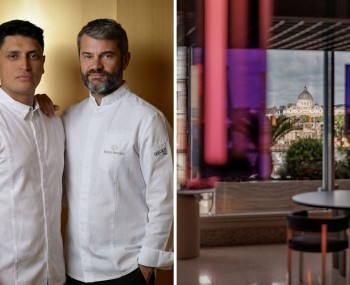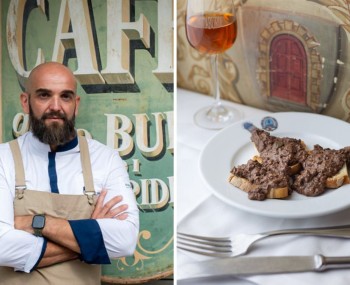
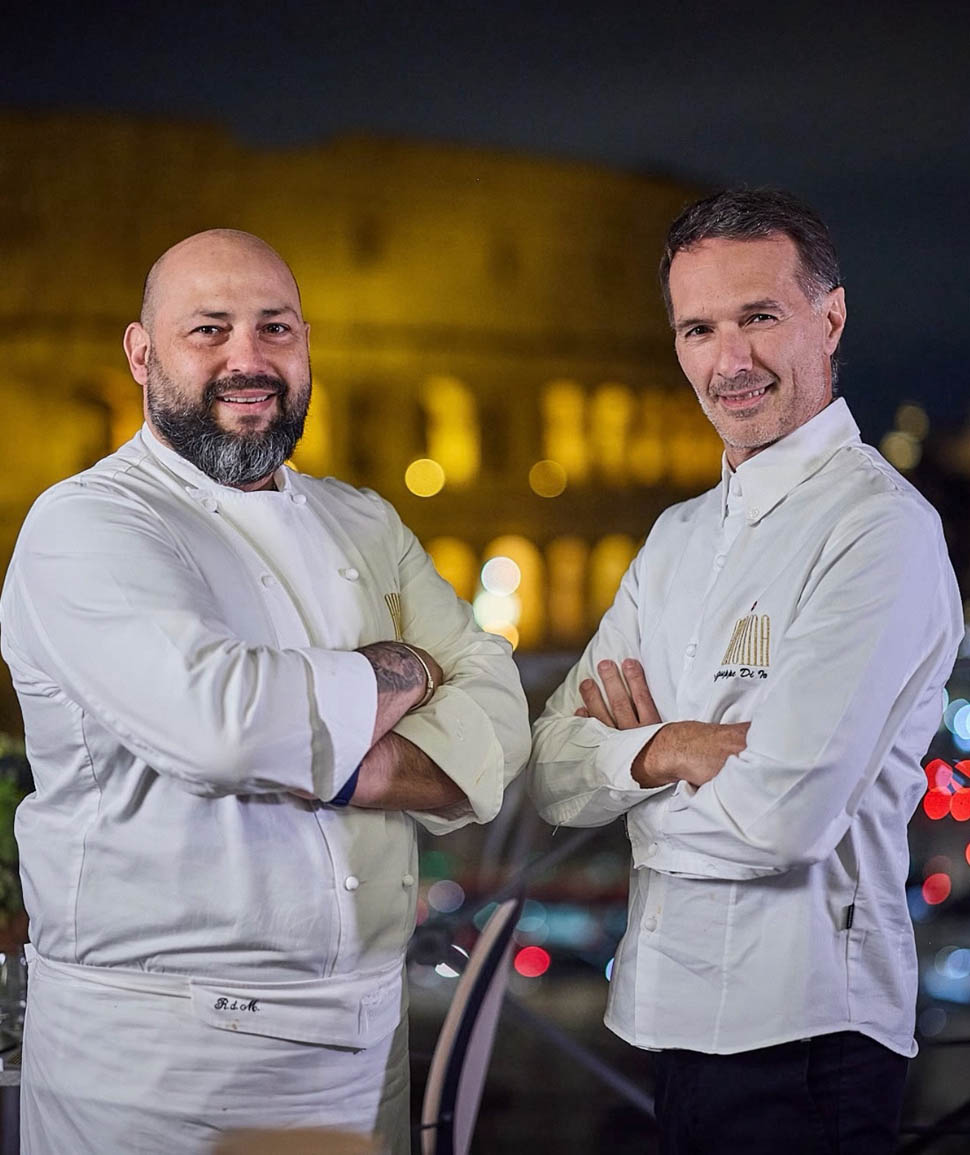
In the 1564 Renaissance palazzo in the Sant’Ambrogio district, the new Florentine home of the Manfredi Collection entrusts its culinary identity to the vision of Giuseppe Di Iorio and the cooking of resident chef Raffaele De Mase. A Mediterranean concept rooted in Tuscany, where memory, territory and contemporary sensibilities also find their way onto the plate through the encounter with CRU CAVIAR.
*Content with promotional purposes

Gesti d'autore is a feature by Reporter Gourmet exploring the encounters between leading figures in the culinary world and Cru Caviar, an outstanding expression of Italian excellence. Each instalment is a portrait, a dish and a precise gesture: the way a precious ingredient finds its place within a composition without ever becoming an exercise in ostentation. A journey through different kitchens, united by the same idea of understated elegance, built on balance and subtle nuances of flavour.
The Hotel
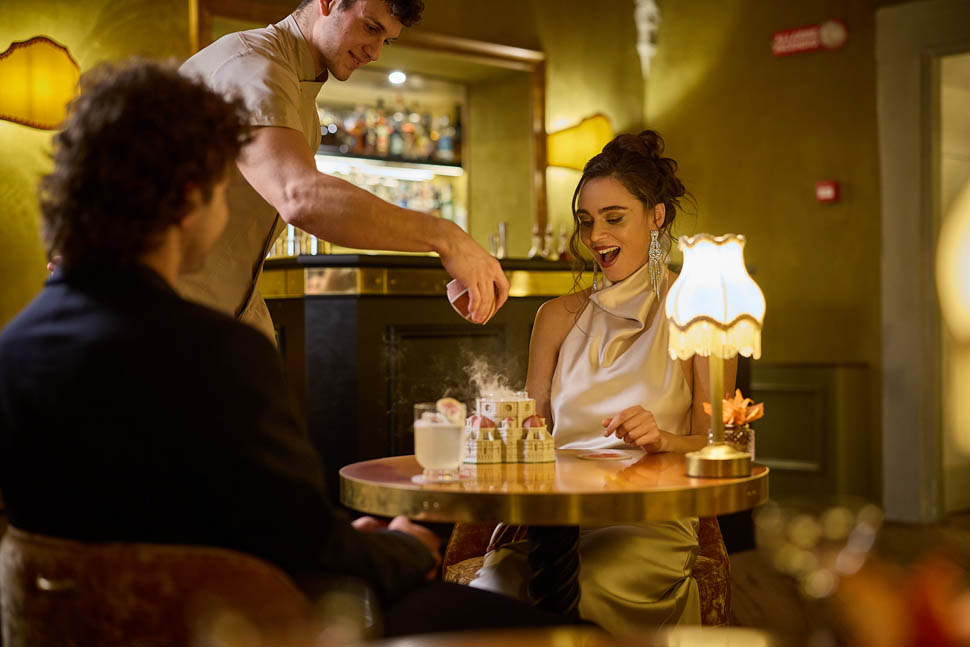
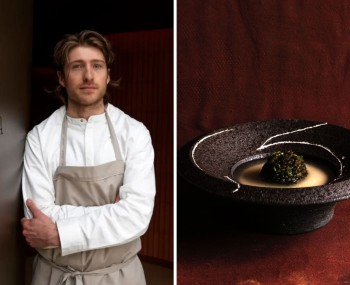
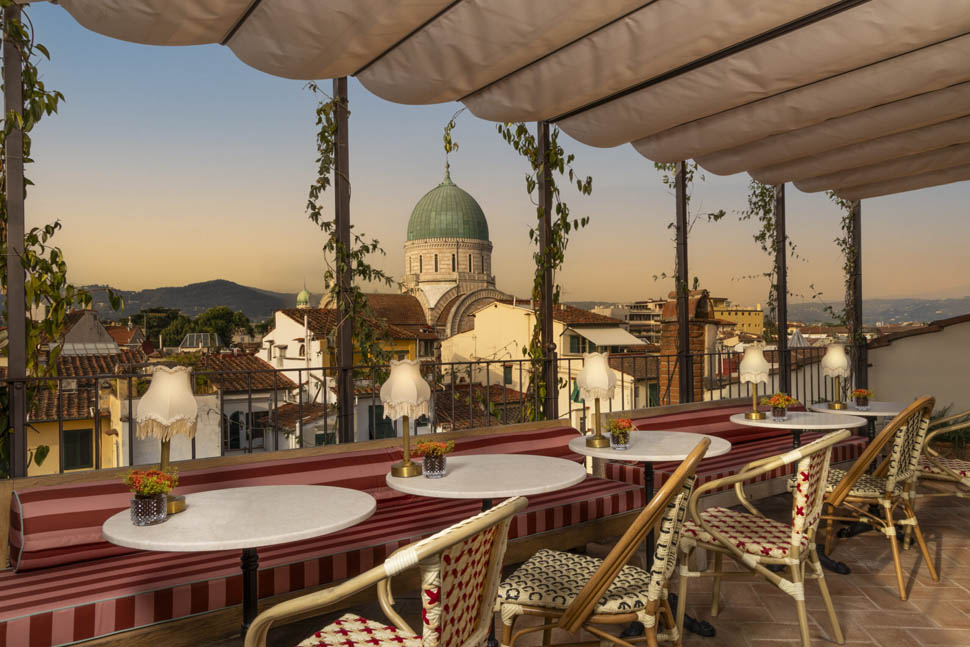
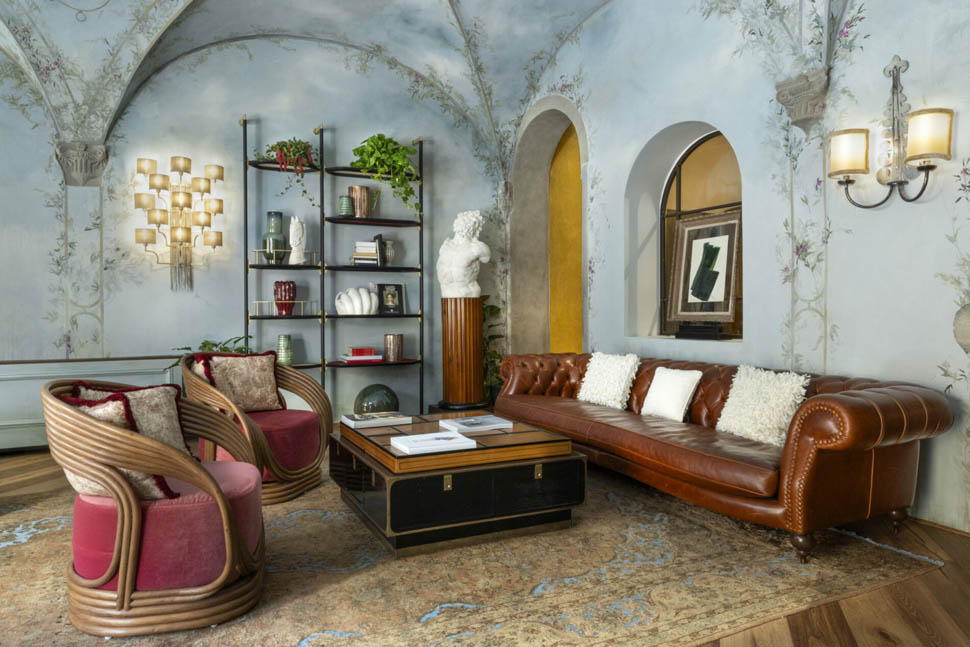
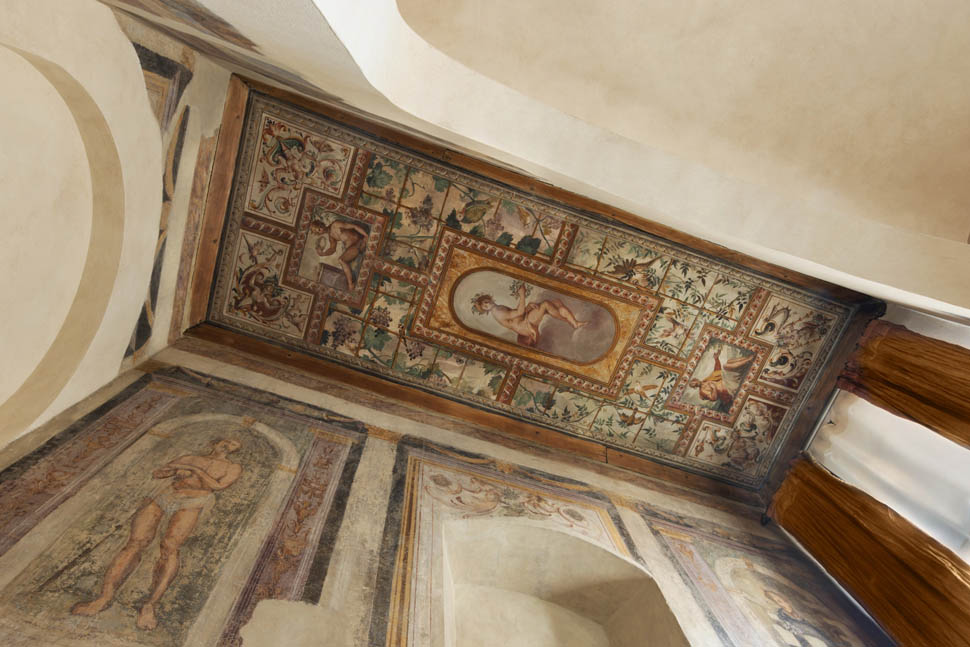
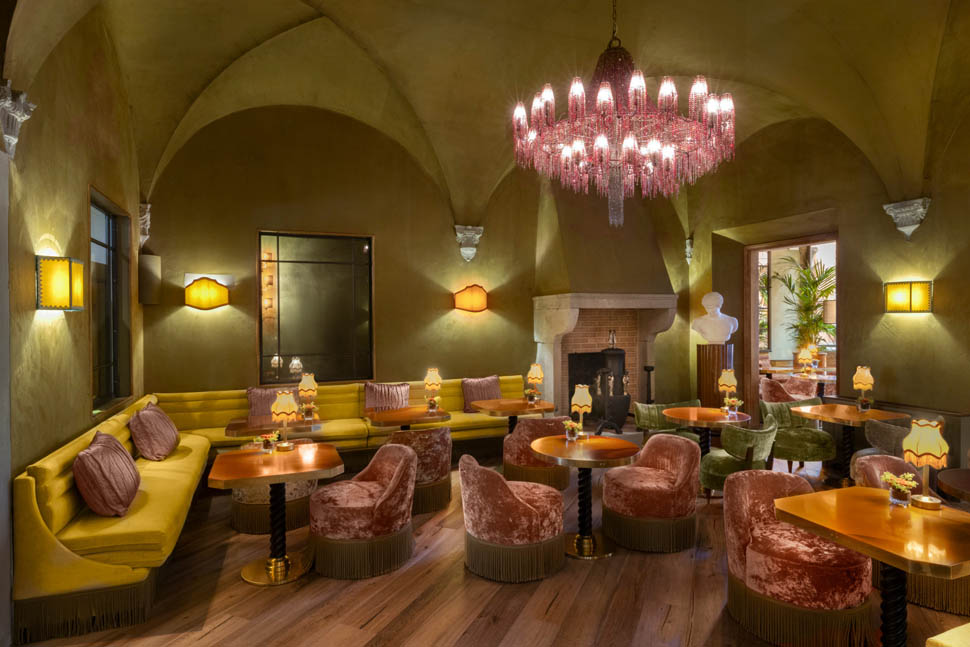
In Florence, 1564 is a date you can still walk through. It is carved into the façade of a Renaissance palazzo, the building that James Cavagnari has transformed into his own vision of hospitality: fourteen suites, vaulted ceilings and frescoes, marble floors, velvet, ceramics, works of art and a family history that continually travels back from England to engage with Florence. Inside this architecture, which has no need to pretend to be old, a cuisine has now arrived that, by contrast, seeks to strip away some of the layers that have accumulated around the present. The signature belongs to Giuseppe Di Iorio, chef at Aroma, the one-Michelin-starred restaurant at Palazzo Manfredi in Rome. At The James Suite Hotel Firenze 1564, his name is attached to the new James Restaurant, alongside the 1564 Lounge Bar and resident chef Raffaele De Mase, offering an approach to Italian cuisine through a contemporary lens while never losing sight of something very tangible: the pleasure of eating.
A New Address, a Continuing Story
The James Suite Hotel Firenze 1564 is the result of several layers coming together: a Renaissance palazzo, a family history, an international outlook and a vision of hospitality that does not seek to recreate the past, but to inhabit it once again. At number 20 Via di Mezzo, in the heart of Florence, the building still bears the year of its birth, 1564, etched into its architecture. A year that seems almost written for storytelling: Michelangelo dies, Galileo and Shakespeare are born, and within these walls, one of the many private residences of Renaissance Florence begins to take shape.
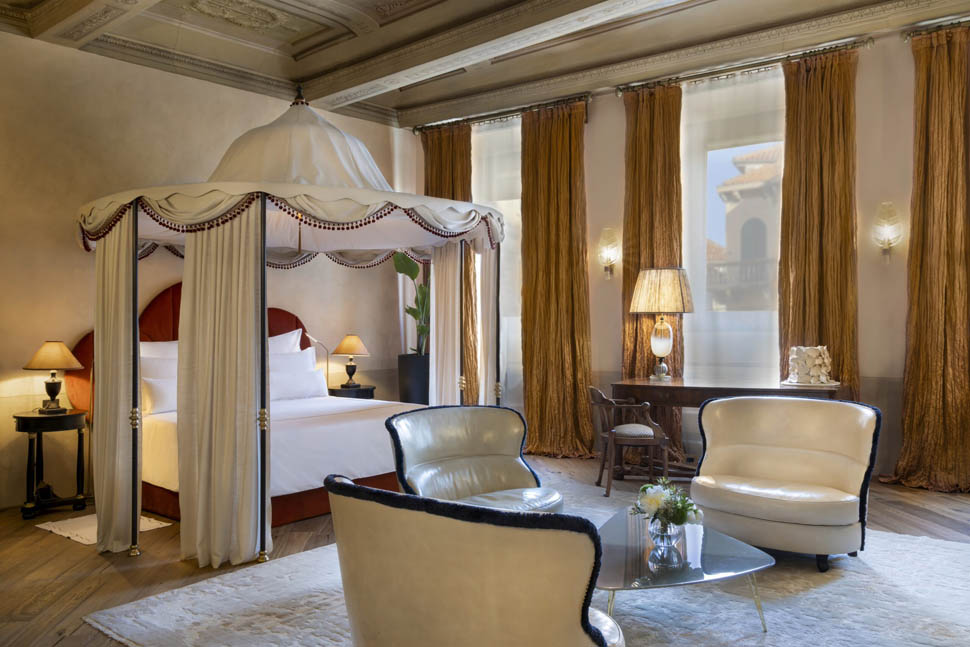
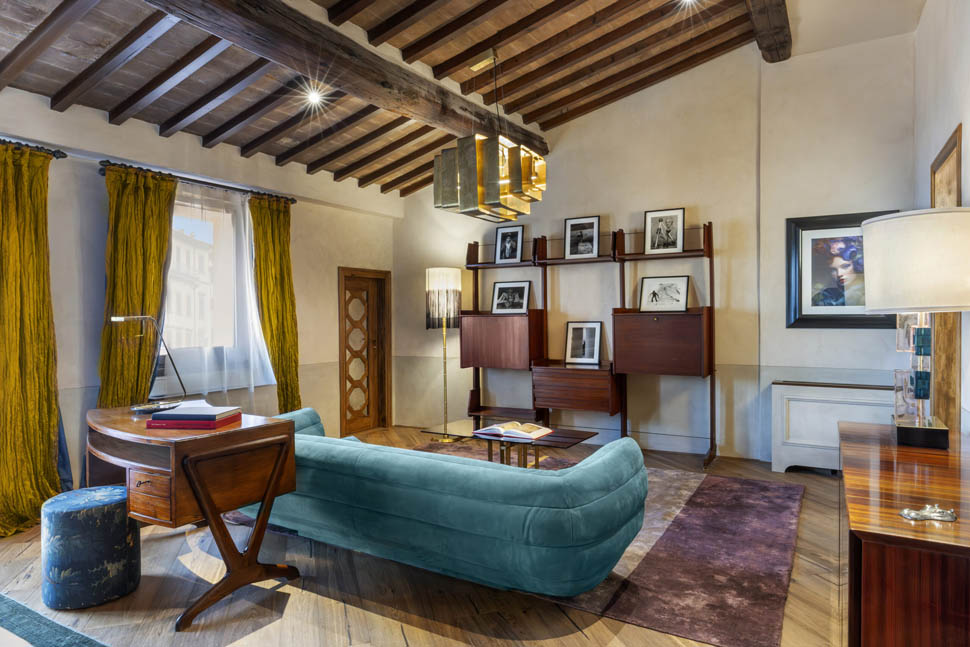
Originally built as a convent, the building retains the structure of the old merchants’ courtyards, the off-centre portal, the rooms with barrel-vaulted ceilings and the inner courtyard that has remained intact for centuries. Today, that history takes on a new form once again: behind the project is architect and designer James Cavagnari, born in London in 1964 and with a long international career, from Salvatore Ferragamo, for whom he designed more than two hundred boutiques around the world, to the redesign of Bulgari’s global retail identity. In fact, the feeling upon entering The James is that of a private home transformed into a hospitality space, without entirely losing its domestic character: all fourteen suites are different, conceived as small worlds of their own. There are velvets, woods, brass, antique chandeliers, restored floors and even a piece of British history woven into the story of the property: a travel wardrobe once belonging to Queen Elizabeth II.
The James Restaurant, the Culinary Heart of the Palazzo
The James Restaurant occupies a space within the hotel. What sets it apart? The restaurant does not seek to create a cuisine separate from the identity of the hotel. On the contrary, it echoes that identity through its materials and design. It is an intimate space with just a few tables, where service and cuisine share the same vision of hospitality. The gastronomic direction looks to the Mediterranean and Tuscany, without turning the local area into a repertoire of obligatory references. Ingredients remain at the heart of the experience, as does the desire to work with just a few elements and allow their individual character to shine through. It is a philosophy Di Iorio had already articulated when discussing the project: “We work on dishes that first and foremost reflect the identity of the place, without overlooking experimentation and making use of every cooking technique.”
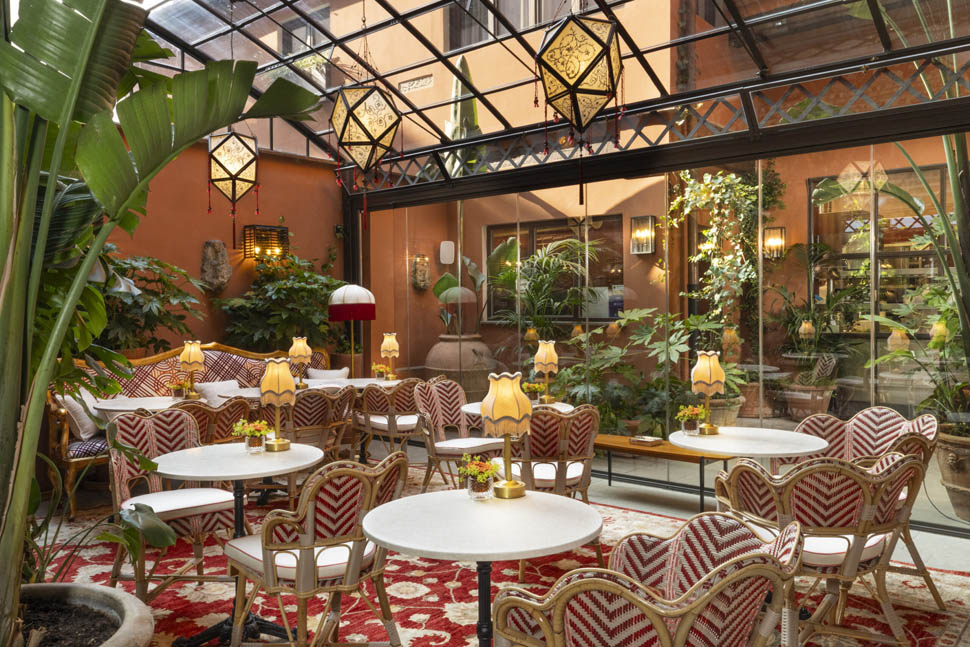
There is much of The James Restaurant’s philosophy contained in this idea. Experimentation is not conceived as an escape from tradition, but as a way for tradition to keep speaking. And choosing just a few ingredients does not necessarily mean simplicity: it means asking each one to serve a precise purpose.
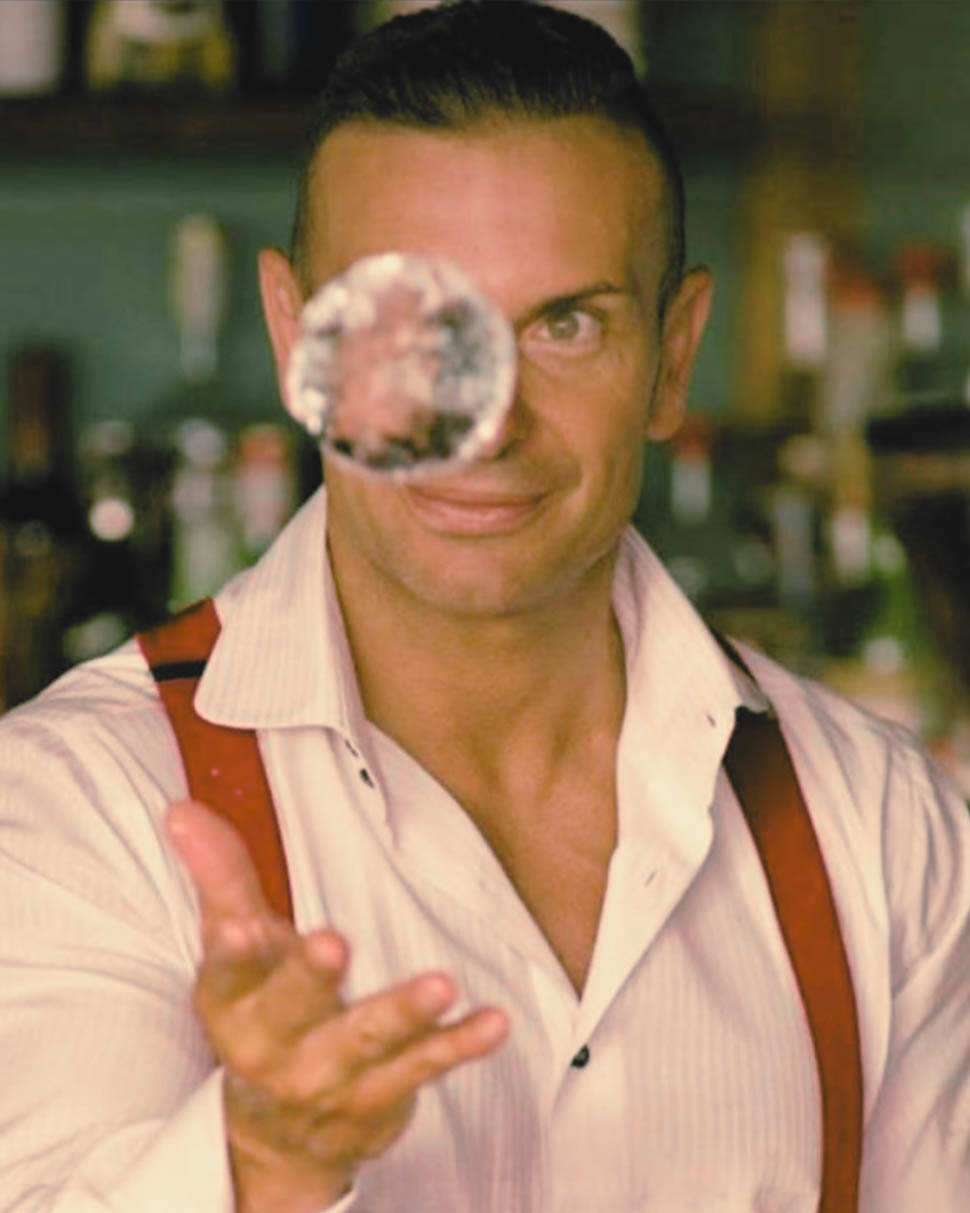
The same philosophy extends to the 1564 Lounge Bar, named after the year the palazzo was built, which interprets the aperitivo through a drinks list inspired by the city’s lesser-known mysteries and stories. The bar, curated by Matteo Zed for the Manfredi Collection, follows the same approach: rather than telling Florence only through its best-known symbols, it looks for what lies beneath the surface. Dinner at The James can thus become the natural continuation of that journey: from cocktail to table, from palazzo to kitchen, from history to contemporary interpretation.
Giuseppe Di Iorio: When Luxury Becomes a Matter of Taste
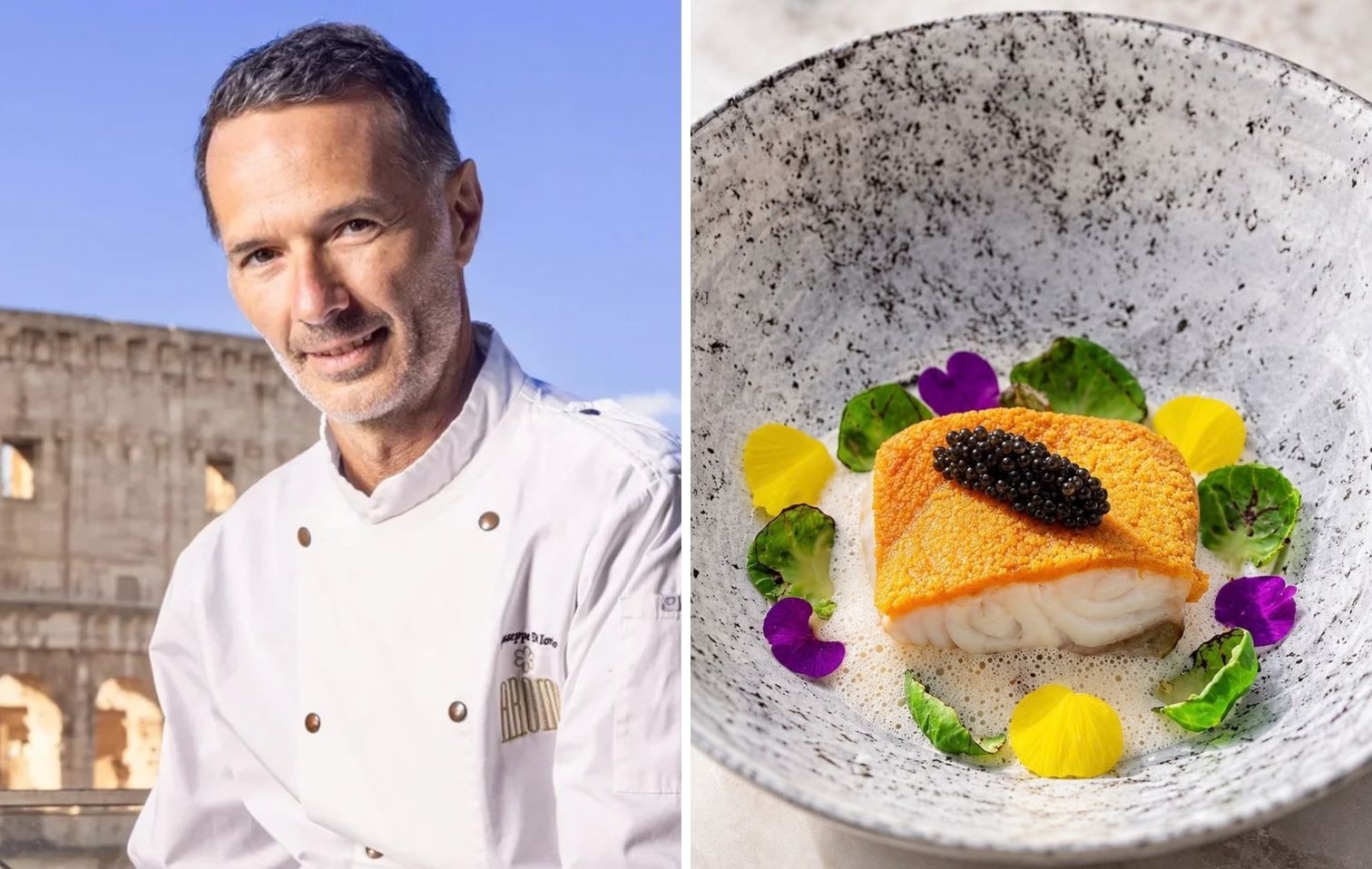
Di Iorio’s philosophy? Technique remains essential, but it does not necessarily need to show itself. It can work behind the dish, shaping texture, temperature, sauces, cooking methods and balance, while leaving the diner with the most important thing: recognising what they are eating and wanting to keep eating it. It is a sensibility that finds a natural counterpart in the collaboration with CRU CAVIAR, where an ingredient traditionally associated with luxury — caviar — is brought into a precise gastronomic composition.
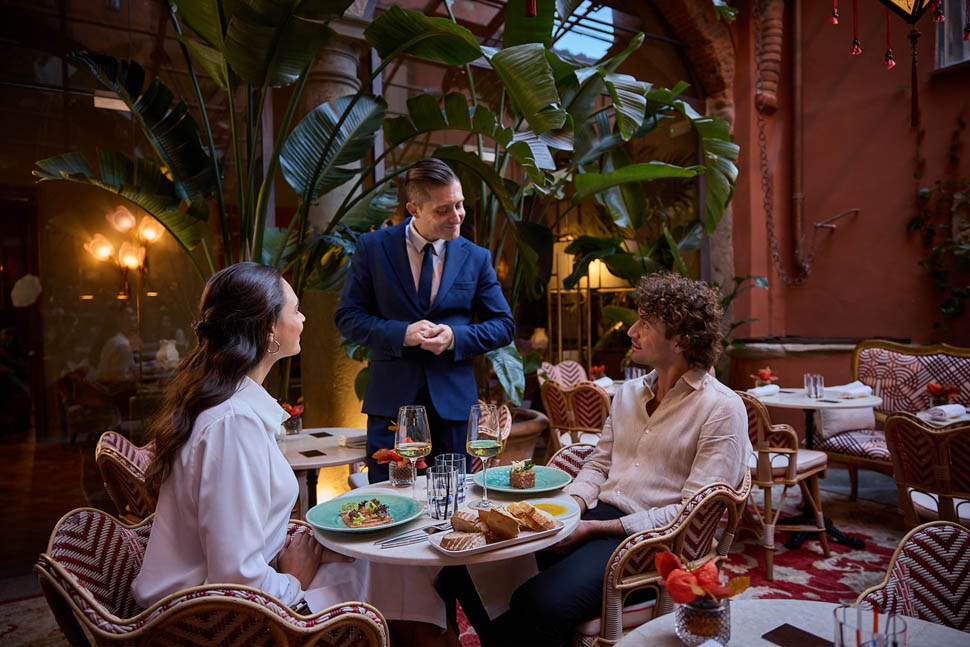
Caviar is, above all, an exceptionally precise ingredient: briny, marine and persistent, with a delicate texture that can alter the perception of everything around it. The collaboration between the company and Chef Di Iorio takes shape in a composition whose very title brings together a series of contrasts: Crispy sea bass with ’nduja, Brussels sprouts, almond sauce and a quenelle of caviar.
The sea bass introduces a delicate, clean, marine element. Its crisp coating changes the way it is perceived, adding a tactile dimension. Then comes the ’nduja, with its bold, spicy and deeply Mediterranean character. The Brussels sprouts bring a vegetal, slightly bitter note, while the almond sauce adds roundness and a softer dimension. The caviar arrives at the end, shaped into a quenelle, adding depth, persistence and that distinctive salinity that lingers on the palate even after the other flavours have begun to fade.
It is a dish that also captures the way Di Iorio seems to approach fine dining: not complicating things for the sake of demonstrating technique, but building with precision in order to enhance each ingredient.
The Recipe
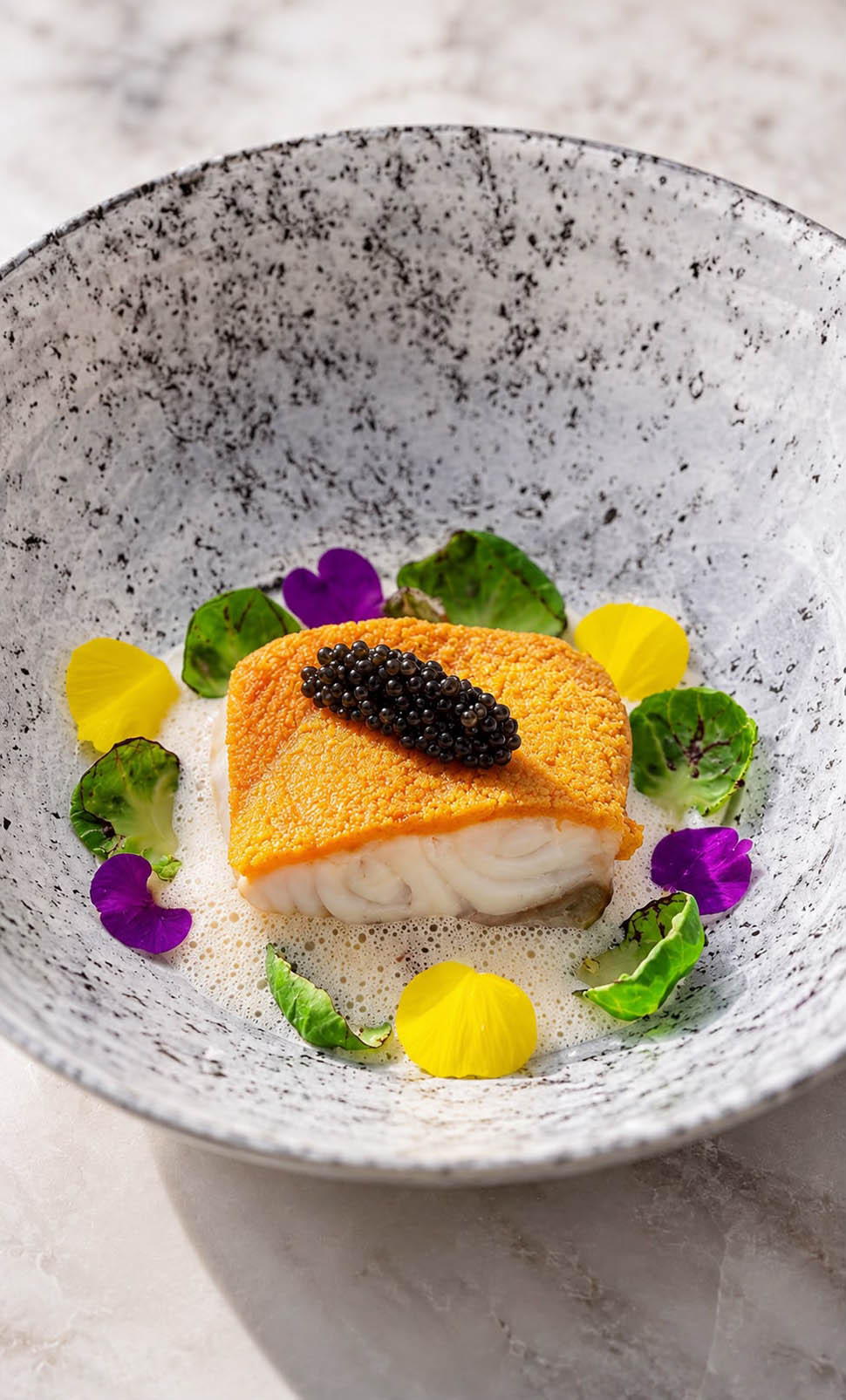
Crispy Sea Bass with ’Nduja, Brussels Sprouts, Almond Sauce and a Quenelle of CRU CAVIAR
Ingredients (serves 4)
Salt-baked sea bass
- 1.8 kg whole sea bass, cleaned
- 1 kg coarse salt
- 150 g white wine
- Mixed spices, to taste
’Nduja crust
- 60 g gluten-free panko, sifted
- 60 g almond flour
- 10 g ’nduja
- 10 g softened butter
- 3 g salt
Almond sauce
- 500 ml almond milk, made by blending and straining 1 kg almonds with 1 litre fish stock
- 500 ml fish stock
- 3 shallots
- 50 g butter
- 50 g Amaretto di Saronno
- 1 lemongrass stalk
- 6 g ginger
- 1 star anise
- Sichuan pepper, to taste
Brussels sprouts
- 20 small Brussels sprouts
- 100 g extra-virgin olive oil
- Salt and pepper, to taste
Candied lemon
- 1 lemon
- 100 g water
- 50 g sugar
Garnish and finishing
- 30 g toasted almonds, chopped or sliced
- 24 g CRU CAVIAR Beluga Caviar
- Wild herbs and edible flowers, to taste
Method
1. Prepare the candied lemon
- Peel the lemon, taking only the zest and carefully removing all the bitter white pith.
- Blanch the zest three consecutive times in boiling water, changing the water each time.
- For the fourth cooking, prepare a syrup by dissolving 50 g sugar in 100 g water. Add the zest and cook until candied. Cut into thin strips or small dice.
2. Prepare the ’nduja crust
- Sift the gluten-free panko.
- In a bowl, combine the almond flour, panko, softened butter, ’nduja and salt until you obtain a homogeneous mixture.
- Place the mixture between two sheets of plastic wrap or in a vacuum-sealing bag and roll it out to the desired thickness. Refrigerate until firm.
3. Prepare the almond sauce
- In a saucepan, gently sweat the sliced shallots in the butter.
- Deglaze with the Amaretto di Saronno and allow the alcohol to evaporate.
- Add the spices — crushed lemongrass, ginger and star anise — followed by the almond milk and fish stock.
- Reduce gently over low heat until the desired consistency is reached. Season with Sichuan pepper.
- Pass through a chinois to obtain a smooth sauce and thicken if necessary. Optionally, use an immersion blender on the surface to create an almond foam.
4. Prepare the Brussels sprouts
- Remove and reserve the outer leaves of the Brussels sprouts. Blanch them briefly, then cool them in iced water to preserve their colour. Set aside for the garnish.
- Cut the hearts of the Brussels sprouts into wedges and season with extra-virgin olive oil, salt and pepper.
- Sear in a hot pan until crisp and deeply golden.
5. Cook and gratinate the sea bass
- In a large pan, combine the coarse salt with the spices and white wine. Warm the mixture gently.
- Place the sea bass on the bed of salt, cover and cook through.
- Once cooked, fillet the fish and carefully remove all the bones, dividing it into portions.
- Cut the ’nduja crust to the size of each fillet, place it over the flesh and grill until golden and crisp.
6. Prepare the CRU CAVIAR Beluga
- Shape the Beluga caviar into four quenelles of 6 g each.
Plating
- Arrange the toasted almond pieces, diced candied lemon, sautéed Brussels sprout wedges and a few spoonfuls of almond sauce (or foam) on the base of each plate.
- Place the gratinated sea bass fillet with its ’nduja crust on top.
- Garnish with the blanched outer Brussels sprout leaves, fresh herbs and edible flowers.
- Carefully place one quenelle of CRU CAVIAR Beluga on each portion of sea bass just before serving.