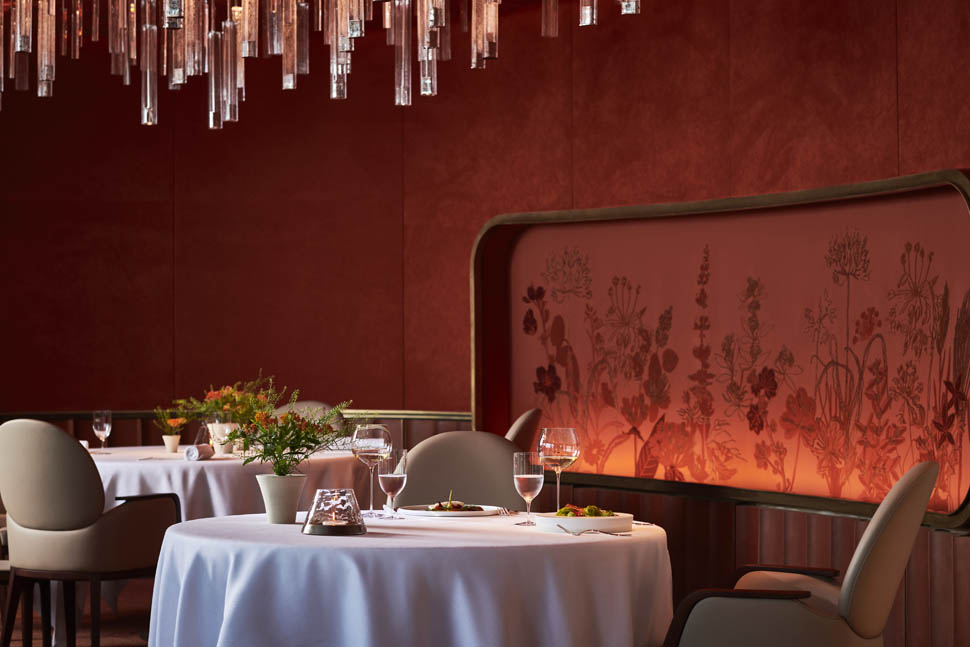
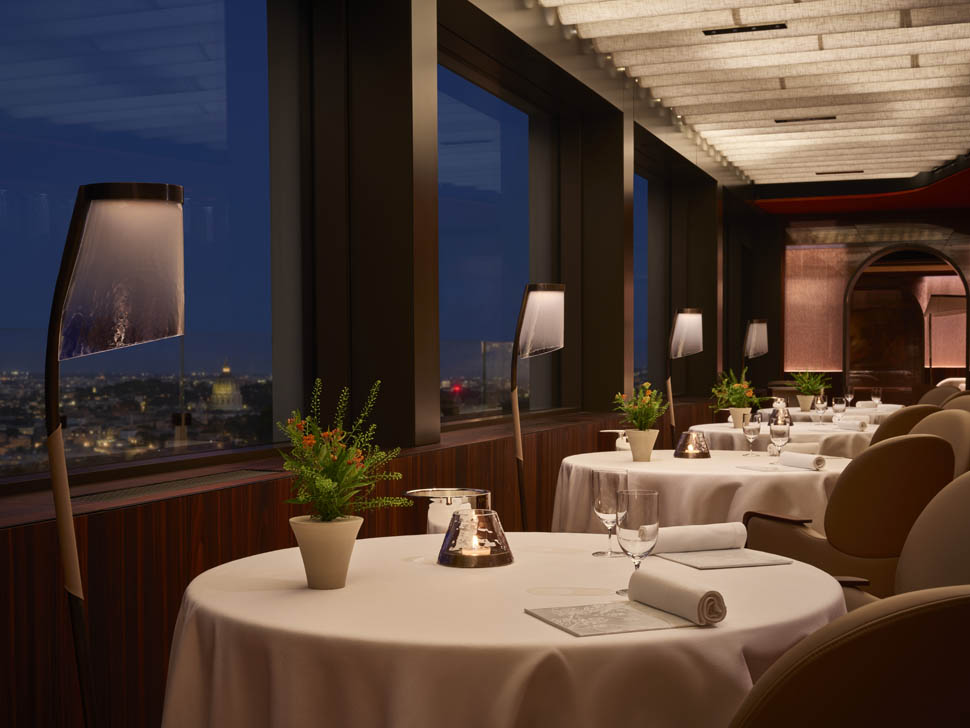
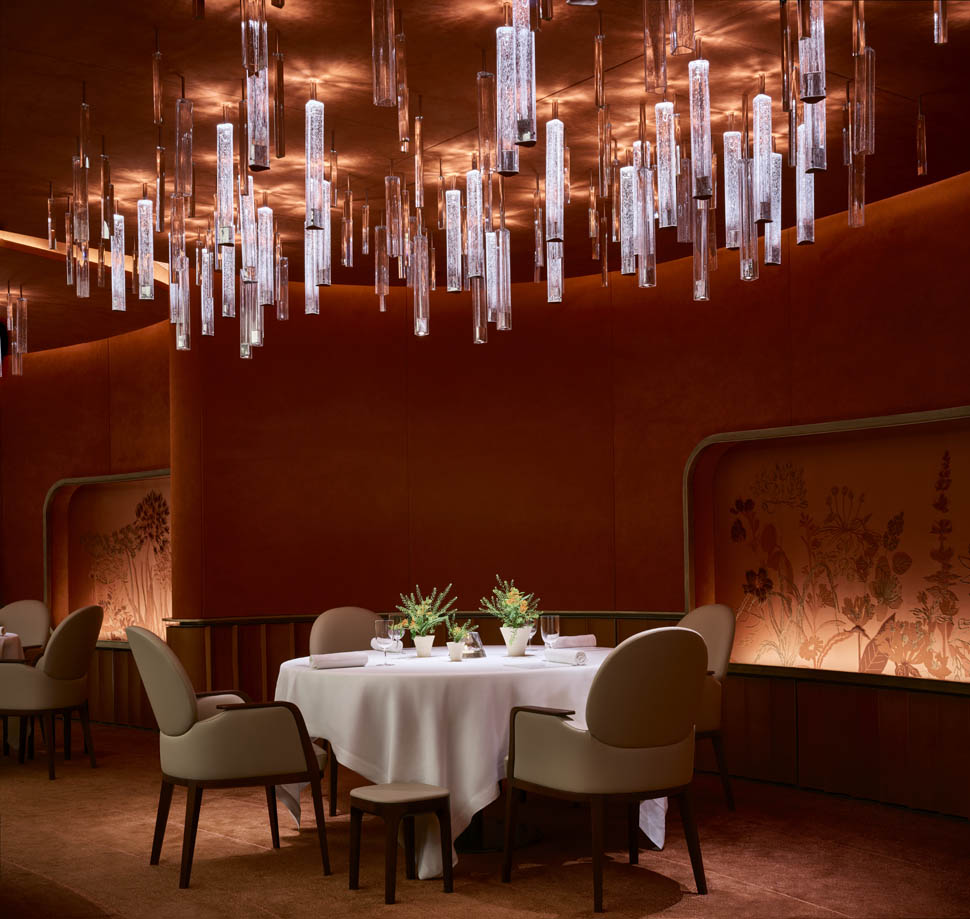
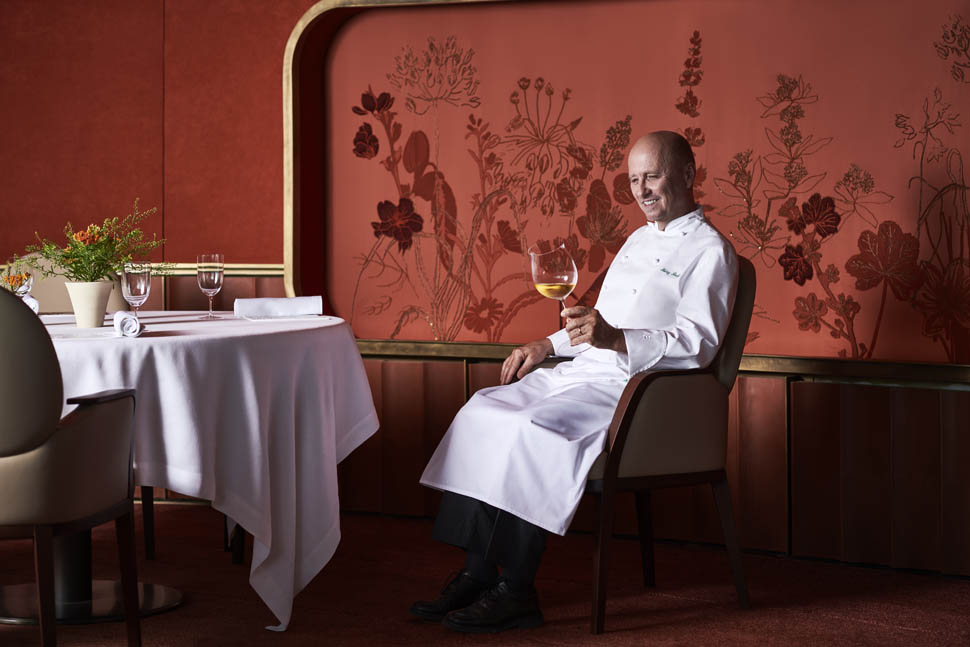
From the hill of Monte Mario, the view of Rome remains a breathtaking sight, but as soon as you step into the La Pergola dining room on the top floor of the Cavalieri Waldorf Astoria, the landscape gives way to the rhythm of a dining experience that has few equals.
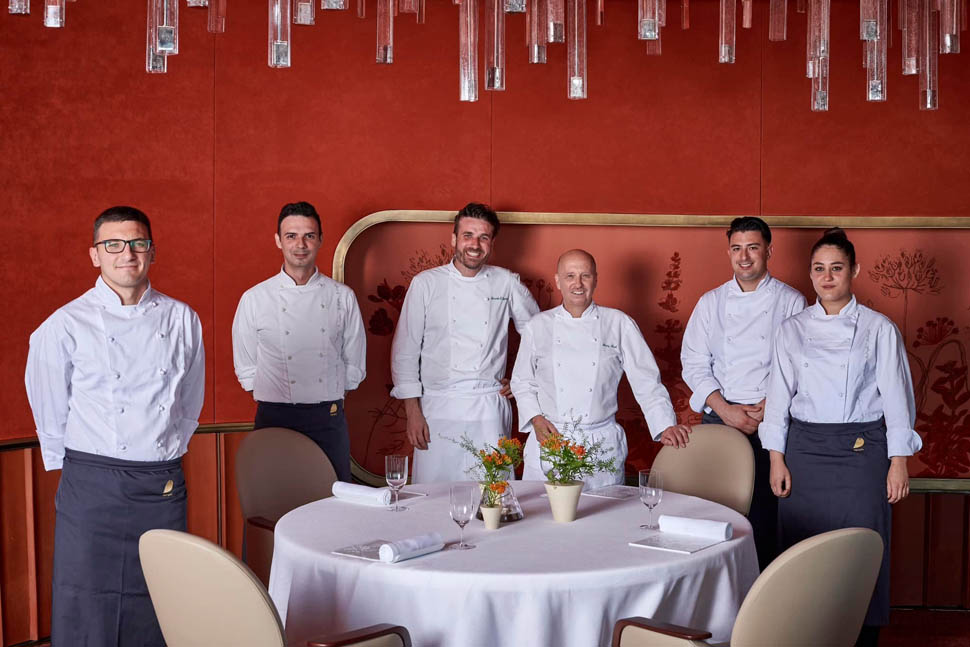
Inside, Simone Pinoli presides over the tables with that calm authority that dispels any sense of stiffness, restoring to the act of hospitality a sense of naturalness that feels almost old-fashioned. It’s a precise rhythm that finds its natural counterpart in Marco Reitano: managing a wine cellar of that size without ever letting the prestige of the labels weigh heavily requires an innate confidence—the rare ability to read the person in front of him even before uncorking a bottle.
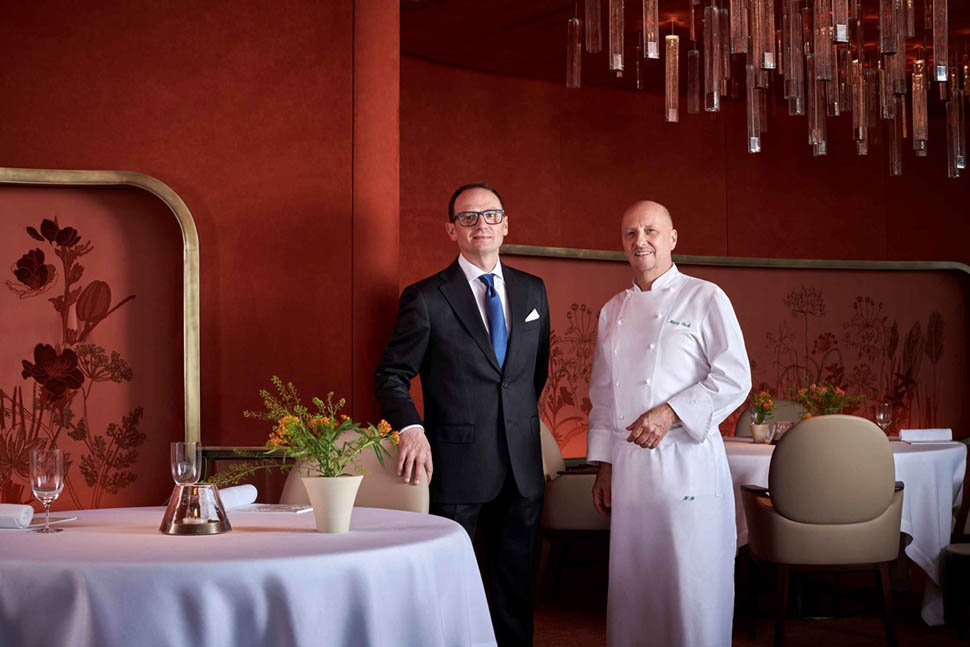
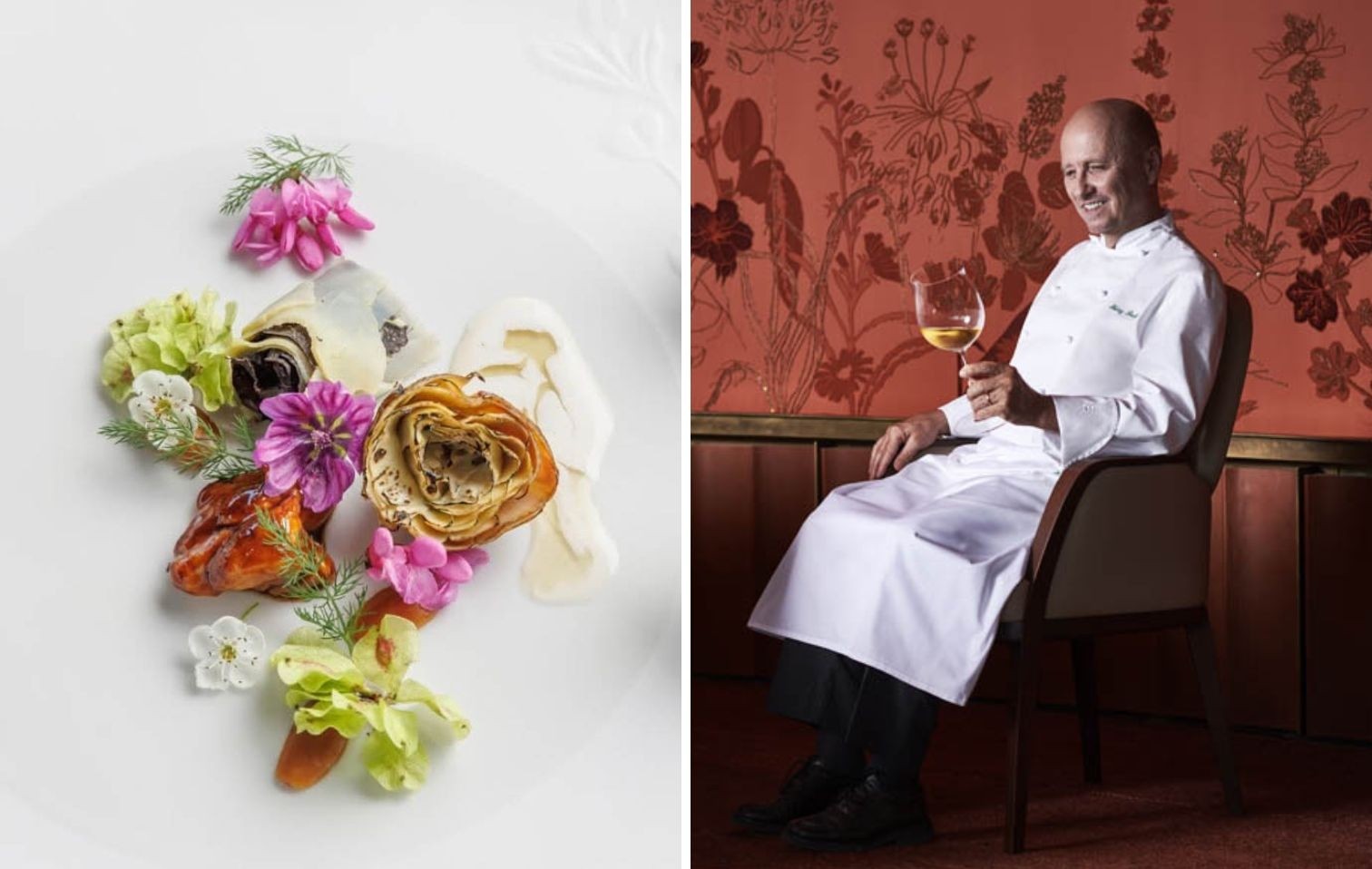
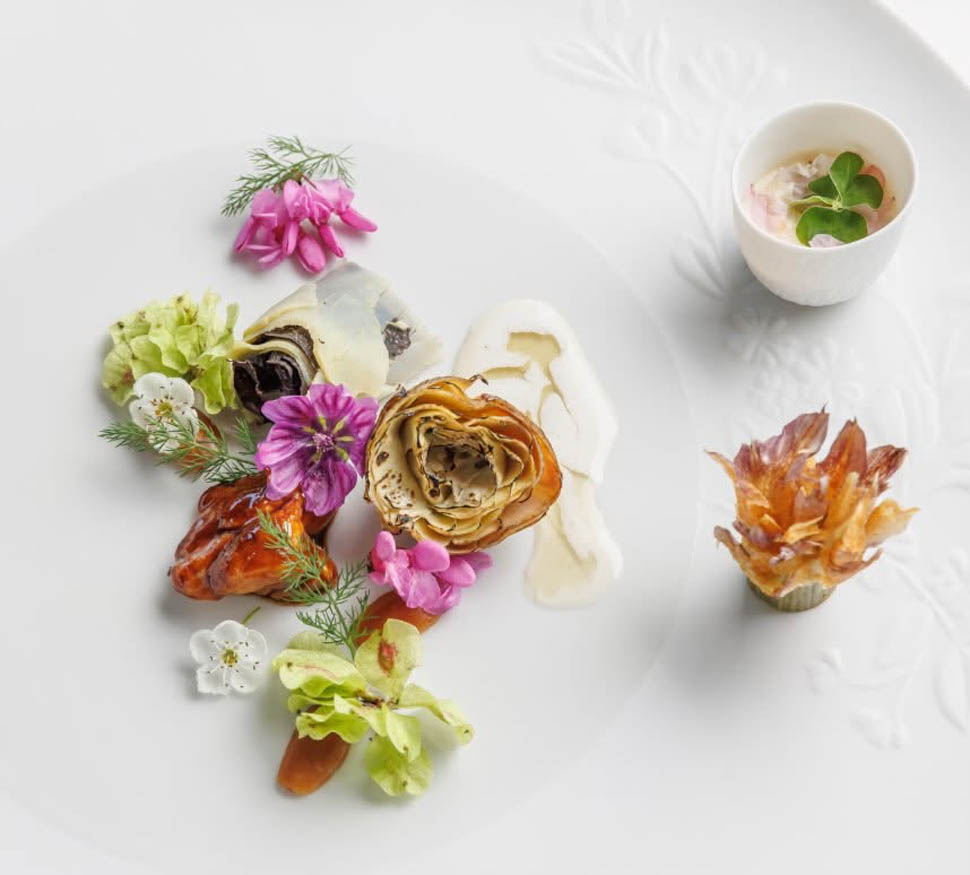
It is within this dining experience that Heinz Beck brings his vision of scientific cuisine to life, a ten-course journey where the chemistry of extraction and the physics of textures ultimately serve to enhance the dish’s digestibility.
This becomes immediately apparent with the dry-cured yellowtail, where the meticulous preparation finds its structure in chufa milk—the sweet “zigolo” of the Valencian tradition—extracted using ultrasound to achieve a natural creaminess, combined with germ-activated almonds. No unnecessary fat is added, no hint of cream: just the purity of the fish, enhanced by tarragon oil.
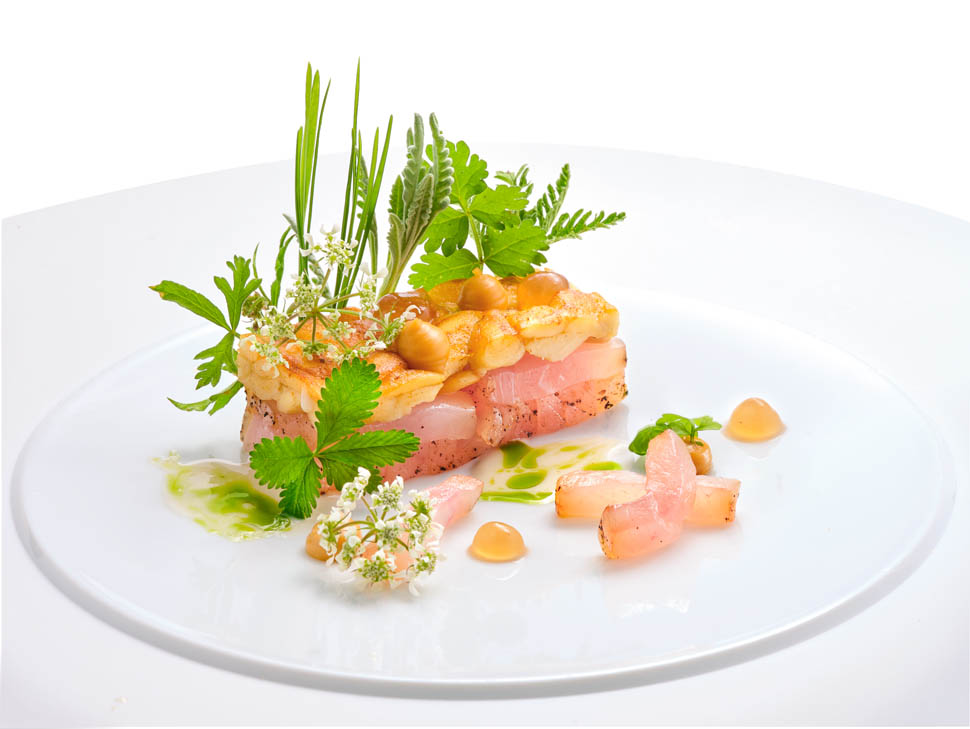
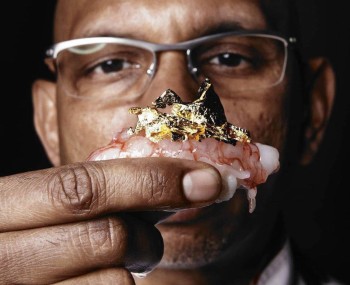
In the red shrimp dish, the shrimp is grilled while protected by lemongrass leaves, but the real punch comes from the oxidized apricots. Beck triggers enzymatic fermentation until the fruit’s pulp is transformed, yielding a dark sauce with a distinct umami flavor that cuts through the natural sweetness of the shrimp. Jerusalem artichokes bring the dish full circle with a dual texture: the skin puffed into chips and the flesh bound with veal marrow, then degreased on the barbecue to retain only a hint of smoke. A rare and elegant combination.
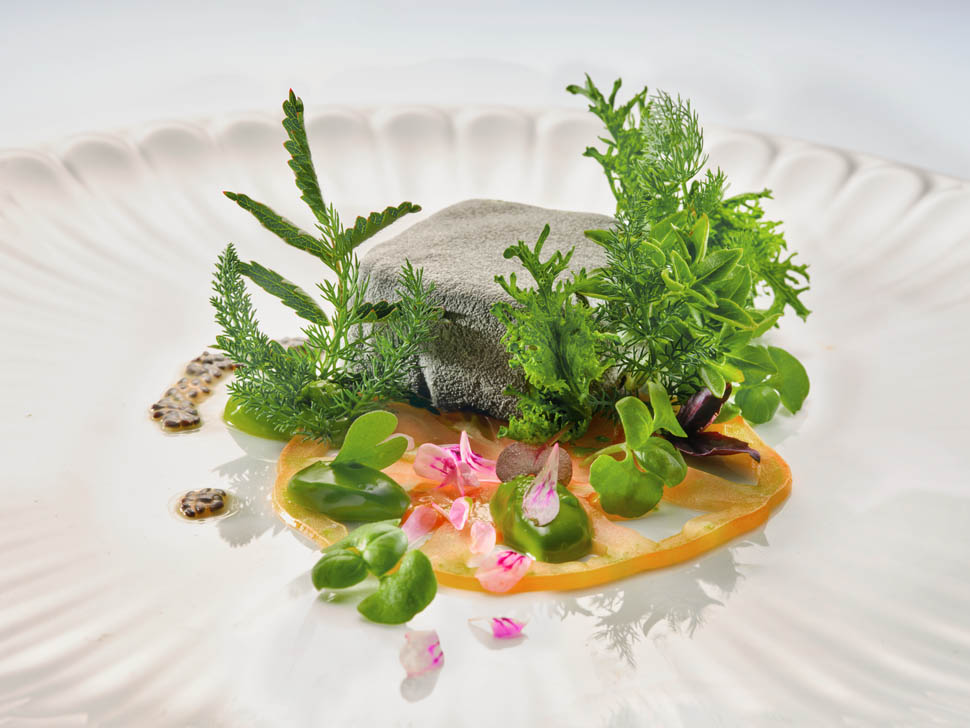
The cuttlefish, reduced to an ethereal, vacuum-cooked veil, is truly impressive. Here, the ingenuity of upcycling is applied to the tentacles, which are reduced to a concentrated sauce through cryoextraction to create an element rich in floral aromas and flavor. The olfactory balance is achieved through linden flower hydrosol and jasmine cold-extracted using ultrasound: the microwaves break down the cell walls of the petals without generating heat, leaving the essential oils intact with zero calories. The dish titled 0.01%—an infinitesimal fraction of human biomass relative to the planet—shifts the focus to visual provocation. At the center of the plate lies a cracked Roman cobblestone, gray with freeze-dried vegetable charcoal infused with tomato and celery water, from which sprouts and wild microgreens seem to literally pierce the edible stone. Inside lies a puffed cloud of tomato, basil cream, and an egg-free mayonnaise whipped at very high speed, resting on a plain tomato carpaccio dressed with basil oil and rehydrated basil seeds.
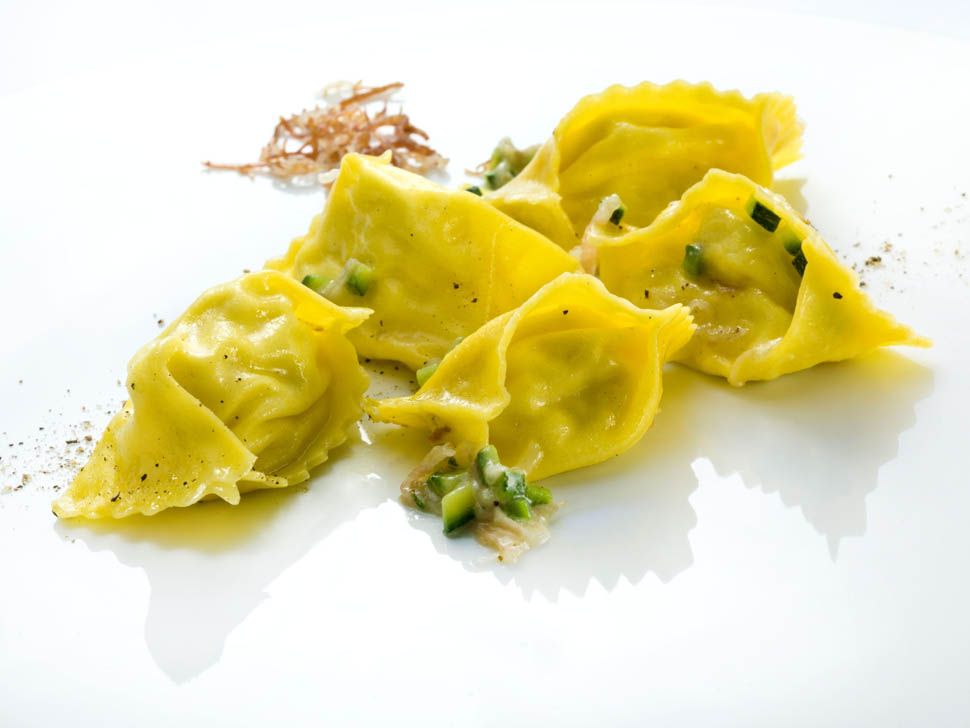
Then come the Fagottelli, and that’s where you really see the difference between a simple idea and a contemporary classic. Beck took the structure of carbonara and turned it on its head: the cream made from egg yolks, pecorino, and pepper is whipped while hot, enclosed in an egg pasta sheet rolled to a micrometer-thin thickness, and served dry with zucchini and crispy guanciale. When the pasta pouch breaks open on the center of the palate, the liquid filling hits the taste buds before the fats can coat the tongue. It’s an immediate burst of flavor that tricks the brain, delivering the richness of the classic recipe with drastically reduced fat content.
The red mullet, seared only on the skin to keep it crispy, rests on a cold gazpacho made from raw celery and ripe cherries. Structure is provided by crystals created by oven-drying the pure celery extract and cherries marinated in Turkish rose and verbena. It surprises with its aromatic aftertaste and great depth of flavor.
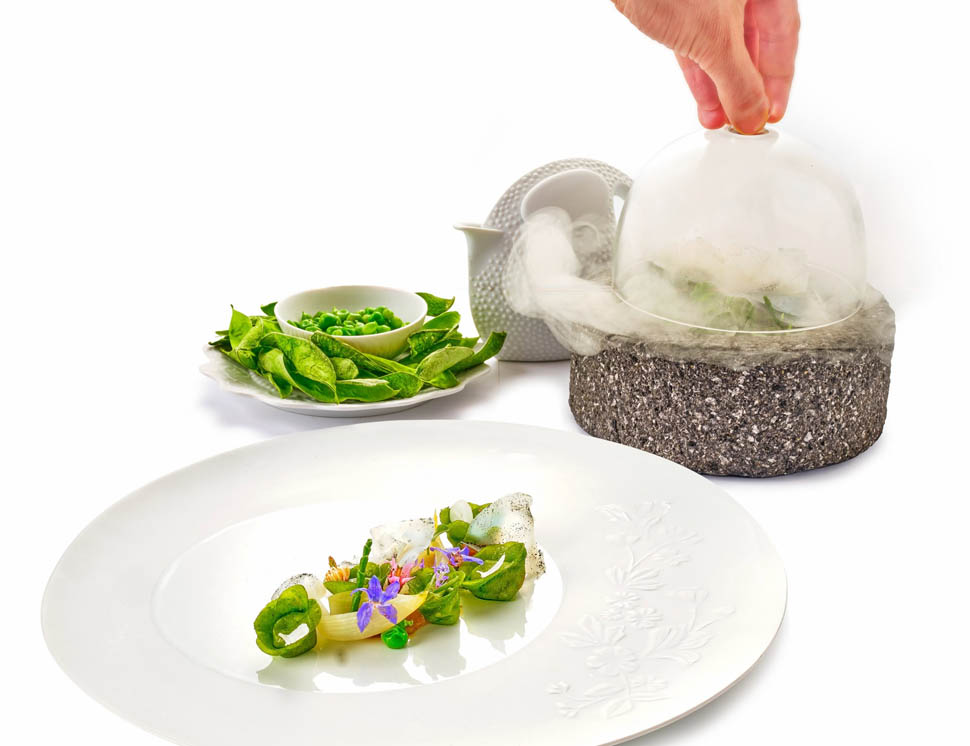
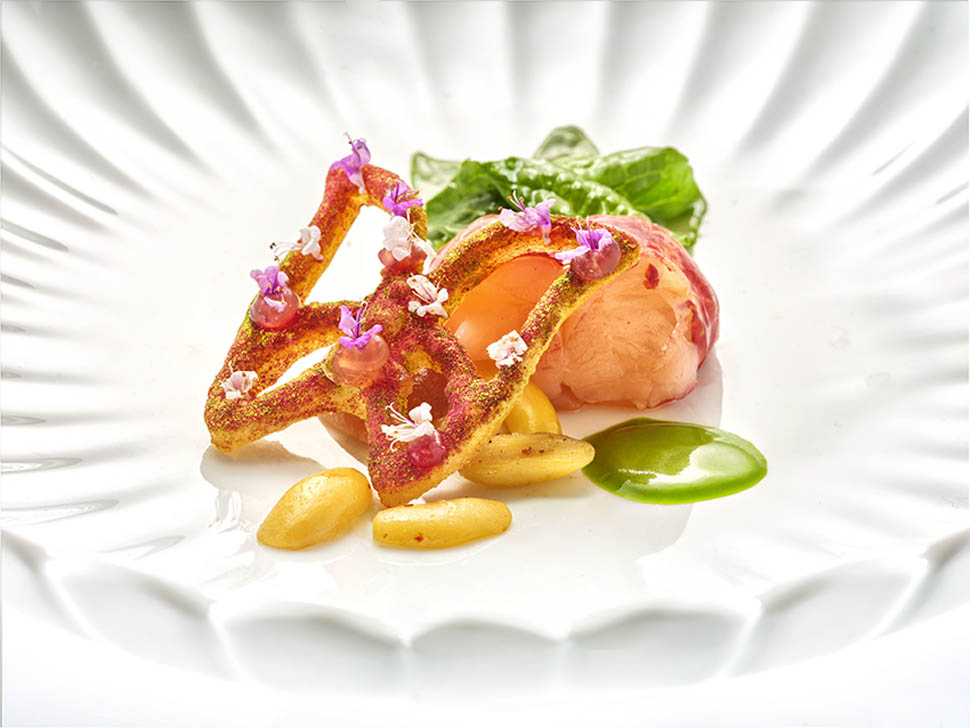
The lobster, on the other hand, engages with a distinctly earthy flavor profile. Its firm flesh combines with the creaminess of borlotti beans sautéed with thyme and rosemary and the earthy note of young spinach hearts, served both as leaves marinated in vinaigrette and as a sauce—all bound together by the bitter kick of a concentrated reduction of pure licorice extracted using ultrasound. A crispy butterfly-shaped piece dusted with freeze-dried beet powder completes the visual impact. It’s incredible how the dish envelops the palate without feeling heavy. In the lamb fillet, cooked at a low temperature to keep the flesh perfectly pink, the key lies in the Perlina eggplant. Left to dehydrate for twenty-four hours in the Josper oven with a selection of spices, the eggplant loses its water, concentrating its sugars and mineral salts, making the addition of sea salt completely unnecessary. The mallow sauce, with its emollient properties, and the dual preparation of the fig leaves—transformed into aromatic oil and powder—envelop the meat with a refreshing, vegetable-forward note.
The transition to the dessert, designed to cleanse the palate, is provided by thefennel and Granny Smith green apple salad. The fennel, vacuum-sealed and infused with Sambuca to alter its porosity, lends its tufts to a simple sorbet. The final touch takes place in the dining room: the staff crushes a yogurt meringue together with fresh fennel fronds in a mortar, releasing the essential oils of anethole right in front of the guest. The meal concludes with the composition of peaches, amaretto, and pepper, where the different varieties (Tabacchiera, yellow, walnut, and white) are presented as jellies, mousses, brunoise, and immersion spherifications.
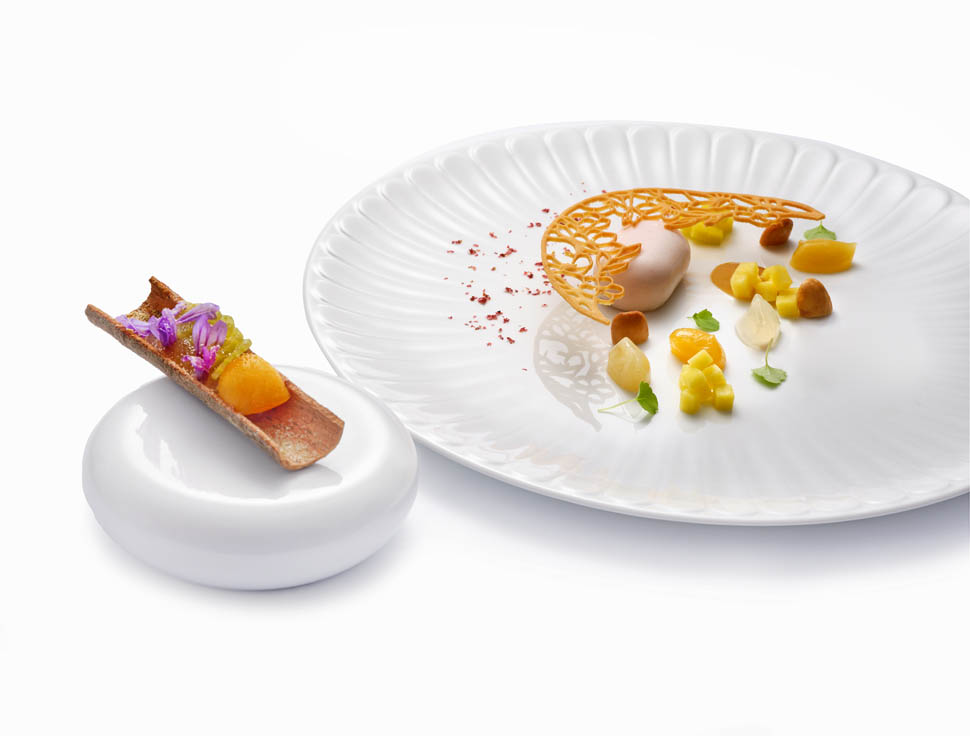
The fior di latte gelato is infused with bergamot and served with an almond crumble and praline-coated almonds. The real highlight, however, is the finishing touch of pink pepper and Andaliman pepper: their balsamic and slightly spicy kick stimulates the taste buds, emphasizing the natural sweetness of fructose and avoiding the need to overload the dish with refined sugars. In an era when haute cuisine often risks getting lost in stylistic flourishes, Heinz Beck continues to demonstrate that scientific knowledge of the subject isn’t meant to impress, but to restore the act of eating to its purest, lightest, and most deeply satisfying form.
Contact
La Pergola del Cavalieri Rome, at the Waldorf Astoria Hotel
Via Alberto Cadlolo, 101 - Rome.
Tel. 0635092152.
Open for dinner only, Tuesday through Saturday.