There’s a specific moment when street food stops being just comfort food and becomes a subject of study. It happens when a pop culture classic—like bolinhos de bacalhau, those tempting codfish balls that are a staple in Brazilian and Portuguese bars—ends up on the table of a chef like Daniel Boulud.
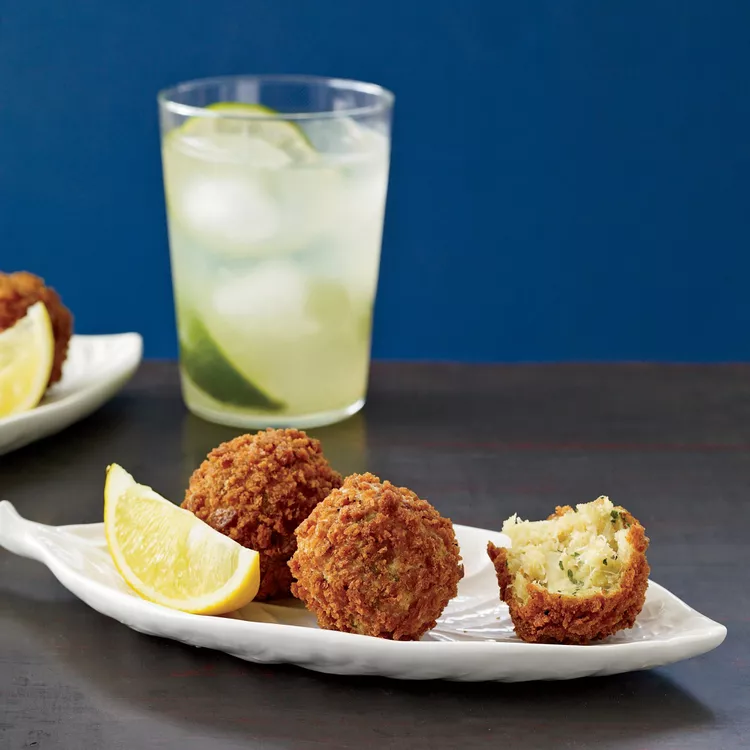
Recipe published by the chef on Food&Wine
Photo of the dish by Stephanie Foley
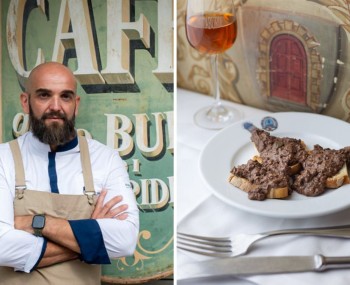
Photo of the chef by Thomas Schauer
Boulud, a pillar of French cuisine in New York with his restaurant Daniel, is famous for iconic dishes that combine technical precision and simplicity, such as his famous sea bass in a crispy potato crust or the timeless DB Burger stuffed with foie gras. He doesn’t like to deconstruct dishes just to impress; he prefers to perfect what already exists through classical technique.
In this recipe, the classic bar-style fish cake is reimagined down to the finest details. The texture is delicate yet firm: an airy, crispy crust on the outside, and a soft, almost soufflé-like center on the inside, achieved by cooking the fish in milk. The chef’s true signature, however, lies in the regional twist: instead of the classic tropical chili pepper, Boulud uses piment d’Espelette—a fruitier, more nuanced Basque AOC chili pepper—which pairs perfectly with fresh cilantro. The result? A rustic dish that becomes haute cuisine, perfect for recreating at home.

THE RECIPE: SALTED COD CROQUETTES (BOLINHOS)
Prep time: 1 hour and 10 minutes
Total time: 2 hours and 15 minutes (+ 24 to 48 hours for desalting)
Yield: about 40 croquettes
INGREDIENTS
- 225 g salted cod (skinless and boneless, rinsed)
- 240 ml whole milk
- 2 sprigs of thyme
- 1 bay leaf
- 8 garlic cloves (3 crushed, 5 finely chopped)
- 450 g yellow-fleshed potatoes, peeled and cut into cubes of about 5 cm
- 1 tablespoon extra virgin olive oil
- 1 large shallot, finely chopped
- 1 teaspoon piment d’Espelette (or sweet paprika)
- 3 tablespoons chopped fresh cilantro
- 120 g 00 flour
- 150 g fine breadcrumbs
- 3 large eggs
- 1 large egg yolk
- Vegetable oil for frying
- Lemon wedges for serving
PREPARATION
Soaking: Place the salt cod in a bowl of cold water and let it soak in the refrigerator for 24 to 48 hours, changing the water at least three times.
Cooking the fish: Drain the salt cod and place it in a pot with the milk, thyme, bay leaf, and 3 crushed garlic cloves. Cover with water, ensuring the water is about 5 cm above the fish. Simmer over low heat for 20 minutes, until the fish flakes easily with a fork. Drain it with a slotted spoon, let it cool slightly, and flake it into strands.
Cooking the potatoes: In the same pot and cooking liquid, cook the potatoes for about 10 minutes. Drain them and transfer them to a large bowl along with 2 tablespoons of the cooking liquid, mashing them until you have a coarse purée.
Mixing the mixture: Heat the olive oil in a small skillet and sauté the shallot and minced garlic for 4 minutes. Pour everything into the bowl with the potatoes, then add the salt cod, cilantro, Piment d’Espelette, and egg yolk. Mix well and let it firm up in the refrigerator for at least 30 minutes.
Shaping and Breading: Prepare three separate bowls with flour, beaten whole eggs (with a teaspoon of water), and breadcrumbs. Shape the mixture into balls about the size of a tablespoon (about 15 ml). Coat them in sequence in the flour, egg, and breadcrumbs. Place them on a baking sheet lined with parchment paper and refrigerate for 10 minutes.
Frying: Heat about 1.3 cm of vegetable oil in a deep skillet. Fry the croquettes in two batches for about 4 minutes, turning them until evenly golden brown. Drain them on paper towels and serve hot with lemon wedges.