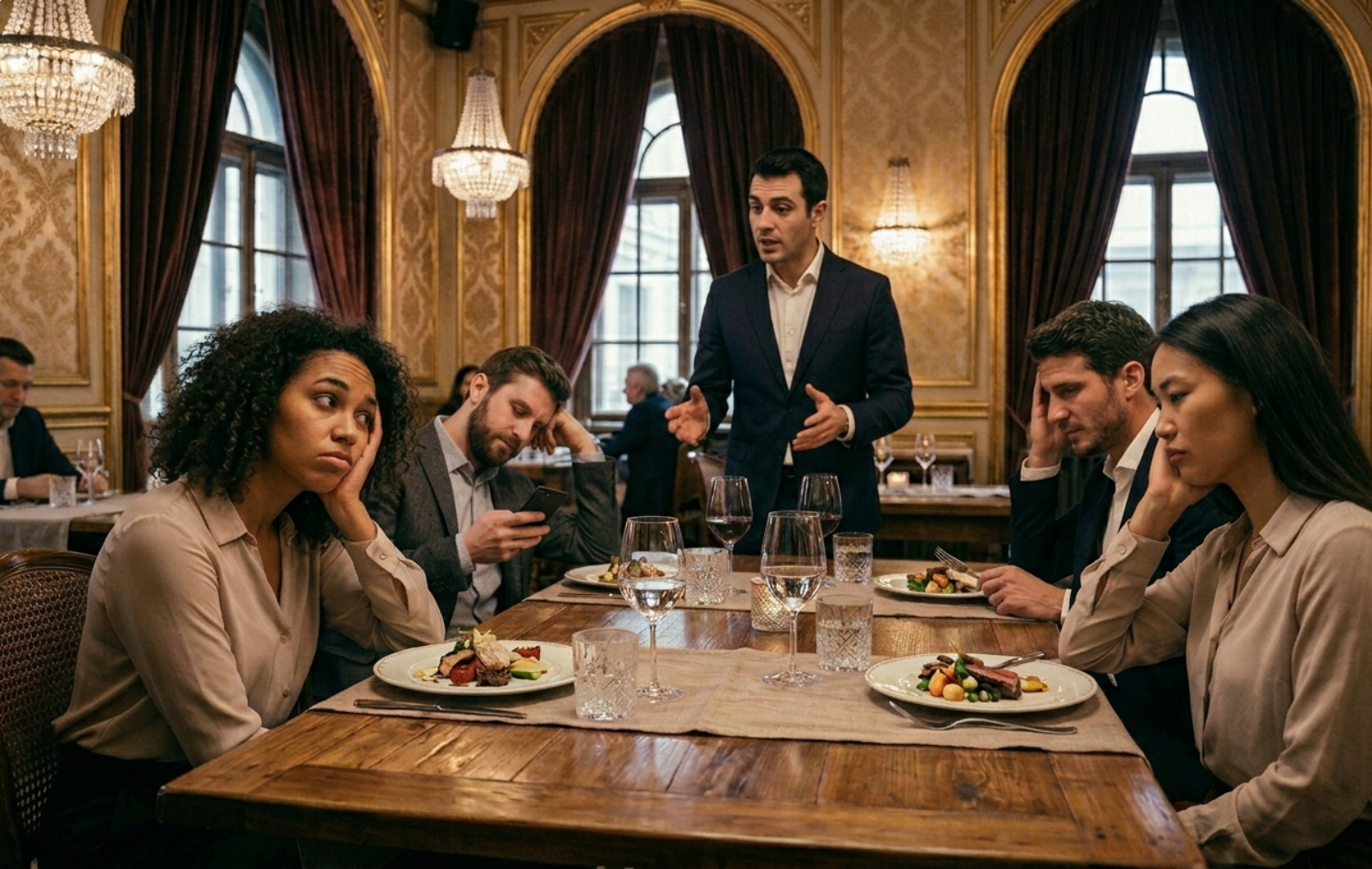
Today, a customer who spends three hundred euros on a tasting menu no longer wants to be lectured; they want to be fed. And I’m not just talking about calories; I’m talking about emotions that don’t require a ten-page instruction manual. So-called “storytelling”—that term that has plagued marketing for the past decade—is becoming public enemy number one in Spain’s most prestigious dining rooms.
Take the Padrón brothers, Juan Carlos and Jonathan, who rule the roost in Tenerife and Madrid with El Rincón de Juan Carlos and Poemas. They figured it out before anyone else: words are the enemy of warmth. “I agree that stories should be much shorter; first, because they drag out the dinner, and second, because they let the food get cold,” Juan Carlos tells El País. In Tenerife, they’ve decided to keep the story short: they present the essentials, and only if they see that spark of curiosity in the eyes do they go into more detail. It’s a matter of respect, almost a matter of the flavor’s survival. Ramón Freixa shares this view; he has stories to spare, but he prefers to let the palate do the talking. He calls it the “silent eye”: that narrative that is there, that you sense, but that doesn’t need to be explained to the guest at the table. Because you feel the truth when you take that first bite.
The Customers' Perspective
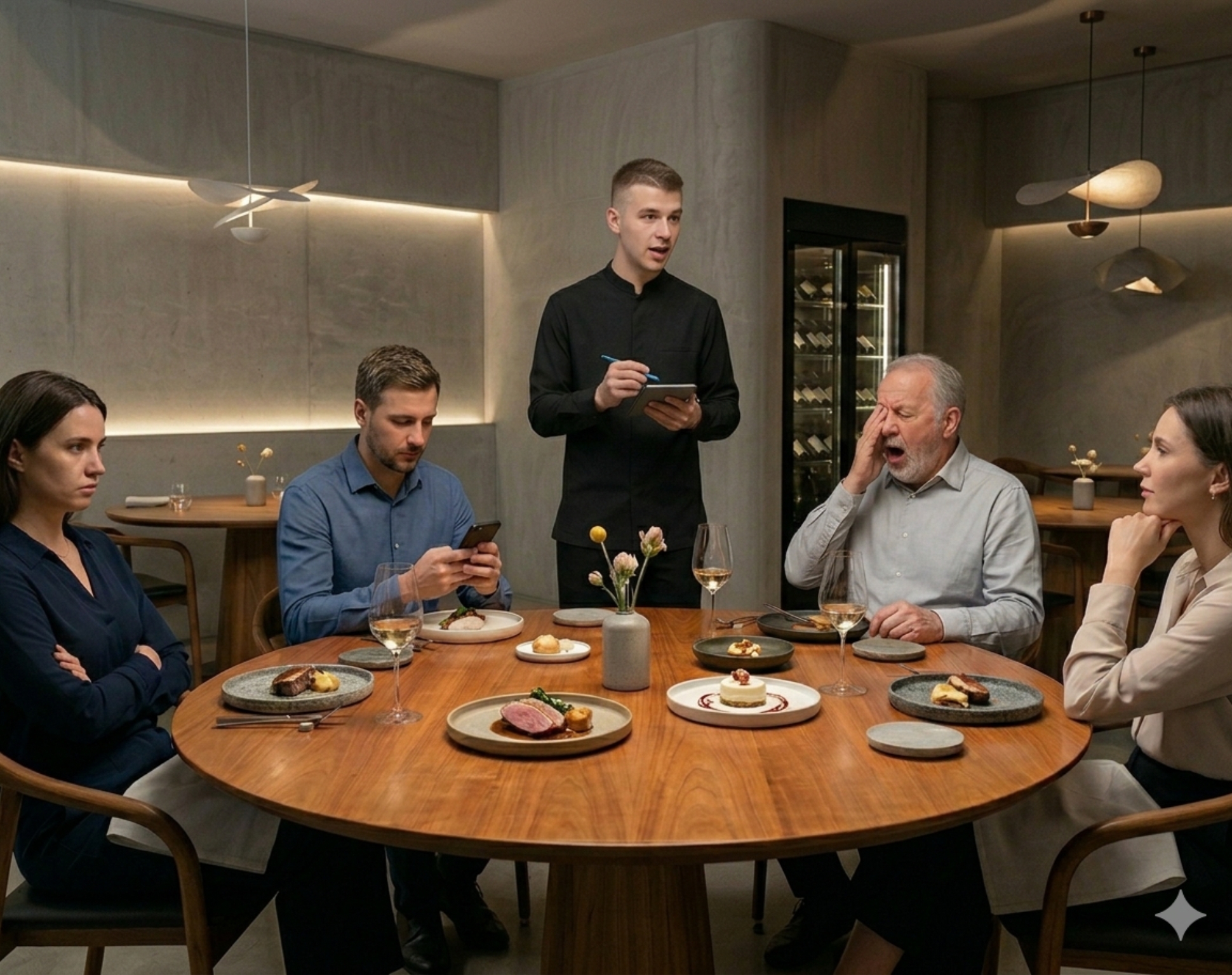
Juan Carlos García, who runs Vandelvira in Baeza, gets straight to the point with a honesty that’s almost startling: often, these endless explanations serve the chef’s ego more than the customer’s enjoyment. “Sometimes we get too caught up in our own heads; we have this desire to go all out in what we want to convey,” he admits. But admitting a mistake is the first step toward not making it again. Over-conceptualizing can be a spectacular own goal, because explaining why a dish is brilliant might actually make the dish itself less brilliant. The impetus must come from the customer: if they want to know the reasoning behind things, they’ll ask the questions themselves. Albert Raurich, who sees plenty of difficult people between Dos Palillos and Dos Pebrots in Barcelona, is even more blunt. There are those who want absolutely nothing to do with explanations, “they couldn’t care less,” he says, quoting a customer who told him in no uncertain terms: “Don’t bother explaining things to me—just feed me good food.” Of course, it’s nice to help people understand the effort that goes into a dish, but you can’t force the issue.
The Sixth Flavor: When Storytelling Matters (But in Moderation)
Yet not everyone is ready to give up on words. There are those, like Miguel Vidal of Bancal in Madrid, who believe that the “sixth flavor” lies precisely in storytelling. But be careful: he’s talking about being concise. Explaining that the turbot in front of you was caught in March, when the females have the most fat for spawning, isn’t an exercise in style—it’s a way to positively influence the guest’s mind. You’re giving them added value; you’re explaining why that fish has that almost buttery texture. However, even Vidal does not appreciate those who explain a recipe in too much detail. It is a matter of balance, a fine line to walk with extreme care. Even Andoni Luis Aduriz, of Mugaritz, ponders this boundary. He, who has built a career on provocation and context, admits that there are things that need no explanation because they are already accessible, recognizable. There’s no need to explain an ensaladilla rusa, unless there’s an element in it that distorts its meaning. A lengthy explanation should only be given when strictly necessary to ensure the deeper meaning of the dish isn’t lost. But less is more, almost always.
Front-of-House Psychology: The Art of Reading Silence
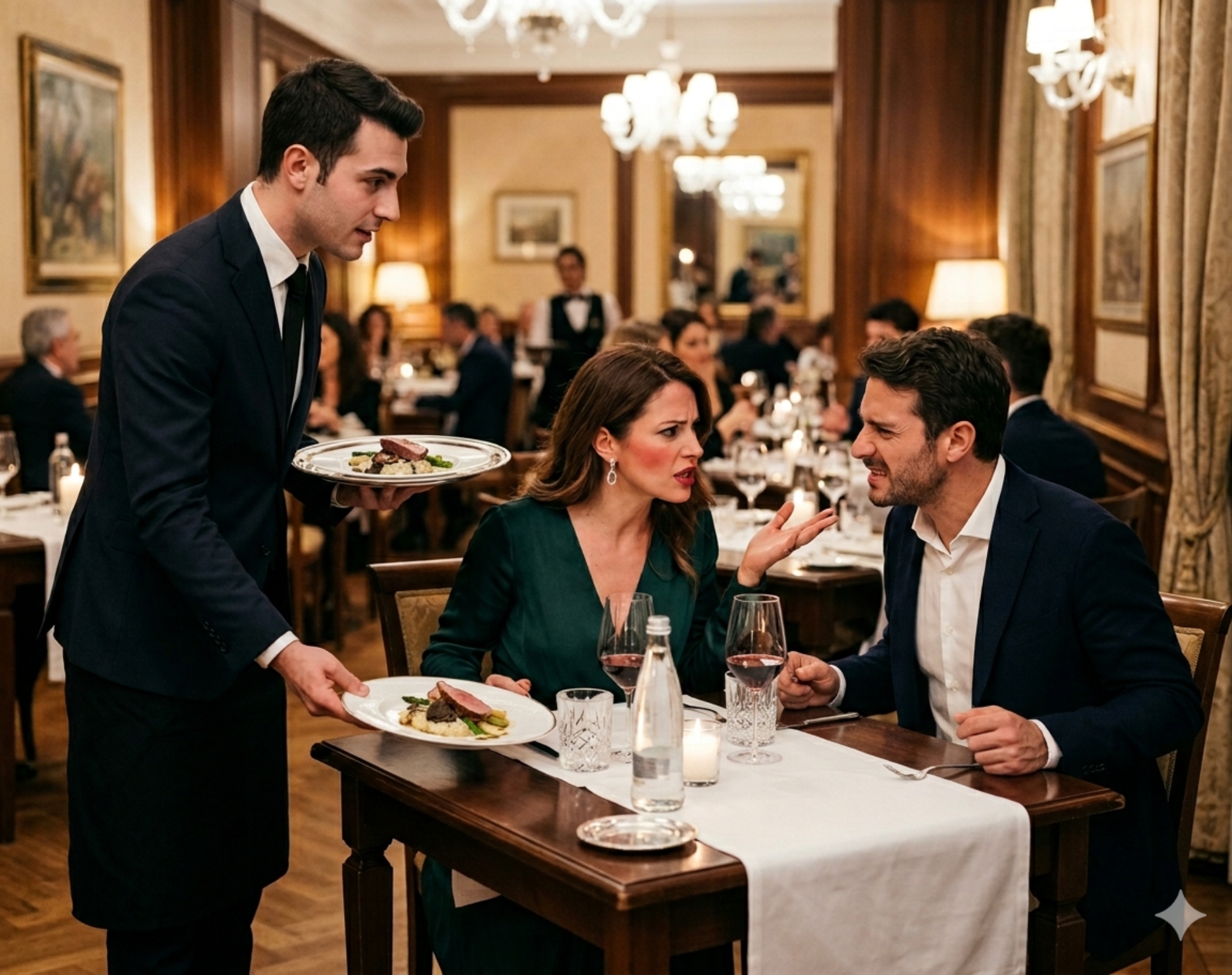
The real challenge, however, rests on the shoulders of the front-of-house staff. Susi Díaz, of the restaurant La Finca in Alicante, trains her team to be psychologists before they are servers. "You must never interrupt a conversation between guests just to recite a script," she says firmly. If you see a couple arguing heatedly or gazing into each other's eyes, the last thing you should do is launch into a long story. At most, you whisper the name of the dish and vanish like a ghost. Then there are the tables of foreigners or die-hard foodies who want to know everything. There—and only there—can you give free rein to your expertise. But it is a difficult art, that of understanding who is sitting in front of you in a matter of seconds. At Casa Marcial, Nacho Manzano has found a diplomatic middle ground: he leaves the printed menu on the table. It’s right there, in black and white. If you want to read it, great. If you want us to explain it to you, just ask. It’s a way to avoid being intrusive and to give the guest control over their own time. Because curiosity cannot be forced, it must arise spontaneously. Even in Valencia, at Fierro, Carito Lourenço and Germán Carrizo have flipped the paradigm. Eat first, talk later. It is the ultimate litmus test: if the dish speaks for itself, it has won. The revolution of silence has only just begun. The good news is that chefs have finally realized it: people are hungry for food, not for words.