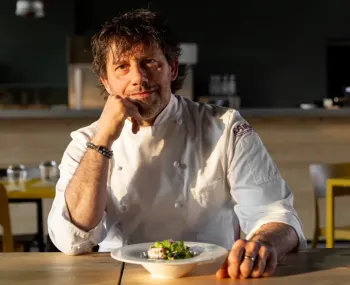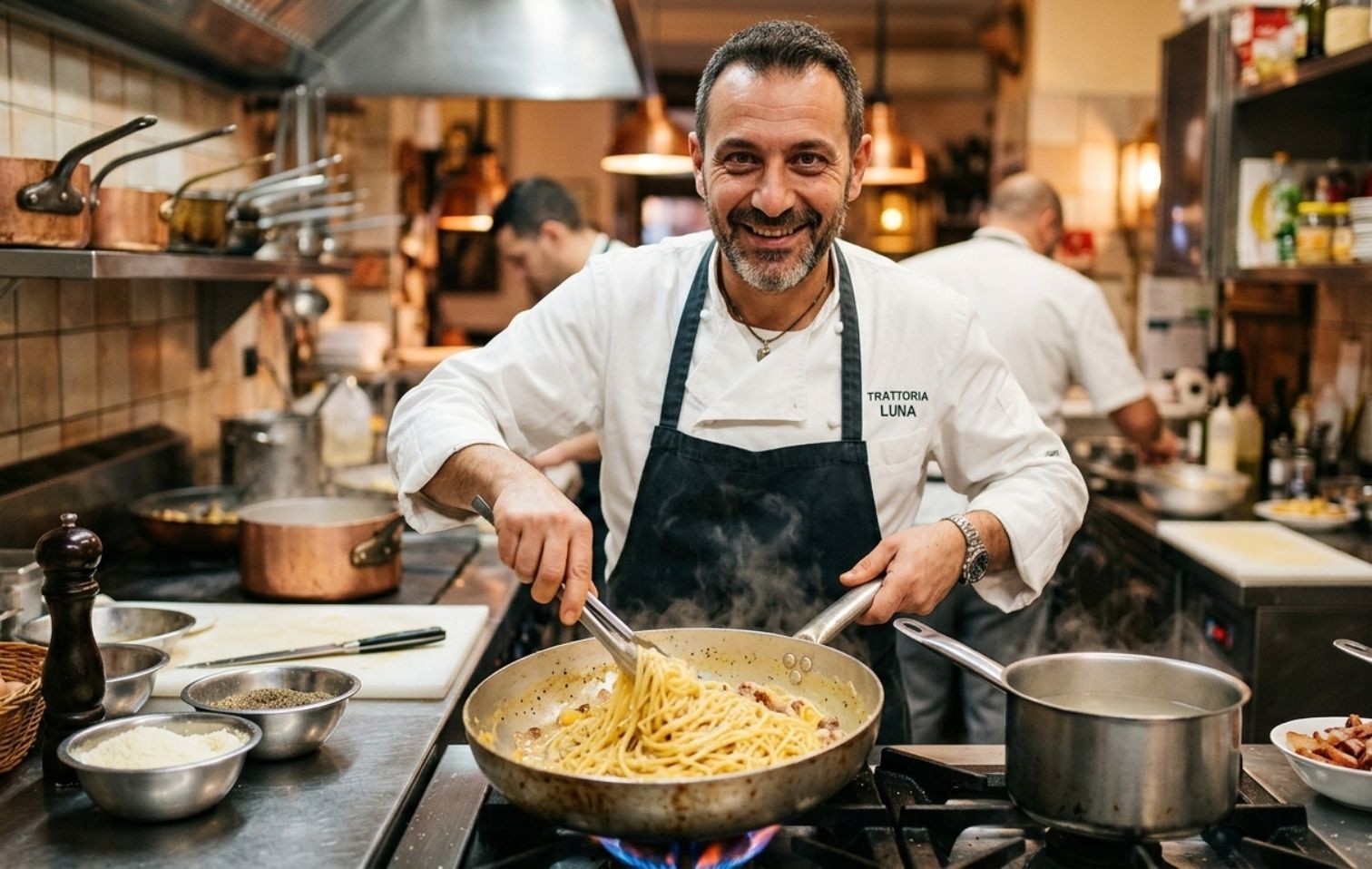
From the banks of the Tiber to dining rooms around the world, one universal recipe reigns supreme. A study reveals that it has definitively overtaken the great traditional classics.
Rome’s Gold: Why Carbonara Remains the Undisputed Queen of Italian Tables
If Italian cuisine were an orchestra, Carbonara would be its most charismatic soloist, the one capable of drawing thunderous applause. It is no longer just a matter of taste, but a sociological phenomenon confirmed by the numbers: as Carbonara Day (April 6) approaches its tenth anniversary, the verdict of Italian palates is final. With a popularity rating nearing 46%, the “egg and guanciale cream” has dethroned sacred icons such as Spaghetti alle Vongole (42.6%) and the ever-reliable Ragù (42.5%).
The Alchemy of a Perfect 10
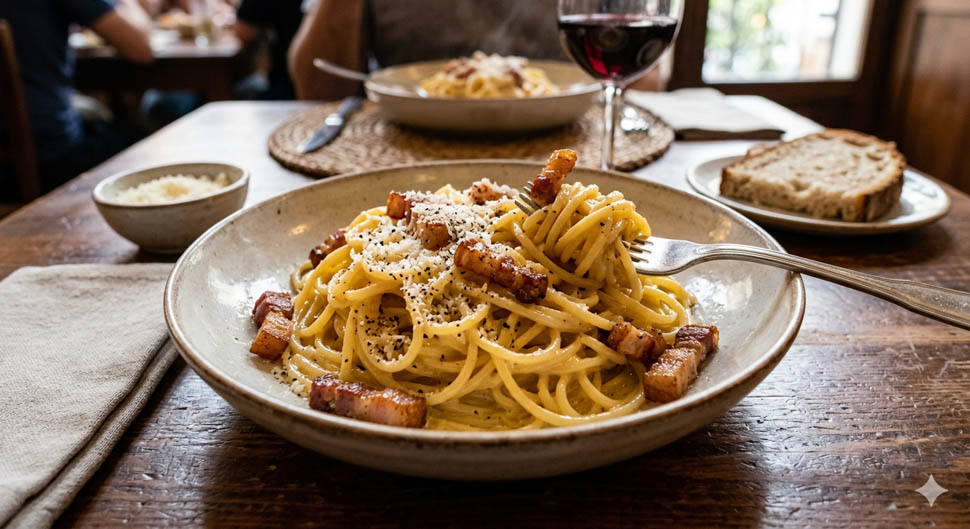
To delve into the essence of Carbonara is to handle the living fabric of tradition. According to a survey conducted by AstraRicerche for the pasta makers of Unione Italiana Food, one in two Italians believes this dish deserves a “perfect 10” without reservation. But what is it that makes this blend of carbohydrates and proteins so irresistible? 63.9% of respondents describe it as “delicious,” a word that evokes that sinful pleasure that only the fat of perfectly browned guanciale can provide. For others, it is the balance of flavors (21.1%) or its democratic and convivial nature that makes it the permanent center of gravity of every Roman dinner table.
Beyond the Recipe: The Myth of Its Origins
While social media has been flooded with the hashtag #Carbonara10eLode—reaching an initial audience of a staggering 1.7 billion people—it’s worth delving into the origins of this dish. Although 94.3% of Italians inextricably link it to the capital, the origins of Carbonara are shrouded in a haze of black pepper and legend. Some point to the pastieri of the Apennines (the “carbonari”), while others, with a historical bent, trace its birth to the fateful 1944 encounter between American soldiers’ rations of eggs and bacon and the expertise of Roman chefs. Whether it was born amid the rubble of war or in the woods of the charcoal burners, the result remains the same: it is a triumph of Italian-style umami.
The Dogma of Guanciale and the Eclipse of Cream
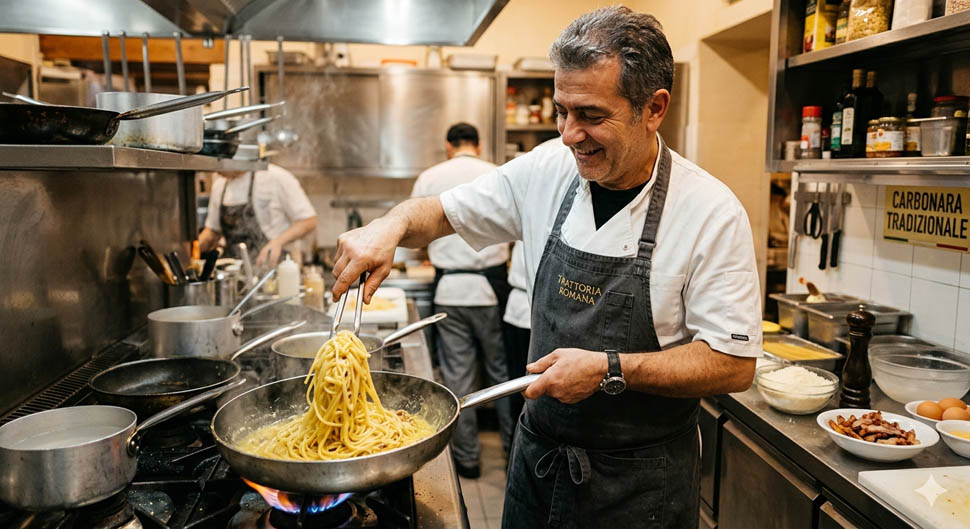
Despite the proliferation of variations—sometimes daring, sometimes heretical, like the one we told you about with panecetta and sausage—there is only one Carbonara—the one we like best. Yet, the true gourmet knows that the secret lies in temperature control: the egg must caress the pasta, never cooking to the point of becoming an omelet. “Pasta is not just an iconic food, but a cultural value that unites millions of people,” emphasizes Paolo Barilla, president of Unione Italiana Food, as reported by ANSA. It is a democratic excellence that allows for no shortcuts: cream is a faded memory of the 1980s, replaced today by the obsessive search for Pecorino Romano DOP and freshly toasted pepper.
The Wish List
While Carbonara reigns supreme, its other “sisters” in the pasta world aren't standing idly by, painting a picture of taste that is quintessentially Italian:
- Carbonara: 46% (The undisputed queen)
- Spaghetti with Clams: 42.6% (The scent of the sea)
- Pasta with Meat Sauce: 42.5% (The warmth of Sunday)
- Amatriciana: 29.4% (The pride of Lazio)
- Tomato and Basil: 29.3% (The essence of minimalism)
Get your forks ready: the capital is ready to reclaim its crown, because, as 66% of respondents maintain, the best Carbonara is—and always will be—the one eaten in the shadow of the Colosseum.