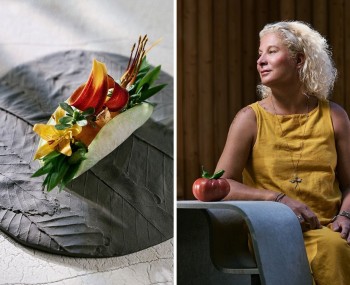
The prototype of the modern Umbrian restaurant goes by the name of “Elementi”: under the banner of Borgobrufa, the region opens up to the world, satisfying the mind as well as the appetite. What’s new? Andrea Impero’s “Inspiration 2026” menu, which takes guests on a culinary journey. Beyond the clichés of local reinterpretations.
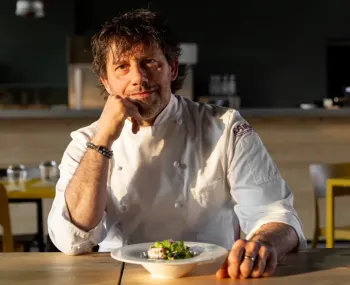
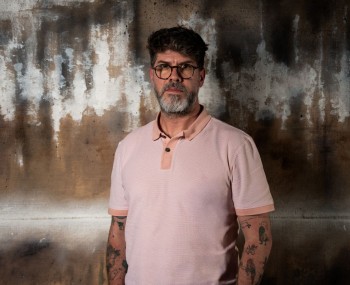
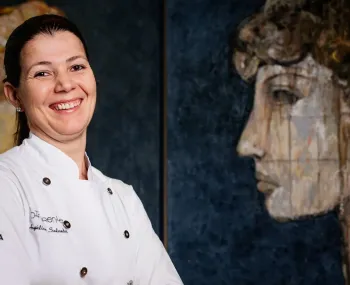
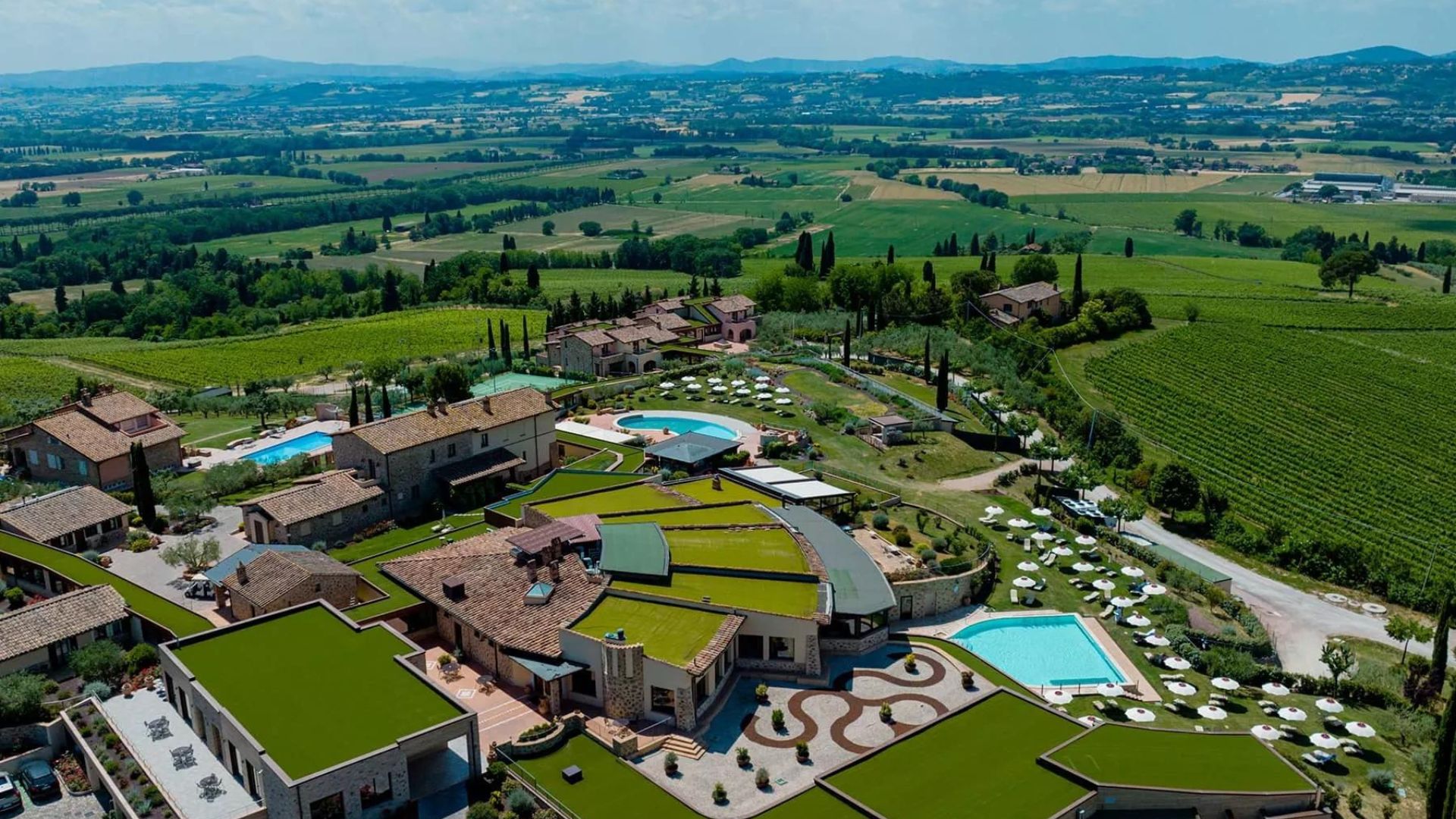
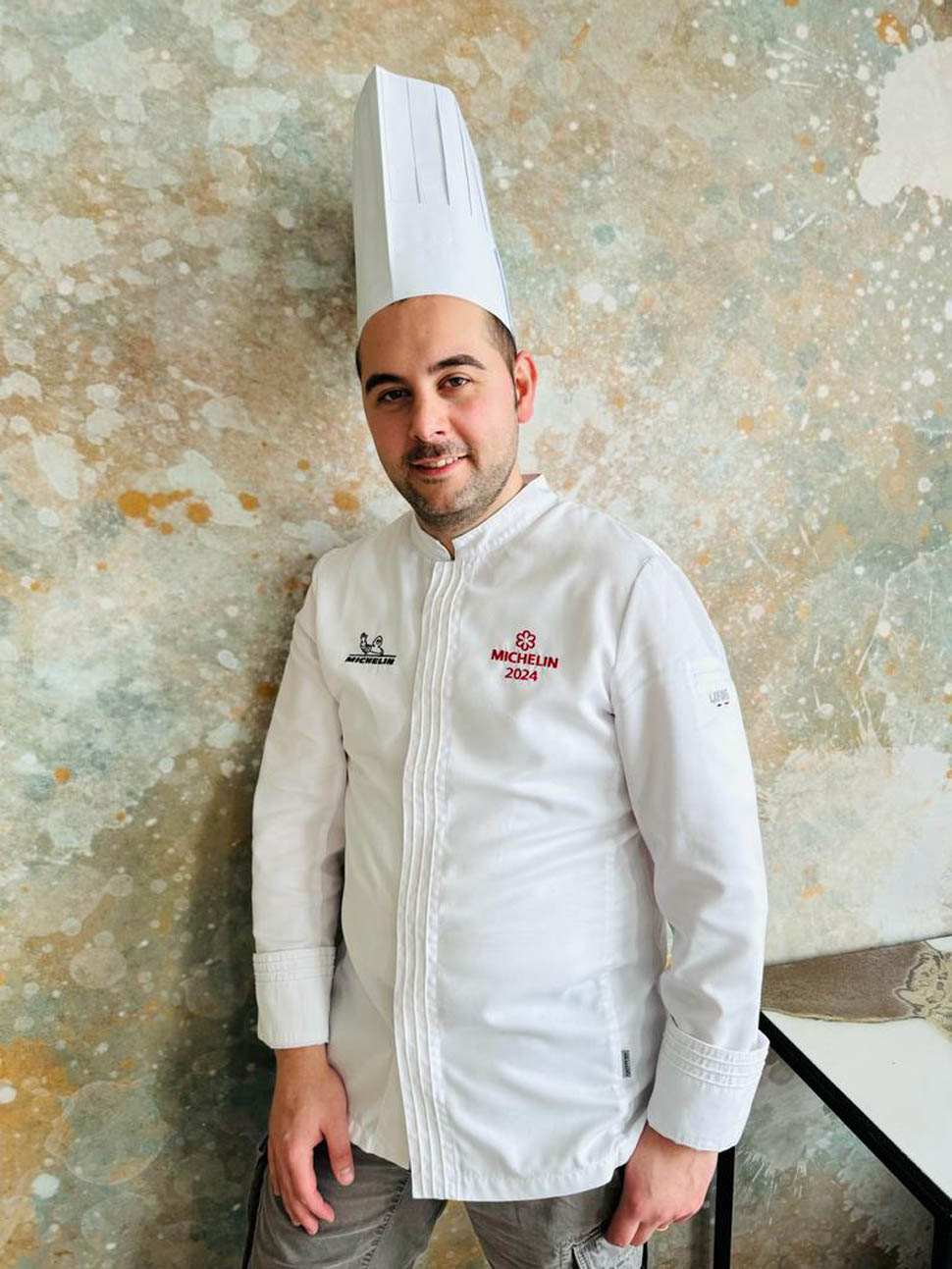
In Umbria, there’s a restaurant where the “bread and salami” aperitif becomes an amuse-bouche, wild boar the filling of a “tasting kebab,” and “pasta with onions” a pre-dessert: so many bites, so many small epiphanies poised to transform the local culinary scene. The setting? Outside, a Perugian labyrinth that knocks firmly on the windows (not surprisingly, the former agricultural fort was converted by the owners into a “stone and lawn” resort with the largest spa in the region); inside, the fine dining Elementi led by chef Andrea Impero, who in just a few years has amassed the accolades of 1 Michelin star, 2 Espresso Hats, and 2 Gambero Rosso Forks. But we’re not here to reel off statistics: rather, to tell the story of an establishment that overturns the perception of the usual “local cuisine,” placing on a pedestal the exchanges between peoples who are only seemingly at opposite ends of the spectrum.
The Restaurant, the Chef, and the Philosophy
One could dwell on the 3,000-square-meter wellness center, on the liquid treasure trove of the on-site wine cellar (including estate wines such as the excellent Burgus and Poggio Belvederino), and on the charitable initiatives that are certainly not lacking (notably the collaboration with the Serafico Institute of Assisi for the deaf and blind, confirming that this is not your typical business-oriented resort). Yet, Elementi leaves a different mark on the established landscape of the region. “I believe that antiquity is a precious resource to draw from. I have always seen it as a case study for creation,” Impero begins. The reason is simple: “We are often convinced that recipes ‘belong’ to us because they have been handed down through generations. The truth, however, is that there is no national copyright: every dish has a global lineage.”
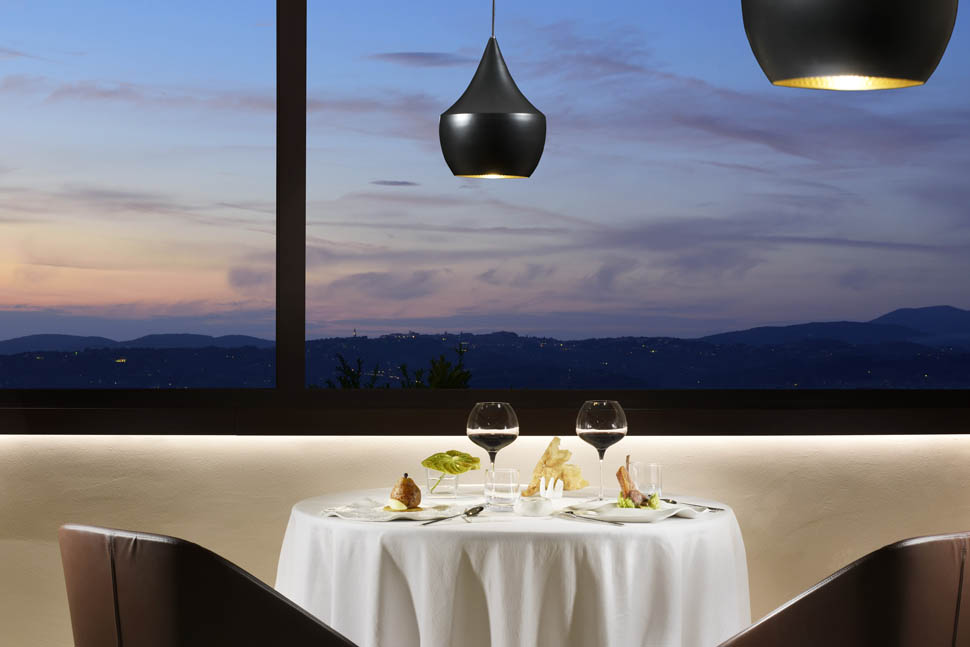
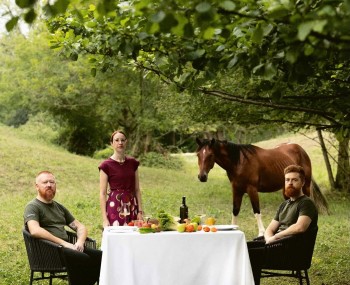
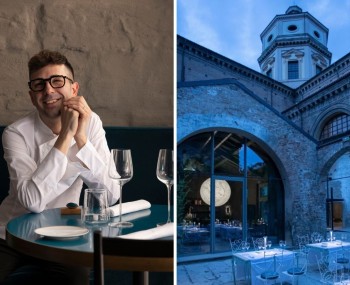
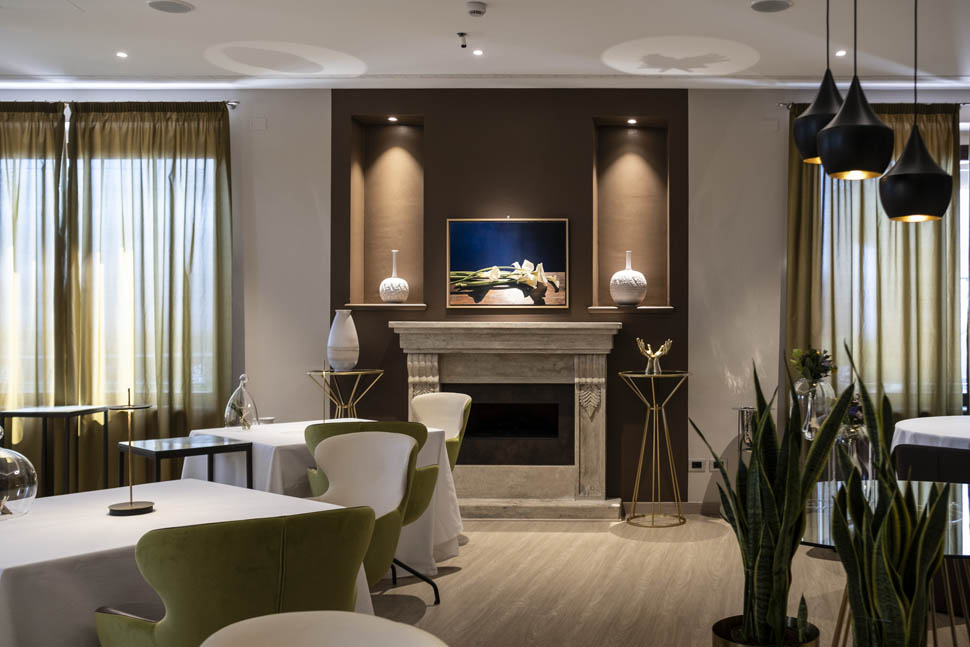
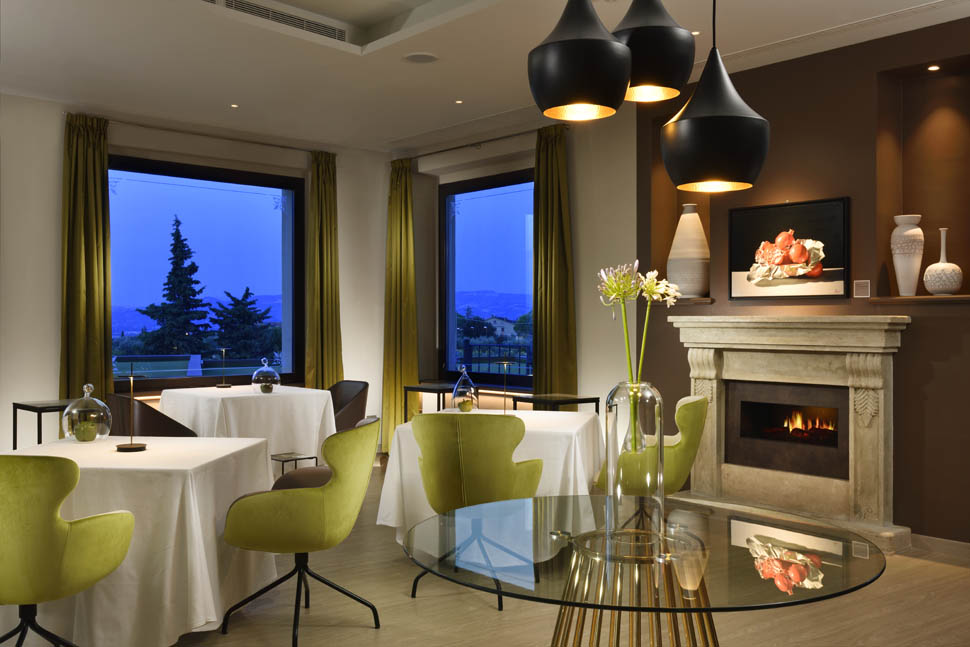
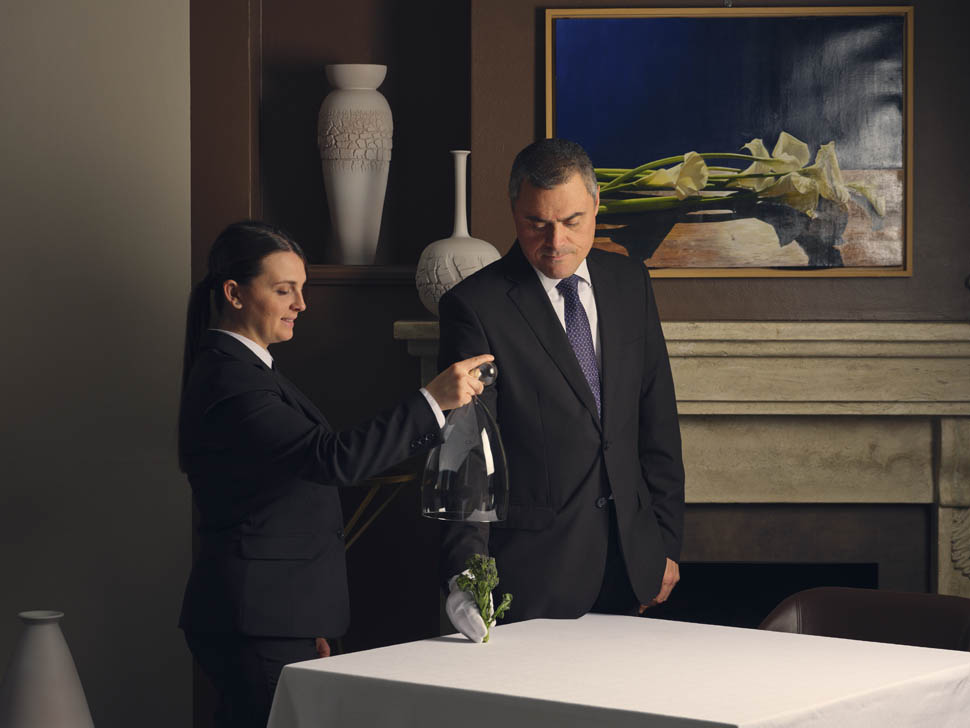
And so, even in a physical sense, the dining experience is twofold. On one hand, there’s the “nature”-inspired design that blends seamlessly with the landscape, the crackling fireplace in the background, and the pristine white table where the ingredient of the moment is presented, only to be reimagined in evolving forms throughout the meal; on the other, universal food preservation practices (expect a tasting featuring six assorted tomatoes in February!) and the tendency to gather rituals from around the world into a string of “patchwork” dishes. In short, this means a continuous reworking of the ingredient, literally carried over from month to month thanks to storage methods designed to enhance its expressive range. Then, there is the attempt to take the guest on a journey “while seated,” with an experience far from being confined to the Umbrian region.
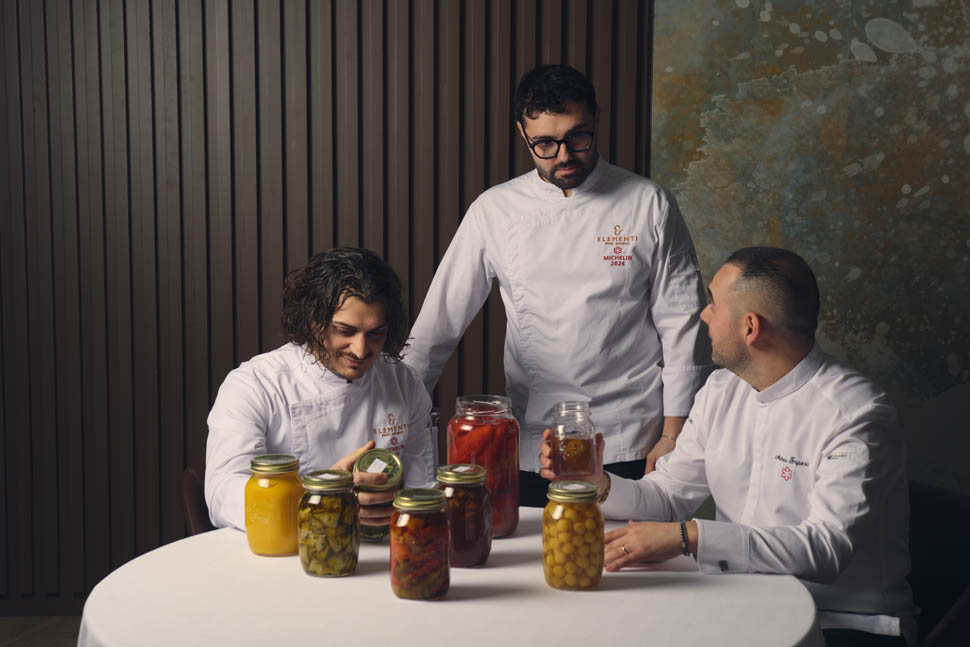
Impero, after all, has a varied background that spans borders: from a small village in the Frosinone area to the “restaurant ventures” of the Iaccarinos in Rome and the Mellinos in London, all the way to his role as Executive Chef at Maritozzo during a long stint in Moscow, where he became familiar with the complex network of hotel outlets. From a casual chat “on the sidelines,” the profile of a chef passionate about the anthropology of taste emerges, one who is also well-versed in those semi-forgotten artisanal practices that we will rediscover in the “Inspiration 2026” tasting.
The New Tasting Menu: Inspiration 2026
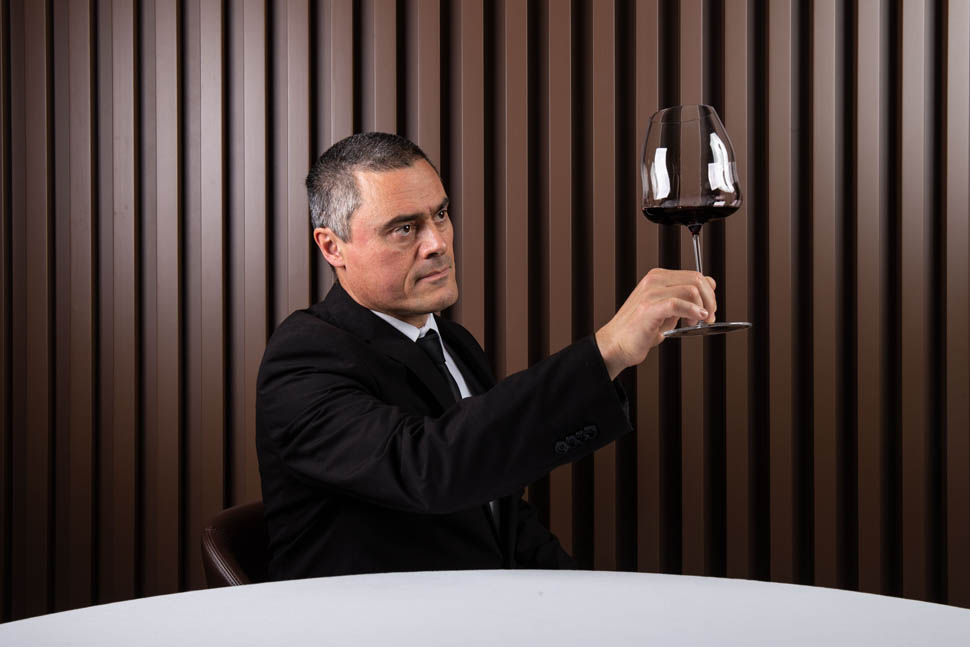
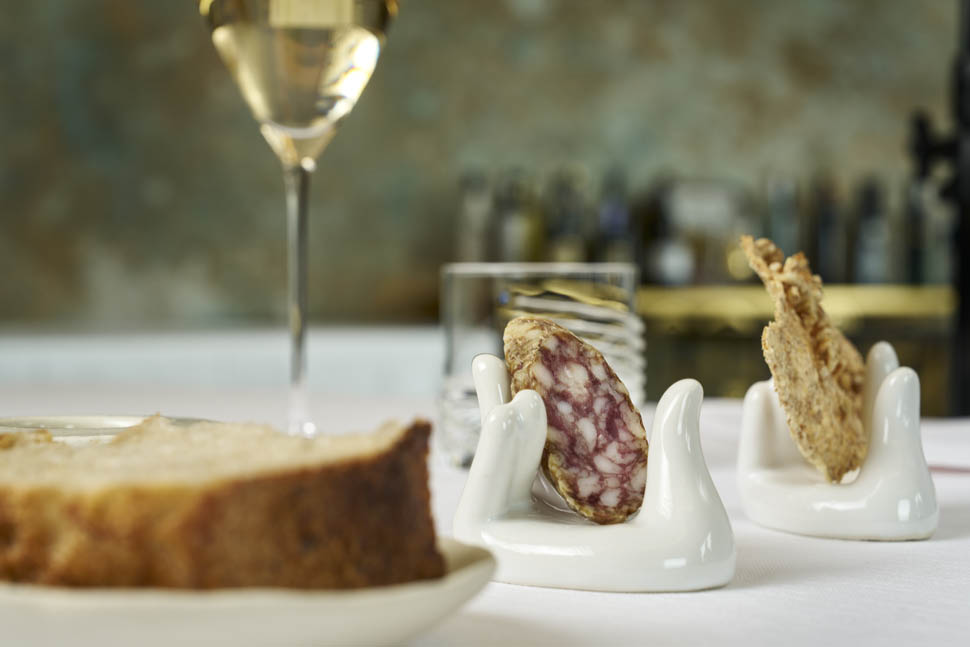
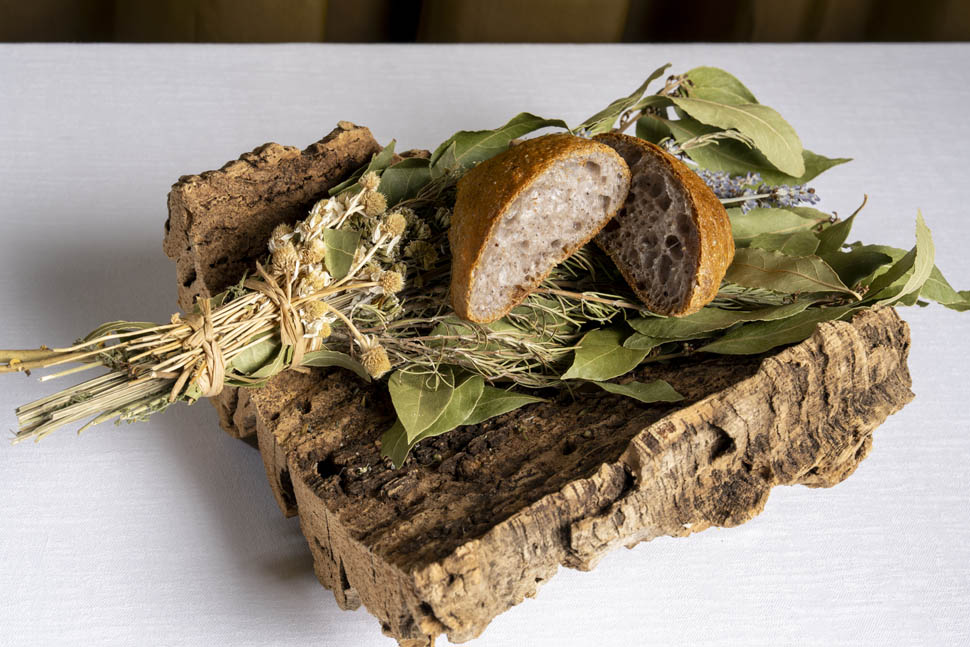
Let’s return, then, to “Bread, spelt, and salami,” the opening course presented as a “deconstructed platter” by maître d’ and sommelier Domenico Scotto d’Antuono. He will guide us through the geography of the drink with a selection of alternative beverages—from kombucha to Bloody Mary—alongside the indispensable local labels.
The baptism by fire comes in the form of the Cinturino Nero Umbro salami, which the chef made himself exactly one year ago. The zest of Cervia salt and the subtle acidity of a splash of Champagne added to the mixture raise the bar for aging, making the pork fat almost “refined.” Hence the idea: the cured meat is served at regular intervals with bread made from minimally refined flours and BioAlberti’s einkorn wheat crackers. This grain is treated with the same patience reserved for fine rice—long, unseasoned cooking followed by drying to create a crumbly snack. Thus, the grain becomes crispy, creating a contrast between the softness of the cured meat and the elasticity of the leavened bread.
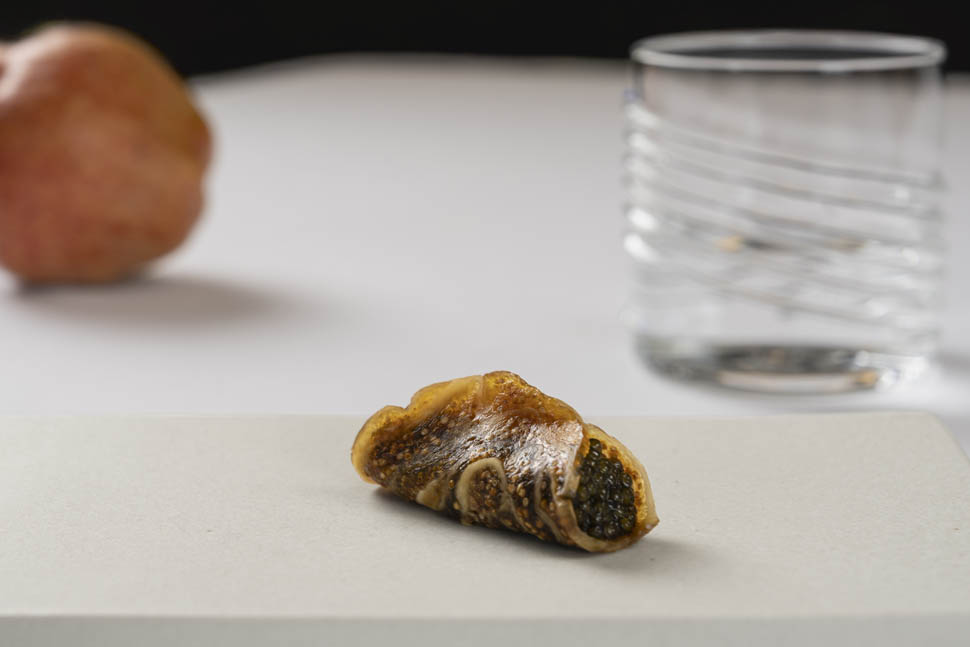
It’s just a hop, skip, and a jump from Umbria to North Africa, as long as the flour-based dish switches up its pasta: the second bite (“Fichissimo,” ed.) is a round-trip flight to the Maghreb, featuring Moroccan Msemen flaky bread, fig cream, and figs in syrup. The flavor upgrade lies in the carpaccio of Fico Mondo, a white variety from Cilento that the chef has wisely paired with caviar. A strategic move, because in the mouth it feels like an “underwater garden” that fills the cheeks in a whirlwind of saltiness and roundness. And in the end, salivation increases, washing away the fruit’s sugars.
Vegetable? Yes, but preserved: Andrea Impero’s “potential vegetable”
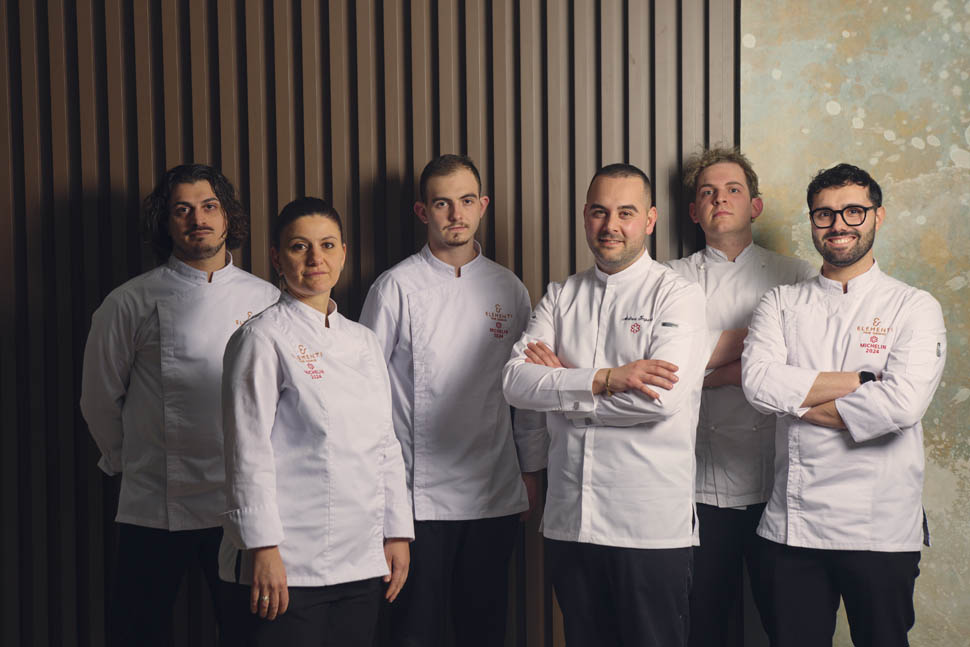
“The name Elementi stems precisely from our ongoing research into ingredients, which we conduct alongside partners such as Darcy Gordon in Val Nerina—for the figs—or Il Fauno in Ciociaria, involved in the next course,” explain maître d’ Mariantonella di Renzo and head chef Nicola Marzano (“dining partners” whose harmony is reflected in a particularly engaging narrative).
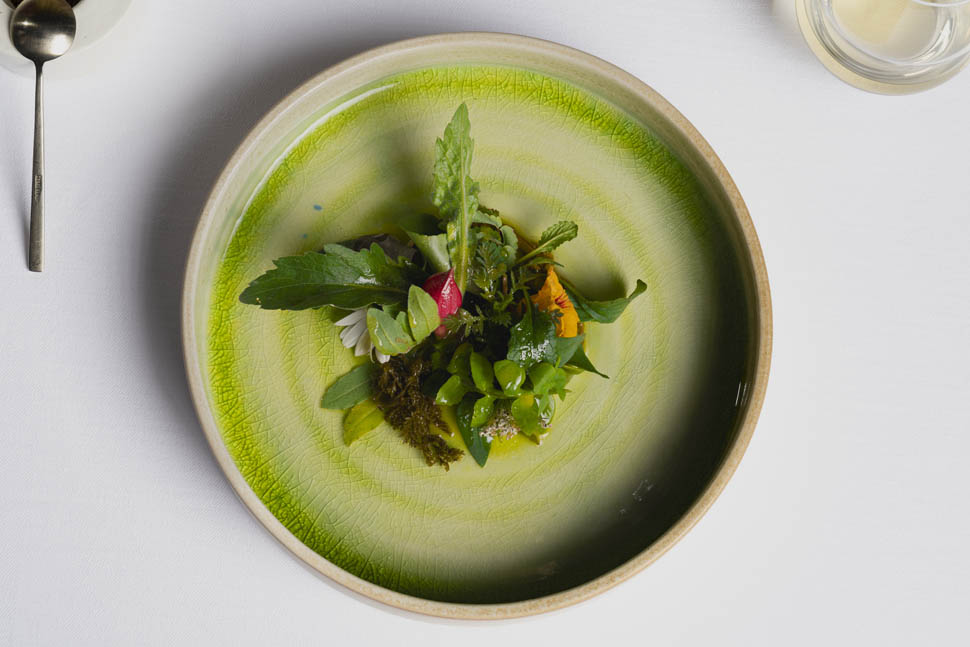
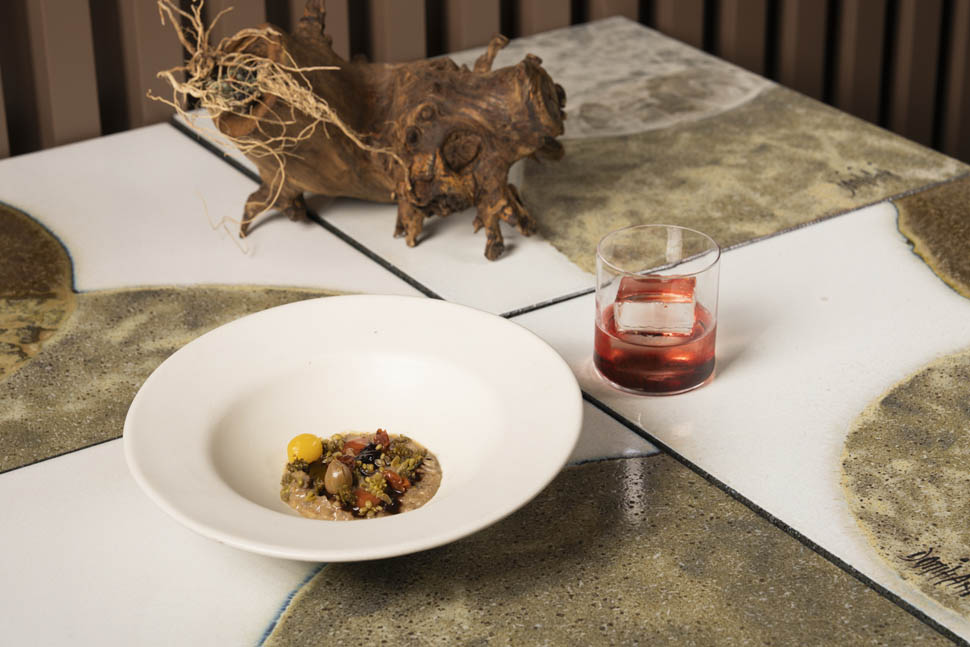
It bears repeating: as you eat, you’ll notice that this preservation-focused approach extends not only the shelf life of early-season produce but also the burst of herbaceous flavors meant to complement the meaty protein. Rooted in this same philosophy, then, is the salad featuring the Fauno’s weekly “foraging haul,” which is delivered punctually every Thursday to the kitchen team. Before us lies a simple salad enlivened by numerous preserved elements: ranging from creamed turnip greens to wild white carrot leaves in oil, all the way to Jerusalem artichokes in brine. The kick? Surprisingly, it comes from a lacto-fermented, salted lemon, pounded in a mortar. An exponential burst of flavor that d’Antuono tempers with a kombucha made from gentian root and jasmine. The green core of the composition finally expands into a highly fermented bread made with licoli and fermented spruce buds.
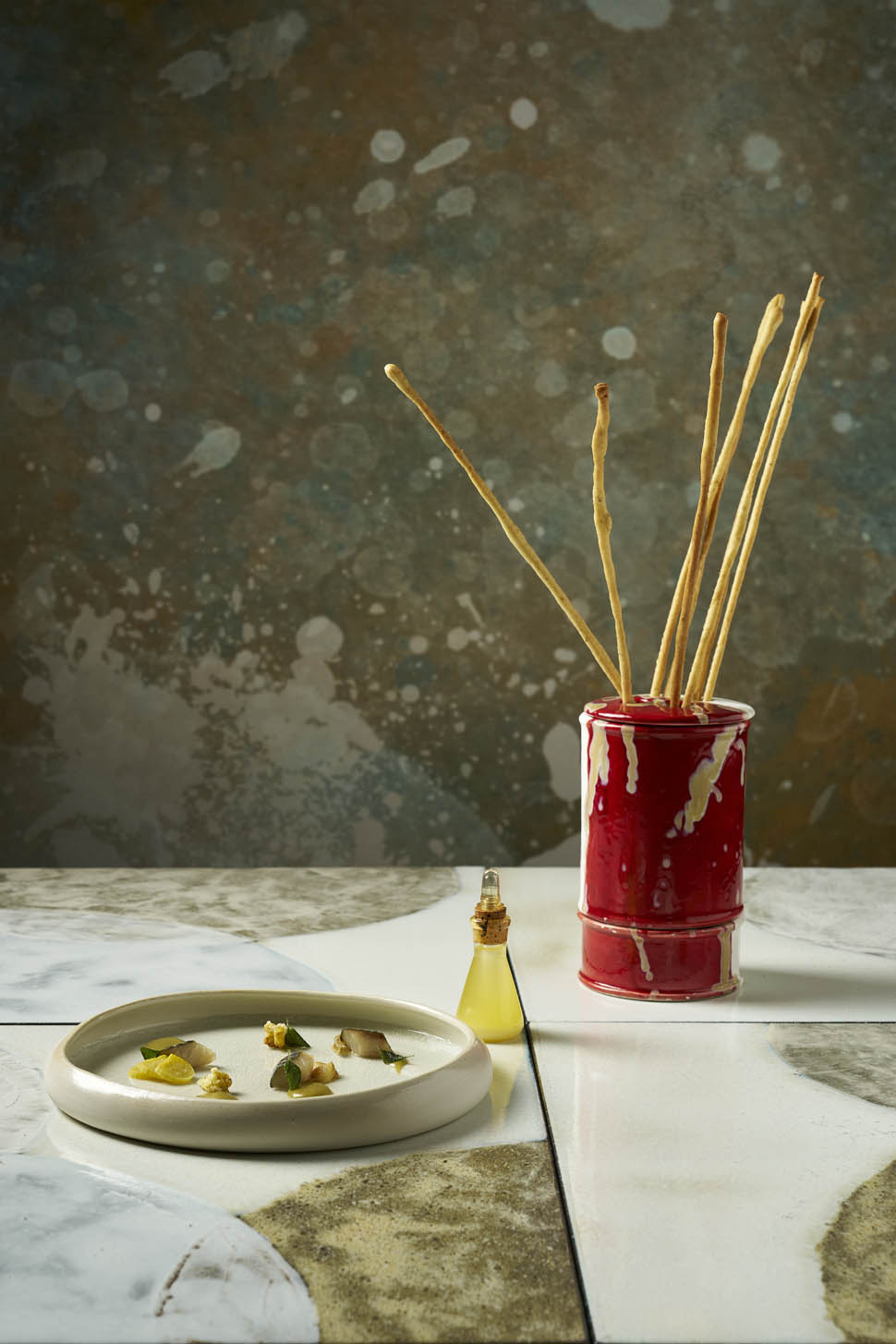
“With ‘Scapece,’ we wanted to show that this frying and marinating technique, now widespread in Italy, actually originated in Spain,” explains Impero as he introduces the second round of chlorophyll. To drive the point home, there’s a selection of summer zucchini ranging from Romanesca in a scapece-style cream to “UFO” zucchini, dried and massaged in the air using a Japanese technique. The “animal shoulder” chosen for the vegetable is mackerel, also prepared scapece-style, whose scraps—skin and bones—make up a vibrant Omega-3 sauce.
Umbrian meat, global inspirations
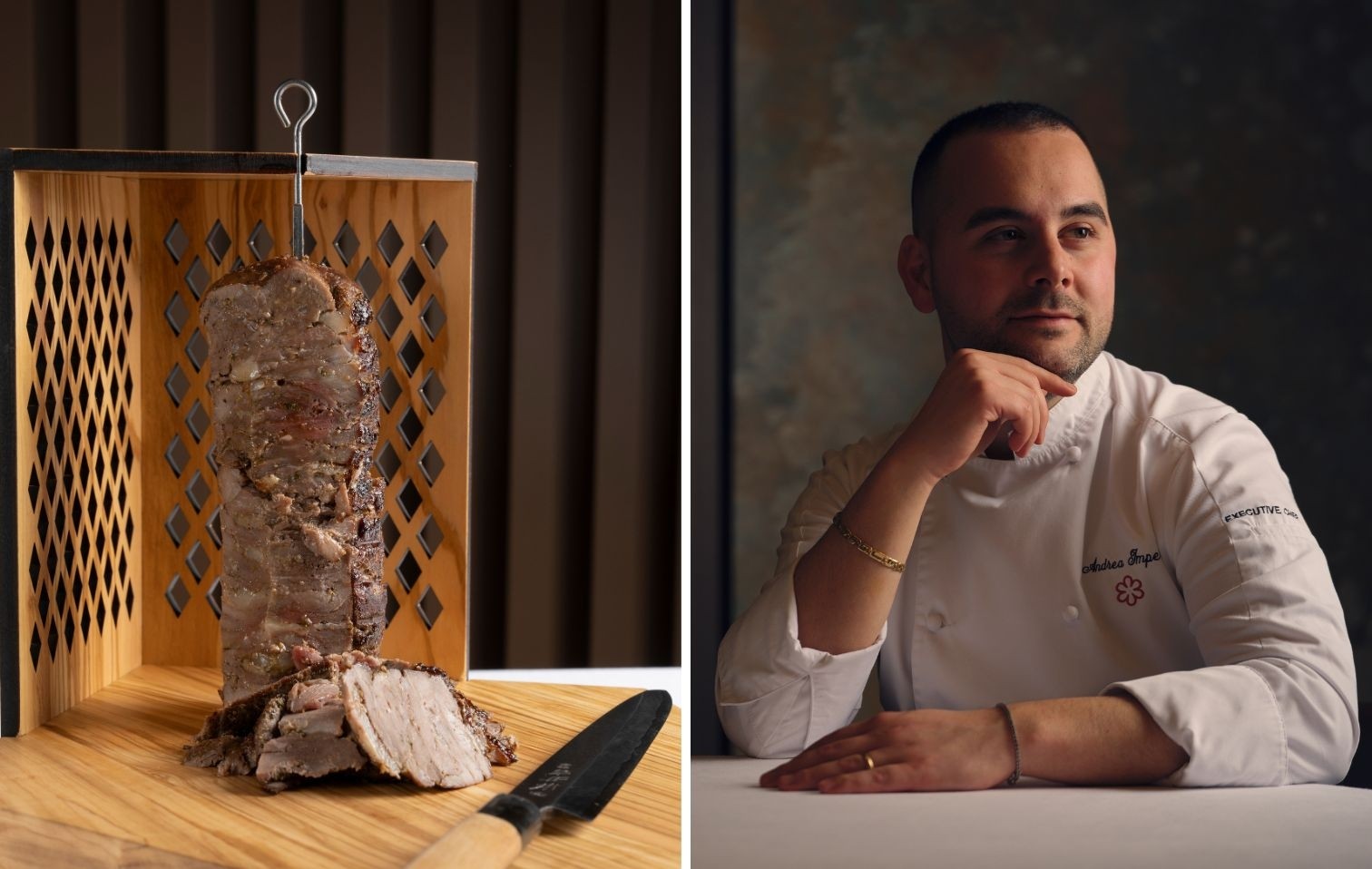
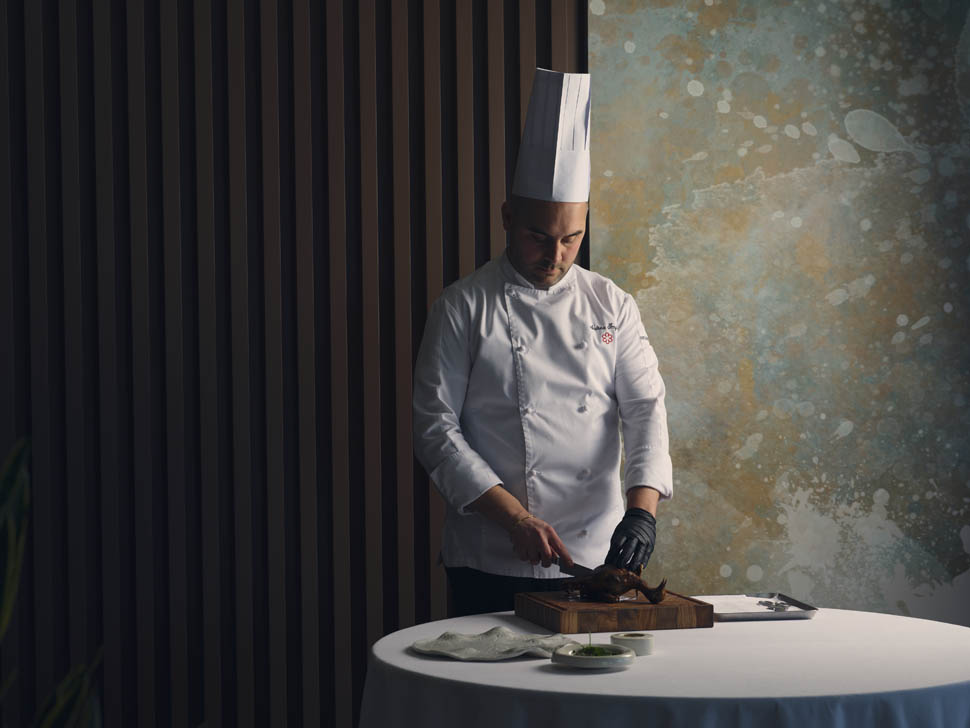
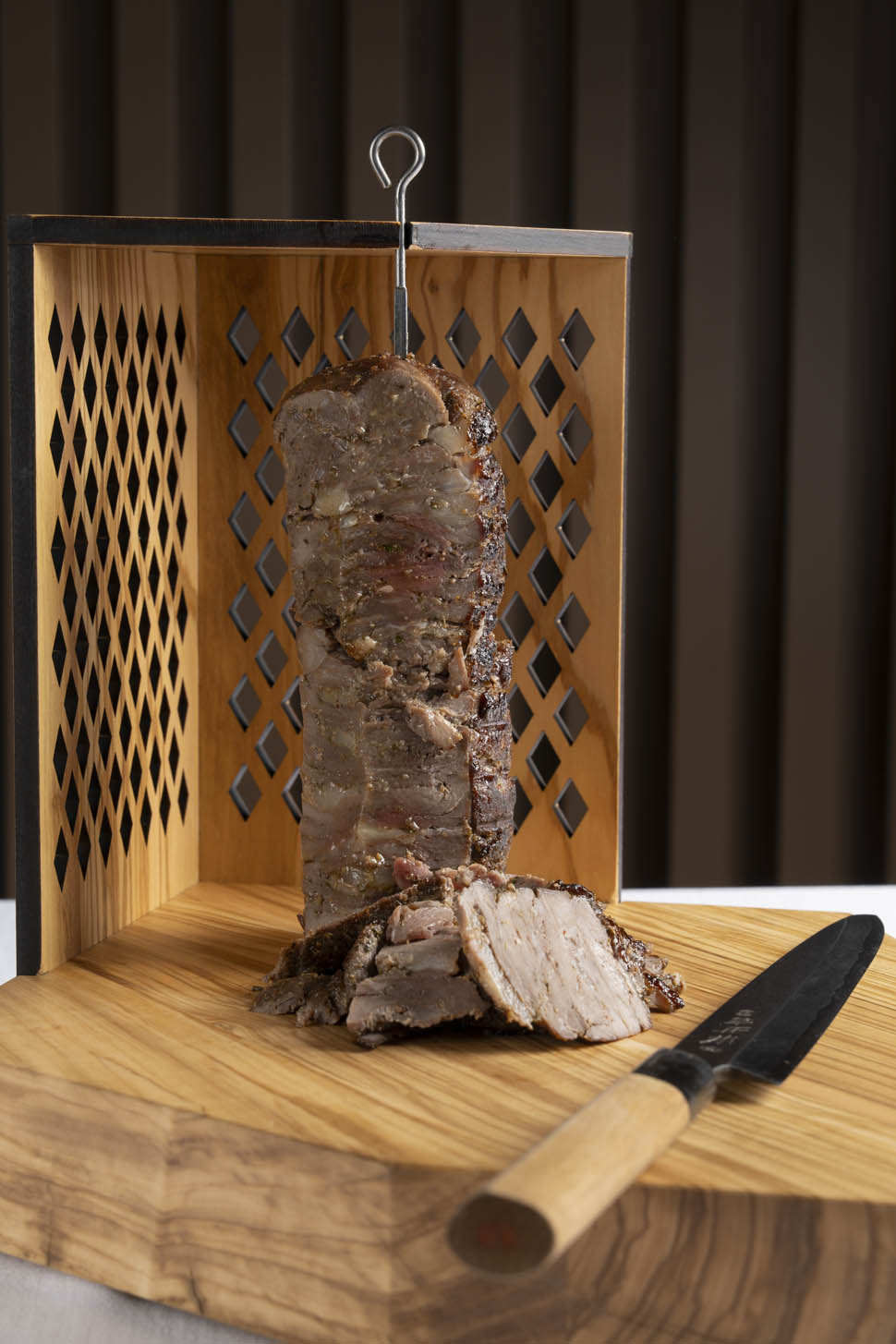
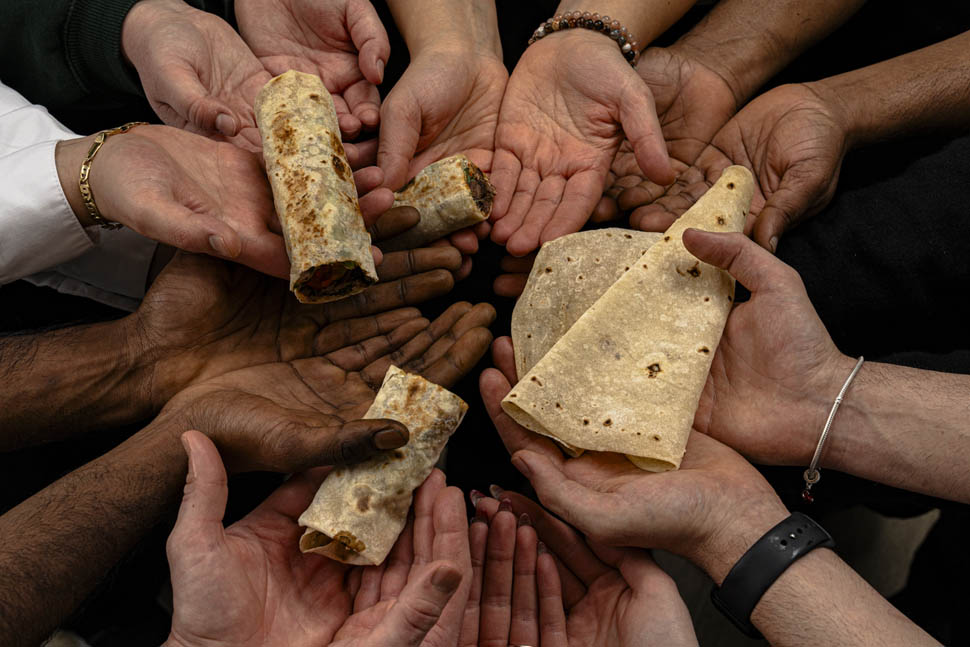
Ever tried a wild boar kebab? At Elementi, the chef slices and plates it right in front of diners, demonstrating just how often live service breaks down the barrier between guests and the kitchen. In “Dürum”, the lavash bread wrapper holds a filling that is no less juicy than smoked meat, thanks to the lengthy preparation of the wild game from Tenuta Borgo Santa Cecilia. “This time, it’s a bit of a provocation,” adds Impero. “I lived in Russia for several years, coming into contact with the Caucasian peoples. And there I understood the true meaning of the kebab, a symbol of interaction and conviviality: thanks to the presence of lavash, designated a World Heritage Site, the layering of meats takes on a profound significance.” From the hunt to fine dining, it is one of the highlights of the culinary journey.
His mastery of cooking times is also evident in “Te la do io l'America”, an attempt to transcend the myth of the “Stars and Stripes” grill with an ancestral cooking method under ashes. This was preceded by six months of intensive testing following a trip to California, from which the chef returned with the insight that beef fat could thrive in a Mediterranean ecosystem. This is demonstrated by the lingering notes of the 24-hour marinade “which we prepare with grapefruit, onion, and rue—a wild plant already used by the Romans for its antiseptic properties.” It is also confirmed by the Italian-style rub, thanks to a blend of spices far more assertive than typical American seasonings (such as powdered and dried goat’s horn chili peppers). On the palate, fat mellowed by primitive, underground embers, which meets the subtle nutty notes of the purple potato.
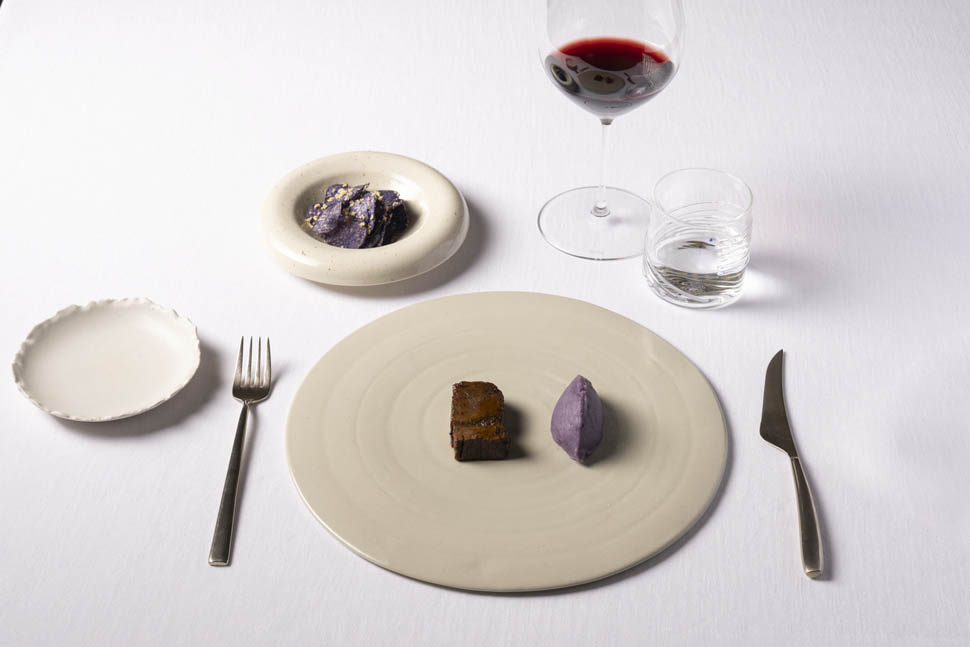
Nine courses without pasta (and without regrets!)
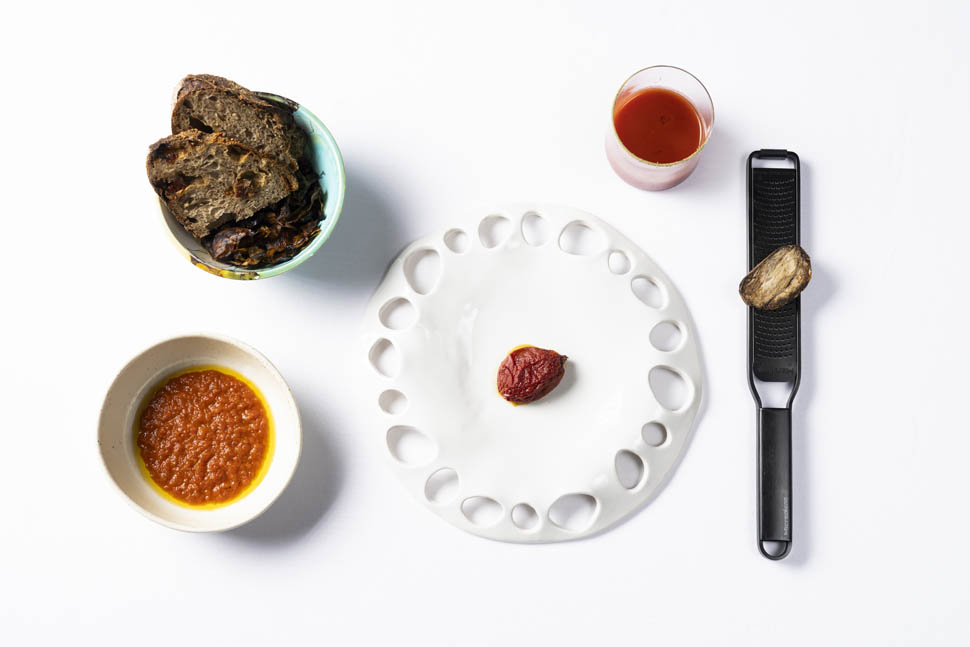
Just like the zucchini alla scapece, course “1532” revisits the theme of the “botanical vertical,” a tomato-centric creation where the excellent sourdough bread, leavened with the fruit’s own juice, truly shines. Suffice it to say that you’ll taste six different varieties, prepared using just as many house-specialty methods; however, regarding this course and the next (“Marianne, All the Soups of the World”), we’ll leave a veil of suspense, avoiding giving too much away about the “savory finale” of the tasting.
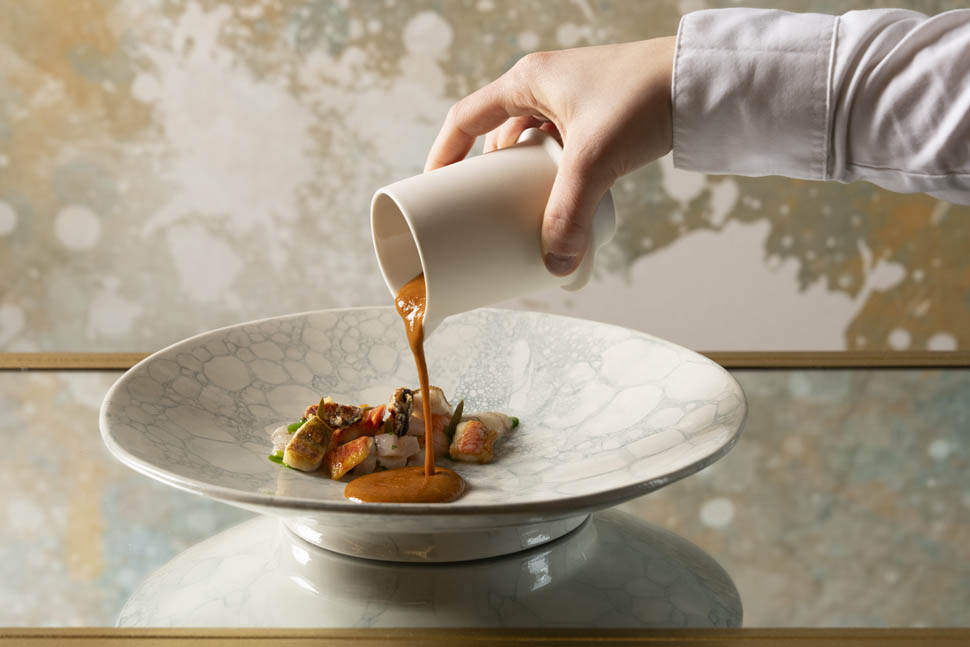
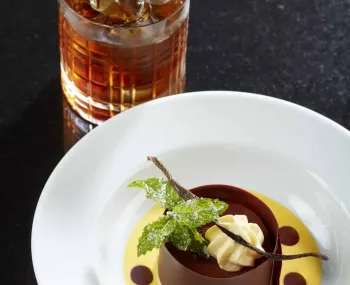
So here we are at dessert. And the pasta? “Absent,” notes Impero. “It’s not an option we rule out, but if the tasting doesn’t include it, guests reach a pleasant level of fullness, having first experimented with the baked goods.” In our case, all the tables appreciated it, confirming how objectively less conventional choices can stimulate the mind beyond the stomach. “In other situations, the first courses easily serve as pre-desserts, if you’re inclined toward a sweet finish”. Spectacular, for example, the spaghettini dipped for the last 3 minutes of cooking in a cryo-extracted copper-colored Cannara onion, followed by a dusting of 96-month Parmigiano Reggiano. A match point perfectly in harmony with the pastries, centered on the gifts of the forest and balanced in sweetness.
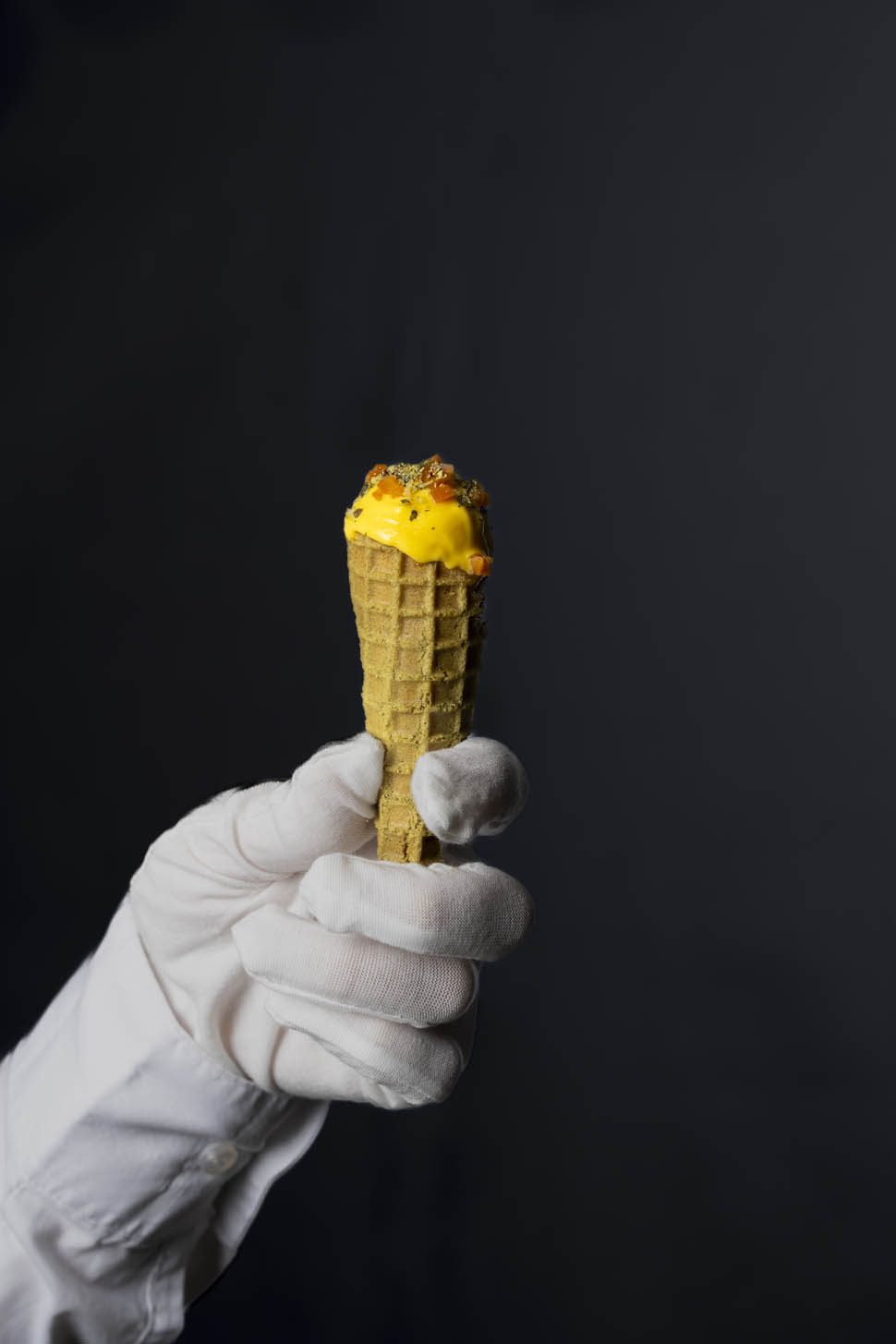
Quattro Sensi: Borgobrufa’s Versatile Brand
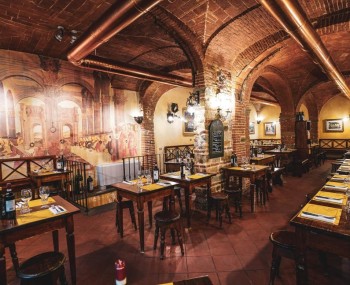
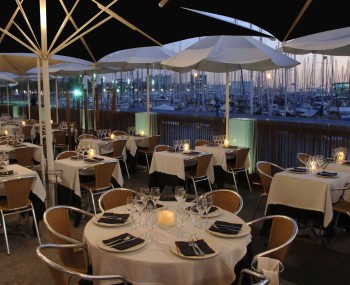
When fine dining makes an appearance among hotel restaurants, it often happens that the other establishments are considered the “younger siblings” of fine dining. This is not the case for Quattro Sensi in Borgobrufa, a well-oiled machine starting with the pace of service—as we were able to observe during a weekend with a full house, thanks to the professionalism of sommelier Didel Dima. What draws a comparison with Elementi is the mosaic of stained-glass windows that runs the entire length of the space, offering the eye a diversion of iridescent hues ready to shift from morning to after-dinner.
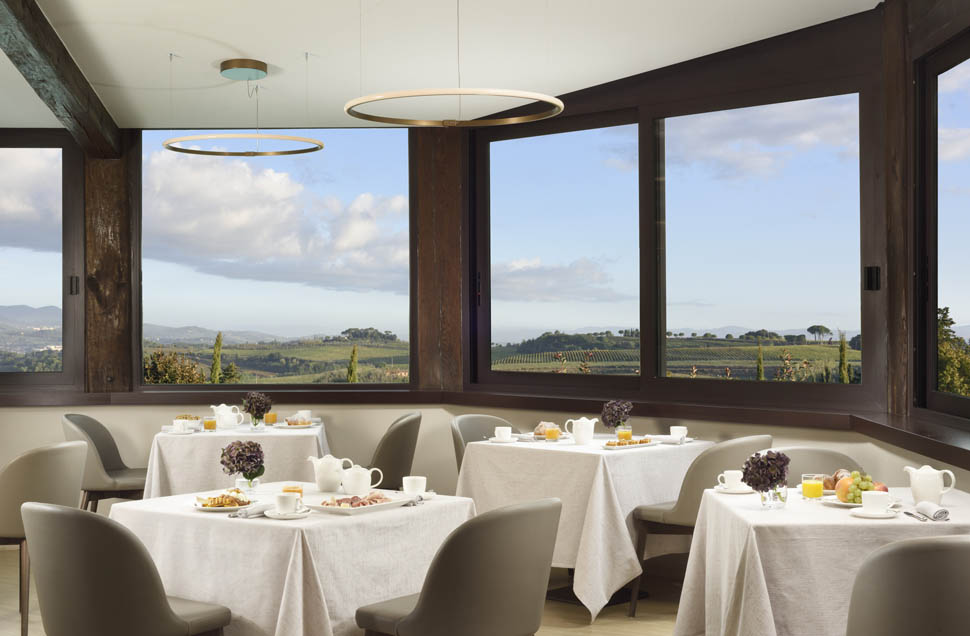
The care taken in presenting each course remains a cornerstone, because here it’s not enough to simply shave a prized black truffle at the table or pour a red wine that pairs perfectly with braised wild boar—what matters is conveying the value of the artisans without whom it would be impossible to showcase Umbria’s array of culinary excellence. Among the must-try dishes is the egg pappardelle with white ragù made from Orvieto Cinturello pork, lightened with orange and wild fennel to balance the “porky” richness: the result is a well-balanced and enjoyable first course that remains satisfying with every bite.
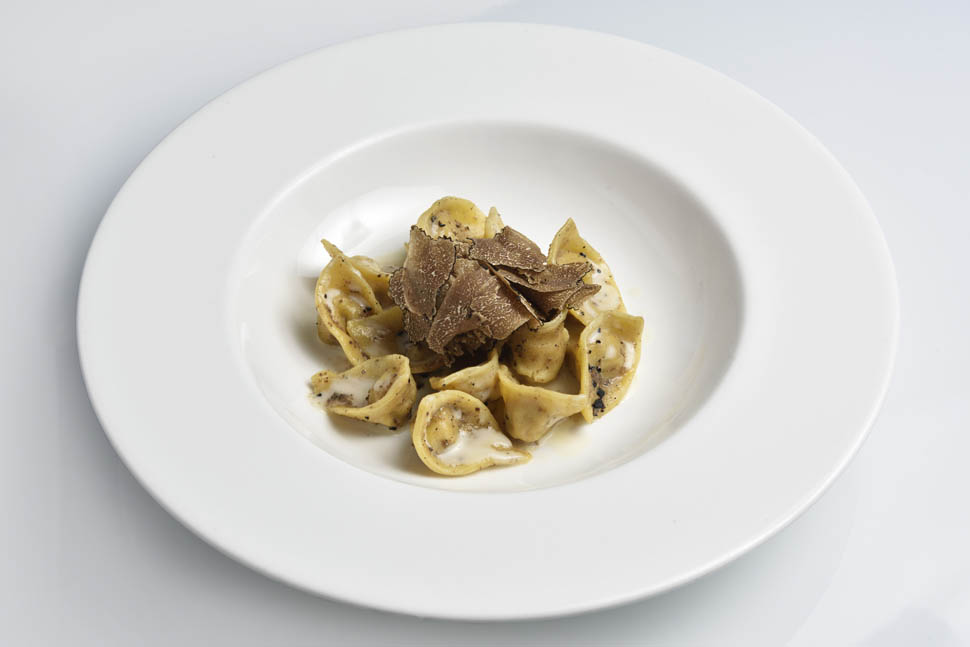
Then there are the seasonal soups, first and foremost the Castelluccio lentil soup. What makes it special? Bread balls made with plant-based cheese, making the dish suitable even for those following a vegan diet. Finally, we’d gladly return to (re)taste the 70% dark chocolate brownies by Marco Colzani, with walnuts and orange, paired by Didel with Antonelli’s Passito da Montefalco Sagrantino. A dessert that has no rivals further south.
Contacts
Ristorante Elementi e Quattro Sensi- Borgobrufa
Via del Colle, 38, 06089 Brufa PG
Phone: 349 753 8102