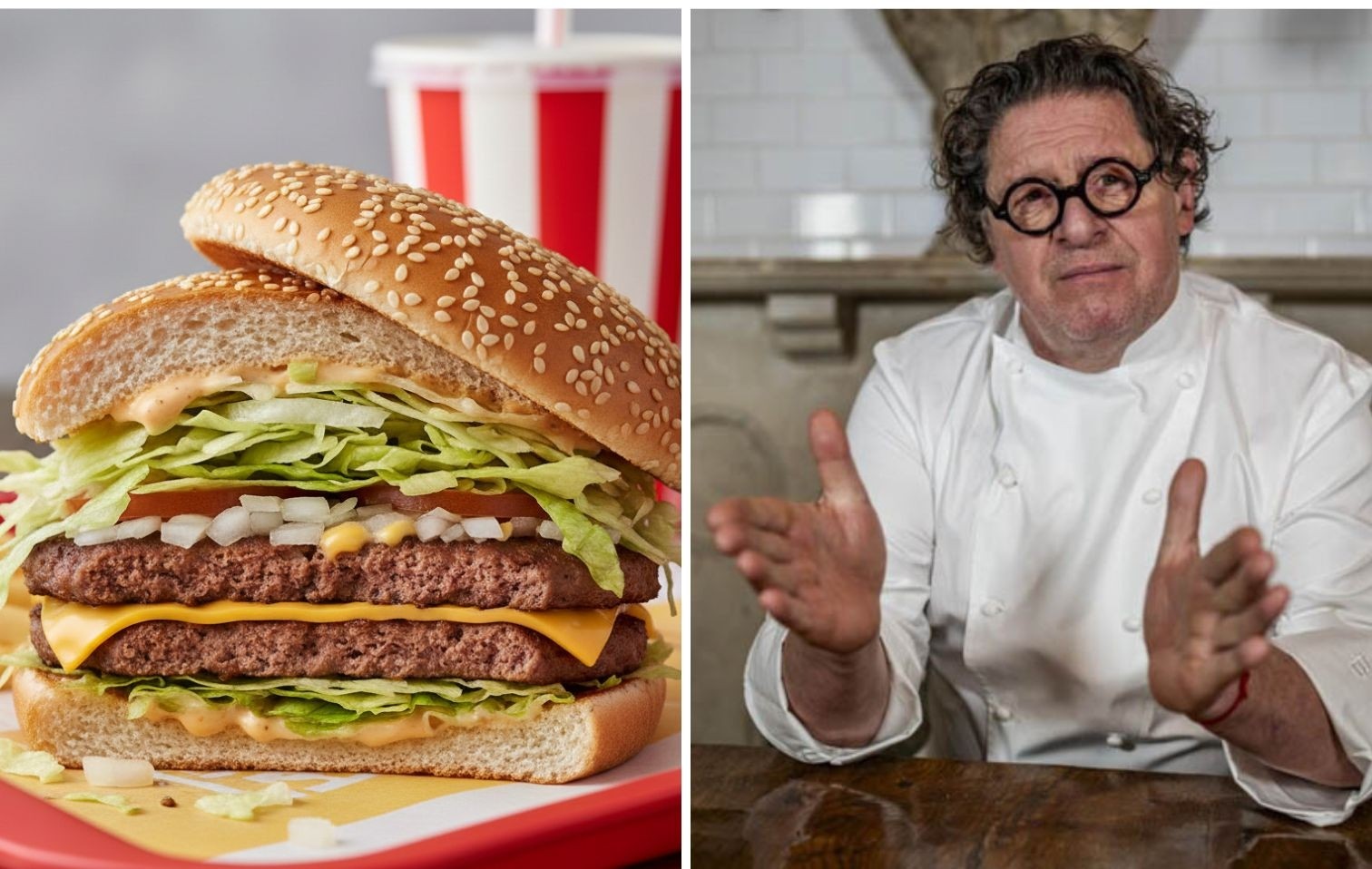
There is a subtle, almost imperceptible boundary between haute cuisine and popular consumption, a line that only the giants of taste can cross with ease. Marco Pierre White, the enfant terrible of British cuisine, recently demonstrated that the act of eating does not always require ceremonial rigor: it can in fact be rediscovered as a gesture of pure, hedonistic lightness.
An aesthetic of silence: between Warhol and Wiltshire
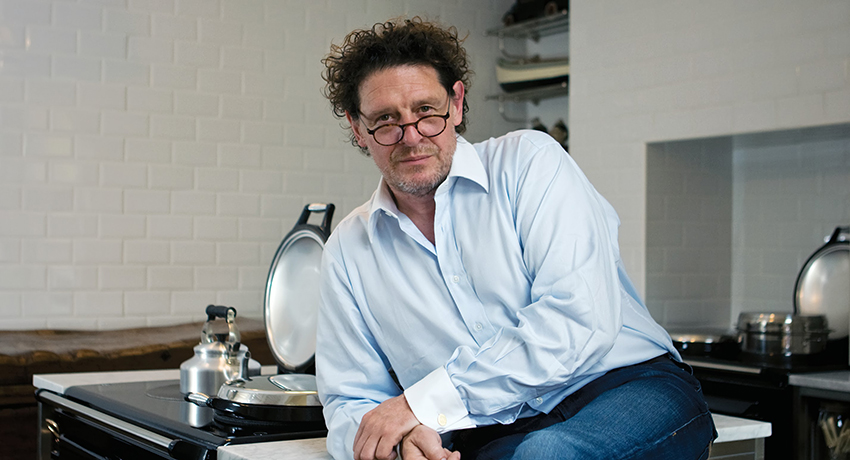
In a cinematic video posted on Instagram, the chef who redefined the concept of fine dining is shown eating a McDonald's cheeseburger. The video is not just social media content, but a “tribute” to Andy Warhol's famous 1981 performance. Immersed in the quiet of his Wiltshire home, White elevates fast food to an art form: there are no words, only the tactile rustling of the wrapper, the gurgling of ketchup carefully poured from a glass bottle, and the soft hum of an afternoon in the countryside.
It is the essence of simplicity that has become a symbol of pop culture enjoyment. “I don't really like elegance,” the chef confessed in a recent interview with AGA. “I grew up in a working-class family. A person's palate is formed in childhood.”
The weight of charisma and the legacy of taste
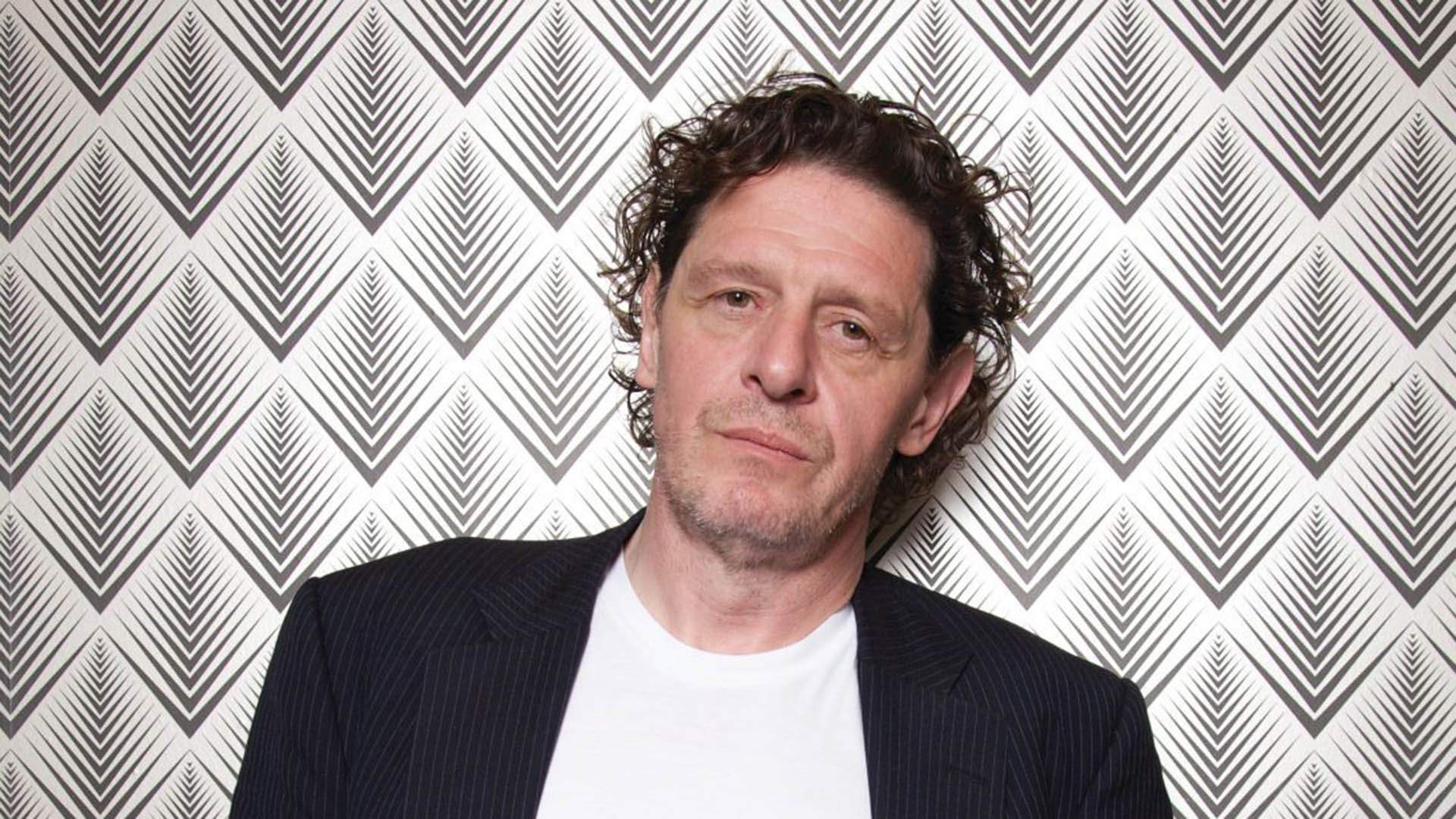
Although Marco Pierre White symbolically returned his three Michelin stars over a quarter of a century ago (remember the uproar on food networks at the time?), his influence remains an unsurpassed gravitational force. While colleagues such as Gordon Ramsay and Jamie Oliver have built media empires, White's remains the only true “national treasure” of English cuisine. His every move, however seemingly transgressive, is analyzed with reverence. The fact that a frugal meal of his generates more discussion than a contemporary tasting menu testifies to how much his figure transcends cuisine to become an example (and, at times, a trend).
A democratic philosophy: quality over prestige
White's fondness for the fast food giant is not a recent provocation, but rather an ideological position that has matured over the years. Back in 2007, the chef defended the chain, emphasizing its consistent quality and sourcing of raw materials—free-range eggs and Irish beef—and comparing it directly, in terms of value for money, with much more pretentious establishments. For White, this is not a commercial operation, but a “gentle nod to food equality”: the recognition that good taste does not necessarily have to be a privilege for the few.
The response to criticism: the primacy of experience
Naturally, the image of the master chef biting into an “industrial” sandwich raised a chorus of dissent among purists. Faced with accusations of having “sold his soul,” the chef's response was swift and imbued with his proverbial confidence: “And how many Michelin stars have you won, kid?” It is a warning that ends any debate: the authority to judge food does not come from the pedigree of the dish, but from the ability to understand its honesty. Ultimately, the lesson Marco Pierre White teaches us between the folds of a paper bag is a valuable one: the world of food and wine gains in authenticity when it stops taking itself too seriously. Eating and drinking thus return to what they should always be: a pleasure free from superstructures.