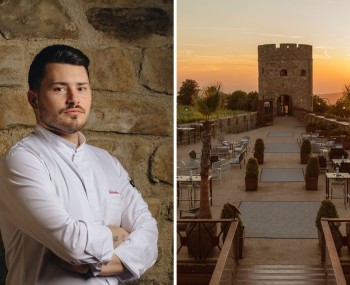
In the Seiser Alm, inside a glass theater for only eight spectators, the Greek chef stages an intimate ritual: each dish is a fragment of her history, each flavor is a blow to the sense of taste.
Getting to Paradiso Pure.Living is neither easy nor random. Hairpin bend after hairpin bend, but the beauty of the arrival is worth it even for those who, like me, suffer from car sickness at certain altitudes. You climb, one curve after another, until you are surrounded by greenery and nature, well over 2000 meters above sea level, in a picture-postcard landscape: the Alpe di Siusi, the Dolomites, a UNESCO World Heritage Site, and the Sciliar-Catinaccio Nature Park frame the most unique vegan hotel in Italy.
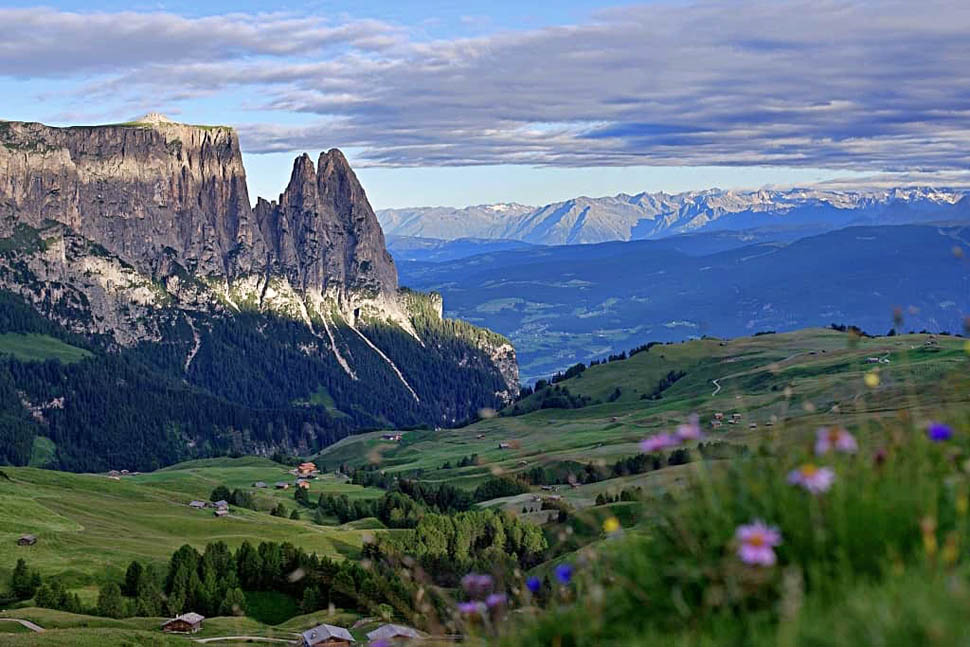

It is an ascent, a ritual. In winter, you climb up with a snowcat. In summer, the high altitude leaves you breathless. And even from the driveway, you can tell that this is no ordinary place. The hotel's façade makes a statement, and while you shouldn't judge a book by its cover, in this case, perhaps we can start to form a small idea.
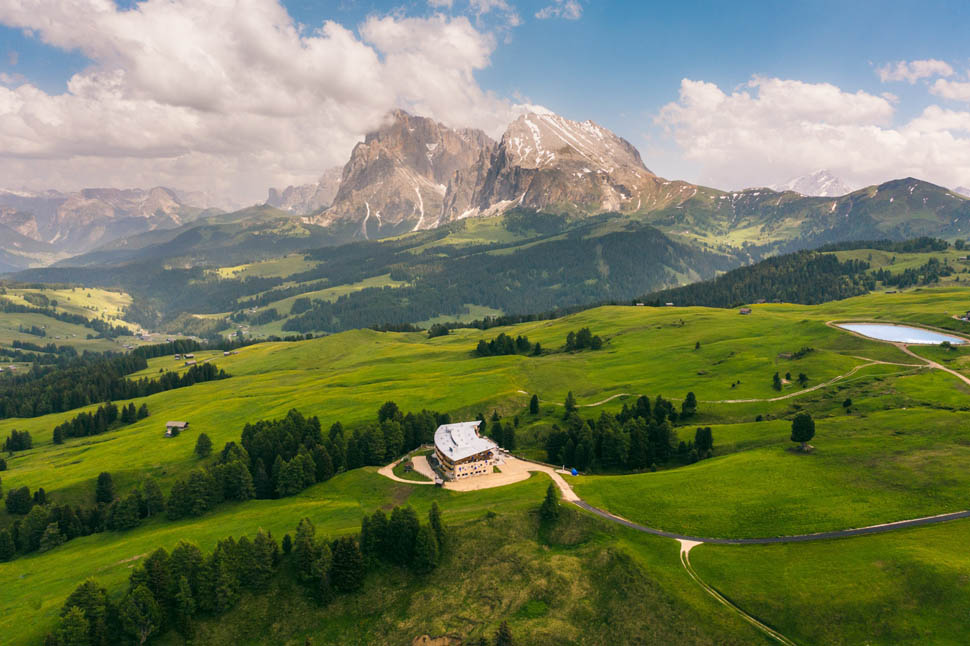
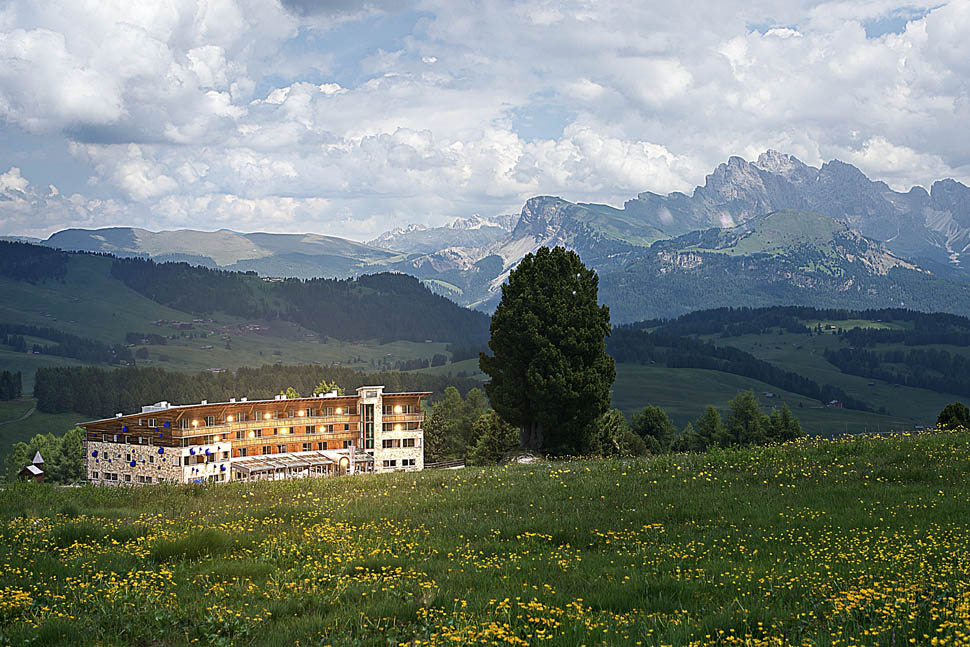
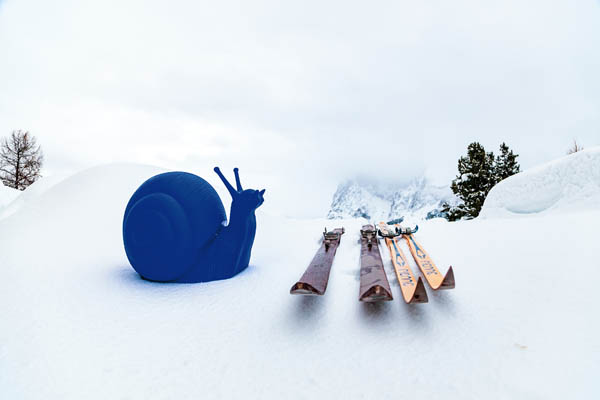
Large blue snails climb the exterior walls of the hotel. Is it all surreal, magical, out of place? No, I would say unexpected, fairy-tale like. Adding to the surprise is the large statue of Aurora, arms folded, dressed in pink, like the color of the peaks here at the first light of day—the aurora, in fact. Her blue snail keeps her company nearby. Even the view from the rooms seems to silently scream, “Welcome to Paradise.” And the grayness that welcomes us is not unpleasant; on the contrary, it competes with everything else to create that atmosphere of a lucid dream.

Paradiso Pure.Living is undoubtedly the most unique (vegan) hotel in Italy. Paradiso is not a place like any other. It is a declaration of freedom by Alexander and Maximilian Spögler, travelers, dreamers, collectors. Of beauty. So much beauty. The two brothers feed on art. It is scattered throughout the hotel, its walls, its common areas. Unusual, punk, informal, unconventional, smiling, and thoughtful. In their image and likeness.
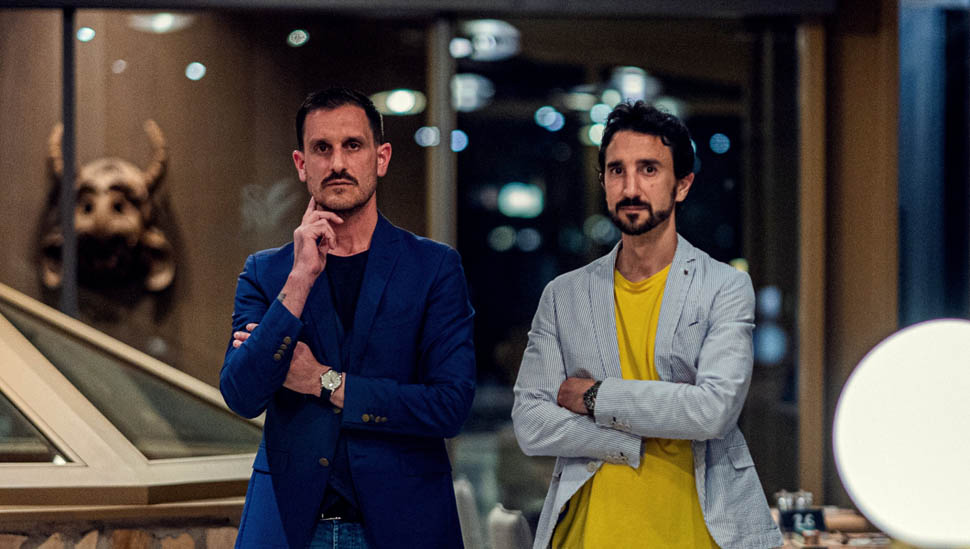
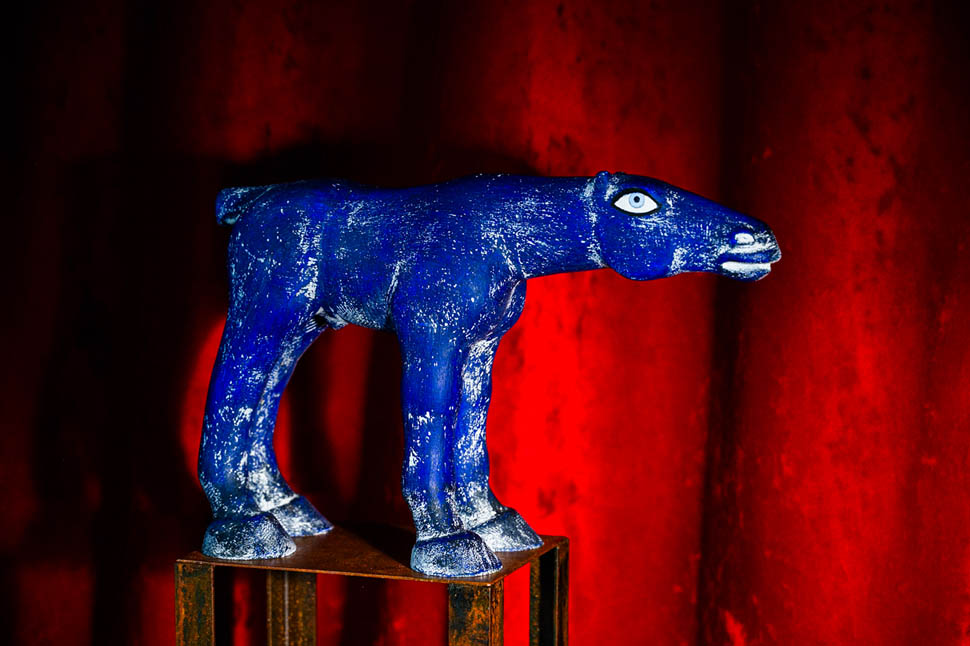
The Spögler family—pioneers of veganism in luxury hospitality—have built a coherent and visionary world here. After LA VIMEA, Italy's first vegan hotel, and I Pini, an organic vegan farmhouse in Tuscany, here is the South Tyrolean gem where everything is designed to reduce impact and amplify beauty.
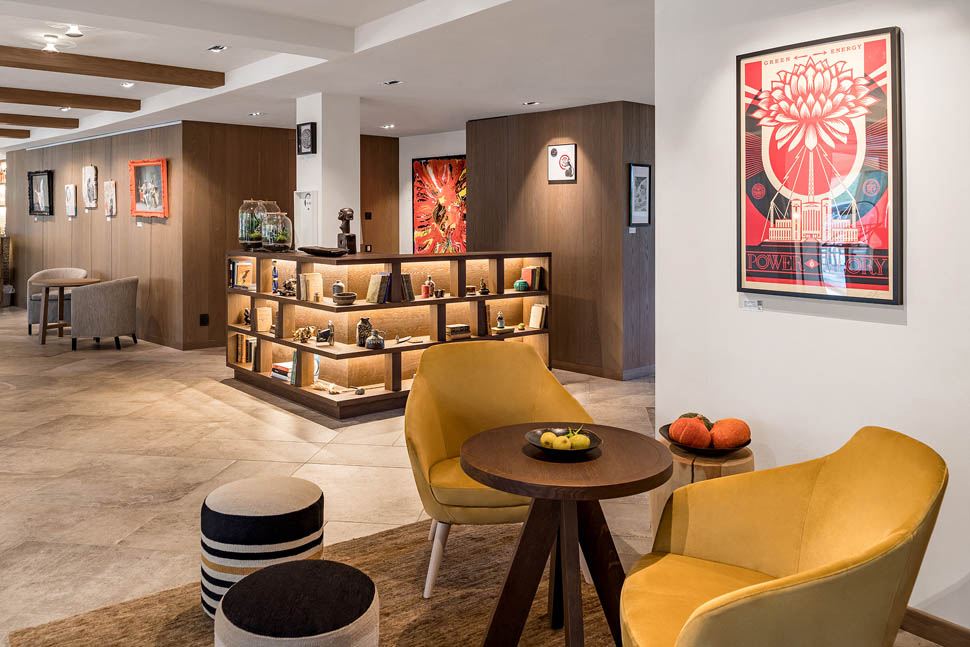
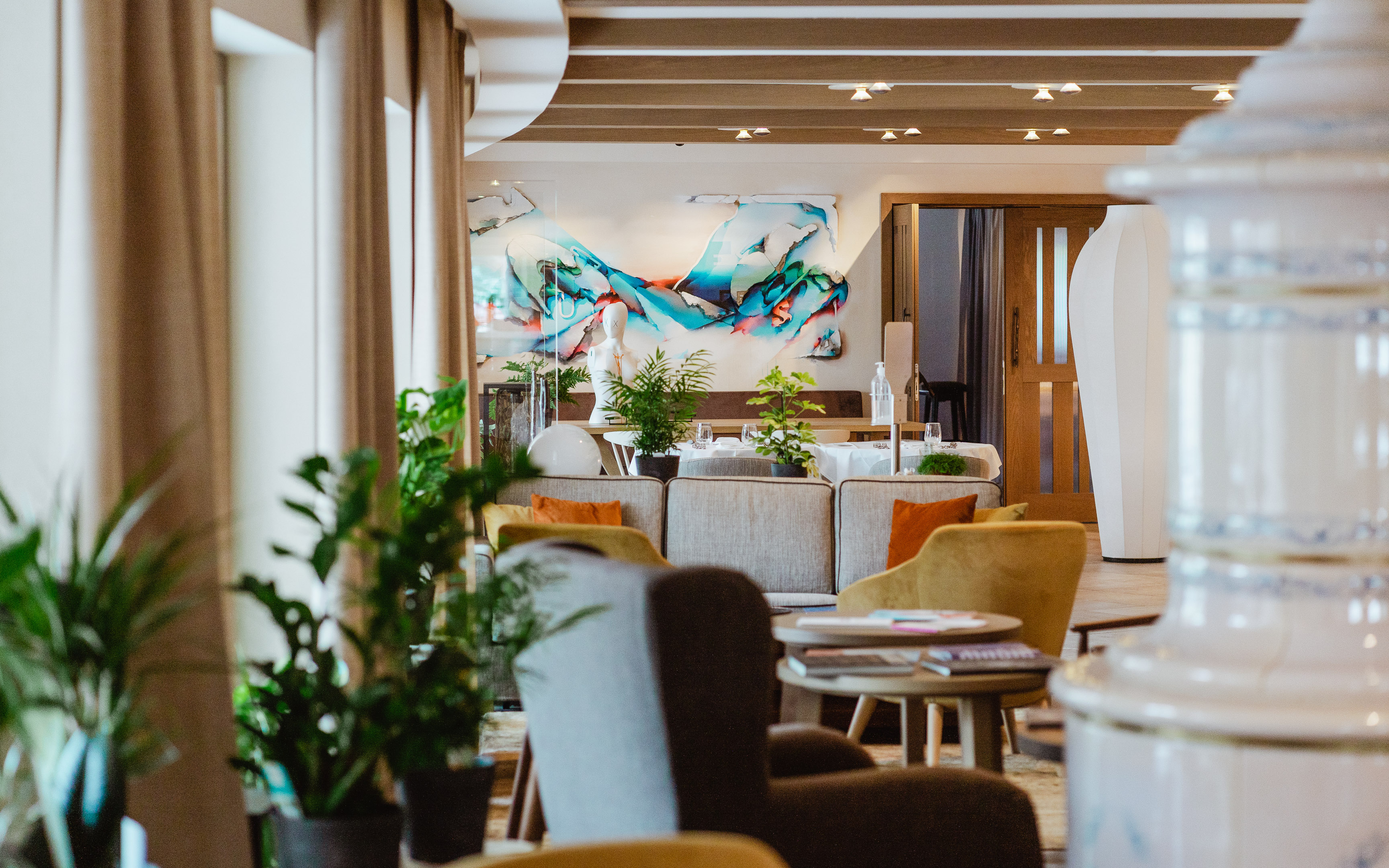
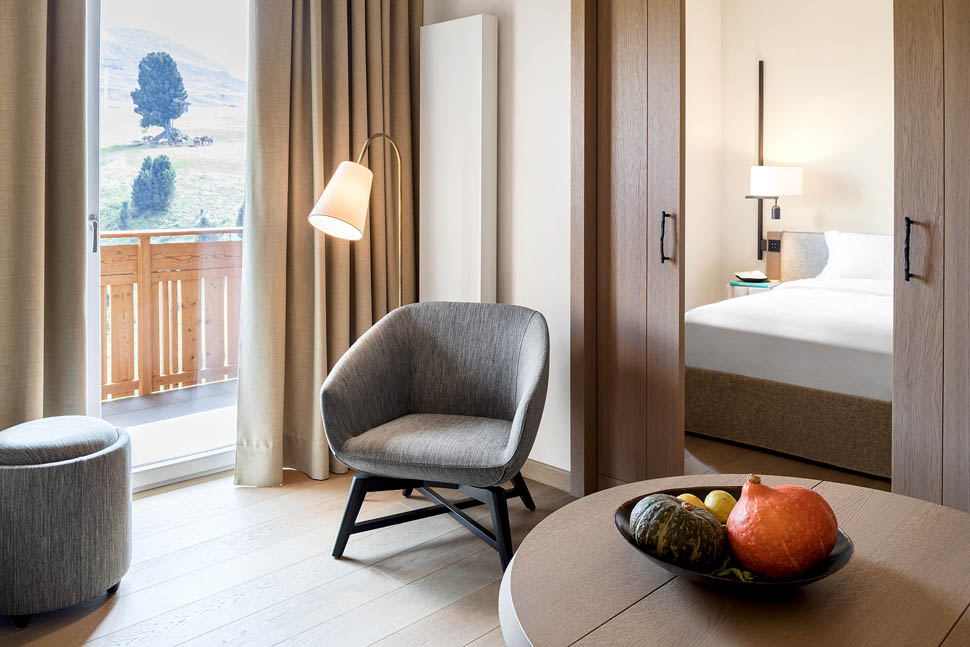
OMNIA Plant-Based, the secret room of memories
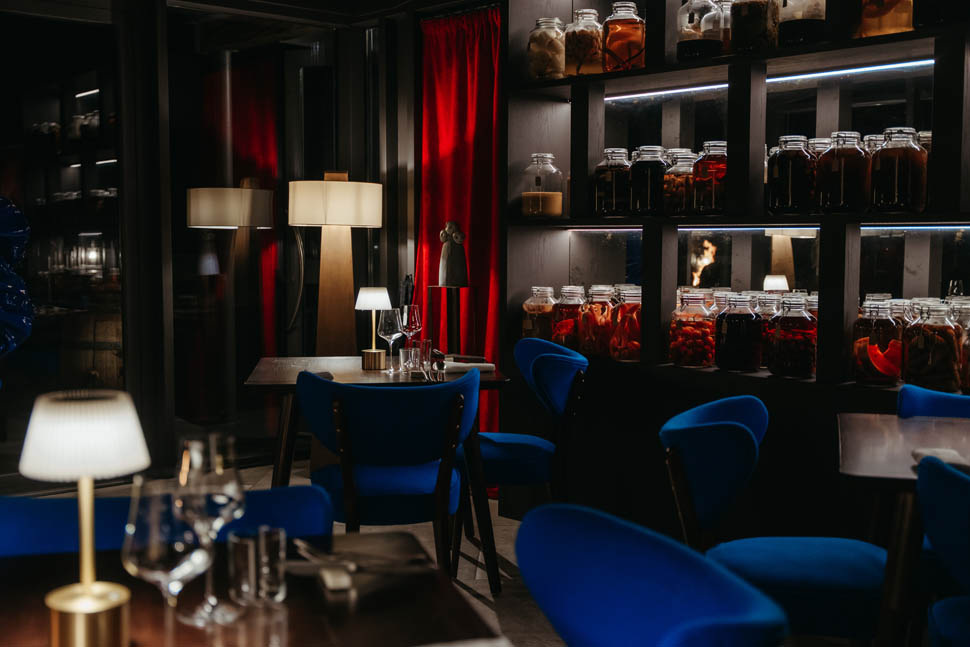
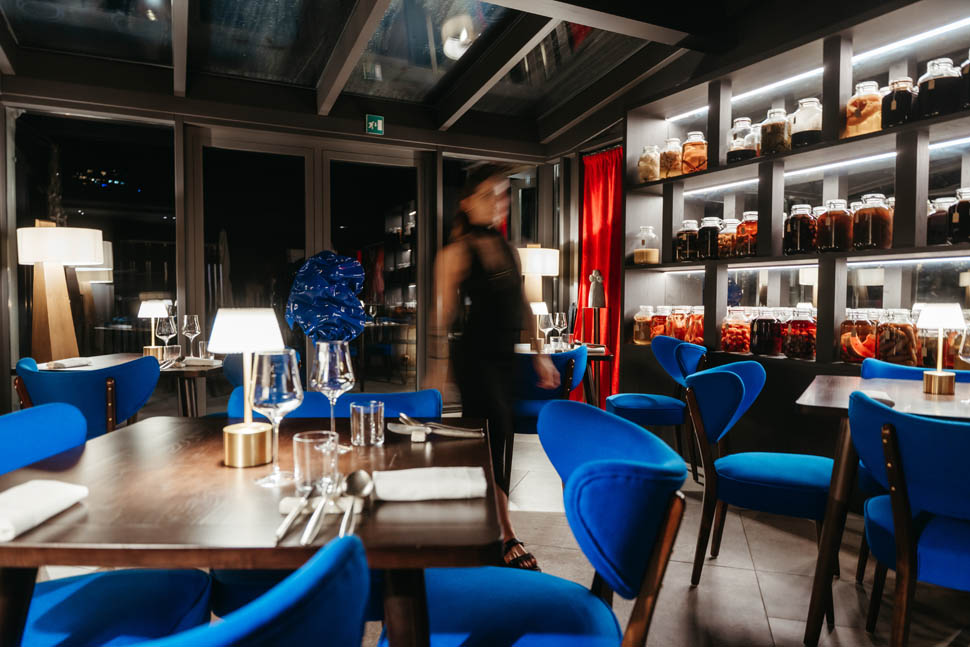
The heart of the hotel is OMNIA Plant-Based: six tables, a glass-walled room overlooking the peaks, and a lit brazier shining outside in the silence. You enter through red curtains, like stage curtains. Inside, low lighting and fermentations on display: roots and vegetables transforming in color and taste.
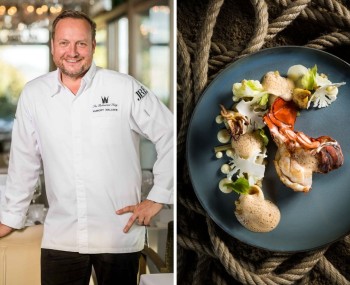
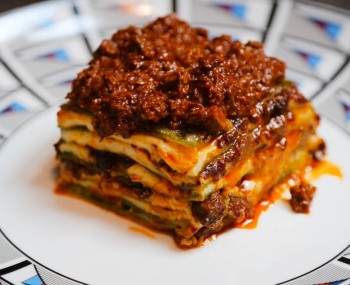
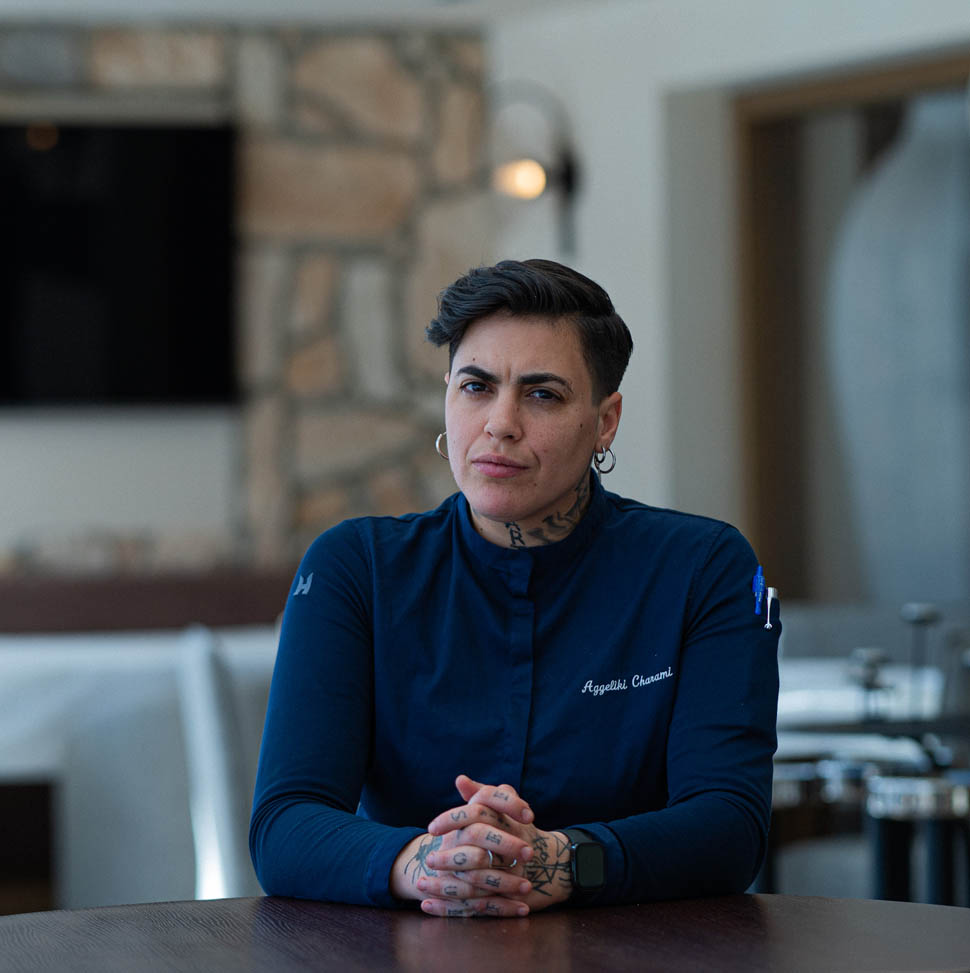
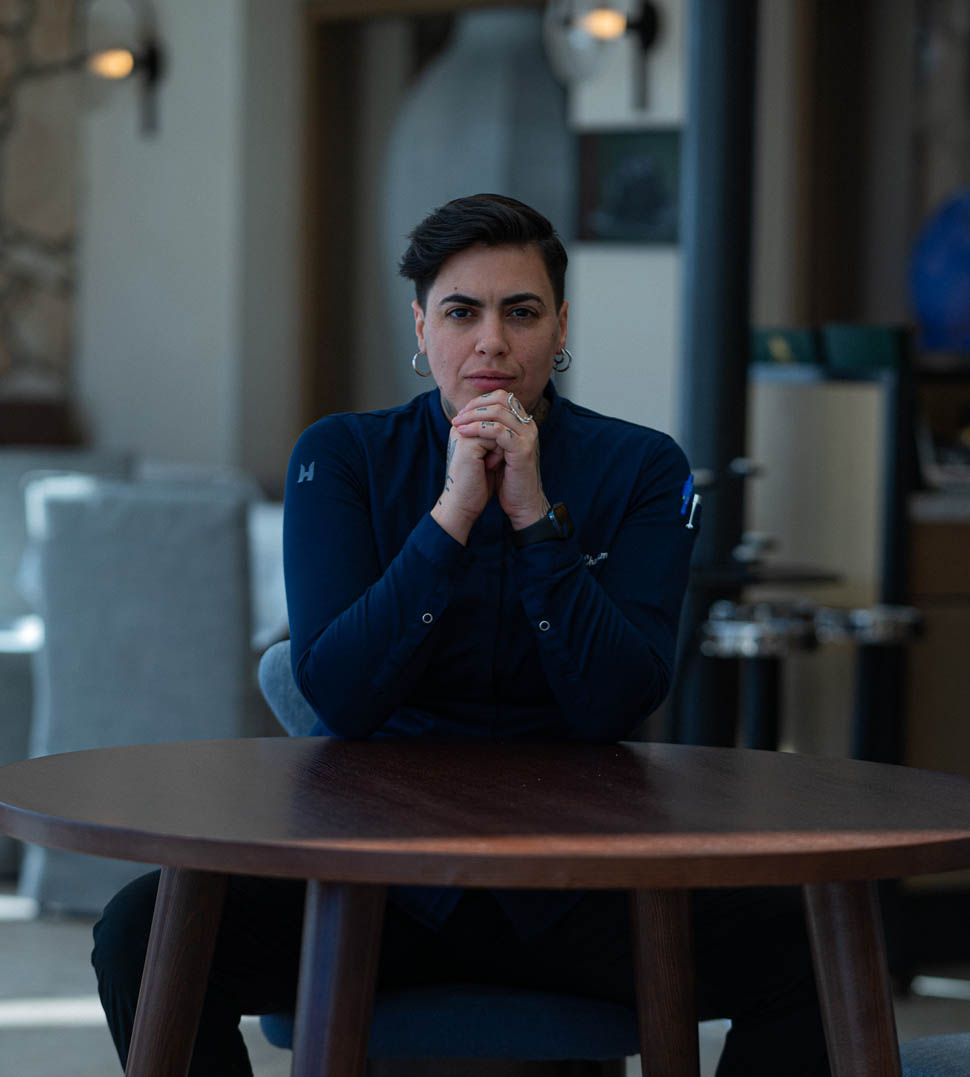
At the center of the scene is Aggeliki Charami, born in 1990 in Sparta and raised in Elea, a small village in southern Greece. There was always a pot on the stove with which her mother cooked simple dishes, her way of saying “I am here for you.” As a child, she wanted to be a veterinarian, but her anger at seeing images of abused animals found expression—and what expression—in her cooking.

She began her career as a chef in Athens and arrived in the Dolomites at the end of 2024, after various experiences and her transition to veganism, which she successfully promoted at Koukoumi, a luxury vegan resort in Mykonos, Daios Cove in Crete, and Comptoir 102 in Dubai. A young chef who, behind the tough exterior of someone who has experienced more than she should have, hides a good heart and an ability—probably innate, if not well trained—to transform ingredients, bring out the most unexpected flavors, and surprise. Continuously.
I don't know if cooking can be elevated to an art form, but there may be some elements in common: there is imagination, thought, and there is its realization. There is abstraction and then visual, olfactory, and gustatory concretization. Then there are those who are able to add an additional element, one that stirs the soul, feelings, and emotions. And so it happens that during dinner, at the table next to mine, a few tears discreetly roll down the face of a fellow diner. This had never happened to me before.
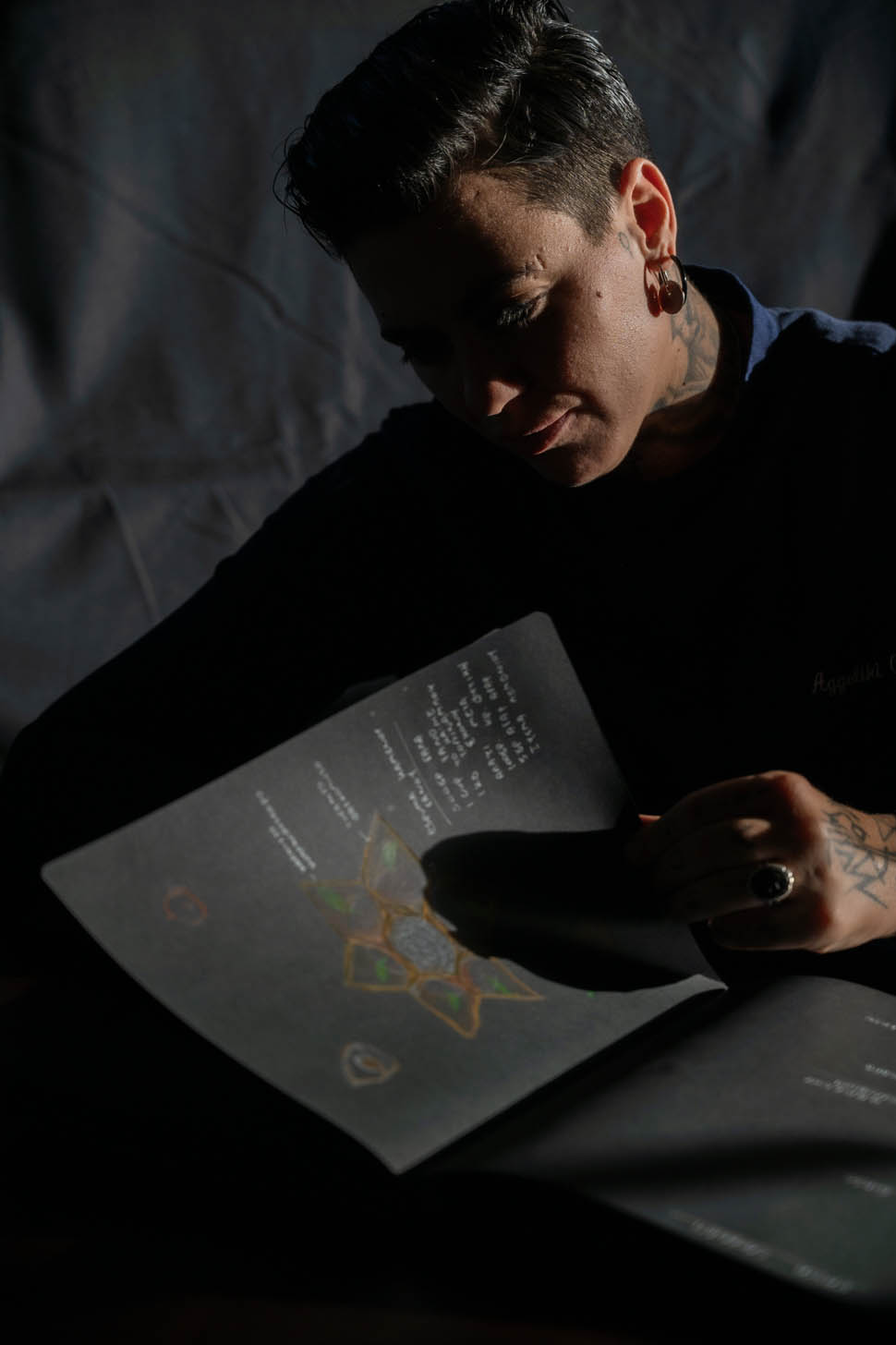
OMNIA Plant-Based is Aggeliki's diary. Here, cooking becomes storytelling, poetry. Memories are transported to the present through taste. The dishes go beyond form, revealing strong emotions, memories, love, suffering. Just look at her, listen to her tone of voice, her serene way of recounting difficult moments, which are transformed into pride, boastfulness, disruptive force. Her desire to take plant-based cuisine to the highest levels emerges. A lot of research, continuous research. She seems unstoppable in her enthusiasm, in her desire to emerge, to tell her story, always on the edge of emotion, on the edge of her emotional shell.
One dinner, ten memories
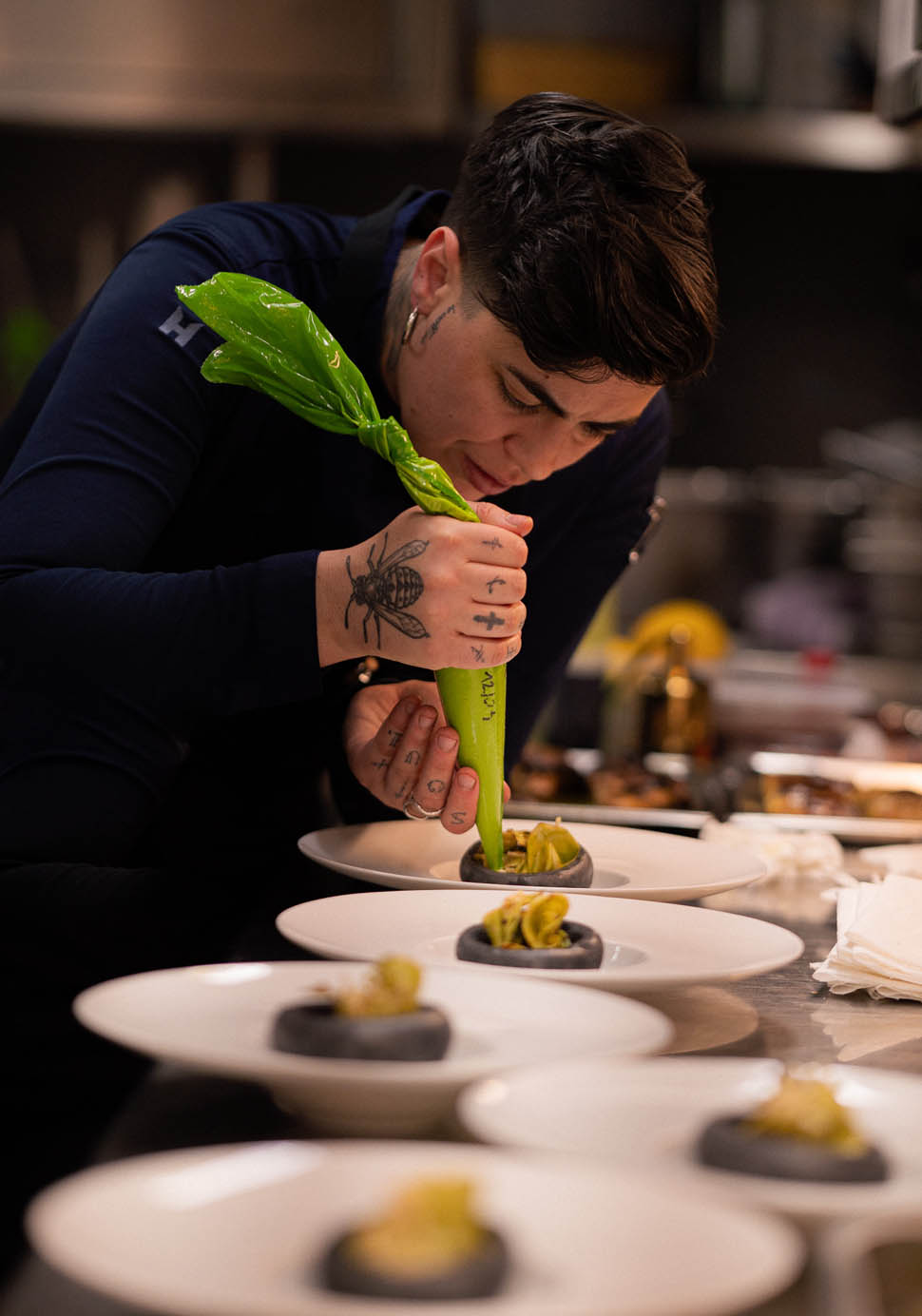
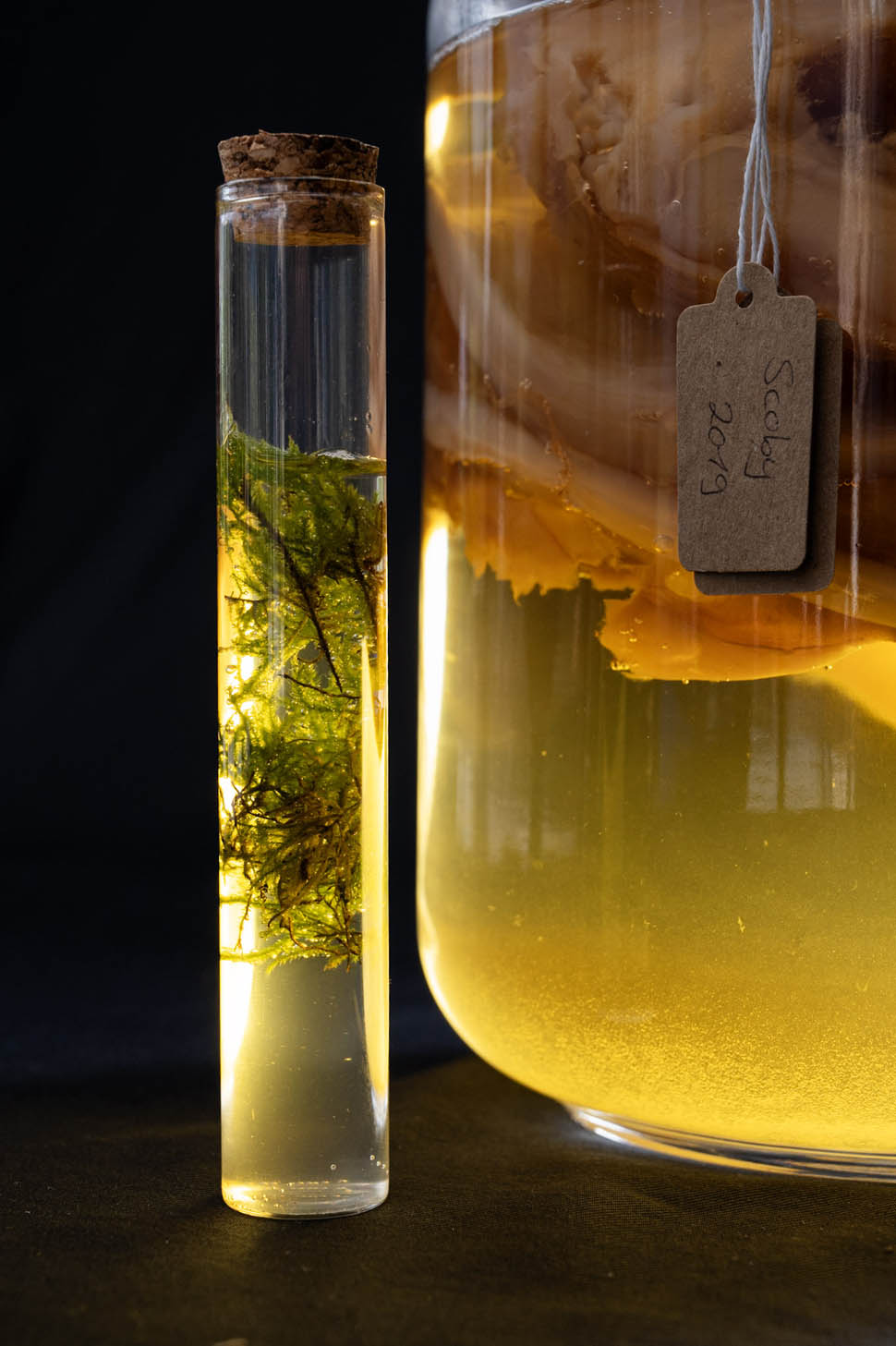
Before starting, Aggeliki welcomes her guests into the kitchen. She shows them the ingredients and tells them about them. She gives them a taste of seven-year-old kombucha and koji, which smells of cereal and umami. Then the ritual begins. Her whole life is in those dishes, ever since that first moment when her mother said to her through tears: “If you're going to try, do it now, don't wait.” And so she begins. Thailand, Cambodia, travels and memories, techniques, the sense of taste. It is difficult to find such a great ability to capture taste and flavors at this level. Intensity, depth. Everything.
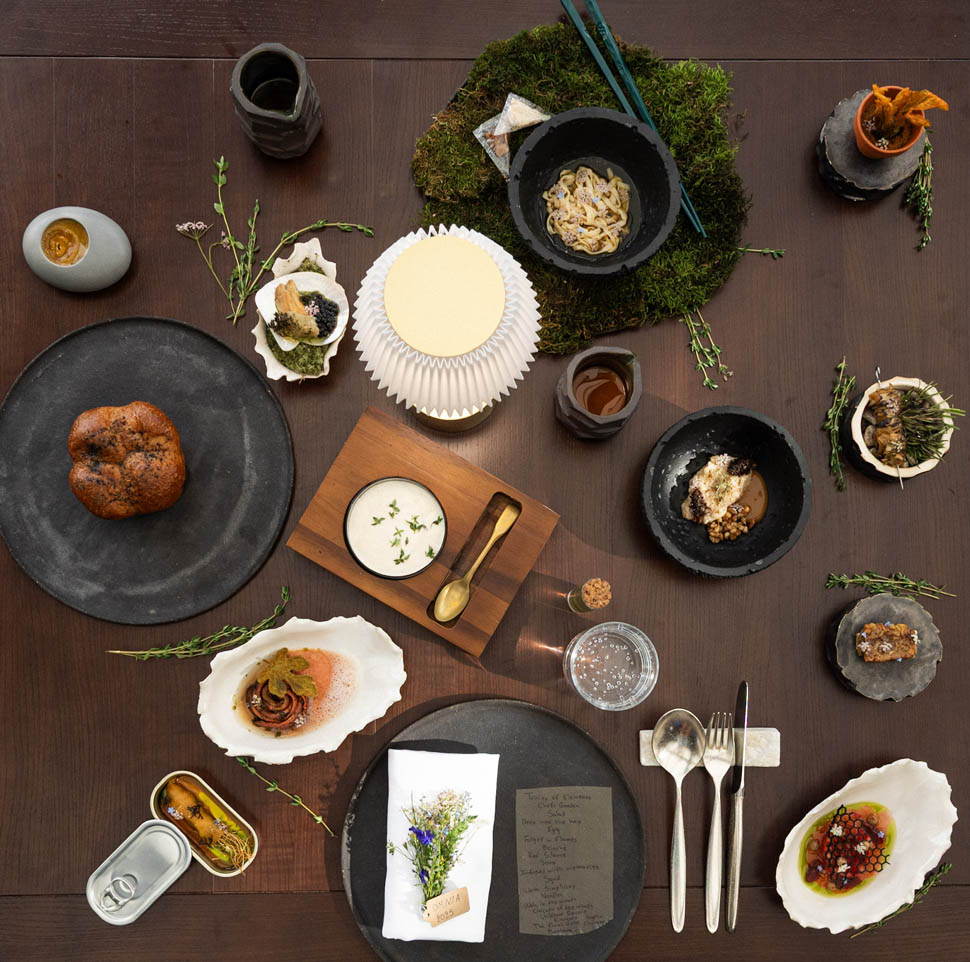
Ten courses, one menu. Each dish has a soul, an origin, a story. It is not a tasting, it is a biography, but also a cry to the world, a way of expressing oneself. Each dish is introduced by the chef herself. She enters the dining room with her team, as if in a procession—we are in Paradise, after all—a succession of silent, solemn acts that recount the genesis of the dish before revealing its ingredients. It is this direct contact, this unhidden and shared vulnerability, that makes OMNIA Plant-Based something that goes beyond cuisine. Something capable of triggering emotions, feelings, and generating new memories.
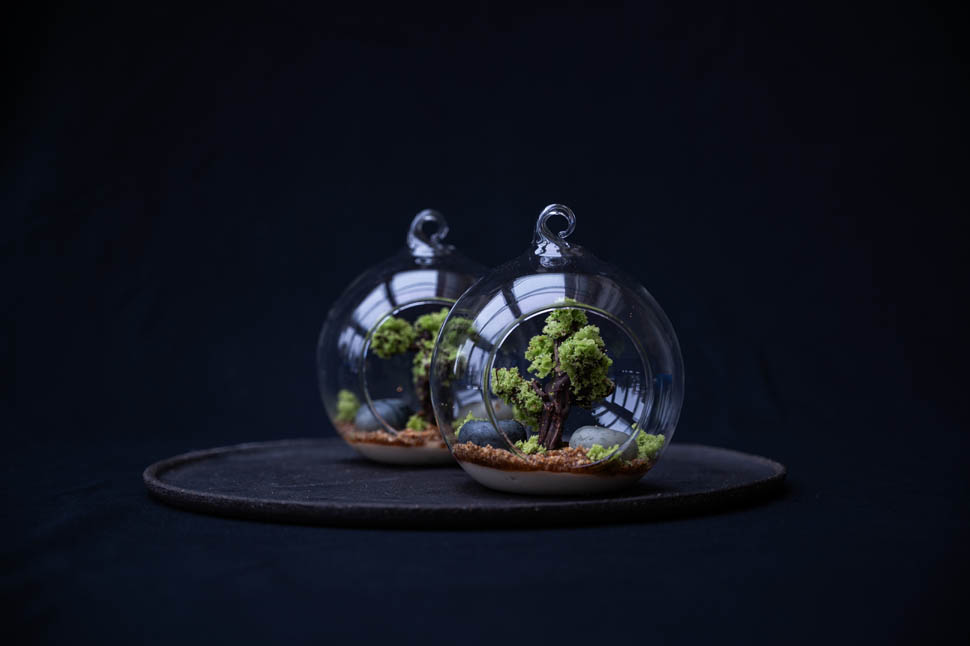
The bar is run by Anna Giusti, who hails from Campania and has previous experience in Rome and Greece. She is highly skilled at creating mainly non-alcoholic cocktails to accompany the dishes. She is also capable of adding other elements to the story.
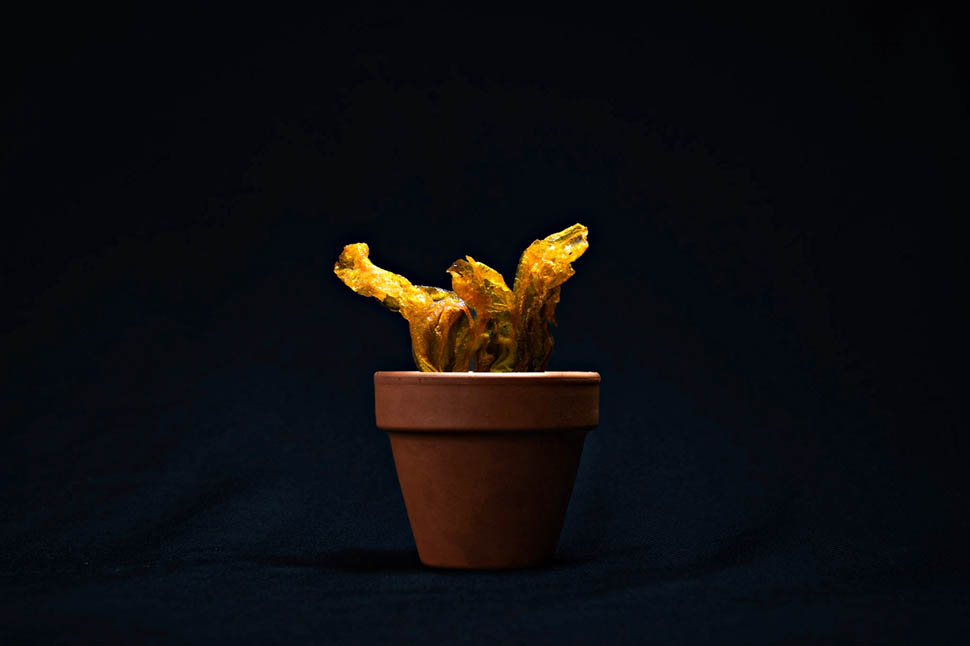
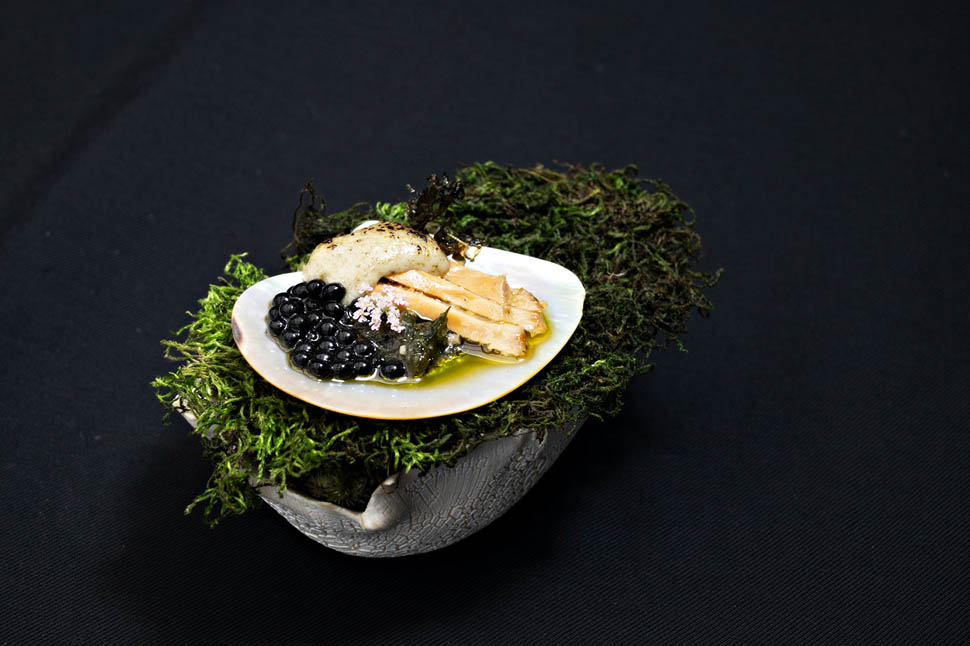
It starts with a reminder of an oyster, where the fleshiness is provided by mushrooms and the saltiness by sea water; it is accompanied by a small plant, which is actually a courgette flower. A quiet start, certainly not trivial, before a work in progress with even deeper, more intense, purer peaks.
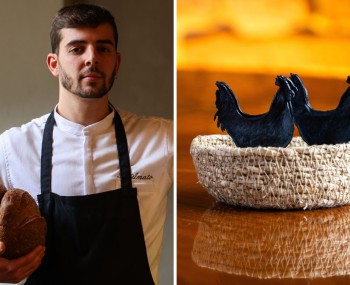
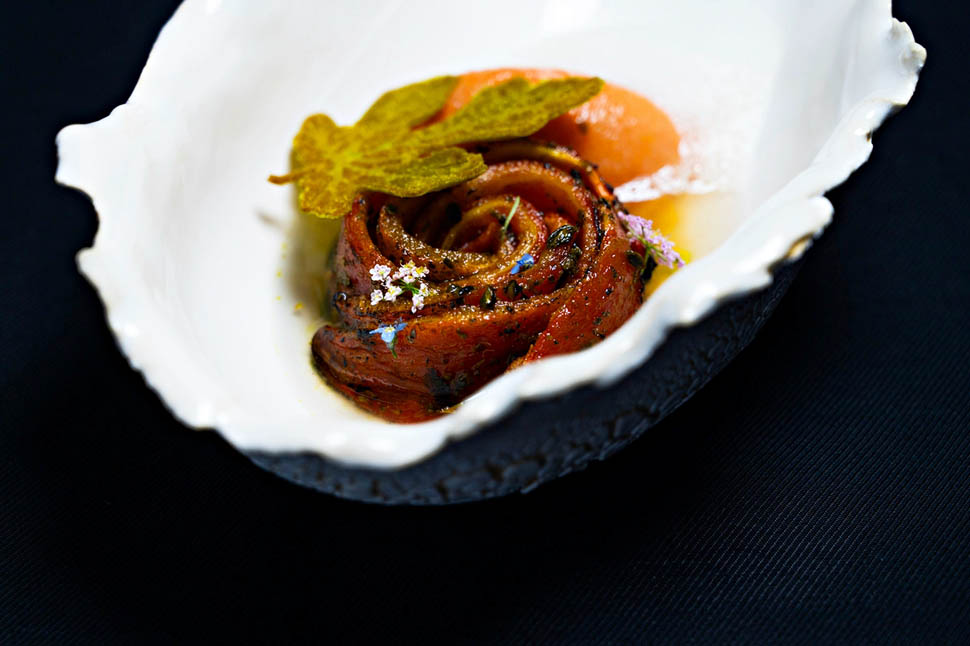
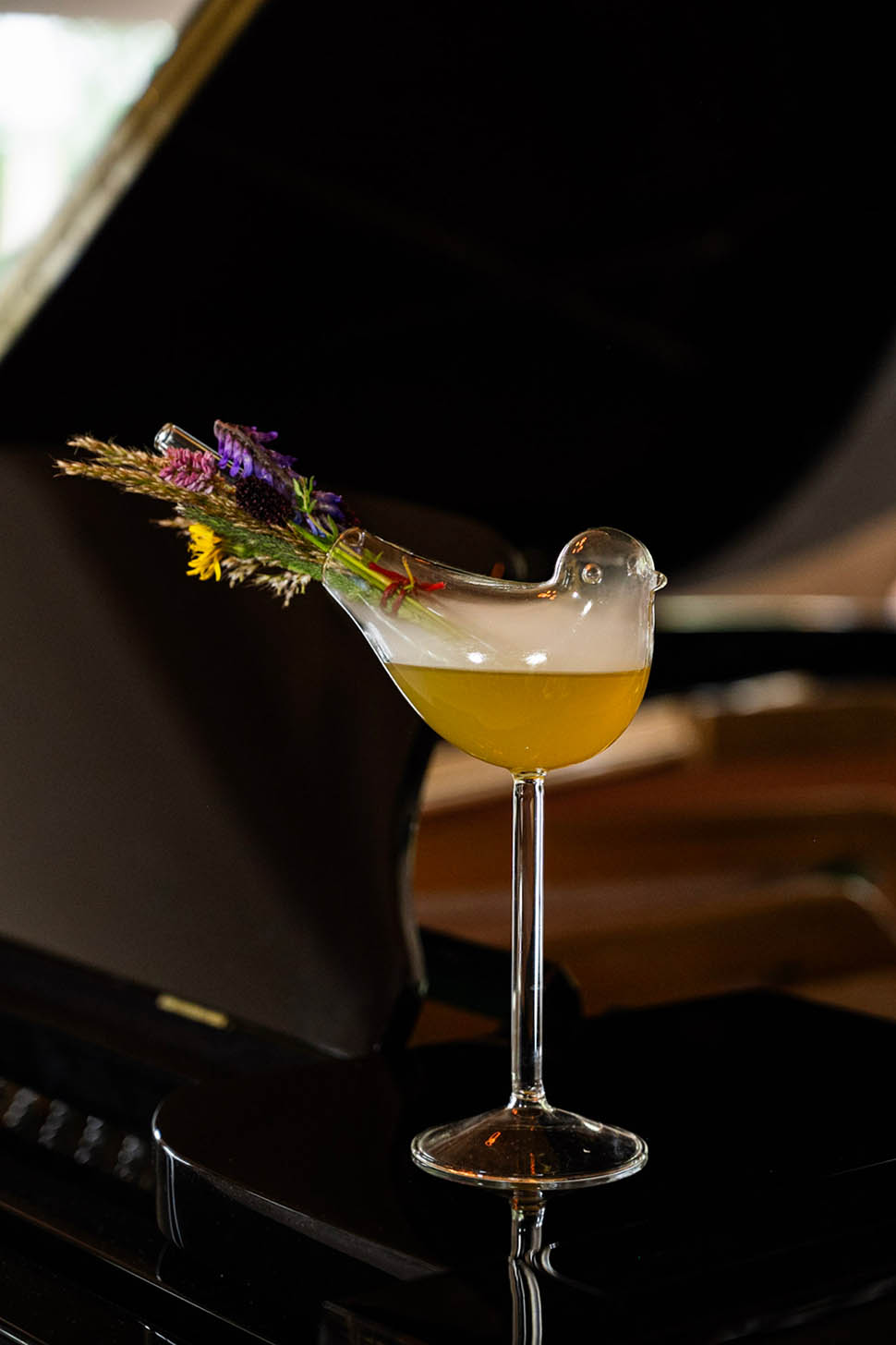
Aggeliki pays homage to her country with a Greek salad, simple and intense, made with tomatoes, cucumbers, olives, fermented water, and wild herbs. Already here, the combinations aimed at achieving intense flavors give us a glimpse of her skills. The dish is accompanied by a gin-based cocktail (non-alcoholic) with thyme, rosemary, cucumber cordial, and smoked with thyme in a bird-shaped “glass.”
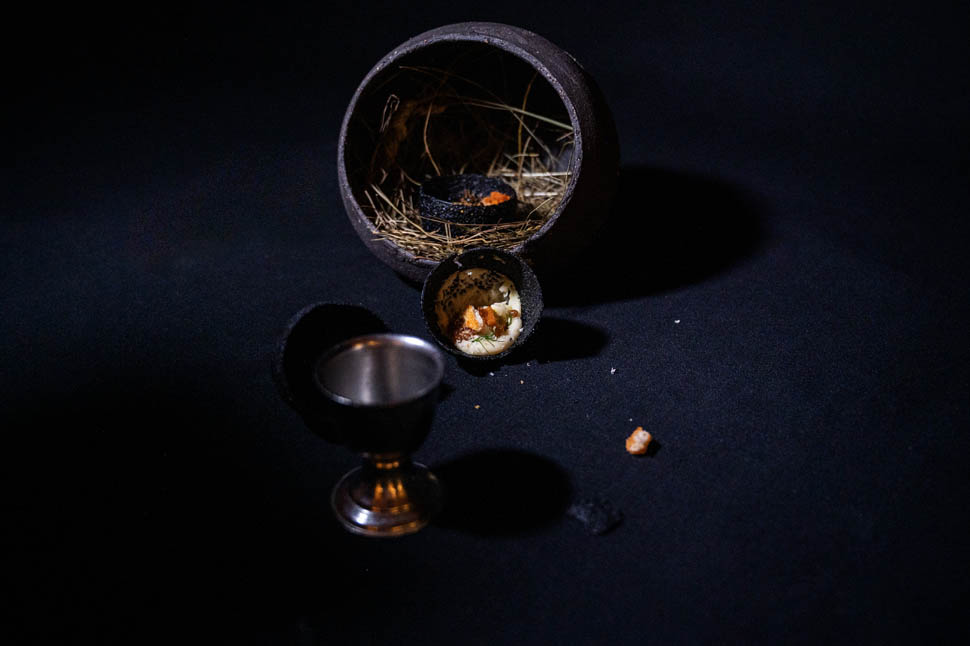
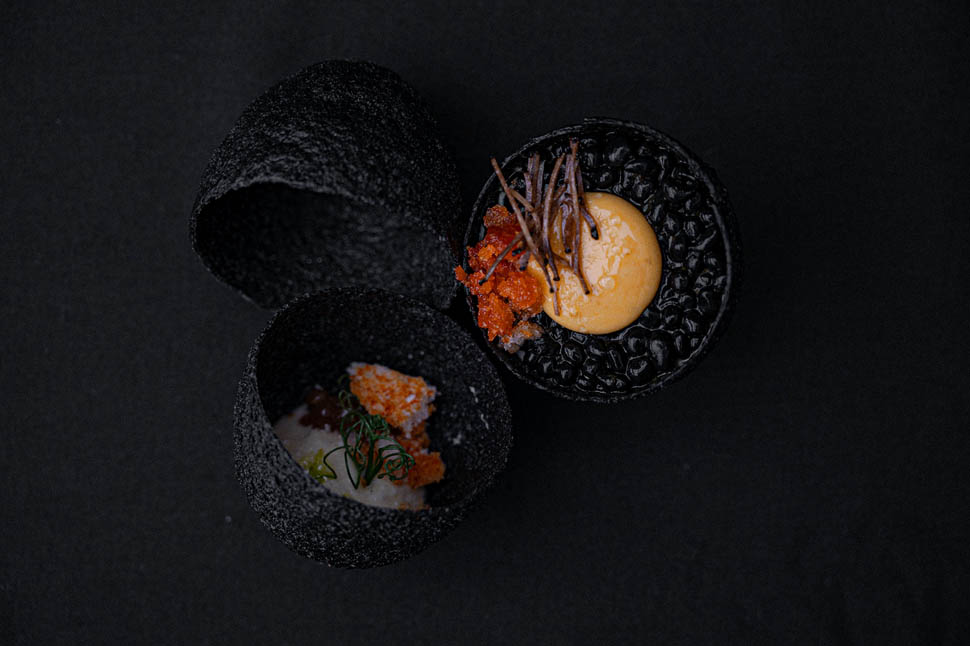
Then comes a childhood memory: eggs and fried potatoes. Here is one of the most spectacular dishes, with a reproduction of an egg served inside an egg-barn, with a savory tea made from roasted potatoes. Warm, invigorating, umami. Served in a concrete glass to recall the oven that was used to cook the tubers. An intense, deep flavor that cleanses the palate, resetting it from the fake yolk and knocking on the door of each of our memories, with that unique sensation that belongs to everyone, of that warm dish when it's cold outside.
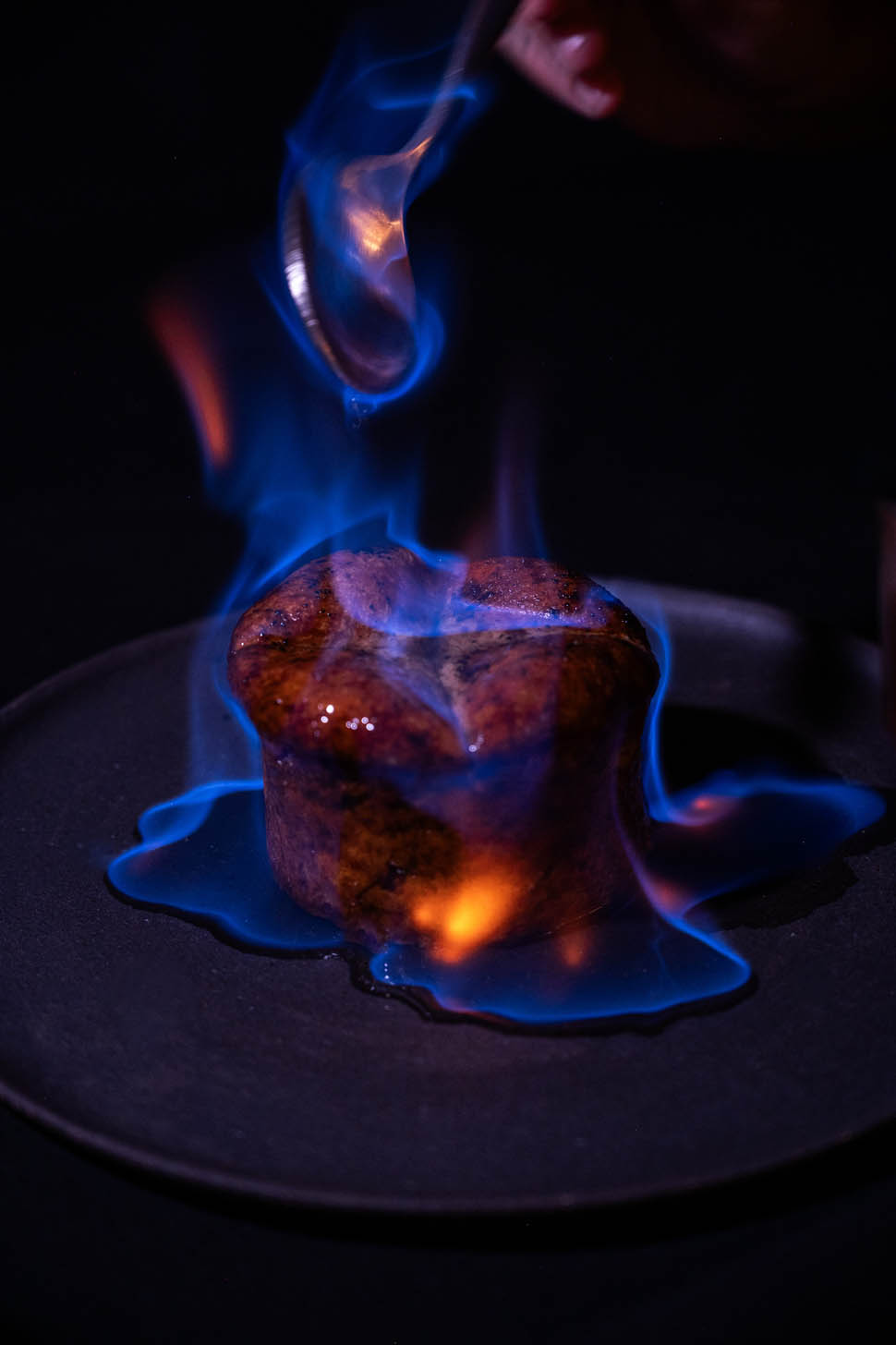
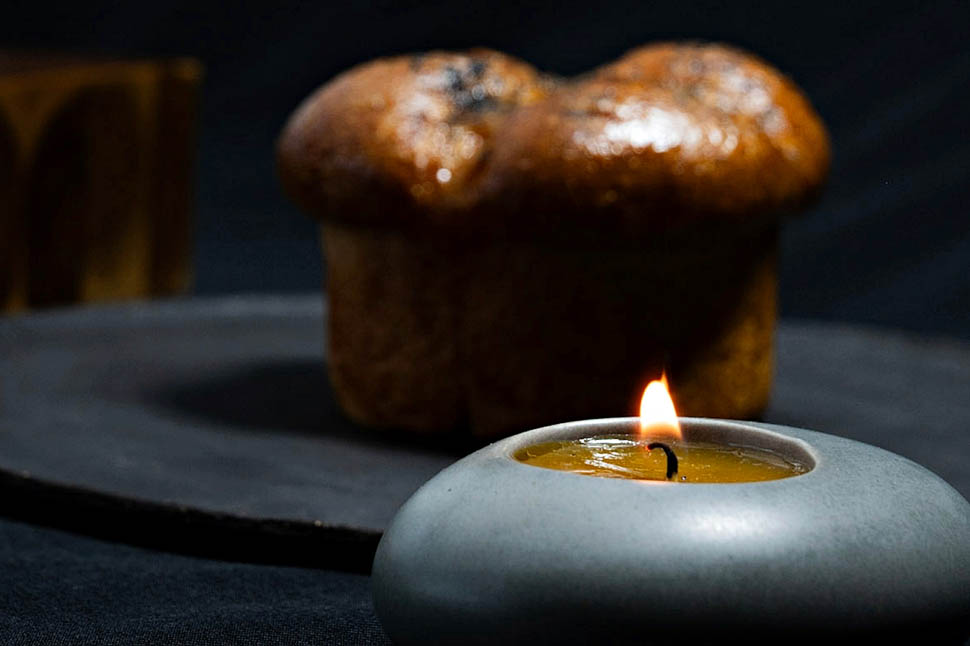
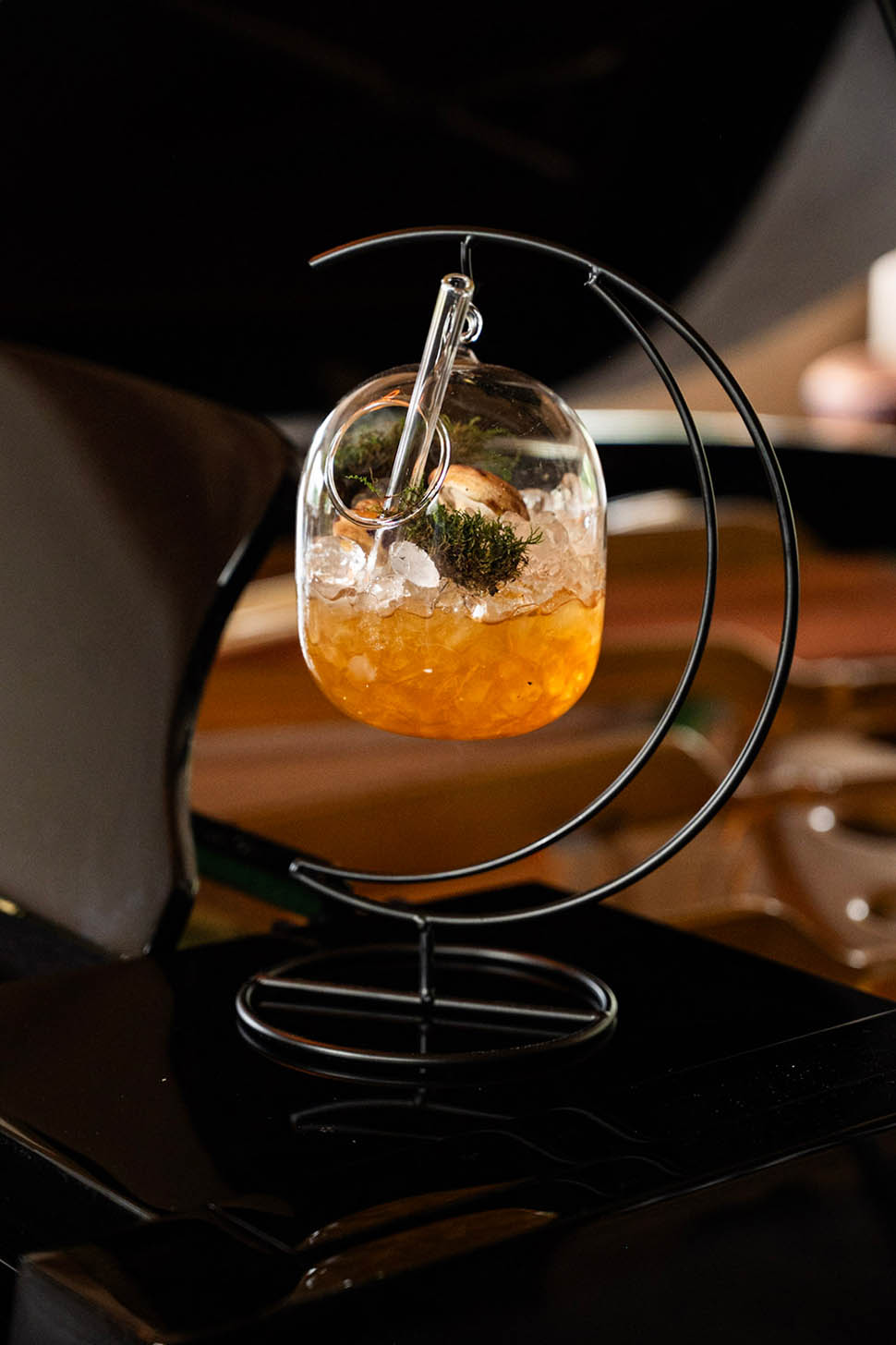
The flambé brioche speaks of pure pleasure, of hands breaking warm bread. A masterpiece, you forget that it is completely plant-based, with a light topping of onions. It is lit at the table, to everyone's amazement, and the alcohol caramelizes. Then you dip your bread in a lemon, oregano, and salt mousse with a soft and buttery consistency. The accompanying cocktail is rum (non-alcoholic) infused with shiitake mushrooms, coffee liqueur, shiitake cordial, drops of fermented mushrooms, and finished with a rosemary smoke.
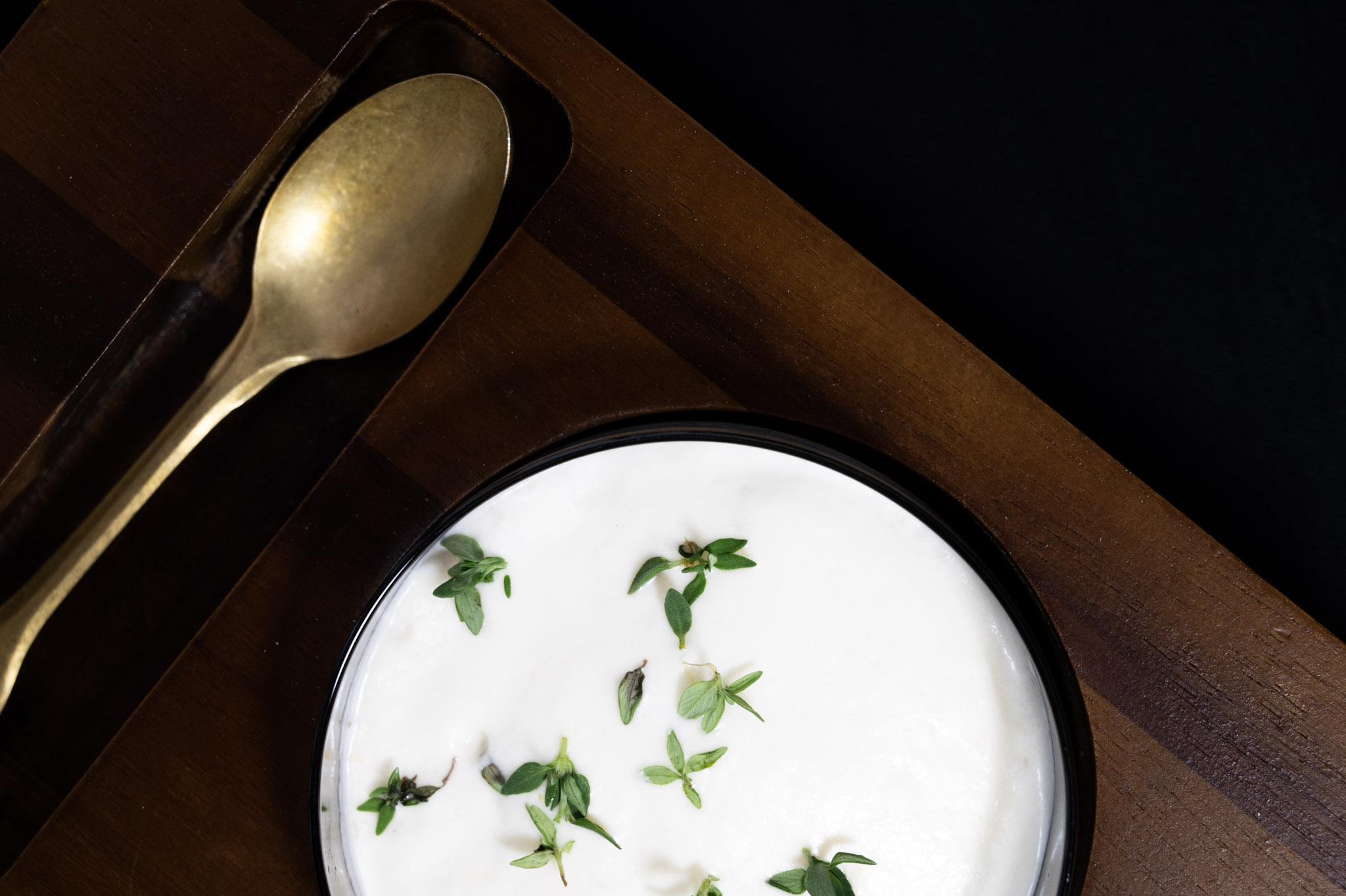
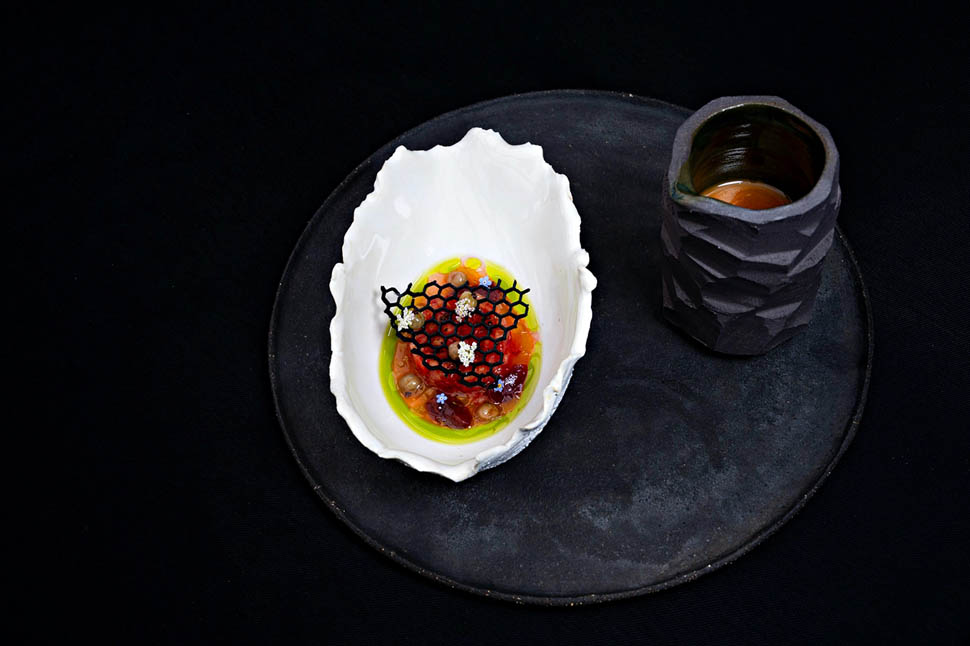
Red Silence is pure poetry: a memory of her father when he was still alive, taking the animals from the family farm to the beach to cool off on hot days. She would accompany him and then stay alone, eating watermelon and watching the sea. This image becomes a watermelon soup served with a sea water foam.
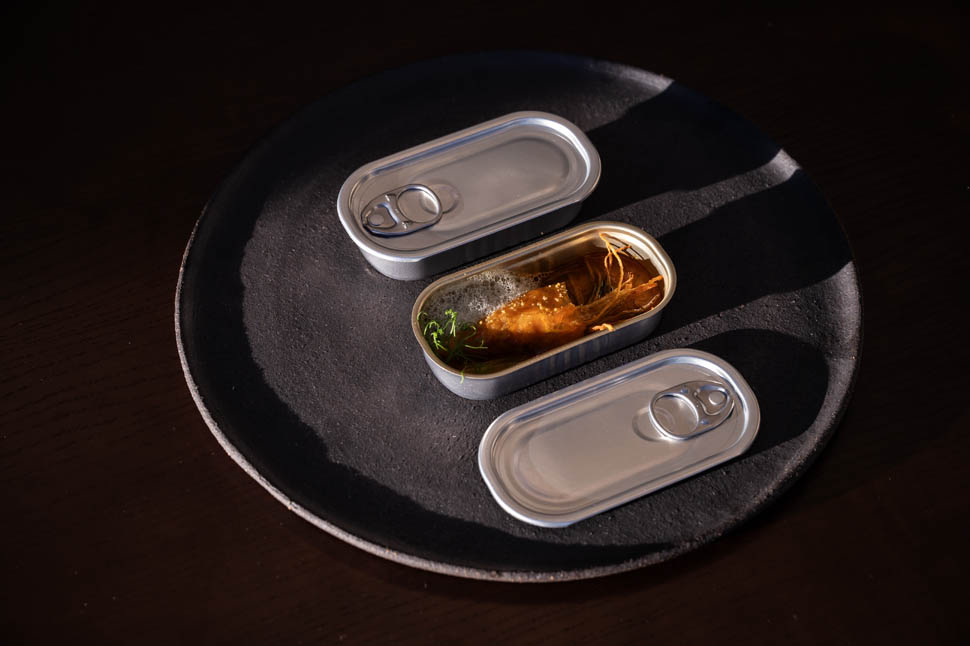
One of the most complex dishes in terms of taste and history is squid, presented in a metal tin, similar to those used for canned sardines. The mollusk is reinterpreted with kombucha scoby skin. The dish is paired with a cocktail of kombu seaweed-infused gin, dashi and kombu cordial, and wakame seaweed. With pride and emotion, the chef tells us the reason behind this dish: before starting work at around the age of 13, Aggeliki experienced a period of financial hardship with her mother and brother.
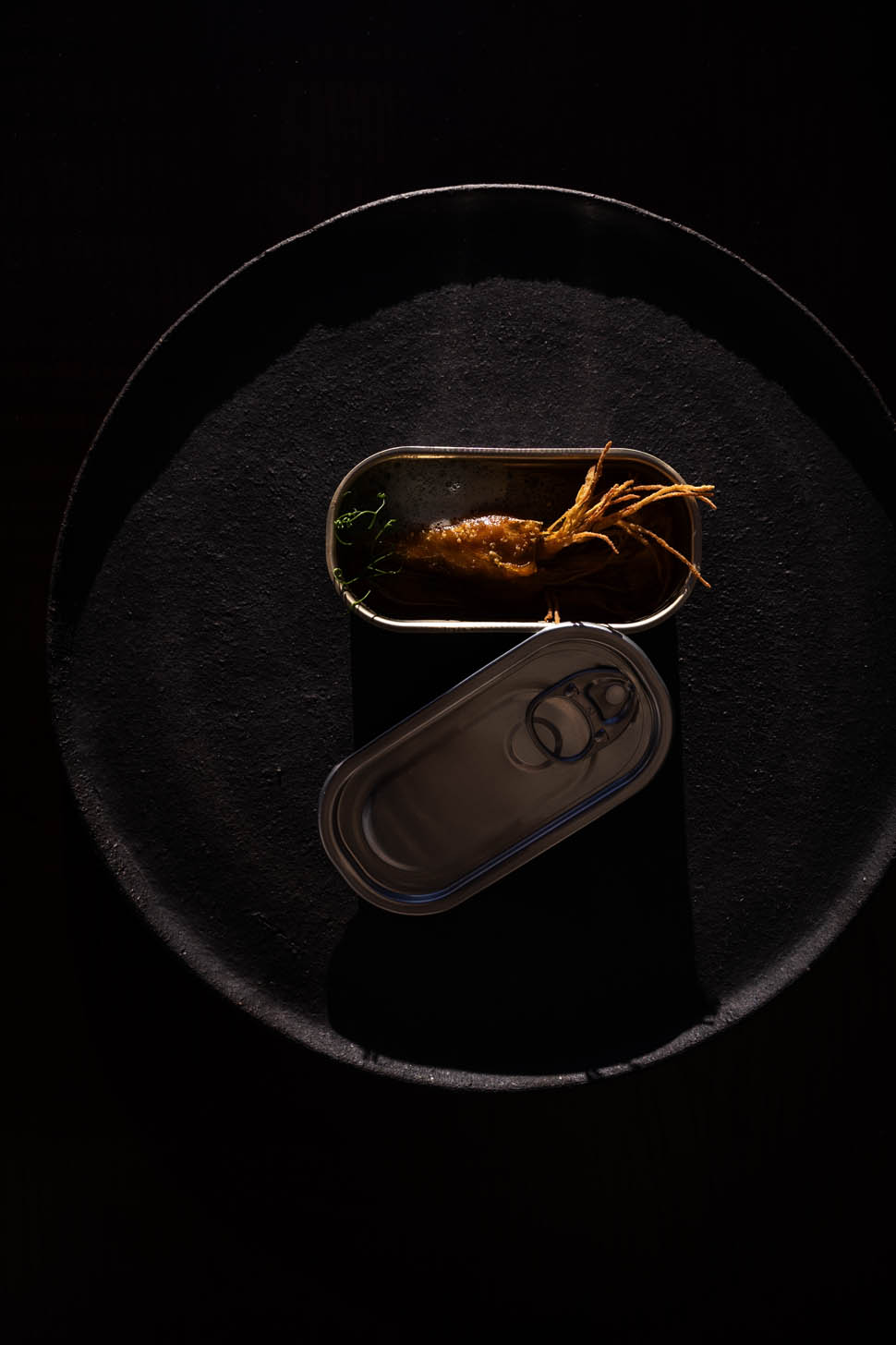
Canned food was their main and monotonous source of nutrition. “We ate canned food, and I particularly remember once saying that I didn't want to eat the same things all the time. And so, I don't know how, but my mom made a risotto with squid using only two or three ingredients. That concept has stayed with me, along with the idea that love and the desire to do something for the people you love are enough.”
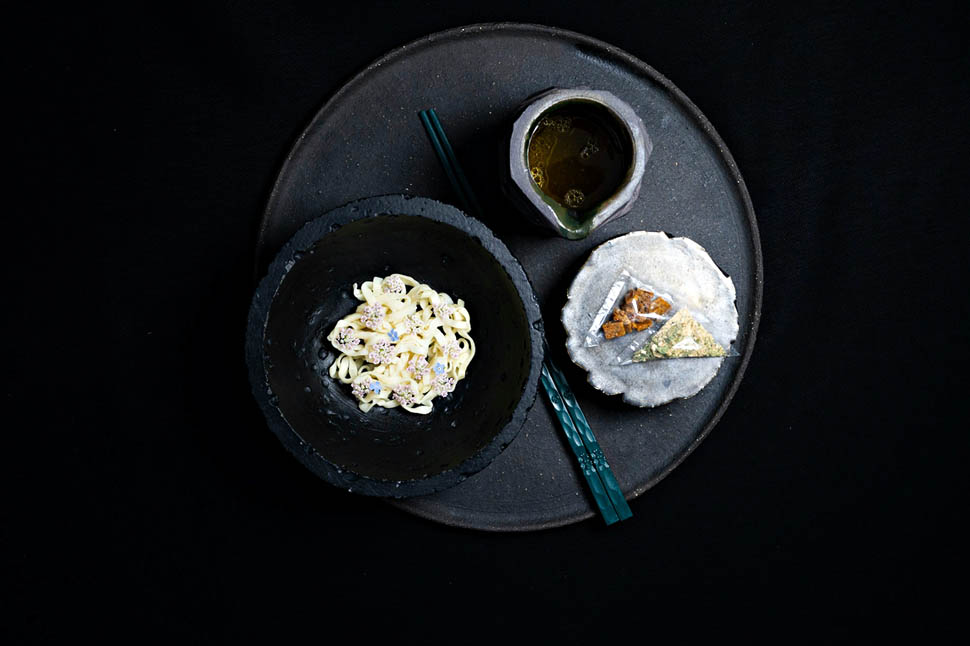
There is also room for lightness: DIY noodles, with mushroom broth and rice paper bags to dip and melt. “It's what I eat when I go home,” says Aggeliki. It is also a tribute to her travels in Asia.
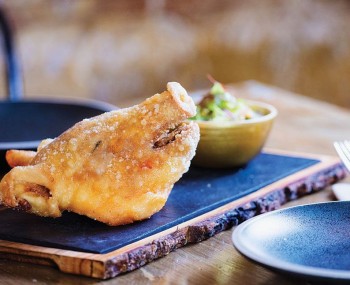
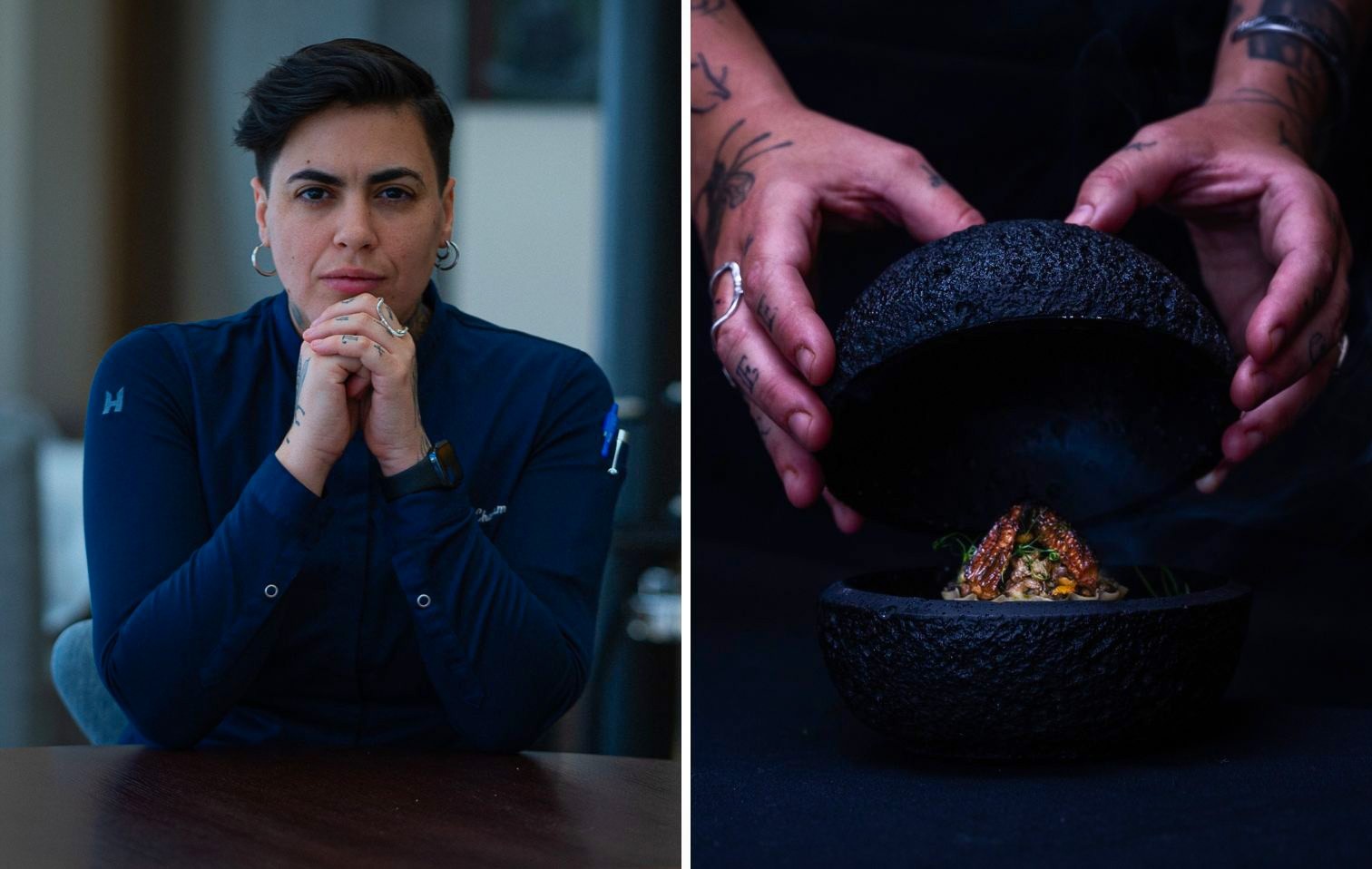
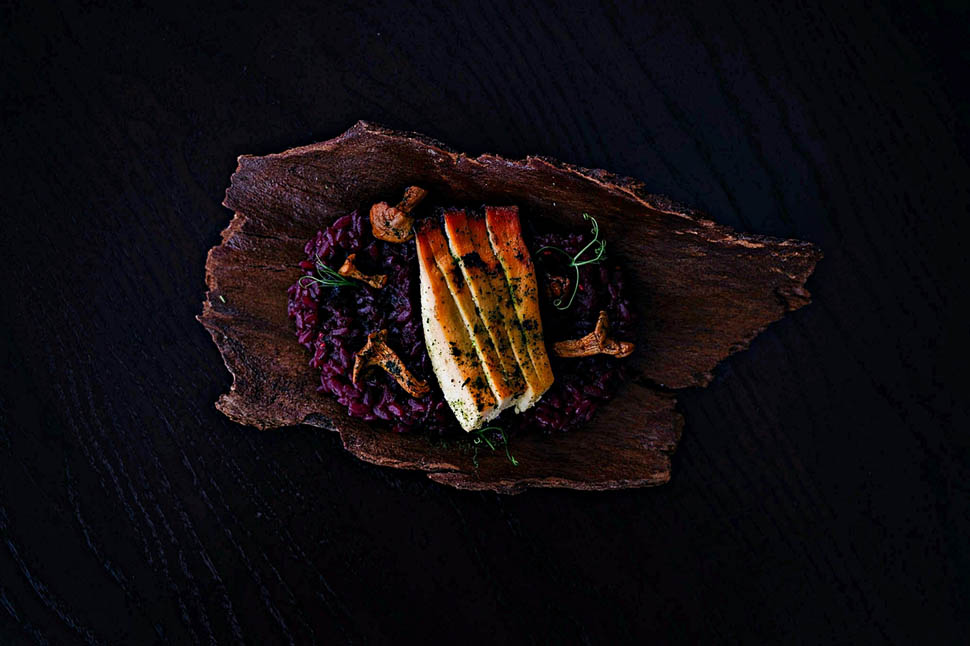
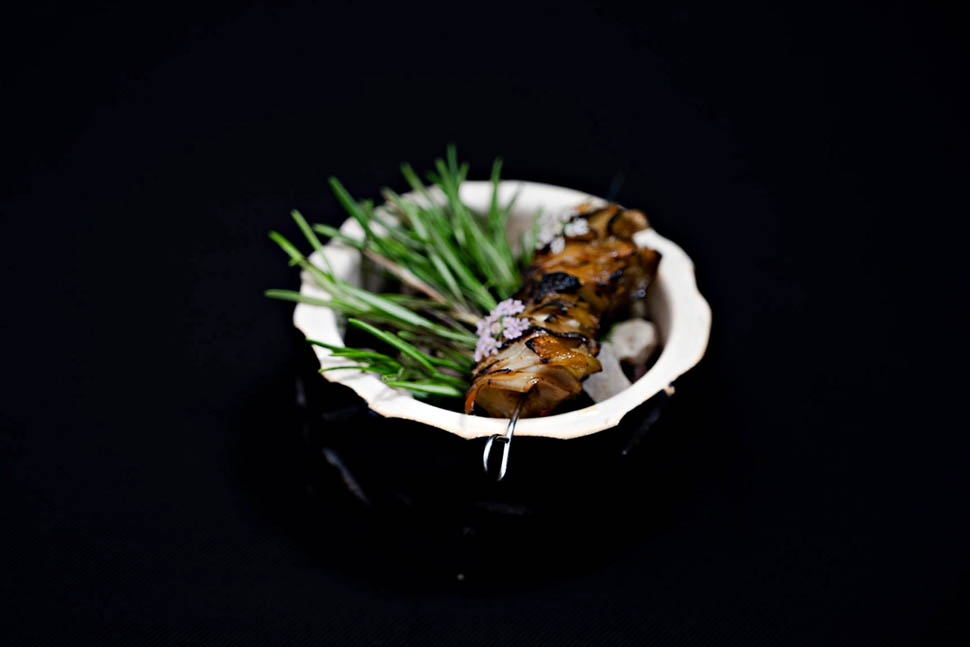
A deep, intense, spicy, and hot dish. The grand finale is an ode to Greece: mushroom souvlaki, and vegetable “chicken” that is actually another mushroom - Chicken of the woods (Laetiporus sulphureus). A combination of Eastern and Western cooking techniques, a search for ingredients, cooking methods and cultures, textures, memories and recollections, aesthetics, poetry and taste. Disruptive, complex, with the palate constantly stimulated by sudden exchanges of taste sensations, so familiar and yet so distant at the same time. An up-and-down ride between acidity, sweetness and deep umami. Everything in harmony. Everything.

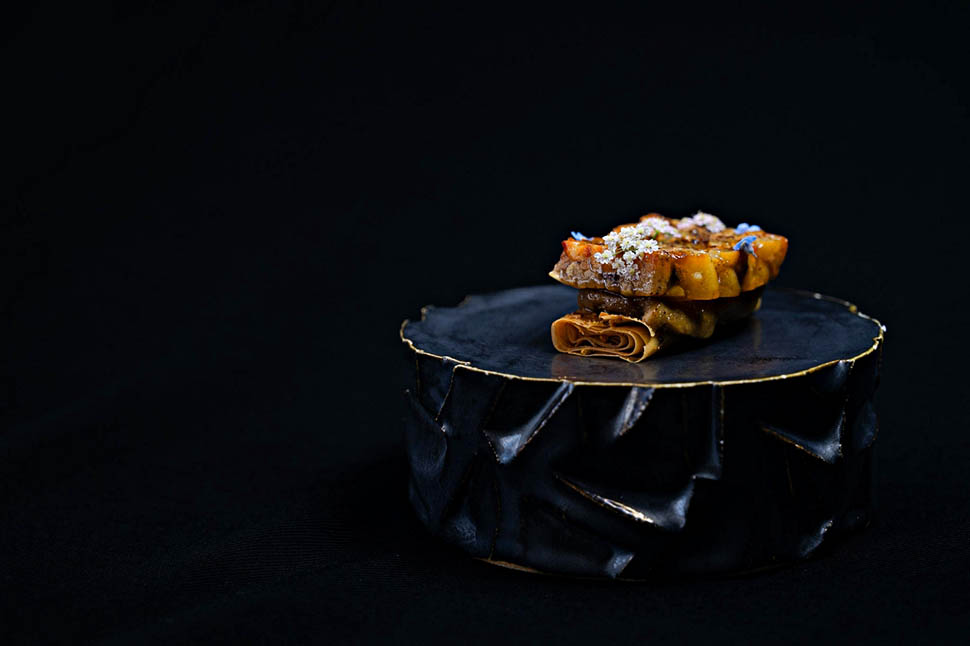
We finish with dessert: caramelized rice pudding (koji) and baklava, reimagined in substance but not in taste. Nothing is as it seems, but everything is profoundly true. It's not just the taste. Present and intense. It's also emotion, feeling, a tribute to old memories and an opening of space for new ones.
Contacts
OMNIA Plant-Based Restaurant
Joch, 17, 39040 Castelrotto BZ
Phone: 0471 727905