In Livingstone, just a few kilometers from Victoria Falls, chef Sungani Phiri has transformed his home into a restaurant with seating for just 22, where local ingredients, contemporary techniques, and culinary heritage come together to shape a new Zambian cuisine. The early days? Full of pitfalls: “My sister thought it was too ambitious a project.” Today, it’s a success.
The Chef
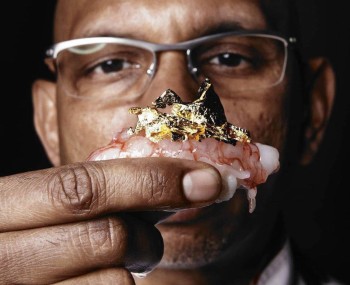
To experience a side of Zambia different from what’s in the guidebooks, you don’t need to venture far from Victoria Falls. Just sit on a veranda in Livingstone, in front of Chef Sungani Phiri’s home kitchen, and let him serve you one of his 14-course meals. The first course might arrive as a black cone of cassava, nestled on a bed of millet and encased in a potjie, the traditional three-legged pot. Inside, avocado ice cream; on top, a few flakes of edible gold. Both sweet and savory, elegant in appearance and deeply Zambian in origin. And that gold isn’t just a decorative flourish: it’s a tribute to the Copperbelt, the country’s mining region.

It is dishes like this that form the foundation of Phiri’s project, one of the most unique culinary experiences developed in Zambia in recent years. Sungani Restaurant is, in fact, a home-based restaurant, housed in the chef’s own home, where the fine-dining cuisine is built almost entirely around indigenous ingredients and the country’s culinary heritage. An idea that also stems from a rather simple question: why, when discussing Zambian haute cuisine, must the reference point necessarily be European? For years, in fact, high-end dining in Zambia has looked primarily to the techniques and conventions of Western cuisine. Phiri has chosen to take a different path. Rather than abandoning those ingredients to make them more familiar to an international audience, he brings them to the forefront and explores what they can become through contemporary techniques. The result is a cuisine that aims to be recognizable even before it is spectacular. Every dish begins with something that belongs to the land, the markets, the rivers, and the tables of Zambia, and takes it elsewhere without erasing its identity.

A Sister’s Challenge
The idea for what’s known as “New Zambian cuisine” arose, curiously enough, from a family discussion, as the BBC recently reported in a special on the chef’s cuisine. After culinary school, Phiri initially intended to apply the techniques of European haute cuisine he had learned. It was his sister who challenged that plan, calling it essentially pretentious if it lacked a genuine connection to the country. Her challenge prompted him to change course. He thus began working with the ingredients he had grown up with, wondering how to incorporate them into a more sophisticated culinary context without turning them into something foreign. Before opening Sungani in 2025, the chef had also gained experience outside his own kitchen. He trained in South Africa under two-Michelin-starred chef Sven Niebremer and later served as head chef at the Royal Chundu Lodge in Livingstone and at Botanica in Lusaka. In April 2025, he welcomed his first guests into his home and launched “The Rebirth,” a tasting menu built around the idea of a rebirth of Zambian cuisine. “I try to use food to showcase the very best this country has to offer and then translate that into a dish,” Phiri explained to the BBC. The word “translate” is particularly important. His work isn’t simply about reproducing traditional recipes in a more elegant form. The goal is to build a bridge between what the ingredients have always been and what they can become.

A Kitchen Inside the Home
Even the choice of location is anything but random. Sungani Restaurant is located in the chef’s home and seats just 22 people on the veranda adjacent to the family’s open-concept kitchen. In the center, an island separates the preparation area from the dining area. The dining table serves as both the chef’s table and the family table. Alibesi Mwale Phiri, the chef’s wife and director of operations, welcomes guests with a “Twamilandilani”—“welcome” in Nyanja, one of Zambia’s many local languages—inviting them to feel at home. The domestic atmosphere is therefore not merely a gimmick to stand out; it is an integral part of the project’s philosophy. As Phiri explains, in Zambia, when you want to honor someone, you don’t necessarily take them to a restaurant—you invite them to your own table. Even the selection of ingredients follows a specific rule. Everything used in the restaurant comes from within a radius of about 100 kilometers. The chef scours farms and fish markets, looking at what’s in season, what’s plentiful, and—above all—what’s overlooked. That’s why the menu isn’t set in stone. Depending on the season, the menu can include 14–16 courses, many of which draw inspiration from the Southern Province, the region where Livingstone is located. The price of the experience is $215, about 160 pounds, with payment required in advance. It’s advisable to book at least three days in advance, though reservations can also be made one or two weeks ahead of time. But Sungani is more than just a restaurant. The chef’s home has become a training ground for young Zambian chefs: three of them were working in the dining room during the evening covered by BBC Travel. Groups of chefs come here to learn how to work with indigenous ingredients, which they often never seriously encountered during their training.

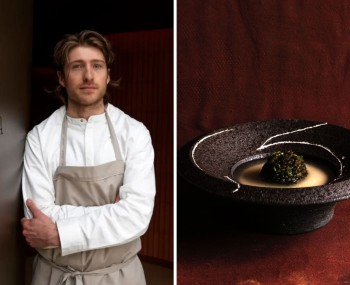
Among the dishes, the BBC highlights the exquisite preparation of the savory ravioli stuffed with “village chicken”—free-range chicken prepared according to local tradition—served with egg yolk, julienned carrots, and bok choy, or the beef pâté served with delele (okra) and a pai tee made with river shrimp: small, crispy pastry shells filled with crayfish from the Zambezi River. The bread service is intriguing; it’s served alongside jam under the name “The Journey To Home.” The plate features freshly baked cassava rolls and a dense, sweet bread made with mabisi, a traditional local sour milk. The star fish, however, is the Zambezi bream, a species similar to tilapia that has sustained communities living along the Zambezi River for generations. It is traditionally grilled whole. Phiri, on the other hand, transforms it into a geometric composition: thin slices arranged like a mosaic and flavored with lemon zest, ginger syrup, and parsley powder. The dish is rounded out with okra caviar and tiny flakes of edible gold. For visitors from abroad, the menu offers a completely different way to experience Zambia: not just through safaris, mopane forests, or Victoria Falls, but through its flavors, its ingredients, and the stories each one carries. For those who have known this same food since childhood, Phiri’s culinary journey can become something even more intimate: the chance to see their own cuisine treated with a care and consideration that—precisely because it is so familiar—is often overlooked.