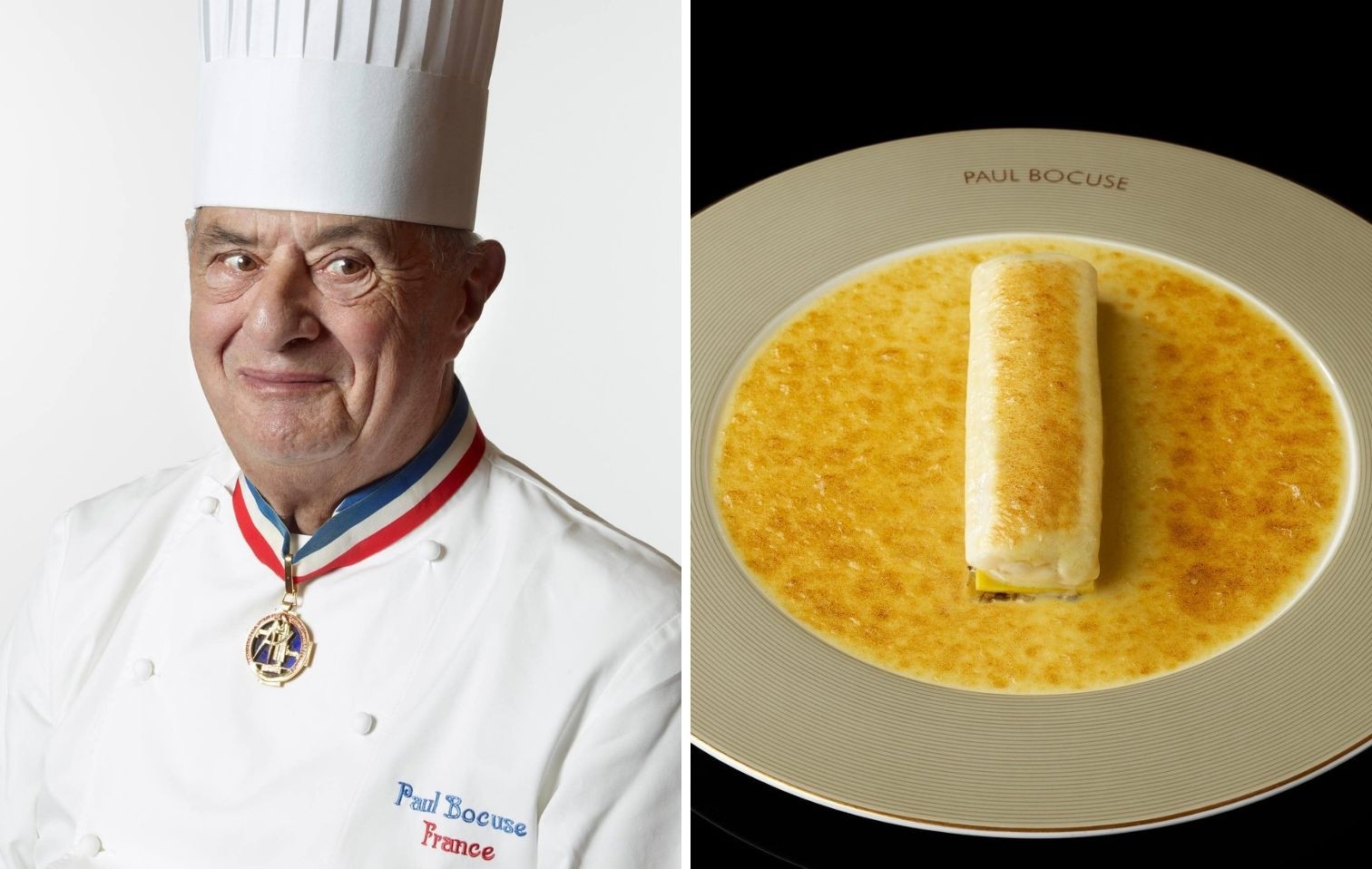
It’s a sole stuffed with tagliatelle—the best in the world: in France, Paul Bocuse popularized the recipe of his mentor Fernand Point, which features a decidedly unconventional sauce. Today, the dish has evolved in form and can still be enjoyed at Bocuse restaurants. But how is it made?
Sole à la Fernand Point is not just a seafood recipe, but a true monument of French gastronomy. In fact, it represents the crucial transition from Escoffier’s classical cuisine to Nouvelle Cuisine, embodied by the legendary chef of La Pyramide in Vienne.
Fernand Point’s Masterpiece
Fernand Point is considered the “father” of modern French cuisine. In this sense, sole is the emblem of his philosophy: technical perfection, superb ingredients, and apparent simplicity. Unlike 19th-century preparations, laden with excessive decorations, Point’s version focused entirely on the quality of the fish and the texture of the sauce. Therefore, giant sole (weighing about 400–500g) were used, preferably caught in the English Channel. The fish was filleted with surgical precision and gently cooked in butter and white wine (usually a Vouvray or a Burgundy Chardonnay) along with finely chopped shallots. The heart of the dish? Point Sauce, a reduction of the fish’s cooking juices, thickened with a generous amount of high-fat fresh cream and butter. The sauce was meant to be velvety, almost a caress on the palate. In the traditional preparation, the dish is briefly passed under the salamander (a professional grill) to achieve a light golden glaze, without overcooking the fish. The dish is also served with fresh tagliolini in butter, which act as a “bed” to catch the precious sauce.
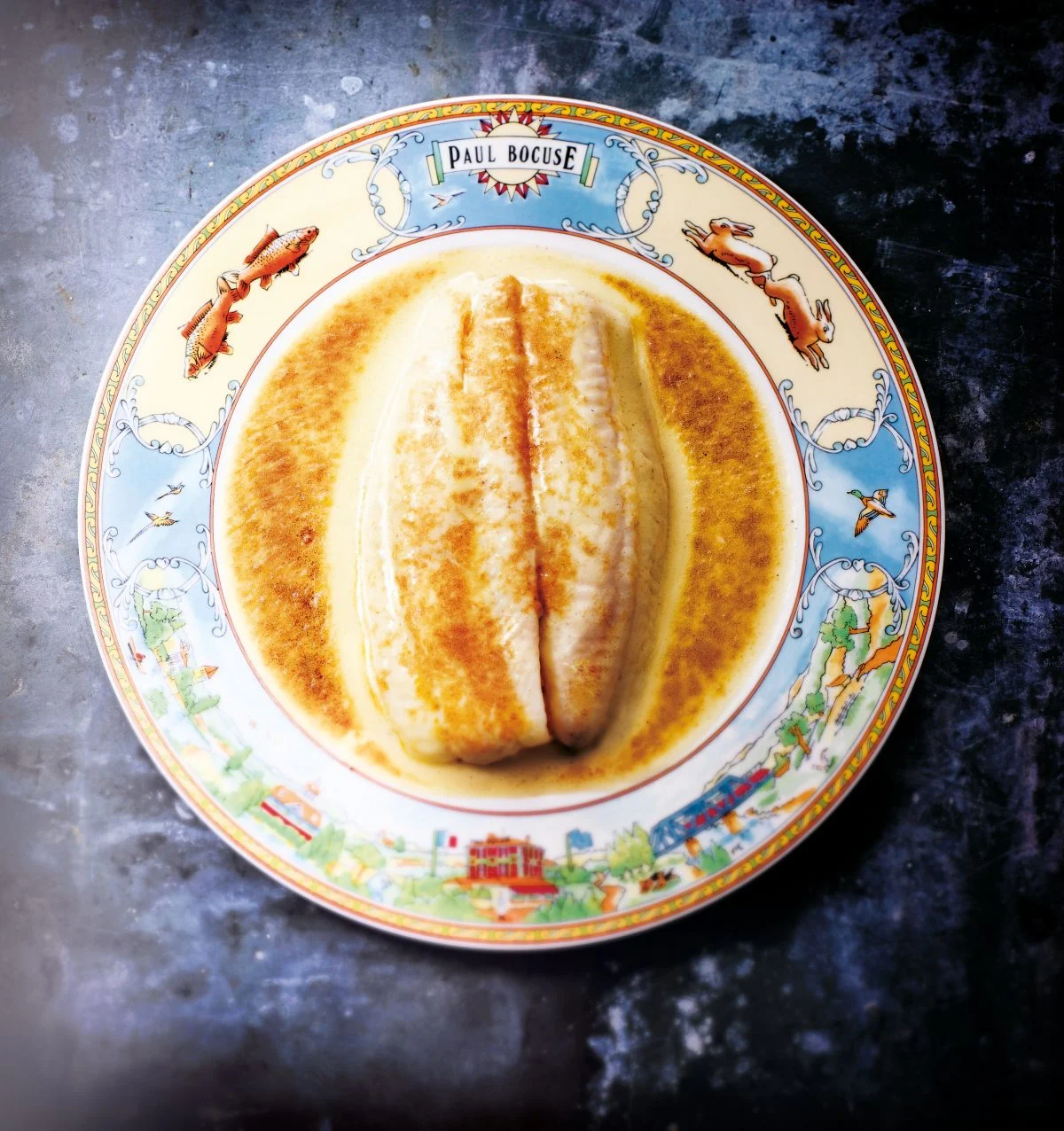
Paul Bocuse’s version: the evolution of the disciple
Paul Bocuse was Fernand Point’s most famous pupil. At his restaurant in Collonges-au-Mont-d’Or, Bocuse kept his master’s tradition alive, while adding that touch of grandeur characteristic of his own style. Bocuse’s version, also known as Fernand Point’s “Grand Classique” sole, differs in several visual and technical details:
- The addition of seafood: While Point focused on the purity of the fish, Bocuse often enriched the presentation with shrimp tails or asparagus tips (depending on the season) to add height and color to the dish.
- The glaze: Bocuse perfected the glazing technique. His sauce was slightly more frothy, achieved by incorporating a touch of hollandaise sauce or egg yolk into the base of cream and wine reduction. This allowed for a perfect, uniform amber color during the grilling process.
- The service: if Point was the chef of the “substance,” Bocuse was the chef of the “show.” The sole was often presented whole at the table before being filleted and glazed with the sauce right before the guests’ eyes, transforming the meal into a ceremony.
One more interesting fact: it is said that Bocuse never changed the original recipe he learned at La Pyramide, claiming that it was impossible to improve upon perfection. His “version” was actually an act of absolute devotion to Point, keeping alive the dogma of using the highest quality butter as the main ingredient.
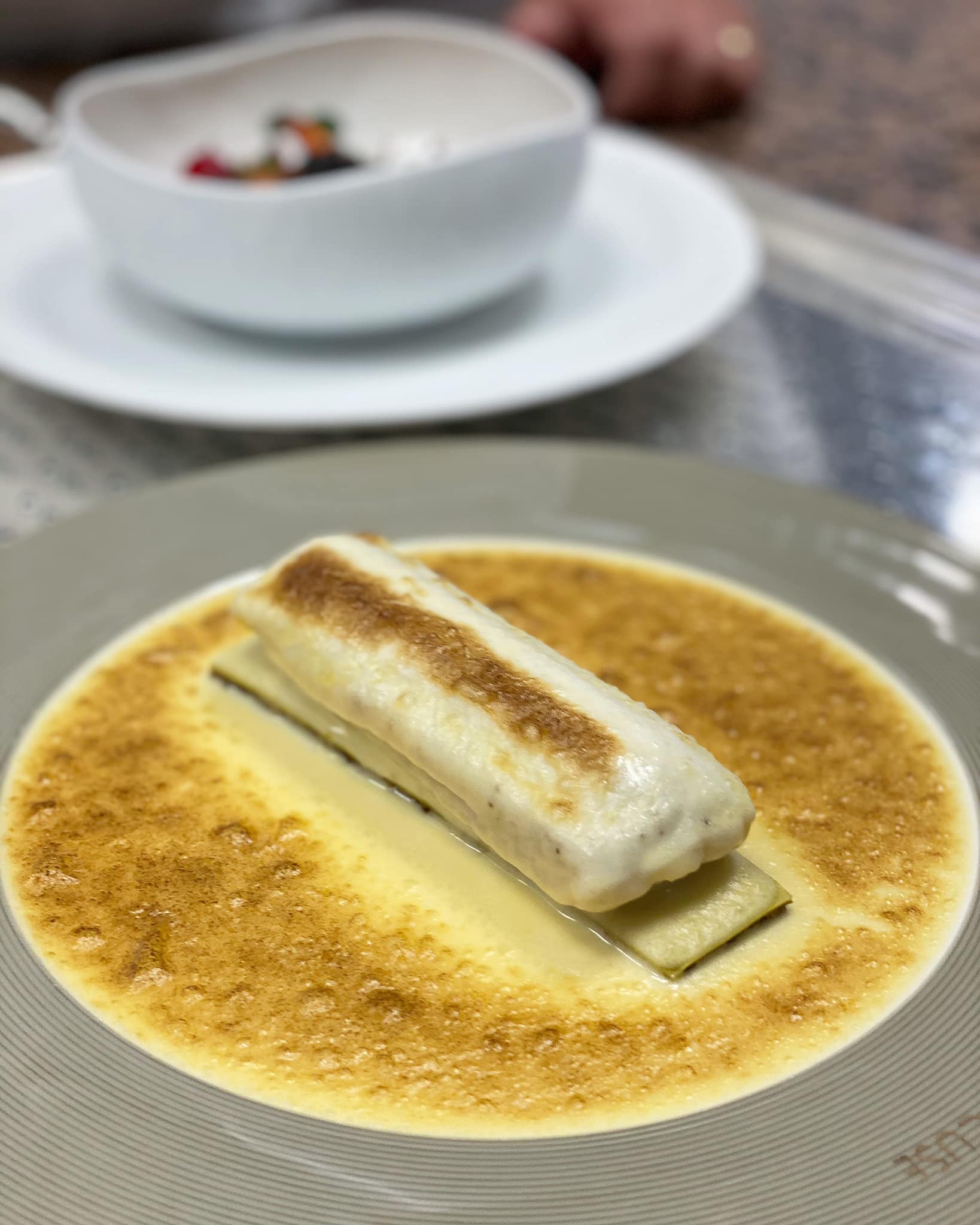
Recipe from the Académie Du Goût website
Ingredients (serves 4)
1 sole weighing approximately 600 g
1 medium tomato
3 shallots
4 medium-sized button mushrooms
20 cl white wine
2 nests of tagliatelle
1 egg yolk
100 g butter
1 tablespoon whipping cream
Salt
Freshly ground pepper
Instructions
Fillet the sole. Peel and dice the tomato. Peel and finely chop the shallots. Wash the mushrooms, cut the caps into strips, and set the stems aside.
(You can ask your fishmonger to fillet the fish and leave the head, skin, and bones for making the broth.
Remove the sole’s head, skin, and bones, then cover with water. Simmer with white wine, shallots, and mushroom stems for 20 minutes.
Place the egg yolk in a small saucepan over a double boiler on low heat. Add 1 tablespoon of water, stir, and then incorporate the clarified butter. Season with salt and stir the mixture until smooth.
Strain the broth through a fine-mesh strainer. Arrange the sole fillets, mushrooms, and tomato in a dish or saucepan, then pour the broth over them. Simmer over low heat until it comes to a boil.
Drain the sole fillets and reserve the broth. Remove the tomato and mushrooms.
Reduce the broth until only a few tablespoons remain. Whip the cream to stiff peaks using a whisk or mixer. Add the broth and cream to the zabaglione.
Cook the pasta for 5–6 minutes in boiling salted water. Arrange the pasta, tomato, and mushrooms on a serving platter. Place the sole fillets on top.
Pour the sauce over everything. Place under the broiler for 2–3 minutes until golden brown.
Carefully check the sole fillets for doneness.