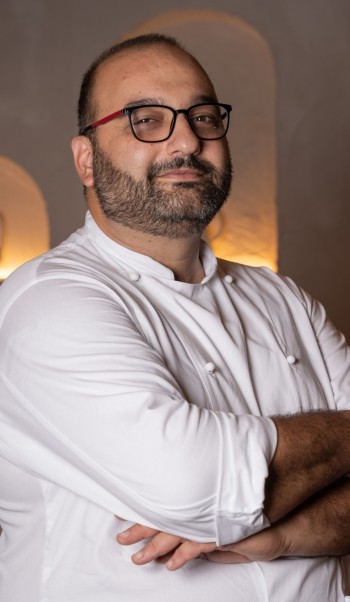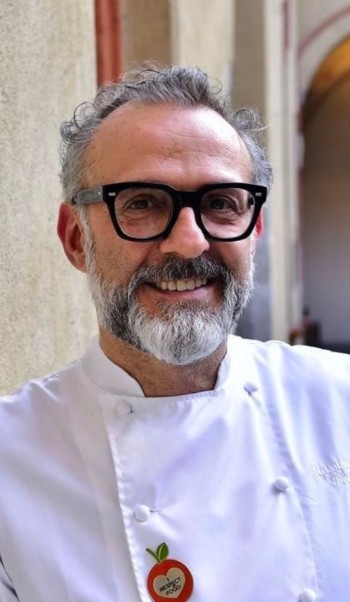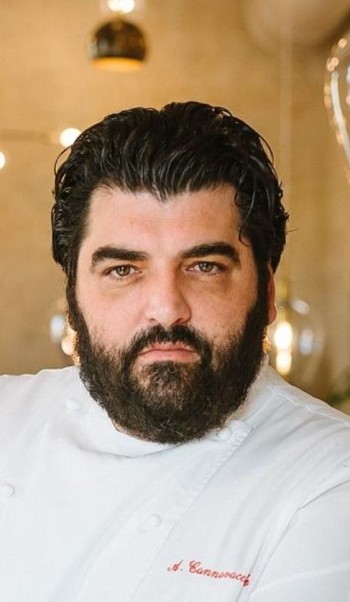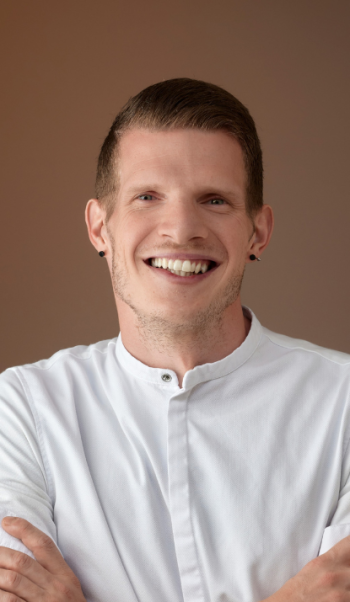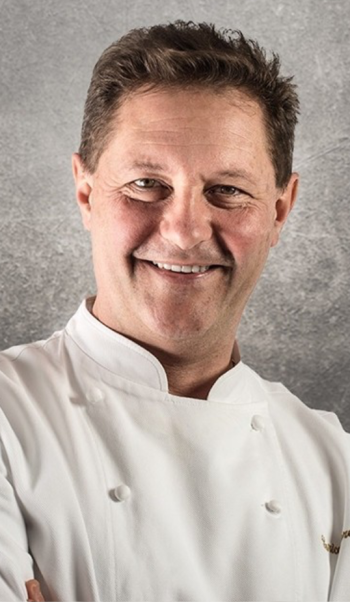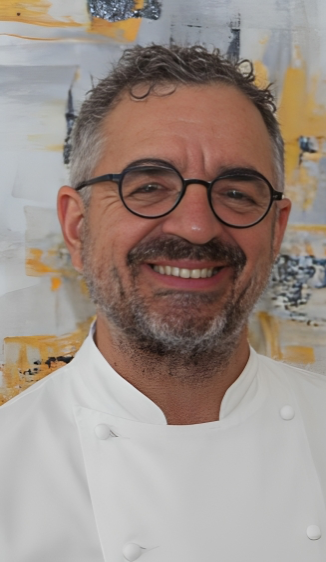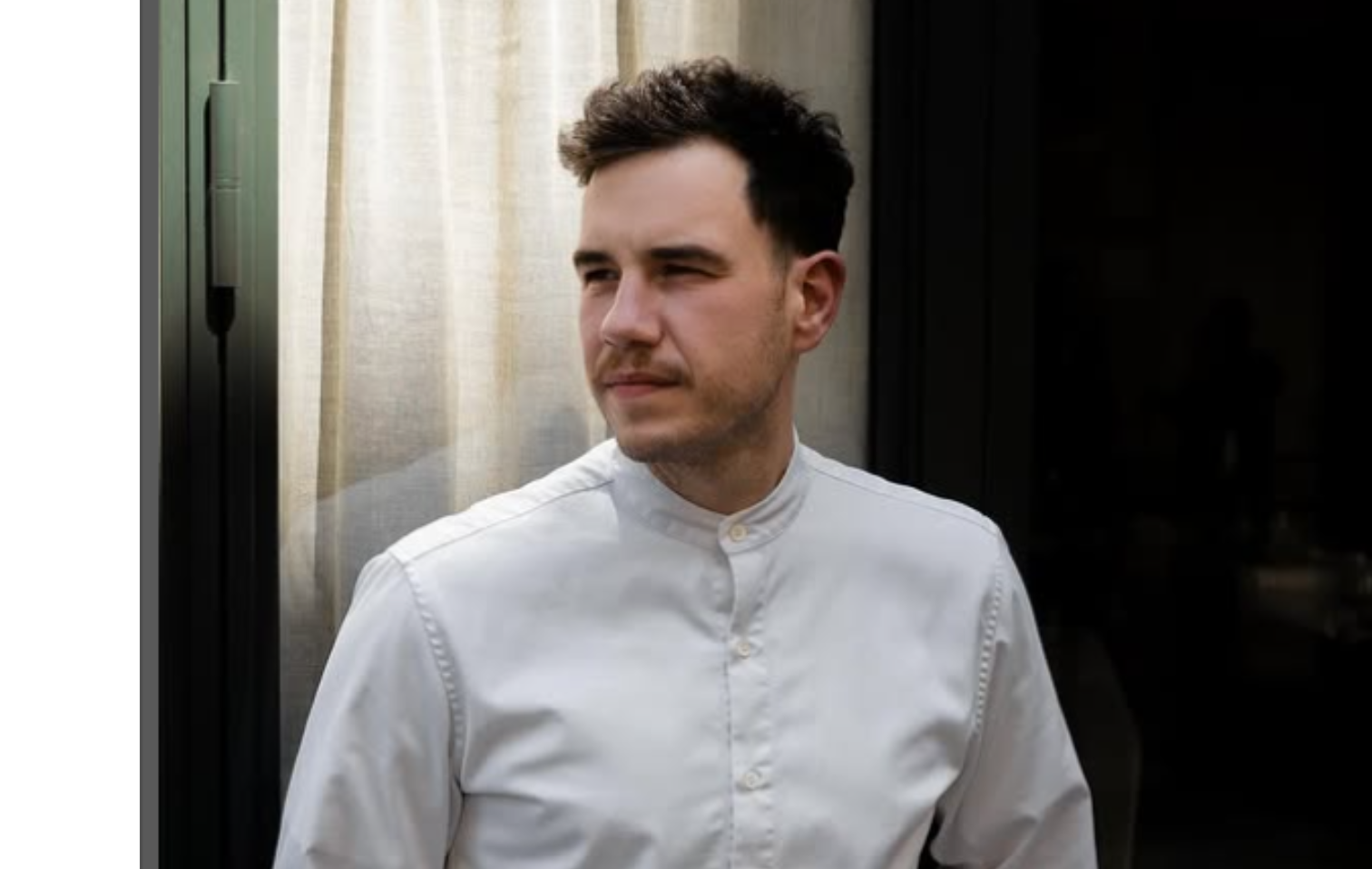
Bruno Laporte auvergnat by birth and Parisian by adoption, shaped by Rabanel and Ledeuil, travels in Asia and a stage at Noma (2019), he now leads Chenapan (Paris 9) with produce‑driven, seasonal, playful cuisine, recognized by Gault&Millau and listed in the MICHELIN Guide (2023).
Born in Clermont‑Ferrand in 1987, he followed a classic path: after a school internship he obtained the BEP and professional certificate with Emmanuel Hodencq, who hired him on the brigade. In 2009 he joined Jean‑Luc Rabanel’s L’Atelier in Arles, absorbing rigor and a vegetable‑centric approach; the following year he returned to Auvergne at Le Pré (Xavier Beaudiment), rising to sous‑chef.
In 2015 he entered William Ledeuil’s Paris team at Ze Kitchen Galerie; two years later he led the opening of Kitchen Ter(re) as chef, setting a line with contemporary language—ancient‑grain pastas, clear extractions and sauces—acknowledged by international critics.
In 2019 he undertook a study trip in Southeast Asia and completed a stage at Noma in Copenhagen, refining sensitivity for fermentations, acidity and aromatic contrasts. Back in Paris, in 2021 he signed a five‑month residency at Fulgurances L’Adresse: “It allowed me to cook with my heart; it was one of the best periods of my life,” he says, before a stint at Oka and joining L’Innocence (2022).
The long‑nurtured project took shape in May 2023 with the opening of Chenapan in the 9th arrondissement, together with partner and dining‑room lead/sommelier Florentin Fraillon. The restaurant—18 seats and an open kitchen—offers blind tasting menus that change with producers’ deliveries, and service tuned to by‑the‑glass pairings, non‑alcoholic fermentations, and a concise list spanning France and select European bottles. Gault&Millau awards 12.5/20, while the MICHELIN Guide includes Chenapan in its selection; in the same 2023 Fraillon receives the Sommelier Île‑de‑France trophy and Laporte enters the book 109 – Le Sang neuf de la gastronomie française.
His culinary philosophy is French in technique, with spices, citrus, seaweeds and tightly drawn sauces evoking Asian landscapes. Flavor is pursued through precise broths and jus, work on grains and vegetables, and chiaroscuro between richness and acidity.
On a human level, he often emphasizes attachment to Auvergne roots and a “heart‑led” team cooking; the period with Ledeuil—he recounts—was formative for brigade and business management, a trait now reflected in Chenapan’s essential organization and constant dialogue between kitchen and dining room.