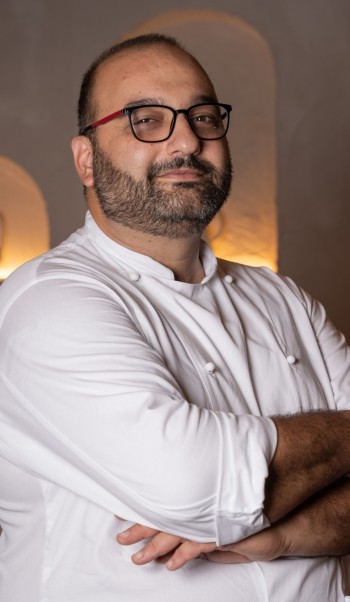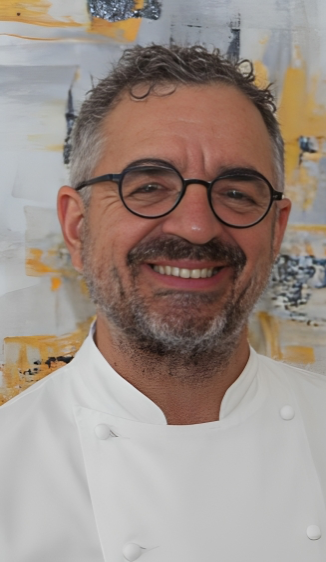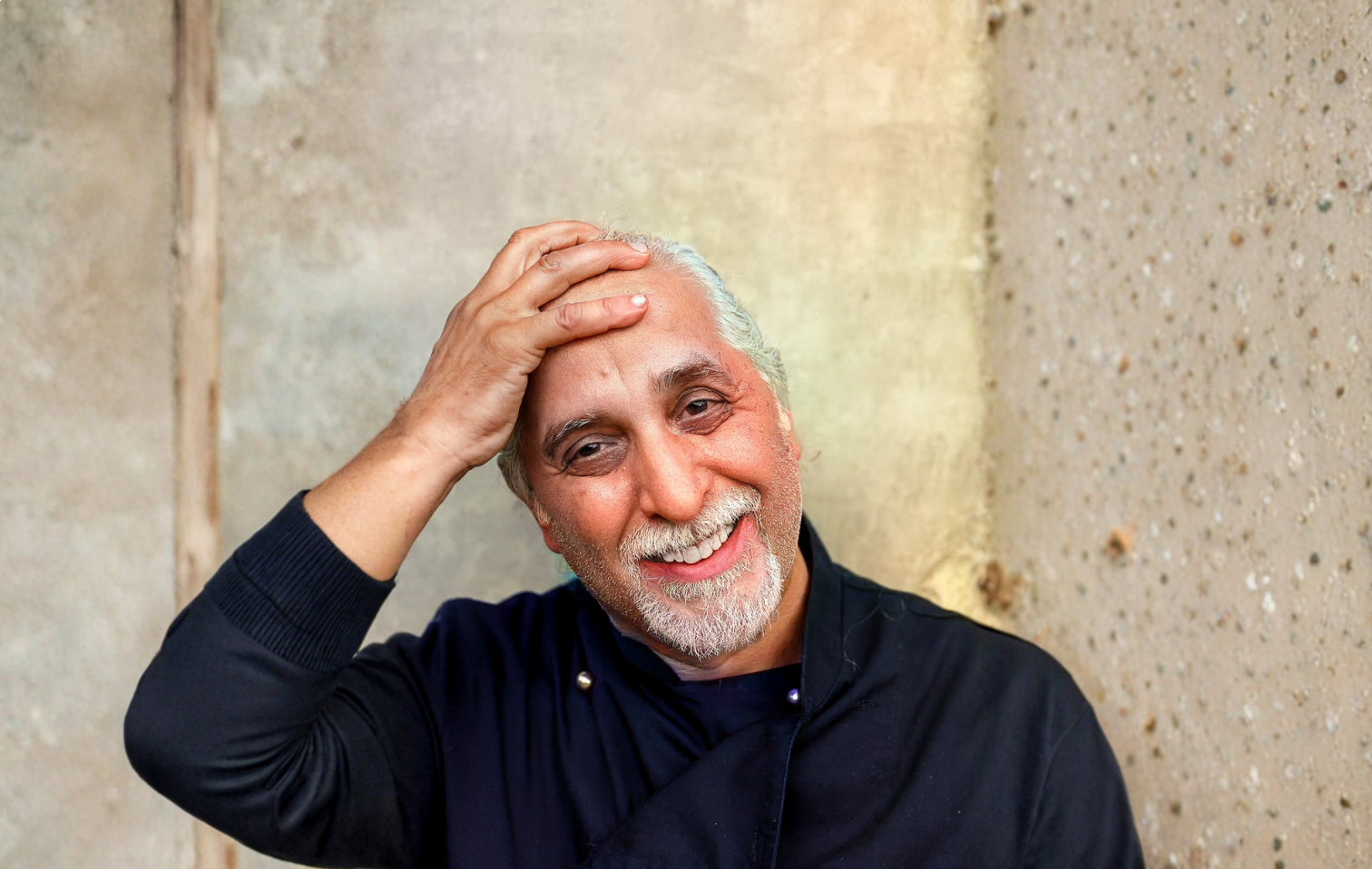
Chef and author of “Scaccomatto. Cuochi si diventa”, Mario Ferrara interprets cuisine as a language and a means of storytelling. From Lucania to Japanese and Spanish influences, he has built a dynamic Mediterranean style with vegetables at its core.
“Cuisine is a language,” writes Mario Ferrara in his book “Scaccomatto. Cuochi si diventa”. Like any form of expression, it is learned, enriched, and transformed over time. His philosophy, seemingly simple, is rooted in a complex and layered path where diverse experiences and cultures have shaped a unique and personal culinary vocabulary.
The origins of this language lie in Lucania, Ferrara’s homeland — a region of exceptional ingredients, bold flavors, and dishes made from few but essential components. From this land he inherited a love for purity and authenticity, convinced that simplicity is always the starting point of great cuisine.
Over the years, his culinary “vocabulary” has expanded, constantly enriched by new techniques and inspirations from different cultures. His is not just a modus operandi, but a modus vivendi, based on dynamism and curiosity that transcend borders. Among the most decisive encounters are those with his Japanese collaborators, whose influence left a deep mark on his technique. In a beautiful act of reciprocity, they later opened two Scaccomatto restaurants in Japan, inspired by his philosophy.
Spanish influences have also contributed to his evolution, completing a mosaic of flavors that defines his cooking today — a cuisine that connects Southern Italy with the broader Mediterranean, balancing memory and modernity.
Mario Ferrara’s cuisine can be described as Mediterranean, centered on local ingredients and a strong vegetable component, the true core of his gastronomic vision. His dishes aim not to transform ingredients but to enhance their essence, highlighting their natural energy and balance.
For Ferrara, every dish is a message, every ingredient a word, and every menu a narrative that weaves together culture, technique, and emotion. A living language — rooted in Lucania, yet open to the world.