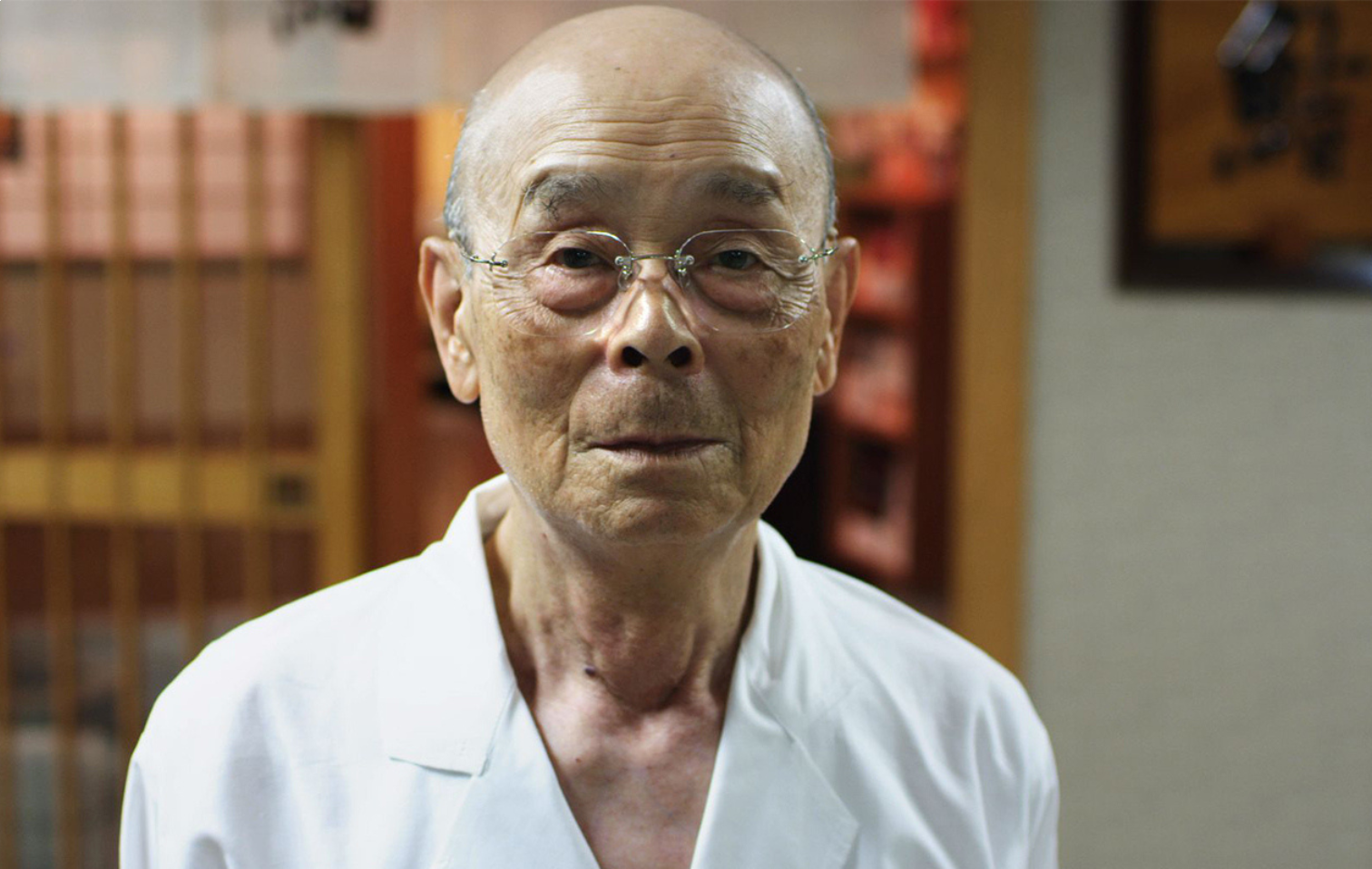
Born in Tenryū, Shizuoka, in 1925, Jiro Ono opened Sukiyabashi Jiro in Ginza in 1965. The first sushi-ya to win three Michelin stars (2007), it left the guide in 2019 for exclusivity, yet his relentless precision still shapes generations of itamae (chefs).
Ono began work at age seven as a boy in a Hamamatsu eatery and became a sushi chef at 25 in Kyōbashi. After the war he refined rice and fish technique in Tokyo restaurants until, in 1965, he opened Sukiyabashi Jiro—ten stools, a single 20-piece omakase and an obsession with the shine, pressure and temperature of shari.
The debut Michelin Guide Tokyo (2007) awarded him three stars, catapulting the tiny basement restaurant to world fame and inspiring the documentary “Jiro Dreams of Sushi” (2011). Chefs such as Joël Robuchon have called him the benchmark for craftsmanship.
Heads of state followed—most notably the dinner for Barack Obama and Shinzō Abe in 2014—and at 93 years, 128 days he was recognised by Guinness World Records as the oldest chef helming a three-star kitchen.
In November 2019 Michelin removed Sukiyabashi Jiro because reservations were accepted only via luxury-hotel concierges: “not open to the general public,” inspectors said, stressing quality was not in question.
Since 2023, health concerns have kept Ono away from daily service; the main counter is now run by his son Yoshikazu (while son Takashi leads the two-star Roppongi branch). Jiro still performs final tastings of rice, nori and tuna cuts.
His philosophy is summed up in shokunin kishitsu—craftsman’s spirit. Details are calibrated: rice served at 37 °C, octopus massaged 40 minutes, nigiri expected to be eaten within ten seconds. “I pursue perfection, yet I have never achieved it,” he says, embodying Japan’s ideal of infinite refinement.