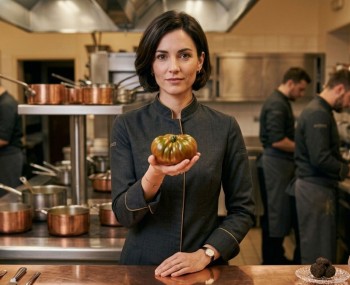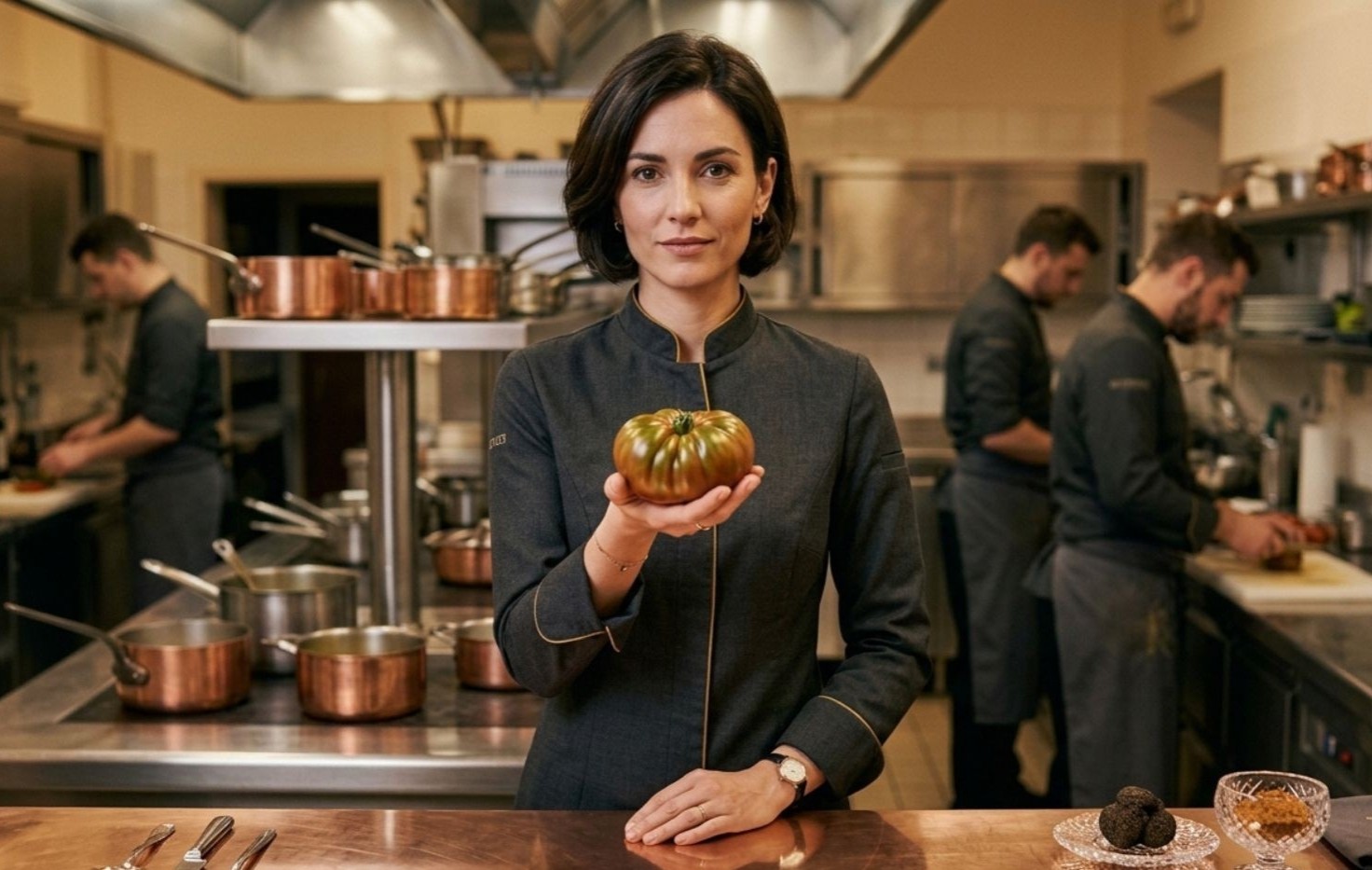
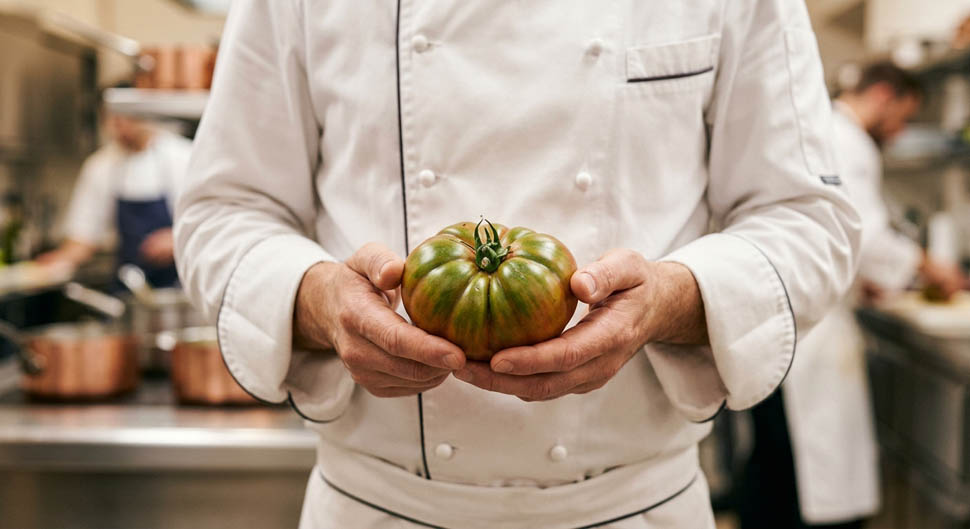
It is gnarled, ungainly, streaked with deep green, and a far cry from modern aesthetic standards. Yet the Raf tomato from Almería has become a veritable obsession in haute cuisine, coveted by world-class chefs who treat it with the same reverence reserved for the finest caviar. With prices that can reach 15 euros per kilo, this vegetable embodies the modern concept of gastronomic luxury: minimal yield, limited availability, and an inimitable flavor profile.
The Alchemy of the Soil: Why the Raf Is Unique
The Raf’s uniqueness stems from a geographical paradox. Introduced to Andalusia in the 1960s, this variety found its perfect habitat in the arid, saline soils between La Cañada and Níjar. It is precisely the soil’s salinity that subjects the plant to “water stress,” causing it to concentrate sugars and reduce its water content.
The result is a berry that ripens from the center toward the skin, offering a crisp texture when bitten into and a masterful balance between deep sweetness and a hint of acidity. With an extremely low yield—just 4 or 5 kilos per plant compared to 20 in traditional cultivation—and a perfect ripening window that lasts only a few days, the vegetable has become a precious rarity, selling for as much as 15 euros per kilo.
The Chefs’ Perspective: The Essence on the Plate
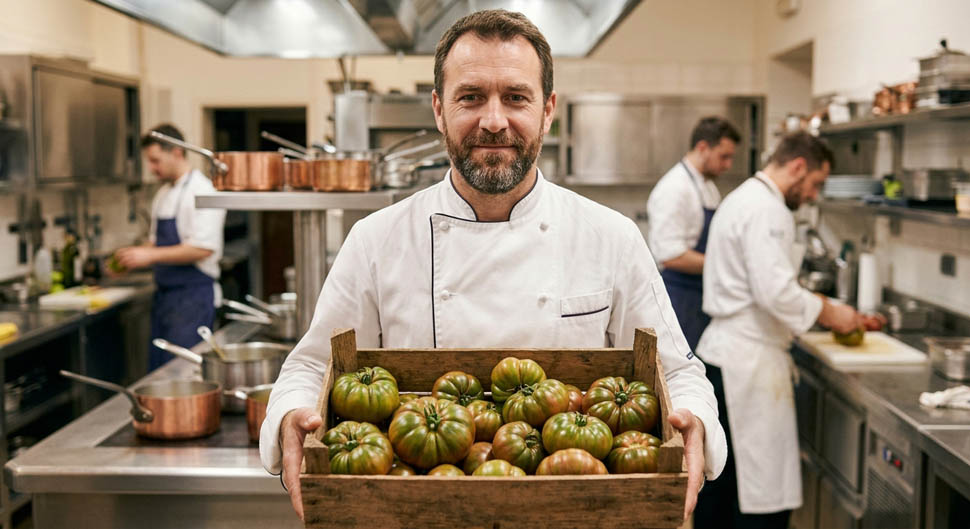
To explore the potential of this ingredient, two exceptional masters of signature cuisine came together, as recently reported in a feature by the Michelin Guide: José Álvarez (of the historic La Costa restaurant, one MICHELIN star in Almería) and Florencia Montes (chef and founder of the ONICE restaurant in Nice, with a distinguished background as executive chef at Mirazur, three MICHELIN stars).
Faced with the complexity of the Raf, the philosophy of the great masters of taste becomes straightforward: the less the product is manipulated, the more its greatness shines through. José Álvarez elevates the Raf to the undisputed star of his menu at La Costa, serving it almost in its purest form to highlight its crunch and flavor balance. To highlight it without overpowering it, he pairs it only with a drizzle of extra-virgin olive oil from the Arbequina variety. Florencia Montes, surprised by the fruit’s extraordinary sweetness and texture even in the middle of winter, emphasizes its absolute purity: when working with an ingredient of this caliber, true talent lies in not altering its essence with unnecessary embellishments.
From the “Sea of Plastic” to Haute Cuisine
The story of Raf is also the culinary redemption of Almería. Beneath the imposing “sea of plastic” formed by the industrial greenhouses that dominate the Andalusian landscape lies a gastronomic tradition rooted in respect for resources, zero waste, and a deep connection to the land.
In this setting where the desert meets the Mediterranean, Raf demonstrates how contemporary cuisine doesn’t always need exotic ingredients to surprise: sometimes, the most authentic luxury lies in an imperfect tomato with a sweet heart and green skin.